
Introduction
What if your living room could feel like a walk through a forest at dusk—quiet, grounded, and wrapped in shadow?
Here’s the problem you might be facing. You’ve pinned countless organic modern living rooms, but something feels missing. They’re beautiful, yes. All those light woods and white linen sofas look great in photos. But they don’t feel like you. Maybe your space doesn’t get tons of natural light. Or maybe bright minimalism just doesn’t feel cozy enough for how you actually want to live. You want a room that hugs you at the end of a long day, not one that feels like a museum.
In this guide, you’ll discover 19 ways to merge the raw, textural beauty of organic modern design with the depth and drama of moody interiors. You’ll learn how to choose dark earthy paint colors. You’ll see how to layer textures so the room stays warm (not cave-like). And you’ll find out how to pick statement pieces that balance light and shadow perfectly.
Let’s build a room that feels like your retreat.
What Is Moody Organic Modern Design? (The Quick Definition)
Before we jump into the ideas, let’s get clear on what this style actually means.
It’s a hybrid aesthetic. Think of it this way: you’re taking the core principles of organic modern—natural materials, clean lines, handcrafted details—and deepening the color palette. We’re talking charcoal, forest green, burnt umber, and inky navy. It’s the difference between a sunny meadow and a midnight forest. Both are beautiful. One just feels deeper.
Here’s the thing about going dark: texture becomes even more critical. When you remove bright light, texture has to work harder. Flat walls that looked fine in a white room will look dead in a dark one. That’s why this style relies on limewash walls, chunky knits, raw wood, and stone. They create visual interest when color alone won’t cut it.
The “moody” part isn’t just about color. It’s about intentional shadow. You’re not fighting the dark corners—you’re welcoming them. This means layered lighting, dimmer switches on everything, and rooms that actually look better at night than they do during the day. That’s the secret.
But connection to nature stays central. You’re still bringing the outdoors in. It’s just that now, it’s the feeling of a forest floor instead of a sun-drenched beach.
And that’s why people are falling for this look. It feels real. It feels grounded. Ready to see it in action? Here are 19 ways to make it yours.
1–5: Start with the Foundation (Walls & Floors)
Before you buy a single piece of furniture, look at your bones—the walls and floors. They set the stage for everything else.
1. Deep Forest Green Walls + Raw Wood Accents
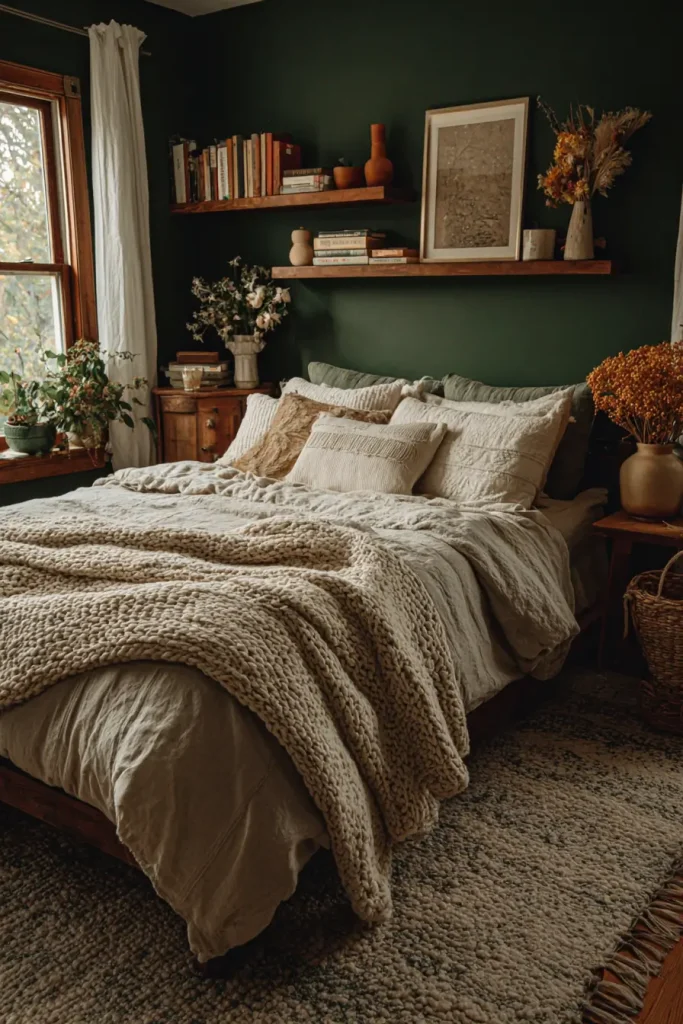
Paint your walls a dense forest green. Not a bright leafy green, but the color you see deep in the woods where the canopy blocks the sun. It mimics being in a wooded grove.
Then balance it with raw wood. Think floating oak shelves or a reclaimed wood coffee table. The wood keeps the room grounded in nature. Without it, the green might feel too heavy. With it? You’ve got a room that breathes.
2. Charcoal Limewash for Textural Depth
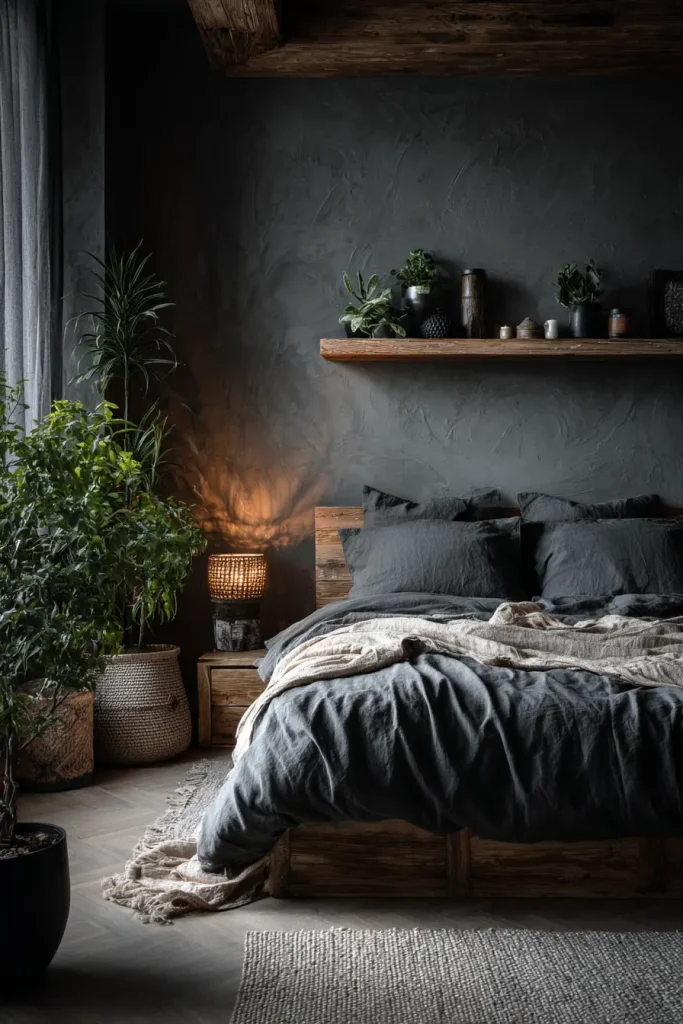
Here’s a trick designers use: limewash walls in charcoal or greige.
Regular paint sits flat on the wall. Limewash is different. It catches light softly, creating a cloudy, organic texture that flat paint can’t achieve. Run your hand across it, and you’ll feel the difference. It’s imperfect. It’s ancient. And in a moody room, that’s exactly what you want.
3. Dark Slate Flooring + Plush Contrast Rugs
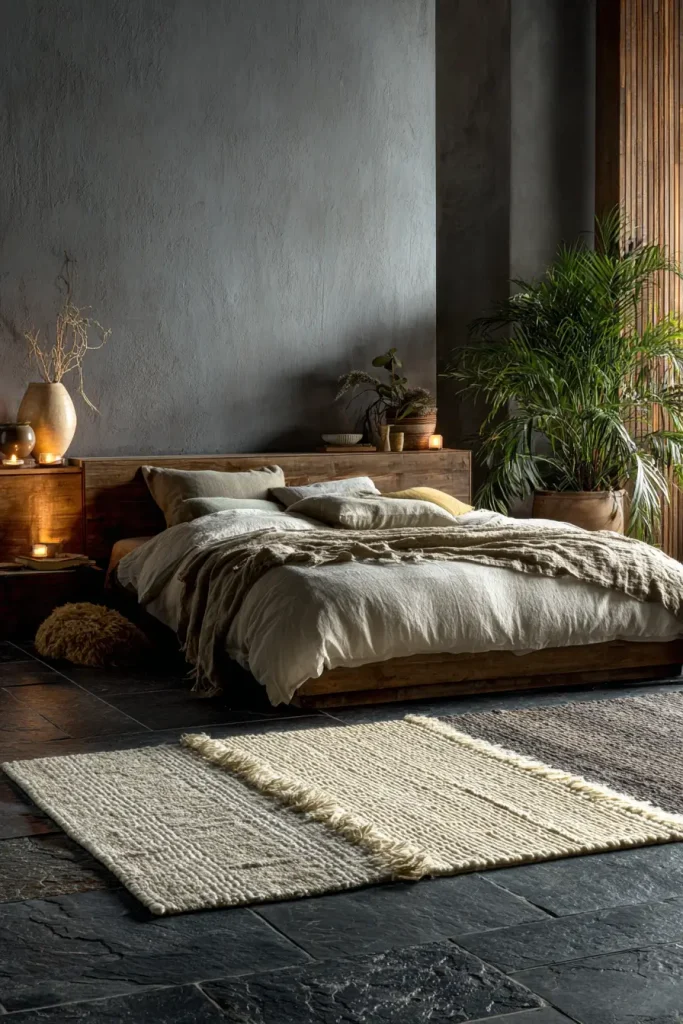
Let’s talk floors. Dark slate or stained wood floors give you that solid, grounded base.
But here’s the key: don’t let the room become a cave. Layer a cream or natural wool rug right on top. The contrast does two things. First, it keeps the room from feeling like a black hole. Second, it gives your eyes a place to rest. Light floor, dark walls. Dark floor, light rug. That push and pull is what makes the room work.
4. Exposed Brick (Painted Matte Black)
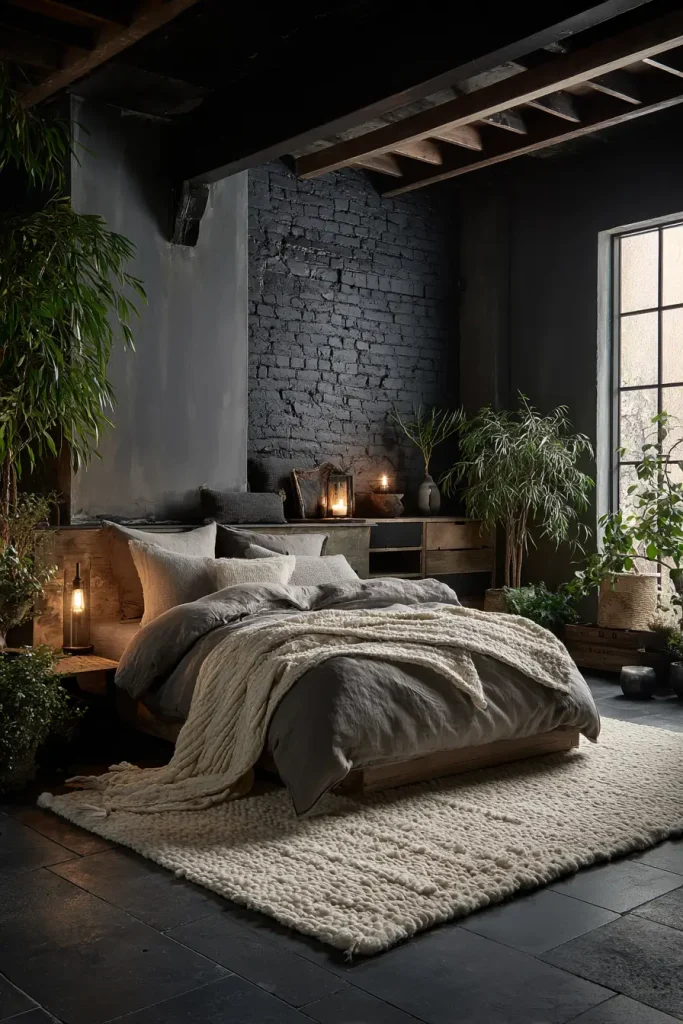
Got brick? Don’t cover it up. Paint it matte black instead.
This sounds intense, we know. But here’s why it works: the texture of the brick remains fully visible. Every groove and bump catches shadows differently. The color recedes, making the room feel deeper and more intimate. It’s like the brick was always meant to be that color.
5. Fluted Wood Paneling in Stained Walnut
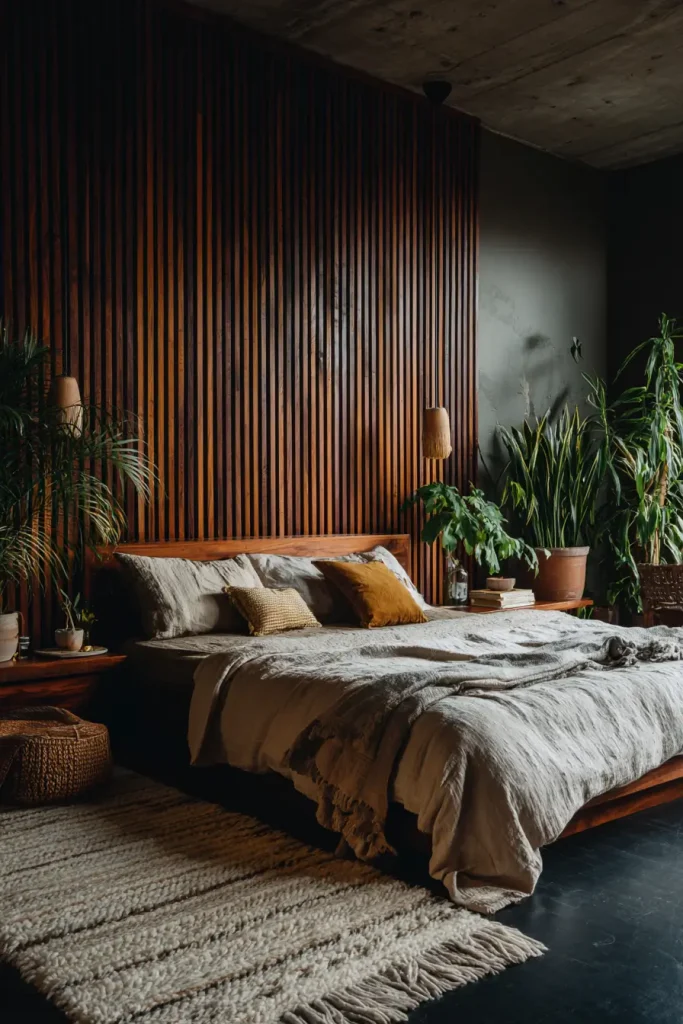
Fluted wood paneling is having a moment, and for good reason.
Add it to a single accent wall in a dark walnut stain. The vertical lines add rhythm to the room—they draw your eye up, making ceilings feel higher. And those grooves? They catch shadows beautifully as the sun moves through the room. It’s subtle architecture that does the work for you.
Once your shell is set, it’s time to bring in the heavy hitters: furniture.
6–10: Furniture That Grounds the Space
Now, let’s ground the room. These pieces should feel planted, like they grew there.
6. Low-Profile Sofa in Charcoal or Moss Green
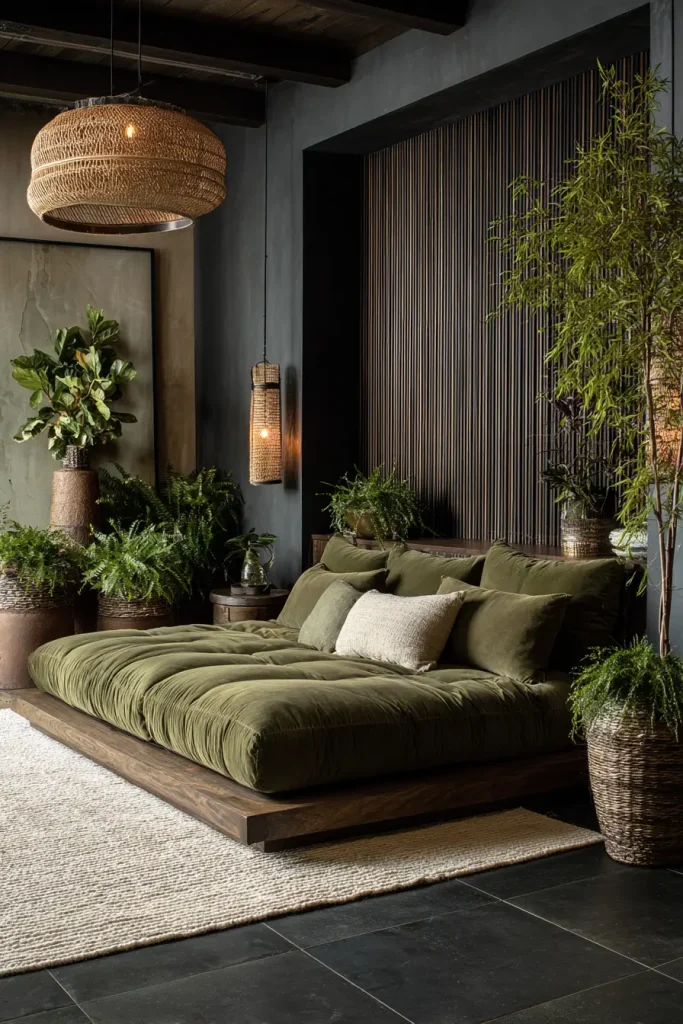
Choose a low, platform sofa. The closer it sits to the ground, the more grounded the whole room feels.
Go for a dark, textured fabric. Brushed twill works. So does velvet in moss green or charcoal. The texture matters because you’ll be touching this thing every day. And the color matters because it anchors everything else in the room. This is your foundation piece.
7. Live-Edge Coffee Table in Dark Walnut
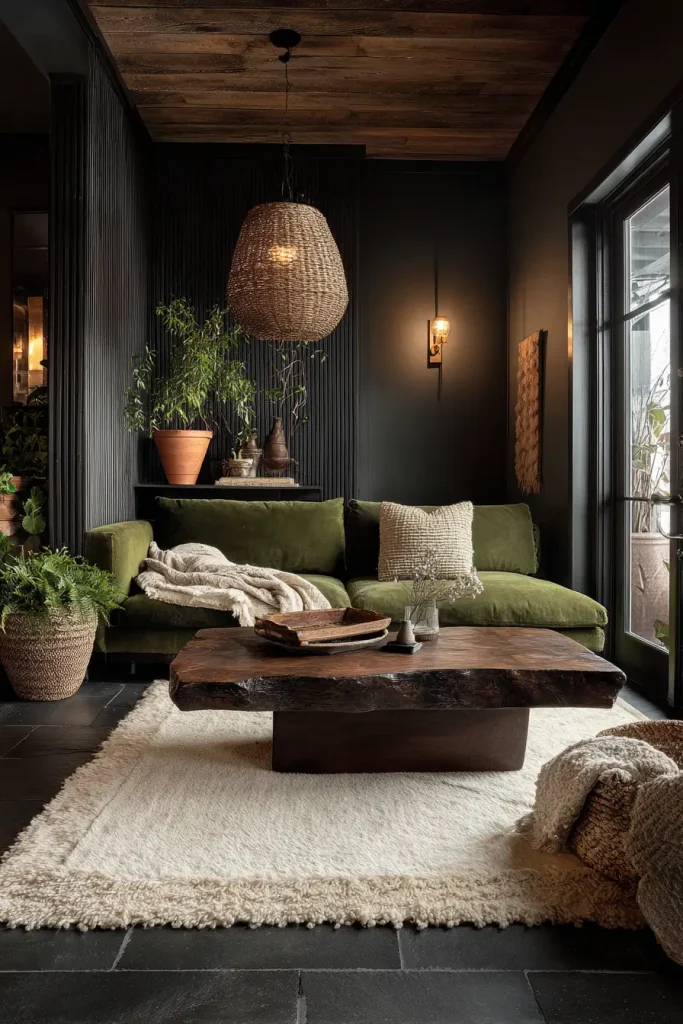
A live-edge table brings organic imperfection. No two are exactly alike.
Go for walnut or ebony-stained oak. The dark wood matches your moody palette, but the organic edge keeps it from feeling man-made. It’s nature, shaped just enough to be useful. That’s the whole vibe right there.
8. Cognac Leather Accent Chair
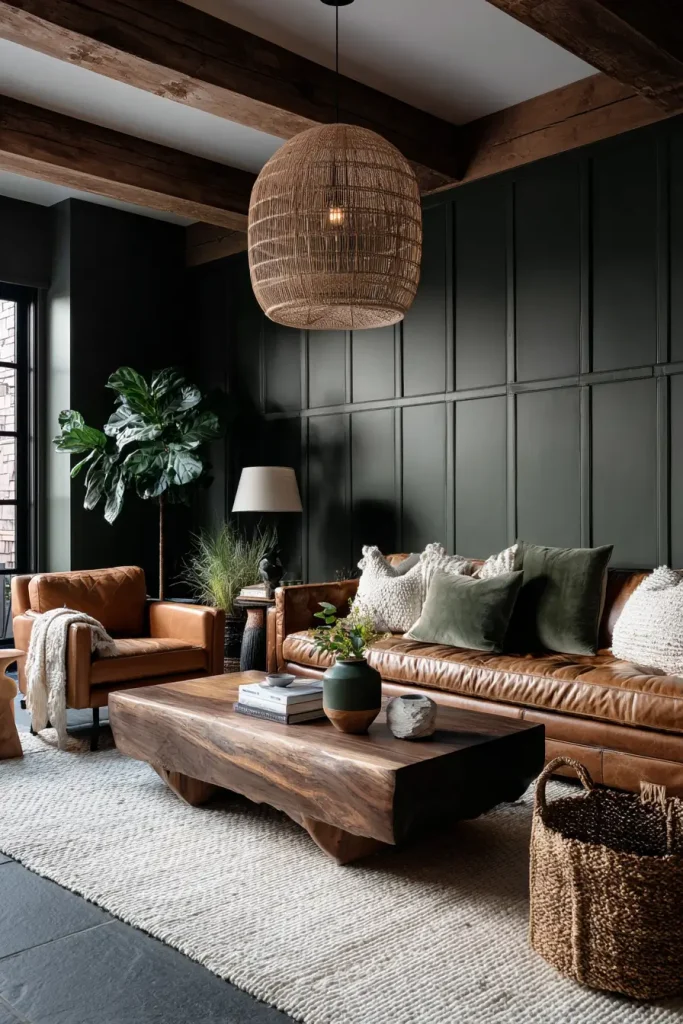
Here’s where you add a pop. Cognac leather in a warm tan.
Against dark walls, that leather practically glows. It adds a vintage element, too. Leather ages well—it develops a patina over time that only gets better. This chair will look good now, and it’ll look even better in ten years.
9. Stone Coffee Table (Travertine or Marble)
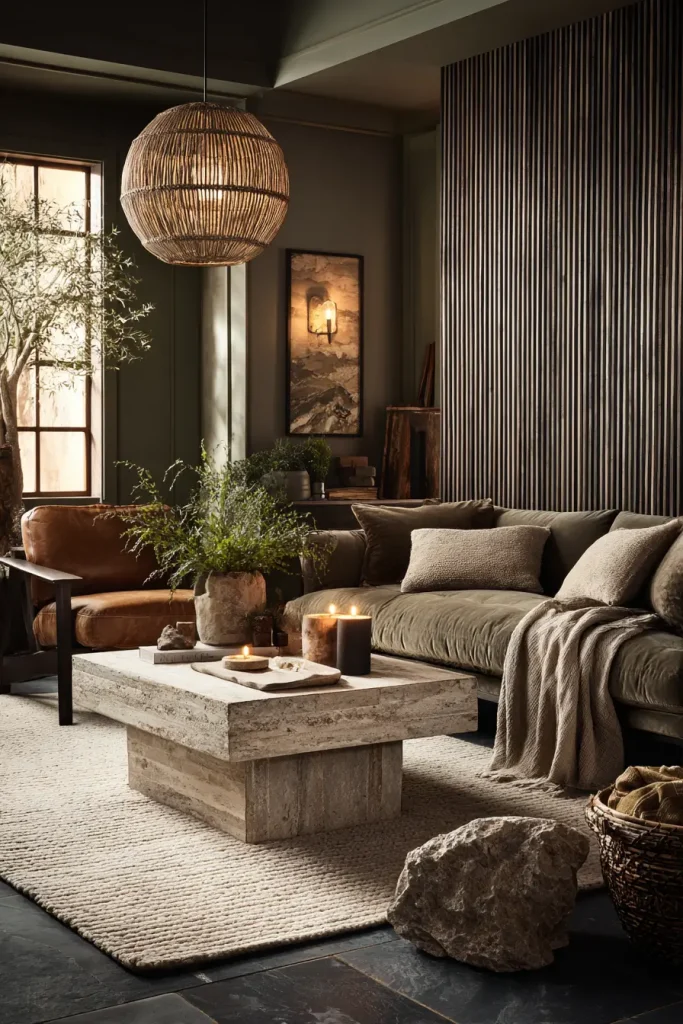
Maybe wood isn’t your thing. Try stone.
A travertine or marble coffee table adds cool elegance. It’s a sculptural element all on its own. And the natural veining in the stone adds interest without adding color. It sits there, quietly beautiful, doing its job without shouting.
10. Bouclé Armchairs for Soft Contrast
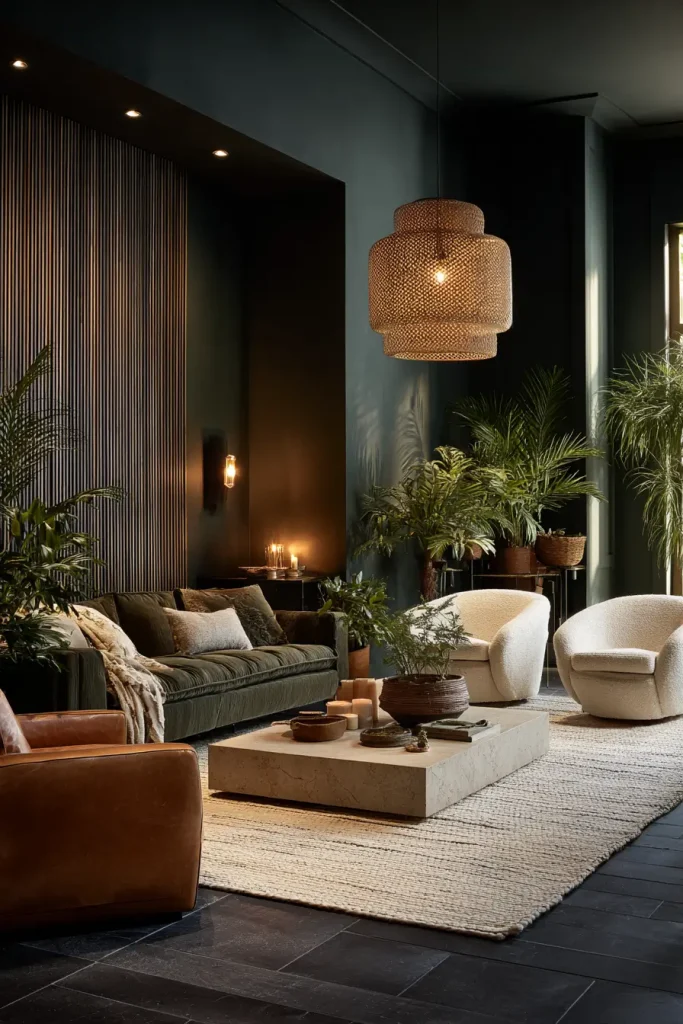
White or cream bouclé against a dark wall? Yes, please.
This is your high-contrast moment. The nubby texture of bouclé is pure cozy. Against a deep green or charcoal wall, it creates a focal point that feels intentional, not stark. It’s the visual equivalent of a deep breath.
But even the best furniture disappears without the right light.
11–15: Lighting & Atmosphere (The “Mood” Makers)
This is where the “moody” magic really happens. Light sets the feeling.
11. Woven Rattan Pendants with Amber Bulbs
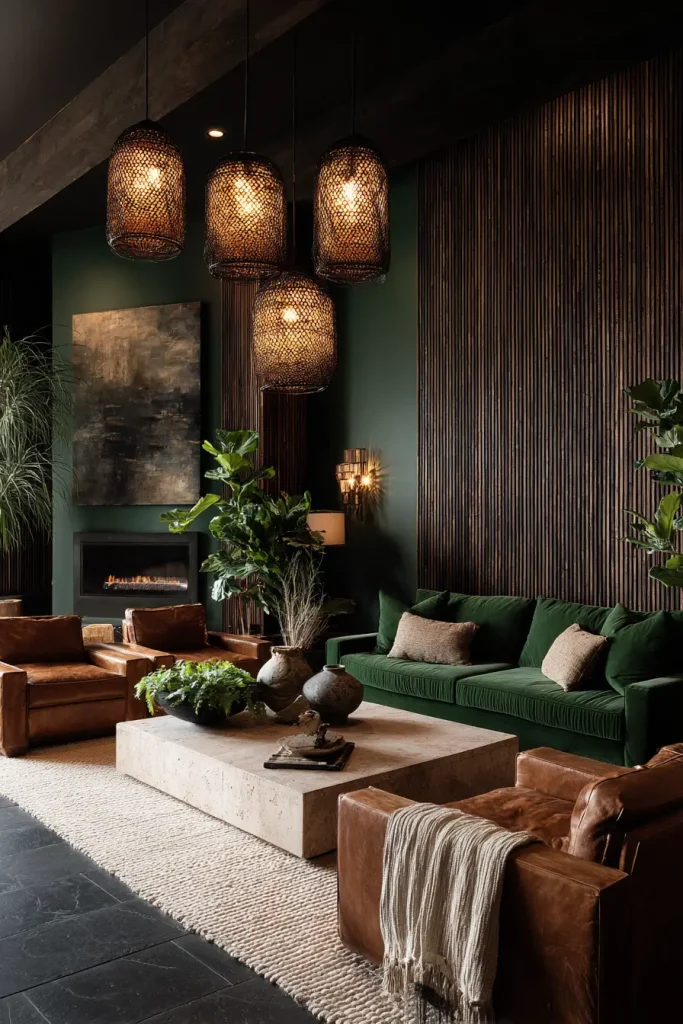
Rattan isn’t just for boho rooms anymore. In a dark space, it’s magic.
Woven rattan pendants cast beautiful shadows on your walls and ceiling. Those shadows add depth and interest without buying a thing. Use warm amber bulbs—2700K or lower—to keep the glow golden and soft. Never use cool white bulbs in a moody room. They’ll ruin everything.
12. Black Iron Floor Lamps (Arched Style)
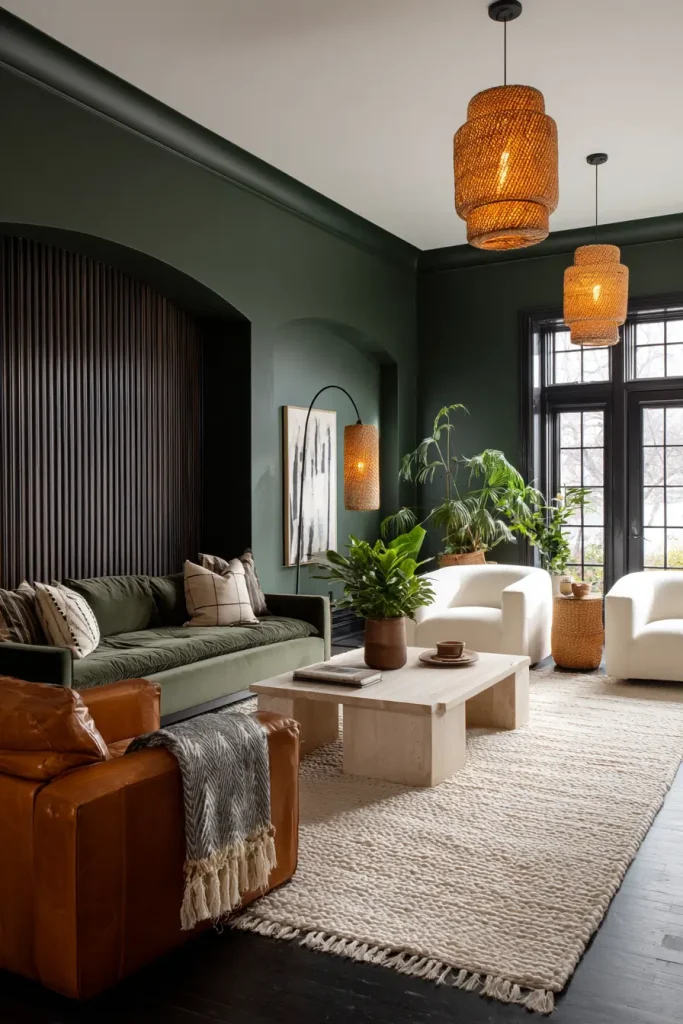
Sleek black iron adds a slight industrial edge.
Arching floor lamps do two things. First, they draw the eye upward, making the room feel taller. Second, they create intimate reading zones. A pool of warm light next to a dark wall? That’s a moment.
13. Brass Sconces with Dimmable Filament Bulbs
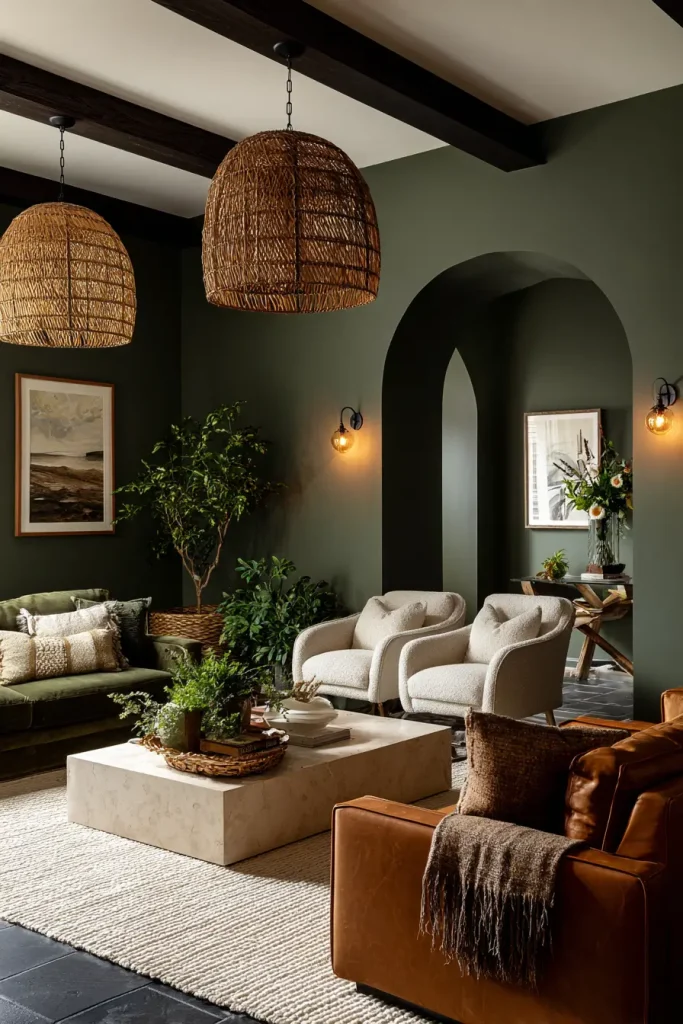
Wall sconces save floor space and add vintage charm.
Brass against dark walls looks rich. And those exposed filament bulbs? They look like little glowing sculptures. Here’s the pro tip: put every single light on a dimmer. The ability to control the “mood” level from 100% down to 10% is what makes a room feel alive at night.
14. Layered Lighting Strategy
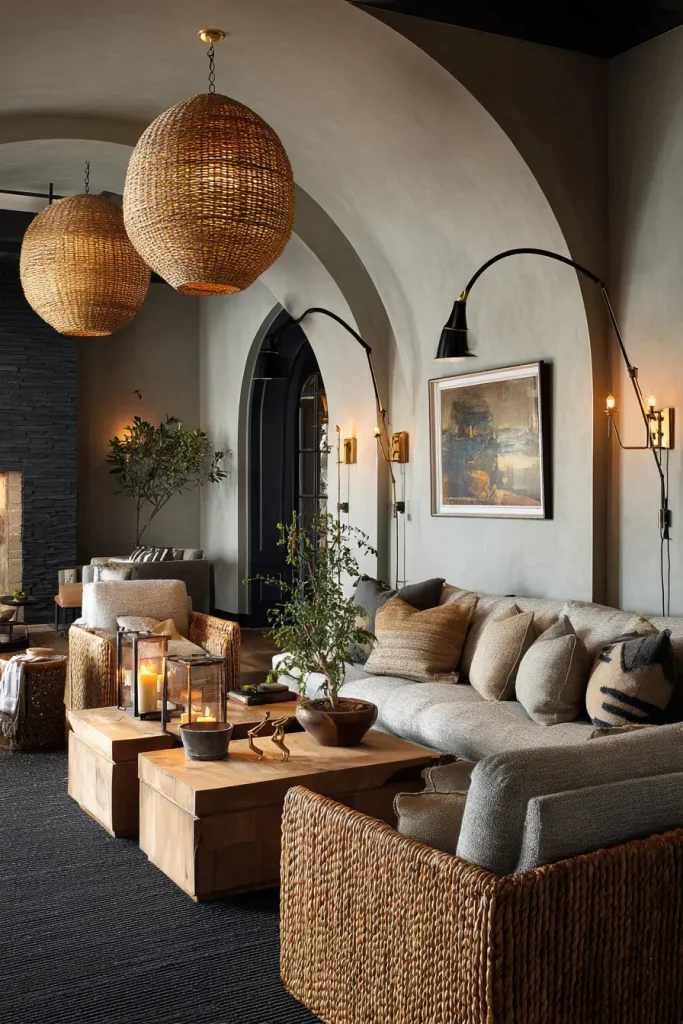
Never, ever rely on a single overhead light. It’s the fastest way to kill a moody room.
You need three layers: ambient (general light), task (reading lights), and accent (lights that highlight art or architecture). When you have all three, you can create any feeling you want. Bright for cleaning. Dim for movies. Medium for dinner with friends.
15. Antique Bronze Mirror to Bounce Light
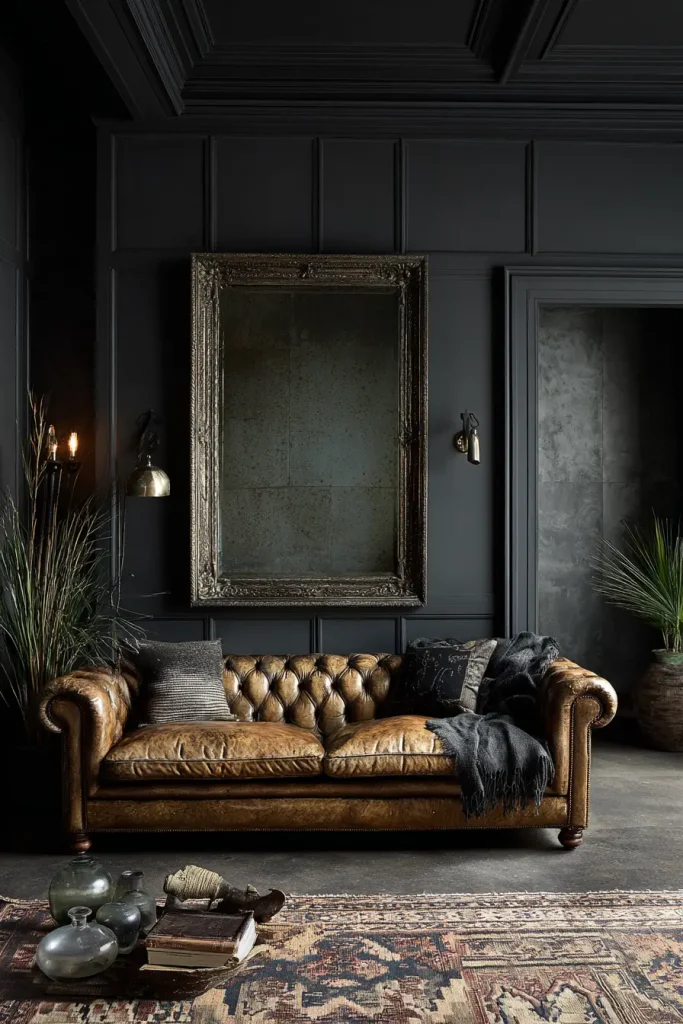
A large mirror with a dark bronze frame does two jobs.
First, it reflects what little light you have, making the room feel brighter without adding glare. Second, the dark frame matches your moody palette. It doesn’t shout “LOOK AT ME.” It just quietly helps.
With your lighting set, let’s accessorize.
16–19: Decor, Textiles & The Finishing Touches
The finishing touches are where your personality shines.
16. Layered Rugs (Jute Base + Wool Top)
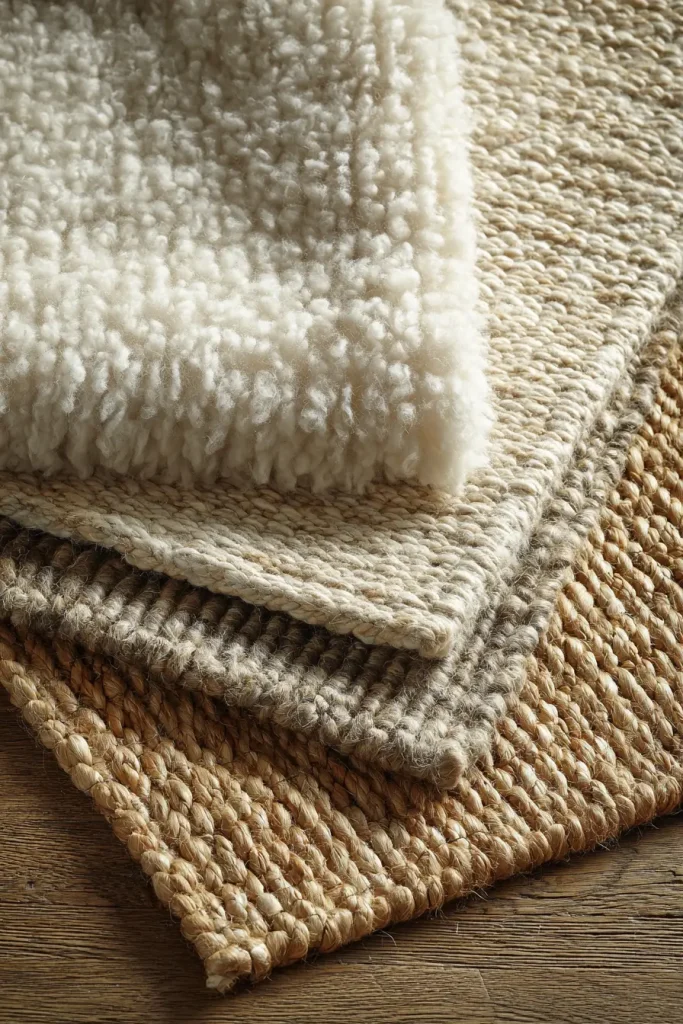
Here’s a designer secret: layer your rugs.
Start with a large, natural jute rug. It’s rough, organic, and cheap. Then layer a smaller, softer wool rug on top—maybe in cream or charcoal. Now you have texture underfoot and visual complexity. It looks intentional. It feels amazing to walk on barefoot.
17. Heavy Knit Throws in Chocolate Brown

A chunky knit throw adds “weight” to the sofa. Literally and visually.
Drape it over the arm of your chair or the back of your sofa. In chocolate brown or deep charcoal, it invites you to curl up. You can’t look at it without wanting to touch it. That’s the point.
18. Black Ceramic Vases + Dried Botanicals
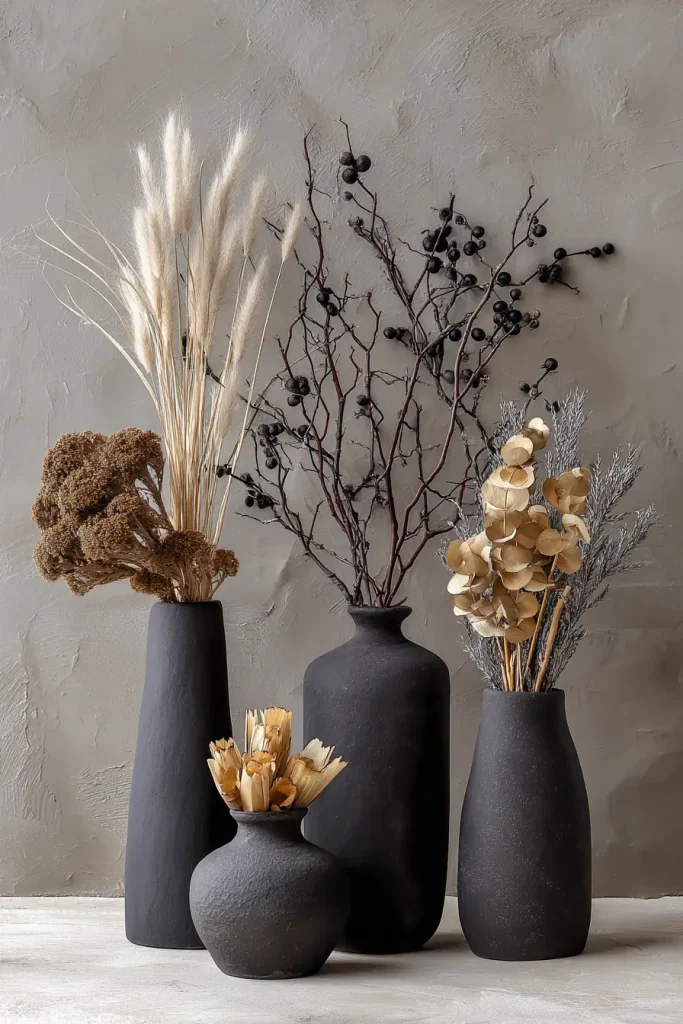
Matte black or clay vessels on a shelf or coffee table.
Put dried things in them. Eucalyptus works. Pampas grass works. Bare branches work. The dried botanicals add height and organic shape without needing water or sunlight. They just exist, quietly beautiful.
19. Oversized Botanical Art in Black Frames
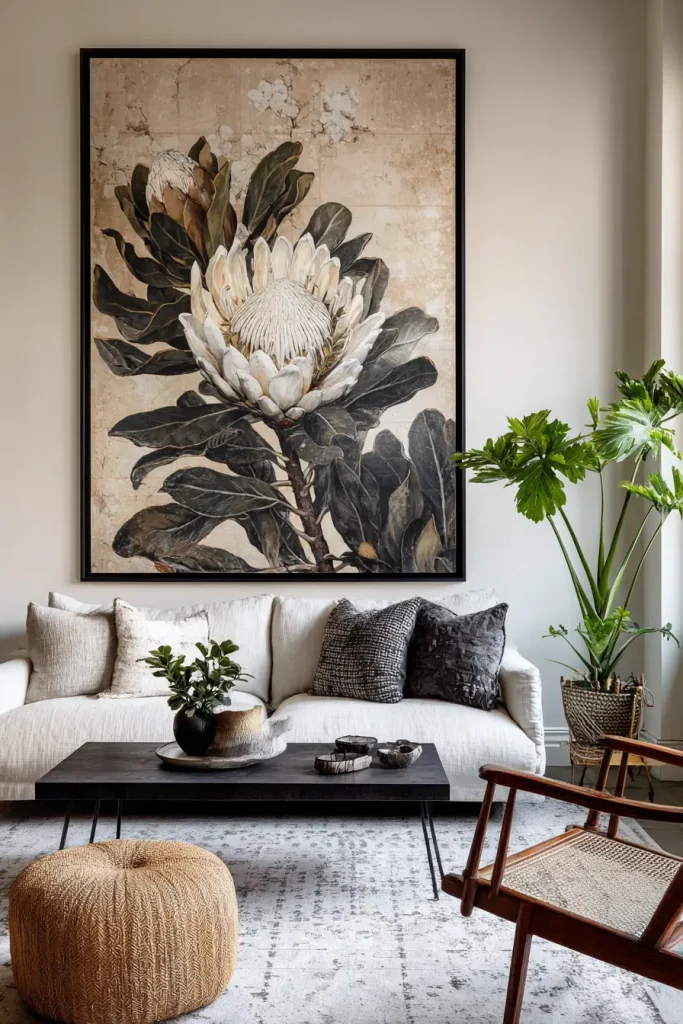
On those big empty walls, go large.
Large-format fern prints or abstract earth-tone art fills the space without clutter. The black frames tie back to your other dark elements. And the botanical subject matter keeps you connected to nature, even indoors.
Conclusion
A moody organic modern living room isn’t about abandoning light. It’s about embracing shadow as a design tool. Think of it as a tool, not a problem to fix.
By choosing deeper paint colors, grounding your space with dark wood and stone, and layering textures that invite touch, you create a room that feels like a retreat. It’s sophisticated, yes. But more importantly, it’s livable. A space that looks as good on a rainy Sunday as it does during a dinner party.
Ready to go dark? Start small. Swap out a bright accessory for something in charcoal or forest green. Add a single black ceramic vase to a shelf. Then watch how the room begins to transform.
Which of these 19 ideas will you try first? Drop a comment below or save this guide to Pinterest for your next room refresh. Your cozy, grounded, moody organic modern living room is closer than you think.

- 17 Classy Living Room Ideas for a Cozy Elegant Look - April 23, 2026
- 16 Dark Moody Living Room Ideas That Feel Rich and Warm - April 22, 2026
- 14 Elegant Bedroom Trends for 2026 You’ll Love - April 22, 2026


