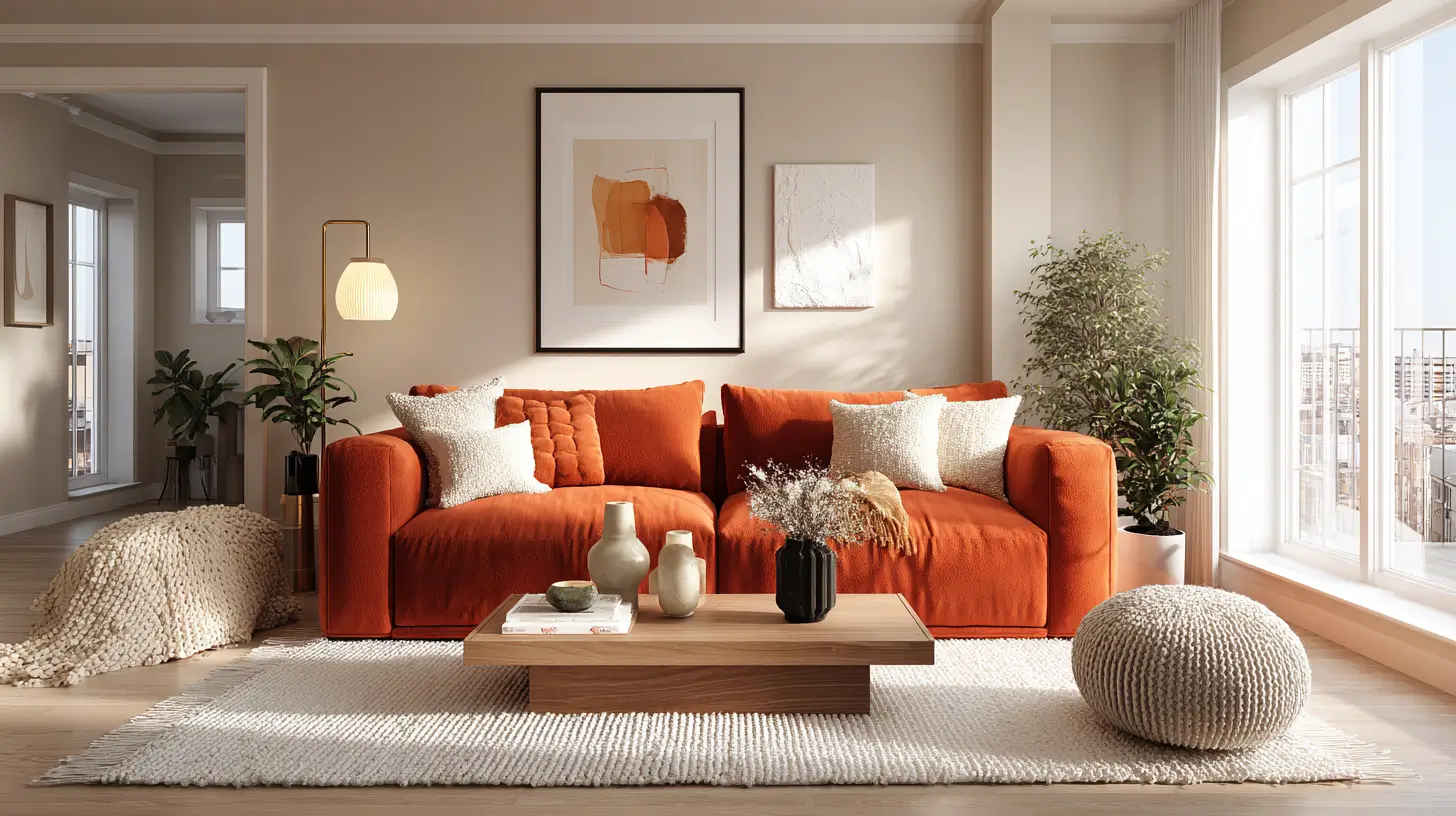
Why Your Orange Couch Feels “Off” Right Now
You bought the couch. It looked perfect in the store or online. But now it’s sitting in your living room and something feels wrong. The room looks loud. Or messy. Or like you made a mistake.
You didn’t make a mistake. You just need the right things around it.
An orange couch is one of the easiest statement pieces to work with. The hard part is already done. You have a focal point. Now you just need to build around it correctly.
This guide gives you 16 real, specific ideas. Not vague advice like “use neutral tones.” Real combinations with actual paint names, rug types, pillow colors, and wood tones.
By the end, you will know exactly what to change, add, or remove to make your orange couch look like it belongs there.
Why Orange Couches Are a Smart Choice in 2026
The all-grey living room is fading fast. Designers and homeowners are moving toward warm, expressive spaces that feel lived-in and personal.
Orange fits that shift perfectly.
According to Pinterest Predicts data, searches for bold sofa colors and warm-toned interiors have been rising steadily since 2022. Google Trends shows “burnt orange couch” consistently gaining interest year over year. This is not a flash trend. It is a real design shift.
Color psychology research shows orange creates feelings of warmth, energy, and social connection. It makes people feel welcome. That is exactly what a living room should do.
The “dopamine decorating” trend, widely covered by designers like Emily Henderson and publications like Architectural Digest, supports the idea that bold, joyful spaces are good for mental wellbeing. Your orange couch fits right into that.
So stop second-guessing your choice. Let’s style it.
Ideas 1 to 4: Neutral Backgrounds That Make Orange Pop
The safest and most effective approach is pairing your orange couch with a calm, neutral background. This lets the couch be the star without the room feeling chaotic.
Idea 1: Warm White Walls With Blonde Wood Floors or Furniture
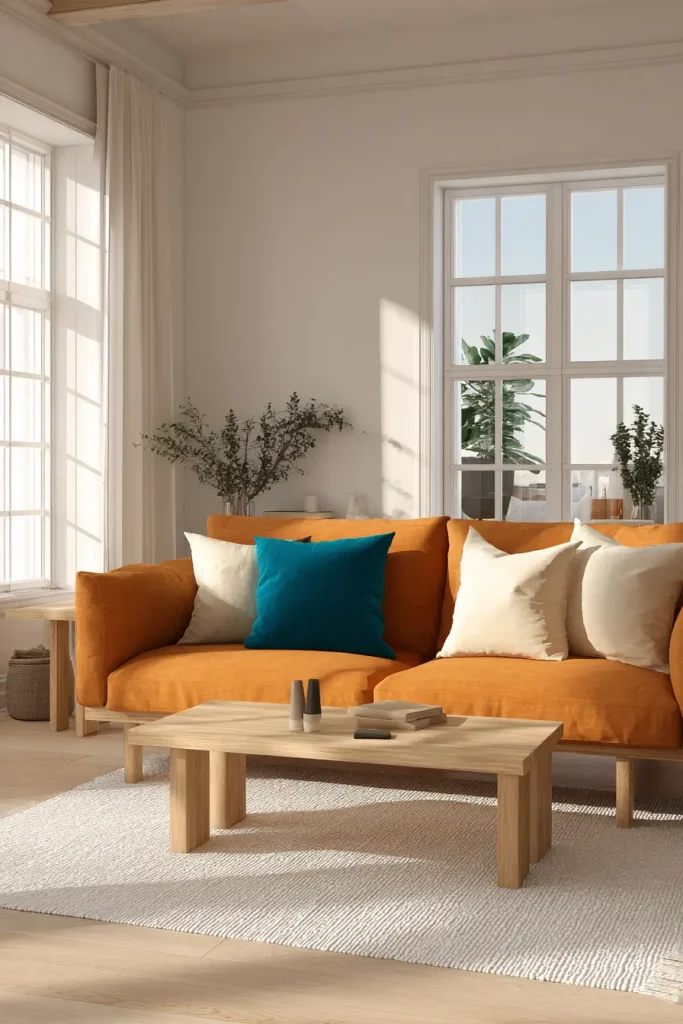
This is the cleanest look. Warm white walls reflect light and create space. Blonde wood furniture and floors bring in a natural warmth that works with orange without competing against it.
Wall paint to use: Benjamin Moore “White Dove” (OC-17) or Sherwin-Williams “Alabaster” (SW 7008). Both are warm whites with no blue or grey undertone.
Rug: A low-pile ivory or oat-colored rug in wool or cotton. Keep the pattern simple or go solid.
Throw pillows: Cream, warm sand, and one deep teal. Three pillows. Simple.
Wood tone: Light to medium blonde, like ash or maple. Avoid dark walnut here as it can make the room feel heavy.
Avoid this: Do not add too many warm accents. Warm white plus orange plus yellow throw pillows equals overwhelming. Keep most accents cool or neutral.
Pro Tip: If your walls are already a bright white with a cool undertone, add a warm wood coffee table. It bridges the gap between the white wall and the orange couch.
Idea 2: Greige Walls With Linen Curtains
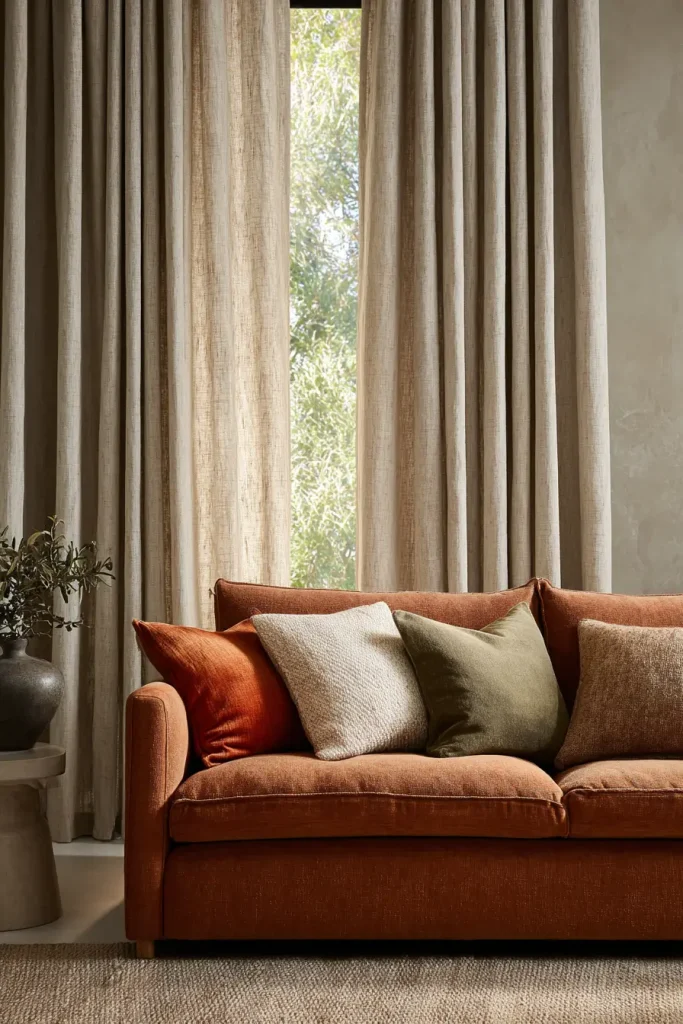
Greige is the mix of grey and beige. It is one of the most flexible wall colors ever created. It gives your orange couch breathing room without washing out the color.
Wall paint to use: Sherwin-Williams “Accessible Beige” (SW 7036) or Benjamin Moore “Pale Oak” (OC-20).
Curtains: Floor-to-ceiling linen in natural or white. The texture adds softness. The length makes the ceiling look taller.
Rug: A flatweave rug in warm grey or tan. Loloi’s “Isle” collection or Ruggable’s washable flatweaves work well in these tones.
Throw pillows: Rust, cream, and olive green. These three colors work together and with orange.
Avoid this: Do not use cool grey curtains. Cool grey next to orange creates a clash. Stay warm throughout the room’s neutral tones.
Idea 3: Cream Plaster Walls With Terracotta Accents
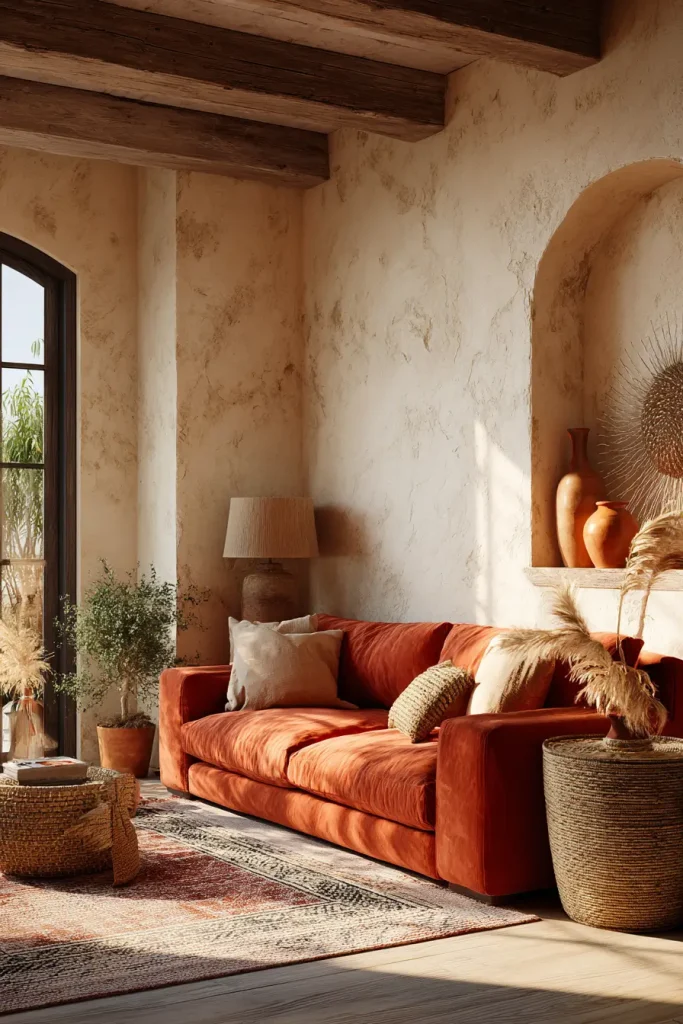
This look feels like a Spanish villa or a warm Mediterranean room. Cream walls with a slightly rough texture make orange feel earthy and intentional.
Wall finish: Look for matte or eggshell paint with a slightly textured roller. It does not have to be actual plaster. The finish does most of the work.
Paint color: Benjamin Moore “Linen White” (OC-146) or Farrow and Ball “Joa’s White” (No. 226).
Accents: Terracotta pots, a ceramic lamp base in rust or sand, and woven baskets. These repeat the warm undertone of orange without copying it exactly.
Rug: A Moroccan-style rug in cream, rust, and black. Beni ourain style rugs from brands like Loloi or Revival Rugs work beautifully here.
Avoid this: Do not add pink accents. Terracotta plus orange plus pink pushes the room into muddled territory.
Idea 4: Off-White Walls With a Natural Jute Rug
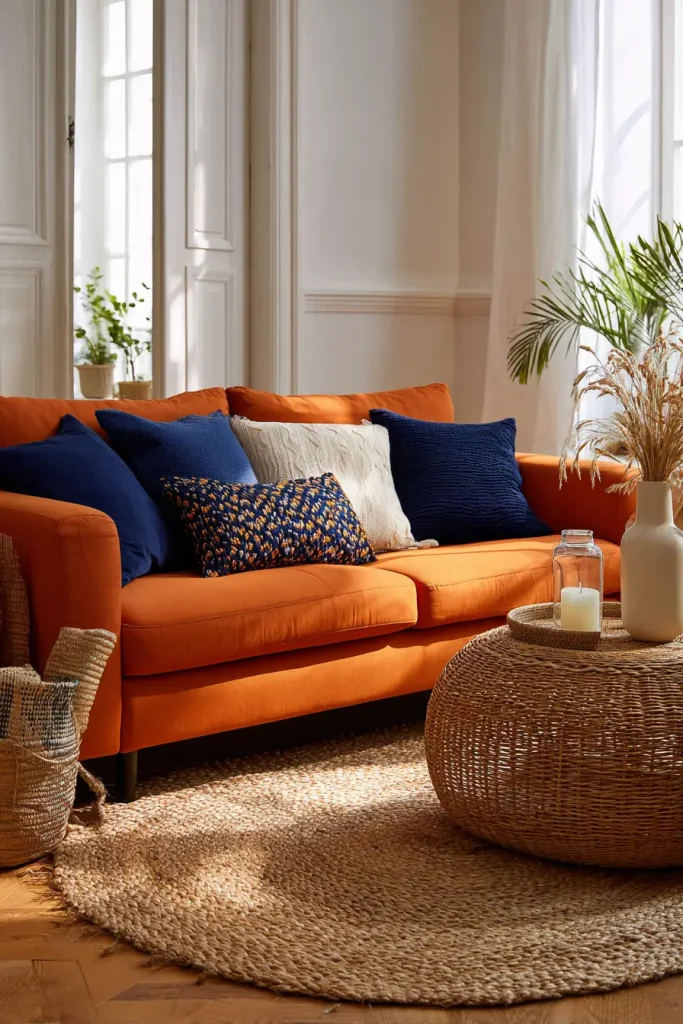
This is the most budget-friendly option on the list. Almost every rental or starter apartment can pull this off.
Jute rugs are textured, natural, and inexpensive. They ground an orange couch without pulling focus.
Rug to use: A natural jute rug in 8×10 or 9×12 depending on room size. IKEA’s LANGSTED or a basic jute from Pottery Barn or Wayfair.
Throw pillows: Deep navy, cream, and one printed pillow with both orange and navy in the pattern. The pattern ties the room together.
Coffee table: A round rattan or cane coffee table. Light, airy, and works with jute and orange.
Avoid this: Do not use a chunky sisal rug. Sisal is scratchy and rough. Jute is softer and looks more polished.
Ideas 5 to 8: Bold Color Combinations That Work
If you want more color in your room, these four ideas use contrast and color theory to make your orange couch feel intentional, not accidental.
Idea 5: Deep Forest Green Walls With an Orange Sofa
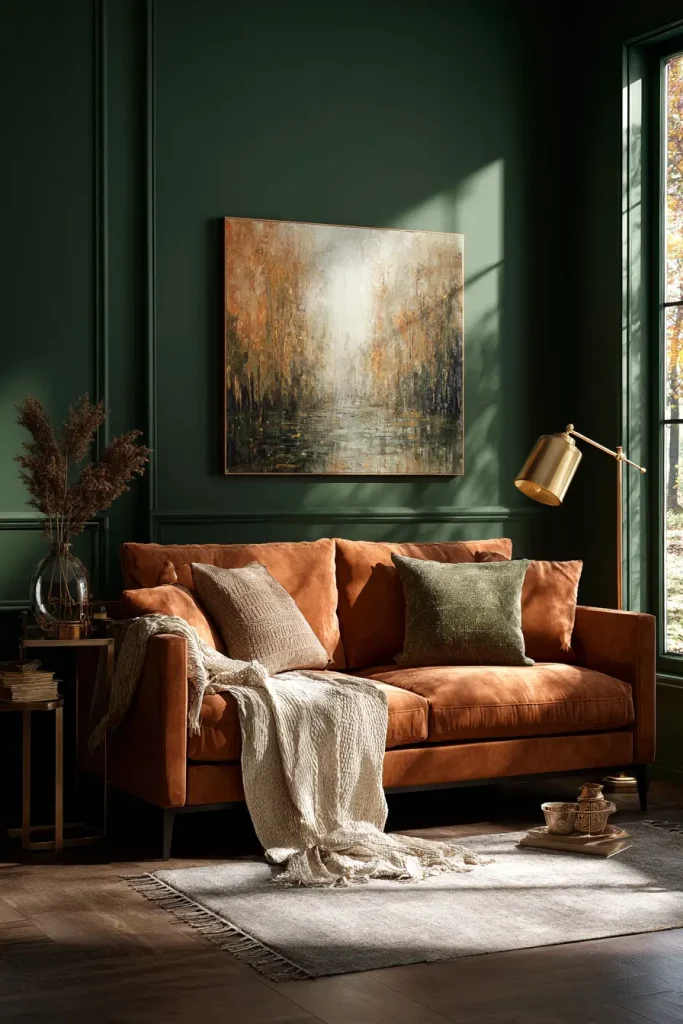
Green and orange sit across from each other on the color wheel. That means they create natural contrast. When you get the balance right, the room looks rich and collected.
The key is using a deep, muted green. Not bright lime. Not olive. Deep forest green.
Paint to use: Sherwin-Williams “Hunt Club” (SW 6468) or Benjamin Moore “Hunter Green” (2041-10).
How to balance it: Follow the 60-30-10 rule. 60 percent of the room is the wall color (green). 30 percent is the main furniture (orange couch). 10 percent is accent pieces like pillows, lamps, or art.
Accent pieces: Brass lamp, dark walnut side table, cream linen throw, and one large piece of abstract art in warm tones.
Avoid this: Do not add red accents. Red plus orange plus green looks like a holiday decoration.
Idea 6: Navy Blue Walls With an Orange Sofa
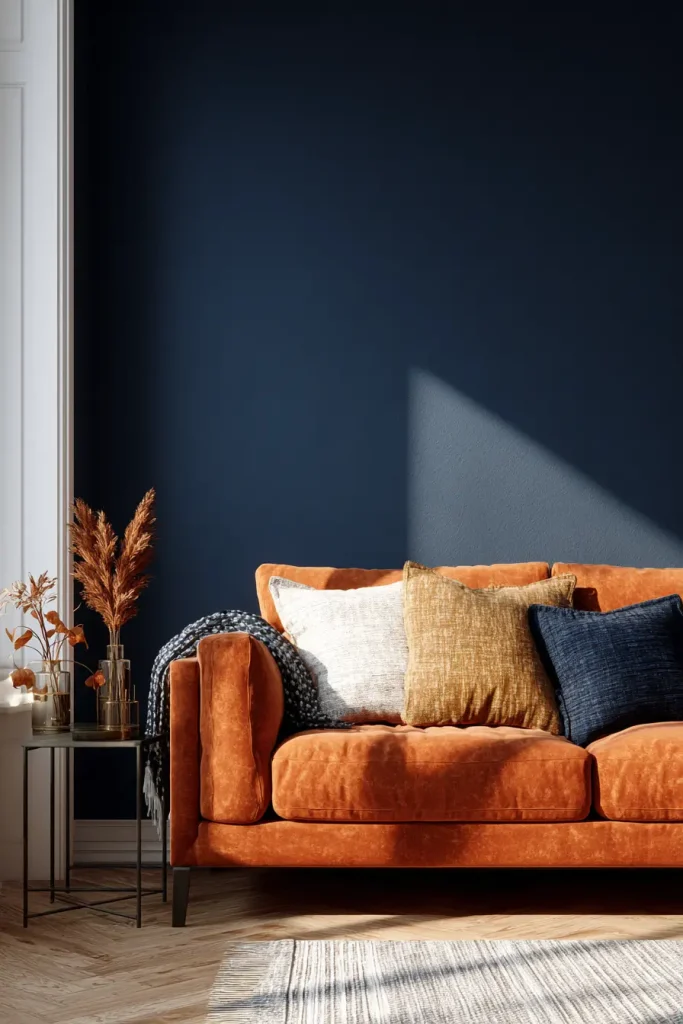
Navy and orange is a classic combination. Sports teams have used it for decades because it works. In a living room, it feels sophisticated when done right.
Paint to use: Benjamin Moore “Hale Navy” (HC-154) or Sherwin-Williams “Naval” (SW 6244).
What makes it work: Navy is dark enough to calm the room down. Orange pops against it without looking wild.
Throw pillows: White, warm gold, and one navy blue to repeat the wall color on the couch. This ties the room together visually.
Lighting: Use warm bulbs in the 2700K range. Cool lighting next to navy walls can make the room feel cold and clinical.
Avoid this: Do not paint all four walls navy in a small room. Use it on one accent wall behind the couch or in a room with strong natural light.
Idea 7: Warm Terracotta Layering With Rust Tones
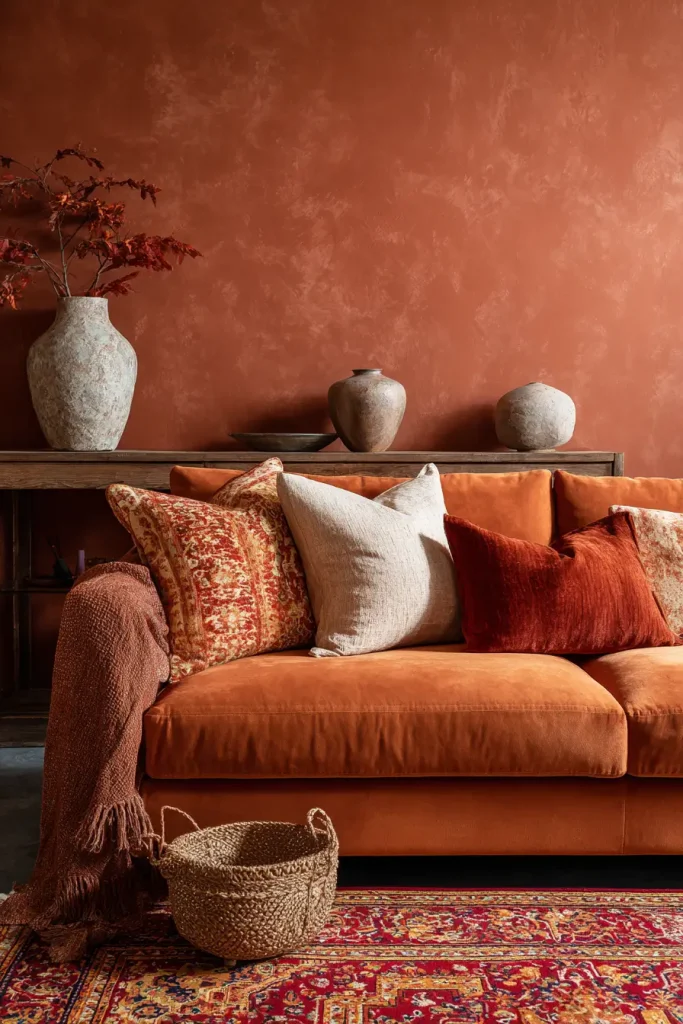
This is an analogous color scheme. Analogous means the colors sit next to each other on the color wheel. In this case, orange, rust, and terracotta are all neighbors.
The result is a warm, cocooning room that feels very 2026.
Wall color: Sherwin-Williams “Cavern Clay” (SW 7701) or Benjamin Moore “Terra Cotta Tile” (2090-30).
Rug: A vintage-style Persian rug in red, orange, and gold tones. Revival Rugs and eBay are great sources for affordable vintage-style rugs.
Key rule: Vary the textures heavily. When you use similar colors, texture is what keeps the room from looking flat. Use velvet, linen, wool, and ceramics together.
Avoid this: Do not use the same shade of orange everywhere. Vary the depth. Dark rust on the wall, medium orange on the couch, light terracotta on a pillow.
Idea 8: Mustard Yellow Accents With an Orange Sofa
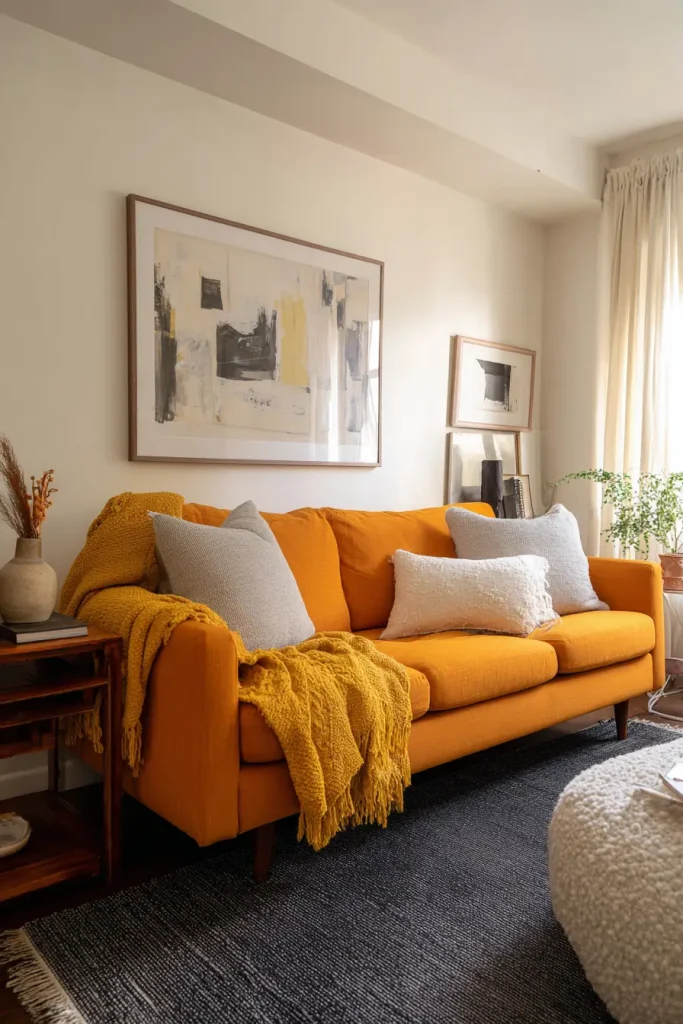
Mustard and orange are close on the color wheel. Done poorly, this looks like a fast food restaurant. Done well, it looks warm, artsy, and collected.
The secret is proportion. Mustard yellow should appear in small doses only.
Where to use mustard: One throw blanket, one ceramic vase, and one printed art piece. That is it.
Wall color: Keep the walls neutral. Cream or off-white. The mustard and orange together are already bold.
Rug: A grey or dark charcoal rug. The grey cools the room down and makes both the orange and mustard feel intentional.
Avoid this: Do not paint the walls mustard yellow. That is too much warmth and the orange couch will disappear into it.
Ideas 9 to 12: Style-Based Orange Couch Looks
These four ideas are built around specific interior design styles. Find the one that matches how you already live, and the orange couch slots right in.
Idea 9: Mid-Century Modern Orange Sofa With Walnut and a Geometric Rug
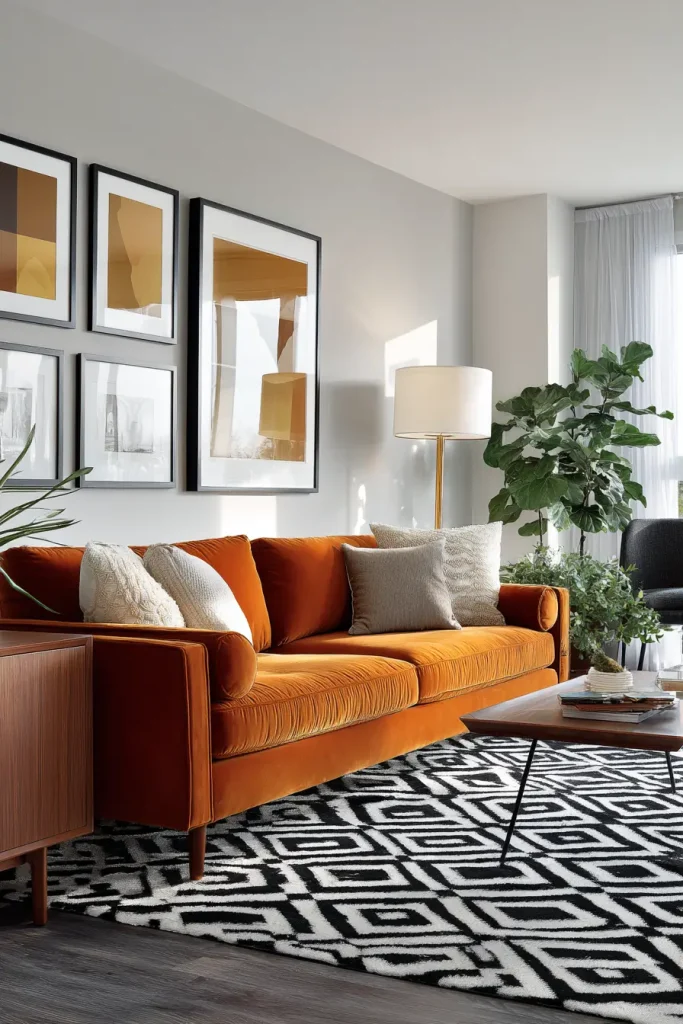
Mid-century modern was basically made for orange. The style peaked in the 1950s and 60s when bold colors and clean lines were standard. An orange couch fits this look without any effort.
Key furniture pieces: A walnut credenza, a hairpin-leg coffee table, and a floor lamp with a white drum shade.
Rug: A geometric rug in black, white, and cream. The pattern should be bold but the colors should be neutral. This balances the orange sofa.
Art: Abstract prints in warm tones. West Elm and Society6 both have affordable MCM-style art prints.
Budget pick: Article’s Sven sofa in cognac or burnt orange is a widely recommended option. Around $1,200 to $1,500 depending on size.
Splurge pick: A custom Joybird sofa in their “burnt sienna” or “cognac” velvet options. Around $2,500 and up.
Avoid this: Do not mix too many furniture styles. MCM looks best when most pieces share the same clean, low-profile silhouette.
Idea 10: Bohemian Living Room With an Orange Couch, Textiles, and Plants
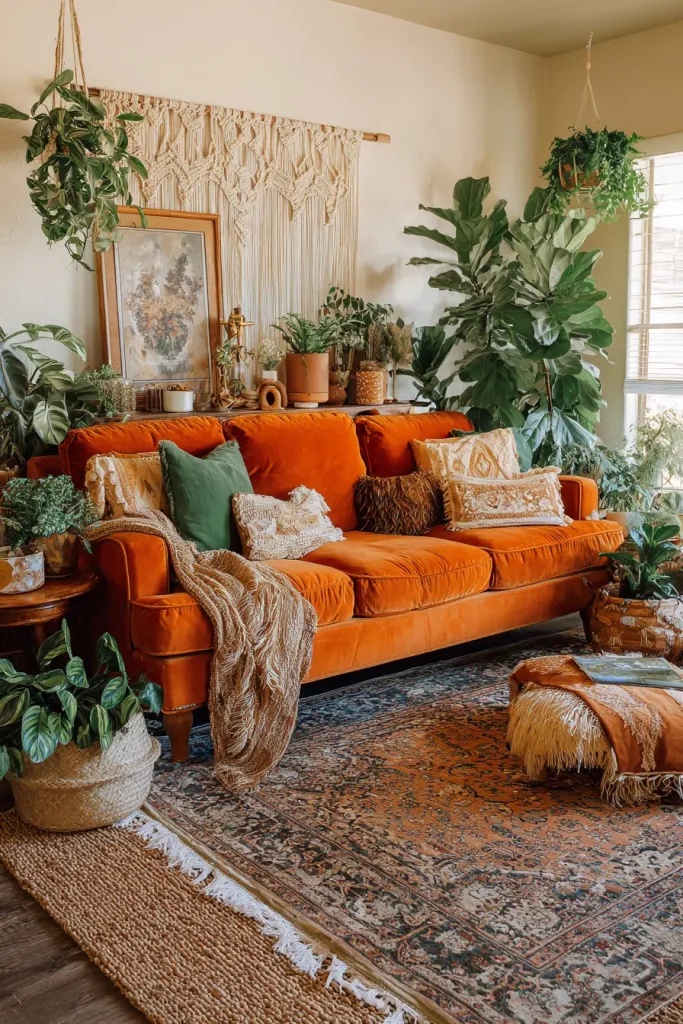
The boho style loves bold color. Designer Justina Blakeney, founder of The Jungalow, has built an entire brand around the idea that more color and pattern equals more life.
This style is the most forgiving for an orange couch because nothing has to match perfectly.
Key elements: Layered rugs, throw blankets in different textures, macrame wall art, and lots of plants.
Plants that work visually: Fiddle-leaf fig, monstera, and trailing pothos. The large green leaves create contrast against the orange fabric.
Rug layering: Place a large natural jute rug down first. Then layer a smaller vintage-style or Persian rug on top. The layers add depth.
Budget approach: Thrift stores and Facebook Marketplace are your best friends for boho style. Mismatched ceramics, woven baskets, and vintage textiles all cost very little secondhand.
Avoid this: Do not let the room become cluttered. Boho has a lot of pieces, but each one should be intentional. If something does not add to the warmth or texture, remove it.
Idea 11: Industrial Style With an Orange Velvet Sofa, Exposed Brick, and Metal Accents
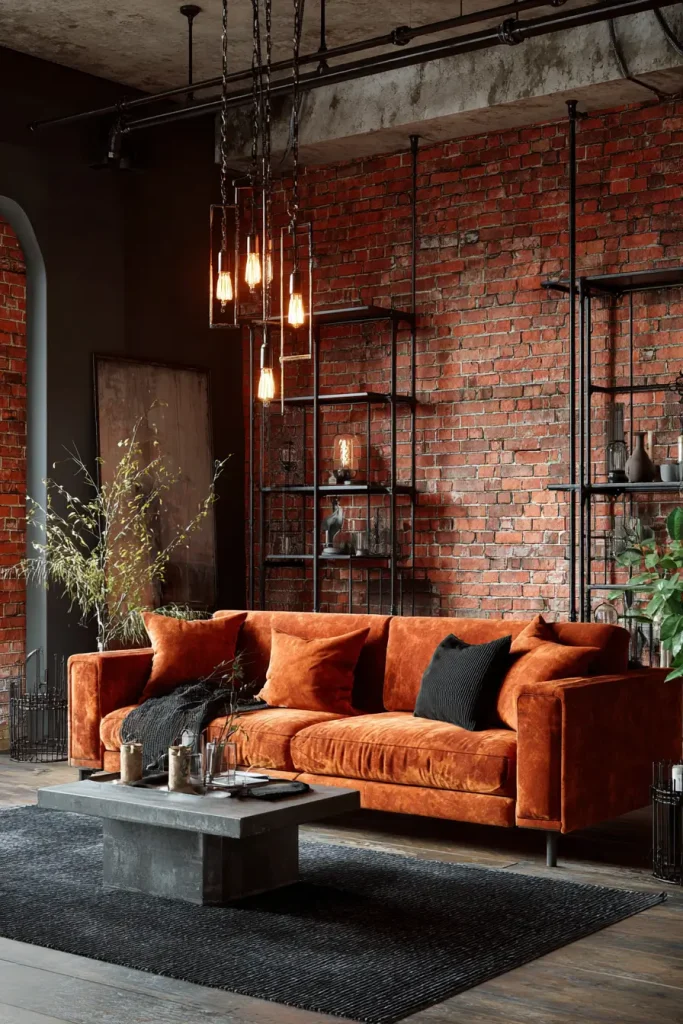
Industrial design uses raw materials like metal, concrete, and exposed brick. Orange velvet is a surprising but perfect contrast against these hard surfaces.
The softness of velvet against brick or concrete is what makes this work.
Key elements: A metal pipe bookshelf, a concrete or raw wood coffee table, Edison bulb pendants, and a vintage-style area rug in dark tones.
Metal finish: Matte black throughout. Matte black and orange is a sharp combination.
If you do not have exposed brick: Exposed brick wallpaper (removable) from RoomMates or Tempaper can create the same effect. It is not perfect, but it reads well in photos and in person.
Rug: A dark charcoal or black rug with minimal pattern. It grounds the space and lets the orange couch and brick texture do the work.
Avoid this: Do not use shiny chrome accents. Chrome feels too clean and modern for industrial style. Stay with matte black or aged bronze.
Idea 12: Scandinavian Minimalism With One Orange Statement Sofa
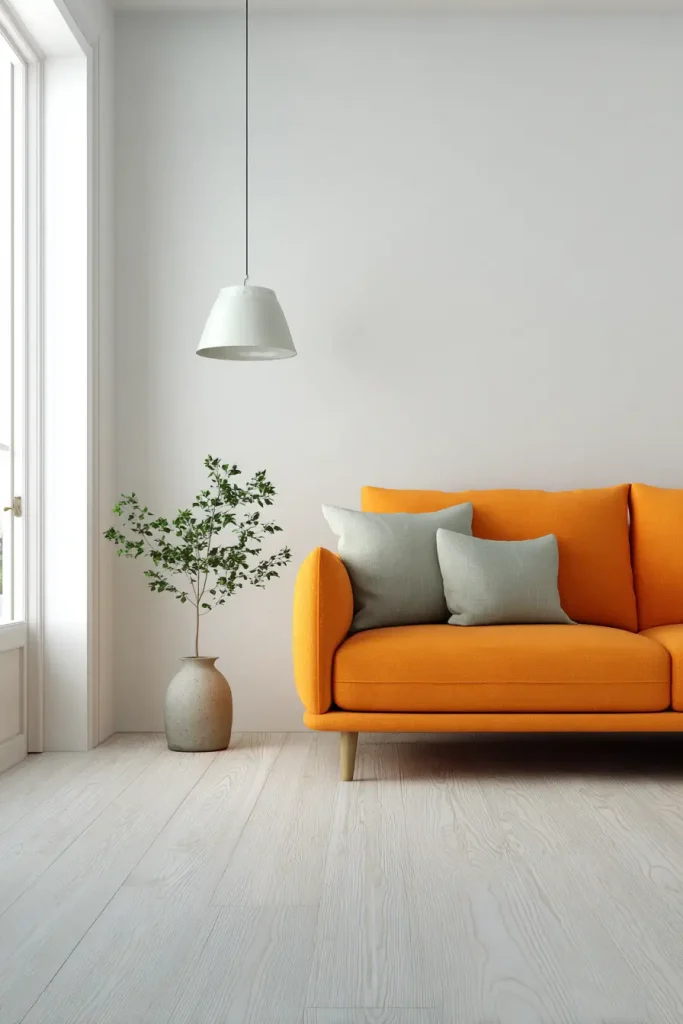
Scandi design is all about restraint. White walls, light wood, minimal decor. The orange couch becomes the single bold element in an otherwise calm room.
This only works if you commit to simplicity everywhere else.
Wall color: Pure white. Benjamin Moore “Chantilly Lace” (OC-65) is the most popular choice among designers.
Floor and furniture: Light birch or pine wood. IKEA is genuinely one of the best sources for Scandi-style furniture at a reasonable price.
Decor: Extremely minimal. One plant, one simple pendant lamp, and two throw pillows in white or light grey. That is enough.
What makes it work: The restraint everywhere else makes the orange couch feel like a curated choice, not an accident.
Avoid this: Do not add colorful art or accessories. Every extra item you add weakens the impact of the orange couch as the focal point.
Ideas 13 to 16: Small Rooms and Apartment-Friendly Ideas
According to U.S. Census Bureau data, nearly 36 percent of American households rent their homes. Most renters have smaller spaces and cannot make permanent changes. These four ideas work in small rooms, studios, and rentals.
Idea 13: Use an Orange Loveseat as a Room Divider in a Studio
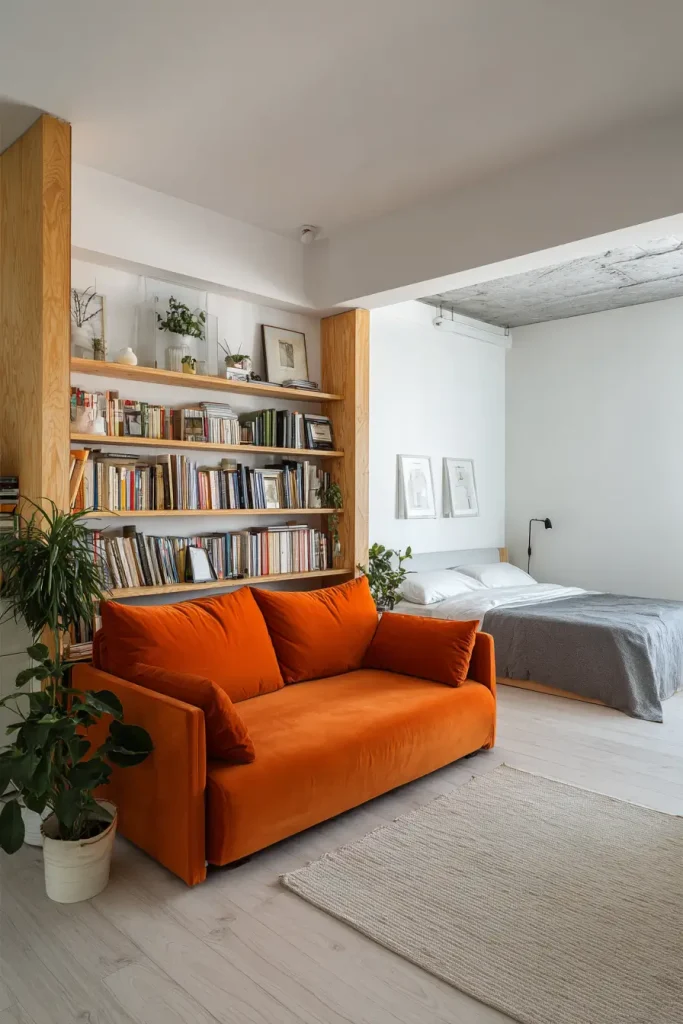
In a studio apartment, furniture placement is everything. An orange loveseat placed perpendicular to the wall, with its back facing the sleeping area, creates a visual separation between living and sleeping zones.
Size guidance: For studio apartments under 500 square feet, a loveseat between 58 and 66 inches wide works best. Anything larger overwhelms the space.
Behind the loveseat: A low bookshelf or console table placed against the back of the loveseat doubles as a surface for books, plants, or a lamp. It makes the back of the couch look finished.
Rug: Place the rug in front of the couch only. This defines the living zone clearly without covering the whole floor.
Avoid this: Do not push the loveseat flush against the wall in a studio. Give it at least 6 inches of breathing room. It reads better visually.
Idea 14: Use Dark Walls to Ground an Orange Couch in a Small Room
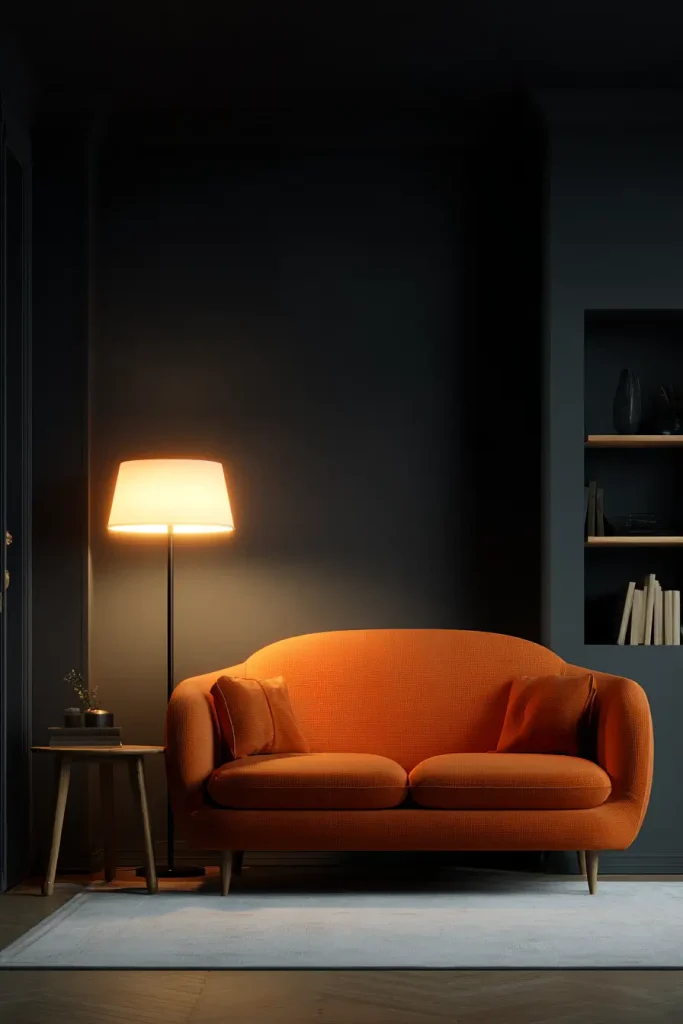
Most people think small rooms need light colors to feel bigger. But dark walls in a small room create a cocooning effect that actually makes the space feel intentional and cozy. And dark walls make orange pop beautifully.
Paint to use: Sherwin-Williams “Tricorn Black” (SW 6258) softened with warm lighting, or Benjamin Moore “Black Pepper” (2132-10) for something slightly softer.
Lighting is critical here: Use warm, low-temperature bulbs at 2700K. Add a floor lamp and a table lamp in addition to overhead lighting. Multiple light sources at different heights make a dark room feel warm, not depressing.
Rug: A cream or ivory rug reflects light upward and keeps the floor from feeling too dark.
Avoid this: Do not pair dark walls with dark wood furniture in a small room. You lose definition. Use lighter wood tones to add contrast.
Idea 15: Use an Orange Couch to Zone a Seating Area in an Open Plan Space
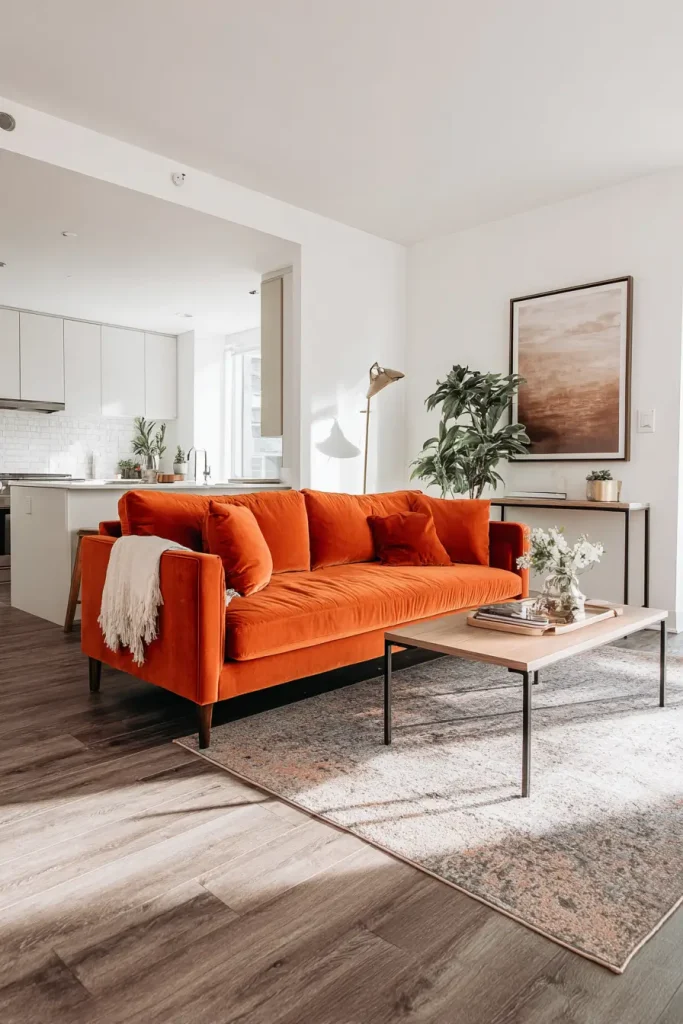
Open-plan spaces are great until you realize there is nothing to separate the living area from the dining area or kitchen. An orange couch is bright enough to act as a visual anchor.
How to zone it: Place the orange couch with its back facing the kitchen or dining area. Put a rug under and in front of it. Add a coffee table. This creates a clear “living room box” within the open space.
What this does: The orange color draws the eye immediately. Anyone walking into the space knows exactly where the seating area begins and ends.
Additional zoning tools: A floor lamp behind the couch and a large piece of art on the nearest wall both reinforce the zone boundary.
Avoid this: Do not place the orange couch in the middle of a large open room with nothing behind it. It needs an anchor. A wall, a console table, or a large area rug gives it context.
Idea 16: Rental-Friendly Decor Around an Orange Couch
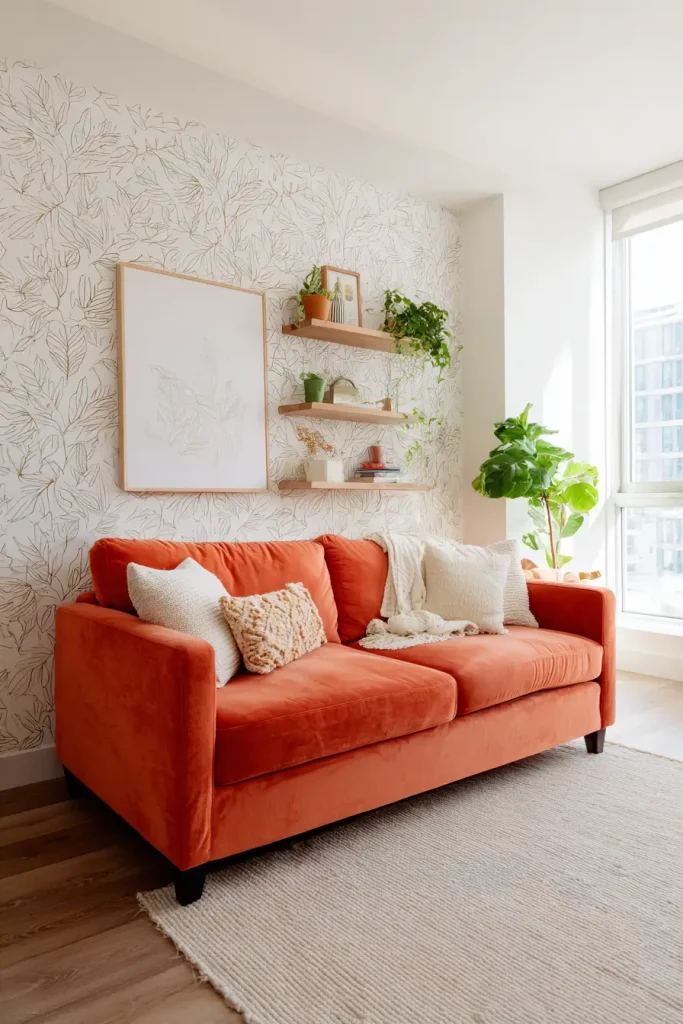
You cannot paint the walls. You cannot hang heavy shelving. You cannot do anything permanent. That does not mean you are stuck.
Here are four rental-safe changes that make a real difference.
Peel-and-stick wallpaper: Chasing Paper, Tempaper, and RoomMates all make removable wallpaper that goes up in an afternoon and comes down without damage. A botanical or geometric print on the wall behind the orange couch completely changes the room.
Large format art: Lean large canvas prints or framed art against the wall instead of hanging them. It looks intentional, not lazy.
Area rug: This is the single most effective change you can make in any rental. A large rug in the right color transforms a room with zero damage to the property.
Removable hooks and shelving: Command strips now hold up to 20 pounds. Use them for small shelves, wall plants, and lightweight mirrors above or beside the couch.
Avoid this: Do not use temporary wallpaper over freshly painted or textured walls without testing a small corner first. Some surfaces do not release it cleanly.
5 Mistakes That Make Orange Couches Look Bad (And How to Fix Each One)
Even good instincts go wrong with a bold piece. Here are the five most common problems and exactly what to do about them.
Mistake 1: Too many warm tones throughout the room
When the walls are warm beige, the rug is rust, the curtains are tan, and the couch is orange, the room turns into one giant warm blob. Nothing stands out. Everything fights.
Fix it: Add at least one cool or neutral element. A grey rug, a white curtain, or a deep blue pillow breaks the warmth and gives the eye somewhere to rest.
Mistake 2: The rug is too busy or too matchy
A rug with too much going on visually competes with the orange couch. And a rug that matches the couch color exactly makes the room look like you tried too hard.
Fix it: Use a solid rug in a neutral tone, or use a patterned rug where orange is a small percentage of the overall design, not the dominant color.
Mistake 3: Ignoring the undertone of your specific orange
Burnt orange, true orange, rust, and coral are all “orange” but they need completely different approaches. Burnt orange has brown and red in it. True orange is pure and bright. Coral leans pink.
Fix it: Hold a paint chip or fabric swatch next to your couch before buying anything. If your couch leans rust, warm neutrals work. If it leans coral, cool whites work better.
Mistake 4: Art on the wall that competes with the couch
Art with lots of warm red, yellow, or orange tones placed directly above an orange couch creates a wall of warm color. The couch and the art cancel each other out.
Fix it: Use art with cool tones, neutrals, or black and white above the couch. Save warm-toned art for a different wall in the room.
Mistake 5: Wrong light bulbs
Orange looks completely different under warm versus cool lighting. Cool white bulbs at 4000K or higher make orange look muddy and strange. Warm bulbs at 2700K make it glow.
Fix it: Replace every bulb in the room with warm white 2700K bulbs. This one change costs about ten dollars and fixes the problem immediately.
Your Quick Cheat Sheet: What Goes With an Orange Couch
Save this section. Use it when you are shopping.
5 Wall Colors That Work
- Benjamin Moore “White Dove” OC-17 (warm white)
- Sherwin-Williams “Accessible Beige” SW 7036 (greige)
- Benjamin Moore “Hale Navy” HC-154 (navy blue)
- Sherwin-Williams “Hunt Club” SW 6468 (forest green)
- Benjamin Moore “Chantilly Lace” OC-65 (pure white for minimalist looks)
5 Rug Colors That Work
- Ivory or cream (solid, low pile)
- Natural jute or sisal tone
- Deep charcoal or dark grey
- Navy blue (solid or with minimal pattern)
- Warm sand or tan flatweave
Throw Pillow Colors That Always Work
- Teal or deep turquoise
- Cream or warm white
- Forest green
- Navy blue
- Deep rust (in small amounts only)
Wood Tones Ranked Best to Worst for Orange
- Medium walnut (warm, rich, classic match)
- Light blonde or ash (airy and fresh)
- Natural pine or birch (works in Scandi style)
- Dark espresso (use carefully in large rooms only)
- Red mahogany (avoid, clashes with orange undertones)
Metal Finishes That Work
- Brass or warm gold (best overall match)
- Matte black (sharp, modern contrast)
- Aged bronze (works in boho and MCM styles)
- Chrome or polished nickel (avoid, feels cold)
Plants That Add to the Look
- Monstera (large green leaves, strong contrast)
- Fiddle-leaf fig (tall, sculptural, fills empty corners)
- Trailing pothos (softens hard edges near the couch)
- Snake plant (minimal and modern)
Keep this section bookmarked for when you go shopping.
You Are Closer Than You Think
An orange couch is not a design problem. It is a starting point. Most rooms that look bad around an orange couch are missing one simple thing: a foundation that lets the couch breathe.
The three things that fix almost every orange couch situation are a calm wall color, a neutral rug, and throw pillows that use contrast instead of matching.
Start small. Swap one throw pillow. Try a new rug. Test a paint sample on the wall before committing.
These 16 orange couch living room ideas are not rules. They are proven starting points. Use the one that fits your space, your budget, and how you actually live.
Your living room can look exactly the way you want it. The orange couch is already the best part.

- 17 Classy Living Room Ideas for a Cozy Elegant Look - April 23, 2026
- 16 Dark Moody Living Room Ideas That Feel Rich and Warm - April 22, 2026
- 14 Elegant Bedroom Trends for 2026 You’ll Love - April 22, 2026