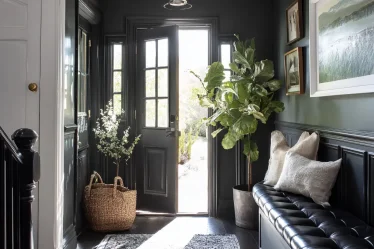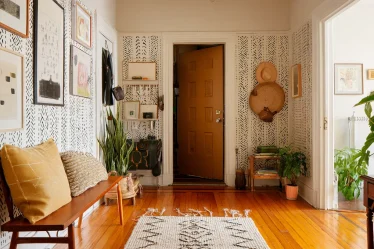
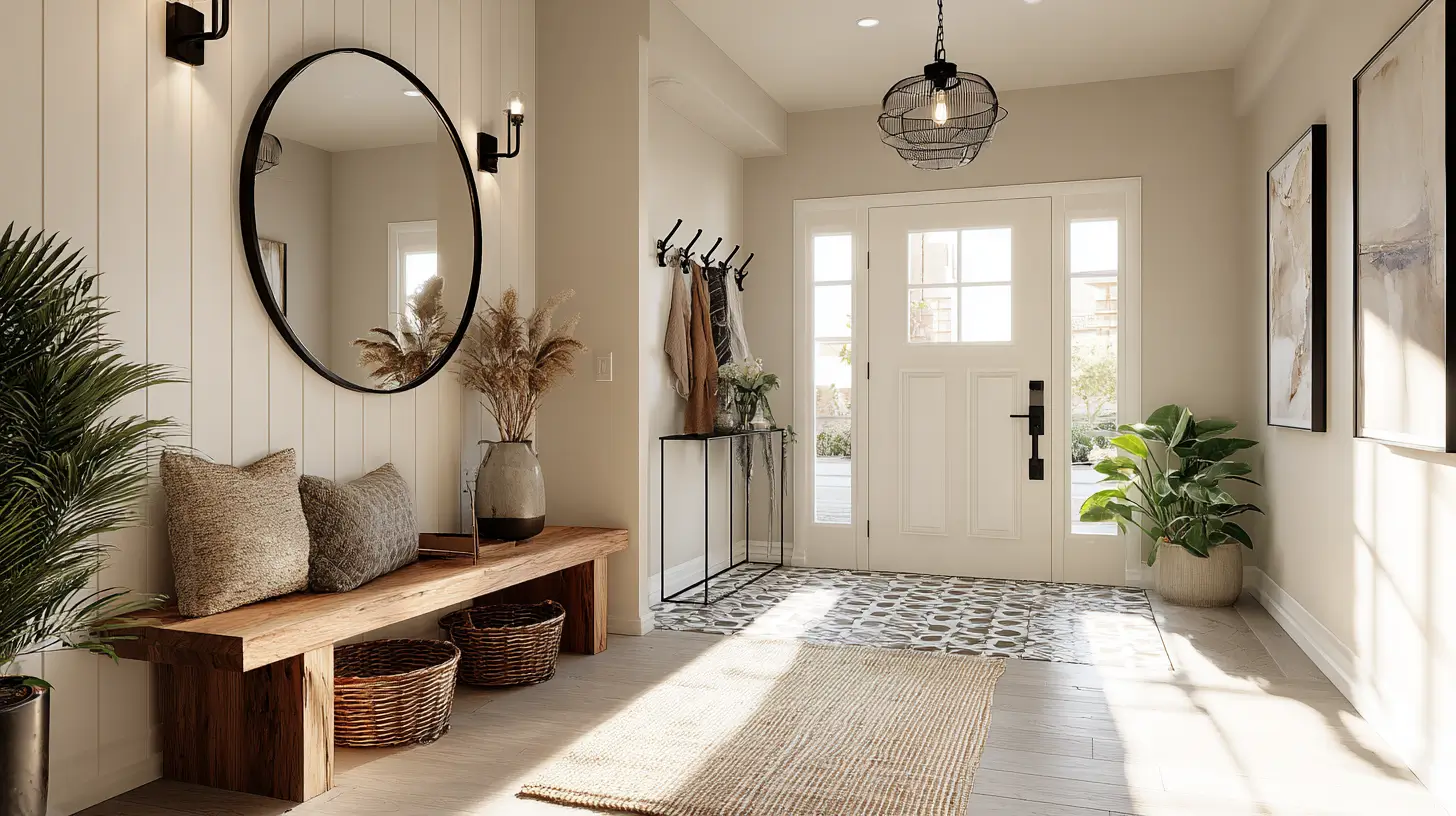
our entryway is the first thing every guest sees. Before you say hello. Before they see your living room. Before anything else.
And most entryways? They look forgotten.
A bare wall. A pile of shoes by the door. Maybe a hook that’s holding three too many coats. You walk past it every day and stop noticing it. But your guests notice it immediately.
Here’s the good news. You do not need a big budget or a designer to fix it. You just need to know where to start.
These 15 entryway ideas work in small apartments, big houses, and even rentals where you cannot put a nail in the wall. Each one is specific. Each one is actionable. Pick one and do it this weekend.
1. Hang a Statement Mirror to Make the Space Feel Bigger
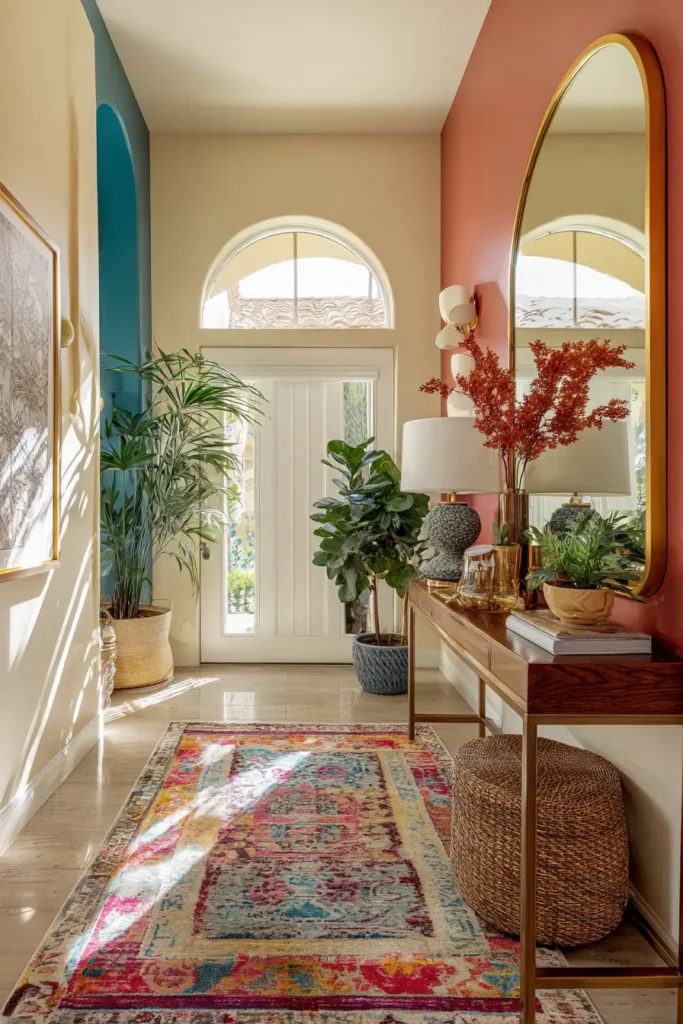
Most entryways feel cramped and dark. A mirror fixes both problems at once.
It reflects light back into the space. It makes the room look deeper than it actually is. And it gives guests something beautiful to look at the moment they walk in.
The sizing rule is simple. Your mirror should be at least half the width of any furniture sitting below it. So if your console table is 40 inches wide, your mirror should be at least 20 inches wide. Bigger usually looks better here.
Height matters too. Hang the center of the mirror at 57 to 60 inches from the floor. That is eye level for most adults. It feels natural. It feels intentional.
Shapes that work well in entryways:
- Arched mirrors for a soft, modern look
- Sunburst mirrors for something bold and sculptural
- Simple rectangular mirrors for a clean, classic feel
For budget options, IKEA’s NISSEDAL mirror and the Kate and Laurel collection on Amazon both look great and cost under $100. If you want something more special, McGee and Co. and Anthropologie carry mirrors that become a real focal point.
Pro Tip: If your entryway gets any natural light, position the mirror to face a window or light source. The reflection doubles the brightness instantly.
A good mirror costs less than most people think. And it makes your entryway feel twice as large as it actually is. Once you hang it, everything else gets easier.
2. Add a Console Table to Give the Space a Purpose
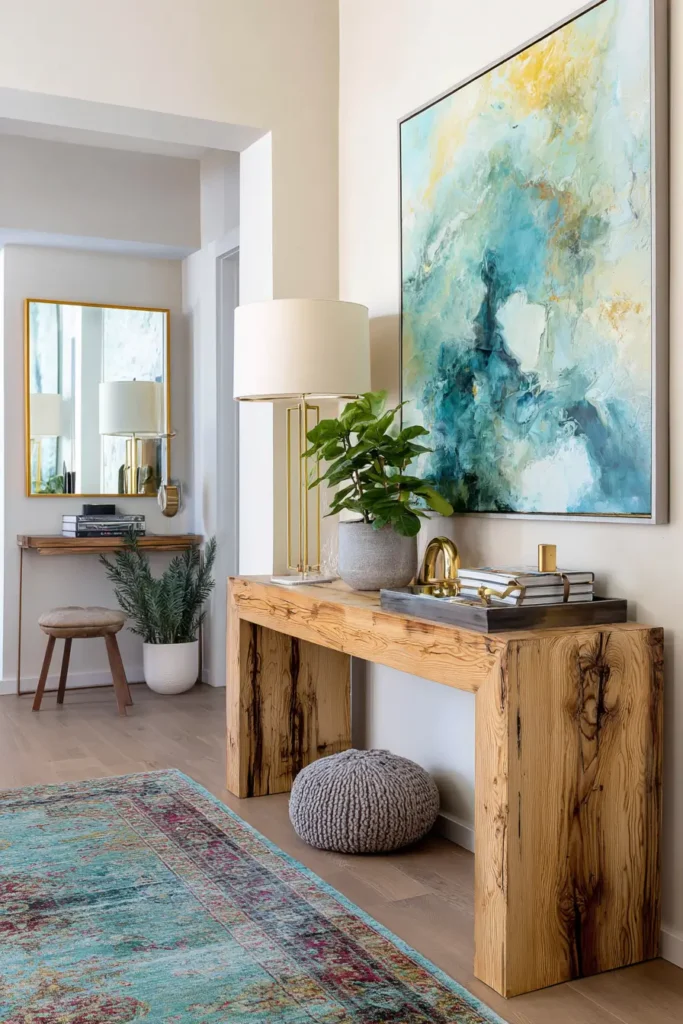
Without furniture, an entryway is just a hallway. A console table changes that.
It gives the space structure. It creates a place for things to land. And when styled well, it becomes the first thing people compliment when they walk in.
Getting the size right matters. Your table should be 1 to 2 inches narrower than the wall behind it. This keeps it from looking too tight or too overwhelming. For depth, anything between 10 and 15 inches works well without blocking foot traffic.
Use the Rule of Three when you style the top. Put one tall item, one medium item, and one low item on the surface. A lamp. A plant. A tray or small stack of books. This combination creates visual balance without looking cluttered or staged.
Best materials trending right now:
- Natural wood for warmth and texture
- Mixed metal frames for a modern look
- Marble top tables for something a little more elevated
What to keep off the table: Mail. Stacks of paper. A bowl overflowing with keys and receipts. These things happen naturally, but they destroy the look. A small tray with a lid solves this. Everything goes in the tray. The tray looks good.
For sourcing, Wayfair has solid options under $150. West Elm works for mid-range. CB2 is worth it if you want something that lasts 10 years.
Think of the table as the foundation of your whole entryway. Everything else builds around it.
3. Put Down a Rug to Ground the Whole Space
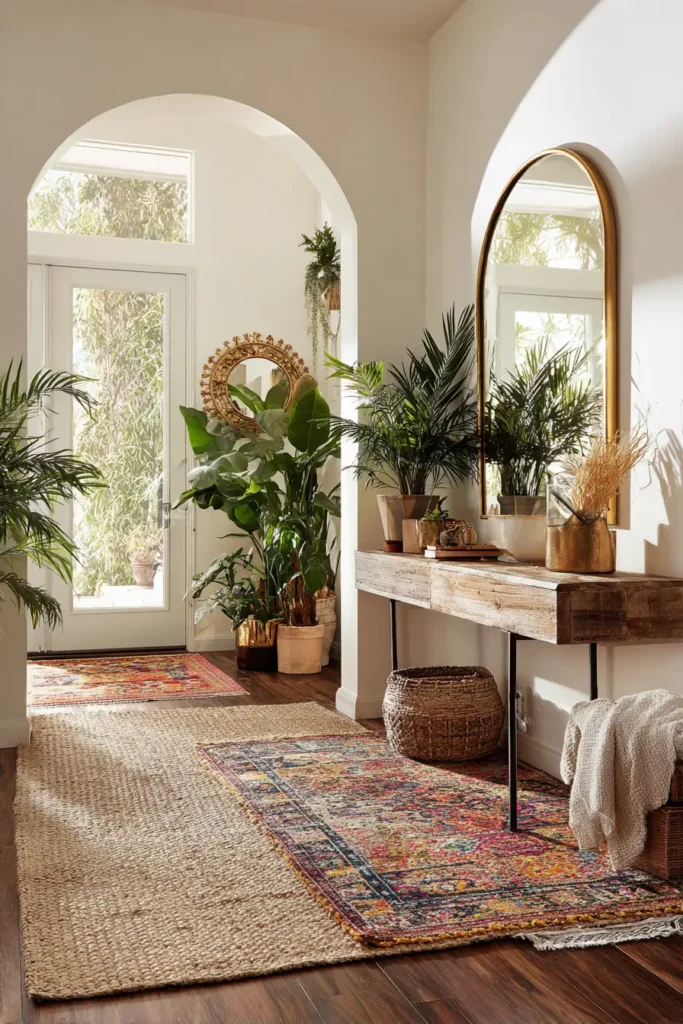
A bare floor in an entryway feels cold. It feels unfinished. A rug solves this immediately.
It defines the zone. It adds color and warmth. And it protects your floor from the constant foot traffic that entryways take every single day.
Choosing the right size: Your rug should extend past the width of your door swing. This way it looks intentional rather than dropped randomly in a corner. In a narrow entryway, even a 2 by 3 foot runner makes a real difference.
Best materials for high-traffic entries:
- Flatweave rugs for easy cleaning and durability
- Jute rugs for a natural, textured look
- Indoor and outdoor synthetics for families with kids or pets
The layering trick: Place a larger neutral rug down first, then add a smaller patterned rug on top. This is a move professional designers use constantly. It looks expensive. It is not. A $30 jute rug plus a $25 patterned runner creates something that looks like it cost $200.
Color strategy: If your walls are neutral, go bold with the rug. If your walls have color or pattern, keep the rug simple. They should work together, not compete.
Ruggable makes washable rugs that are perfect for entryways. They are machine washable, which matters when shoes track in mud and rain. Loloi and Safavieh both offer great mid-range options.
Budget hack: Outdoor rugs work indoors. They are tough, easy to clean, and often cost half the price of indoor rugs.
The rug is the fastest way to make an entryway feel designed. It takes 10 minutes to put down and makes an immediate difference.
4. Upgrade Your Light Fixture to Change the Entire Feel
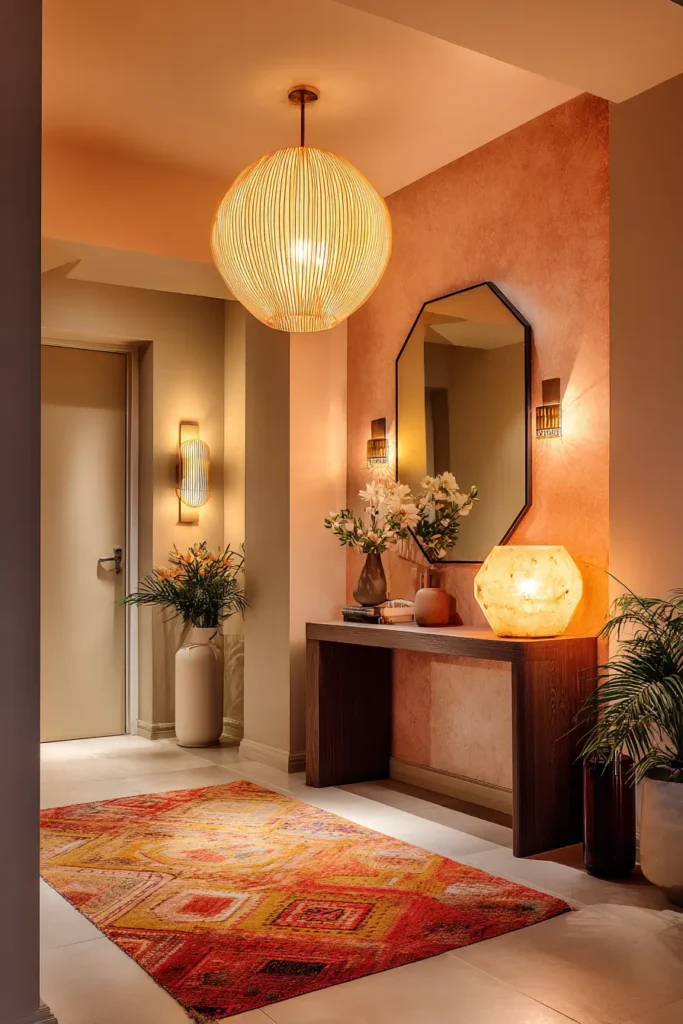
The light fixture that came with your home was not chosen for style. It was chosen to be cheap and inoffensive. And it shows.
A builder-grade flush mount ceiling light makes even a well-decorated entryway feel generic. Swapping it out is one of the highest-impact changes you can make for the money.
Three types of entryway lighting:
- Overhead fixtures: Pendant lights or semi-flush mounts replace that flat ceiling fixture and instantly add character
- Wall sconces: These flank a mirror or door and add layered, warm light
- Accent lighting: A small lamp on your console table adds a soft glow that overhead lights cannot replicate
Bulb temperature matters more than most people realize. Use warm white bulbs between 2700K and 3000K. These make a space feel cozy and welcoming. Cool white bulbs above 4000K make a space feel like a hospital hallway.
For renters who cannot rewire anything:
- Plug-in wall sconces look identical to hardwired ones and cost under $60
- Battery-powered picture lights work above mirrors or art
- A table lamp on a console table requires zero installation
The Lutron Caseta smart dimmer is worth mentioning here. It works without new wiring in most homes and lets you set a soft welcome glow on a schedule. Rejuvenation and Schoolhouse make beautiful fixtures at different price points. Wayfair covers every budget.
Pro Tip: A dimmer switch costs about $20 and takes 15 minutes to install. It changes how every fixture in the room feels.
Good lighting does not just illuminate a space. It changes the emotion of it.
5. Install Hooks So Your Entryway Actually Works Every Day
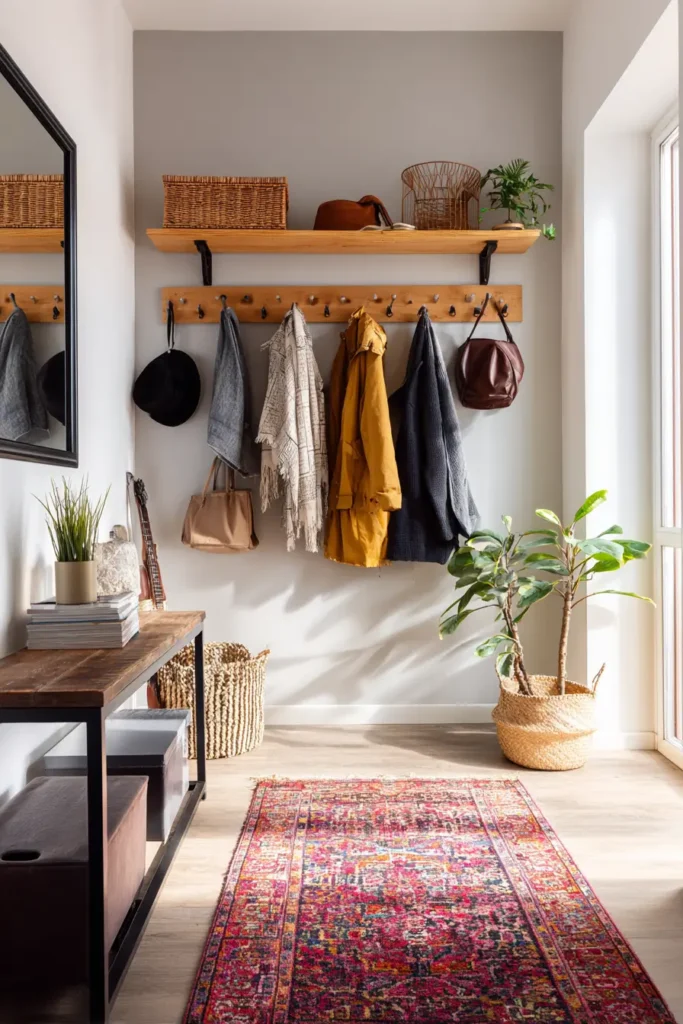
A beautiful entryway that has nowhere to put coats and bags fails immediately in real life.
You can have the perfect mirror and the perfect console table, but if there are no hooks, bags end up on the floor, coats end up on chairs, and the whole thing falls apart by Tuesday.
Three hook systems to consider:
A Shaker peg rail is a long strip of wood with evenly spaced pegs. It looks clean, holds a lot, and works in almost every style of home. You can buy one or build one for under $40.
Individual hooks mounted in a row give you more flexibility on spacing and hardware finish. Great if you want each hook to be a small design detail.
A full wall organizer panel like The Container Store’s elfa system is the premium option. It holds everything and can be configured however you need it.
Spacing rule: Leave 12 to 16 inches between hooks per person in your household. So a family of four needs at least 48 inches of hook space. Plan for this before you buy.
For renters: Command strips rated for 7.5 to 16 pounds hold individual hooks without drilling. They work. They are not perfect forever, but for a rental they are genuinely useful.
Add a small shelf above the hooks. This creates space for hats, a small basket, or a plant. IKEA’s HEMNES line has shelf-and-hook combos that work well and look intentional.
Hooks are the most practical upgrade on this list. And practical upgrades are the ones you appreciate every single day.
6. Paint One Wall a Bold Color to Make People Stop and Notice
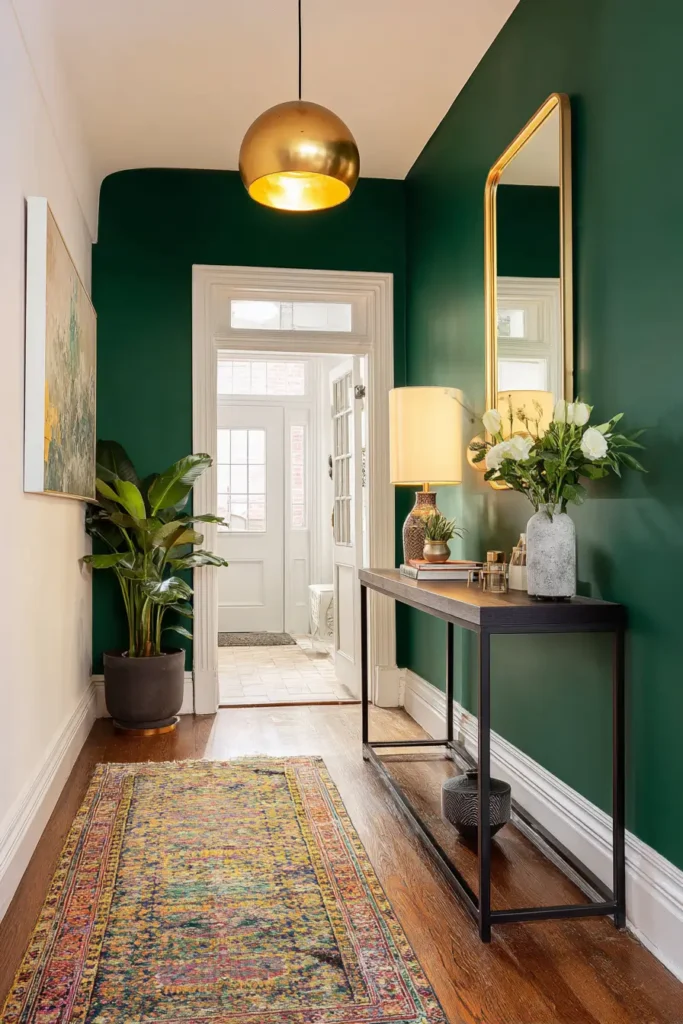
The entryway is the one room in your home where you should go bolder than you think.
It is small. The commitment is low. You are not going to live in it the way you live in a bedroom or kitchen. And because guests see it immediately, a bold color here makes a bigger impression than anywhere else.
Accent wall vs. full room: In a small entryway, painting all four walls the same bold color can feel too heavy. Start with one wall, usually the one directly facing the front door. Paint it a deep, rich color. Leave the others white or a soft neutral.
Colors trending in 2026 that work well in entryways:
- Deep forest green: grounded, sophisticated, works with wood and brass
- Warm terracotta: inviting and earthy, pairs well with white trim
- Navy blue: timeless and strong, especially good in traditional homes
- Mushroom and warm greige: subtle but elevated, flatters natural light
For paint brands, Benjamin Moore, Clare Paint, and Farrow and Ball are the most referenced by designers. Clare in particular is popular with DIYers because of its one coat coverage.
For renters: Peel-and-stick wallpaper has improved enormously in the past two years. Chasing Paper and Spoonflower both offer patterns that look like the real thing. They come off cleanly and do not damage walls.
Color psychology in plain terms: Green signals calm. Blue feels stable and welcoming. Warm neutrals feel safe and comfortable. Dark colors feel intimate and cozy rather than small, when done right.
Pick a color you would want to see every time you come home. That is a good test.
7. Add a Plant to Bring the Space to Life Instantly
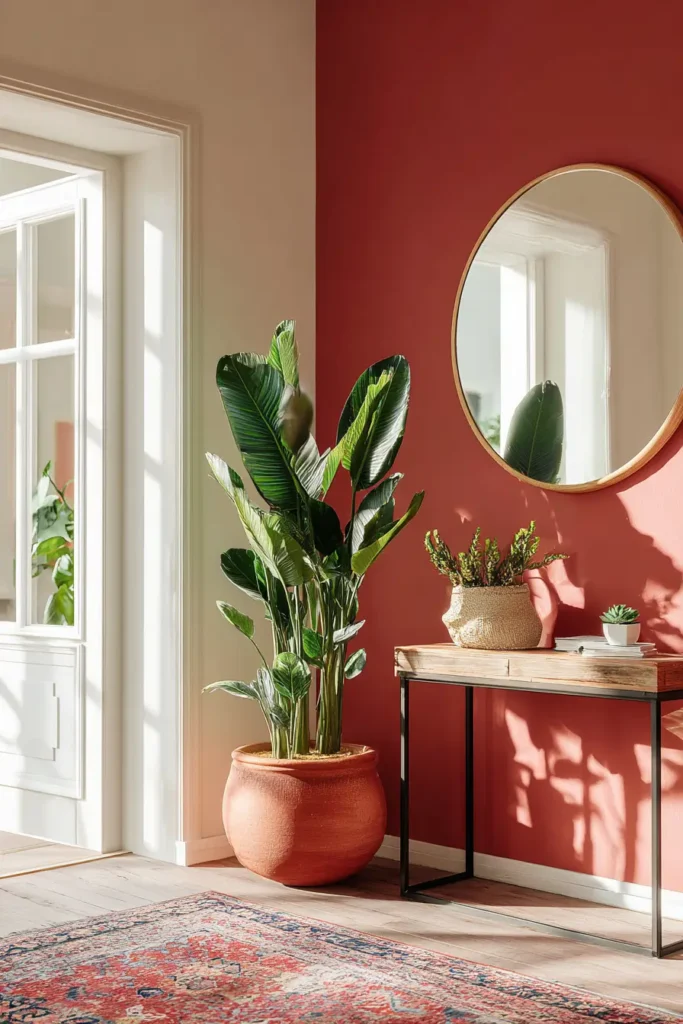
No decorating trick makes a space feel more alive than a real plant.
It is not about being a plant person. It is about the fact that organic shapes and living things make rooms feel warm in a way that no candle or throw pillow can fully replicate.
Best plants for entryways that do not get much natural light:
- Pothos: grows in almost any condition, trails beautifully
- Snake plant: thrives on neglect, looks architectural and modern
- ZZ plant: extremely low maintenance, glossy leaves look great
- Peace lily: one of the few flowering plants that tolerates low light
The light level test: Hold your hand up in front of a white piece of paper in your entryway. If you see a faint shadow, you have low light. A clear shadow means medium light. A sharp dark shadow means bright light. Match your plant to that level.
Pot styling matters as much as the plant. Use a pot that contrasts with your wall color. A terracotta pot against a white wall. A white ceramic pot against a dark green wall. The contrast makes both the plant and the wall look better.
On faux plants: They are acceptable in 2026, especially in very dark entryways where nothing survives. IKEA and Amazon both carry faux plants that look convincing. Avoid anything shiny or plastic looking.
The Sill and Bloomscape are the two best online plant retailers right now. Both include care guides and ship with healthy plants.
One plant in a good pot changes the whole feeling of a room. It takes five minutes to set up.
8. Build a Gallery Wall That Shows Who You Are
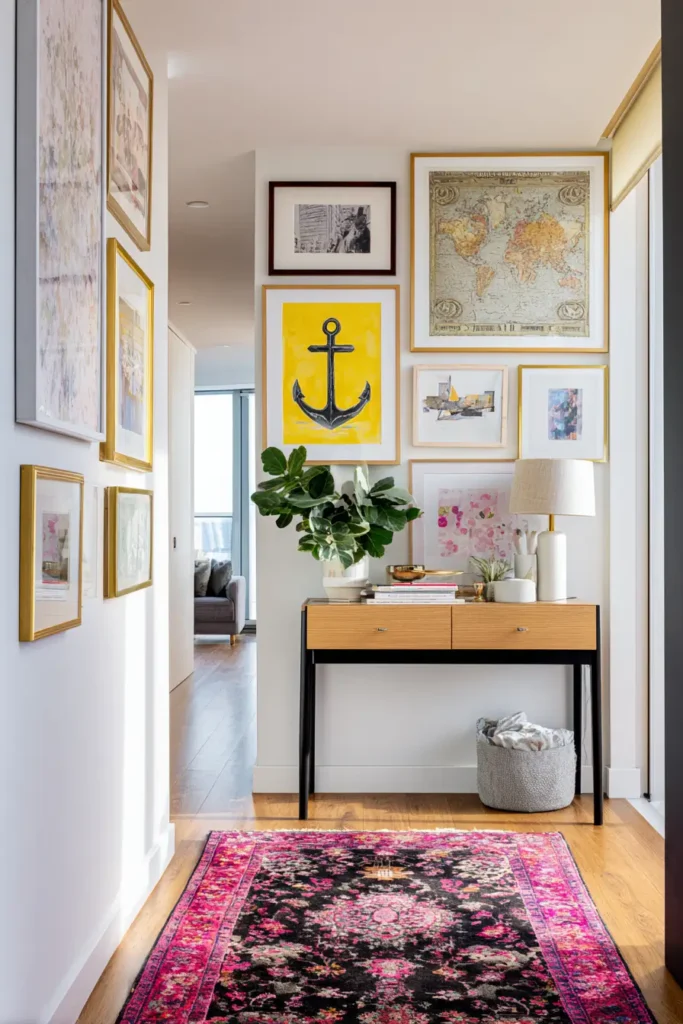
The moment a guest sees photos, art, and things you have chosen on your wall, they know something about you. That is what makes a gallery wall in an entryway so effective.
It is not just decoration. It is a conversation starter before the conversation even begins.
How to plan it without wasting 30 nail holes: Cut pieces of paper to the exact size of each frame. Tape them to the wall using painter’s tape. Move them around until the arrangement looks right. Then nail through the paper. Peel it off. Done.
The one rule that keeps it from looking chaotic: Pick one unifying element across all frames. It can be the frame color, the subject matter, the art style, or just black and white versus color. Everything inside the frames can be different. But one shared element ties the whole thing together.
Frame size mix that works: Start with one large anchor piece, at least 16 by 20 inches. Surround it with medium and small frames. The anchor piece tells the eye where to look first. The smaller pieces add variety without competing.
Budget gallery wall formula:
- Buy mismatched frames from thrift stores
- Paint them all the same color, matte black or white
- Print art from Desenio or Society6 for a few dollars per print
- Add one personal photo or piece
Framebridge and Artifact Uprising are worth it for pieces you really care about. But you do not need to spend much to make this look great.
9. Add a Bench for the Item Most Entryways Are Missing
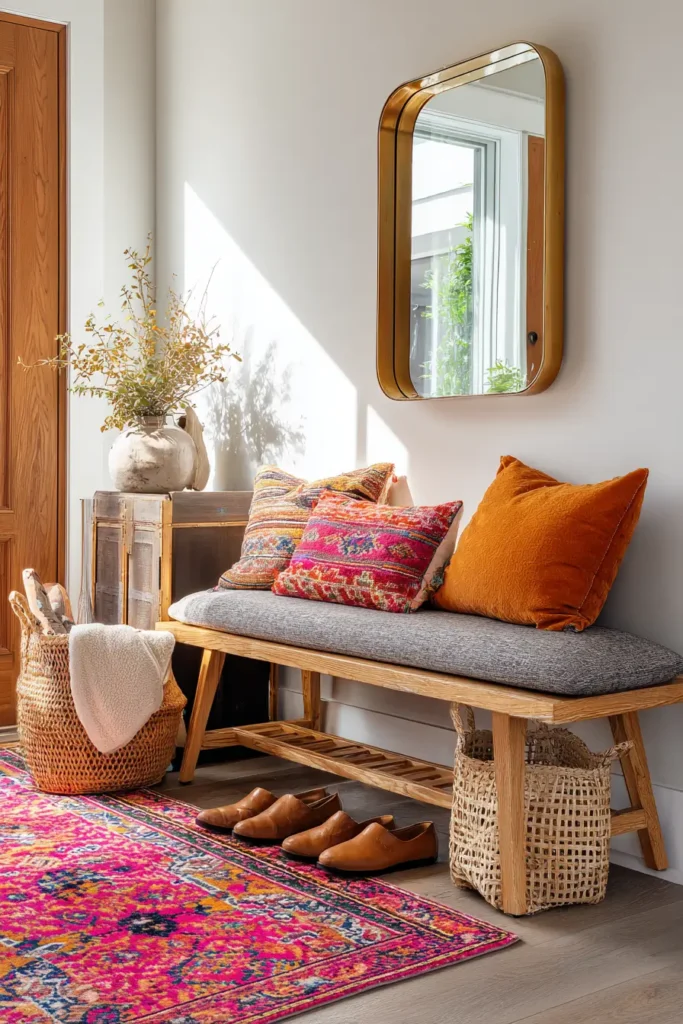
Here is the truth. A bench is the most useful piece of furniture an entryway can have, and most entryways do not have one.
Think about what you do every time you walk through the door. You sit down, take off your shoes, put on different shoes, or drop something while you dig for your keys. A bench makes all of that easier. Without one, you are doing it standing up or crouching awkwardly.
Three types to consider:
An upholstered bench adds softness and color. Good for entryways that lean toward comfort and warmth.
A wood bench is clean and durable. Works in almost every style. Easier to wipe down.
A storage bench is the best option for small entryways. It hides shoes, seasonal items, or anything you want out of sight. IKEA HEMNES and Pottery Barn both make storage benches that hold up well.
Sizing rule: Your bench should not be wider than two-thirds of the wall it sits against. This keeps the space from feeling blocked.
How to style a bench: One folded throw. One or two pillows. A basket tucked underneath. That combination looks done without looking over-styled.
The sit test: If you would not actually sit on the bench to put on shoes, it is too low, too hard, or in the wrong position. Fix it before you move on.
Amazon has several well-reviewed entryway benches under $150. Check ratings carefully and look for ones with solid wood or metal frames.
10. Use Baskets to Hide the Clutter That Ruins Everything
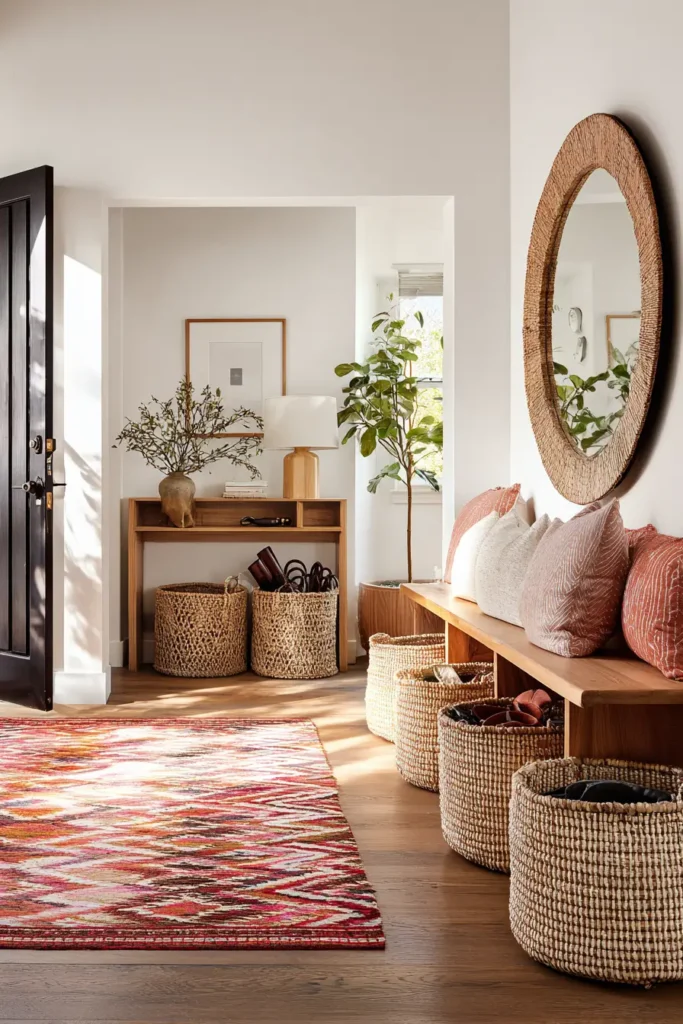
You can have the most beautiful entryway in the world. If there is visible clutter, none of it matters.
Clutter is the single fastest way to erase every good design decision you have made. And entryways collect clutter naturally. Shoes. Bags. Umbrellas. Dog leashes. Sports equipment. It all lands at the door because that is where it is used.
The solution is not to fight the clutter. It is to contain it visually.
The one basket per function rule: Give each category of clutter its own basket. One basket for shoes. One for bags or backpacks. One for umbrellas. One for pet items. No basket should hold more than one type of thing, because mixed baskets turn into junk drawers you can see.
Materials trending in 2026:
- Seagrass for a natural, woven texture
- Rattan for warmth and light weight
- Canvas with leather handles for a more structured look
When to label: Label baskets in high-traffic households with kids. It makes putting things away effortless because nobody has to think about where something goes.
When not to label: In adult-only spaces, unlabeled baskets look cleaner and more refined.
Target’s Threshold line has affordable, good-looking baskets. The Container Store is worth it for anything you want to last. Serena and Lily for something more elevated.
The goal is organized storage that looks intentional. Not hidden storage that looks frantic.
11. Add Architectural Detail to Make Your Walls Look Custom
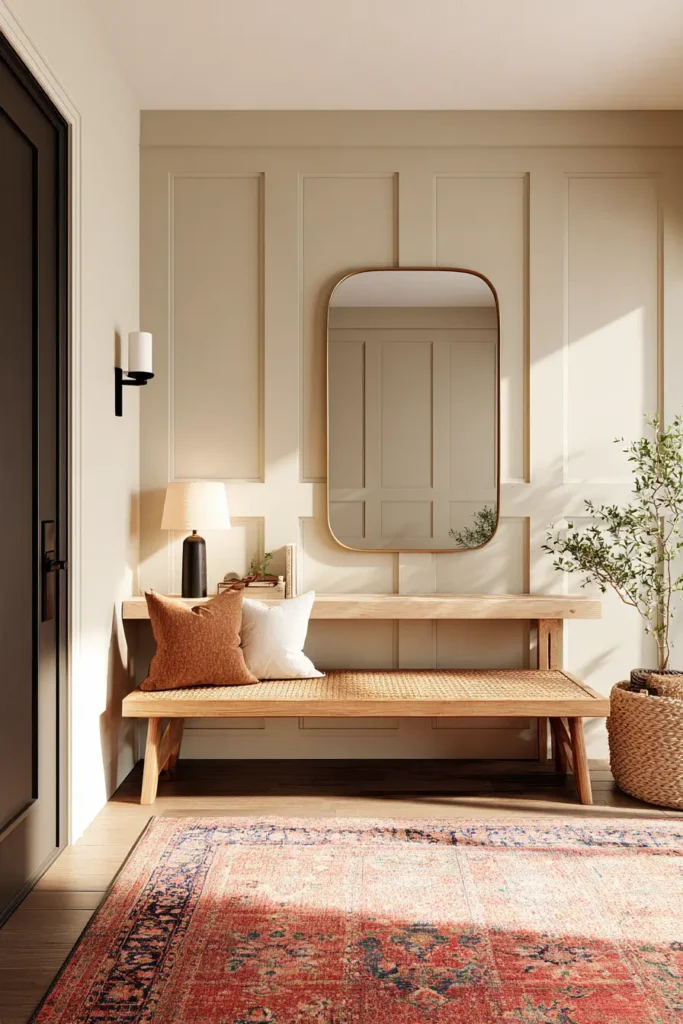
Bare flat walls look like every other house. Architectural detail looks like someone actually cared about the space.
Board and batten. Wainscoting. Picture frame molding. These are the three most popular wall treatments for entryways right now. They all create visual texture. They all make a small space feel more thoughtful and finished.
Board and batten is the most popular for good reason. You apply vertical boards at even intervals across the wall, add a horizontal cap rail across the top, and paint everything the same color. The result looks like a custom built home. The materials cost between $50 and $150 for a small entryway wall. It takes a weekend.
Wainscoting covers the lower half of the wall in panels or boards, usually topped by a chair rail. It is a classic look that works in traditional and transitional homes.
Picture frame molding creates rectangular frames directly on the wall using thin trim pieces. It looks very designer and is surprisingly easy to DIY.
For renters: Peel-and-stick shiplap panels exist now and they actually look decent. Not perfect, but good enough for a rental.
Home Depot and Lowe’s sell board and batten trim kits designed for beginners. YouTube channels like Hometalk and Shanty 2 Chic have free tutorials that walk you through every step with real beginner-level instructions.
This upgrade looks expensive. It is not.
12. Add Scent Because Your Eyes Are Not the Only Thing That Notices
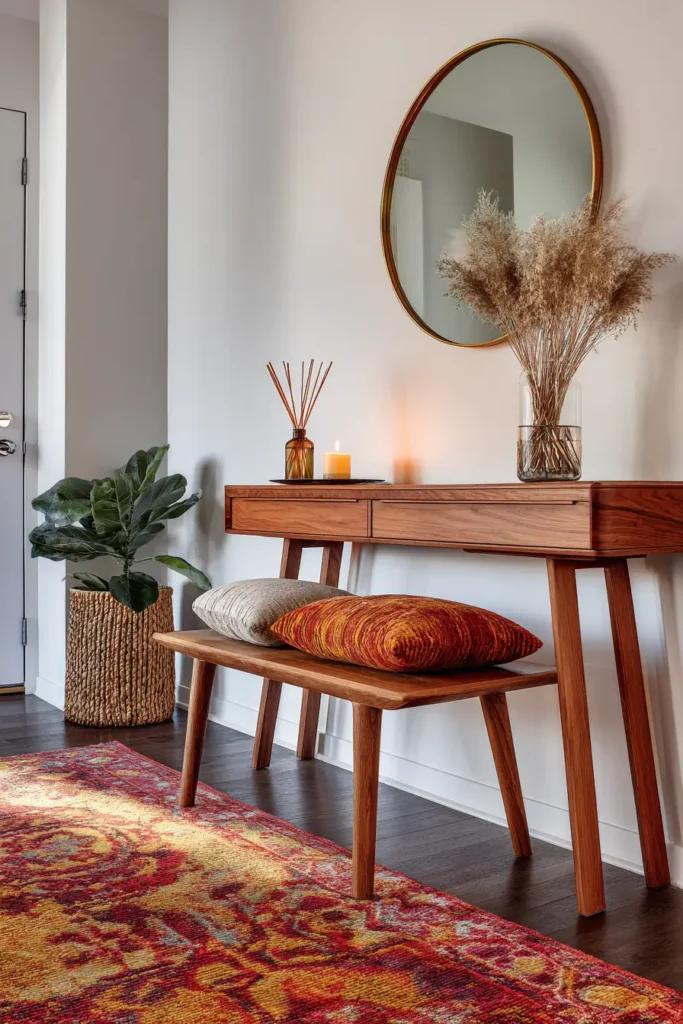
Most people decorate for what guests see. Almost nobody thinks about what guests smell.
And yet scent creates an emotional reaction faster than any visual element. You have walked into a home and instantly felt comfortable without knowing why. Scent is often why.
Scents that make an entryway feel welcoming:
- Linen or clean cotton: fresh and neutral
- Cedar or sandalwood: warm and grounded
- Light citrus: energizing without being overwhelming
- Eucalyptus or light herb: clean and calming
Candles vs. reed diffusers vs. electric diffusers:
Candles look beautiful but require supervision and regular replacement. Do not leave one burning unattended near a door that opens and closes.
Reed diffusers are low maintenance and consistent. They release scent slowly over weeks. Muji and Vitruvi make clean, minimal options that look good on a console table.
Electric diffusers let you control intensity and schedule. Useful if you want the scent on when guests arrive but off when nobody is home.
What to avoid: Heavy floral scents. Strong food smells like vanilla or cinnamon year-round. Anything synthetic or perfume-forward. These can feel overwhelming in a small entry space.
Diptyque and Nest are the premium options. Both hold their scent well and the packaging looks intentional on a shelf. Homesick is a mid-range brand that does a good job.
Seasonal rotation idea: Change your scent four times a year. Fresh citrus in spring. Light floral in summer. Cedar or apple in fall. Pine or warm wood in winter. It keeps the entryway feeling current without changing anything visible.
13. Upgrade Your Door Hardware for a Detail Guests Always Touch
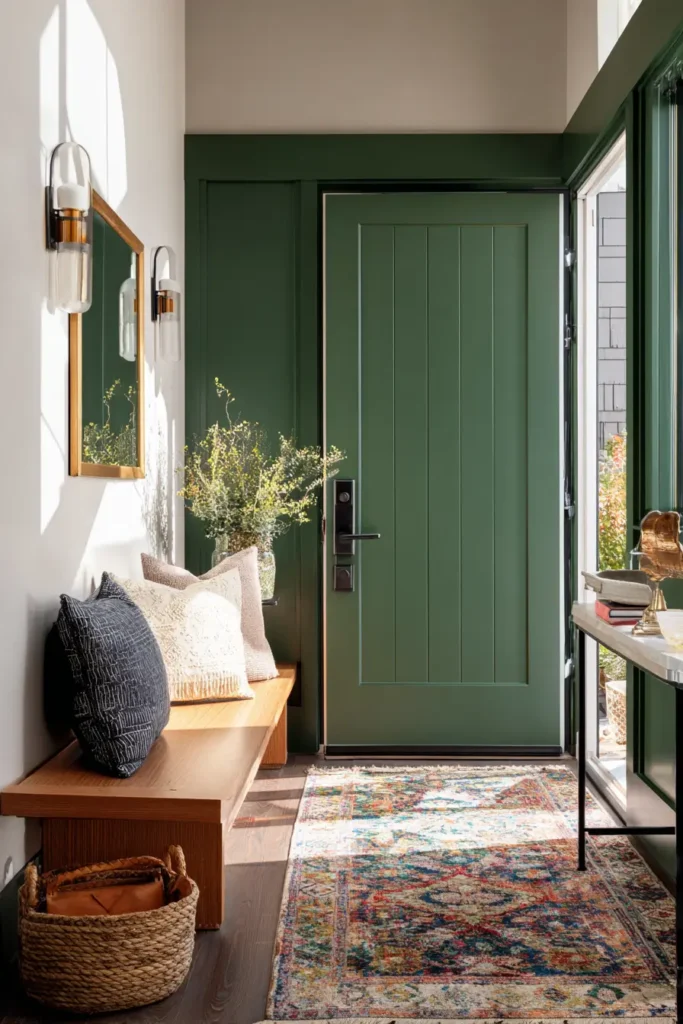
Every single guest who walks through your front door touches the door handle. They see the hardware up close. And most door hardware is cheap, scratched, or completely forgettable.
Swapping out your hardware is fast, affordable, and immediately noticeable.
Five hardware upgrades worth making:
- Door knob or lever handle: $30 to $120 depending on brand and finish
- Deadbolt: $40 to $90, and you can match the finish to your handle
- Kick plate: $20 to $50, protects the door base and looks intentional
- Door knocker: $25 to $100, decorative and functional
- Door hinges: $5 to $15 each, often ignored but visible when the door is open
Finishes trending right now: Unlacquered brass ages beautifully. Matte black is clean and modern. Satin nickel is a safe, neutral choice that works with everything.
Emtek makes designer grade hardware that is worth the price. Rejuvenation is another strong option. Both have door hardware in coordinated collections so everything matches without effort.
The interior door color move: Painting the inside of your front door a bold color has become a real design trend. Deep green, navy, black, or even a rich burgundy. It is unexpected and it looks intentional in a way that surprises guests.
Smart locks as design statements: August Smart Lock and Schlage Encode both look good and add real functionality. Keyless entry is genuinely useful. And both fit over existing deadbolts without major installation work.
Small hardware details signal that you paid attention to the whole picture.
14. Think Vertically When Your Entryway Is Tiny
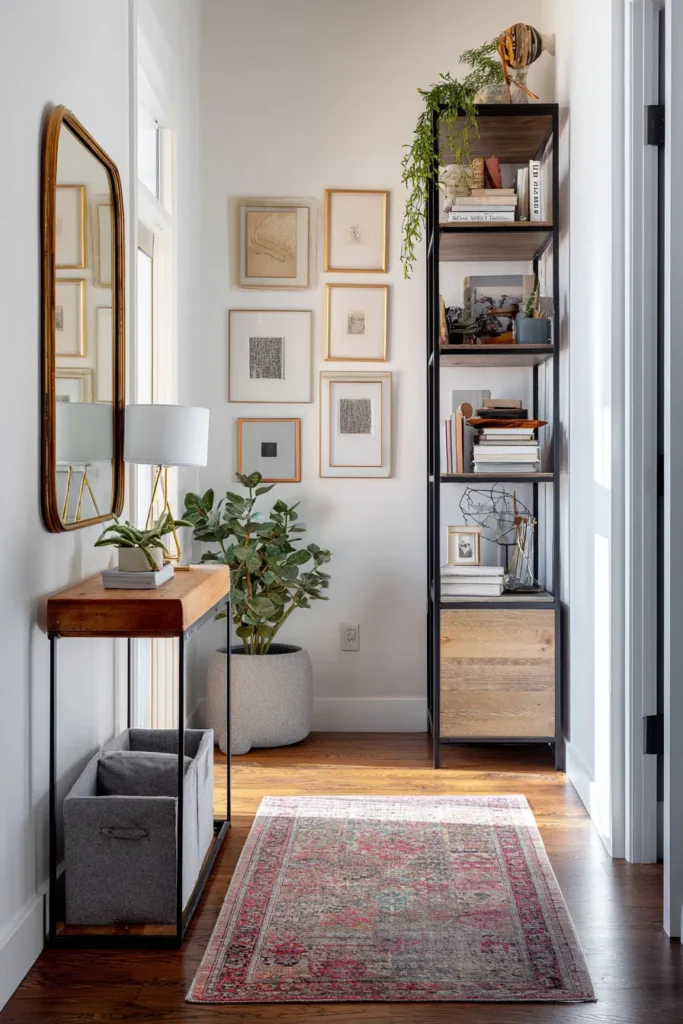
A small entryway does not mean a bad one. It means you have to think differently.
When you do not have floor space, you use wall space. When you cannot go wide, you go tall. This is not a compromise. It is actually a strategy that can make a small entryway look more interesting than a large empty one.
Vertical storage options that work in tight spaces:
A tall narrow bookcase like the IKEA BILLY works as a combination display and storage unit. It takes up very little floor space and draws the eye upward. This is one of the most searched entryway solutions on Pinterest and TikTok right now.
Floating shelves stacked vertically give you storage and display space without using any floor square footage. Check the stud finder app on your phone before installing. It works and it is free.
Tall narrow console tables at 10 to 12 inches deep fit in spaces where standard tables would block the door. Measure your clearance before buying.
The eyes up trick: Place something visually interesting near the ceiling. A small piece of art. A trailing plant on a high shelf. A decorative object. The eye follows it upward and the room instantly feels taller.
Vertical art arrangements: Instead of spreading frames horizontally, stack them vertically in a column. Three frames in a vertical line take up almost no horizontal space and look like a deliberate design choice.
Small entryways reward creativity. Work with the space you have rather than against it.
15. Add One Personal Touch So It Feels Like Your Home, Not a Showroom
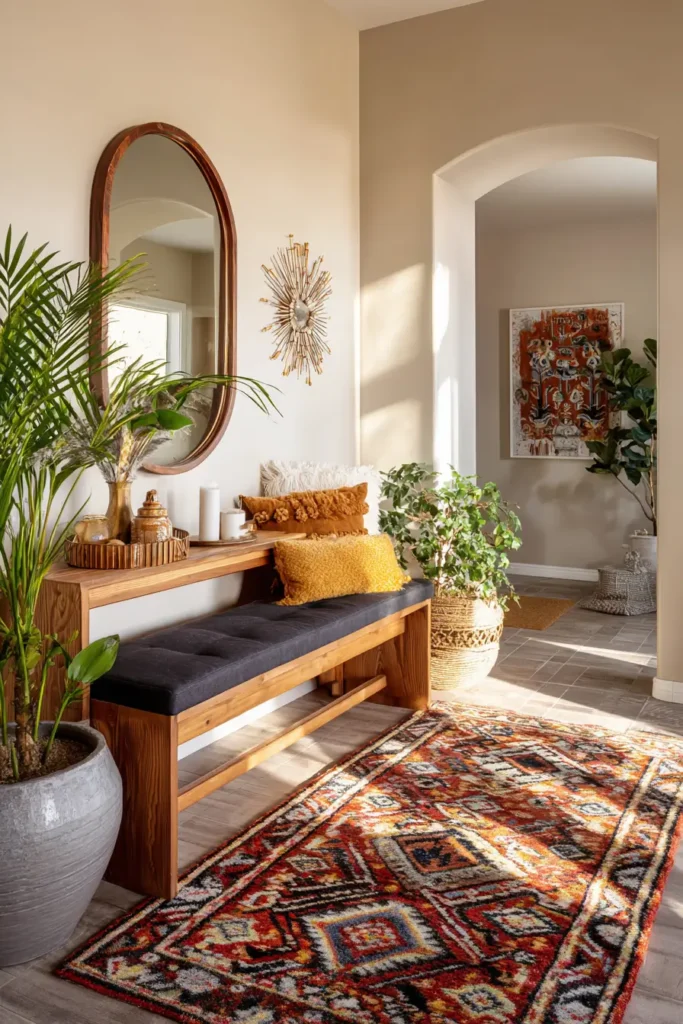
Everything on this list so far makes an entryway look good. This last one makes it feel like yours.
There is a difference between a space that looks styled and a space that feels inhabited. The best entryways have both. They look intentional and they feel personal. Guests can tell the difference even if they cannot explain it.
Simple ways to add personality without overdoing it:
A custom doormat with your family name or a phrase that means something to you. Etsy has hundreds of options, many under $40, and they ship quickly.
A welcome tray on your console table with one candle, one meaningful object, and nothing else. The restraint is the point. One thing you love, displayed with care, says more than a shelf full of random items.
A chalkboard sign that you update seasonally. Write a short welcome. Change it every few months. It gives guests something to notice every time they visit.
The 60-second audit: Stand at your front door and look in. What is the very first thing your eye goes to? That thing should be something you love or something beautiful. If it is a pile of shoes, a charging cable, or a jacket on the floor, that is where to start.
The seasonal refresh strategy: Change one element in your entryway each season. Swap the doormat. Change the plant. Swap the candle scent. Update the art print. Small seasonal changes keep the space feeling alive without requiring a full redesign.
The goal is not to look like a magazine. The goal is to look like you, on your best day, with your home at its most welcoming.
Start With One and Build From There
You do not need to do all 15 of these at once. Nobody does.
Pick the one that feels most urgent. If your entryway is dark, start with lighting. If it is cluttered, start with baskets and hooks. If it feels completely bare, start with a mirror and a rug.
Each change builds on the last. And after two or three of them, you will have an entryway that makes people stop and say something when they walk in.
That is the whole goal. A space that says you thought about it. A space that makes people feel good before they even sit down.
Start this weekend. Pick one idea. Your entryway makeover begins with a single decision.
Meta Description: 15 actionable entryway ideas to create an incredible first impression. Tips for any size, budget, or rental. Transform your space starting today.

- 17 Classy Living Room Ideas for a Cozy Elegant Look - April 23, 2026
- 16 Dark Moody Living Room Ideas That Feel Rich and Warm - April 22, 2026
- 14 Elegant Bedroom Trends for 2026 You’ll Love - April 22, 2026