
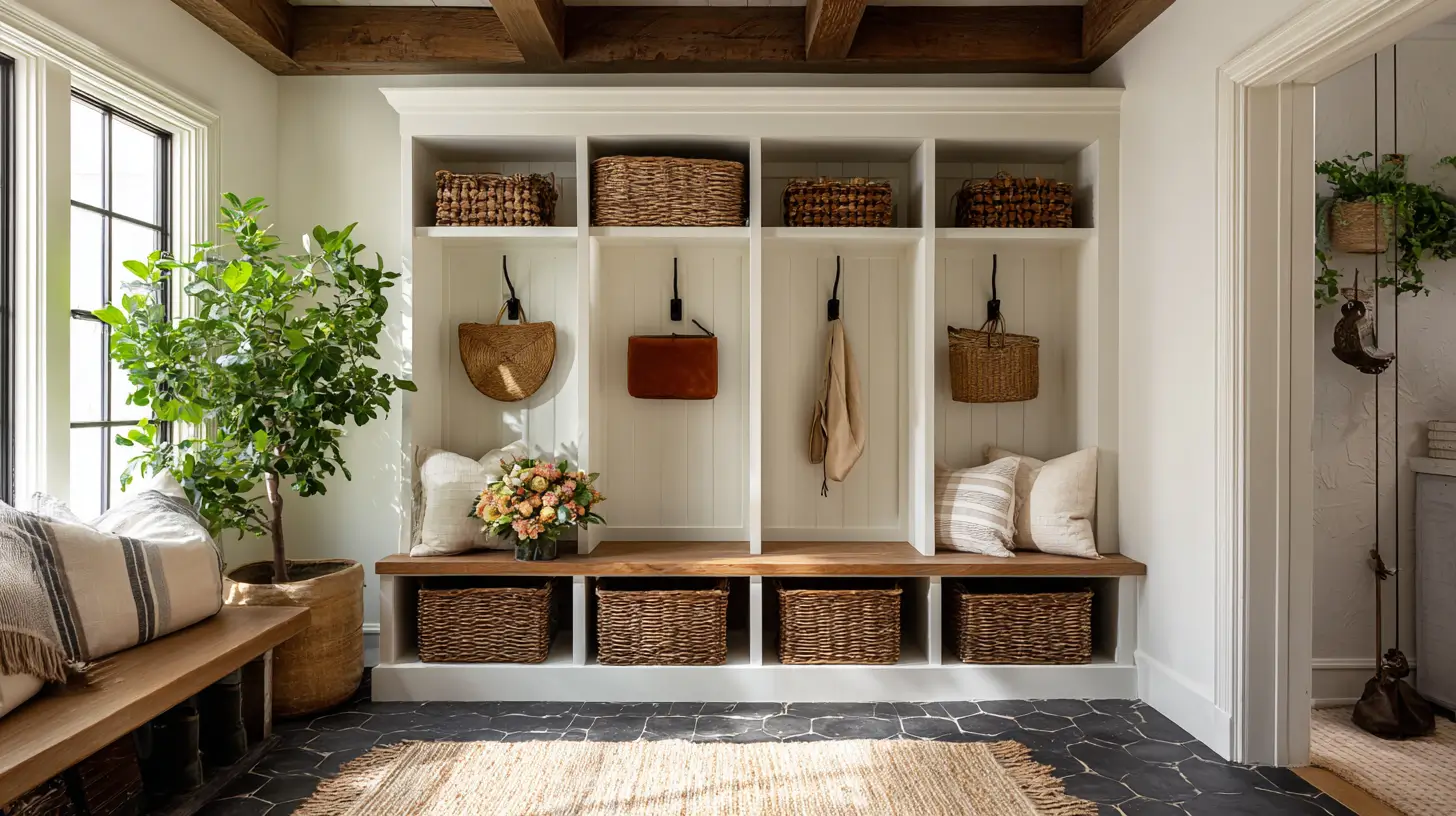
Your Mudroom Is Failing You Every Single Morning
Shoes blocking the door. Coats on the floor. You’re already late and you cannot find your keys.
Sound familiar?
You have probably tried to fix this before. You bought a basket. You added a hook. Things looked good for three days. Then it was back to the same mess.
Here is the truth. Your mudroom is not messy because you are lazy. It is messy because nothing in it has a real home. When stuff does not have a specific spot, it lands wherever it lands. Every single time.
This article gives you 16 storage ideas that actually fix that. Each one solves a specific problem. Some cost $20. Some take one hour to set up. A few are bigger projects if you want them.
You do not need all 16. You just need the ones that match your chaos.
Let’s fix your mornings.
Why Most Mudroom Storage Fails (And What Actually Works)
Most people organize their mudroom the wrong way.
They add a basket here. A hook there. Then wonder why it still looks like a disaster two weeks later.
The real problem is not the stuff. It is the system. Or the lack of one.
Here is what goes wrong most of the time.
No zone for each item type. When coats, shoes, bags, and dog leashes all share the same area, nothing stays put. Each category needs its own spot.
Not enough spots for the number of people. A family of four needs four times the storage a single person needs. Sounds obvious. But most mudrooms treat everyone like they share one hook.
Storage is in the wrong spot. If the key hook is across the room from the door, your keys will end up on the counter. People drop things where they walk. Storage needs to be exactly there.
Everything is open and visible. Open shelves and cubbies look fine in magazines. In real life, they collect clutter fast. A mix of open and hidden storage works better.
The best mudrooms use three layers: the wall for hanging things, the floor level for shoes and benches, and closed storage for the stuff you do not want to look at every day.
Keep those three layers in mind as you read through these 16 ideas. Everything will make more sense.
1. Give Each Person Their Own Locker Zone
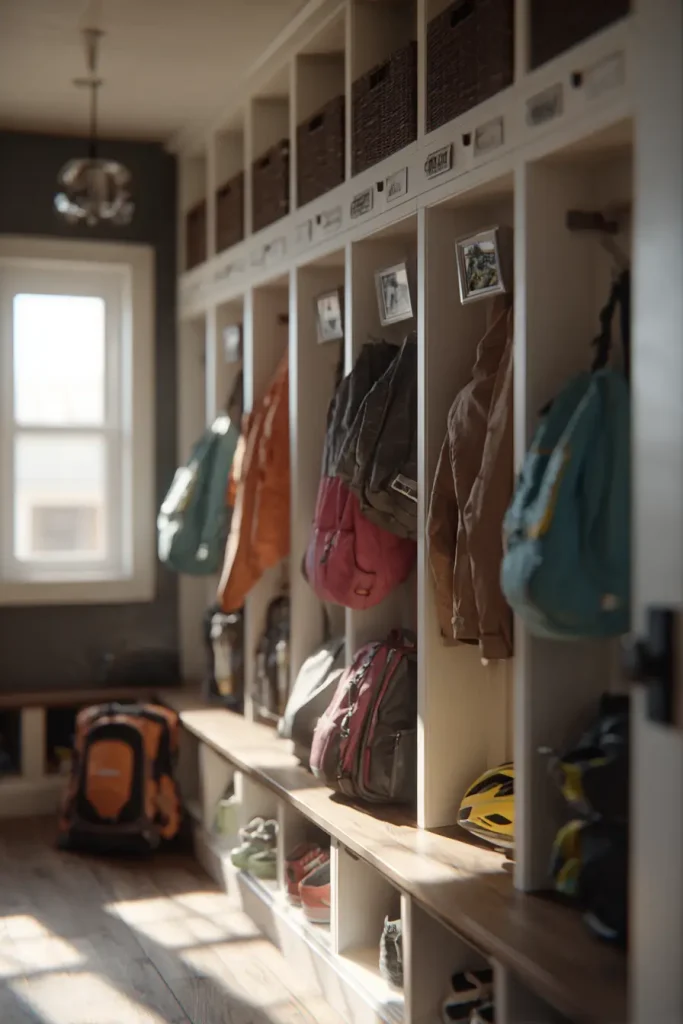
The problem: Everyone’s stuff gets mixed together. Nobody knows where anything is.
This is the single most effective mudroom idea for families. You assign one vertical section of wall to each person. That section has one coat hook, one shelf above for bags or helmets, and one cubby or bin below for shoes.
It sounds simple because it is. But it works because it creates personal responsibility. When your kid’s coat is on the floor, it is obvious whose coat it is.
You can build this with the IKEA PAX wardrobe system. It is the most popular DIY version right now. One unit costs around $200 to $400 depending on the size and doors you pick. Thousands of people have done this on YouTube with full before and after videos.
If you want something custom, companies like California Closets or Inspired Closets will design and build it for you. Expect to pay $1,500 to $4,000. It is not cheap. But it lasts decades and looks built in from day one.
Label each locker with a name. For younger kids, use a photo of their face. That way even a three year old knows exactly where to put their stuff.
Best for: Families with two or more people. Cost range: $200 to $4,000 depending on DIY or custom.
2. Replace Your Shoe Pile With a Flip Top Bench
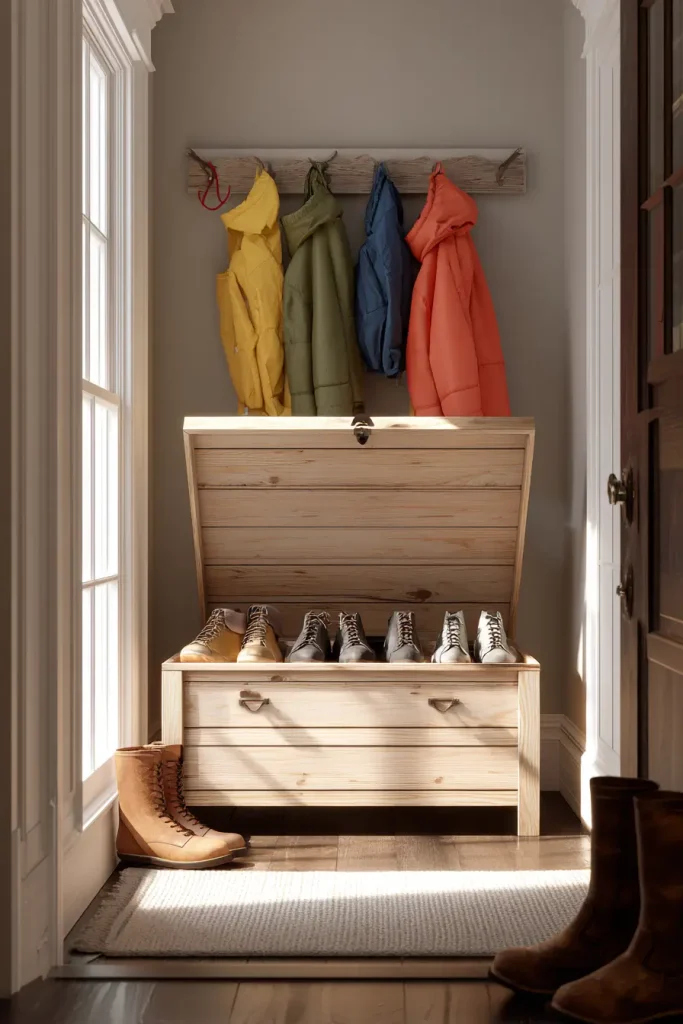
The problem: Shoes are everywhere and you have nowhere to sit while putting them on.
A storage bench with a flip top lid solves both of those problems at once. You sit on top to put your shoes on. You lift the lid and the shoes go inside. Done.
The IKEA HEMNES shoe bench is one of the most recommended options. It holds 16 to 20 pairs depending on the size. The SONGMICS bench is another solid choice at a lower price point.
A 40 inch bench fits 3 to 4 pairs per person comfortably. If you have a family of four and enough wall space, two benches side by side cover almost everyone.
The lid keeps everything hidden. No more staring at a pile of sneakers when you walk in the door.
Best for: Small mudrooms, apartments, narrow entryways. Cost range: $60 to $250.
3. Put a Pegboard on the Wall for Flexible Storage
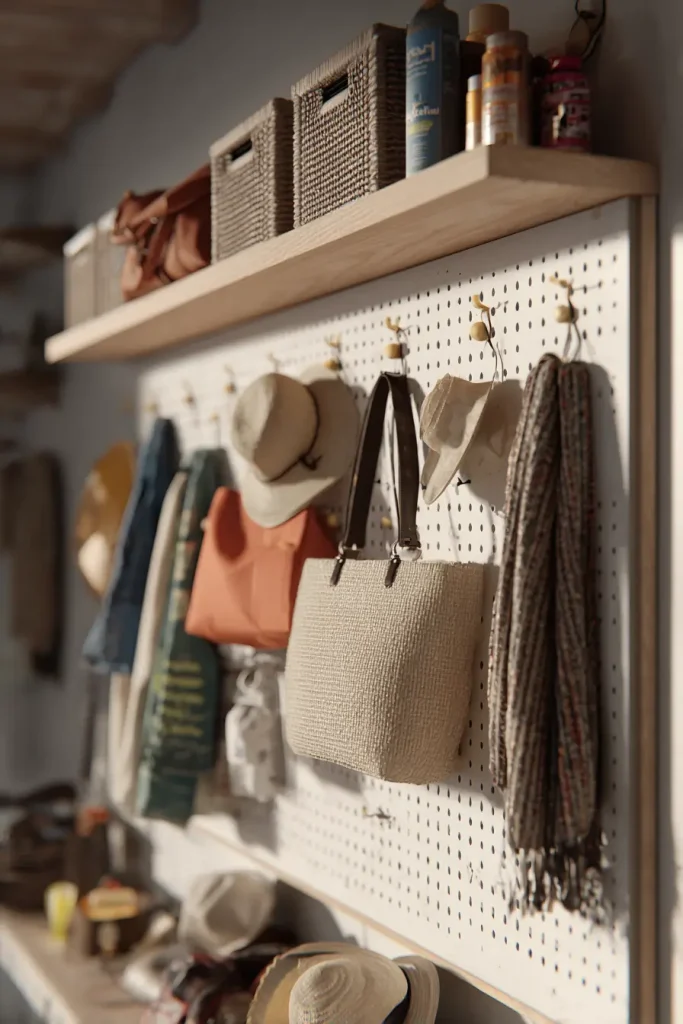
The problem: Your storage needs change by season. What works in July does not work in January.
A pegboard wall is the most flexible wall storage you can put in a mudroom. Hooks go in. Hooks come out. You move them in 60 seconds. No tools needed.
In summer you hang beach bags and sunscreen baskets. In winter you swap for hats, scarves, and an extra hook for heavy coats. Same board. Different setup.
IKEA makes the SKADIS pegboard system. It looks cleaner than the old school hardware store version and comes with accessories like shelves, bins, and cord organizers that clip right in.
If you want it to look less like a garage, paint the pegboard before you hang it. Add a simple wood frame around the edge. It looks like a real design choice instead of an afterthought.
A full pegboard wall for a standard mudroom runs about $25 to $80 for the DIY version.
Best for: Anyone whose storage needs shift with seasons or activities. Cost range: $25 to $80.
4. Put a Shoe Rack Directly Below Every Hook
The problem: Shoes get kicked off at the door and never make it to a rack across the room.
Here is a rule that works: wherever you put a coat hook, put a shoe rack directly below it. Not nearby. Directly below.
People take off their shoes when they take off their coat. If the shoe spot is right there, the shoes go in it. If it is three feet away, the shoes stay on the floor.
Slanted shoe racks take up less floor space than flat ones and hold more pairs. A three tier slanted rack holds 9 to 12 pairs and takes up about 20 inches of floor space.
The Whitmor 3 Tier Shoe Tower and the Honey Can Do Adjustable Shoe Rack are both under $40 and widely available.
This is one of the cheapest fixes on this list. And it works immediately.
Best for: Anyone with a shoe pile problem, especially near the door. Cost range: $20 to $60.
5. Build a Command Center for Keys, Mail, and Phones
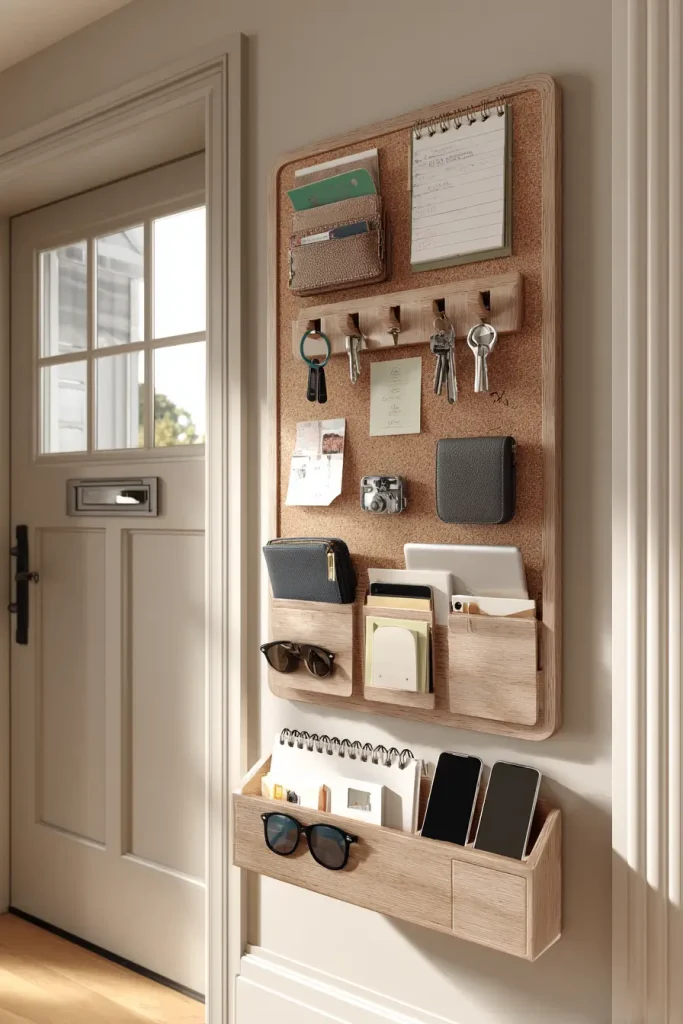
The problem: Keys go missing every morning. Mail piles up everywhere. Phones die because chargers are in the bedroom.
You lose your keys because you put them down wherever your hands happen to be. The fix is a key hook that is literally within arm’s reach of the front door.
A command center puts all of that in one spot on the wall. You need five things: a key hook (3 to 5 hooks minimum), a small tray for wallets and sunglasses, a spot for charging phones, a corkboard or chalkboard for notes, and a slot for mail or papers.
Wall mounted command center boards from Amazon run $30 to $80. Or you can build your own from separate pieces in an afternoon.
For families with school kids, add a paper slot labeled “needs signature” so permission slips and forms do not disappear into a backpack abyss.
Put this within three feet of the door. That is the only location where it actually works.
Best for: Anyone who loses keys or drowns in mail and papers. Cost range: $30 to $120.
6. Use Labeled Baskets for Every Category of Clutter
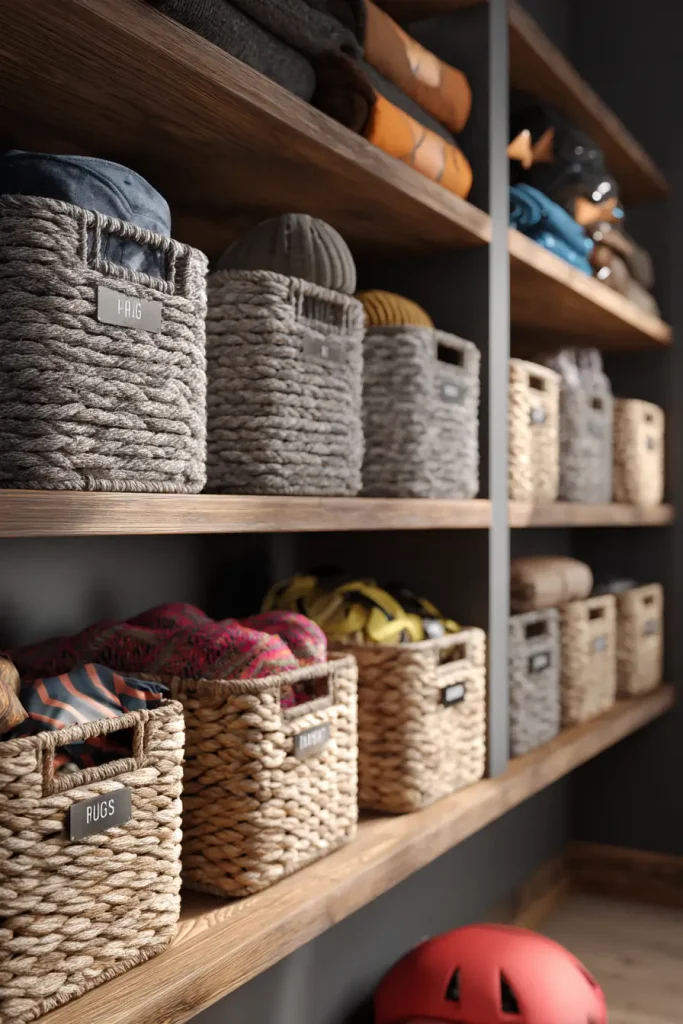
The problem: Hats, gloves, dog stuff, sports gear, and random items share the same basket. You can never find anything.
One basket per category. That is the rule.
You need a basket for hats and gloves. A separate one for dog supplies. Another for sports gear that gets grabbed daily. One more for seasonal stuff you need occasionally.
Without labels, the baskets become junk baskets within a week. With labels, everyone knows where things go. Including guests and kids old enough to read.
Woven baskets with leather or rope labels are one of the biggest home organization trends right now. They look good and they actually work. Target’s Brightroom line, Amazon canvas bins, and The Container Store all carry affordable options.
Buy all the same basket in different sizes. It looks intentional instead of chaotic.
Best for: Any mudroom with mixed categories of stuff. Cost range: $8 to $30 per basket.
7. Add Floating Shelves Above Your Hooks
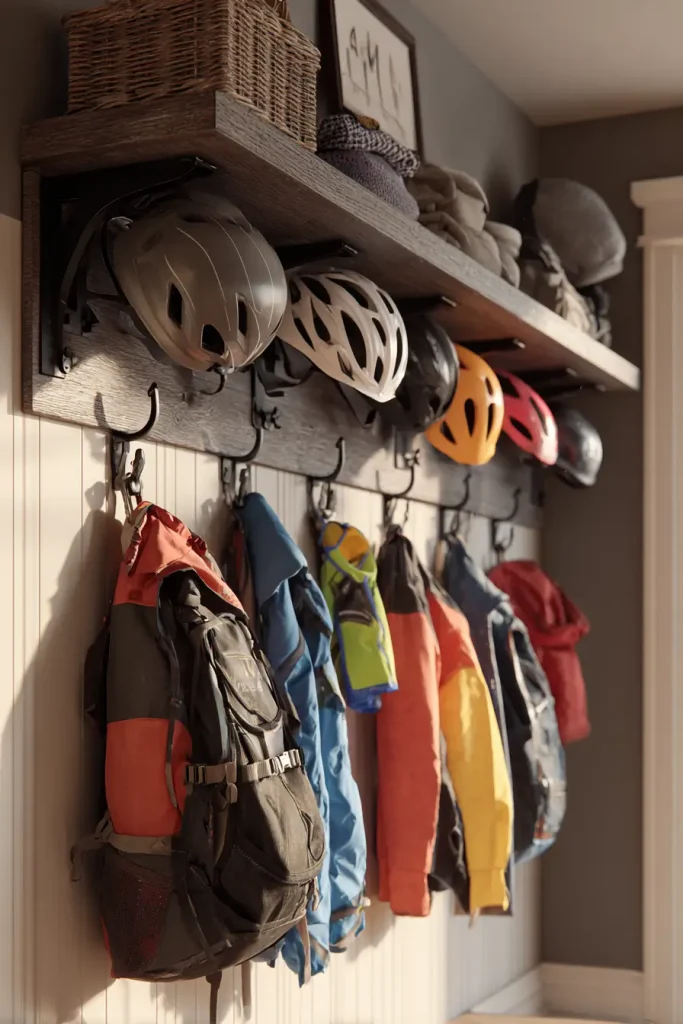
The problem: The wall space above your coat hooks does nothing. You are wasting your best storage real estate.
Most people hang coat hooks at 60 to 66 inches and leave everything above that empty. That space between the top of the hooks and the ceiling is usually 18 to 30 inches. That is enough for one or two solid shelves.
Use that space for off season hats and gloves, spare backpacks, sports helmets, or seasonal decorations.
Install the shelves at 72 to 78 inches from the floor. That keeps them above head height so nobody bumps into them.
IKEA LACK shelves are the most popular budget option. They come in white, black, and wood tones and cost about $15 to $20 each. Bigger shelves like the IKEA BERGSHULT hold more weight and look more substantial.
This one change can double your storage without touching your floor space.
Best for: Anyone with hooks already installed who wants more storage fast. Cost range: $15 to $60 per shelf.
8. Choose a Bench With Drawers Instead of Open Cubbies
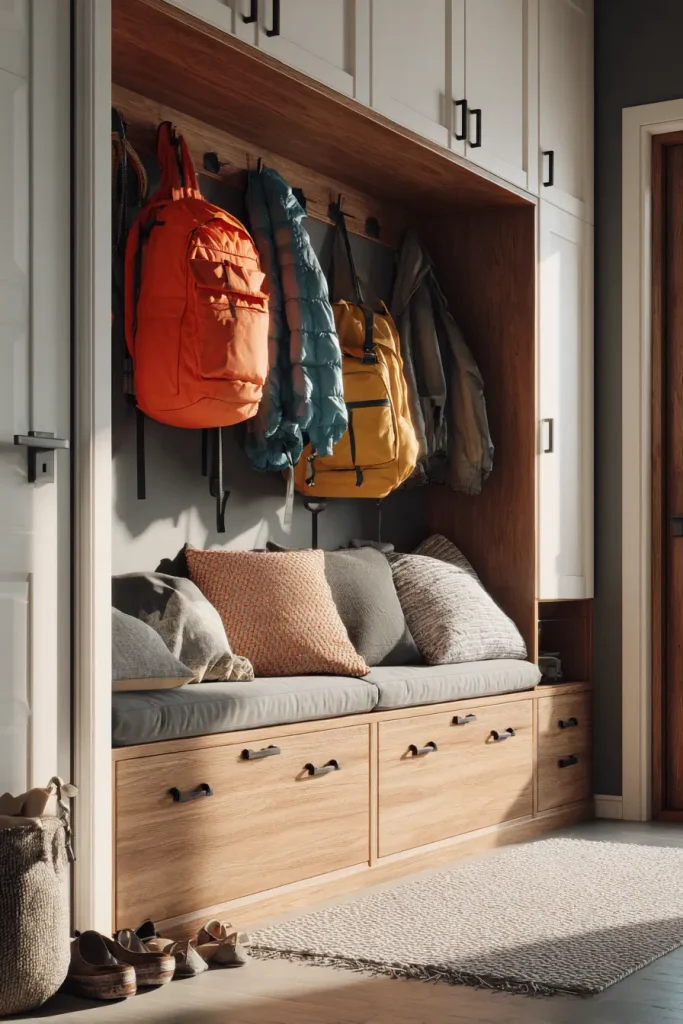
The problem: Open cubbies under a bench fill with shoes, bags, and random stuff. It looks messy all the time.
Open cubbies seem like a smart idea. And they work for about a week. Then they turn into a pile with walls around it.
Drawers fix this. The mess is hidden. The front of the bench looks clean. You still have just as much storage.
Drawer depth of 6 to 8 inches works perfectly for shoes lying flat. Two drawers side by side give you plenty of room for one person’s everyday shoes.
If you are doing a DIY build, one popular approach is to build a simple bench frame and slide IKEA ALEX drawer units underneath. The drawers roll smoothly, hold a surprising amount, and the whole thing looks intentional.
Add a cushion on top with a cover you can wash. Mudrooms get dirty. Washable cushion covers save you a lot of frustration.
Best for: Anyone who wants a clean looking mudroom without constant tidying. Cost range: $150 to $600
9. Add a Tall Cabinet to Handle the Big Stuff
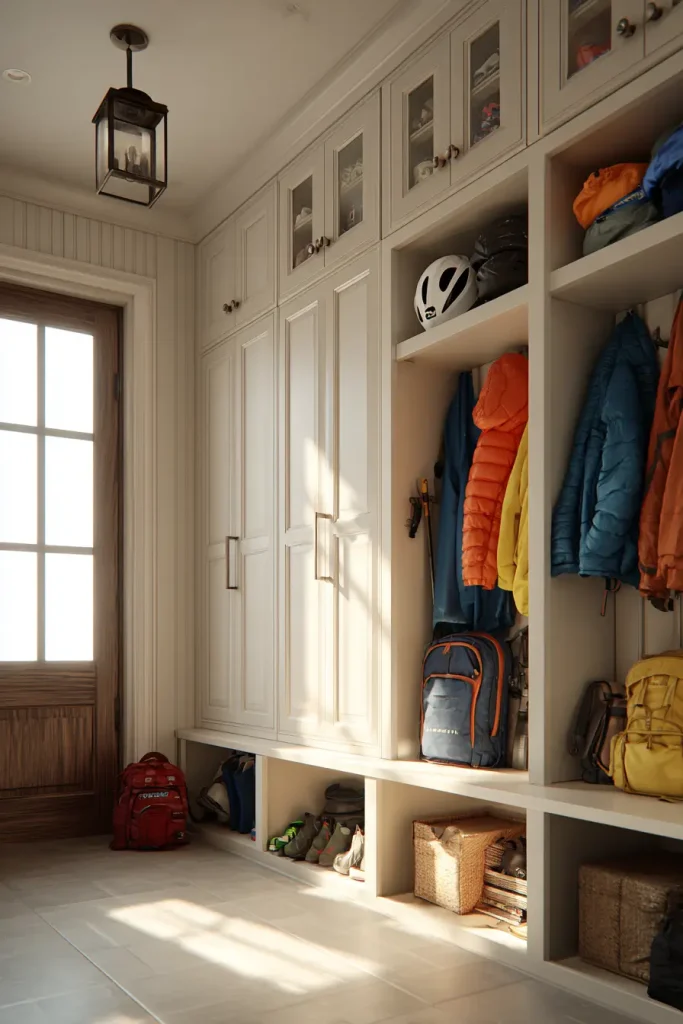
The problem: Sports equipment, cleaning supplies, and bulk items have nowhere to go.
A floor to ceiling cabinet is the single most powerful clutter control move in a mudroom. It hides a massive amount of stuff behind two doors.
Use the bottom half for everyday items. Shoes that do not fit under the bench, reusable grocery bags, umbrellas. The top half is for things you grab less often. Sports equipment, extra supplies, seasonal gear.
The IKEA BRIMNES cabinet is a widely used option. It looks clean, has adjustable shelves, and costs $150 to $200. Home Depot’s HDX utility cabinets are bulkier but hold more weight and cost around $100 to $150.
If you rent, freestanding cabinets require zero installation. You just put them in place and start filling them.
Best for: Families with lots of gear, or anyone who needs to hide a lot of stuff. Cost range: $100 to $500.
10. Create a Sports Zone With Wall Mounted Racks
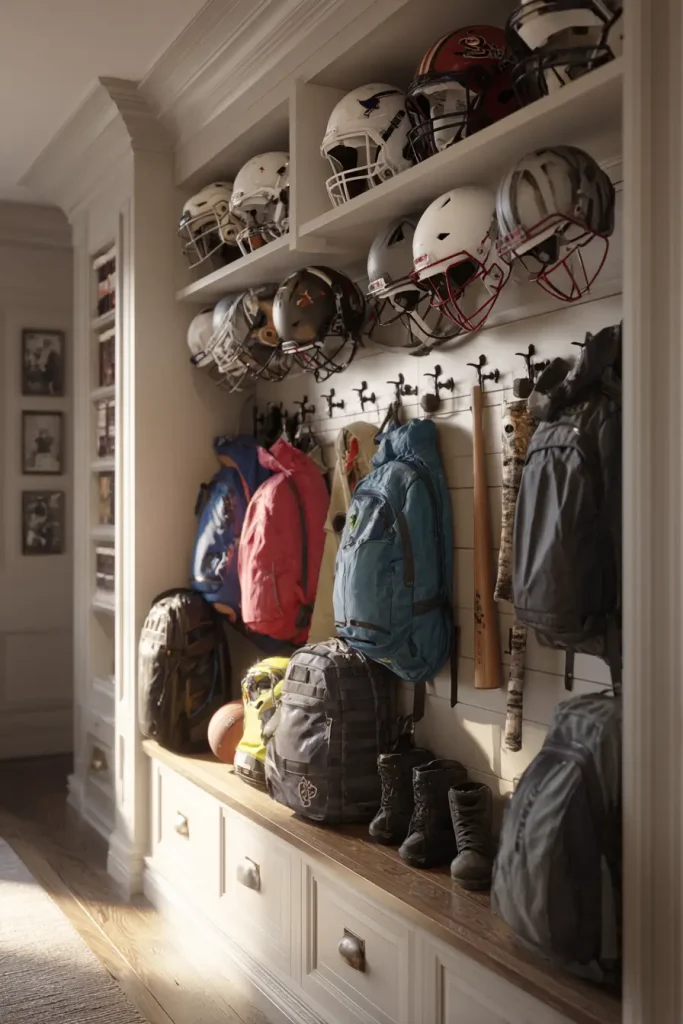
The problem: Helmets, balls, bats, cleats, and gear bags take over the whole room.
Sports gear is the number one mudroom problem for active families. It is bulky, oddly shaped, and there is a lot of it.
The fix is a dedicated sports zone on one wall with specific racks for each sport. Ball racks hold balls off the floor. Helmet hooks keep helmets visible and accessible. Gear bag hooks hold the bags upright.
StoreYourBoard and Monkey Bar Storage make wall mounted sports organizers that are specifically designed for this. They are not cheap, but they hold a lot and they last.
Assign each sport its own section of the wall. When your kid’s baseball gear is in the soccer section, it is easy to see. That makes putting things back in the right spot automatic over time.
Best for: Families with kids in organized sports. Cost range: $40 to $150.
11. Double the Space in Your Coat Closet in One Hour
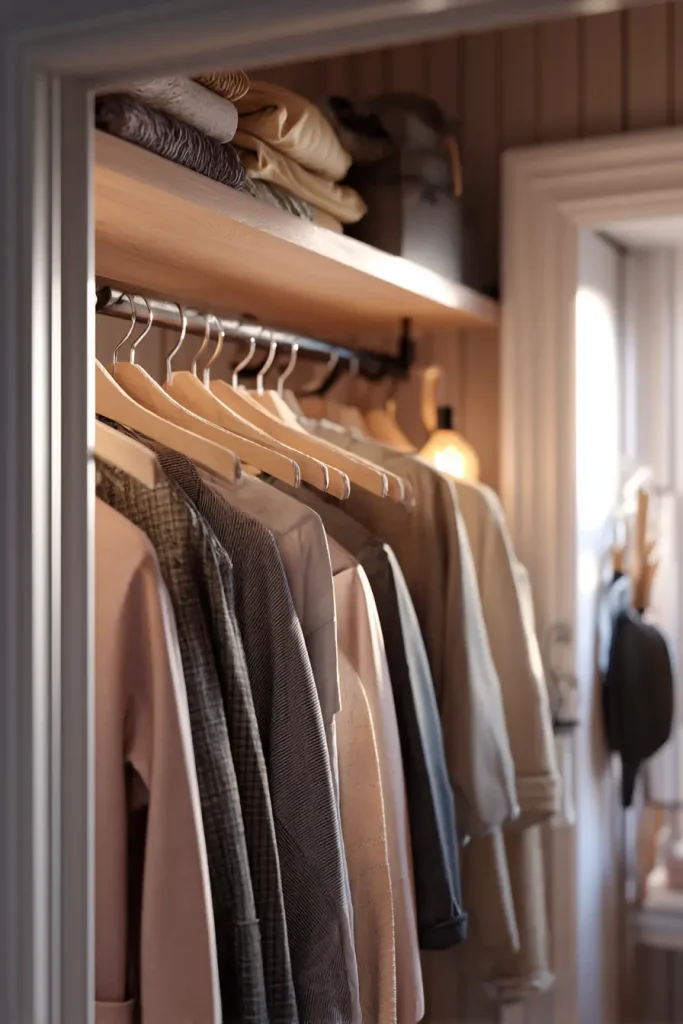
The problem: Your coat closet rod is half empty up high but you have no room for short items below.
Most coat closets have one rod running the full width. That leaves 24 to 36 inches of empty space below the hanging coats. That empty space is wasted storage.
Add a second shorter rod below the first one. Hang kids’ coats on the lower rod. Use the upper rod for adult coats and longer items.
This one change doubles your hanging capacity without adding any new furniture.
While you are at it, switch to slim velvet hangers. They are thinner than plastic hangers and coats do not slide off them. You can fit roughly twice as many coats in the same closet.
On the back of the closet door, add an over the door organizer. Use it for umbrellas, hats, reusable bags, or small sports items.
This whole project takes about an hour and costs $10 to $40.
Best for: Anyone with an existing coat closet that is not being fully used. Cost range: $10 to $40.
12. Use a Hall Tree When Your Space Is Under 4 Feet Wide
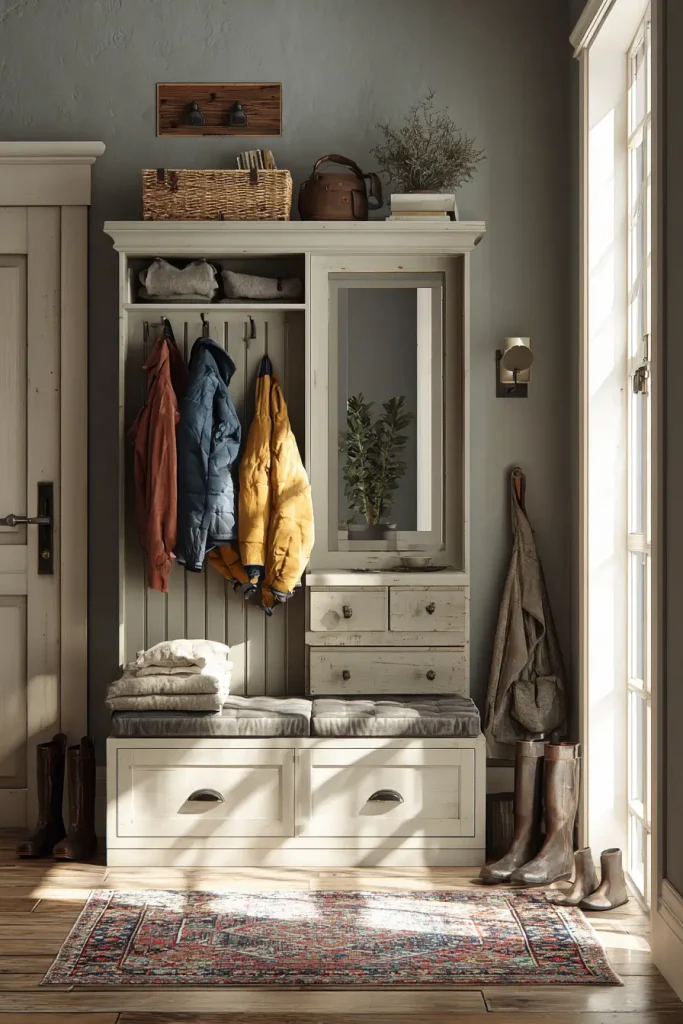
The problem: Your entryway is too narrow for a bench, hooks, and a shoe rack. You have to pick one.
A hall tree is the answer for tight spaces. It packs coat hooks, a bench seat, shoe storage, and often a mirror into a single piece that is 18 to 24 inches wide.
That is smaller than most nightstands. And it does four jobs at once.
The VASAGLE Hall Tree is one of the most reviewed options right now. It holds up well, looks decent, and costs around $80 to $130. The Crosley Furniture Brennan Hall Tree is a step up in quality at $200 to $300.
The mirror is not just decorative. In a narrow entryway, it reflects light and makes the space feel twice as big.
Best for: Apartments, condos, or any entryway under 4 feet wide. Cost range: $80 to $300.
13. Set Up a Pet Station So Leash Chaos Ends
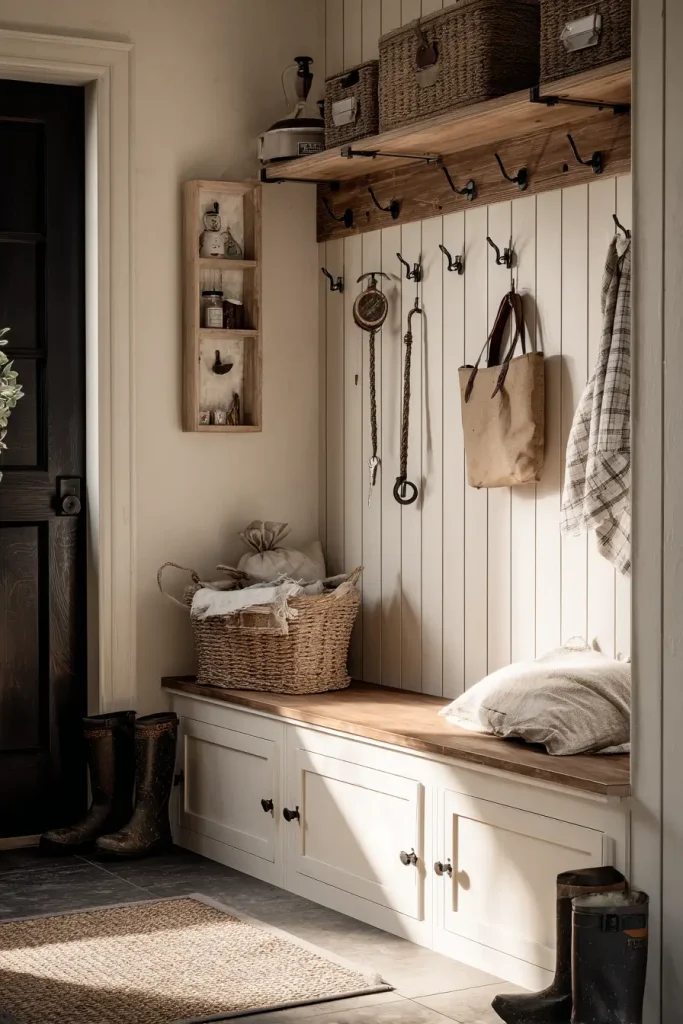
The problem: The dog leash is never where you need it. Dog stuff is spread across three rooms.
About 67% of US households own a pet, according to the American Pet Products Association’s 2023 to 2024 National Pet Owners Survey. And almost none of them have a dedicated pet spot in the mudroom.
Your pet station needs four things: a low hook for the leash (accessible without looking), a basket for treats and waste bags, a couple of small hooks for towels, and a spot for the brush.
When your dog comes in from a muddy walk, you want that drying towel right there. Not in the laundry room. Not under the sink. Right there by the door.
A small IKEA ALEX drawer unit works well here. One drawer for treats and supplies, hooks on the side for the leash and towels.
Best for: Any pet owner who uses the mudroom as a dog entry point. Cost range: $20 to $100.
14. Organize the Inside of Your Drawers and Cabinets
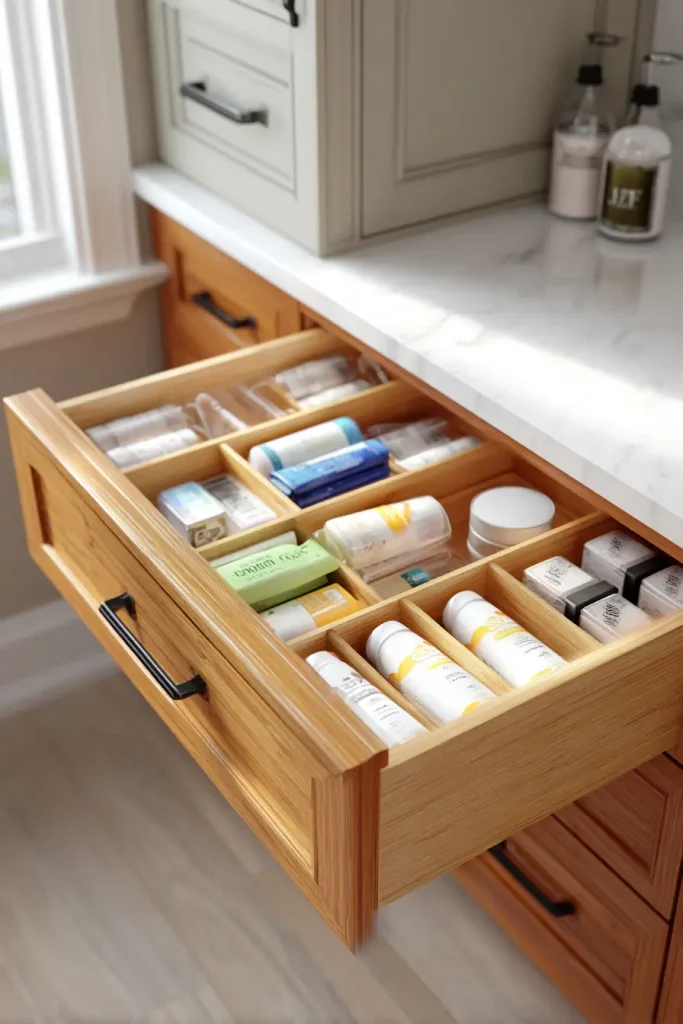
The problem: Your mudroom furniture is organized on the outside. The inside is chaos.
This one gets skipped more than any other idea on this list. People buy the bench. They add the cabinet. Then they just throw things inside and call it done.
Six months later the inside of every drawer looks like a junk drawer.
Drawer dividers fix this. Use adjustable bamboo or acrylic dividers to create specific sections for specific things: sunscreen, bug spray, lip balm, batteries, tape, spare change, and the other small items that always end up floating around.
When every small item has a section, the drawer stays organized. You do not have to dig. You know exactly where to look.
This takes about 20 minutes per drawer and costs $10 to $35 for a set of dividers.
Best for: Anyone who already has mudroom furniture but the inside is a mess. Cost range: $10 to $35.
15. Put Hooks at Kid Height So Children Can Actually Reach Them
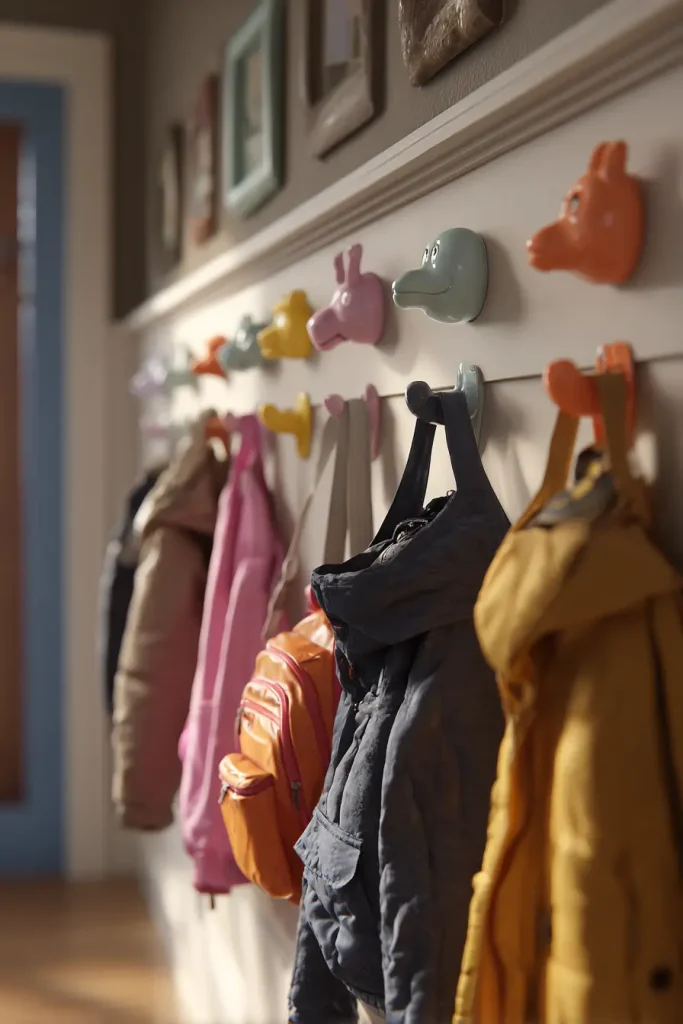
The problem: Your kids do not hang up their coats. You blame them. The real problem is the hooks are too high.
This is one of the most common mudroom mistakes families make. Hooks go up at adult height. Kids cannot reach them comfortably. So coats end up on the floor. Every single day.
The fix is a second row of hooks at 36 to 42 inches from the floor. That is comfortable reach height for kids between ages 4 and 10. Older kids can use the adult height hooks.
This is a core idea in Montessori home design. When everything is at a child’s height and accessible without help, kids do it themselves. It is not magic. It is just good design.
Use fun hooks for kids. Animal shapes, colored hooks, or hooks shaped like their favorite things. A hook that feels like theirs gets used.
Best for: Families with kids between ages 4 and 12. Cost range: $10 to $40 for a set of hooks.
16. Add a Chalkboard or Whiteboard for the Family Schedule
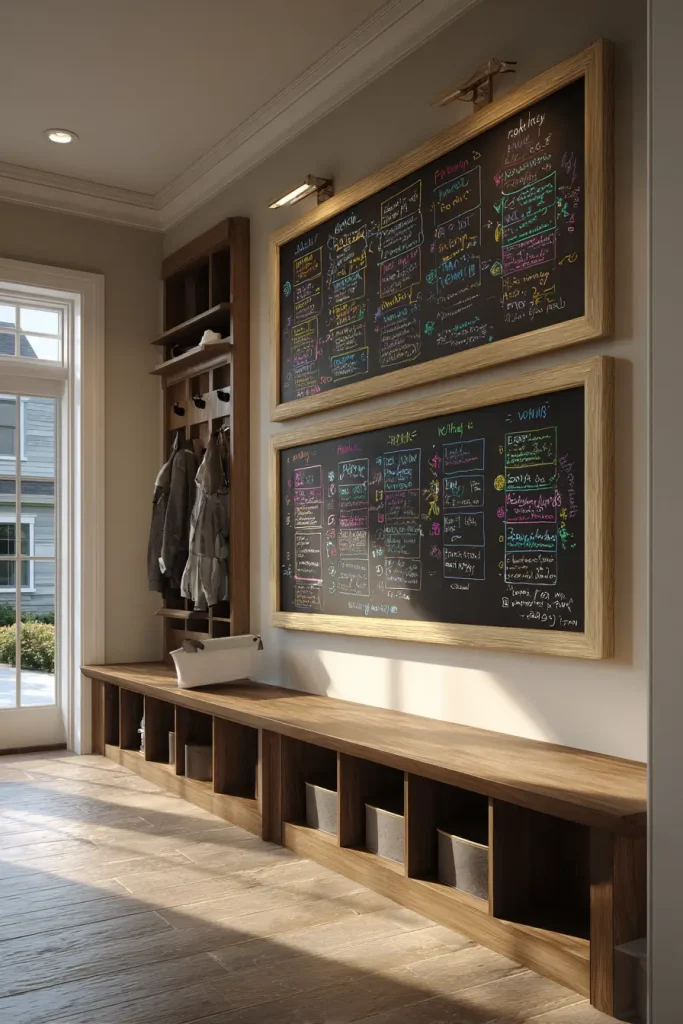
The problem: Your mudroom stores stuff but does not communicate anything. Important reminders get missed.
The mudroom is the last place your family passes before leaving the house. That makes it the best place to put information that needs to be seen.
A chalkboard section on one wall (use chalkboard paint and a simple wood frame) or a framed magnetic whiteboard does the job well. Write the week’s schedule on it. Add a reminder for after school pickup. Note what needs to go back to school tomorrow.
Put a key hook directly below it. You check the board. You grab your keys. You leave with everything you need.
Chalkboard paint costs about $15 for a quart. A framed whiteboard runs $30 to $60. This is one of the lowest cost ideas on the list with one of the highest daily payoffs.
This changes your mudroom from a storage space into a family communication spot. That is a real upgrade.
Best for: Busy families, parents of school age kids. Cost range: $15 to $60.
How to Plan Your Mudroom Layout Before You Buy Anything
Before you order a single basket or drill a single hole, spend 20 minutes on this.
Step 1: Measure everything. Width of the space. Depth. Ceiling height. Which way the door swings. A bench that is 3 inches too wide blocks the door. Measure first.
Step 2: Count your users. A couple needs different storage than a family of five. Write down every person who uses this space and what each person brings in and takes out daily.
Step 3: List every item that needs a home. Coats. Shoes. Bags. Keys. Sports gear. Pet supplies. Seasonal items. Every item on that list needs a specific spot. If you skip this step, you will buy storage that does not match what you actually need.
Step 4: Assign zones before you pick furniture. Decide where the shoe zone goes. Where the coat zone goes. Where the bags go. Then pick furniture that fits those zones.
Step 5: Set a realistic budget. A fully functional mudroom for a family of four can be built for $150 to $300 using IKEA pieces and Amazon basics. Mid range setups with benches and cabinets run $300 to $600. Custom built ins are $1,500 and up.
Free tools that help with the planning step:
RoomSketcher.com lets you draw your space and try different layouts. It is free and you do not need design experience. The IKEA online planner works well for PAX and HEMNES layouts. Apartment Therapy has solid guides specifically for small entryways.
Even a rough sketch on notebook paper beats buying furniture without a plan.
The Best Products for Mudroom Storage in 2026
You do not need expensive products to build a system that works. But you do need the right products.
Here is how to think about it by budget.
Under $100: Start here. IKEA SKADIS pegboard ($20 to $50), basic hook rails from Amazon ($15 to $30), SONGMICS storage bench ($60 to $90), slanted shoe racks ($20 to $40). These basics set up a working system for one or two people.
$100 to $400: This range covers most families. IKEA PAX wardrobe for locker style storage, VASAGLE or similar hall trees for narrow spaces, and components from The Container Store elfa system. The elfa system is modular, adjustable, and can grow with your needs.
$400 and above: IKEA PAX with custom panel doors looks truly built in. California Closets and Inspired Closets offer full custom design and installation. These are long term investments, not quick fixes.
For renters: Command strips hold up to 7.5 pounds per strip with no damage to walls. Freestanding hall trees need zero installation. No drill pegboard systems hang on existing hardware.
Where to shop in 2026: IKEA, The Container Store, Wayfair, Target Brightroom line, Amazon, and Home Depot. All carry mudroom storage at multiple price points.
Check product availability before buying. Products change, get discontinued, and go in and out of stock.
Now Pick One Idea and Do It This Weekend
Here is the chaos from the beginning of this article. Shoes everywhere. Coats on the floor. Keys missing again. Late for everything.
That is not a you problem. It is a system problem. And systems are fixable.
You now have 16 specific fixes. Some take 20 minutes. Some take a weekend. A few are bigger projects if you want them.
Do not try to do all 16 at once. Pick the one that matches your biggest daily frustration. The one that will make tomorrow morning less stressful than this morning.
Put up the key hook. Buy the labeled baskets. Add the shoe rack under the coats. One small change to a mudroom can change your whole morning.
These mudroom storage ideas work because they are built around how people actually behave, not how they wish they behaved. That is why they stick.
Meta Description: 16 mudroom storage ideas that give every coat, shoe, and bag a home — with budget ranges, product picks, and layout tips for 2026.

- 17 Classy Living Room Ideas for a Cozy Elegant Look - April 23, 2026
- 16 Dark Moody Living Room Ideas That Feel Rich and Warm - April 22, 2026
- 14 Elegant Bedroom Trends for 2026 You’ll Love - April 22, 2026
