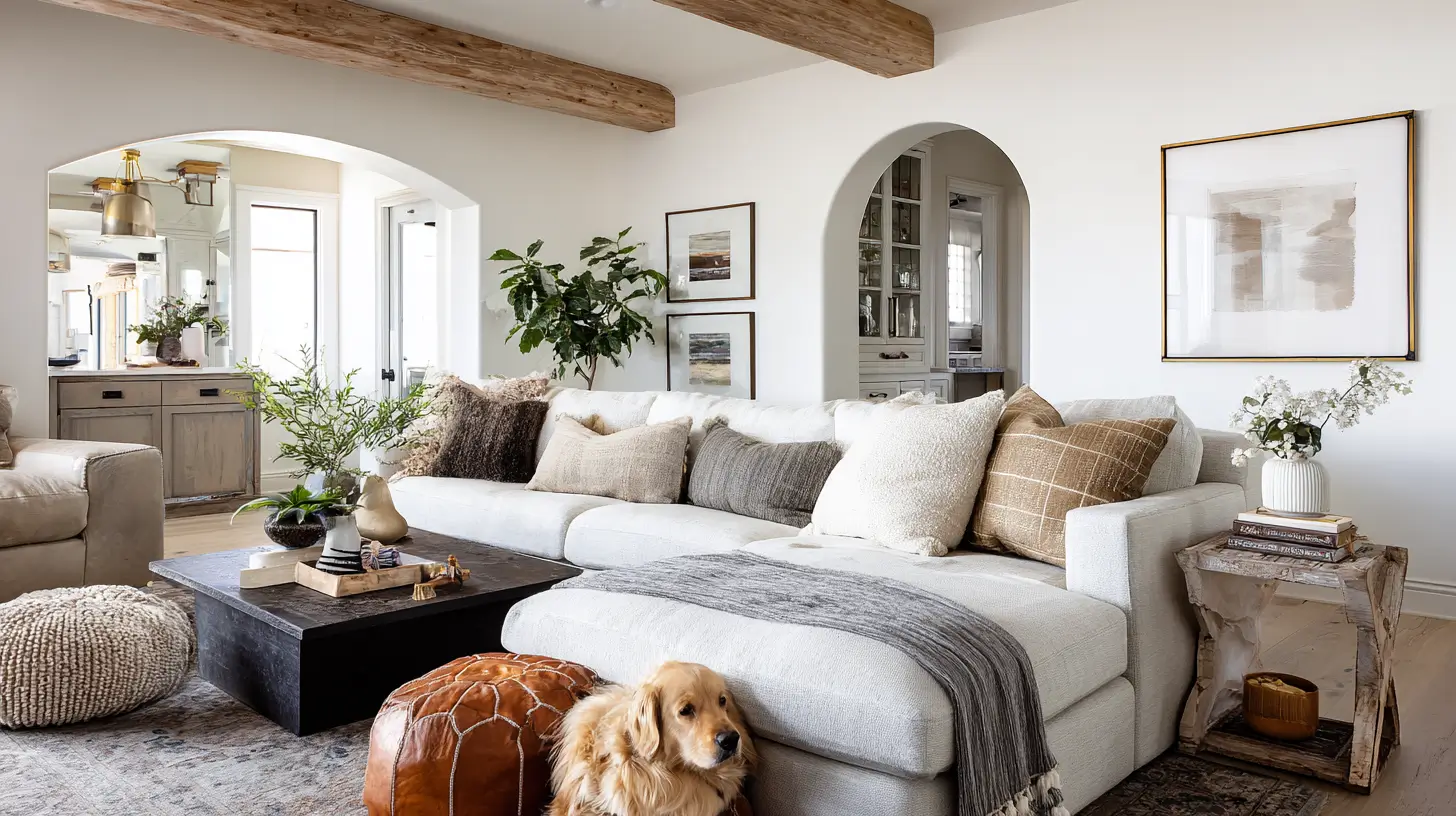
Your living room is doing three jobs at once. It is a playroom. It is a pet lounge. And it is supposed to be a space where adults can sit down and relax. Most design advice pretends only one of those jobs exists.
You have probably bought a sofa you loved. And then watched it lose the fight in six months. You have tried “nice things” and felt guilty when they got ruined. You have read tips that say “just use slipcovers” without telling you what that actually means.
This guide gives you 15 real ideas. Each one has a specific action you can take. No vague advice. No telling you to “invest in quality” without telling you what quality looks like. Just practical changes that make your living room work for kids, pets, and actual life.
1. Pick Fabrics That Can Be Cleaned Without Panic
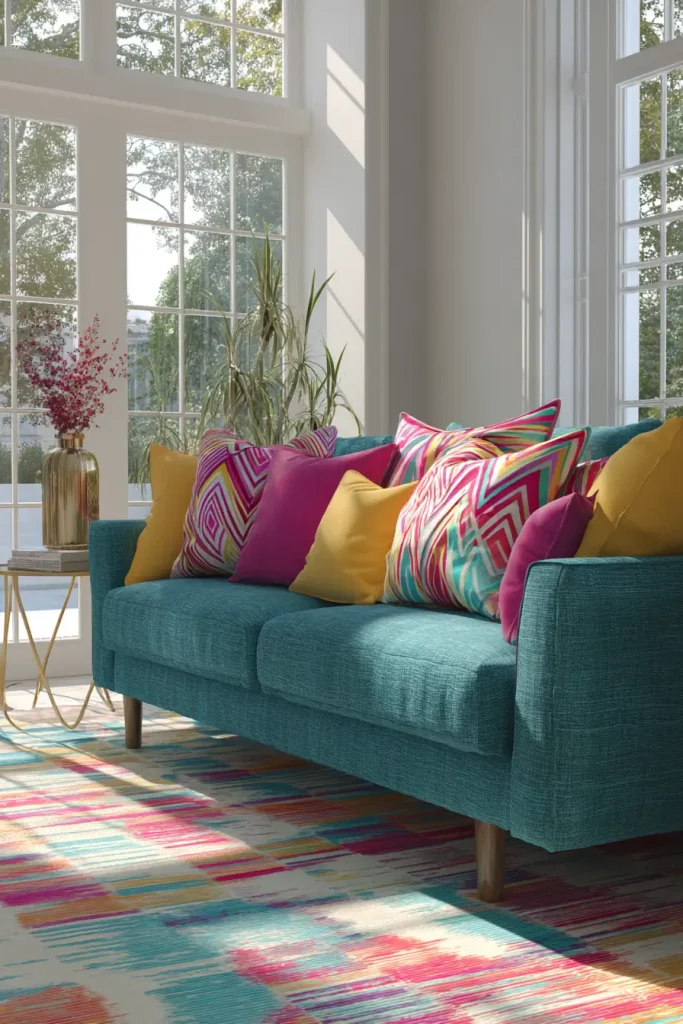
Most sofas are not built for families. They are built for showrooms.
The fix is not buying a cheaper sofa. It is buying the right fabric. Performance fabrics are made with a tighter weave, a stain-resistant coating, or a synthetic blend. Regular upholstery has none of that.
Look for these fabrics by name when you shop:
- Crypton fabric. This is used in hospitals and hotels. The stain resistance is real. You can verify this at cryptonfabric.com.
- Sunbrella. Originally made for boats and outdoor furniture. Interior designers now use it in family homes because it cleans easily. Check sunbrella.com.
- Tight-weave microfiber. Run your hand against the grain. If it leaves a mark easily, pet fur will embed in it.
- Indoor-outdoor polyester blends. Made to survive rain. They handle juice and muddy paws without trouble.
Fabrics to skip: velvet, linen, silk, and anything with an open or loopy weave. Fur gets trapped. Liquid soaks in. You will be fighting those fabrics every week.
Before you buy, do a quick test. Rub a pen cap across the fabric ten times. If it pills or snags, it will not survive a dog or a toddler.
2. Plan Zones Instead of One Open Space
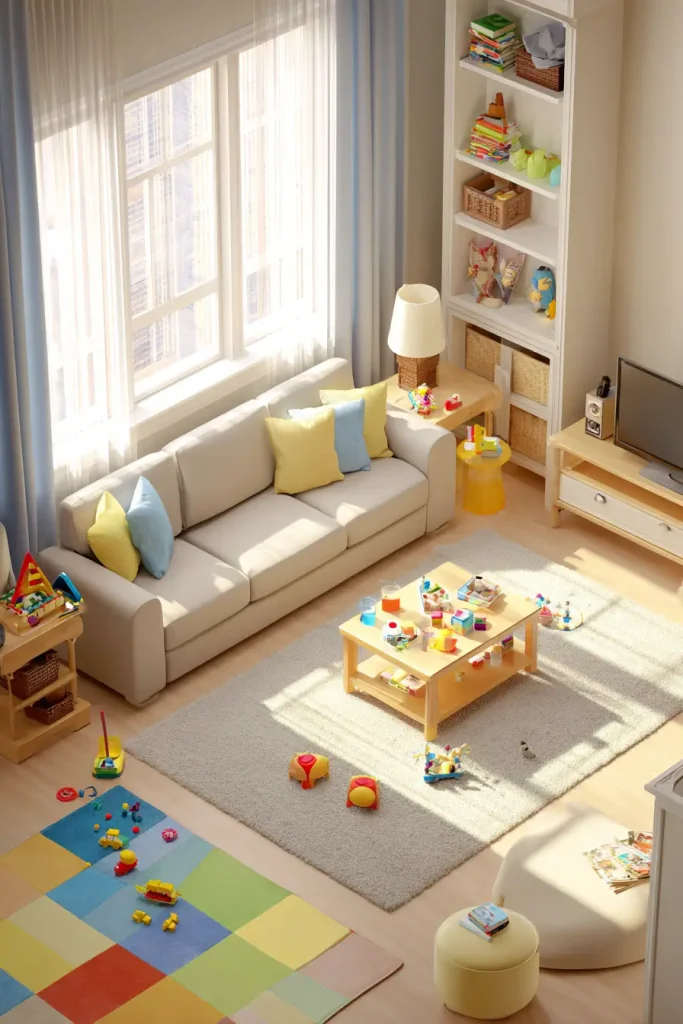
A living room without zones is just a room where everything happens everywhere. Toys end up under the TV. The dog sleeps on the couch cushion. Snacks appear in corners you forgot about.
Zones do not need walls. You create them with furniture placement, rugs, and lighting.
Here is one layout that works: put the sofa along one wall. Place a small area rug in the corner nearest a window or outlet. That corner is the kids’ activity zone. Put a second, smaller rug near the sofa for the dog bed or cat tree. That is the pet zone.
Now messes have a home. Toys belong in the corner. The dog belongs on the rug near the sofa. These are not hard rules. But they cut down on the chaos by a lot.
The concept of activity zones comes from Montessori home design. Charlotte Poussin’s book “The Montessori Home” covers this if you want to go deeper.
3. Go Lower With Your Furniture
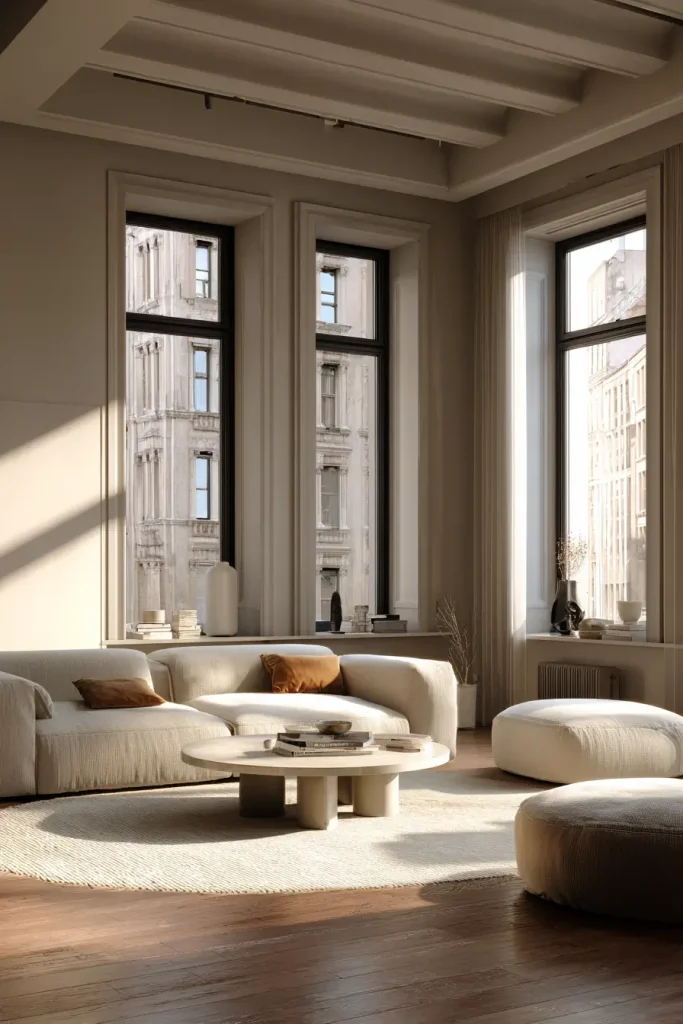
Here is something most design advice skips. The height of your furniture matters for safety.
A standard coffee table sits at about 16 to 18 inches tall. That puts sharp corners right at toddler head height. The American Academy of Pediatrics lists furniture-related injuries as one of the top home injury causes for children under 5. You can check their data at healthychildren.org.
Low-profile sofas are easier for young kids to climb on and off without falling. They are also easier for older dogs to use without jumping, which helps with hip and joint strain.
What to do right now: add corner guards to your existing coffee table. They cost a few dollars and take two minutes to install. They are not just for babies. They are a smart, easy fix for any sharp-edged furniture in a family home.
4. Buy a Rug That Hides Mess Between Cleanings
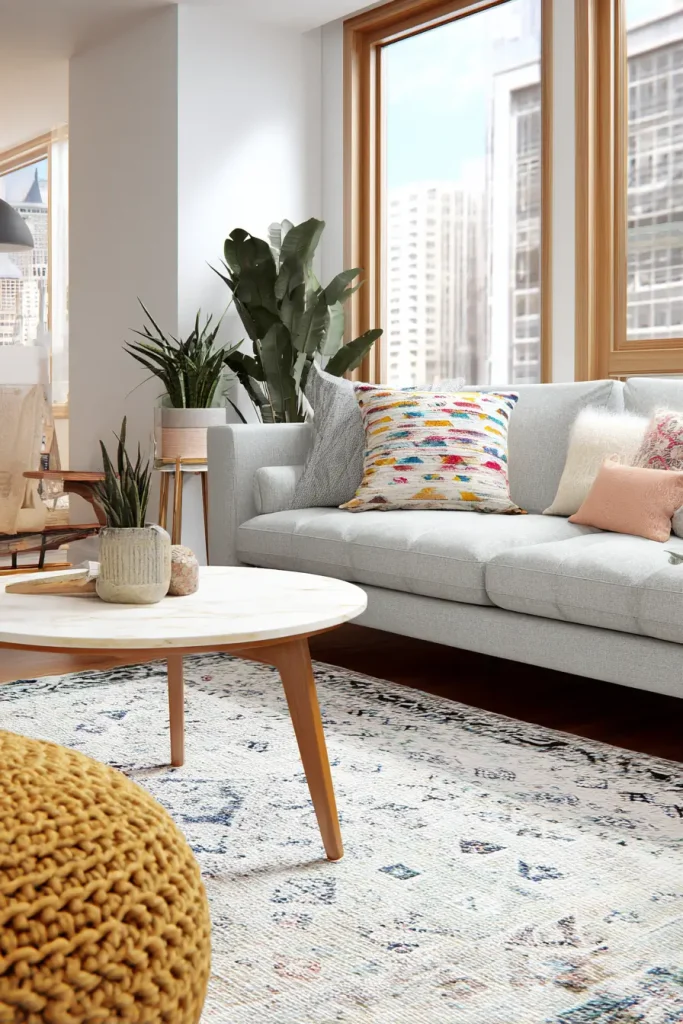
White rugs are a choice. But they are not a good choice in a family home.
Here is what actually works. Go with a mid-tone, patterned, or multi-colored rug. The pattern hides stains between cleanings. You are not covering up mess forever. You are just not staring at every accident the moment it happens.
For material, polypropylene is your best friend. It resists stains. It does not hold moisture. Indoor-outdoor rugs made from polypropylene can be hosed down outside if needed.
Wool blends are durable but harder to clean. High-pile or shag rugs trap fur and hide crumbs. They look nice in photos. They are a nightmare in real life.
Two products worth checking for current availability in 2026:
- Ruggable (ruggable.com). These are machine-washable rugs with a two-piece system. The cover comes off and goes in the washing machine. They market specifically to pet and kid households.
- IKEA’s polypropylene rug lines and Target’s Threshold indoor-outdoor collection. Both are worth checking for what is currently in stock.
One more thing. Get a non-slip rug pad. Running kids and dogs who bolt across a room will slide a rug right into the wall without one.
5. Get Rid of Your Glass Coffee Table
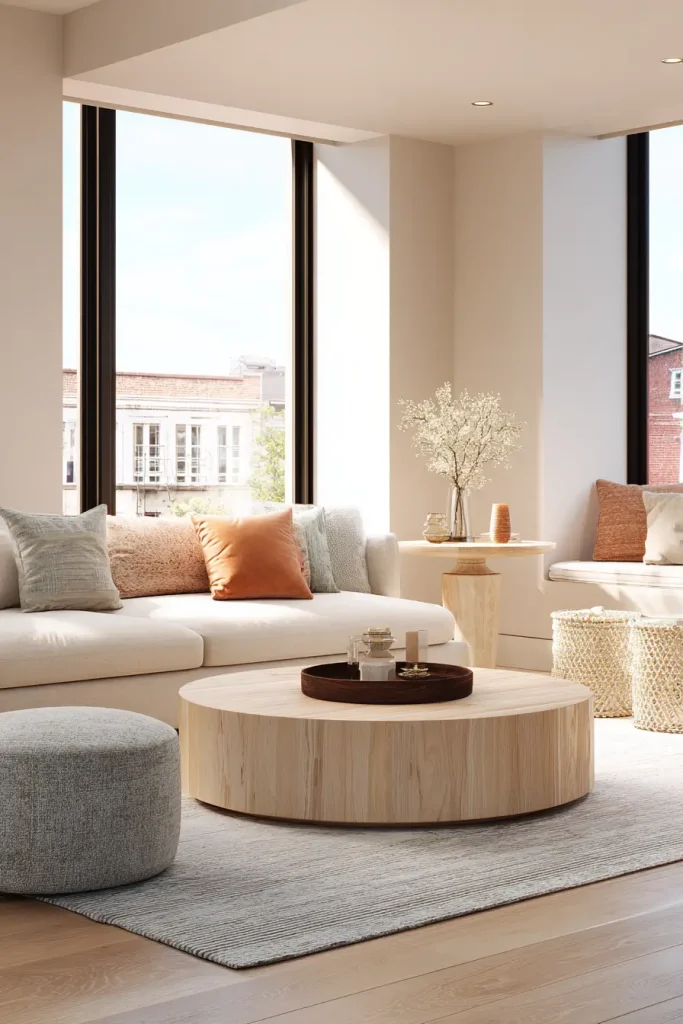
A glass coffee table in a home with toddlers is a risk. It is not worth the look.
You have three better options.
First, an upholstered ottoman. Put a tray on top for drinks and remotes. It doubles as extra seating. If a child falls into it, nothing breaks. Look at West Elm or CB2 for current options in 2026.
Second, a round wooden coffee table with no sharp edges. Round means no corners at head height. Wood means no shatter risk.
Third, nesting tables. These can be pushed aside during play and pulled out when you need a surface. They give you flexibility without taking up permanent floor space.
The bottom line: the “ottoman as coffee table” idea is not a compromise. It is just a smarter choice for this stage of life.
6. Set Up Storage That Kids Can Actually Use
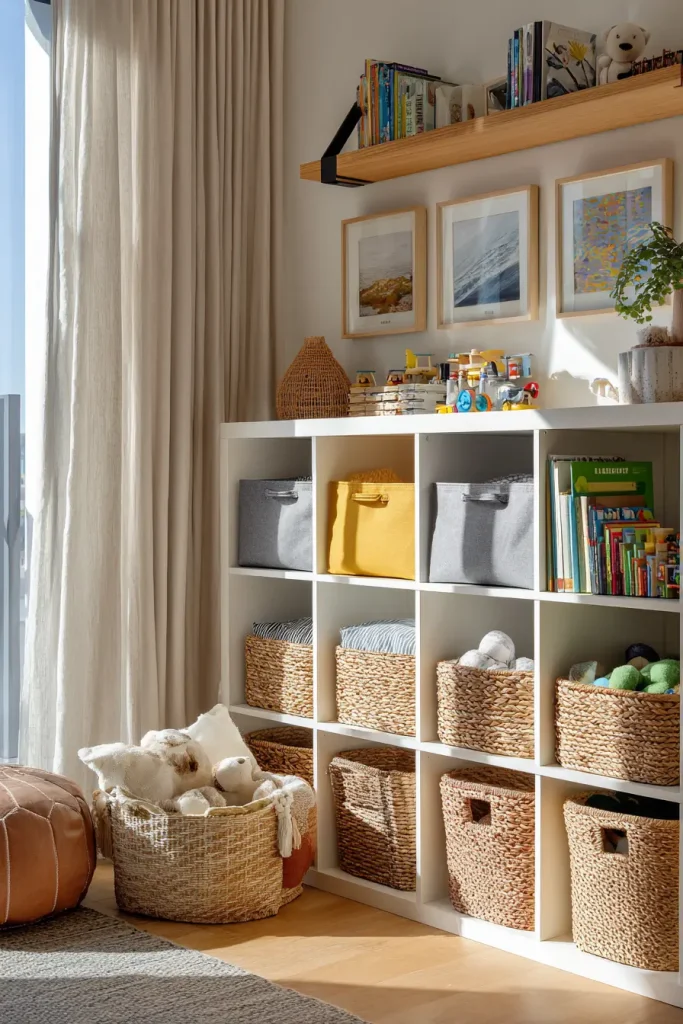
Most toy storage fails for one of two reasons. Either kids cannot figure out how to use it, so they do not. Or it is so open that toys scatter the moment a bin tips over.
The goal is storage that kids can manage on their own. That means bins and shelves at their height. When kids can put things away themselves, you do less of it.
IKEA’s KALLAX shelving unit has become a go-to for family rooms for a good reason. It is modular, sturdy, and the cubbies fit standard fabric bins. Search “IKEA KALLAX family room” on YouTube and you will find dozens of real setups from real families showing how they use it. That is not a paid claim. It is just genuinely one of the most-documented pieces of furniture in family organization content.
For pets: include a small basket or bin for dog toys and leashes. It keeps pet gear from spreading across the room and gives it a home that does not look like an afterthought.
If you want to go deeper on family organization, Marie Kondo’s book “The Life-Changing Magic of Tidying Up” has a section on children’s spaces.
7. Match Your Decor to Your Pet’s Fur Color
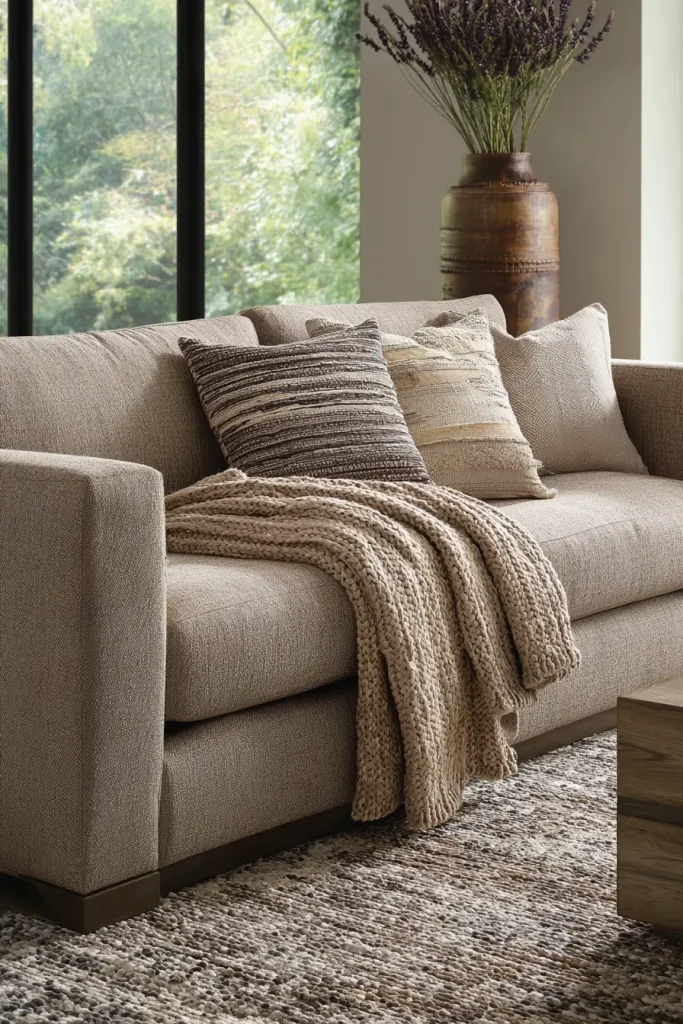
This sounds like a trick. It is not. It is a real strategy that experienced pet owners use.
If you have a golden retriever, warm beige and tan upholstery will not show fur between vacuuming sessions. If you have a black cat, dark gray or charcoal fabric will hide hair better than light colors.
You are not trying to eliminate fur. You are trying to stop staring at it all day.
A few other things that help:
- Keep a designated throw blanket on the spot your pet prefers on the sofa. When guests come, pull it off. Done.
- Use tightly woven fabric on your main furniture. Fur lifts off a tight weave with a lint roller far easier than from an open or loopy texture.
- Accept that high-shedding dogs may need daily vacuuming of upholstered surfaces. This is not a design failure. It is just life with that specific dog.
The American Pet Products Association (americanpetproducts.org) publishes annual data showing about 66% of US households own a pet. Check their site for updated 2025-2026 numbers. The point is: a lot of people are dealing with this same problem every day.
8. Fix Your Lighting Before Someone Gets Hurt
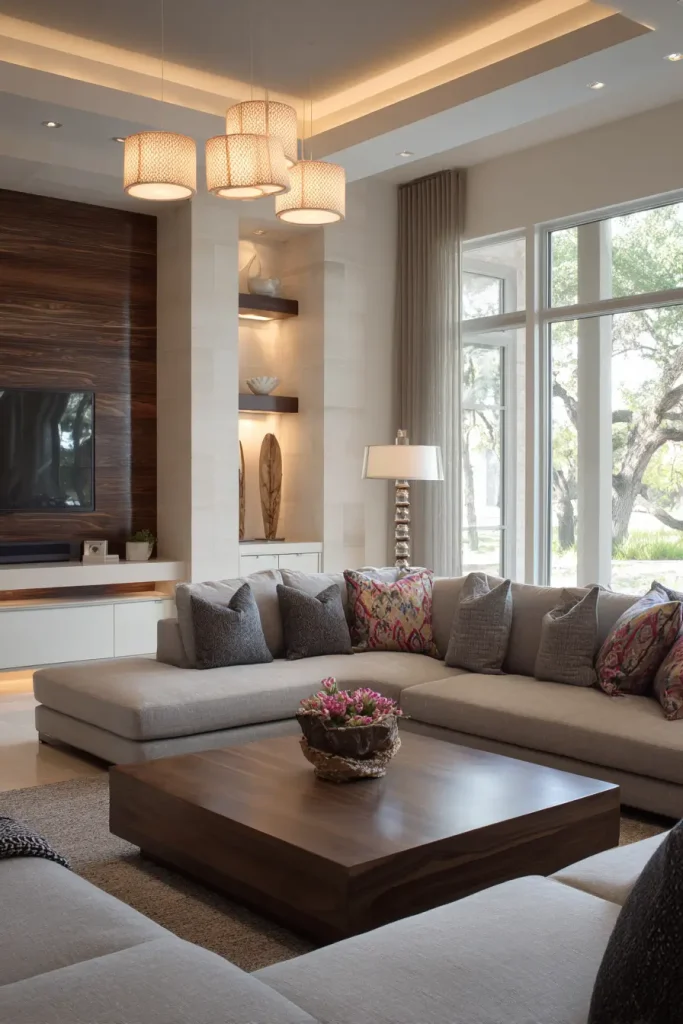
Floor lamps are a tip-over hazard. A dog running at full speed or a toddler grabbing for something will knock a floor lamp over. It is not a question of if. It is when.
Switch to ceiling fixtures and wall sconces wherever you can. These are out of reach. They cannot tip. They also free up floor space.
For lamps you do keep, put them on wide-based, heavy stands set back on a console or side table. Not near the edge. Not where a running child passes.
Cords are the other issue. Trailing cords are a trip hazard for kids and a chewing target for pets. Fix this with cord clips, in-wall cord covers, or battery-powered lamps that have no cords at all.
Dimmer switches are worth adding if you do not have them. They let you shift the room from bright play mode to calm evening mode without buying different lamps. Lutron (lutron.com) makes widely available dimmer systems that work with most existing setups.
The CPSC publishes electrical safety guidance for families at cpsc.gov.
9. Buy a Sofa Like You Are Running a Small Business
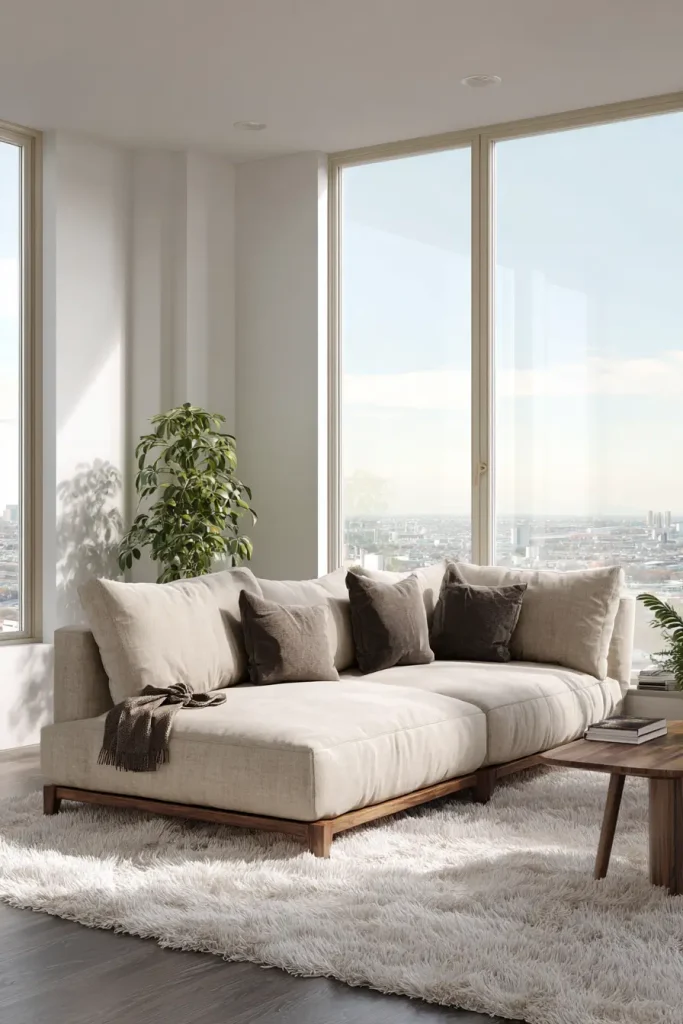
Think about what a hotel or restaurant buys. They do not pick furniture they love. They pick furniture that survives heavy use and still looks okay two years later.
You should do the same.
Frame matters. Look for hardwood or plywood frames. Softwood and particleboard frames break down faster under active use. Ask the retailer directly. A good retailer will tell you.
Cushion fill matters. High-density foam with at least 1.8 lb density holds its shape under repeated use. Down-wrapped cushions feel amazing on day one. They flatten faster than you expect.
Leg style matters. Sofas with exposed legs are easier to clean under. Skirts that go to the floor trap fur, dust, and lost toys underneath. You will never get them out without moving the whole sofa.
Seat depth matters too. Sofas deeper than 38 inches are comfortable for adults but awkward for young kids. They either slide forward or curl up, which is not great for long-term posture.
Architectural Digest (architecturaldigest.com) has published sofa buyer guides you can search. Consumer Reports (consumerreports.org) also periodically reviews sofa durability.
10. Use Slipcovers as a Real Strategy
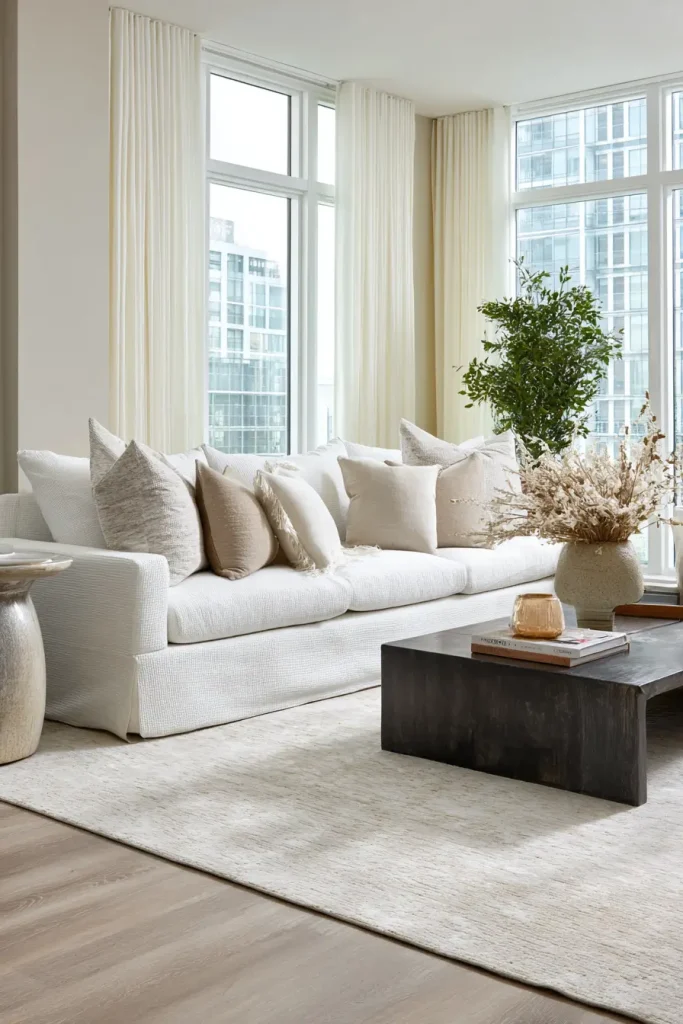
Slipcovers have a bad reputation. The image people have is a baggy grandma sofa from 1994. That is not what modern slipcovers look like.
Tailored slipcovers exist for most standard sofa sizes. They fit cleanly. And they can go in the washing machine every two or three weeks.
Think about that. A slipcover that gets washed regularly is cleaner than a fixed upholstery sofa that never gets cleaned at all. Pet dander, kid sweat, cracker crumbs. A washable slipcover beats a “nice” sofa that you can never really clean.
What to look for: machine-washable label, elastic or tuck-in design that stays in place, spandex blend for a fitted look.
Brands to check for current 2026 availability:
- IKEA offers washable slipcover options for several of their sofa lines (ikea.com)
- Sure Fit is a standalone slipcover brand
- Comfort Works (comfortworks.com) makes custom slipcovers for specific sofa models
11. Think About What Is Under Your Rug
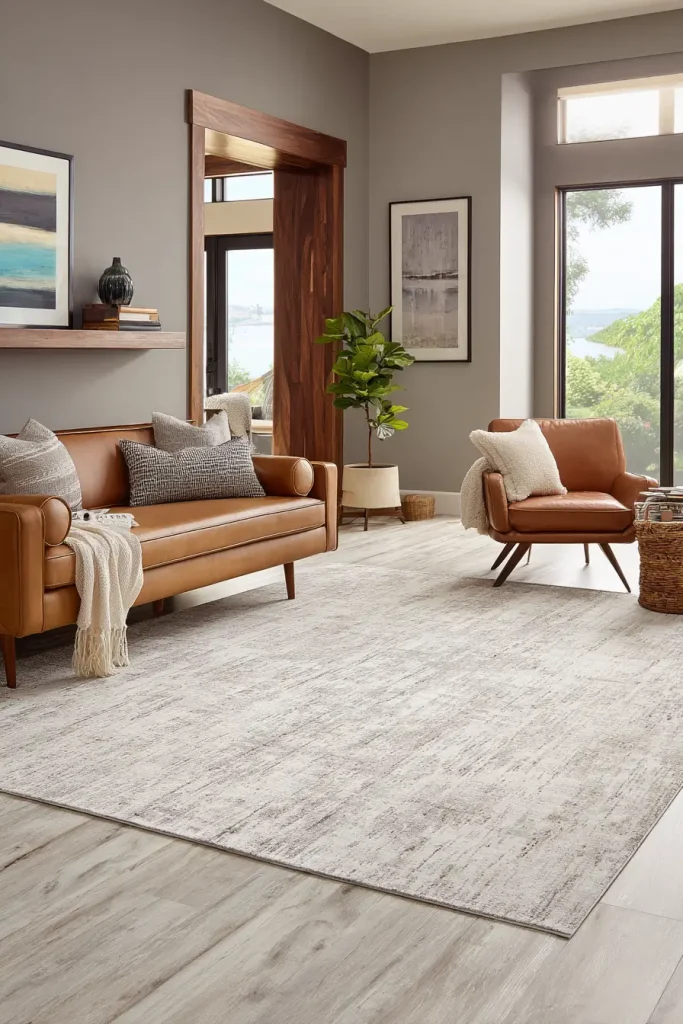
The rug gets a lot of attention. The floor under it matters too.
Wall-to-wall carpet is the hardest surface to keep clean in a family home with pets. Pet accidents soak in. Stains set. There is no way to hose it down.
Hard flooring under an area rug is much better. If something spills, it hits the hard floor or the rug. You clean the rug or mop the floor. Done.
Luxury Vinyl Plank (LVP) is one of the most recommended flooring options for pet and kid households right now. It is scratch-resistant, waterproof, and softer underfoot than tile. LifeProof (sold at Home Depot) and COREtec both publish pet and kid suitability ratings on their product pages.
Also pay attention to the clearance under your furniture. Sofas and chairs with very little floor clearance trap fur and require moving the whole piece to clean. That is a small daily frustration that adds up fast.
12. Make a Book and Toy Display That Gets Used
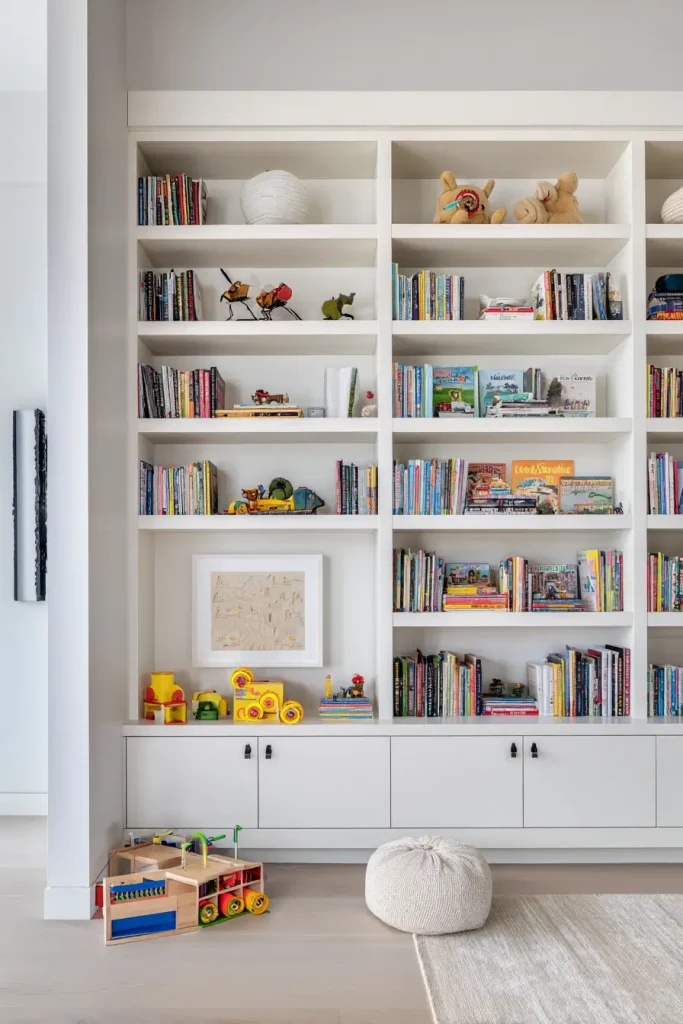
The goal is not a pretty shelf that no one touches. The goal is a setup that kids actually use.
Forward-facing bookshelves work. These are shelves where books face out instead of spine-out. Kids can see the covers. They pick books more often. This is used in schools and early childhood spaces for good reason. Search “forward-facing bookshelf” as a product type.
For toys, keep only a small number in the living room at any time. Rotate the rest in and out. This is called toy rotation. Kids play better and longer with fewer toys visible at once. The American Academy of Pediatrics’ parent site, healthychildren.org, has content on play and child development. Janet Lansbury’s site (janetlansbury.com) is a well-established resource on child-led play spaces.
Put adult items and fragile things on the top shelves. Put kid-accessible things on the bottom. Simple as that.
13. Reduce Noise With Soft Surfaces
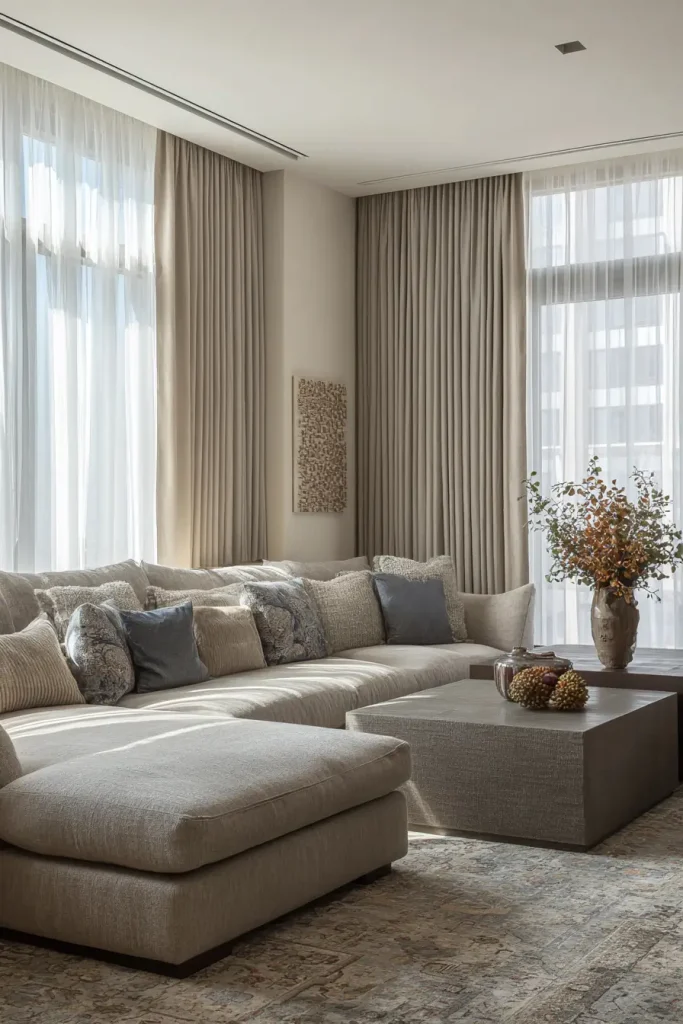
Hard floors, bare walls, and no curtains create echo. A barking dog or a crying toddler in that kind of room is very loud.
Soft surfaces absorb sound. A rug helps. Upholstered furniture helps. Heavy curtains help. Even fabric-wrapped wall art helps.
Heavy curtains are worth considering for two reasons. They cut noise. And they manage light for nap times and evening TV watching.
Acoustic panels are now a mainstream product. They used to be only for recording studios. Now you can find fabric-wrapped decorative versions made for living rooms. This Old House (thisoldhouse.com) has covered acoustic panels for home use. It is a good starting point for non-promotional guidance.
14. Keep Sharp and Small Things Off Low Surfaces
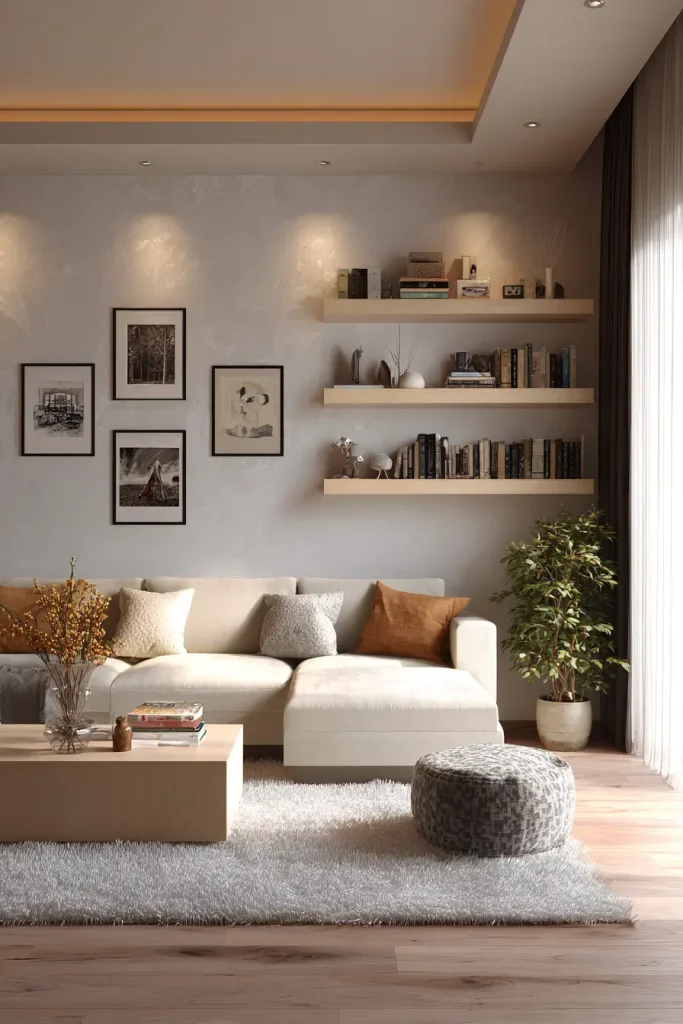
Anything below three feet is reachable by a toddler. Most dogs can reach that high too.
That means: no heavy vases that can tip, no ceramic sculptures with sharp edges, no small decorative objects that could be swallowed or chewed.
It is not about having a boring room. It is about moving the risky stuff up.
Gallery walls at adult height work well. You get personality and visual interest. Nothing is in reach. It is one of the easiest ways to keep your room looking intentional without putting anything at risk.
The CPSC maintains a searchable database of recalled products at cpsc.gov/recalls. Many recalled items are home decor. It is worth checking specific things before you display them. The AAP also has home safety guidance at healthychildren.org.
15. Build in Flexibility Because the Room Will Change Fast
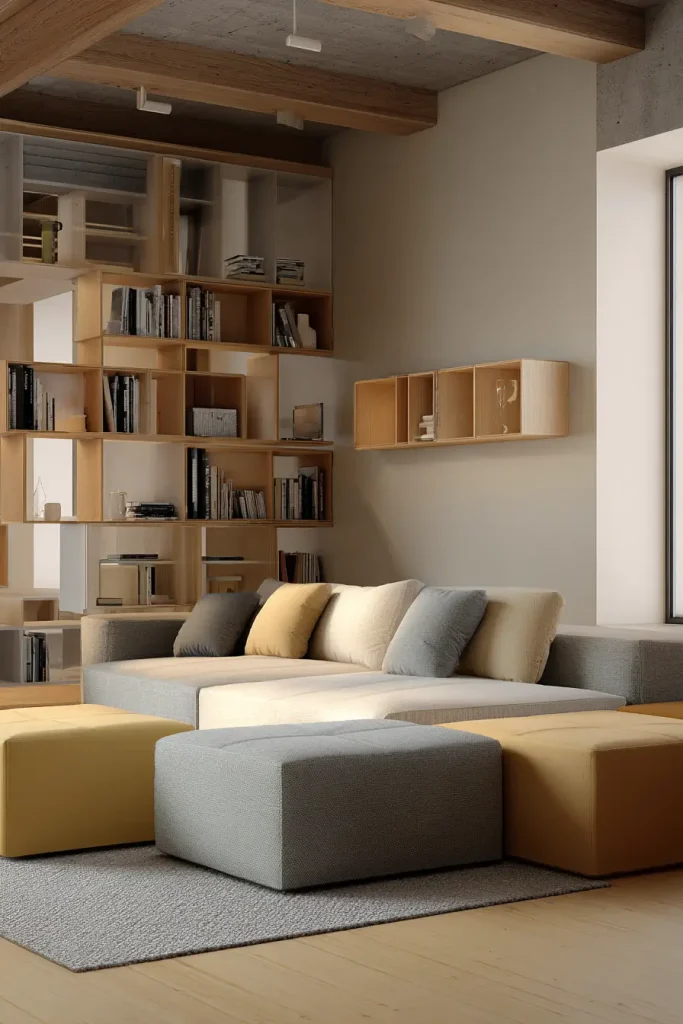
A living room that works for a 2-year-old will need to work for a 7-year-old. And then a 12-year-old. It changes faster than you expect.
Do not over-commit to permanent changes. A built-in ball pit corner will need to be removed. A solid bookshelf that can be relocated will last through every phase.
Modular furniture is the best long-term investment here. A sectional that can be reconfigured. Shelving that can move. Pieces that serve more than one purpose.
Avoid things that only work for one stage. The toddler activity table will go. The sturdy storage bench probably will not.
Architectural Digest and House Beautiful both publish family home before-and-after content showing how real spaces change over time. Searching Houzz under family home design gives you real photos from real houses.
The Bottom Line
A living room for families with young children and pets does not have to feel like a sacrifice. It just has to be built for how you actually live.
Start with two or three ideas from this list. Do not try to change everything at once. The biggest daily impact usually comes from the sofa fabric and the rug. Those are two things you touch and see every single day.
Pick something this week. Make one change. That is all it takes to start turning your living room into a room that actually works.

- 17 Classy Living Room Ideas for a Cozy Elegant Look - April 23, 2026
- 16 Dark Moody Living Room Ideas That Feel Rich and Warm - April 22, 2026
- 14 Elegant Bedroom Trends for 2026 You’ll Love - April 22, 2026