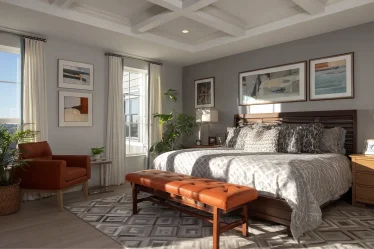
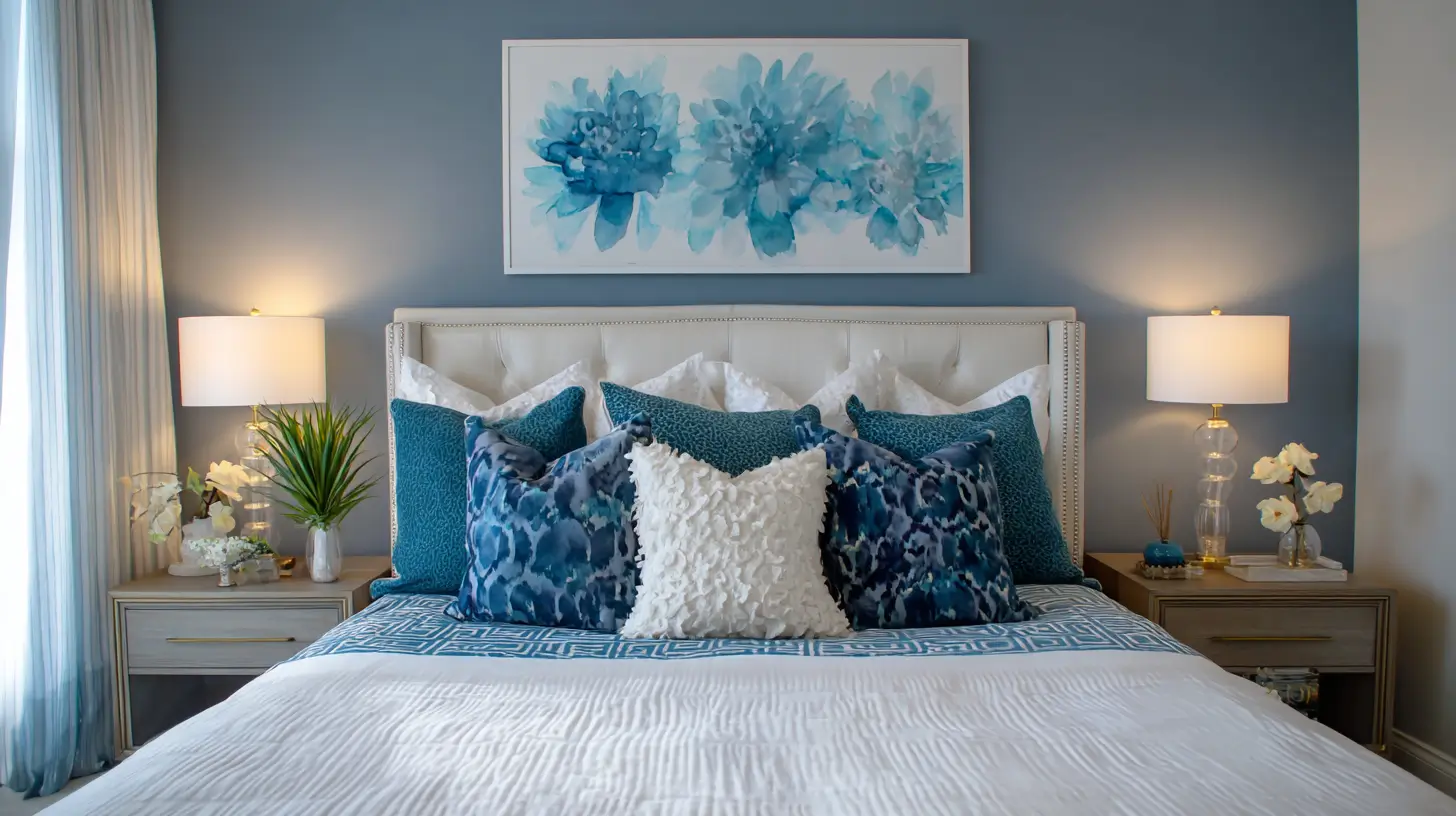
Most people stare at four empty walls and freeze. They don’t know where to start. They’re afraid of spending money on the wrong things. And they don’t want their bedroom to look like a mess of random stuff thrown together.
This guide fixes that.
You’ll get a clear order to follow, specific tools to use, and real advice that works in 2026. No vague tips. No expensive designer tricks. Just a plan you can actually use.
Here’s what you’ll learn:
- How to set a budget before buying anything
- The right order to do everything (most people get this backwards)
- How to pick colors that won’t clash
- Where to find good furniture without overspending
- How to make your room look finished and intentional
Let’s get into it.
1. Set Your Budget Before You Buy a Single Thing

Here’s the problem most beginners run into. They see a beautiful bedroom on Pinterest, rush to the store, and start buying things. Then they run out of money halfway through. The room looks half-done for months.
The fix is simple. Set your budget first. Write it down. Stick to it.
What does a bedroom actually cost in 2026?
According to HomeAdvisor, the average cost to furnish a bedroom falls between $1,500 and $3,500 depending on quality. But you don’t need to spend that much. Here’s a realistic breakdown by budget level:
Under $500: You’ll need to prioritize hard. Focus on a mattress and bedding first. Use secondhand furniture. Skip wall décor for now. It won’t look perfect, but it will be functional and comfortable.
$500 to $1,500: This is the sweet spot for most beginners. You can get decent furniture from IKEA or Wayfair, quality bedding, basic lighting, and a few décor pieces.
$1,500 and above: You have real options here. You can mix quality pieces with budget finds. Your room can look polished without looking expensive.
Quick Tip: Before you buy anything, create a simple budget spreadsheet in Google Sheets. List every category: bed frame, mattress, nightstand, dresser, lamp, curtains, rug, wall art. Assign a max spend to each. This stops impulse buys.
Free tools that help with planning:
- Google Sheets (budget tracker)
- Canva (mood board builder)
- Pinterest (visual inspiration)
2. Measure Your Room and Plan the Layout Before Buying Furniture

This is the step that saves people from expensive mistakes. Buying a sofa that doesn’t fit through the door. Getting a bed frame that blocks the closet. These things happen every day.
Measure first. Buy second.
How to measure your room correctly:
Grab a tape measure. Write down the length and width of the room. Also note:
- Where the windows are and how wide they open
- Where the door swings open
- Where the electrical outlets are
- Any awkward angles or built-in features
The bed-first rule: Your bed is the biggest piece of furniture in the room. Place it first in your plan. Everything else gets arranged around it. This one rule simplifies every other decision.
Once your bed is placed, check the pathways. You need at least 24 inches of clear walking space around furniture. That’s the standard most interior designers follow. Less than that and the room feels tight and hard to move around in.
Free floor planning tools you can use right now:
- Roomstyler 3D (roomstyler.com) — free, browser-based, no download needed
- IKEA Place — AR app that shows IKEA furniture in your actual room through your phone camera
- Planner 5D — more detailed, free version available, works on mobile
Spend 20 minutes planning your layout before you order anything. It’s the best 20 minutes you’ll invest in this whole process.
3. Pick a Color Palette That Actually Works
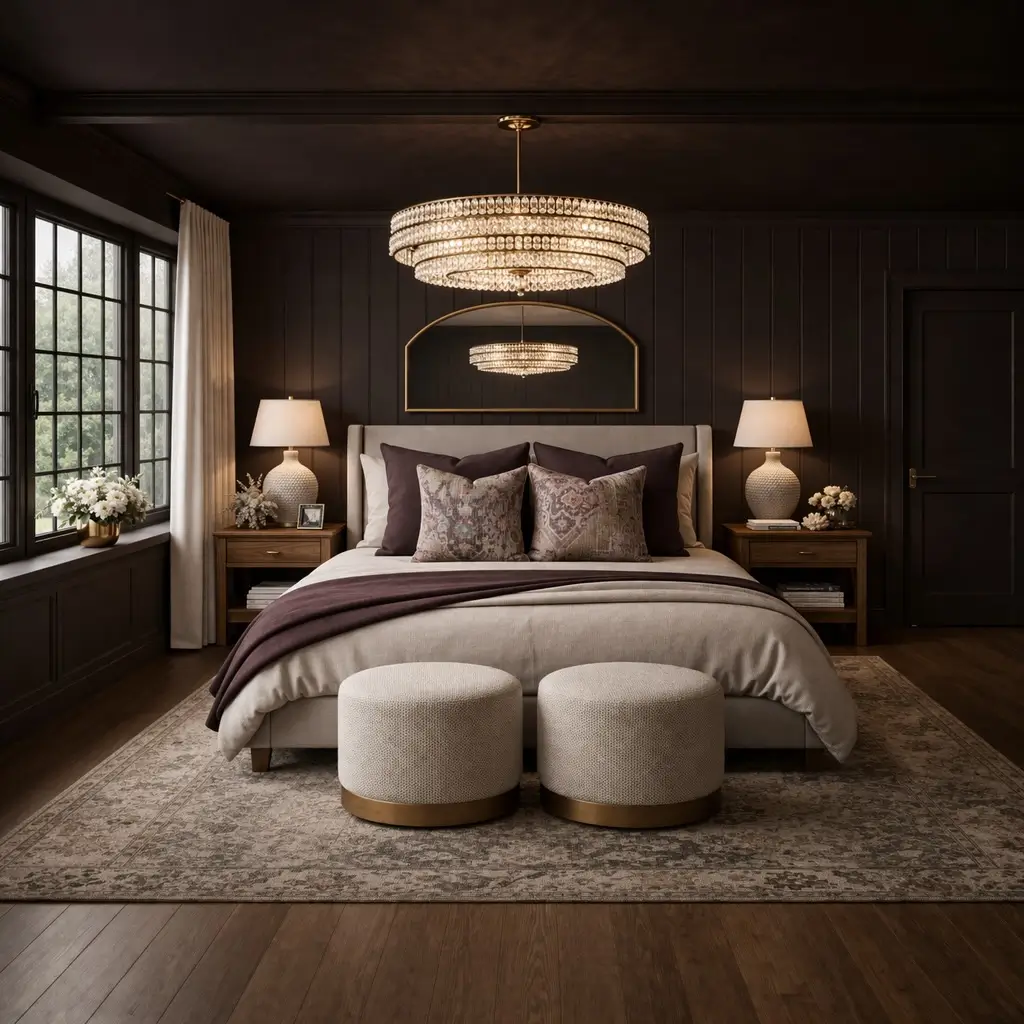
Color is where people panic. There are thousands of options and zero obvious starting points. But there’s a simple rule that makes this easy.
The 60-30-10 rule:
- 60% of your room should be one dominant color. This is usually the walls.
- 30% is a secondary color. Think furniture, bedding, or curtains.
- 10% is an accent color. This shows up in throw pillows, a plant pot, a lamp shade.
That’s it. Three colors. Used in those proportions. Most well-designed rooms follow this formula whether the designer knows it or not.
What colors are working well in 2026?
Based on Sherwin-Williams and Benjamin Moore’s 2025-2026 forecasts (always check their sites for the current year’s official picks), the direction is warm and earthy. Expect to see:
- Warm off-whites and creamy whites
- Sage green and muted olive
- Terracotta and warm clay tones
- Soft warm grays (not cold blue-gray)
These colors feel calm. That matters because your bedroom is where you sleep. Calm colors help you wind down.
Light matters more than the paint chip.
A color that looks perfect in the store can look completely different on your wall. Natural light changes everything. So does the direction your room faces.
Always buy a sample pot first. Paint a 12-inch square card and tape it to the wall. Look at it in the morning, afternoon, and evening. Only then decide.
Free color tools:
- Coolors.co (generate and test color palettes)
- Adobe Color (color wheel and harmony checker)
- Sherwin-Williams ColorSnap (upload a photo and test paint colors virtually)
4. Choose Your Essential Furniture in the Right Order

Not all furniture is equally important. And not all furniture is worth spending on. Here’s how to think about it.
Buy in this order:
- Mattress
- Bed frame
- Storage (dresser, wardrobe, or under-bed storage)
- Nightstand
- Seating (only if your room has space)
Where to spend vs. where to save:
Your mattress is the one place worth spending real money. You spend a third of your life on it. A bad mattress affects your sleep and your health. Don’t cut corners here.
Your nightstand? You can buy that secondhand for $20 and it’ll work just fine.
Where to shop in 2026:
- IKEA — reliable, budget-friendly, lots of multi-functional pieces
- Wayfair — wide selection, frequent sales, check reviews carefully
- Facebook Marketplace — genuinely great finds, especially for dressers and bed frames
- Thrift stores and charity shops — hit or miss, but worth checking regularly
- Amazon — good for basics like under-bed storage, small shelving, and organizers
Small room? Use furniture that does two jobs.
An ottoman bed stores bedding and clothes underneath. A floating shelf doubles as a nightstand. A narrow bookshelf acts as a room divider and storage at the same time. In rooms under 150 square feet, every piece of furniture should serve more than one purpose.
Quick Tip: Before clicking “buy,” check the exact dimensions of the piece against your room measurements. A $400 dresser that doesn’t fit the wall is just a $400 mistake.
5. Layer Your Bedding and Textiles for a Polished Look

Bedding is how most people judge whether a room looks “done.” A well-made bed with layered textiles instantly makes a room feel intentional. A plain duvet on a bare mattress does the opposite.
The 3-layer formula:
- Base layer: Fitted sheet and flat sheet in a neutral tone
- Middle layer: Duvet or comforter in your main or secondary color
- Top layer: One throw blanket draped at the foot of the bed, two or three throw pillows in front
That’s it. You don’t need 14 pillows. You don’t need a complicated arrangement. Three layers, done intentionally, look great.
How textiles tie your whole room together:
Pick one color from your accent color (the 10% from the 60-30-10 rule). Now look for that same color in your bedding, curtains, and rug. Even just a thread of that color repeating across three textiles makes the room feel cohesive.
The rug sizing mistake most beginners make:
A rug that’s too small makes the room look smaller. Your rug should either:
- Have all four legs of the bed sitting on it, with 18-24 inches extending on each side, or
- Have at least the front legs of all furniture pieces touching the rug
When in doubt, go bigger.
The curtain trick that makes windows look larger:
Mount your curtain rod 4 to 6 inches above the window frame, not at the frame itself. Extend the rod 4 to 6 inches wider on each side of the window. This tricks the eye into thinking the window is much bigger than it is. It also makes ceilings feel higher.
Budget textile sources:
- IKEA (MAJGULL and HANNALILL ranges are solid)
- H&M Home
- Target’s Studio McGee line
- Amazon Basics linen-look covers
6. Get the Lighting Right (Most Beginners Skip This Completely)
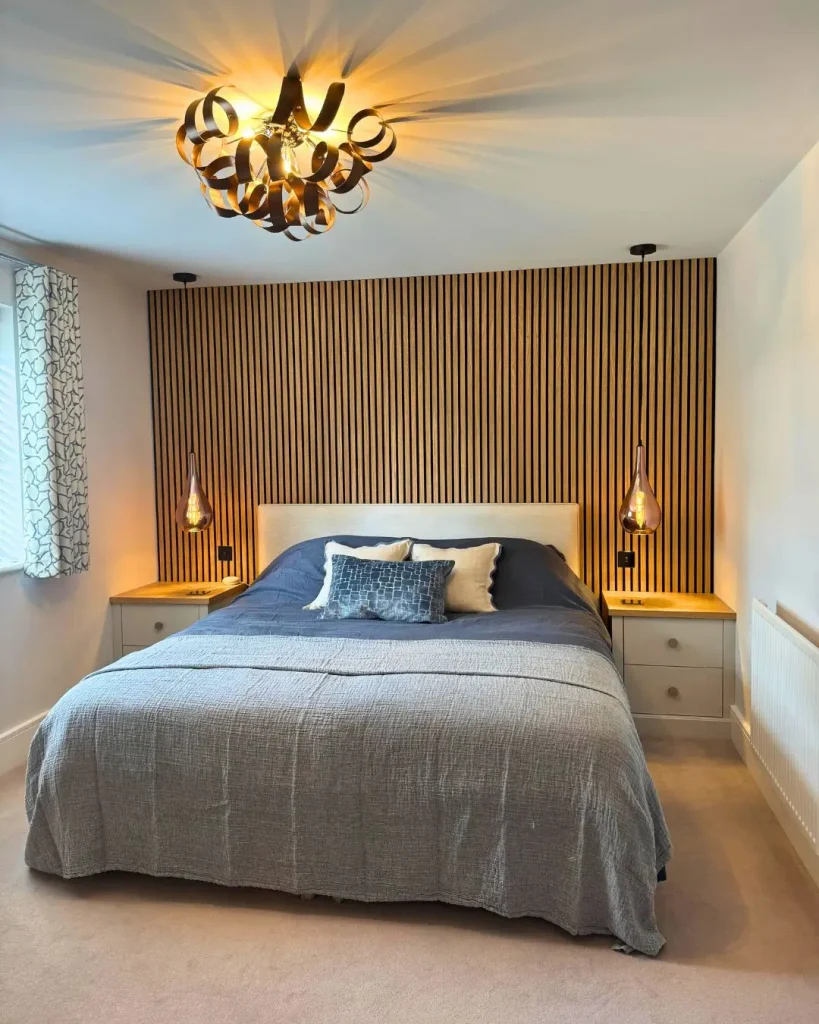
Bad lighting ruins a good room. A harsh overhead bulb makes even the most carefully decorated bedroom feel like a hospital waiting room.
Good lighting costs less than you think. And it changes how the whole room feels.
The 3-layer lighting approach:
- Ambient (overhead): The main light source. Ideally on a dimmer switch.
- Task: A bedside lamp for reading. Keeps you from straining your eyes.
- Accent: Mood lighting. Think LED strips behind a headboard, or a small lamp in a corner.
You don’t need all three on day one. Start with ambient and task. Add accent lighting later.
Use warm bulbs. Not cool white.
Warm light falls between 2700K and 3000K on the Kelvin scale. That’s the warm, golden tone that feels cozy and relaxing. Cool white (5000K and above) feels like an office. It’s not what you want in a bedroom.
When buying any bulb, look at the Kelvin number on the box. Go warm.
Affordable lighting upgrades for 2026:
- Philips Hue or GOVEE smart bulbs — change color temperature with your phone, start at around $15 per bulb
- Plug-in wall sconces — no electrician needed, just plug into an outlet and hang
- LED strip lights — mount behind a headboard for a soft glow effect, widely available for under $20
- Battery-powered puck lights — great for inside wardrobes or on shelving
For renters: You usually can’t change hardwired switches. But you can replace light bulbs and add plug-in fixtures. That alone will transform the feel of your room.
7. Add Wall Décor and Personal Touches Last

This is the step most beginners do first. That’s why their rooms never look right.
Wall art and accessories go on last. Once the furniture is placed, the bedding is on, and the lighting is sorted, then you can see what the walls actually need. You might find you need less than you thought.
Gallery wall the easy way:
Don’t eyeball it. Cut paper templates the exact size of each frame. Tape them to the wall. Adjust until you’re happy with the arrangement. Then hammer in the nails. This saves holes in the wrong places.
Space frames 2 to 3 inches apart. Use a level or the free bubble level in your phone’s compass app.
Where to get affordable wall art in 2026:
- Desenio (desenio.com) — clean, modern prints, frequent sales
- Society6 — independent artists, wide range of styles
- Etsy digital prints — download, print at Staples or your local print shop for under $5 per print
- IKEA BILD range — basic but solid, frames included
Add one living thing to your room.
Plants make a room feel alive. They also improve air quality and reduce stress according to research from the Journal of Physiological Anthropology (2015). For low-light bedrooms, try:
- Pothos — nearly impossible to kill, trails beautifully
- Snake plant — thrives on neglect, cleans the air
- ZZ plant — handles low light and infrequent watering
You don’t need a collection. One plant in a corner or on a shelf is enough.
The odd-number rule for styling shelves and surfaces:
Group décor objects in sets of 3 or 5. Never 2. Never 4. Odd numbers create visual tension that the eye finds interesting. Even numbers feel static and flat.
8. 5 Mistakes That Make Bedrooms Look Bad (and How to Fix Each One)

Mistake 1: Buying furniture without measuring first.
This is the most common and most expensive mistake. A bed frame that doesn’t fit, a dresser that blocks the window, a rug that’s too small. All of it could be avoided with a tape measure and 10 minutes.
Fix: Measure your room before you shop. Write the dimensions on your phone.
Mistake 2: Choosing paint from a tiny chip under store lighting.
Store lights are bright and artificial. Your bedroom has different light. What looks like a soft gray in the store can look purple or blue on your wall.
Fix: Buy a sample pot. Test it at home.
Mistake 3: Hanging curtains too low and too narrow.
This is one of the most common signs of a first-time decorator. Curtains hung at the window frame make the room feel smaller and the ceilings feel lower.
Fix: Hang the rod high. Extend it wide. Your room will look twice as tall.
Mistake 4: Forgetting storage until after everything else is bought.
You fill the room with furniture and suddenly realize there’s nowhere to put your clothes.
Fix: Include storage in your furniture plan from the start. Prioritize it over decorative pieces.
Mistake 5: Over-decorating.
More stuff does not equal a better-looking room. In fact, the opposite is usually true. A few well-chosen items in the right places look far better than surfaces covered in random objects.
Fix: After you decorate, take one thing away. Then step back and look. It’s almost always better.
You Now Have a Plan. Here’s Where to Start.
Most people reading this will think “that makes sense” and then not do anything. Don’t be that person.
Here’s your one action for today: Get a tape measure. Write down your room’s length and width. Then write down a realistic budget number.
That’s it. Those two pieces of information are the foundation for every other decision you’ll make.
Decorating a bedroom from scratch isn’t something you do in an afternoon. It’s a process. You’ll make a few small mistakes. That’s normal. But if you follow this order — budget, layout, color, furniture, textiles, lighting, décor — you’ll avoid the big expensive mistakes that most beginners make.
Your room will get there. Start with step one.

- 17 Classy Living Room Ideas for a Cozy Elegant Look - April 23, 2026
- 16 Dark Moody Living Room Ideas That Feel Rich and Warm - April 22, 2026
- 14 Elegant Bedroom Trends for 2026 You’ll Love - April 22, 2026