
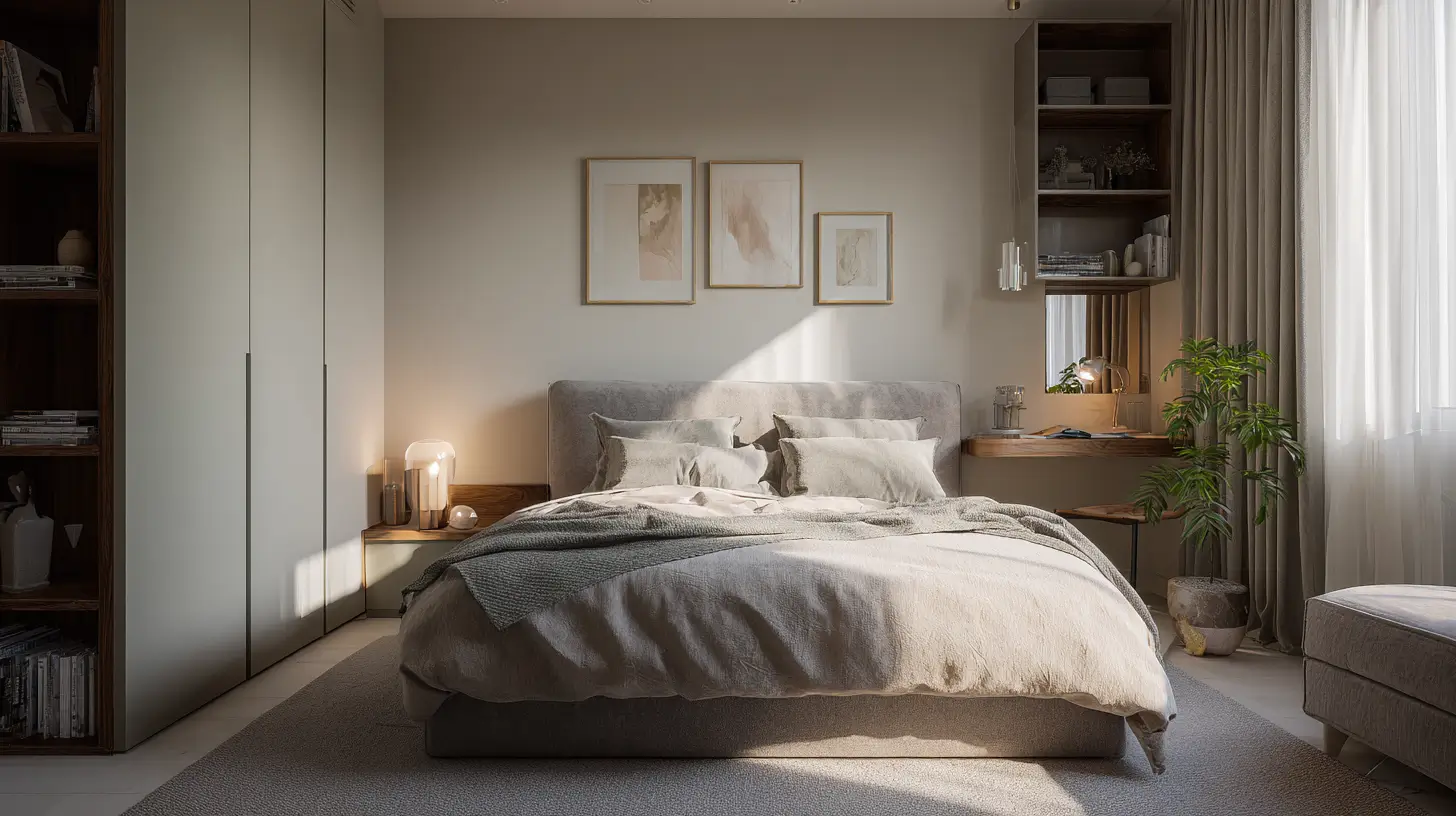
If you’ve ever laid in bed at 2:00 AM staring at the pile of laundry on the chair, mentally folding it instead of sleeping, your bedroom isn’t relaxing you—it’s regulating you in the wrong direction.
For the ADHD brain, a bedroom often becomes a catch-all space. It’s where you work, scroll, exercise, store things, and try to sleep. But when your brain struggles with sensory filtering, all those mixed signals cause hyperarousal. You feel wired when you need to be tired.
This guide gives you 17 specific, low-effort ways to turn your bedroom into a place that actually helps your nervous system slow down. You’ll learn simple fixes from occupational therapy and interior design psychology. No major renovation required.
Let’s start with a quick way to see your room the way your brain does.
1. Start with a Sensory Audit (The 5-Minute Scan)

You can’t fix what you don’t notice. ADHD brains often develop “clutter blindness”—you stop seeing the mess because it’s been there so long. A sensory audit forces you to look again.
Grab your phone. Open the camera and switch to the black-and-white filter. Walk around your room. Color disappears, but texture, shadow, and clutter become painfully obvious. That pile on the dresser? It now screams for attention.
A 2024 Princeton University study found that physical clutter competes for your attention, lowering focus and increasing stress. In a bedroom, that stress turns into trouble falling asleep.
Write down three things that jump out: a bright light, a crowded shelf, a noisy rug pattern. Those are your first targets.
Tonight: Do the black-and-white photo scan. Pick one thing to move or hide.
2. Eliminate “Visual To-Do Lists”

Your brain reads exposed objects as tasks. A stationary bike says “you should exercise.” An unpaid bill says “you should pay me.” Laundry on the chair says “fold me.”
For the ADHD brain, these visual to-do lists create a constant low-grade demand. Even when you’re trying to rest, your brain stays on alert.
The fix is closed storage. Opaque bins, drawers, and baskets hide the items without the emotional weight. IKEA Kallax units with drawer inserts work well. So do simple woven baskets from Target.
Try this: Move exercise equipment out of the bedroom entirely. If that’s not possible, cover it with a plain sheet or put it behind a curtain. Your bed should never share space with a reminder of exercise guilt.
3. Choose “Dim-to-Warm” Lighting Only

Cool white LEDs and overhead lights signal your brain that it’s daytime. They suppress melatonin production and keep you alert.
The goal is warm light at 2700 Kelvins or lower. Think sunset colors. In 2026, tunable white bulbs and “sunset lamps” are easy to find. Philips Hue bulbs let you set scenes—use “Relax” or “Sunset” for evenings.
Smart plugs with voice control help too. You can say “turn off everything” without getting out of bed. That removes a small but real barrier to sleep.
Quick win: Swap any cool-white bulb in your bedroom for a 2700K warm bulb. Do it today.
4. Create a “Doom Box” Zone (Not a Doom Pile)

“Doom piles” are those stacks of stuff you move from one surface to another. They’re not organized, but you also can’t throw them out. They’re a normal part of ADHD life.
Instead of fighting the pile, contain it. Get one large, attractive basket—seagrass or canvas works well. Place it near the door. This is your designated “out of the room” box. Anything that belongs elsewhere goes in the box.
The rule is simple: the box can be full, but it must be the only thing out of place. The rest of the room stays clear. When the box gets full, you take it with you on your next trip out of the room.
Why this works: It respects how your brain processes stuff while keeping the rest of the room visually calm
5. Weighted Sleep Systems (Beyond Blankets)

Deep pressure stimulation (DPS) calms the nervous system by activating the parasympathetic “rest and digest” response. Weighted blankets have been popular for years, but in 2026 the trend is weighted duvets.
Weighted duvets distribute weight evenly and regulate temperature better than a single weighted blanket. Look for one that’s 15–25 pounds, or about 10% of your body weight.
If you’re a side sleeper, a weighted eye mask can also help. It provides gentle pressure around your eyes and blocks light.
Research note: A 2023 review from Sensory Integration Education found deep pressure can reduce anxiety symptoms by up to 63% in sensory-sensitive individuals. That includes many people with ADHD.
6. Separate Zones: Sleep vs. Work

If you work from your bed, your brain associates the bed with stress and focus. Then when you try to sleep, you’re in “work mode.”
The solution is context separation. If you have space, move your desk to another room. If you live in a studio, use a room divider or a folding screen to create a visual boundary. Even a bookshelf placed perpendicular to the bed helps.
At minimum, create a “no laptops in bed” rule. Use a specific chair for screen work. And change into pajamas—the physical act of changing clothes signals your brain that the workday is over.
7. Neutral Palettes with a Single Accent

High-contrast patterns—loud florals, geometric stripes—create visual noise. Your brain works harder to process them, which is the opposite of rest.
Earth tones like greige, terracotta, soft sage, and warm beige have a naturally calming effect. They don’t demand attention. If you want visual interest, add texture instead of color. Linen sheets, a wool throw, velvet pillows. These give your eyes and hands something pleasant without overstimulation.
2026 color note: Soft sage and muted terracotta are trending. Both work well as accent colors against a neutral base.
8. Blackout Curtains (But a Specific Type)

Total darkness is essential for melatonin production. But cheap blackout curtains often leave light gaps at the edges.
Look for curtains labeled “blackout” that wrap around the rod, or use curtain clips to close the gap. For 2026, motorized smart curtains are more affordable. You can set them to open slowly in the morning with a sunrise simulation, which wakes you gently—no jarring alarm.
If you can’t install curtains, a sleep mask works. Manta Sleep masks are popular because they have adjustable cups that don’t press on your eyes.
9. “One-Touch” Flooring

Your brain processes obstacles as friction. If you have to step over shoes, bags, or cords to get to the bathroom, that’s cognitive load you don’t need.
The “no floor dwellers” rule: nothing sits on the floor except furniture legs. Shoes go in a closet or a basket. Cords get hidden behind furniture or in cord covers.
If you use a rug, choose flat-weave over high-pile shag. High-pile rugs feel unpleasant to some ADHD feet and are harder to vacuum, which adds friction to cleaning.
10. The “Everything Has a Home” Nightstand

The nightstand is a common spot for clutter to accumulate. Keys, receipts, random items, old water bottles.
Simplify it to four items:
- A water bottle (with a lid)
- An eye mask
- Lip balm
- A remote or sleep machine
If you need more storage, use a wall-mounted caddy or a small drawer unit. The goal is to have a clear surface. When everything has a designated spot, it’s easier to put things back.
11. Auditory Buffering (Beyond White Noise)

Silence can be loud for the ADHD brain. Without background noise, your internal monologue takes over, and intrusive thoughts keep you awake.
White noise works for some, but many people with ADHD prefer brown noise. It has a lower frequency—think heavy rain or a deep rumble. It masks background sounds without the high-pitched hiss that can be irritating.
Apps like MyNoise and Spotify have brown noise playlists. For partners who don’t want noise, try sleep headphones (a soft headband with flat speakers). And for the “monkey mind,” put on a familiar audiobook at low volume. Your brain follows the story without needing to stay alert.
12. Scent as a Neurological Anchor

Your sense of smell connects directly to the amygdala, the emotional center of your brain. That means scent can trigger a calm state almost instantly.
Pick one scent and use it only for sleep. Lavender is the most studied—it’s shown to improve sleep quality and reduce anxiety. Cedarwood and vetiver are good alternatives.
In 2026, safety matters: avoid open-flame candles in the bedroom if you’re prone to forgetting. An ultrasonic diffuser with a timer is a better choice. Set it to run for 30–60 minutes before bed.
13. Tactile Transition Objects

ADHD brains often need a physical cue to shift from wakefulness to rest. Your sheets and pillows can provide that.
If you run hot at night, choose cooling sheets made from bamboo or Tencel. If you run cold, flannel or fleece gives that cozy feeling.
A body pillow is another simple tool. It provides proprioceptive input—pressure against your joints—which reduces tossing and turning. Some people find it mimics the feeling of being held, which lowers anxiety.
14. Remove High-Stakes Technology
“Do not disturb” mode isn’t enough for the ADHD brain. The phone is still right there, and impulse control is harder when you’re tired.
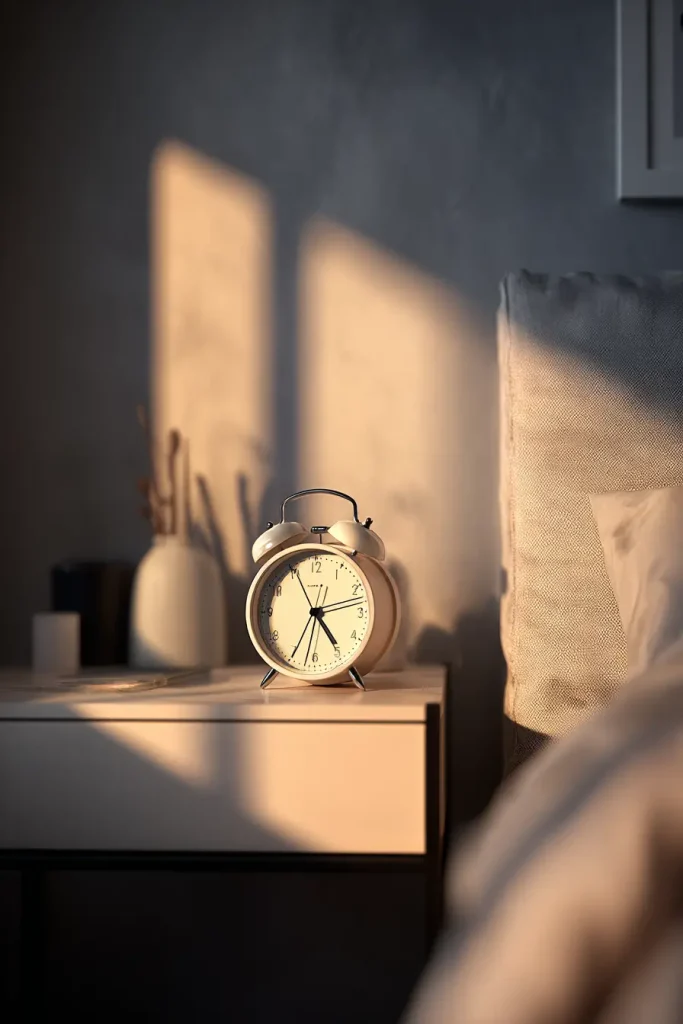
The most effective fix is to charge your phone in another room—the kitchen, the bathroom, anywhere but the bedroom. Replace it with a basic analog alarm clock. No screen, no scrolling, no 2:00 AM doomscrolling.
If you absolutely need your phone for sleep sounds, put it across the room with the screen facing down. Make it physically harder to reach.
15. Strategic Mirror Placement

Mirrors can create hypervigilance. If you have a mirror facing your bed, your peripheral vision catches movement (often just you shifting) and your brain stays alert.
Try covering the mirror with a cloth or sliding door. If you can’t cover it, reposition it so it faces a wall or a window. Mirrors are best used to reflect natural light, not your sleeping position.
16. Micro-Resets (The 90-Second Routine)

ADHD brains often fall into “all or nothing” cleaning. You either ignore the mess or spend hours hyperfocusing on it. Neither is sustainable.
Instead, do a 90-second reset every morning before you leave the room:
- Make the bed (or just pull the duvet flat)
- Put anything in the doom box
- Close closet doors
- Flatten the rug if it’s bunched
Do this while your morning medication is active (if you take it). That way, the room is reset before your executive function declines in the evening. When you return to sleep, there’s nothing demanding your attention.
17. The “Cool Down” Thermoregulation

Your body temperature must drop to fall asleep and stay asleep. The ideal bedroom temperature is 65–68°F (18–20°C).
If you sleep with a partner who runs hot or cold, look into a BedJet or ChiliPad. These let each person control their side of the bed. They’re an investment, but for people with ADHD who are sensitive to temperature changes, they can be life-changing.
Conclusion
An ADHD-friendly bedroom isn’t about being a minimalist. It’s about reducing the mental energy required to be in the space. Less visual noise means less brain noise. Fewer decisions mean more rest.
You don’t need to do all 17 things at once. Pick one—just one—and try it tonight. Replace the light bulb. Move the doom pile into a basket. Charge your phone in the kitchen.
Your nervous system will thank you. And tomorrow, if you want, pick another.
Start with one. See what changes.

- 17 Kids Bedroom Ideas That Grow With Them - March 31, 2026
- 17 Industrial Bedroom Ideas for Urban Apartment Dwellers - March 31, 2026
- 16 Stylish Living Room Seating Ideas for 2026 - March 31, 2026

