Introduction
A basement bathroom doesn’t have to feel dark, cramped, or purely functional.
Yet that’s exactly how many of them turn out.
You might be dealing with low ceilings. Maybe there’s barely any natural light. The plumbing might sit in the wrong spot. And moisture? That’s always a concern below ground.
These problems stop many homeowners from finishing their basement bathroom at all. Or worse, they rush the design and regret it later.
The good news is this: smart basement bathroom ideas can completely change the space. Even a small footprint can feel bright and open with the right layout and lighting.
In this guide, you’ll discover 16 practical and stylish ideas you can actually use. You’ll learn layout solutions made for tight spaces. You’ll see lighting tricks that make ceilings feel taller. And you’ll find design features that can boost resale value.
Whether you’re searching for small basement bathroom ideas or planning a full basement bathroom design, this guide will help you build a space that feels intentional, comfortable, and worth the investment.
1. Brighten the Space with Strategic Lighting
Lighting is usually the biggest problem in basement bathrooms.
There are no big windows. Shadows collect in corners. The room feels smaller than it is. And here’s why that matters. Poor lighting makes everything look dull and cramped.
Start with layered lighting. That means combining three types:
- Ambient lighting for overall brightness
- Task lighting near the mirror
- Accent lighting for depth
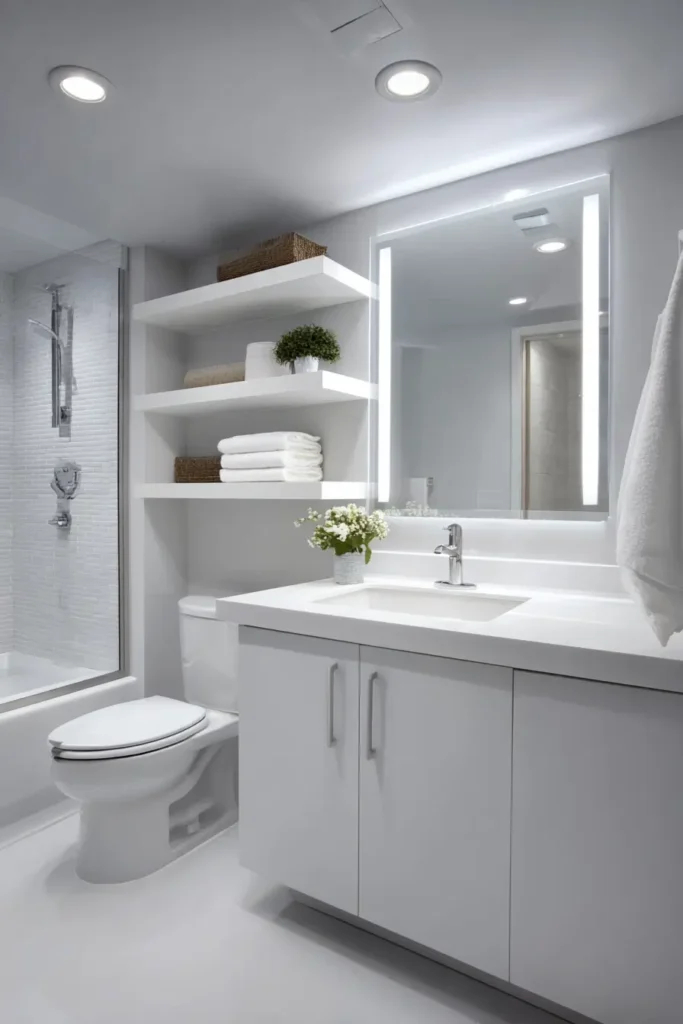
Recessed ceiling lights work well in low ceilings. They don’t hang down, so you avoid losing headroom. They also create a cleaner look in modern basement bathroom design.
Next, upgrade your mirror. LED mirrors can reduce shadowing by up to 30%. That means fewer dark spots on your face when shaving or applying makeup. It also makes the whole room feel brighter.
Choose warm white lighting if you want a cozy feel. Pick cool white if you prefer a clean, modern look. Just don’t mix too many tones.
If you’re exploring small basement bathroom ideas, lighting should be your first upgrade. It’s often the fastest way to change how the space feels.
2. Use Light Colors to Make It Feel Bigger
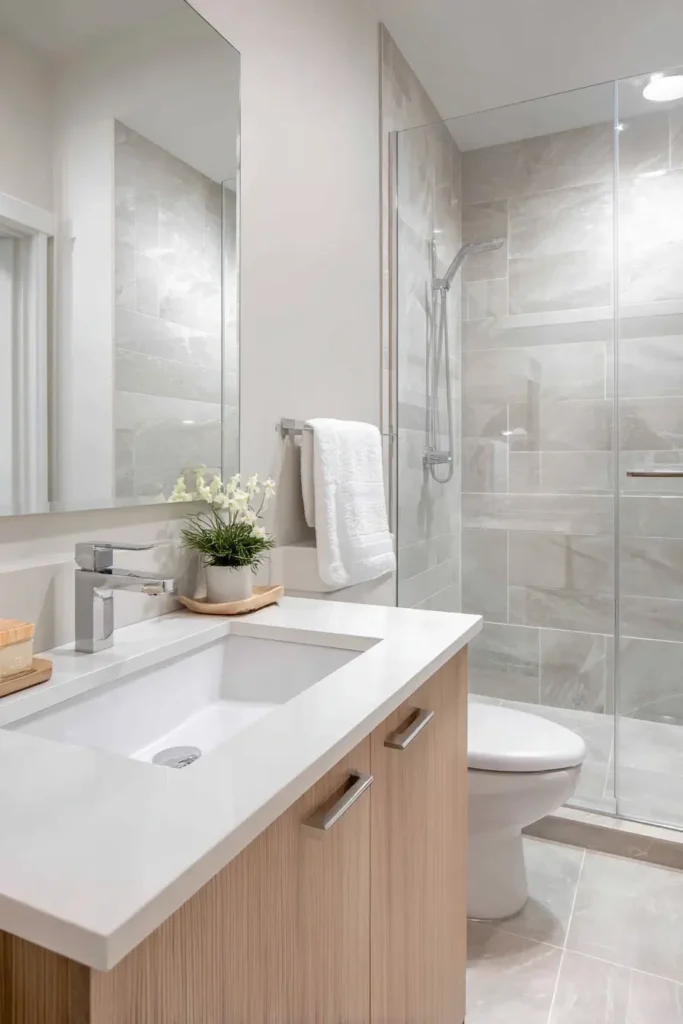
Dark colors absorb light. Basements already lack it.
That’s why lighter shades work better in most basement bathroom ideas.
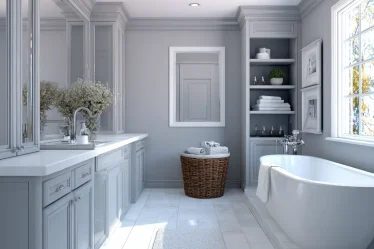
Soft whites, pale gray, and warm beige reflect light around the room. They make walls feel farther apart. A color like Swiss Coffee or Pale Oak can instantly brighten the space without looking cold.
Light-colored tile helps too. Large-format porcelain tile in soft tones creates fewer grout lines. Fewer lines make the room feel less busy.
High-gloss finishes can also help. Glossy cabinets or tiles bounce light back into the room. Even a satin paint finish can make a difference.
For an even bigger effect, match the floor and wall tones. When colors blend, your eye moves smoothly across the space. That creates the illusion of size.
Before-and-after comparisons often show how dramatic this change can be. A dark basement bathroom feels boxed in. The same space in soft neutrals feels open and calm.
If you’re searching for small basement bathroom ideas, start with your paint color. It’s affordable and powerful.
3. Install a Walk-In Shower Instead of a Tub
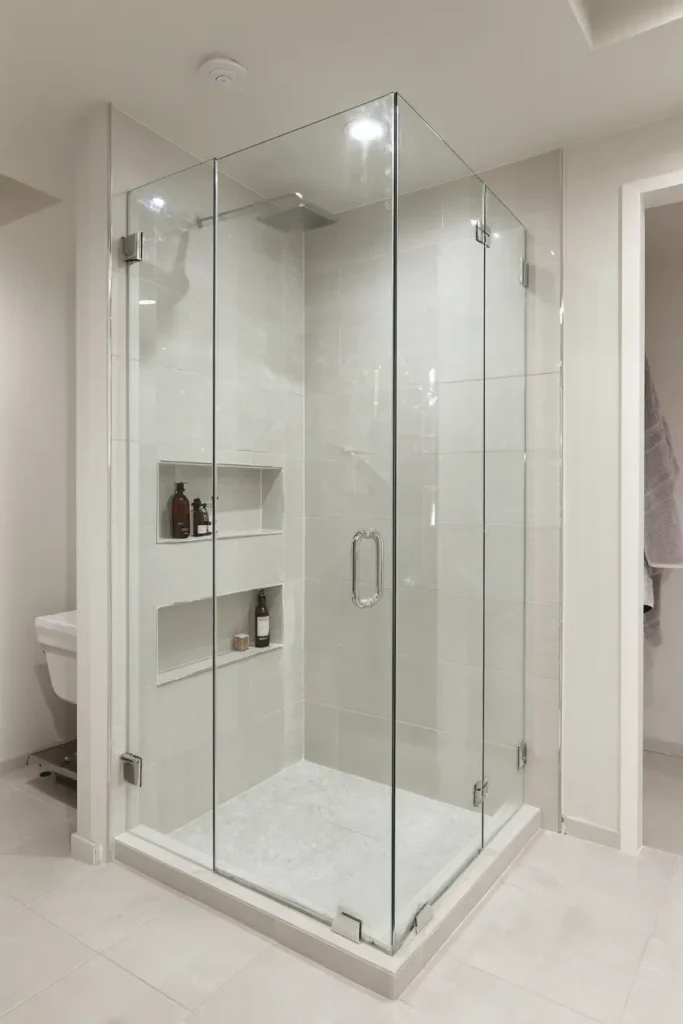
Tubs take up space. In a basement, space is limited.
A walk-in shower gives you back valuable square footage. In many layouts, you can save 6 to 10 square feet compared to a standard tub.
That extra space matters. It makes the room easier to move around in.
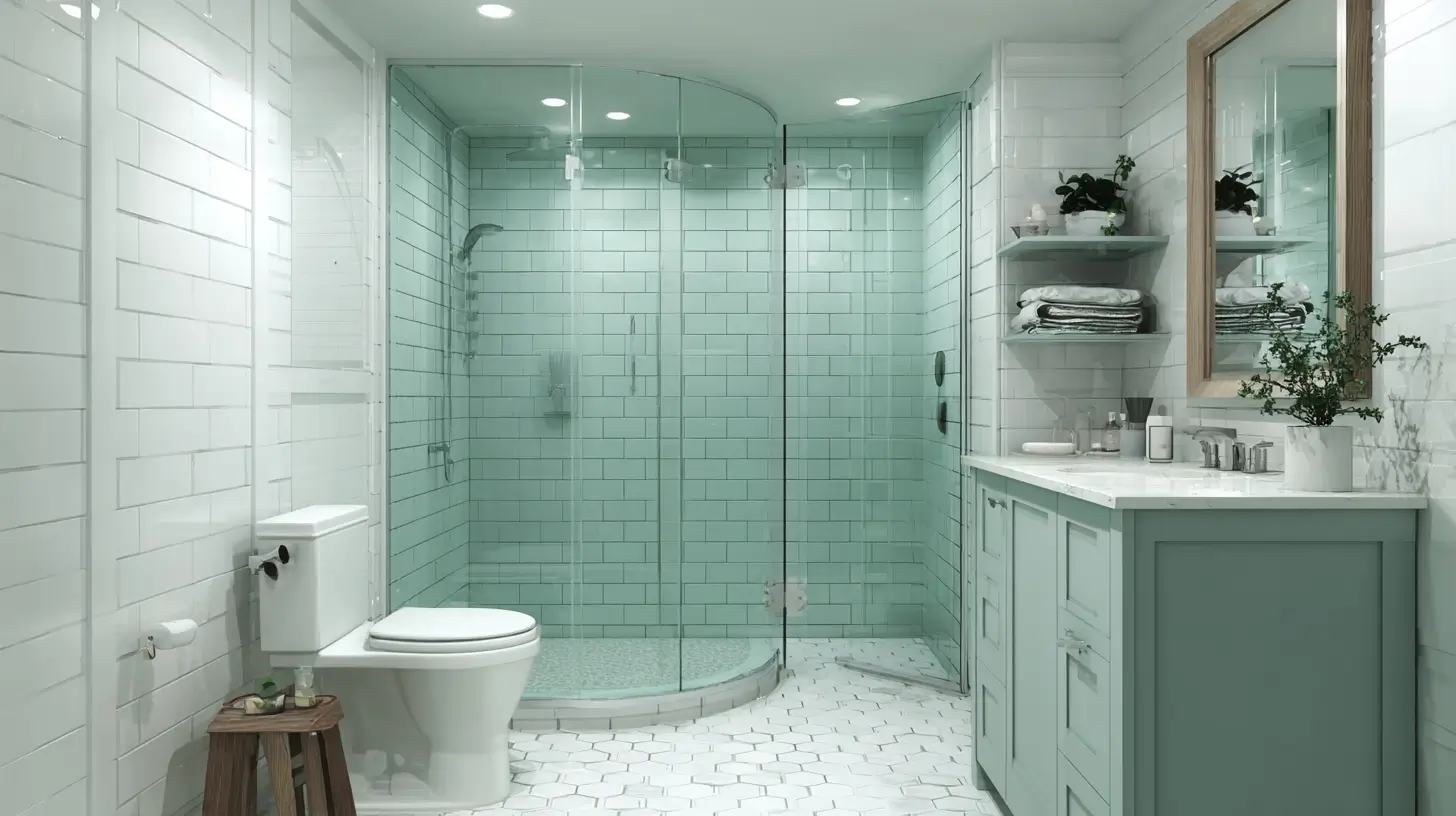
Choose frameless glass doors. They let your eye travel across the room without visual blocks. This makes your basement bathroom design feel larger.
Curbless showers are another smart choice. They create a smooth floor line. No step-up means the space looks seamless. It also improves accessibility.
Walk-in showers are easier to waterproof when built correctly. Fewer edges mean fewer leak risks. That’s important in a basement bathroom remodel where moisture control is critical.
Many buyers today prefer large showers over tubs in secondary bathrooms. That can improve resale appeal.
If you don’t truly need a tub, skip it. A well-designed shower often feels more modern and practical.
4. Add a Statement Accent Wall for Personality
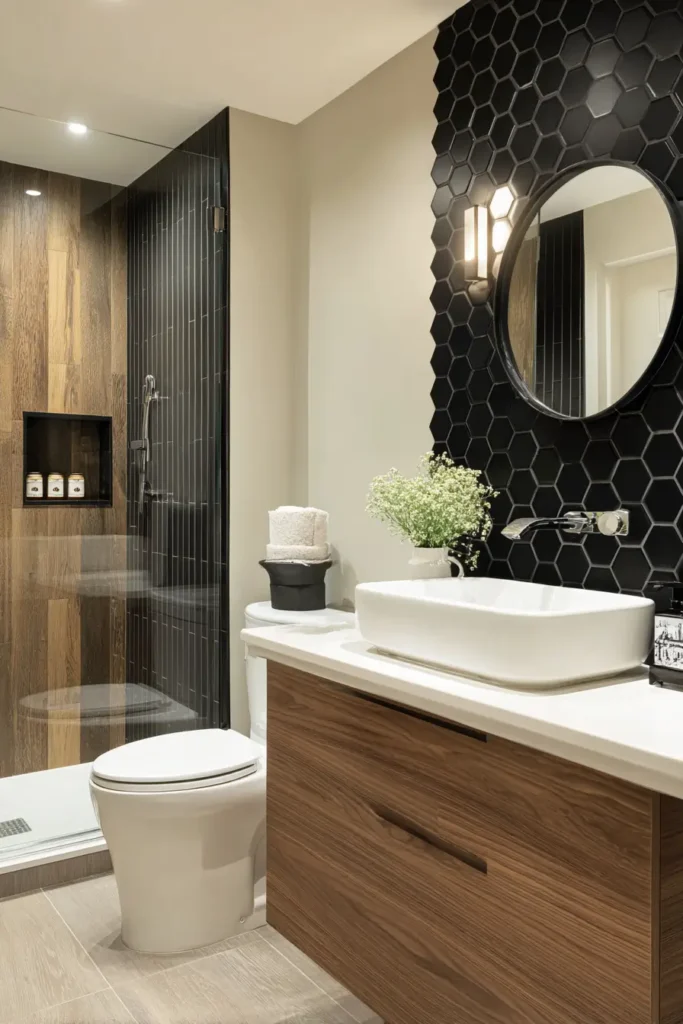
Basements can feel plain. An accent wall fixes that fast.
You don’t need to cover the whole room. Just one wall is enough.
Waterproof wallpaper is an easy option. It adds pattern without major construction. Bold tile works even better if you want something long-lasting.
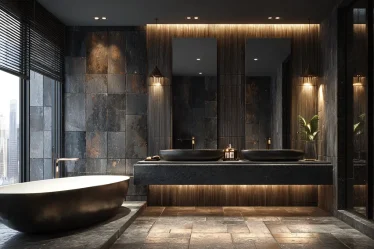
Black hex tile behind a vanity creates strong contrast. Vertical tile can make low ceilings appear taller. That simple direction change tricks the eye.
Wood slat panels add warmth. Stone veneer adds texture. Both bring depth to flat walls.
The key is balance. Keep the other walls simple so the space doesn’t feel crowded.
Many basement bathroom ideas focus on function. An accent wall adds personality. And that makes the space feel finished instead of temporary.
5. Maximize Storage with Built-In Niches
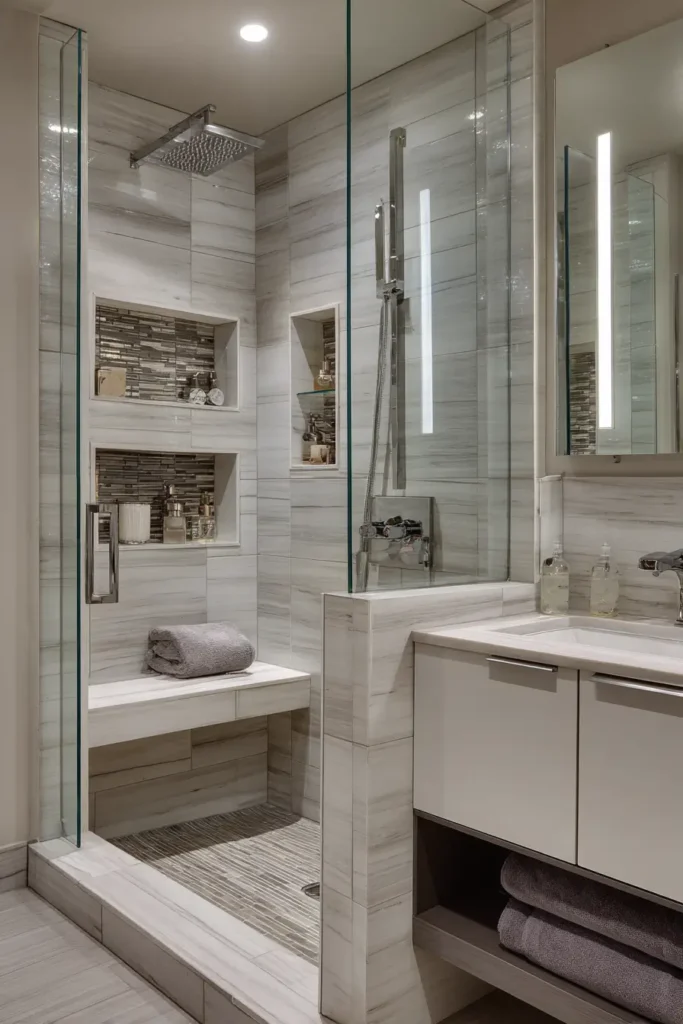
Storage is tight in a basement bathroom.
That’s why built-ins matter.
A shower niche keeps bottles off the floor. It also removes the need for hanging caddies. A single recessed niche can save 1 to 2 square feet of usable space.
Recessed shelving between studs is another smart move. It doesn’t stick out into the room.
Floating vanities help too. They open up floor space and often include drawers for hidden storage.
If your bathroom sits under stairs, use that angled wall. Custom shelves or cabinets can fit there perfectly.
When looking at small basement bathroom ideas, always ask: can this be recessed into the wall?
The less storage that sticks out, the more open your room will feel.
6. Use Large Mirrors to Create Depth
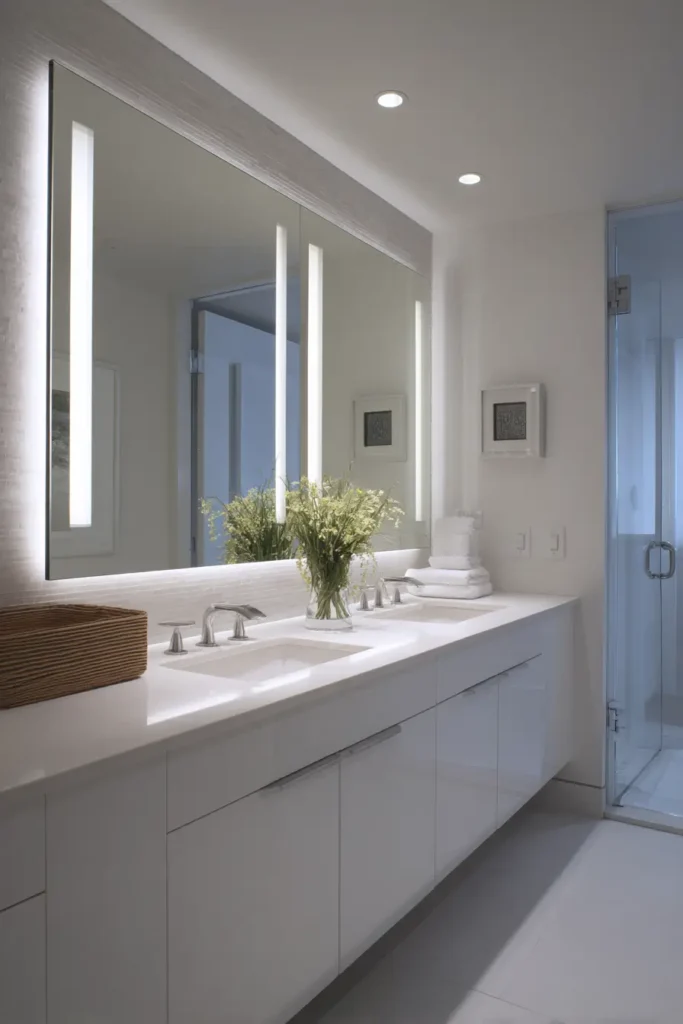
Mirrors double what your eye sees.
That’s powerful in a basement.
A wall-to-wall mirror above the vanity makes the space feel twice as wide. It reflects light and removes visual breaks.
Backlit mirrors add soft glow around the edges. That reduces harsh shadows and adds a modern touch.
Placement matters. Install mirrors across from lighting fixtures so light bounces back into the room.
Avoid tiny mirrors in small bathrooms. They make walls feel chopped up.
One large mirror often works better than two small ones.
If your basement bathroom feels tight, this is one of the simplest upgrades you can make.
7. Try a Modern Floating Vanity for More Space
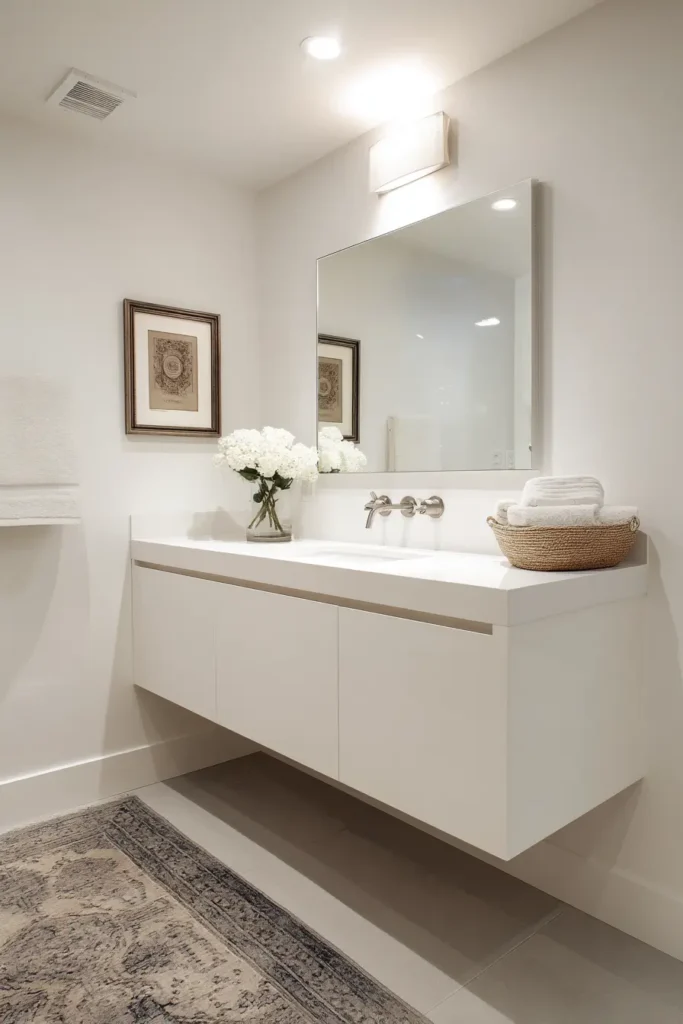
Traditional vanities sit flat on the floor.
Floating vanities don’t.
That small difference changes how the room feels. When you see more floor, the bathroom appears bigger.
Floating vanities are also easier to clean. You can mop underneath without obstacles.
For most small basements, a 24- to 30-inch vanity works well. It provides enough counter space without crowding the room.
Choose simple designs with clean lines. That keeps your basement bathroom design looking modern instead of bulky.
Wall-mounted faucets can save even more counter space. Every inch matters in a basement.
If your goal is a sleek look without major remodeling, this is a strong option.
8. Install Heated Floors for Comfort
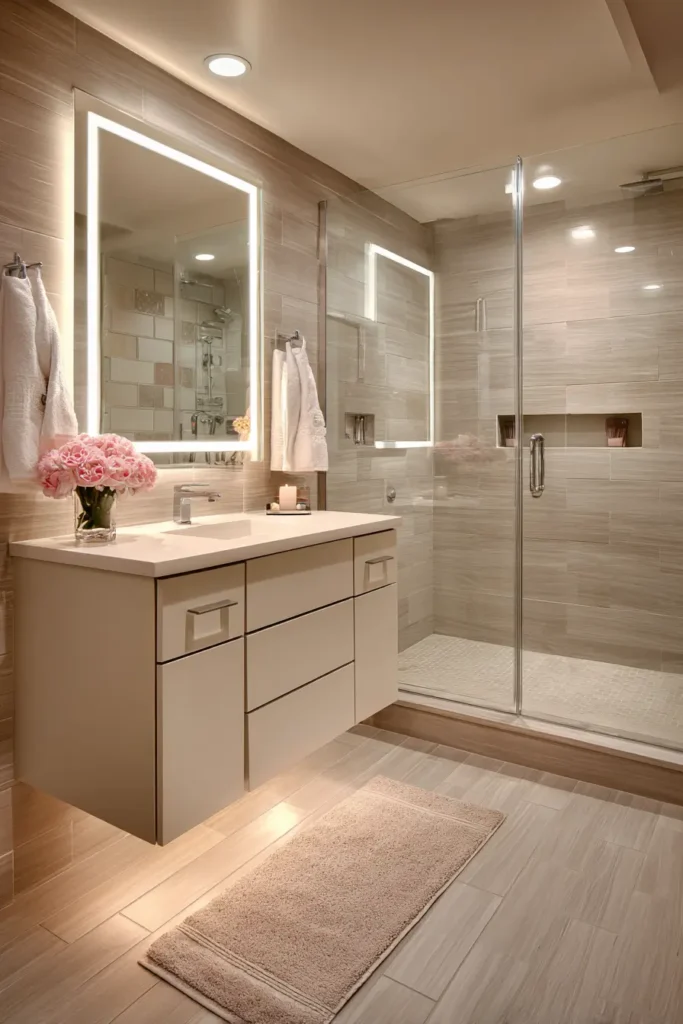
Basement floors are cold. Always.
Radiant floor heating fixes that problem.
Electric heating mats sit under tile. They warm the surface evenly. No cold shock when you step out of the shower.
It adds comfort, especially in winter.
Radiant heating usually adds about 2 to 5 percent to your remodel cost. It’s not cheap. But many homeowners say it’s worth it.
Heated floors also reduce moisture buildup by drying the surface faster.
If you want your basement bathroom to feel less like a basement, warmth makes a big difference.
9. Embrace an Industrial Style That Fits the Basement
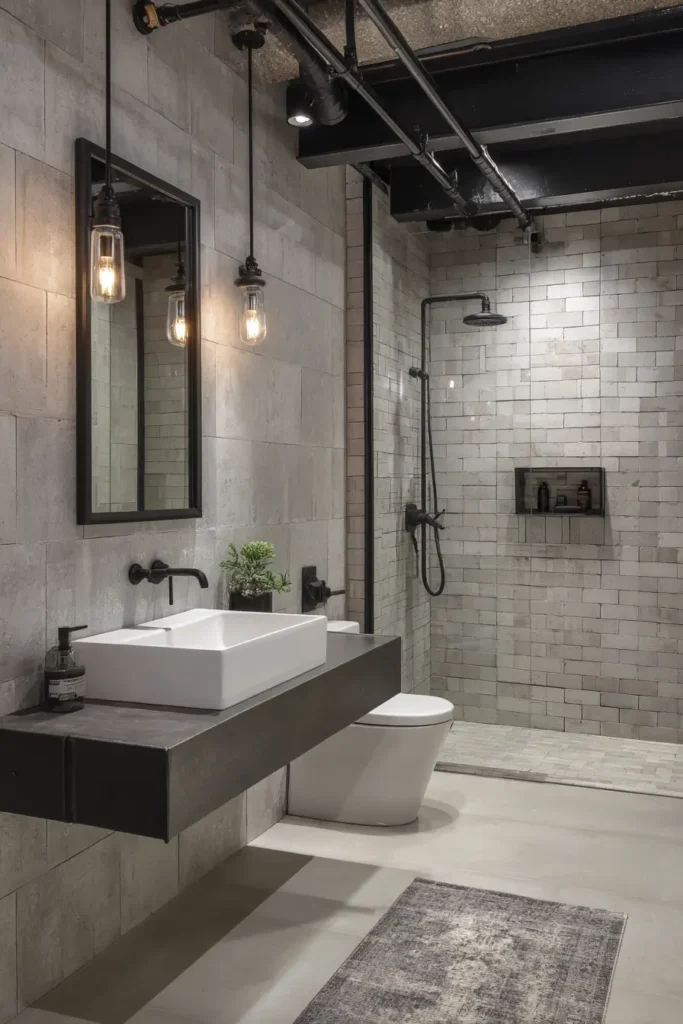
Basements already have an industrial feel.
You can lean into it instead of hiding it.
Exposed pipes painted matte black can look intentional. Concrete-look tiles fit the space naturally.
Matte black fixtures add contrast. They also hide water spots better than chrome.
Keep the color palette simple. Gray, white, and black work well together.
This style is practical. It handles moisture well and doesn’t rely on delicate materials.
If your basement ceiling shows ducts or beams, this look may feel more honest than trying to cover everything.
10. Add a Compact Powder Room Layout
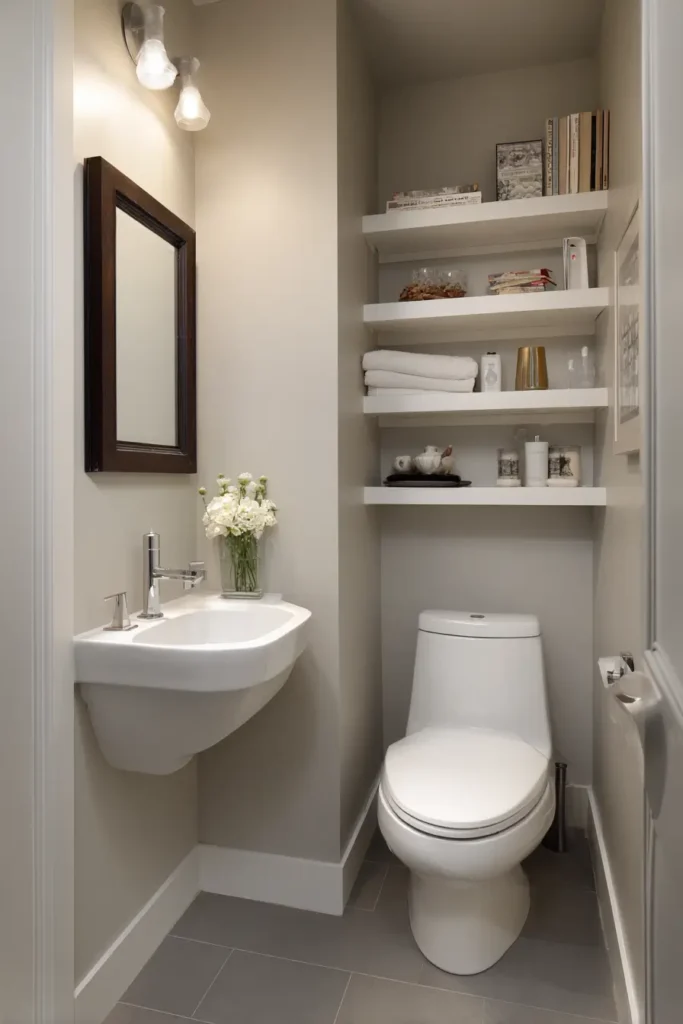
Sometimes you only need a toilet and sink.
A compact powder room works well in tight basements.
Corner sinks save space. Wall-mounted toilets free up floor area.
Keep the layout simple. Place fixtures along one wall if possible. That reduces plumbing costs.
Use vertical storage to avoid clutter.
If you’re finishing a basement mainly for guests, this layout may be all you need.
It’s efficient. And it costs less than a full bath.
11. Use Waterproof Materials to Prevent Damage
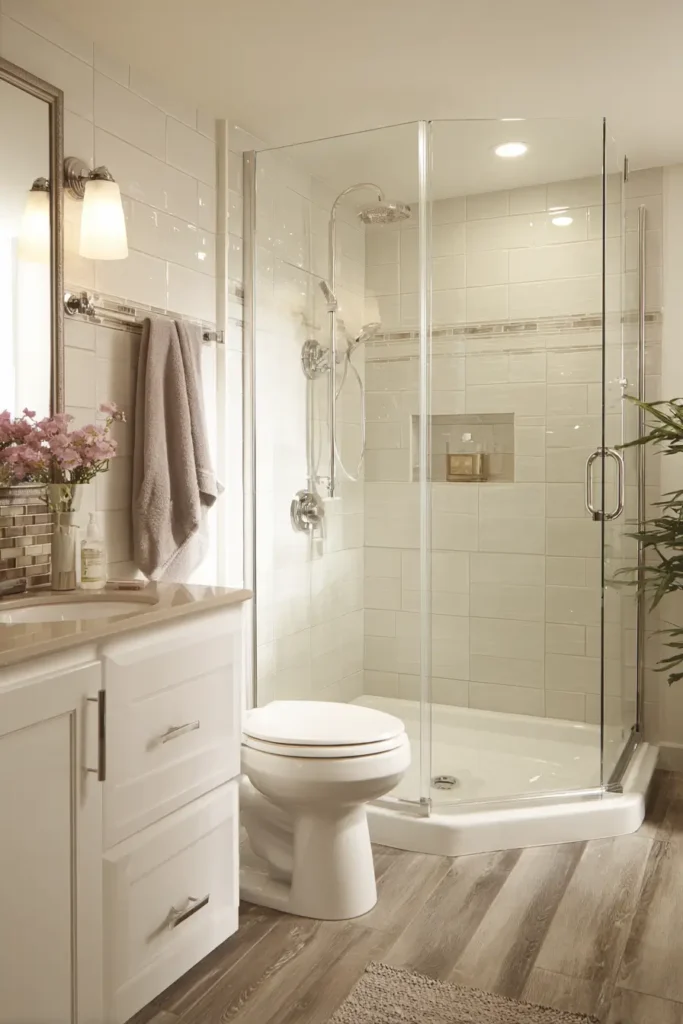
Moisture is your biggest enemy in a basement.
Choose materials that handle it well.
Mold-resistant drywall helps prevent growth behind walls. Porcelain tile resists water better than natural stone.
Luxury vinyl plank flooring works well if you want warmth underfoot. It handles moisture better than hardwood.
Install a proper exhaust fan. Vent it outside, not into the attic.
Good materials don’t just protect your bathroom. They protect your home.
This step isn’t flashy. But it prevents expensive repairs later.
12. Bring in Natural Elements for Warmth
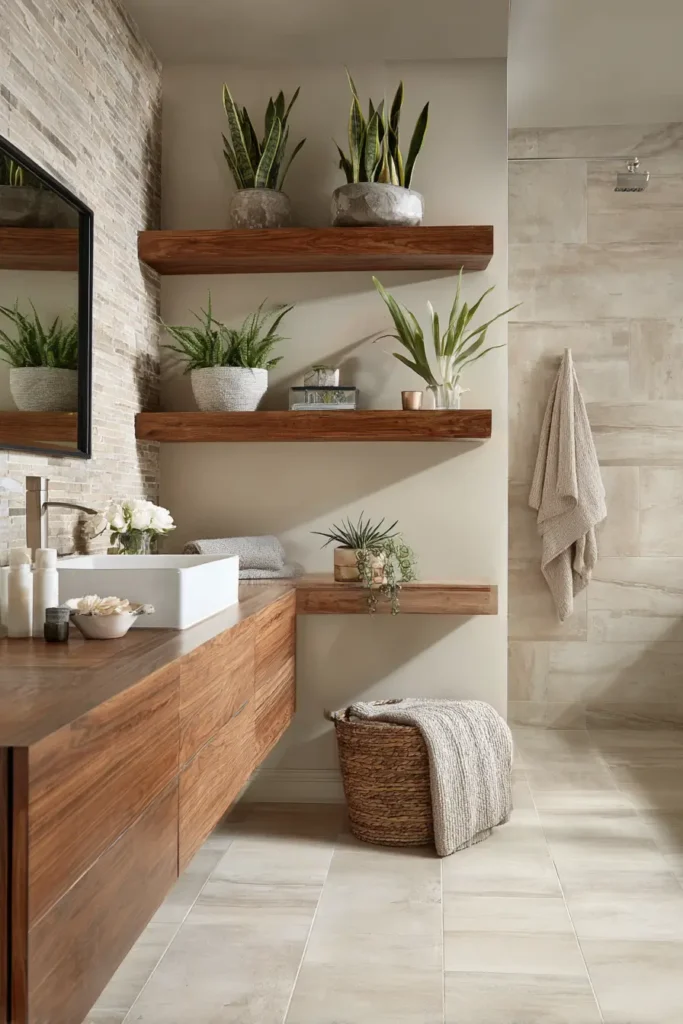
Basements can feel cold.
Natural textures soften the space.
Wood accents on vanities or shelves add warmth. Just seal them properly.
Stone finishes bring texture and depth.
You can also add low-light plants like snake plants or pothos. They handle limited sunlight well.
Even small touches make the room feel less underground.
Balance is key. Mix natural elements with durable materials.
13. Create a Spa-Inspired Bathroom You’ll Actually Use
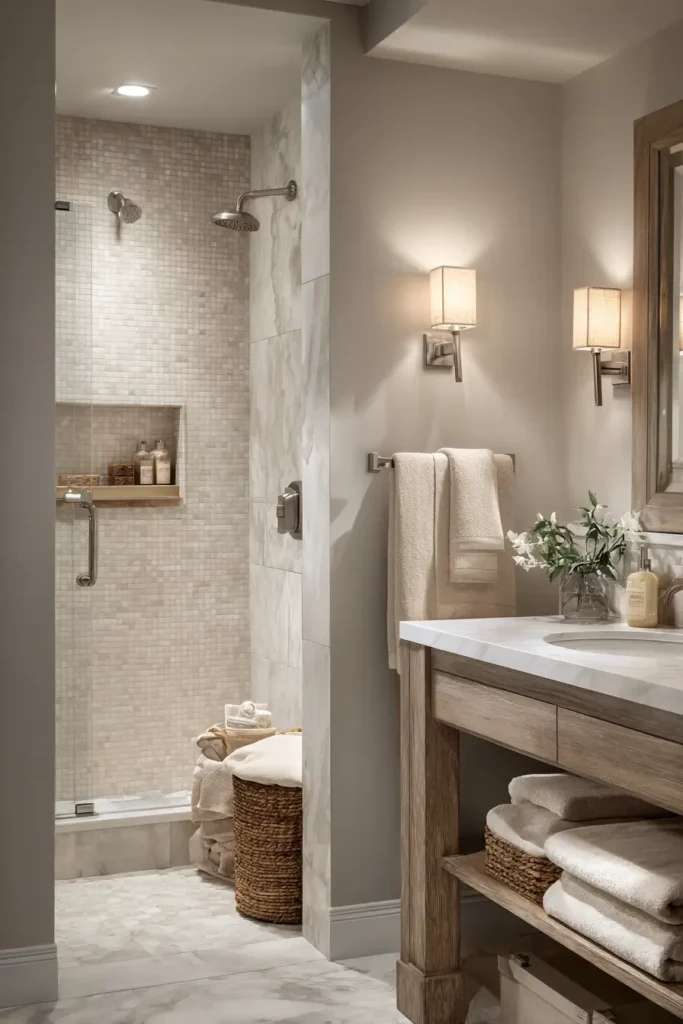
Why settle for basic?
A spa-style basement bathroom feels like an escape.
Start with a neutral color palette. Soft beige, white, and light gray work well.
Add soft lighting. Avoid harsh overhead glare.
A rainfall showerhead creates a calming experience. Towel warmers add daily comfort.
You don’t need luxury everything. Focus on a few upgrades that improve how the room feels.
If you use your basement often, this upgrade pays off in comfort.
14. Design Around Low Ceilings
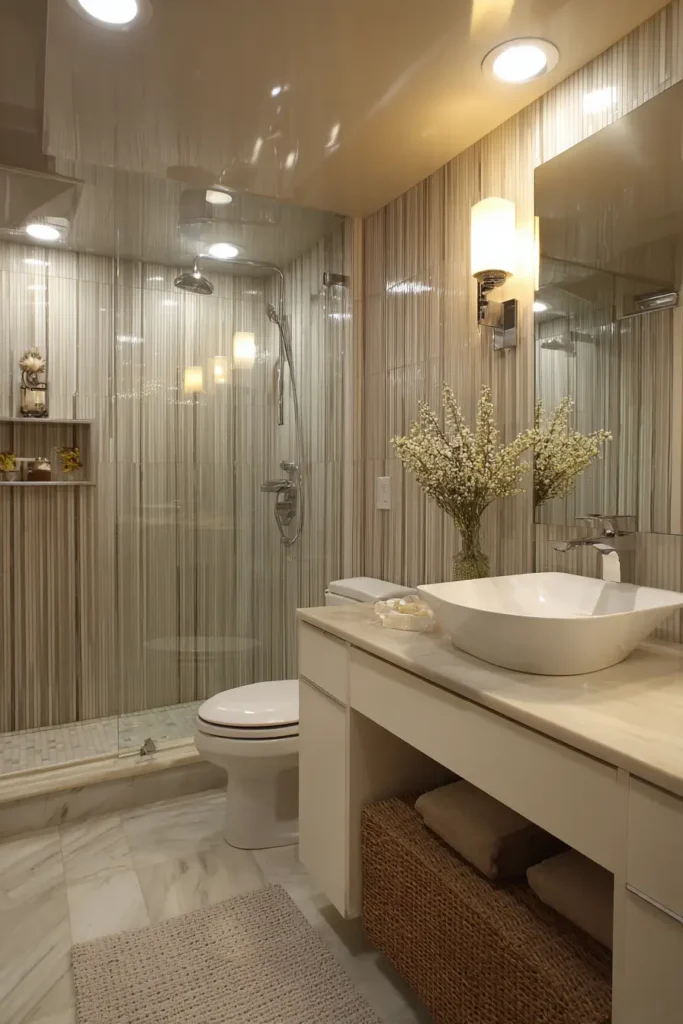
Low ceilings are common in basements.
You can’t always raise them. But you can design smartly.
Use vertical tile to draw the eye upward. Paint the ceiling a lighter shade than the walls.
Choose low-profile lighting and slim fixtures.
Avoid bulky cabinets that hang down.
Every visual trick helps.
Your goal is to make the ceiling feel taller than it is.
15. Add Smart Features for Daily Convenience
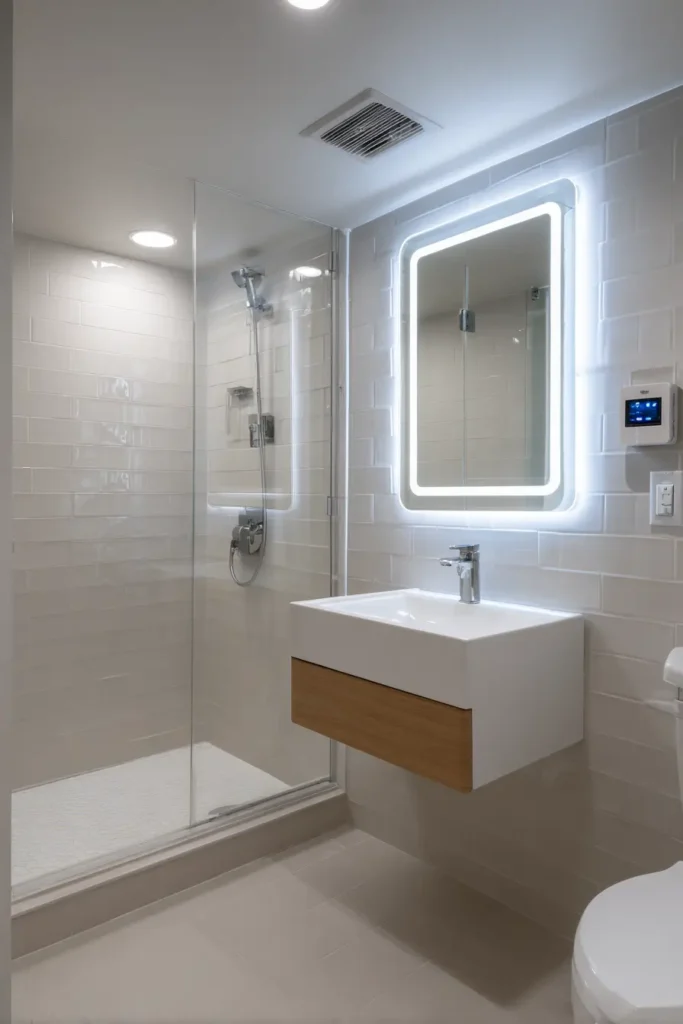
Smart features make life easier.
Motion sensor lighting means no fumbling for switches.
Smart exhaust fans turn on automatically when humidity rises. That protects against mold.
Bluetooth mirrors let you play music or podcasts while getting ready.
These upgrades are small. But they improve daily use.
If you already have wiring access during a remodel, consider adding them now.
16. Plan Plumbing Early to Avoid Expensive Mistakes
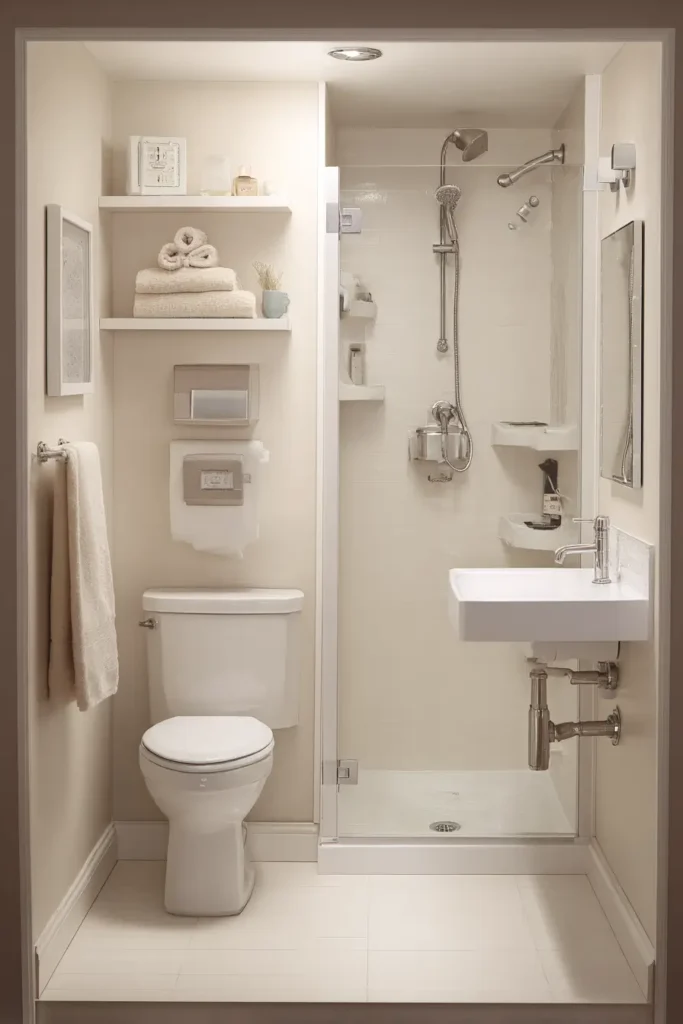
Plumbing changes are costly.
Moving major lines can increase your project cost by $2,000 to $5,000.
Try to place your bathroom near existing plumbing. That saves money.
Upflush toilets are helpful when your main sewer line sits above the basement floor.
You may also need a proper drainage system or sump pump.
Planning this early prevents budget surprises.
Before finalizing your layout, talk to a contractor. It could save you thousands during your basement bathroom remodel.
Conclusion
A great basement bathroom starts with smart lighting. Then comes layout. Then storage. And always moisture control.
You don’t need a huge space to create something functional and stylish. You need good planning.
Focus on light colors. Choose practical materials. Use built-in storage. Plan plumbing carefully.
Now it’s your move.
Start sketching your layout. Talk to a contractor if needed. Save the basement bathroom ideas that fit your space and budget.
With the right choices, your basement bathroom can feel bright, useful, and completely intentional.

- 15 Entryway Ideas for Renters That Look Custom Without Touching a Wall - March 10, 2026
- 17 Pantry Organization Ideas That Make Every Item Easy to Find - March 10, 2026
- 15 Stunning Kitchen Ideas with Gold Hardware - March 9, 2026