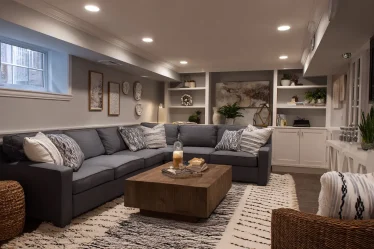
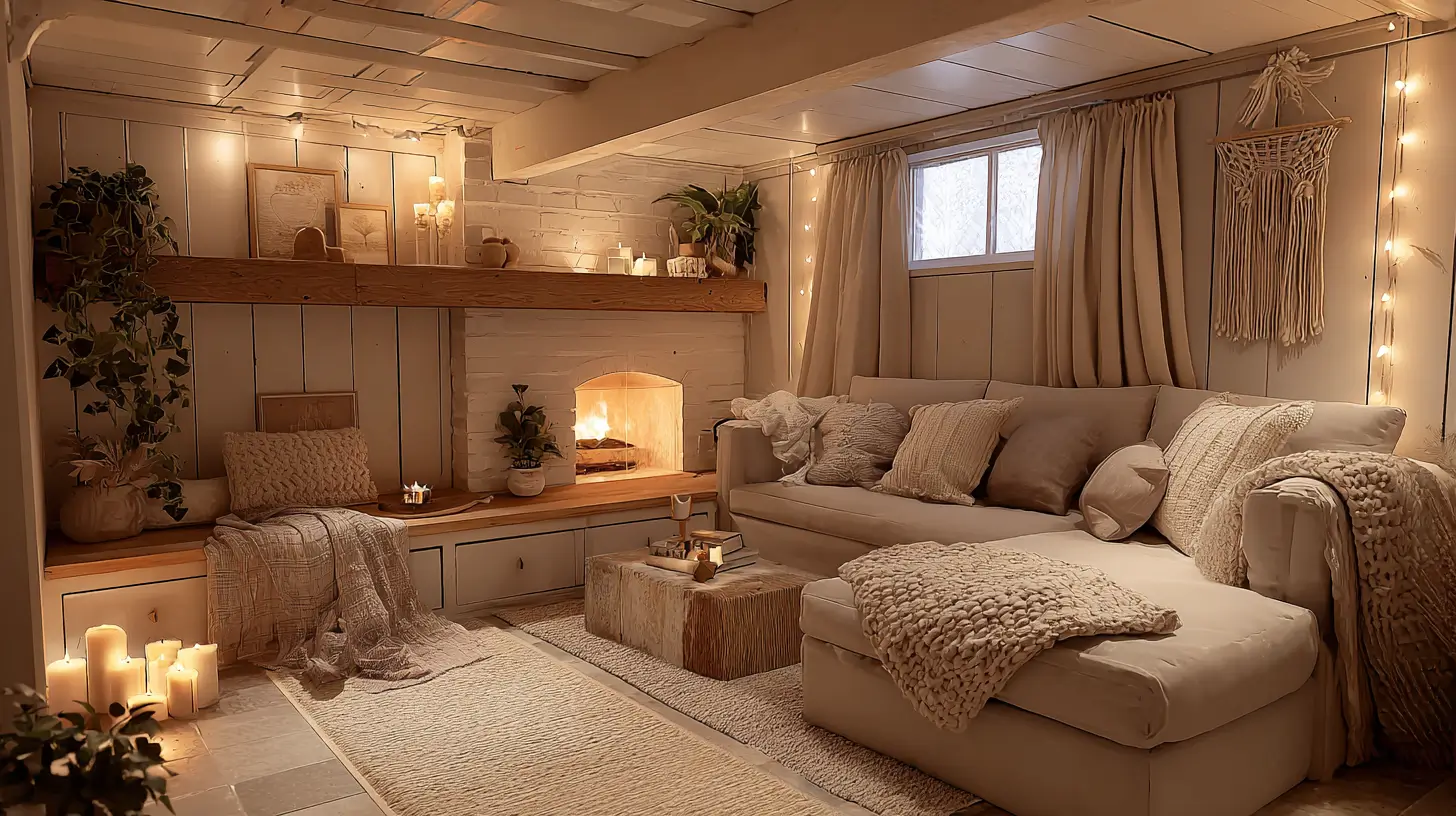
Your basement doesn’t have to feel like a place where good furniture goes to die.
Most basements share the same problems. Low ceilings. Zero natural light. Concrete walls. A damp smell that no candle fully covers. These things make a basement feel like a punishment room instead of a real part of your home.
So what do most people do? They drag old furniture down there and call it done. Then they spend the next five years avoiding the space entirely.
That’s hundreds of square feet going to waste.
This guide walks you through 13 cozy basement decor ideas that actually work. Each one addresses a real reason basements feel cold and unwelcoming. You’ll get specific products, real price ranges, and clear steps you can take this weekend. No contractor needed. No massive budget required.
If you want to turn your basement into a basement living space you actually use, you’re in the right place. These are the ideas that make a basement feel warm, lived in, and worth spending time in.
Let’s get into it.
1. Fix the Lighting First Everything Else Comes After

Most people spend $500 on a new sofa when they should spend $50 on a lamp. That’s the wrong order.
Lighting is the single biggest reason basements feel cold. Not the concrete floors. Not the low ceilings. The lighting. One harsh overhead fluorescent bulb is doing more damage to your basement’s atmosphere than anything else in the room.
The fix is called layered lighting. That means using multiple light sources instead of one. There are three types you need:
- Ambient light — the general light that fills the room (floor lamps, table lamps)
- Task light — focused light for reading or working (a desk lamp, a reading lamp next to a chair)
- Accent light — decorative light that adds warmth (string lights, candle-style bulbs, LED strips behind a TV)
The American Lighting Association says rooms with multiple light sources feel more comfortable and welcoming than rooms with a single overhead fixture. That’s not an opinion. That’s consistent across home design research.
Bulb temperature matters more than brightness. Look for bulbs between 2700K and 3000K on the Kelvin scale. That range gives you warm, yellow-toned light. Anything above 4000K goes cool and blue, which is the last thing you want in a dark basement. Philips Hue’s website and 1000bulbs.com both have free Kelvin charts you can reference when shopping.
You don’t need an electrician for this. The IKEA RANARP plug-in floor lamp costs around $40 and takes five minutes to set up. Add a set of warm-white string lights from Amazon or Target (under $30) and drape them along a shelf or bookcase.
Quick Action Step: Place one floor lamp in the darkest corner of your basement tonight. Turn off the overhead light. Notice the difference immediately.
Price range: $30 to $150 for a full lighting upgrade
2. Put Down a Warm, Textured Rug to Anchor the Room

Think about stepping onto cold concrete or cheap carpet with bare feet. That physical feeling affects your entire sense of comfort in a room.
A good area rug changes everything. It creates what designers call a “room within a room.” It gives your furniture grouping a clear center. It adds color, texture, and warmth without touching a single wall.
The most common rug mistake in basements is going too small. A tiny rug floating in the middle of a large space looks lost. Apartment Therapy recommends going one size larger than you think you need, especially in a basement. For most standard basement sitting areas, that means an 8×10 or 9×12 rug.
The sizing rule is simple: every main piece of furniture should have at least its front legs on the rug. Ideally, all four legs sit on the rug entirely.
Pick the right material for a basement. Basements have more moisture than above-ground rooms. Some rug materials handle that better than others:
- Polypropylene — moisture resistant, easy to clean, holds up well in basements
- Jute — natural, warm-toned, affordable, works well in drier basements
- Wool blends — cozy and durable, but check that your basement isn’t too damp
Rugs.com, Wayfair, and IKEA all carry polypropylene and jute options in the 8×10 size starting around $80 to $200. Real Simple consistently lists area rugs among the most recommended additions for warming up cold-feeling rooms.
Want extra texture? Layer a smaller rug on top of a larger one. A chunky woven rug over a flat jute base adds depth without major cost.
Quick Action Step: If budget is tight, one large jute rug from IKEA under $100 does more for coziness than most furniture upgrades.
Price range: $80 to $250 for an 8×10 quality rug
3. Paint the Walls a Warm Color — Or Use Peel-and-Stick Wallpaper

The walls in your basement are working against you right now. Cool gray paint. Bare concrete. Stark white drywall. In a room with no natural light, these colors make the space feel clinical and cold.
Color psychology research from the Pantone Color Institute shows that warm earth tones (terracotta, ochre, warm brown, deep olive) increase feelings of safety and physical warmth. Cool colors do the opposite. In a room that already lacks sunlight, cool walls double down on the problem.
The best paint colors for dark basement rooms share one thing: they all lean warm.
- Warm greige (a gray-beige blend that leans warm)
- Terracotta or clay tones
- Deep olive or sage green (avoid the cool, blue-toned versions)
- Rich warm whites like Benjamin Moore’s “White Dove”
Benjamin Moore’s “Pale Oak” is one of the most universally flattering colors for low-light spaces. It reads warm in almost any lighting condition. Sherwin-Williams has a free “Low-Light Room” color selector on their website at sherwin-williams.com that filters paint colors specifically for rooms with limited natural light. That’s worth using before you buy anything.
Not ready to commit to full paint? Use an accent wall. One wall in a warm, deep color does most of the heavy lifting without requiring you to paint everything.
Renting? Peel-and-stick wallpaper is a real solution now. Brands like Tempaper, NuWallpaper, and Spoonflower make removable wallpaper that looks nothing like the flimsy stuff from ten years ago. All three are available on Amazon, Wayfair, and Target in the $30 to $80 per roll range.
Quick Action Step: Use the free Benjamin Moore paint visualizer at benjaminmoore.com to preview “Pale Oak” on your basement walls before buying a single can.
Price range: $50 to $200 for paint; $30 to $80 per roll for peel-and-stick wallpaper
4. Bring In Oversized, Plush Seating You Actually Want to Sit In

There’s a specific kind of cozy that only happens when you’re so deep in a sofa cushion you’ve stopped thinking about your to-do list.
That’s the feeling your basement seating needs to create.
Seating is the emotional center of any cozy room. It’s where people actually live in the space. If the seating is hard, shallow, or uncomfortable, none of the other decor ideas on this list will save the room. People will still avoid it.
The best seating for a basement sitting area falls into two categories:
Sectional sofas work well because they use corner space efficiently and seat multiple people without taking over the room. The IKEA KIVIK and SÖDERHAMN sectionals are frequently recommended on Reddit communities like r/malelivingspace and r/femalelivingspace for basement setups. They’re modular, affordable, and come in durable covers.
Deep-seat couches work for smaller spaces. Article.com and Pottery Barn both list deep-seat sofas as top sellers for entertainment rooms, and it makes sense. A seat depth of 25 inches or more gives you that sink-in feeling.
Can’t afford new seating right now? Try this first. A quality slipcover transforms tired, ugly furniture in about ten minutes. Pairs of oversized throw pillows (18×18 or 20×20 inches) finish the look. This costs under $100 and the difference is immediate.
Floor cushions and poufs add flexible extra seating. Crate & Barrel, Target, and World Market all carry options in the $40 to $120 range.
Apply the “sink-in test” before buying anything. If you wouldn’t nap in it, it’s not cozy enough for your basement.
Quick Action Step: Before buying anything new, throw a thick slipcover on your existing basement sofa and add two oversized throw pillows. The transformation is immediate.
Price range: $80 for a slipcover + pillows; $500 to $1,200 for a new sectional
5. Layer Blankets and Throw Pillows With a Plan

Throws and pillows aren’t decoration. They’re an invitation.
When someone walks into a room and sees a sofa loaded with soft, textured blankets, their body relaxes before they even sit down. It signals: this is a place you can rest.
But there’s a difference between a random pile of throws and intentional layering. Random piles look messy. Intentional layering looks like a room that someone actually cares about.
Use the rule of three for throws. Pick three blankets in different textures. One chunky knit. One sherpa or fleece. One linen or cotton blend. Different weights, different feels, all in tones that work together. Drape one over the back of the sofa, fold one on the arm, and leave one in a basket nearby.
Chunky knit blankets from Amazon, Pottery Barn, and H&M Home range from $30 to $80. All three carry good options.
For pillows, use odd numbers. Three or five pillows look better than two or four. Vary the sizes: two large (20×20), two medium (18×18), one lumbar (12×20). Mix textures: velvet, linen, and a woven pattern work together without clashing.
One practical tip that most people miss: always size up your pillow insert by two inches for a full, plump look. If your cover is 18×18, use a 20×20 insert. This tip comes from home decor blogs like Driven by Decor and it genuinely makes a visible difference.
Keep throws accessible but organized. A blanket ladder from Target, World Market, or IKEA costs $25 to $60 and stores throws in a way that looks intentional instead of messy.
Quick Action Step: Get a blanket ladder and three different-texture throws. Arrange them in one corner. That corner will become everyone’s favorite spot in the house.
Price range: $60 to $200 for a complete blanket and pillow layering setup
6. Create a Focal Point With a Feature Wall or Electric Fireplace

Walk into any basement that feels put together, and there’s almost always one wall that makes you stop and say “oh, that’s nice.”
That’s a focal point. And most basements don’t have one.
Without a visual anchor, your eyes wander around the room without landing anywhere satisfying. The space feels unfinished, even if everything in it is nice. A focal point tells the eye where to go. It gives the room a center of gravity.
The fastest way to create a focal point with the most impact: an electric fireplace.
The 2025 generation of electric fireplaces looks remarkably realistic. Top brands like Dimplex, PuraFlame, and ClassicFlame all have models with 4.4 stars or higher on Amazon with thousands of verified reviews. Mid-range models run $150 to $600. They plug into a standard outlet. No gas line, no chimney, no contractor.
The visual warmth of even a small electric fireplace changes a basement completely. It creates light, a focal point, and actual warmth all at once.
Want a bigger impact with a DIY approach? Shiplap panels from Home Depot or Lowe’s run roughly $1.50 to $2.00 per linear foot. A single accent wall of shiplap behind your seating area becomes an instant focal point. YouTube channels like “DIY Creators” and “Home RenoVision DIY” both have step-by-step shiplap tutorials with millions of views. No carpentry experience required.
A faux fireplace mantel from Amazon or Wayfair runs $120 to $350. Pair it with an electric fireplace insert and you have a full fireplace setup without any construction.
Gallery walls also work if you prefer a no-construction option. More on that in idea 12.
Quick Action Step: If you do only one thing from this entire list, put an electric fireplace in your basement. Nothing else delivers that much warmth, both literal and visual, for the price.
Price range: $150 to $600 for an electric fireplace; $100 to $300 for a DIY shiplap wall
7. Hang Curtains to Add Height and Softness

Curtains in a basement with no windows might sound strange. Until you see what they do to the room.
Soft fabric panels change the acoustic quality of a space. They reduce echo. They add texture and color to bare walls. And when hung correctly, they make low ceilings look taller.
Here’s the trick interior designers use: hang curtains as high as possible and as wide as possible. Apartment Therapy recommends placing curtain rods at least 4 to 6 inches above the window frame (or the top of your wall space if there’s no window), and extending 8 to 12 inches beyond each side.
This creates the illusion of a taller, wider opening. It draws the eye up, which makes the ceiling feel higher. Designer Shea McGee of Studio McGee teaches this “hang high, go wide” rule consistently across her social media and Netflix show.
For maximum coziness, use velvet. Velvet curtains are the single coziest window treatment material available. They absorb sound. They add visual weight and warmth. The IKEA SANELA velvet curtain pair is repeatedly recommended on Reddit and Pinterest as the best budget velvet option at around $60 to $80 per pair.
No windows at all? Use curtains as a room divider or against a blank wall to add a layer of softness. IKEA’s KVARTAL ceiling-mounted curtain track system makes this easy. You can divide an unfinished basement into zones or simply add a soft backdrop to your main sitting area.
Tension rods, ceiling-mounted tracks, and standard wall-mount rods all work. Pick what fits your ceiling height and wall type.
Quick Action Step: One pair of floor-to-ceiling velvet curtains on a bare wall costs under $100 and changes the entire personality of a basement.
Price range: $60 to $150 for curtains and hardware
8. Add Natural Elements — Plants, Wood, and Stone

Concrete and drywall have no warmth on their own. Natural materials are what tell your brain you’re somewhere worth staying.
This is not a design theory. It’s how human biology works. We evolved surrounded by nature. Wood, stone, plants, and organic textures trigger a sense of safety and calm that manufactured materials simply don’t. In a space as artificial-feeling as most basements, bringing in natural elements makes a bigger difference than almost anything else on this list.
Start with plants. The objection you’re thinking is “nothing grows in a basement.” That’s mostly wrong. Several plants genuinely thrive in low light:
- ZZ plant — almost indestructible, thrives in near darkness
- Pothos — grows in indirect light, trails beautifully from a shelf
- Snake plant — tolerates low light and infrequent watering
- Peace lily — blooms in low light and filters air quality
The Sill (thesill.com) and Bloomscape both publish care guides specifically for low-light environments. Both are US-based plant shops actively updating their content in 2025 and are worth checking for current availability and pricing.
Add wood through shelving and decor. Floating wood shelves from IKEA’s BERGSHULT series cost $25 to $60 each. Reclaimed wood pieces, wooden bowls, and wood-framed mirrors all add organic warmth without major expense.
Stone accents are simpler than they sound. Faux stone panels from brands like Stone Mill and Ekena Millwork on Amazon run $30 to $80 per panel. Stone candle holders and coasters are under $20 at most home goods stores.
Wicker baskets and rattan trays round it all out. Warm-toned, natural, affordable, and functional as storage.
Quick Action Step: Put a pothos on a floating shelf and use a wicker basket for your throw blankets. Two items, under $50, and the atmosphere shifts noticeably.
Price range: $50 to $200 for a full natural elements addition
9. Fix the Temperature and Smell Before Anything Else

You cannot decorate your way out of a cold, musty basement. This step has to come first.
No amount of throw pillows covers the smell of mildew. No warm lighting fixes the feeling of damp, cold air hitting your skin when you walk downstairs. If the environment is wrong, the decor is irrelevant.
Start with moisture control. The EPA recommends keeping indoor humidity between 30 and 50 percent to prevent mold and dust mites. Most unmanaged basements run at 60 to 70 percent humidity, sometimes higher. That’s why basements smell. That’s why they feel cold and clammy.
A quality dehumidifier fixes this. The Frigidaire FFAD5033W1 and the hOmeLabs 4,500 Sq. Ft. Energy Star dehumidifier are both top-rated on Amazon with over 10,000 verified reviews each. Budget $150 to $250 for a reliable unit. It’s the most important purchase on this entire list.
Add supplemental heat. Basements run cold because heat rises. A portable electric space heater rated for your square footage adds consistent warmth without modifying your HVAC system. Look for units with programmable timers so the space is warm before you head down.
Address the smell with layers. Don’t just cover it. After the dehumidifier handles the root cause, add pleasant scent with intention:
- Reed diffusers for constant, low-level scent
- Wax warmers (safer than open candles) for stronger warmth
- Candles from brands like Homesick, Capri Blue, or Nest Fragrances for woodsy, amber, or vanilla tones
Electric wax warmers are widely available at Target and Amazon for $15 to $35. They’re popular in home decor communities on TikTok for good reason.
Quick Action Step: A $150 dehumidifier and a $20 candle will do more for your basement’s livability than a $500 piece of furniture. Fix the environment first.
Price range: $150 to $300 for dehumidifier + heater + scent setup
10. Give the Space a Purpose — Reading Nook, Bar, or Game Zone

The coziest basements have a reason to be in them.
This is the mistake most people make. They put furniture in the basement without defining what the space is for. The result is a room that feels like a waiting area. Nobody wants to hang out in it because there’s no clear reason to be there.
Zone your basement. Pick one or two specific purposes and build toward them. Even a large open basement feels more intentional and welcoming when it has defined areas.
Zone 1: The Reading Nook An armchair plus a floor lamp plus a small bookshelf equals a complete reading nook. That’s it. The IKEA POÄNG chair ($119) is one of the most recommended budget armchairs across Reddit’s r/HomeImprovement and r/CozyPlaces. Article’s Sven Chair and Target’s Threshold accent chairs are also strong options. Total cost under $300. This zone gives the basement an identity on its own.
Zone 2: The Bar or Beverage Station According to Houzz’s 2024 Home Design Trends Report, home bars and beverage stations are among the most popular basement additions. You don’t need a built-in bar. A bar cart from Amazon or Target in the $80 to $200 range works just as well. Style it with your glasses, a plant, and a small tray of mixers.
Zone 3: The Entertainment and Game Area A TV mounted on the focal point wall, a gaming chair, and an IKEA KALLAX unit for game and controller storage creates a complete entertainment zone. DXRacer and Respawn gaming chairs offer good quality in the $200 to $350 range.
Use rugs, lighting, and furniture placement to define each zone visually. A rug under the reading nook separates it from the TV area without needing a wall.
Quick Action Step: Pick one zone to build first. A complete reading nook costs under $300 and gives the entire basement a reason to exist.
Price range: $200 to $600 depending on the zone
11. Add Shelving That Works as Both Storage and Style

Walls with nothing on them make a room feel temporary. Like nobody actually lives there.
In a basement, bare walls are one of the most common signs that the space hasn’t been thought through. Shelving fixes this. It adds structure, personality, storage, and style all at once.
Open shelving works best for display and accessibility. It lets you style books, plants, candles, and meaningful objects in a way that shows the room has a personality. Styled shelves look intentional. Empty walls look abandoned.
The most practical and affordable system: IKEA’s KALLAX. A standard KALLAX shelving unit runs $60 to $130 depending on size. It comes in several configurations and works as both a standalone shelf and a room divider. Reddit’s home improvement and decor communities consistently recommend it for basement setups.
The IKEA BILLY bookcase is another strong option for a more traditional look.
Styling your shelves doesn’t have to be complicated. Use this simple formula:
- One tall item (a plant, a vase, a stack of books)
- One medium item (a framed photo, a small sculpture, a candle)
- One small item (a stone, a figurine, a small bowl)
This “three levels of height” technique appears consistently across YouTube channels like “Lone Fox” and “Mr. Kate” because it actually works. The Home Edit also demonstrates the rule of odd numbers in action across their Instagram and Netflix show.
Use wicker baskets on lower shelves to hide practical storage items while keeping the look warm and cohesive. Target’s Threshold line and IKEA’s KNIPSA baskets run $8 to $25 each.
Quick Action Step: Set up one KALLAX unit, style three shelves with books, a plant, and one meaningful object. That’s a personality. That’s a basement people remember.
Price range: $60 to $200 for shelving and styling accessories
12. Add Personal Touches That Tell Your Story

The most beautifully decorated basements in the world still feel cold if they don’t have a single thing in them that’s yours.
This is the gap between a room that looks nice in a photo and a room that actually feels like home. Generic decor can be pleasant. Personal decor is warm.
Interior designer Nate Berkus has said across his TV appearances and YouTube channel that a home should tell the story of who lives in it, not who designed it. That principle applies especially to basements, which often get the leftover furniture and no real attention.
Gallery walls are the most accessible format for personal decor. A cluster of framed photos, prints, and meaningful pieces on one wall costs almost nothing and communicates everything about who you are.
IKEA RIBBA frames and Target’s Threshold frame line run $5 to $25 per frame. Artifact Uprising and Chatbooks offer printed photo books and canvas prints starting at $20 to $40. You can build a gallery wall for under $100 that genuinely changes the feeling of the space.
Collections work too. If you collect records, display them. If you have a stack of meaningful books, shelve them where people can see them. If you have travel photos or vintage finds, frame them. Objects with history are worth ten times more in a room than objects bought specifically for decoration.
DIY art is valid. A simple canvas from a craft store, painted in your color palette, is real art. A framed map of a city that matters to you is real decor. It doesn’t need to be expensive or impressive to be meaningful.
Quick Action Step: Print five photos from your phone, put them in matching IKEA frames, and hang them in a row. That row says more about your basement than any throw pillow ever will.
Price range: $30 to $150 for a complete personal touch setup
13. Muffle Sound to Make the Space Feel Like a Sanctuary

An echo-y basement will never feel cozy. Sound matters as much as sight.
When sound bounces around a room, the space feels empty. Hard. Cold. Think of how different a furnished room sounds compared to an empty one. That acoustic difference is something your brain registers immediately, even if you don’t consciously notice it.
The good news is that most of the cozy basement decor ideas in this article already absorb sound passively. Your area rug, your velvet curtains, your upholstered sectional sofa. All of these reduce echo and increase the perceived warmth of the room. Interior design blogs like Young House Love and Curbly have written specifically about how layering these soft materials improves acoustic comfort in basement rooms.
If you want to go further, add decorative acoustic panels. The 2025 options look nothing like recording studio foam. Brands like ATS Acoustics and Acoustimac offer fabric-wrapped panels that look clean, modern, and intentional. They run $30 to $80 per panel and come in colors that work as wall decor on their own.
For drop ceilings, replace standard tiles with soft ceiling tiles. Armstrong Ceilings makes basement-specific drop ceiling replacements available at Home Depot and Lowe’s. They reduce sound from above while giving your ceiling a finished look.
Add a sound machine or a quality speaker setup. The LectroFan and Marpac Dohm are Amazon bestsellers with over 20,000 reviews each. A white noise machine at low volume eliminates the dead silence that makes basements feel underground and isolated. A good speaker system playing ambient music does the same thing while adding to the overall atmosphere.
Quick Action Step: Your rug, curtains, and sofa are already doing most of the acoustic work. Add one small sound machine and your basement will have a completely different energy.
Price range: $20 to $200 depending on approach
What to Do Next: Your 3-Tier Action Plan
You now have 13 specific, proven ways to make your basement feel warm, personal, and worth spending time in. You don’t need to do all 13 at once.
Here’s how to think about priority:
Start this weekend (under $100):
- Add a warm-toned floor lamp to the darkest corner
- Set up a blanket ladder with three different-texture throws
- Put a pothos plant on a shelf
- Light a candle with a woodsy or vanilla scent
Next month (under $500):
- Put down a large area rug in a warm material
- Paint one wall a warm greige or terracotta tone
- Hang floor-to-ceiling curtains in velvet
- Add floating shelves and style them with purpose
When you’re ready to invest ($500 and up):
- Buy an electric fireplace for instant focal point and warmth
- Upgrade to a plush sectional sofa
- Build out a KALLAX-based shelving system
- Create a defined purpose zone with dedicated furniture
Pick the one idea that addresses your biggest problem first. Don’t wait until you can do everything perfectly. One warm lamp and one jute rug can change how a basement feels tonight.
These cozy basement decor ideas work because they address the real reasons basements feel cold. And they are all things you can actually do.

- 16 Ideas for Dressing Large Windows with Blinds & Curtains - April 8, 2026
- How to Decorate a Bedroom From Scratch (Step by Step) - April 8, 2026
- 16 DIY Kitchen Ideas That Transform the Space Without a Contractor - April 8, 2026