You Love Good Design. Your Lease Does Not Care.
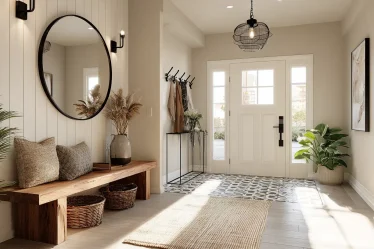
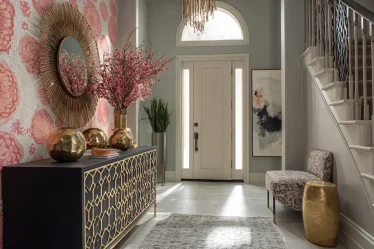
You open Pinterest. You see a stunning entryway. Shiplap wall. Built-in coat hooks. A custom bench that looks like it was made for that exact hallway.
Then you look at your apartment door. Blank wall. Scuff marks. Maybe a pile of shoes you keep promising yourself you’ll organize.
Here is the problem. Almost every entryway makeover you see online was done by someone who owns their home. They can drill, paint, and nail anything they want. You cannot. One wrong move and you lose part of your security deposit.
But here is what nobody tells you: you do not need to touch a wall to make your entryway look incredible. You need the right furniture, the right products, and a plan that works for renters specifically.
These 15 ideas are all renter-approved. No drilling. No painting. No landlord permission needed. And none of them look like a compromise.
Why Renters Get Stuck at the Front Door
More than 44 million households in the United States rent their home. That is a huge number of people living with the same frustration.
Most design advice ignores renters completely. It assumes you can knock out a wall or spend a weekend painting. You are working with different rules. Your entryway gets ignored because it feels like a problem with no good solution.
It also does not help that entryways in rental apartments are small. Many are just a strip of floor between the front door and the living room. There is no dedicated space to work with.
But small and lease-restricted does not mean hopeless. It just means you need smarter tools and a different approach.
The Renter’s Starter Toolkit
Before you try any idea on this list, grab these basics. They will make every single project easier.
3M Command Strips and Hooks. These are the backbone of renter decorating. Large picture-hanging strips hold up to 16 lbs. Large hooks hold up to 7.5 lbs. Always check the weight rating before you hang anything.
Removable wallpaper. Brands like Chasing Paper, Tempaper, and RoomMates make peel-and-stick wallpaper that comes off cleanly. All three are available at Target and Amazon right now in 2026.
Freestanding furniture. Benches, shelving units, and coat racks that stand on their own are your best friends. No wall attachment needed at all.
Double-sided mounting tape. Different from Command strips. Good for lighter items like small signs or decorative objects under 2 lbs.
Anti-slip rug pads. Protect your floors and keep rugs from sliding. Essential if you have hardwood or tile in your entryway.
Get these five things in your home before you start. Everything else is much easier with them on hand.
Idea 1: A Freestanding Bench That Does Two Jobs at Once
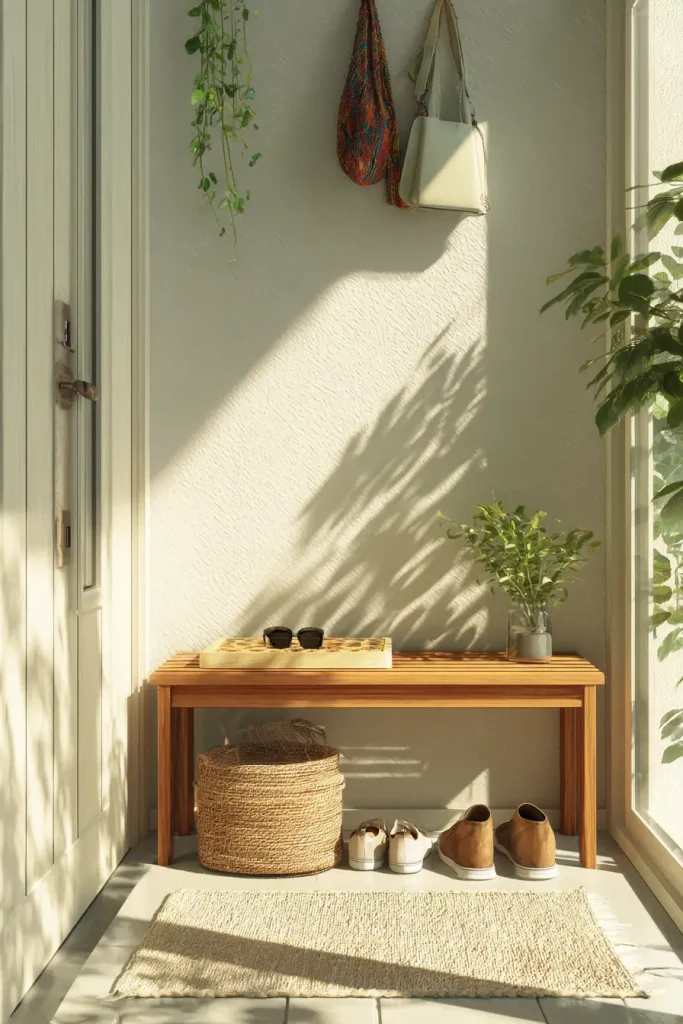
A bench is the single highest-impact purchase you can make for a renter’s entryway. Interior designers and Apartment Therapy editors consistently say the same thing: start with a bench.
Here is why it works. It gives you a place to sit and put your shoes on. It signals that the entryway is its own zone, not just dead space between the door and your couch. And it gives you a surface to style.
Look for a bench under 14 inches deep. Anything deeper will crowd a narrow hallway. The IKEA HEMNES bench works well. So do plenty of options on Wayfair and Amazon in the $40 to $200 range.
Style it like this: put a small tray on top for keys and sunglasses, add a plant to one end, and tuck a basket underneath for shoes. Three simple additions and it looks completely intentional.
No wall required. No tools needed. Just carry it in and place it.
Idea 2: A Hall Tree That Replaces Every Hook You Wanted to Drill
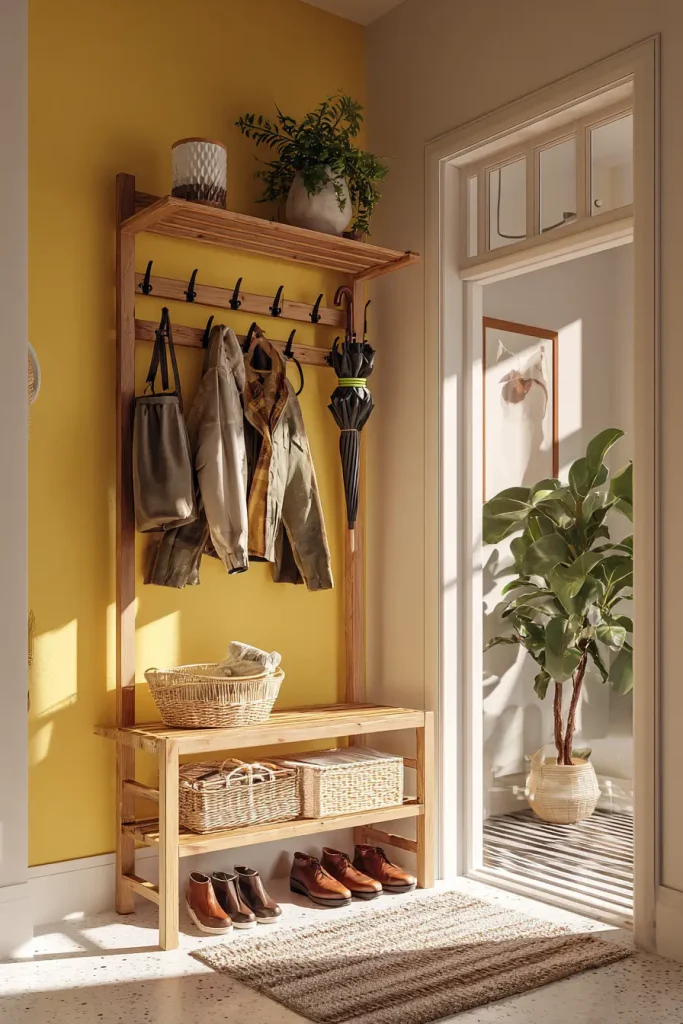
You know those rows of cute hooks you see in mudroom photos? You can get that look without putting a single hole in your wall.
A hall tree is a freestanding unit that combines a coat rack, hooks, a shelf, and often a bottom storage area all in one piece. It stands on its own and looks like a built-in feature when styled well.
The key is placement. Put it in a corner or up against the wall at a slight angle. This keeps it stable on smooth floors. Look for hall trees with a weighted base if you have hardwood or tile.
Hang bags, jackets, and umbrellas from the hooks. Store shoes or a small basket at the bottom. Put a plant or a small bowl on the upper shelf. In about 10 minutes, your entryway has a focal point.
Hall trees are consistently among the top-selling entryway items on Amazon and Wayfair. There are options starting around $60. You can spend more for something that looks more substantial, but the budget ones do the job.
Idea 3: Peel-and-Stick Wallpaper That Actually Comes Back Off
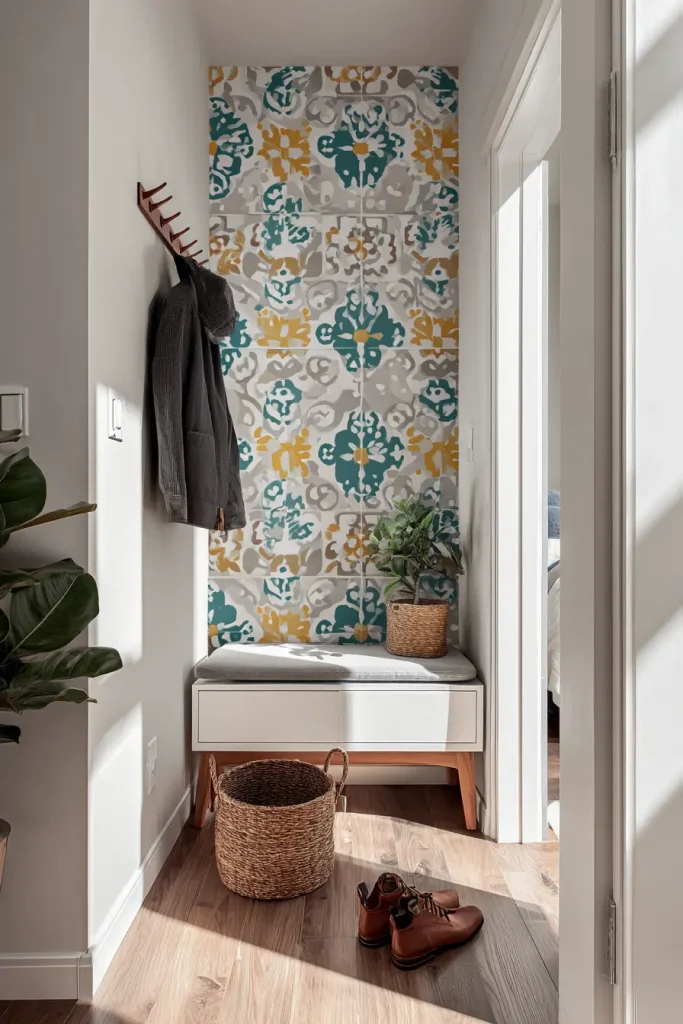
Removable wallpaper has gotten genuinely good. The old versions bubbled, tore, and left residue behind. The current versions from brands like Chasing Paper, Tempaper, and Spoonflower peel off cleanly and can even be repositioned while you are applying them.
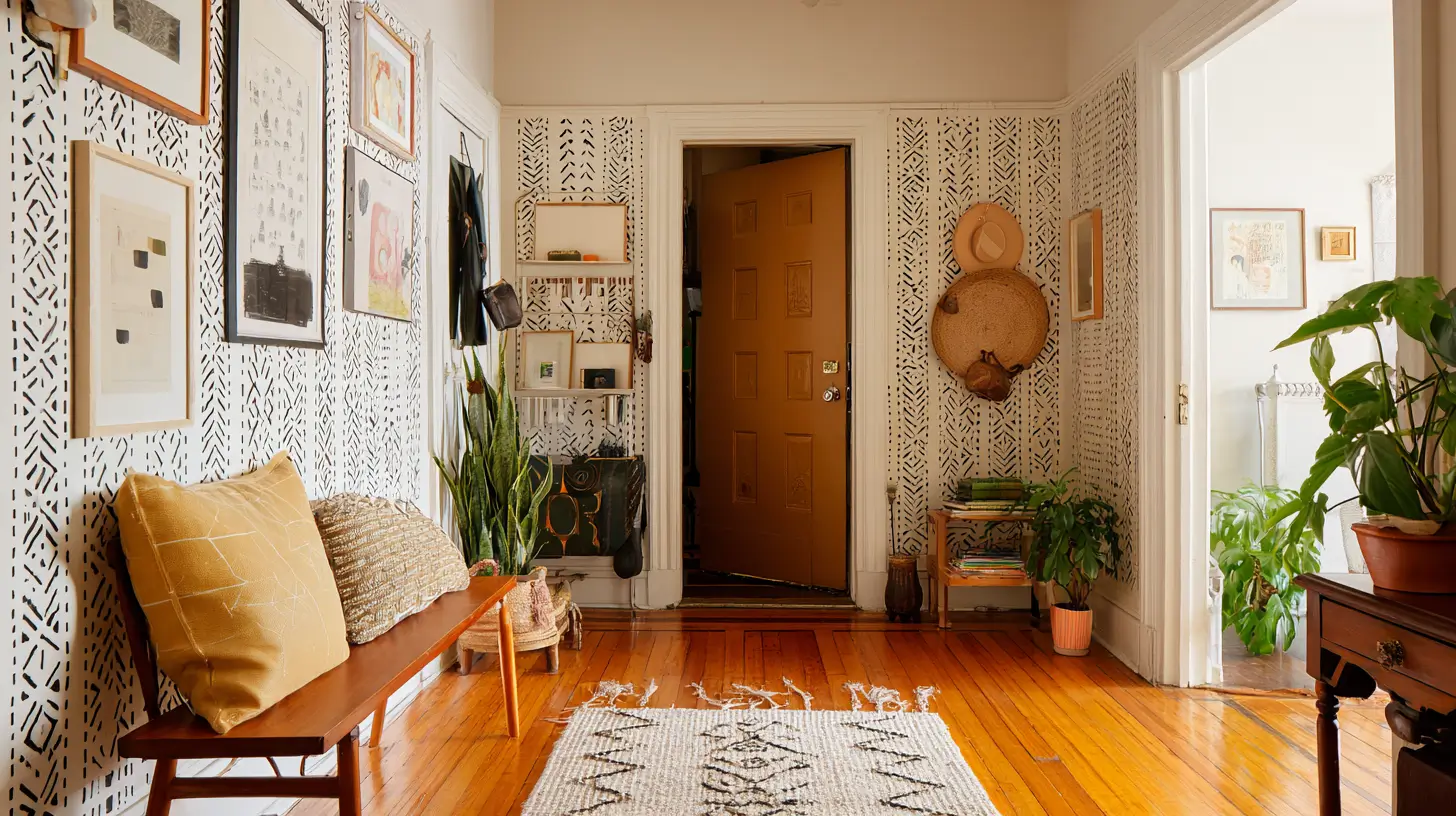
You do not need to paper a full wall to make an impact. In a small entryway, one section about 3 feet wide and ceiling height is enough to completely change the feel of the space. A grasscloth pattern, a moody geometric, or a soft floral will all read as high-end and intentional.
Here is how to apply it:
- Clean the wall with a damp cloth and let it dry completely.
- Start at the top and peel back just a few inches of backing.
- Press the paper flat against the wall and smooth downward with your hand or a credit card.
- Peel the backing slowly as you go, smoothing out bubbles as you move down.
Average cost is between $1.50 and $4 per square foot. A small entryway section might cost you $30 to $60 total. That is a dramatic change for a low price.
Renter Note: Always test a small corner of the wall first. Let it sit for 24 hours, then pull it off. If paint comes with it, the wall was not properly prepared before you moved in. Take a photo and document it before you put up anything else.
Idea 4: A Leaning Mirror That Makes Any Entryway Feel Bigger
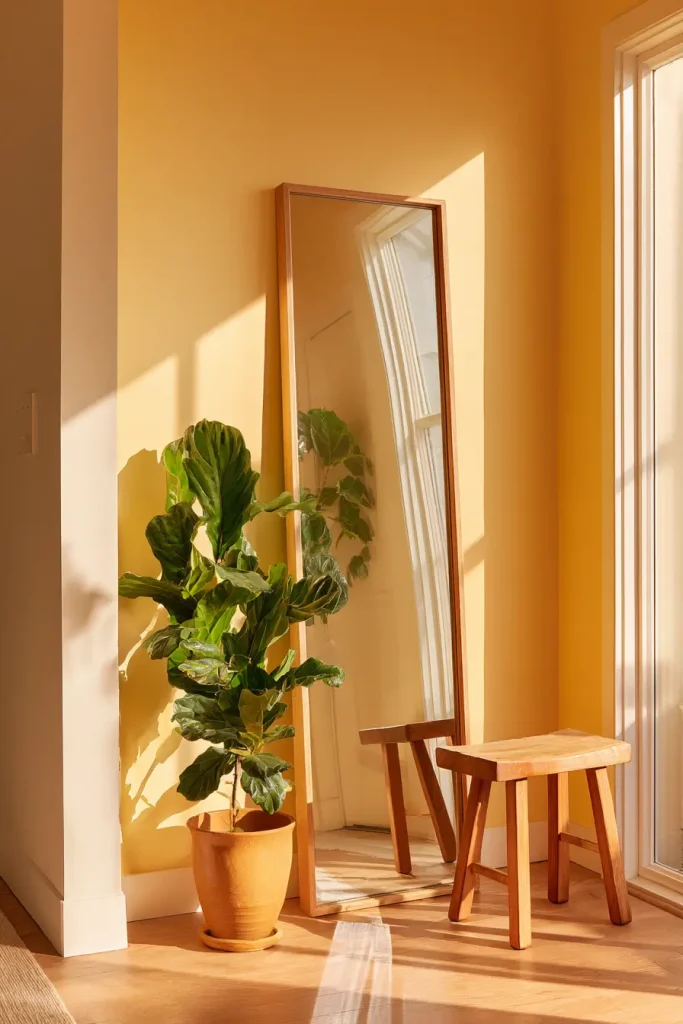
A large leaning mirror is one of the most effective things you can add to a small entryway. It reflects light. It makes the space feel twice as wide. And it requires absolutely zero wall hardware.
You just lean it against the wall.
Mirrors increase the perceived size of a room. This is a well-established principle used in retail stores, restaurants, and interior design. In a narrow hallway, it makes an immediate difference you can see from across the room.
Choose a mirror that is at least 60 inches tall for maximum effect. Style it by placing a small stool or plant in front of the bottom edge. This makes it look placed, not just propped.
One honest note: a large leaning mirror can tip if a door slams nearby or someone bumps it. A simple fix is to loop a furniture anchor strap around a door handle or baseboard for extra stability. These straps cost under $10 and leave no marks.
Idea 5: A Gallery Wall With Zero Nail Holes
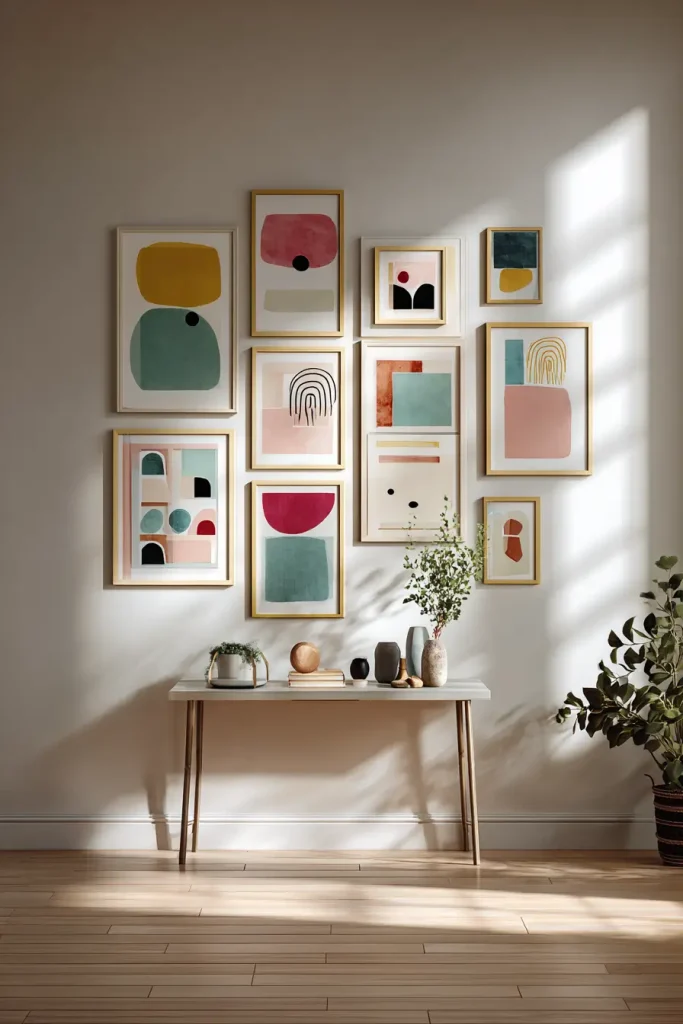
Gallery walls look expensive and custom. They do not have to cost much or damage anything.
The key is using lightweight frames. Frames under 8 ounces hold securely on 3M Command picture-hanging strips. IKEA RIBBA frames are thin, come in multiple sizes, and weigh almost nothing. A mix of 4×6, 5×7, and 8×10 frames creates a collected, layered look.
For art, go to Etsy and search “printable wall art.” You will find thousands of designs for under $5 each. Download, print at home or at a local print shop, and frame them. A full gallery wall of 6 to 8 pieces can cost under $60 total.
Before you hang anything, lay the frames on the floor and arrange them until you like the layout. Take a photo of the arrangement. Then transfer it to the wall.
Use a free level app on your phone instead of measuring tools. It works just as well and saves a lot of frustration.
Idea 6: A Rug That Tells People Where the Entryway Starts
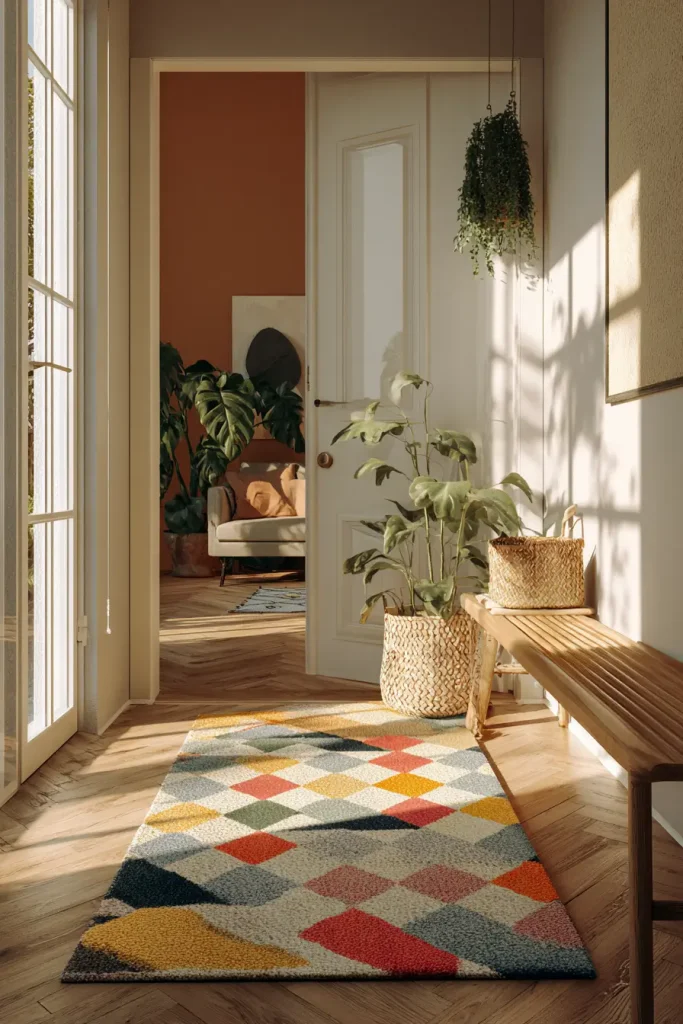
In open-plan apartments, the entryway does not have walls to define it. A rug is how you fix that.
A rug placed at the door creates a visual boundary. It tells the eye that this is its own zone. Without it, the front door area just bleeds into the living room and looks unfinished.
Here is a simple size guide:
A 2×3 rug works for a narrow strip between the door and a wall. A 3×5 rug works for a small defined entry area. A 4×6 rug works if you have more floor space and want to include a bench or console table in the zone.
Choose low-pile or flat-weave. High-pile rugs trap dirt and get crushed quickly in high-traffic spots.
Ruggable makes washable rugs with a two-piece system: a pad that stays on the floor and a cover you can throw in the washing machine. For renters with pets or muddy shoes, this is a practical choice.
Always use an anti-slip rug pad underneath. It protects hardwood floors from scratching and keeps the rug from moving. Both things matter when you are trying to get your deposit back.
Idea 7: Adhesive Hooks That Look Like Real Hardware
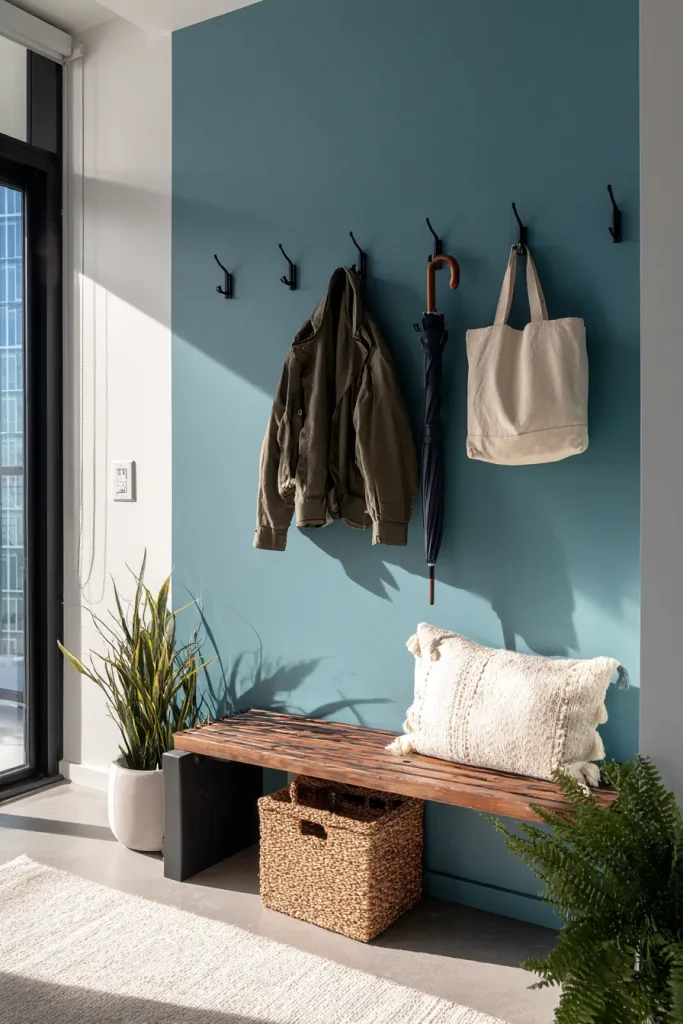
Four matching hooks in a row on a wall look like a custom mudroom feature. And with adhesive hooks, you can get that exact look without drilling a single hole.
The finish you choose matters more than the hooks themselves. Picking all matte black or all brushed brass makes a cheap set of adhesive hooks look intentional and designed. Mixing finishes makes it look like you grabbed whatever was available.
3M Command Large hooks hold up to 7.5 lbs each. That is enough for a coat, a bag, and an umbrella on one hook. They are available at Target, Home Depot, Walmart, and Amazon.
Hang them at 60 to 65 inches from the floor for adult height. Space them evenly about 6 to 8 inches apart.
When it is time to move out, do not yank them. Pull the removal tab straight down slowly. The adhesive releases without taking paint with it. If any residue remains, a little warm water and slow pressure removes it.
Pro Tip: The dental floss trick works on stubborn adhesive. Slide a piece of floss behind the hook base in a sawing motion. It cuts through the adhesive cleanly.
Idea 8: A Freestanding Shelf That Looks Built-In
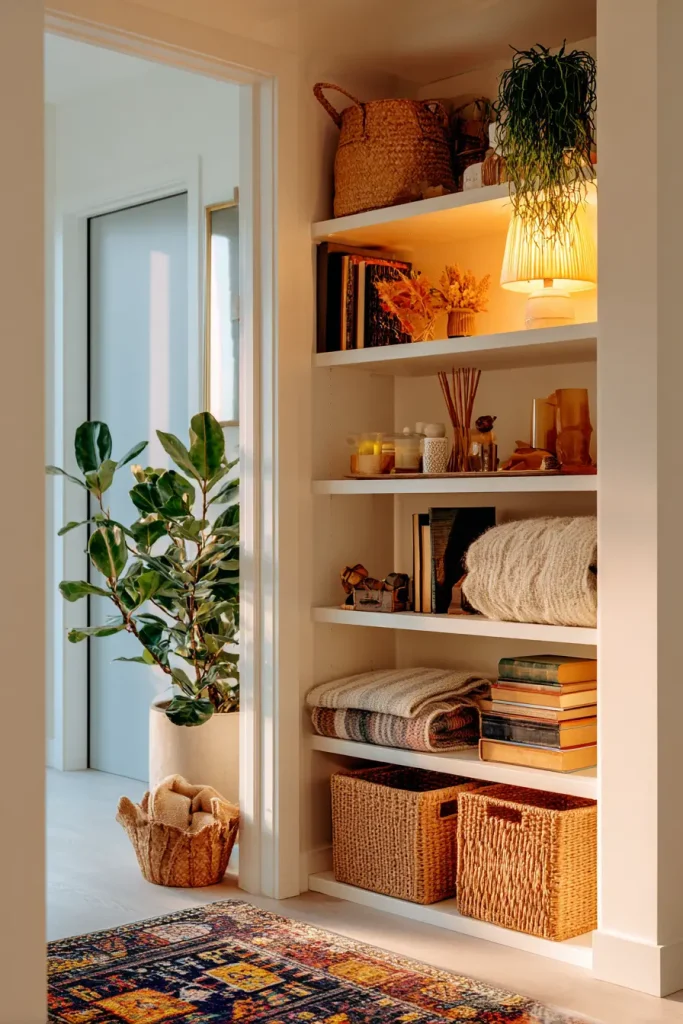
A tall freestanding bookshelf against the entryway wall looks like a built-in storage unit when you style it well. Guests will not know it just lives there and can be moved at any time.
The IKEA KALLAX and BILLY shelves are the most popular options for this. Both are stable, affordable, and widely available. Choose a depth of 12 inches or less to avoid blocking the walking path.
Style the top with a small lamp, a trailing plant, and a tray. Use the middle shelves for baskets that hold scarves, gloves, and other items you grab on the way out the door. Put heavier storage at the bottom.
The lamp matters more than it seems. Most apartment entryways have harsh overhead lighting or none at all. A small lamp on top of a shelf adds warm light and instantly makes the space feel welcoming.
This setup costs between $80 and $180 depending on the shelf you choose. And when you move, it comes with you.
Idea 9: Faux Wainscoting That Looks Custom and Costs Under $80
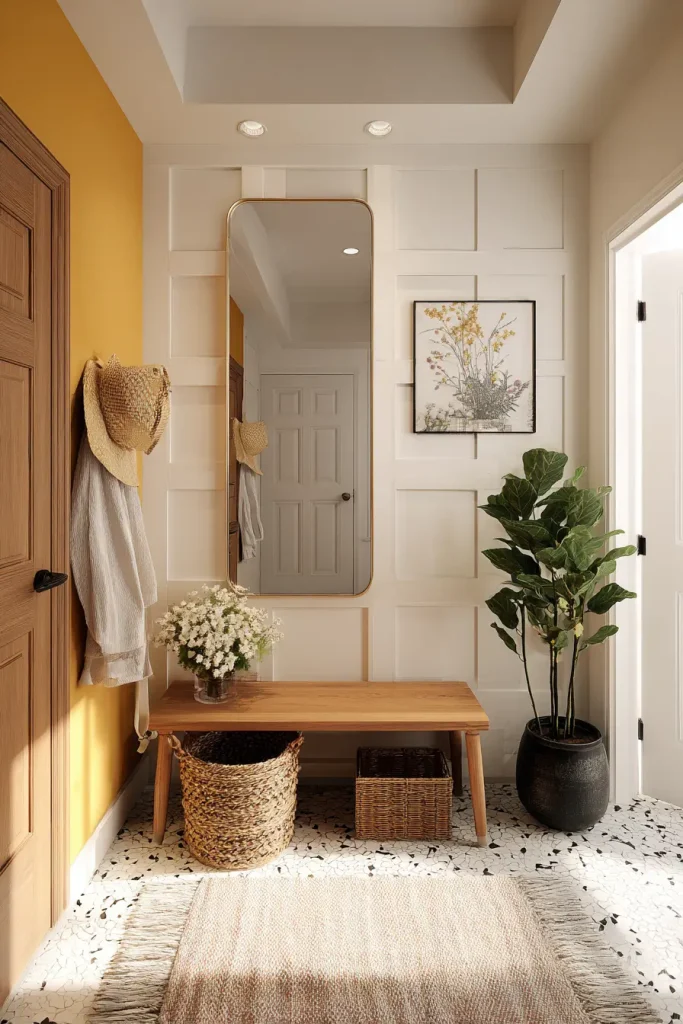
Wainscoting is that classic look where the lower half of a wall has paneling on it. It is a feature found in older homes and renovated spaces. It looks expensive. It reads as architectural.
You can fake it with peel-and-stick panels.
Brands like WallPops and Stikwood make peel-and-stick options that apply directly to the wall and remove cleanly. Applied to the lower 36 inches of one entryway wall, they create an immediate custom look.
Pair it with a leaning mirror above and a bench below. That combination looks like a professionally designed mudroom, not a renter’s apartment.
Budget for $30 to $80 for a small entryway section. The look this creates is worth several times that amount if you are trying to make your apartment feel finished and personal.
This is consistently trending on TikTok under hashtags like #renterdecor and #apartmenttransformation. Search those tags and you will see dozens of before-and-after examples using this exact technique.
Idea 10: A Curtain That Creates a Fake Mudroom
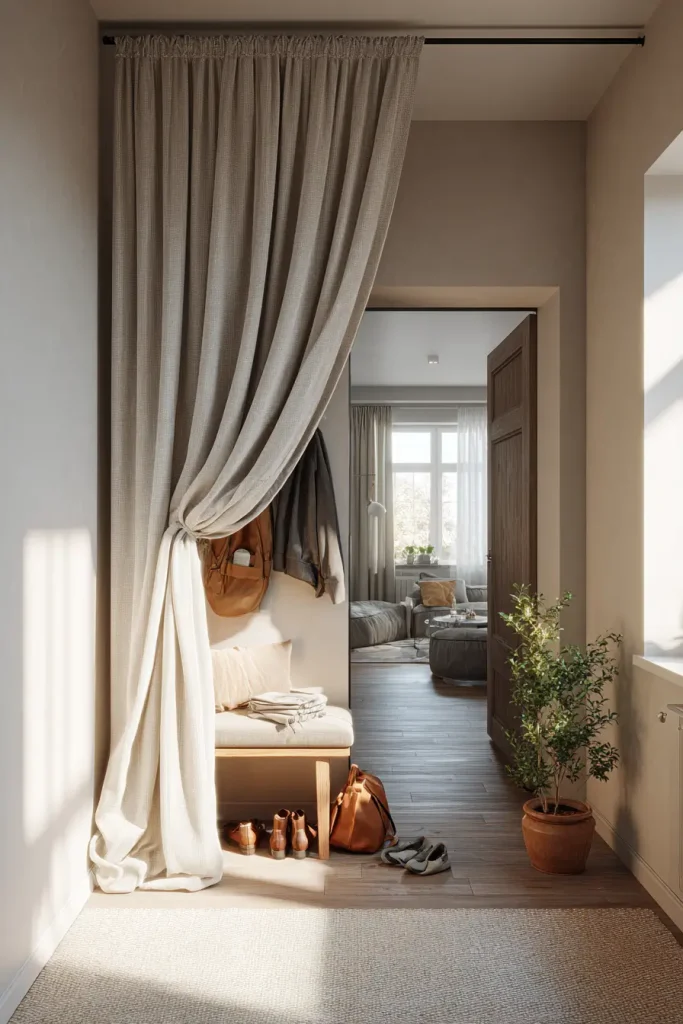
If your apartment has no natural separation between the front door and the rest of the space, a curtain panel can create one.
A tension rod fits inside a doorway or across an open area with no drilling at all. Tension rods expand to fit openings up to 120 inches wide. They hold by pressing against both sides of the opening.
Hang a linen or velvet curtain from the rod. Pull it closed when you want to hide the entryway clutter. Open it when guests arrive. Behind it, you can keep shoes, bags, and coats without them being visible from the living room.
This is the closest thing to a real mudroom that a renter can create without permanent changes. It costs under $50 total for a basic setup using a tension rod from Amazon or Target and a curtain from IKEA.
Choose a curtain with some weight to it. Lightweight sheers look cheap and blow around when the door opens. A heavier linen or cotton blend hangs properly and looks more like a design decision.
Idea 11: Plug-In Lighting That Looks Hardwired
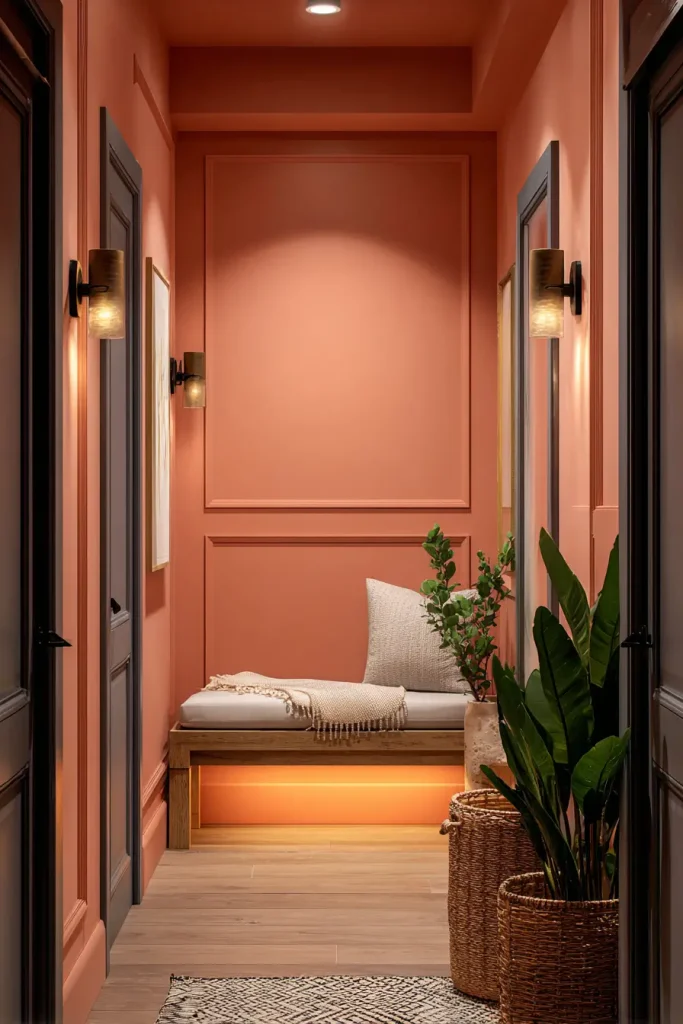
This is the most underused renter entryway tool on this entire list. Most renters never try it. The ones who do are always shocked by how much it changes the space.
Plug-in wall sconces look identical to hardwired sconces. You hang them on the wall using a Command strip or a small damage-free hook, run the cord down the wall, and plug them into an outlet. That is the entire setup.
The cord is the main concern. It does not have to be visible. Cord cover strips from a brand called D-Line are adhesive, paintable channels that snap over the cord and hide it against the wall. They cost under $15 and make the whole thing look professionally installed.
Add a rechargeable LED puck light underneath your bench or shelf for warm ambient glow at floor level. These are battery-operated, stick on with a small adhesive pad, and create the kind of layered lighting you see in design magazines.
Plug-in sconces are available from Wayfair, Amazon, Pottery Barn, and West Elm starting around $35. You do not need to spend a lot to get a result that looks like a lot.
Idea 12: Floating Shelves That Leave Almost No Trace
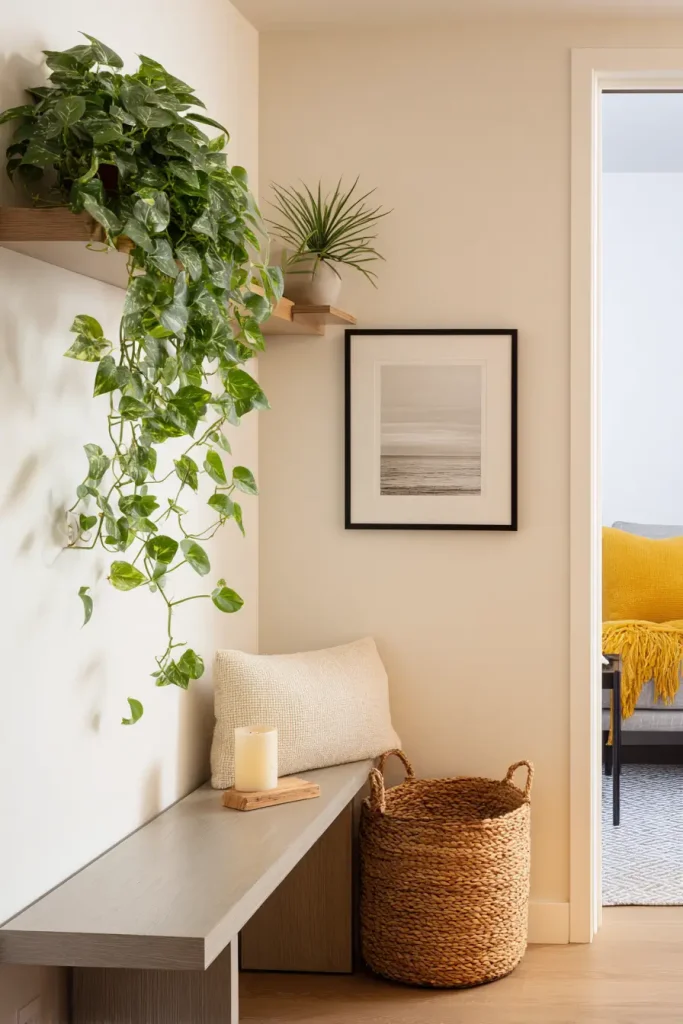
Here is an honest note first. This idea does involve putting something into the wall. But the tool is designed to leave a hole no larger than a pin. Most leases allow small nail holes, and these fall into that category.
Monkey Hooks are curved wire hooks that push directly into drywall with no drill required. They hold up to 30 lbs each. And the hole they leave is barely visible.
Use two Monkey Hooks to hang a lightweight floating shelf. Style it with a trailing pothos plant, a small candle, and a framed print. The shelf looks like it was professionally installed. The total wall impact when you leave is two tiny holes that a bit of toothpaste fills in seconds.
Important: this only works on drywall. To check, tap the wall with your knuckle. A hollow sound means drywall. A solid, dense sound likely means plaster. Do not use Monkey Hooks on plaster.
Always check your lease before using any wall hardware. Many leases explicitly allow nail-sized holes. Read the actual language before assuming.
Idea 13: A Plant Corner That Needs No Wall at All
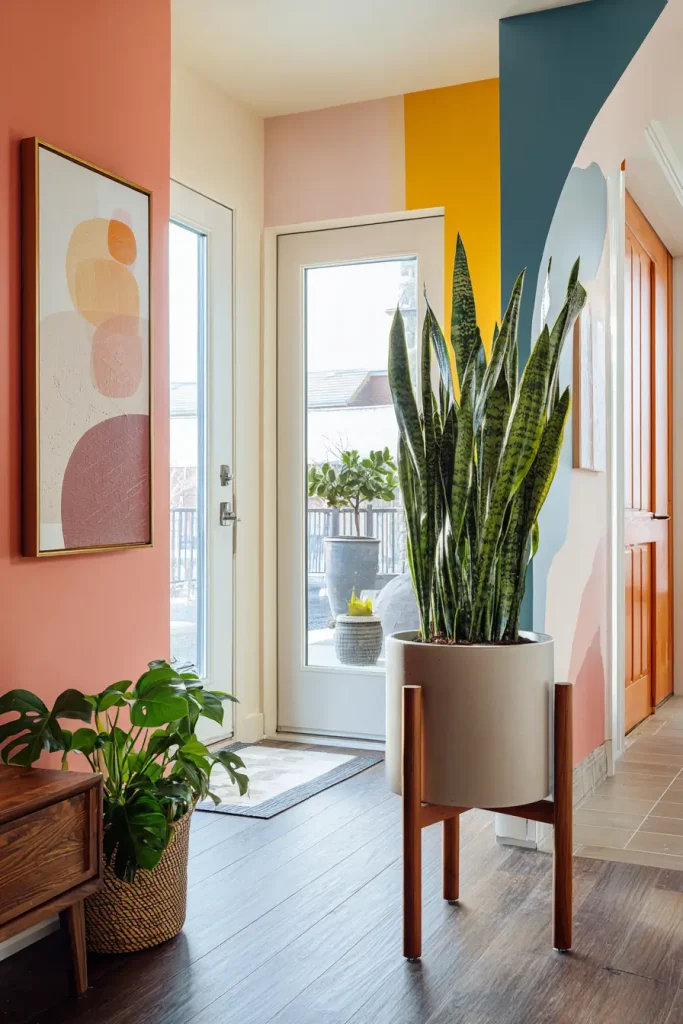
Plants change the feeling of a space in a way that furniture cannot. They add warmth, life, and color. And a well-placed floor plant in an entryway corner is completely freestanding and asks nothing of your walls.
The best plants for apartment entryways are ones that tolerate low light. Snake plants, pothos, ZZ plants, and cast iron plants all do well in dim conditions. They are also low maintenance, which matters when you are leaving and arriving in a rush every day.
A sculptural plant stand makes a single plant look like a design feature. Place a tall snake plant on a raised stand in one corner. Add a smaller trailing pothos on the floor nearby at a different height. Two plants at different levels look like a deliberately styled botanical corner.
According to the IKEA Life at Home report, 72% of people said plants made their home feel more welcoming. That is a significant number. And it costs you nothing more than the plant and the pot.
Idea 14: A Styled Tray That Fixes the Clutter Problem
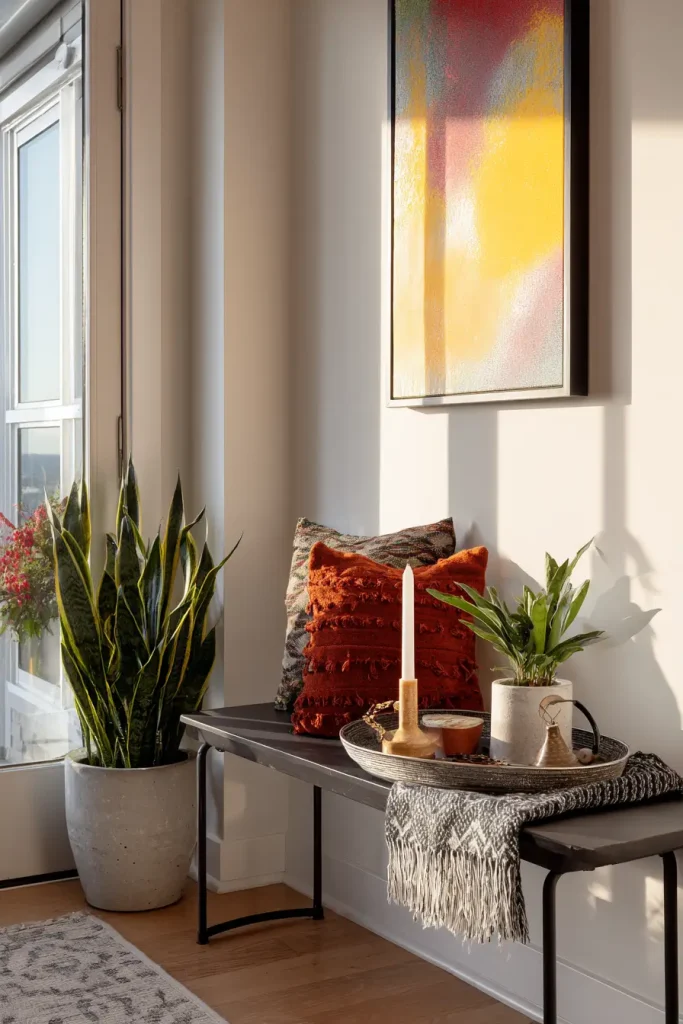
Every entryway has the same problem. Keys end up on the floor. Mail piles up on the bench. Sunglasses disappear. A tray fixes all of this and makes it look intentional at the same time.
Place a tray on top of your bench or shelf. Put your everyday items inside it. The tray contains the clutter and turns it into a styled moment.
Interior stylists use a technique called the rule of three. Group items in odd numbers because they look more natural than even numbers. Try a tall candle, a small plant, and a dish for keys. Three heights, three textures, one tray.
Swap items with the season. In fall, add a small pumpkin or a pine cone. In spring, swap in a small vase with stems. The tray itself never changes. Only what is inside it does.
This is probably the cheapest idea on this list. A good tray costs $10 to $25 at HomeGoods or a thrift store. The decorative objects inside can come from the same places. Total cost under $30 for a look that takes five minutes to put together.
Idea 15: Contact Paper on the Inside of a Shelf
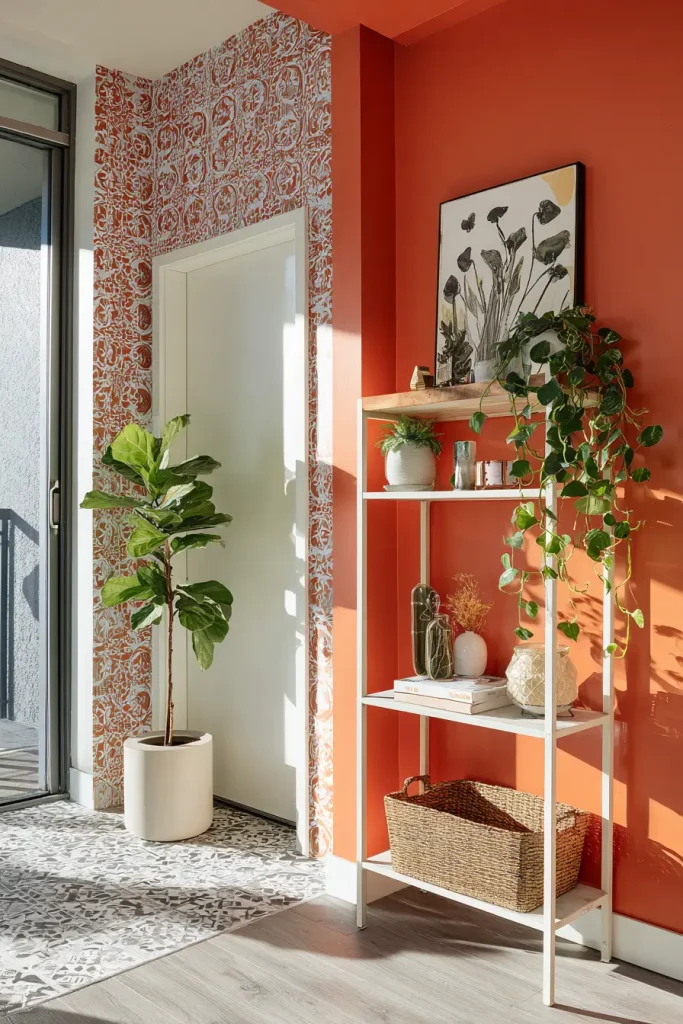
This last idea is small. But it makes a big difference.
Take the freestanding shelf you already have or plan to get. Line the back panel with contact paper or removable wallpaper. Choose a pattern or color that contrasts with the shelf. A dark shelf with a light geometric backing. A white shelf with a dark botanical print.
The result looks like a custom built-in. It looks like someone chose every single detail of that shelf on purpose.
Duck Brand and Con-Tact Brand contact paper are both available at Target, Walmart, and Home Depot for under $15 a roll. One roll is enough for most small shelving units.
This takes 20 minutes. It costs almost nothing. And when you move, you peel it off the shelf and take it with you. The shelf looks exactly as it did when you bought it.
It is one of those ideas that seems too simple to matter until you actually do it. Then you will wonder why you waited.
Your Entryway Does Not Have to Stay Boring
You rent. That does not mean you live in a space that looks like nobody cares about it.
Every idea on this list is reversible. Every one is landlord safe. And every one of them works in a small apartment, a narrow hallway, or a tiny foyer that barely qualifies as an entryway.
Pick one idea from this list. Just one. Do it this weekend. The bench. The tray. The leaning mirror. Whichever feels most doable right now.
You do not need a perfect entryway. You need one that works for you and feels like home when you walk through the door.
That is something any renter can have.

- 15 Entryway Ideas for Renters That Look Custom Without Touching a Wall - March 10, 2026
- 17 Pantry Organization Ideas That Make Every Item Easy to Find - March 10, 2026
- 15 Stunning Kitchen Ideas with Gold Hardware - March 9, 2026