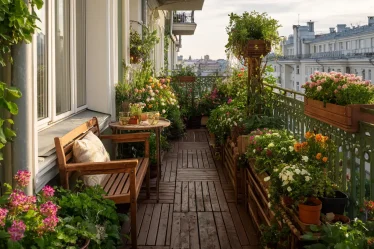

You bought seeds once. Maybe two years ago. They’re still in a drawer somewhere.
Or you walk past someone’s garden and think, “I wish I could do that.” But you don’t know where to start. And the last time you tried, everything died.
That’s not a you problem. That’s a starting-wrong problem.
Most beginner guides tell you to “prepare your soil” and “check your hardiness zone” before you’ve even bought a pot. No wonder people quit before they begin.
This guide is different. These 17 beginner garden ideas start as small as a windowsill. They cost as little as $2. And they work even if you’ve never grown a single thing in your life.
You’ll learn which plants are almost impossible to kill. You’ll find out what to plant first. And you’ll know exactly what to do this weekend to get started.
Pick one idea. Just one. That’s all you need.
Why Most Beginners Fail Before They Even Get Started
Let’s be honest about what usually goes wrong.
The number one mistake is starting too big. You clear a whole patch of garden, buy ten different seed packets, and try to grow everything at once. Three weeks later, it’s a mess and you feel like a failure.
The second mistake is watering too much. The Royal Horticultural Society found that most beginner plant deaths come from overwatering, not from ignoring plants. When in doubt, water less.
The third mistake is picking the wrong plants for where you live. A cactus won’t survive a Scottish winter. Lettuce bolts in Texas summer heat. The plant isn’t broken. It’s just in the wrong place.
And the fourth mistake? Skipping the soil. Bad soil means weak plants. It doesn’t matter how often you water if the soil is like concrete or drains like a sieve.
Here’s the fix for all four mistakes: start small, start simple, and start with plants that are built to survive a beginner. That’s exactly what this list gives you.
According to the National Gardening Association, over 35% of American households grew food at home in 2023. That’s up from just 19% in 2008. More people than ever are learning to garden for the first time. You’re not alone in this.
Cluster A: Start Here, Zero Effort Required (Ideas 1 to 4)
These four ideas need almost no space, no outdoor area, and cost under $20 total. Start with one of these before you do anything else.
Idea 1: Grow Herbs on Your Kitchen Windowsill

This is the single best first garden for anyone who lives in a flat, rents their home, or has never grown anything before.
Basil, mint, chives, and parsley all grow happily in small pots on a sunny windowsill. You don’t need a garden. You don’t need special equipment. You need a pot, some compost, a few seeds, and a window that gets a few hours of light per day.
Here’s what makes herbs perfect for beginners. They’re “cut and come again” plants. That means the more you harvest them, the more they grow back. Snip a few basil leaves for your pasta tonight. New ones will appear within days.
The National Gardening Association reports that herbs are the most grown plant category among first-time home gardeners. There’s a reason for that. They’re fast, rewarding, and useful. You’ll actually want to check on them every day.
Use any container you already own. A yoghurt pot with a hole poked in the bottom works fine. A chipped mug is perfect. Mint especially does well in almost any container, in almost any light.
One warning: mint spreads aggressively. Keep it in its own pot, away from other herbs. Otherwise it takes over.
Your first step: buy one small pot of basil from a supermarket this week. Move it to your sunniest windowsill. Water it a little every two to three days.
Idea 2: Try a Grow Bag on a Balcony or Patio

A grow bag is a fabric pot. It looks like a large bag filled with compost. You can buy one for $5 to $15. And it solves two of the biggest beginner problems at once.
First, you don’t need ground. No digging, no garden beds, no soil to fix. You fill the bag with good compost from a bag, and you’re done.
Second, grow bags drain on their own. They have tiny gaps in the fabric that let excess water out. That makes it much harder to overwater your plants, which is the most common beginner mistake.
Tomatoes, lettuce, and strawberries all perform brilliantly in grow bags. A 10-gallon grow bag on a small balcony can produce enough cherry tomatoes to keep a family of four well-supplied through summer.
Container gardening grew by 28% between 2020 and 2023, according to the Garden Media Group’s 2024 Garden Trends Report. More people are discovering that you don’t need a big yard to grow real food. You just need a bag, some compost, and a sunny spot.
Grow bags are available on Amazon, at Walmart, or at any garden centre in spring and summer.
Your first step: buy one 10-gallon grow bag and one bag of multipurpose compost. Fill it. Then pick one thing to grow in it.
Idea 3: Plant Radishes as Your First Vegetable

If you want to feel like a real gardener as fast as possible, plant radishes first.
Radish seeds germinate in three to five days. You’ll see green shoots pushing through the soil before the week is out. And they’re ready to eat in just 25 to 30 days from sowing.
No other vegetable comes close to that speed. Tomatoes take months. Carrots are slow and fussy. But radishes? They grow so fast that even a child can stay excited about them from seed to harvest.
They’re also nearly impossible to kill in cool weather. Spring and autumn are ideal. One $2 seed packet gives you 60 to 100 radishes. You can grow them in a 6-inch pot, a window box, or directly in the ground.
Here’s a nice detail: plant radish seeds on a Monday, and by the following Saturday your children will already be watching green sprouts break through the compost. That kind of fast visible result keeps beginners going.
Once you’ve grown radishes successfully, you’ll have the confidence to try something that takes a little longer. That’s the whole point of starting here.
Your first step: buy one packet of radish seeds. Sow them in any pot or container you own. Water lightly. Wait five days.
Idea 4: Grow Microgreens on a Tray Indoors

Microgreens are the seedling versions of vegetables and herbs. You grow them in a shallow tray, harvest them when they’re about two inches tall, and eat them on salads, sandwiches, and soups.
They’re ready to harvest in seven to fourteen days. That’s faster than almost any other plant you can grow.
You need almost nothing to get started. A shallow tray or container, some potting mix, seeds, and a bright windowsill or countertop. No outdoor space at all.
Good beginner microgreens include pea shoots, sunflower, radish, and broccoli. A University of Maryland study found that microgreens can contain up to 40 times more nutrients than their fully grown versions. Small plants, big nutrition.
Kevin Espiritu of Epic Gardening, one of the most-watched gardening channels on YouTube with over 4.5 million subscribers, has a beginner microgreens tutorial that has been viewed more than 2 million times. It’s free and walks you through every step from tray to harvest.
If you ever want to take this further, microgreens are also one of the easier things to sell at a local farmers market. But that’s later. For now, just grow them and eat them.
Your first step: search “Epic Gardening microgreens for beginners” on YouTube. Watch it. Then buy one packet of pea shoot seeds.
Cluster B: Outdoor Garden Ideas for Beginners With a Small Yard (Ideas 5 to 9)
You’ve got some outdoor space. Maybe it’s a small garden, a patio, or even just a strip of ground. These five ideas work well in a modest outdoor area, and none of them require expensive tools or years of experience.
Idea 5: Build a Small Raised Bed Garden

A raised bed is a wooden frame filled with good compost. It sits on top of your existing ground. You don’t dig into the earth at all.
This solves the soil problem completely. You’re not fighting with whatever is already in the ground. You fill the bed with quality compost, and your plants grow in perfect conditions from day one.
The best beginner size is 4 feet by 4 feet. That’s small enough to reach every corner without stepping inside the bed. Stepping on your soil compacts it and damages it. A 4×4 design prevents that.
You can build one from untreated pine planks for $30 to $60 in materials. No special carpentry skills are needed. Four planks screwed together at the corners, placed on the ground. That’s it.
Fill it with a mix of topsoil and multipurpose compost. Then lay cardboard on the ground underneath it before you add the compost. That cardboard kills any grass or weeds below for free, without chemicals.
Raised bed gardeners report two to three times higher yields per square foot compared to traditional row gardening, according to the Square Foot Gardening Foundation. That means more food from less space.
The best beginner crops for a raised bed are lettuce, spinach, kale, climbing beans, and courgette. All of them grow quickly, and all of them are forgiving.
Your first step: look up “beginner raised bed plans” on YouTube. Pick one that costs under $60. Build it on your next free weekend.
Idea 6: Start a No-Dig Garden Bed

What if you don’t want to build anything at all?
No-dig gardening is exactly what it sounds like. You don’t dig. You don’t remove weeds. You don’t break your back clearing ground. You just put things on top.
Here’s how it works. Lay cardboard directly over the area you want to turn into a garden bed. Overlap the edges so no weeds can get through. Then pile compost on top, about four to six inches deep. That’s your bed. You can plant straight into it.
The cardboard breaks down over a few months, killing the grass and weeds underneath. The compost sits on top and gives your plants everything they need to grow. Over time, worms and soil life do all the work for you.
Charles Dowding is the person most responsible for making this method popular. He’s a market gardener in Somerset, England, and his YouTube channel has over 850,000 subscribers. His videos are practical, clear, and completely free. He’s been using and refining this method for decades.
The cost to start a no-dig bed is minimal. One or two bags of compost at $10 to $20. Cardboard from your local supermarket is free. They always have empty boxes they need to get rid of.
This is also one of the most physically easy ways to garden. There’s no heavy digging. It works for older gardeners, gardeners with back problems, and anyone who simply doesn’t want to exhaust themselves before a single seed goes in the ground.
Your first step: collect cardboard boxes from a local shop or supermarket. Search “Charles Dowding no dig garden for beginners” on YouTube before you start.
Idea 7: Grow a Cut-and-Come-Again Salad Garden

A cut-and-come-again salad garden is one of the most satisfying things a beginner can grow.
You sow loose-leaf lettuce seeds in a small patch or window box. Once they’re a few inches tall, you cut the outer leaves off, leaving the centre intact. New leaves grow back within one to two weeks. One small planting can give you fresh salad for three to four months straight.
This only works with loose-leaf varieties, not iceberg lettuce. Iceberg grows as one solid head and dies when cut. Loose-leaf varieties, like Oak Leaf, Butterhead, Rocket, and Mizuna, regrow from the centre each time you harvest.
Sow a new batch of seeds every two to three weeks. This is called succession sowing. It means you always have young fresh leaves coming through, even as older plants slow down in summer heat.
Seeds cost $1 to $3 per packet. You don’t need any special equipment. A small patch of earth, a window box, or even a grow bag works perfectly.
This type of garden also makes you feel like a real food grower from very early on. There’s something different about walking to your garden, cutting a bowl of salad leaves, and eating them ten minutes later. Even a small success like that changes how you feel about gardening.
Your first step: buy one packet of mixed salad leaves. Scatter them thinly across a pot of compost. Water gently. Harvest in 30 days.
Idea 8: Plant a Row of Sunflowers

This one isn’t about food. It’s about confidence.
Sunflowers are one of the most forgiving plants on Earth. Push a seed one inch into the soil. Water it. Walk away. That’s genuinely all you need to do.
In one summer, a sunflower can grow from a seed to a plant six to ten feet tall. That kind of visible, dramatic growth is deeply satisfying for beginners. You planted something. It grew. That counts.
Sunflowers also attract bees and other pollinators to your garden. Once pollinators are visiting regularly, every plant you grow benefits from it.
For pots or small spaces, choose “Dwarf Sunspot” which grows to about two feet. For a dramatic show in an open garden, choose “Russian Giant” which reaches eight to ten feet. Seeds cost $2 to $4 per packet and are available in supermarkets, garden centres, and online from early spring.
Sow them after your last frost date in spring. In the UK, that’s usually mid-May. In most of the US, late April to mid-May depending on your region. A quick search for your local last frost date takes thirty seconds and saves your seeds from a cold snap.
Your first step: buy one packet of sunflower seeds in spring. Press them one inch deep into a pot of compost or directly into garden soil. Water them once and wait.
Idea 9: Try the Three Sisters Planting Method

This is one of the oldest and most clever planting systems ever used. And it requires almost zero effort once it’s set up.
The Three Sisters are corn, beans, and squash. They’re planted together in a 4×4 ft space. Each plant helps the others survive and grow.
Corn grows tall and provides a natural climbing structure for the beans. Beans pull nitrogen from the air and store it in the soil, which feeds the corn and squash. Squash grows wide and low, covering the ground with its big leaves. Those leaves shade the soil, keep moisture in, and prevent weeds from growing.
No pesticides. No fertiliser. No complicated care routine. The three plants look after each other.
This method has been used by Native American farmers for more than 3,000 years. Cornell University has a detailed and free planting guide on their website at gardening.cals.cornell.edu. It covers spacing, timing, and which varieties work best.
This is also one of the best ideas for gardening with children. The story behind it is interesting. The results are dramatic. And a whole family can tend a Three Sisters bed without it feeling like work.
Your first step: visit gardening.cals.cornell.edu and search for “Three Sisters.” Read the planting guide before you buy any seeds.
Cluster C: Beginner Garden Ideas for Flowers, Bees, and Low Maintenance Colour (Ideas 10 to 13)
Not everyone wants to grow food. Some people just want a garden that looks alive, smells good, and doesn’t need constant attention. These four ideas are built for that.
Idea 10: Scatter a Wildflower Patch

This might be the lowest effort garden idea on this entire list.
Clear a small patch of bare earth. Remove any existing grass or weeds. Scatter a packet of wildflower seeds across the surface. Rake them in lightly. Water. Walk away.
That’s it.
Wildflower mixes are designed to grow in exactly this way. They don’t need precision spacing. They don’t need feeding. They’re selected to suit local conditions and to self-seed each year, meaning the patch comes back on its own without you replanting.
A 2021 study by the Royal Horticultural Society found that even a one-square-metre wildflower patch meaningfully supports local bee and butterfly populations. You don’t need a big garden to make a real difference to local wildlife.
In the US, American Meadows at americanmeadows.com sells region-specific wildflower mixes. That means the seeds are chosen to suit your local climate and soil. These aren’t generic mixes that may or may not work in your area.
Seed packets start at $5 to $10. One packet covers several square metres.
Your first step: buy a region-specific wildflower mix from americanmeadows.com (US) or your local garden centre. Prepare a small clear patch of earth. Scatter the seeds in spring.
Idea 11: Grow Marigolds Everywhere

Marigolds are near-impossible to kill, produce months of bright colour, and actually do a job in your garden beyond looking good.
They repel aphids and whiteflies. These are two of the most common garden pests for beginners. Plant marigolds next to your tomatoes, peppers, or any vegetable plants, and they act as a natural barrier against insects that would otherwise attack your food crops.
You can sow seeds directly into the ground after your last frost date. Or buy plug plants from a garden centre for $3 to $5 and get instant colour within a week. Direct sowing from seed costs around $2 per packet and gives you dozens of plants.
Once they’re blooming, deadhead the spent flower heads regularly. That means pinching off flowers that have died. This tricks the plant into producing more flowers. Keep doing it through summer and your marigolds will bloom from June through to the first frosts, often four to five months of continuous colour.
They work in beds, borders, pots, and grow bags. They’re one of the only ornamental plants that also serves a practical role in a food garden.
Your first step: buy one strip of marigold plug plants from any garden centre or supermarket. Plant one next to each of your tomato plants, or in a pot on your windowsill.
Idea 12: Create a Container Flower Garden

If you rent your home, live in a flat, or have no outdoor ground at all, a container flower garden gives you colour, fragrance, and life with no permanent changes to your space.
All you need is a collection of pots. They can be different sizes and shapes. That variation actually adds to the look.
Use this simple formula when choosing plants for each pot: thriller, filler, spiller. One tall dramatic plant in the centre. One bushy plant around it to fill in the space. One trailing plant to spill over the edge of the pot.
The best beginner annuals for containers are petunias, pansies, calibrachoa, and impatiens. These are all widely available, cheap to buy, and very forgiving. They bloom for months with minimal care.
Add water-retaining gel crystals to your potting mix before planting. You can buy a small bag for around $5. These crystals absorb water and release it slowly, which can cut your watering frequency by up to 50%. That’s a huge help for beginners who sometimes forget to water.
Containers can also be moved. If one spot isn’t getting enough sun, pick up the pot and try somewhere else. That flexibility is one of the biggest advantages of container gardening over beds.
Your first step: pick up one pot, one bag of compost, and one thriller, one filler, and one spiller plant from your local garden centre. Combine them into one pot this weekend.
Idea 13: Grow Lavender From a Plug Plant

Lavender is one of the most beginner-friendly plants on this list, and one of the most rewarding.
Once it’s established, lavender is drought-tolerant. That means it can survive without water for days or even weeks. If you’re the kind of person who forgets to water things, lavender is forgiving of that.
Do not grow lavender from seed. Seeds can take two or more years to produce flowers. Instead, buy a plug plant or small potted lavender from a garden centre. It will flower in its first year. You get results without the long wait.
Lavender is also a perennial. That means it comes back year after year without you replanting it. Plant it once. Enjoy it for many years.
The best beginner varieties are Hidcote, which grows compact and neat, and Vera, which is taller and more classic in shape. Both are widely available.
Lavender attracts bees and other pollinators. It smells extraordinary on a warm day. And it looks great in a pot, a border, or along a garden path.
Your first step: visit your local garden centre and buy one small lavender plug plant. Plant it in a sunny spot with good drainage. Do not overwater it.
Cluster D: Creative Beginner Garden Ideas Worth Trying in 2026 (Ideas 14 to 17)
These final four ideas go slightly beyond the basics. They’re not harder. They’re just different. Each one brings something unique to a beginner’s first garden.
Idea 14: Grow Strawberries in a Hanging Basket or Pot

Strawberries are the one fruit that a beginner can realistically grow and harvest in their very first season.
A single hanging basket or strawberry pot can produce one to two pounds of fruit per plant over a summer. That’s not a huge harvest, but tasting a strawberry you’ve grown yourself is completely different from eating one from a supermarket. It tastes better. It just does.
Buy bare-root runners in spring. These are small plants with exposed roots, no pot. They cost $1 to $3 each from garden centres or online. They look a bit sad when you receive them. Plant them anyway. They perk up quickly once in compost.
The best beginner strawberry varieties are Cambridge Favourite in the UK and Seascape in the US. Both are everbearing varieties, meaning they produce fruit across the whole summer rather than in one short burst. Both are disease-resistant. Both are easy to manage.
Strawberries are also an excellent plant to grow with children. Kids who grow strawberries actually want to go outside and check on the garden every day.
Your first step: search “bare-root strawberry runners” online in early spring. Order five to ten runners. Plant them in a hanging basket or a large pot of compost.
Idea 15: Use the Back to Eden Wood Chip Method

This is one of the most low-maintenance garden approaches available, and it has had a major resurgence on TikTok and Instagram throughout 2024 and 2025.
The idea is simple. Cover your bare soil with four to six inches of wood chips. The wood chips suppress weeds, hold moisture in the soil, and encourage the kind of soil biology that makes plants grow well. You’re mimicking what happens naturally on a forest floor.
Paul Gautschi developed this system on his property in Washington State. His documentary, called “Back to Eden,” has been watched more than 20 million times on YouTube. It’s free to watch. It covers the whole method clearly and shows real results over many years.
Here’s the part most people don’t know: you can often get wood chips for free. Tree surgeons and arborists need to dump their wood chip waste somewhere. If you’re in the US, a service called ChipDrop at chipdrop.com connects gardeners with local arborists who will deliver wood chips to your address for free or for a small donation.
Wood chips need topping up once a year. Beyond that, the maintenance is minimal. No digging, no weeding, no feeding.
Search #BackToEden on TikTok to see hundreds of real gardeners, many of them beginners, showing their results with this method in 2025.
Your first step: watch the Back to Eden documentary on YouTube. Then sign up at chipdrop.com if you’re in the US and request a delivery.
Idea 16: Join a Community Garden and Learn from Real People

If you want to learn fast, put yourself around people who already know what they’re doing.
Community gardens offer individual plots of land, usually 10 by 10 feet or 10 by 20 feet, for a small annual fee. In most places, that’s between $20 and $80 per year. Some community gardens are even free.
The tools are already there. The water is already there. And the experienced gardeners working on the plots next to you are usually happy to talk, show you what they’re doing, and help you avoid mistakes.
You’ll learn more in one afternoon at a community garden than you will from reading ten articles online. Including this one. Watching someone show you how to thin seedlings or stake a tomato plant is worth a hundred written descriptions of the same thing.
The American Community Gardening Association has a plot finder on their website at communitygarden.org. For UK gardeners, the National Allotment Society and RHS both have allotment and community garden resources.
One important note: wait lists at urban community gardens have been growing. If you want a plot for the 2026 growing season, apply now. Some gardens have waiting lists of one to two years.
Your first step: visit communitygarden.org (US) or search “community garden near me” right now. Find the nearest one. Contact them today about availability.
Idea 17: Download a Garden Planning App Before You Plant Anything

This is the idea most beginners skip. It’s also one of the most useful things on this list.
A garden planning app tells you when to sow each plant based on your local last frost date. It tells you how far apart to space your plants. It sends you reminders when to water, fertilise, and harvest. It does a lot of the thinking for you.
The best free and low-cost apps available in 2026 are Planta (iOS and Android, free with optional paid upgrade), GrowVeg (web-based, $29 per year), and Seedtime, formerly known as Garden Manager.
GrowVeg is especially useful for its plant spacing calculator. Overcrowding is the second most common beginner mistake after overwatering. Pack too many plants into one space and none of them thrive. GrowVeg shows you exactly how many plants fit in your available space before you buy a single seed.
Spending 30 minutes with a planning app before you buy anything can save you months of wasted effort. You’ll know what to grow, when to start it, and how much space you actually need.
Your first step: download the Planta app (free) or visit growveg.com. Enter your location. See what you should be planting right now.
The One Thing to Do After Reading This
You’ve just read 17 ideas. That might feel like a lot.
Here’s the truth: you only need one.
Pick the idea that felt most achievable when you read it. The one that made you think, “I could actually do that.” Go with that feeling. It’s right.
If you’re a renter with no outdoor space, start with herbs on a windowsill or microgreens on a tray. If you have a small yard, build a raised bed or scatter a wildflower patch. If you have kids, plant radishes this weekend. They’ll have sprouts to look at by the following Saturday.
None of these beginner garden ideas require you to be good at gardening. You’ll get better as you go. Every gardener, including every expert you’ve ever watched on YouTube, started somewhere and killed things. That’s part of it.
The only thing that separates people who grow gardens from people who don’t is this: they started.
Start this weekend. One packet of seeds. One pot. One windowsill.
That’s enough.

- 16 Japanese Minimalist Living Room Ideas for Total Visual Calm - March 16, 2026
- 17 Farmhouse Hallway Ideas That Feel Warm and Welcoming - March 16, 2026
- 17 Vintage Bedroom Ideas With a Modern Twist (2026) - March 16, 2026