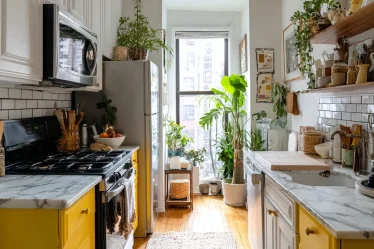
If your kitchen feels like a battlefield by 6pm, you are not alone.
Counters are full. Pots are stacked in a way that makes no sense. You spend three minutes looking for the lid that fits. The kids are asking for snacks. Something is burning.
This is not a you problem. This is a kitchen setup problem.
Families who cook every single day need a kitchen built for real life. Not a showroom. Not a magazine photo. Real life, with real mess, real kids, and real dinners that need to be on the table by 6:30.
These 18 ideas will help you fix that. Some take 10 minutes. Some cost nothing. All of them are practical and work in 2026.
Pick two to start. Build from there.
1. Fix Your Kitchen Layout Before You Buy Anything Else
Before you buy a single organizer or appliance, look at how your kitchen is set up.
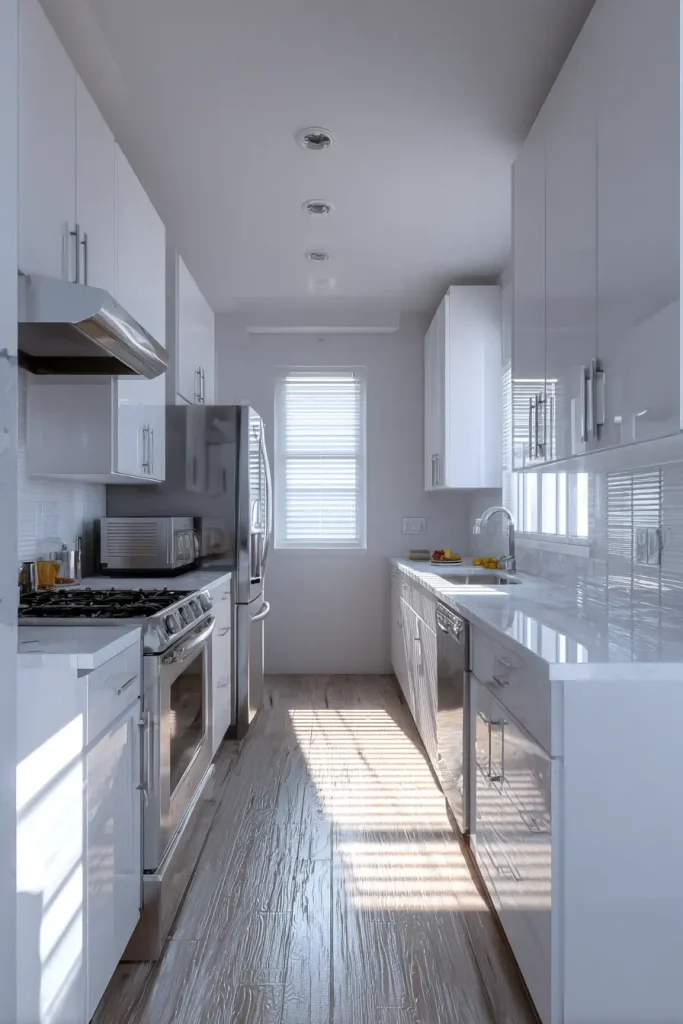
Most kitchen frustration comes from a bad layout. You should be able to move from fridge to prep counter to stove without walking in circles or squeezing past someone.
There is a concept called the kitchen work triangle. It connects your sink, stove, and fridge. The National Kitchen and Bath Association recommends keeping the total distance of this triangle between 12 and 26 feet. Too big and you walk too much. Too small and you bump into things.
For solo cooks, an L-shaped or galley layout works best. For two adults cooking at the same time, a U-shape gives everyone room. The key is clear space between your three main zones. No obstacles. No chairs blocking paths.
Try to break your kitchen into four zones: prep, cook, cleanup, and snacks. Even in a small kitchen, you can assign rough areas to each. This alone will cut down on wasted movement every night.
Getting your layout right is the foundation. Everything else builds on it.
2. Double Your Counter Space Without Spending Much
Counter space is the most fought over real estate in a family kitchen.
The good news is you do not need a renovation to get more of it.
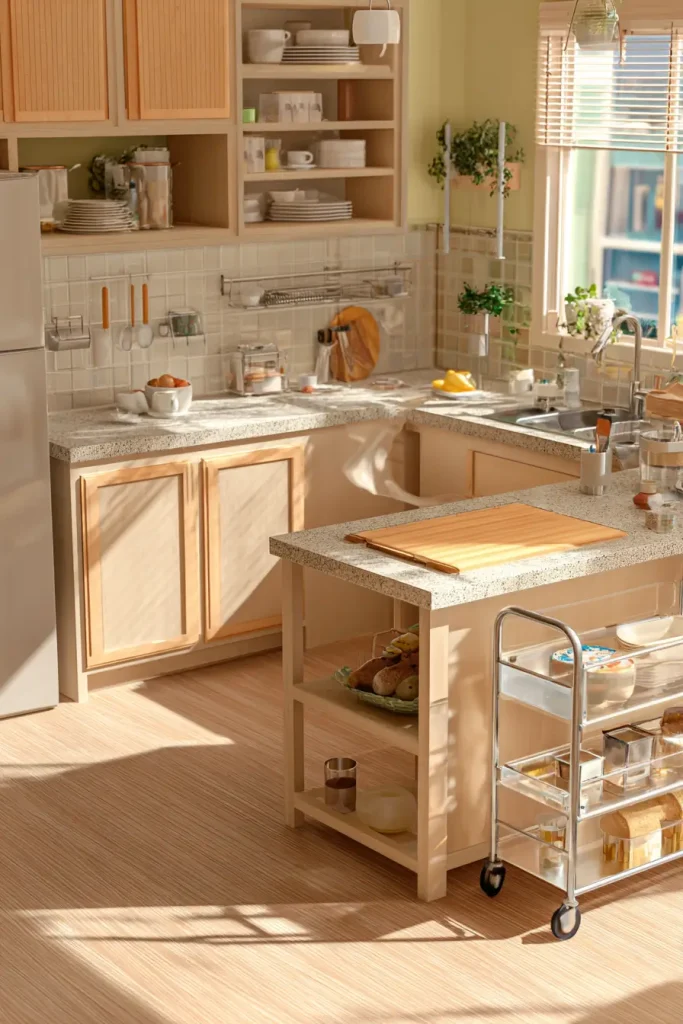
Start by clearing everything off your counters that you use less than three times a week. The coffee maker, the toaster, the decorative fruit bowl. If it does not earn daily counter space, it goes somewhere else. One family did this and freed up 14 inches of prep space. That is a real difference.
Then look at ways to add surface area. An over-the-sink cutting board turns dead space into useful prep room. A rolling cart from IKEA costs under $80 and gives you six to eight square feet of extra counter you can move wherever you need it. A fold-down wall shelf works well in tight kitchens and folds flat when you are done.
Interior designers consistently recommend at least 36 inches of clear counter space for daily cooking. If you are short of that, use these tricks first before thinking about a bigger fix.
You do not need a renovation. You need a reallocation.
3. Organize Pots and Pans So You Can Grab One in Seconds
Here is a time test. How long does it take you to pull out the pan you need right now?
If the answer is more than 10 seconds, your system is not working. The average home cook wastes 4 to 7 minutes per cooking session just searching for the right pan or lid. Over a year of daily cooking, that adds up to more than 20 hours.
Deep lower cabinets are the worst place to store pots. Stacking them means pulling everything out to get to the one at the bottom.
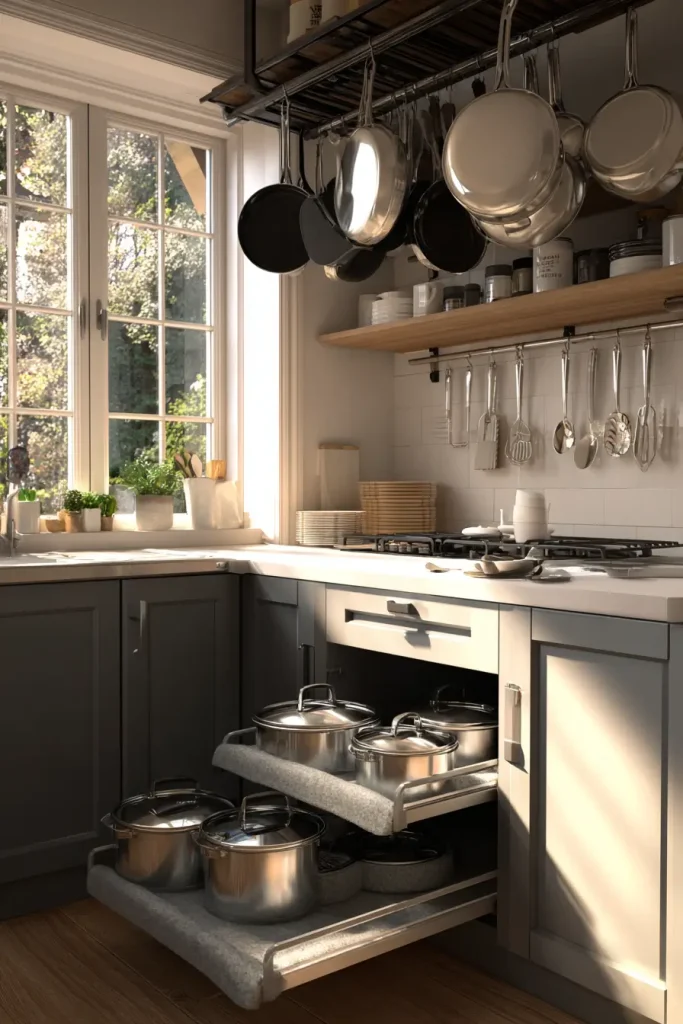
The best fix is a pull-out drawer organizer inside your lower cabinet. Rev-A-Shelf makes solid options. IKEA’s SEKTION pull-out system is popular in home organization communities for good reason. You pull the drawer out and see everything at once.
If you have space above your island or stove, an overhead pot rack costs $30 to $150 and puts every pan in plain sight. Nothing gets buried.
Use felt pan protectors to keep non-stick coatings safe when you nest pans. Keep one cabinet just for the pots and pans you use five or more days a week. Everything else can live in a harder to reach spot.
Start with the pans you use most. Fix those first.
4. Set Up a Prep Station and Keep It There
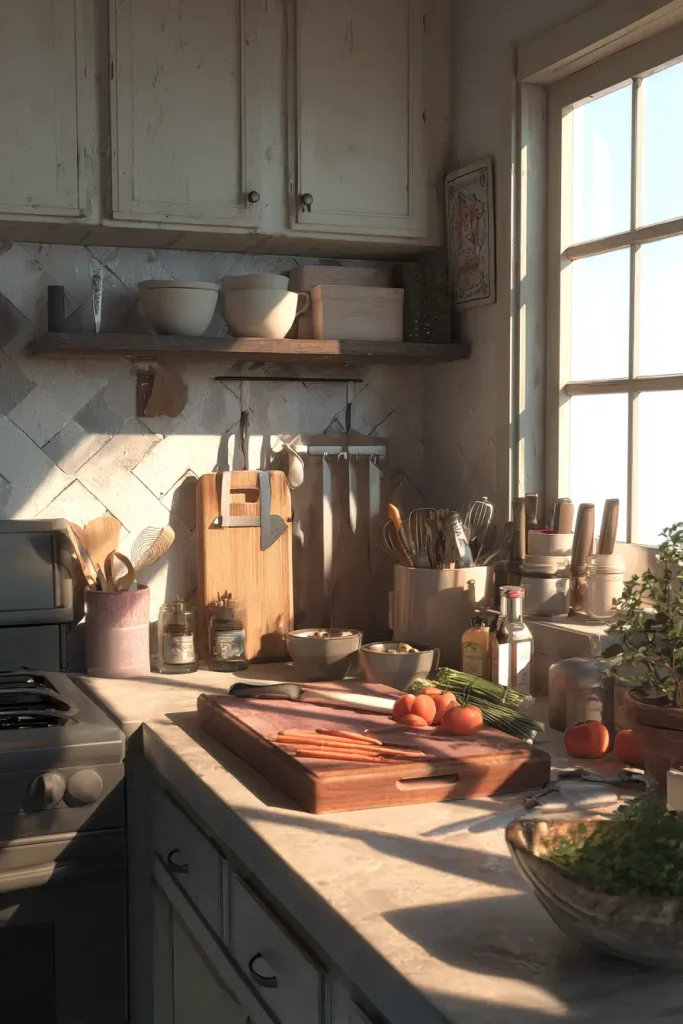
Professional kitchens are fast because every zone has one job.
The prep station is where everything gets washed, chopped, measured, and mixed. It does not move. It does not become a dumping ground. Everything you need for prep lives within arm’s reach of it.
At home, pick one section of counter and make it your permanent prep zone. Put your knives, cutting boards, mixing bowls, and measuring tools there. Keep them there. Always.
Position this zone between your fridge and your stove. This creates a natural flow. Ingredients come out of the fridge, get prepped at the station, and move straight to the stove. You stop walking back and forth across the kitchen.
If you do not have enough counter space for a dedicated prep zone, a butcher block rolling cart solves this. Roll it into position when you cook and roll it out of the way when you are done.
A well set up prep station can cut 20 minutes off your weeknight cooking time. That comes from meal planning coaches and home cooking experts who have tracked this with real families.
Once you have a prep station that never moves, cooking starts to feel automatic.
5. Stop Ignoring Your Walls as Storage Space
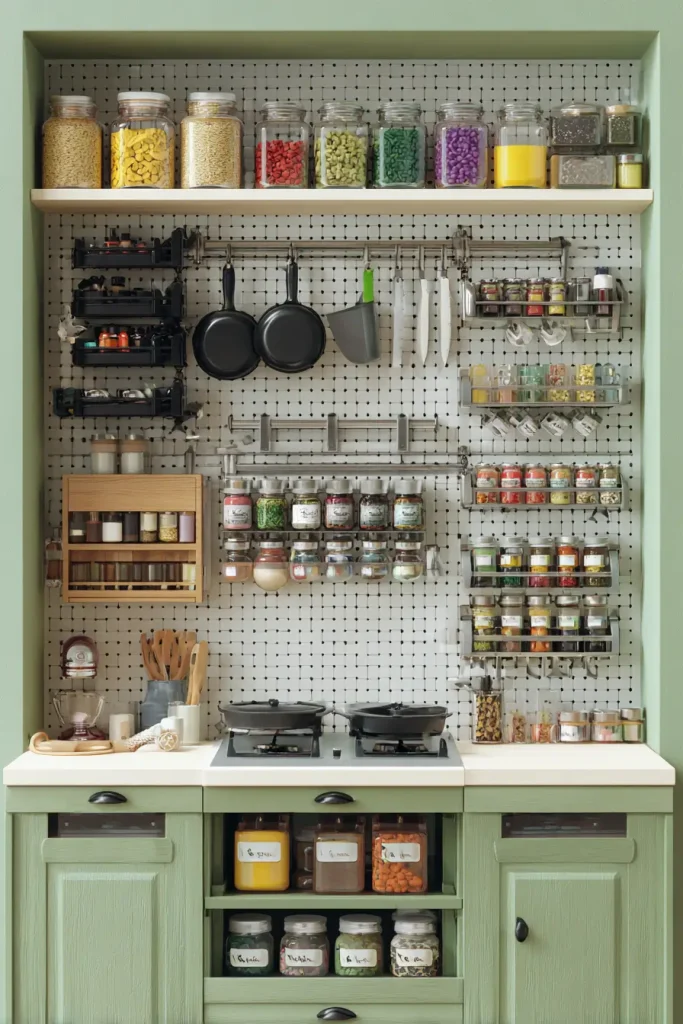
Most families are cooking in a kitchen where more than half the storage space is sitting completely unused.
On the walls.
A magnetic knife strip replaces a bulky knife block and frees up 6 to 10 inches of counter. It costs under $25 and takes 20 minutes to install. Your knives are visible, accessible, and safer because they are not rattling around in a drawer.
Julia Child, one of the most famous home cooking teachers in American history, used a pegboard system in her kitchen. Her actual kitchen is preserved at the Smithsonian. The pegboard held pots, lids, spoons, graters, and small tools. Everything was visible and within reach. That system works just as well today.
You can buy a pegboard kit for under $40 and mount it inside a cabinet or on a kitchen wall. Add hooks and adjust the layout as your needs change.
Wall-mounted spice racks at eye level are another solid upgrade. A single rack in a 12 by 18 inch wall space holds 20 to 30 spice jars. Add hooks to the inside of cabinet doors for measuring cups and graters.
Vertical storage does not just add space. It puts everything in sight so nothing gets forgotten.
6. Get Three Good Knives and Take Care of Them
Here is something professional chefs know that most home cooks do not.
You do not need more knives. You need better ones, and you need to keep them sharp.
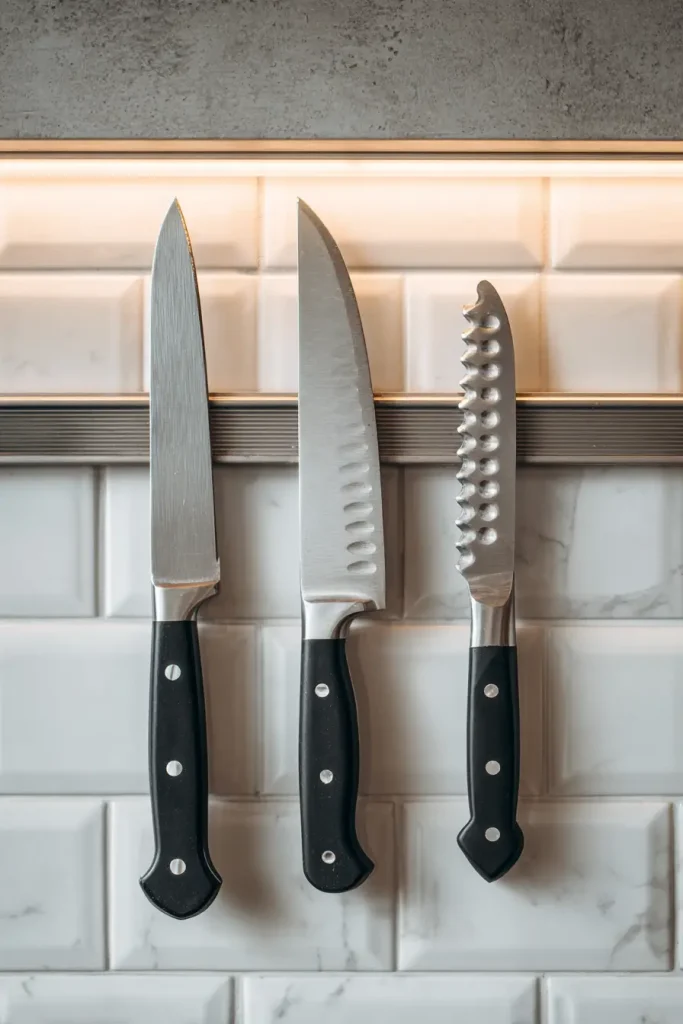
Most daily family cooking requires exactly three knives. A chef’s knife for almost everything. A paring knife for small tasks. A serrated bread knife for bread and soft vegetables. That is it. A 15-piece knife block mostly just takes up space.
A sharp knife is faster and safer than a dull one. Dull knives require more force, slip more easily, and cause more injuries. The American Academy of Orthopaedic Surgeons confirms this. A sharp knife glides through food. A dull knife fights you.
The Victorinox Fibrox 8-inch chef’s knife costs around $40. America’s Test Kitchen has ranked it as a best-value pick multiple times. It outperforms knives that cost five times as much in real use tests.
Keep your knives on a magnetic strip, not in a drawer. A drawer dulls the edge within weeks. Hone with a honing steel once a week. Sharpen on a whetstone every two to three months. That is the whole maintenance routine.
Three sharp, well-stored knives will serve your family better than a full block gathering dust.
7. Build a Snack Station Your Kids Can Use Without You
Every parent who cooks daily knows this moment.
You are mid-way through making dinner. A pan is on the stove. Your hands are dirty. And then: “I’m hungry. Can I have a snack?”
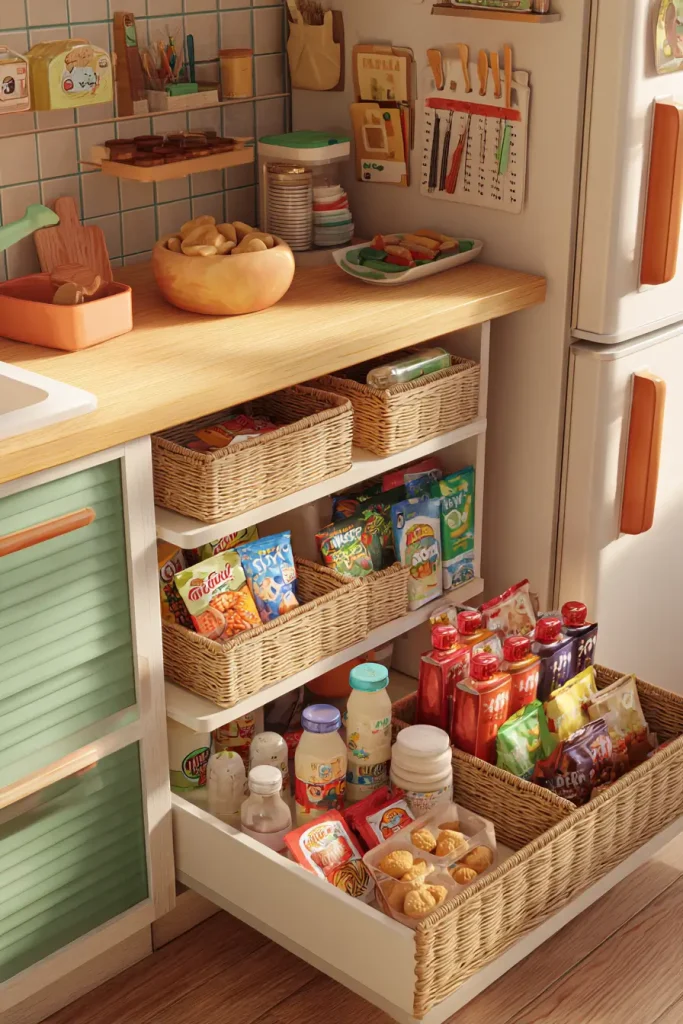
The fix is a snack station your kids can reach on their own.
Pick a low drawer or a low pantry shelf. Stock it with pre-portioned, ready-to-eat snacks. Granola bars, fruit pouches, crackers, nuts, whatever works for your family. Label everything at child height. Non-readers can use picture labels made from stickers or printed labels.
Do the same in the fridge. Put a basket on the bottom shelf with water bottles, juice boxes, and easy snacks your kids are allowed to take without asking.
The “kids snack drawer” concept has gone viral on TikTok and Pinterest in the last two years for a simple reason. It works. It cuts 5 to 10 interruptions per cooking session. Montessori home design has recommended child-accessible food stations for years, and families keep reporting the same result: kids become more independent, parents get more time to cook.
The fridge basket costs nothing to set up. You just rearrange what is already in there.
When kids can feed themselves a snack, you get 20 solid minutes to cook.
8. Plan Your Weekly Menu on Sunday From Inside Your Kitchen
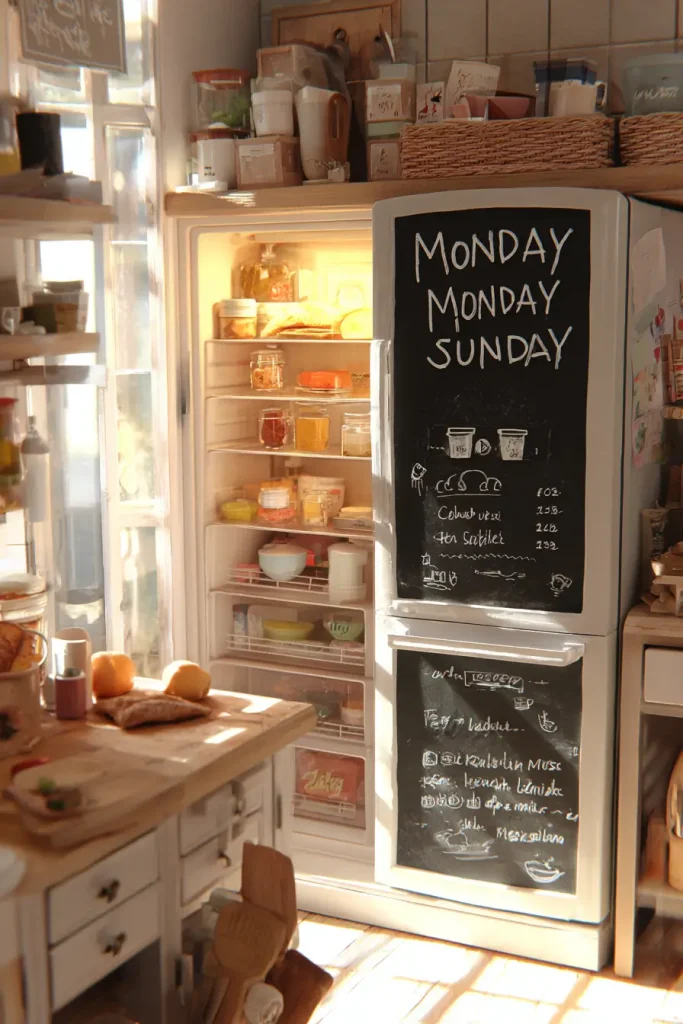
The best kitchen upgrade is not a gadget. It is a 20-minute Sunday habit.
Families who cook every day face a real problem called decision fatigue. By the time 5:30pm rolls around on a Tuesday, you do not want to think about what to make. You just want it to already be decided. Meal planning solves this.
The key is to plan from your kitchen, not from your head.
Before you write your menu, open your fridge and pantry. See what you already have. Plan meals around those ingredients first. Then write your shopping list for what is missing. Most families do this backwards and end up buying things they already have.
A whiteboard on the fridge or a chalkboard panel inside a cabinet door is the simplest system. Write Monday through Sunday and the dinner for each night. Done.
If you want a digital option, apps like Mealime, Paprika, and Plan to Eat are all updated for 2025 and will build your shopping list automatically as you plan.
A 2023 study in the International Journal of Behavioral Nutrition found that families who meal plan eat better and spend less on food. The USDA estimates the average American family wastes more than $1,500 in food every year. Planning cuts that significantly.
Plan in your kitchen. Cook in your kitchen. Make those two things part of the same routine.
9. Stock Your Pantry Like It Is Your Backup Plan
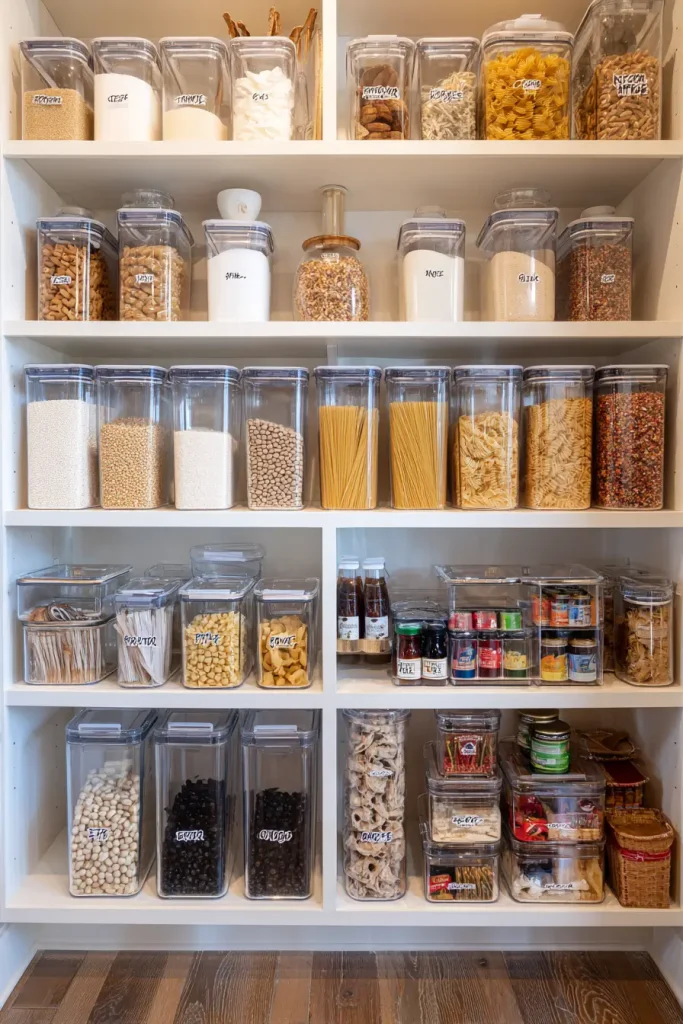
A well-stocked pantry means you can cook a real meal on any night, even when you did not plan for it.
For families who cook daily, the pantry is not storage. It is your safety net.
The pantry zones method works well here. Divide your shelves into sections: baking, grains and pasta, canned proteins, sauces and condiments, and snacks. Every item has a home. You can see what you have at a glance and know what needs restocking.
Use clear containers for grains, flour, sugar, and rice. OXO POP containers are consistently the top rated option on both Amazon and Wirecutter. When containers are clear, you never guess what is running low. You just look.
Practice FIFO. First In, First Out. When you bring home new groceries, put the new stuff behind the old stuff. You always use the oldest items first. This stops food from expiring in the back of the shelf.
Keep a simple inventory sheet on the inside of the pantry door. Update it once a week during your Sunday planning session. This one habit stops you from buying things you already have and running out of things you use every day.
Nutritionists and meal prep coaches suggest keeping at least seven complete pantry meals always available. Pasta nights, rice dishes, canned soup bases. Meals you could cook tonight even if you forgot to shop.
When your pantry has a system, you shop less and cook more.
10. Make Every Appliance on Your Counter Earn Its Place
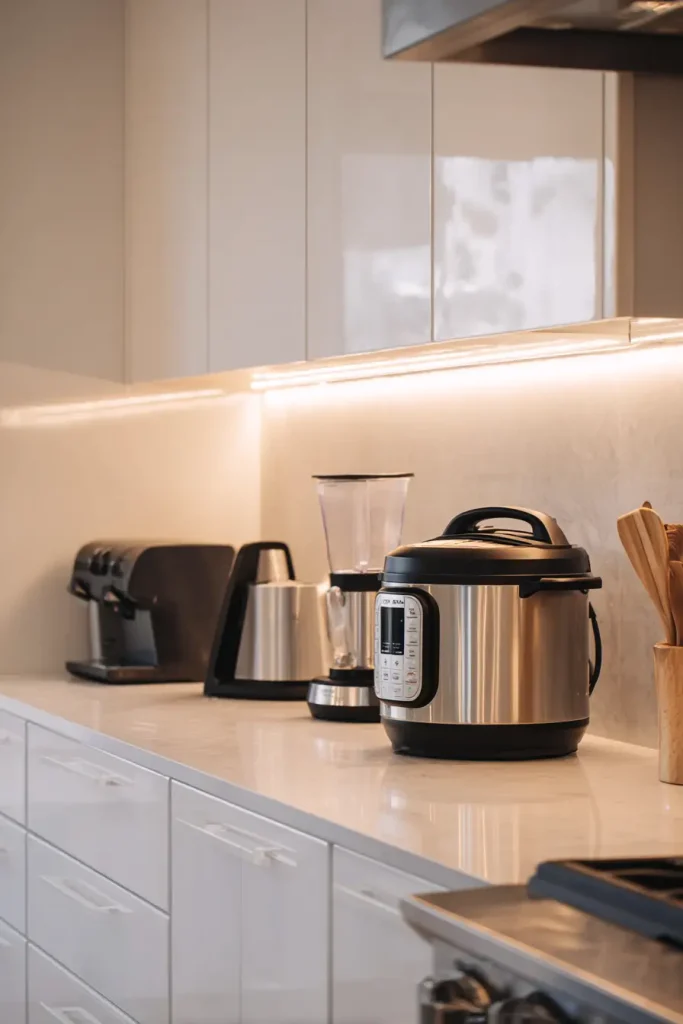
Your counter space is limited. Treat it like it costs money, because it does.
Every appliance sitting on your counter should be used at least four times a week. If it is not, it does not belong on the counter. It belongs in a cabinet.
Most families have three to five appliances on the counter that they rarely use. The panini press from three years ago. The single-serve blender. The electric can opener. These take up space from the things you actually need every day.
The appliances that usually earn counter space for daily cooking families are: an Instant Pot or pressure cooker, an air fryer, an electric kettle, and a quality blender. Air fryer ownership in US households passed 50% in 2024, and there is a reason for that. These appliances get used.
The Instant Pot is worth calling out specifically. It functions as a pressure cooker, slow cooker, rice cooker, and saute pan. One appliance doing four jobs is the right math for a busy kitchen.
For the appliances that do not make the daily cut, an appliance garage is worth considering. This is a countertop cabinet with a roll-up door that keeps appliances accessible but out of sight. IKEA and custom cabinetry shops both offer versions in the $150 to $400 range.
Less clutter means more room to cook.
11. Clean While You Cook, Not After
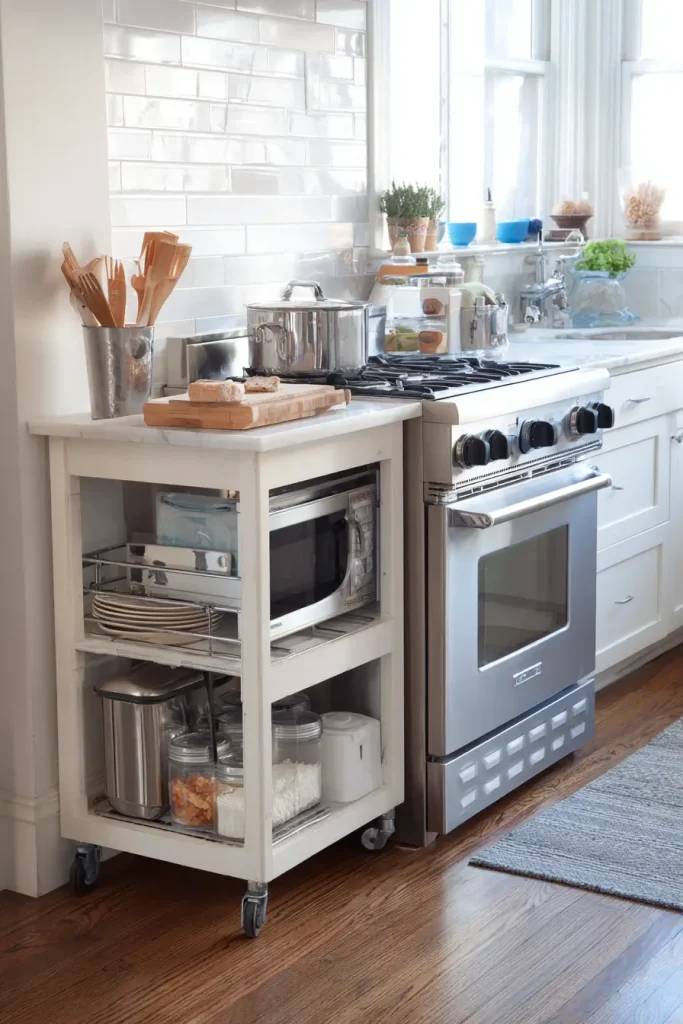
The kitchen that feels hardest to clean is usually not dirty. It just has no system.
Professional kitchen training teaches one rule above all others: clean as you go. In restaurant and culinary school kitchens, this is not optional. It is how you work.
Here is what it looks like at home.
Keep a small bowl on the counter for scraps and trash while you prep. This stops you from walking to the bin every 90 seconds. OXO makes a counter compost caddy that works well for this. You dump it once when you are done prepping.
While something is on the stove simmering, that is your cleaning window. Wipe the cutting board. Wash the prep bowls. Put away the ingredients you are done with. Idle time during cooking is cleaning time.
Run your dishwasher daily if you cook daily. It is designed for that frequency. A folding dish drying mat replaces a bulky dish rack and goes flat when it is not in use.
Microfiber cloths are worth switching to if you have not already. Research from NSF International shows microfiber removes significantly more bacteria from surfaces than paper towels when used with just water. Keep a stack of them in a drawer near the sink.
When cleanup is part of cooking, the kitchen is never a disaster.
12. Organize Your Fridge So Good Food Does Not Go to Waste
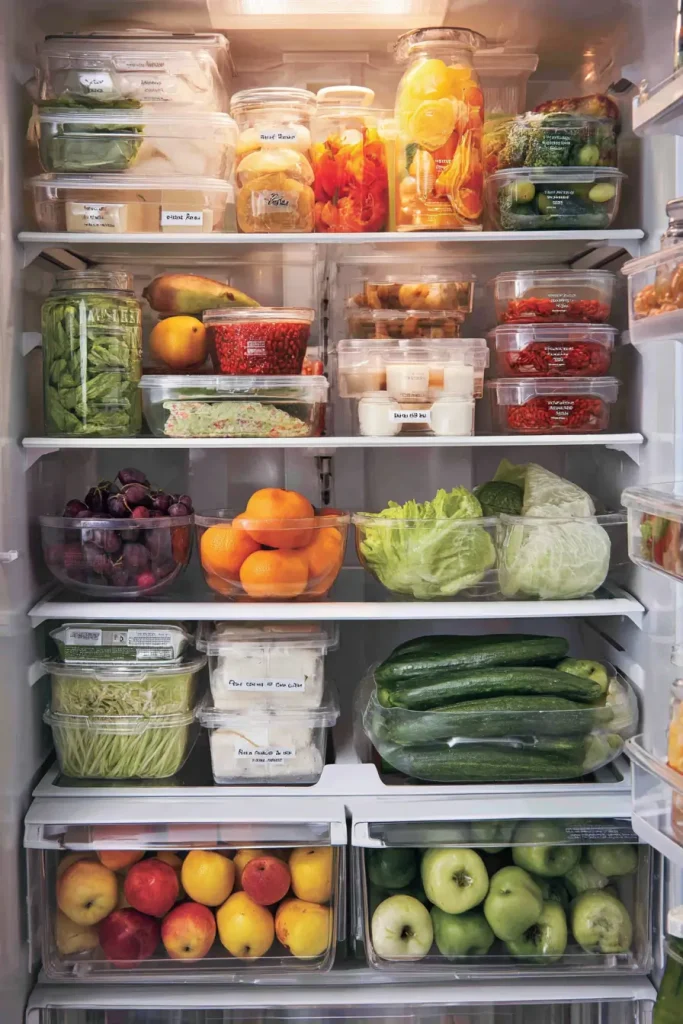
Open your fridge right now. What is at eye level?
Whatever your family sees first is what they will eat. Everything pushed to the back will eventually get forgotten. Studies on food waste show that around 80% of what households throw out comes from items that got buried in the back of the fridge.
Eye-level shelves should hold tonight’s dinner ingredients and tomorrow’s prepped components. Not condiments from six months ago. Not half-used cans. Tonight’s food. Tomorrow’s food.
Use clear bins to group items by category. Dairy in one bin. Leftovers in another. Meal prep components in a third. Vtopmart and BINO both make affordable clear bin sets that are among the most purchased kitchen organization products in 2024 and 2025.
Keep one bin labeled “Eat This First.” This is where you put anything that is close to going bad. Leftover cooked chicken, an open can of tomatoes, a half-eaten container of yogurt. Whoever opens the fridge next sees it immediately and knows what to use.
Label leftovers with the date and what is inside. A piece of masking tape and a marker is all you need. No guessing. No mystery containers.
An organized fridge is not just tidier. It cuts your grocery bill because you actually use what you buy.
13. Build a Spice System That Actually Makes Sense for How You Cook
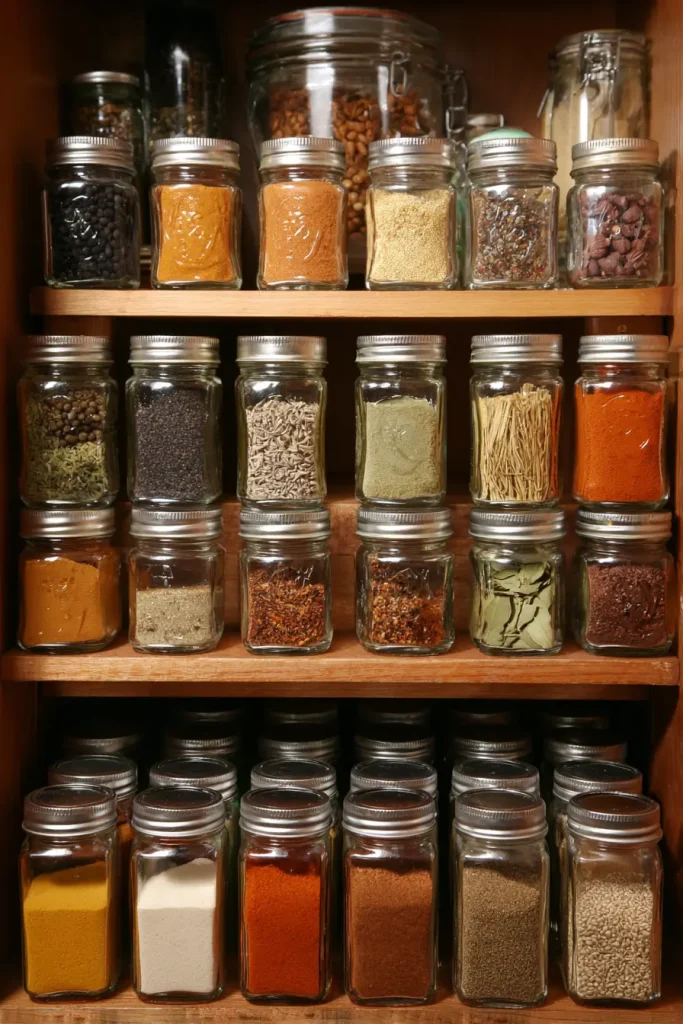
Alphabetical order is logical. It is also completely wrong for daily cooking families.
When you cook the same rotation of meals your family loves, you reach for the same 15 to 20 spices constantly. Garlic powder, cumin, paprika, Italian seasoning, black pepper, chili flakes. These should be the easiest to grab. Storing them alphabetically means allspice is in front and turmeric is at the back, which tells you nothing useful about how often you use them.
Organize your spices by how often you use them. Your daily rotation spices live closest to the stove. Less-used spices go further back or in a secondary spot.
Magnetic spice tins that attach to your fridge or a metal panel are one of the most trending kitchen products in 2024 and 2025. The hashtag #kitchenorganization has over two billion views on TikTok, and magnetic spice containers appear constantly. They work because every tin is visible and within reach.
If you prefer jars, decant your spices into uniform labeled jars. A 30-piece set costs $20 to $40 on Amazon and immediately makes your spice storage look and function better.
McCormick’s own research shows that ground spices lose most of their potency within two to three years of opening. Go through your spice collection every three to four months and toss anything that has been open too long. Old spices just take up space.
Your spice system should match how you actually cook, not what looks nice in a photo.
14. Cook Once and Eat From It Three Times
The daily cooking families who never seem rushed have a secret.
They cooked most of this week’s meals on Sunday.
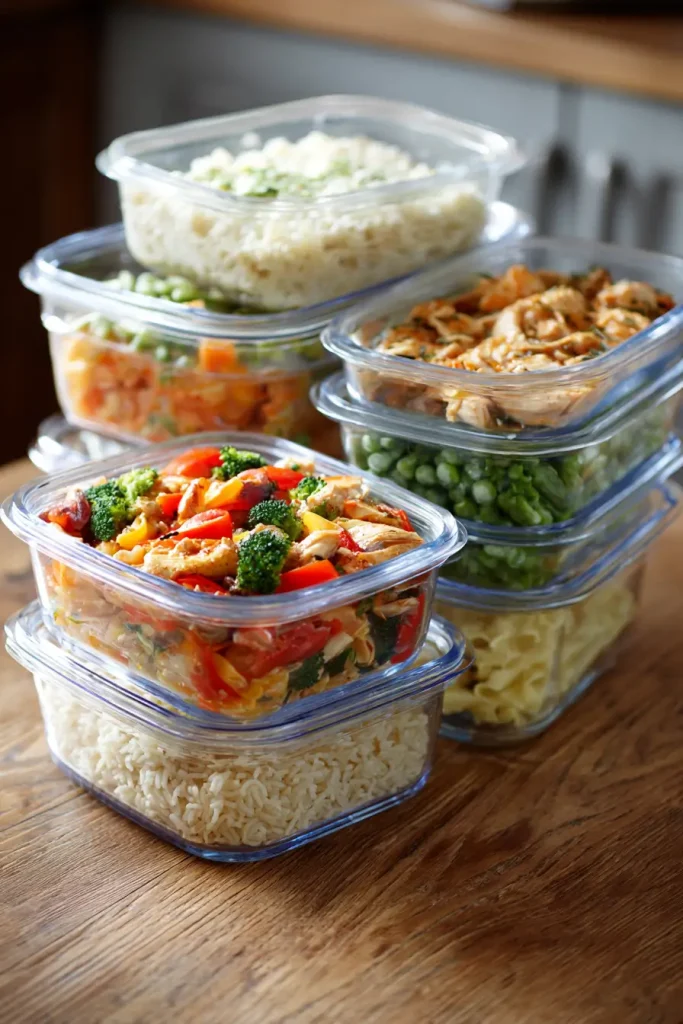
Batch cooking means you prepare large amounts of base ingredients once and use them across multiple meals through the week. Pick one grain. One protein. One sauce. Cook them in large quantities and mix and match.
For example: roast a whole chicken on Sunday. Monday night it becomes a chicken and rice bowl. Tuesday it goes into a quick pasta. Wednesday the bones make broth for soup. One cooking session. Three dinners.
The Bureau of Labor Statistics American Time Use Survey found that Americans spend an average of 37 minutes a day on food prep. Batch cooking cuts the weeknight average down to 15 to 20 minutes because most of the heavy work is already done.
You need good storage containers to make batch cooking work. Rubbermaid Brilliance containers and Pyrex glass sets are the most recommended options by registered dietitians and home organization experts. They stack well, seal tightly, and go from fridge to microwave without any fuss.
YouTube channels focused on meal prep have tens of millions of views on batch cooking content. This is not a trend. It is the most time-efficient way to cook daily for a family.
Batch once. Eat well all week. Spend 20 minutes on a Tuesday instead of an hour.
15. Set Up Your Kitchen So Kids Can Actually Help
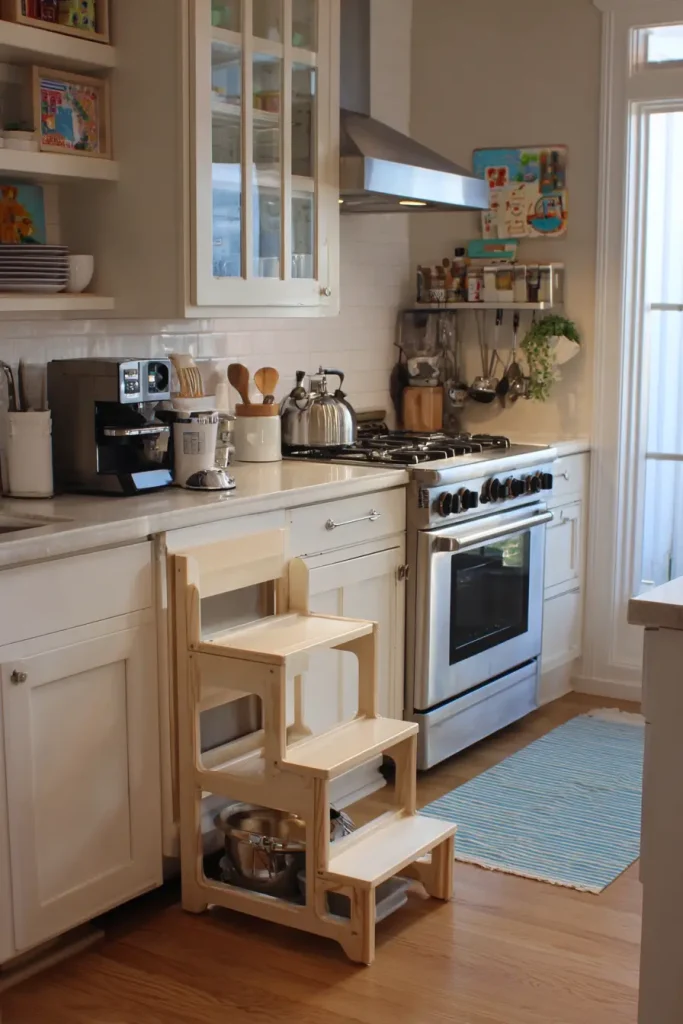
Here is a long-term investment that pays off every single week.
Teaching your kids to help in the kitchen takes more time at first. But within a few months, you have helpers instead of interruptions.
The first physical upgrade is a learning tower or good step stool. This positions a young child safely at counter height. They can see what you are doing and participate. Learning towers range from $80 to $200 and are among the most searched Montessori-inspired kitchen items on Etsy and Amazon right now.
Store a set of age-appropriate kid tools in a low drawer they can open themselves. A small vegetable peeler, a kid-safe knife, a mixing bowl, a measuring cup. Having their own drawer builds a sense of ownership.
Assign each child one permanent kitchen job. Not a rotating list. One consistent job they do every time. A 5 year old can wash vegetables. A 7 year old can peel carrots and stir things on low heat. A 10 year old can do basic chopping with supervision and read simple recipes.
Research from the American Academy of Pediatrics shows that children who cook with parents are more likely to eat a wider variety of foods. A study from the UK’s School Food Trust found that kids who helped make a meal were 76% more likely to actually eat it.
A kitchen set up for kids is building the next generation of daily cooks.
16. Fix Your Kitchen Lighting So You Can Actually See What You Are Cooking
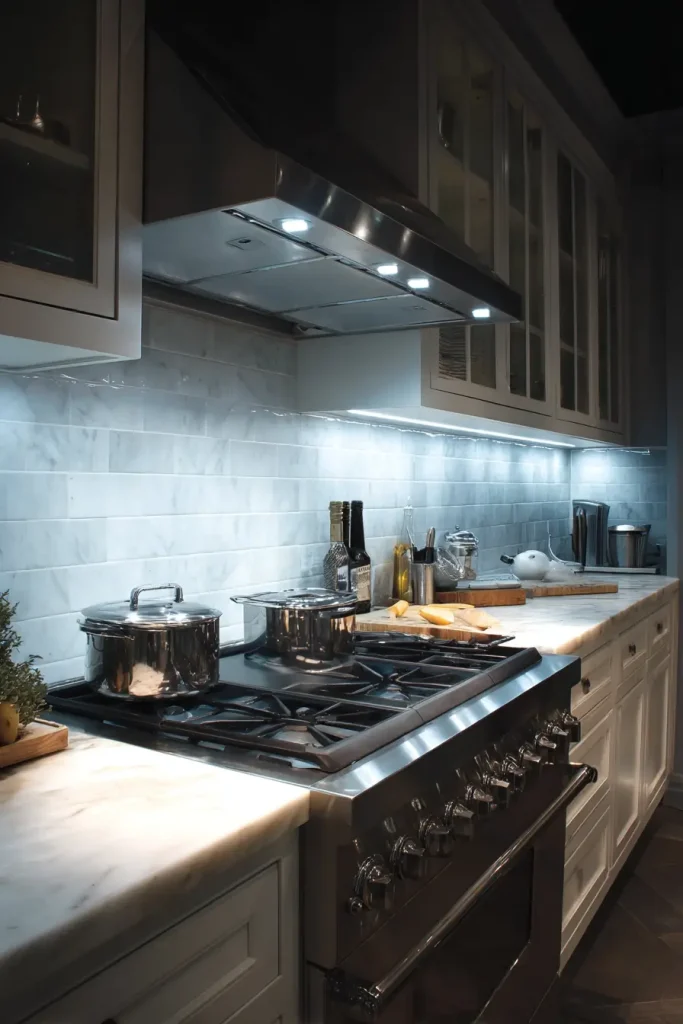
You cannot cook well in a poorly lit kitchen.
This is not just uncomfortable. It is a safety issue. The National Fire Protection Association links poor kitchen visibility to increased cutting and burning accidents. When you cannot clearly see what is browning in the pan, things go wrong.
Most kitchens have one overhead light in the center of the ceiling. This creates shadows on every counter surface. You are standing directly between the light and your cutting board, which means your prep zone is always in the dark.
The fix is task lighting under your cabinets. LED strips mounted under upper cabinets shine directly onto your counter surface. This is the number one functional lighting upgrade recommended by home improvement sources including This Old House and Family Handyman in their 2024 content.
Battery-powered under-cabinet LED strips require no wiring. They peel and stick in place and cost $20 to $40. This is the renter-friendly version and it works well.
For color temperature, aim for warm white between 2700K and 3000K. This is bright enough to work but not harsh or clinical.
The Illuminating Engineering Society recommends 50 foot-candles of illumination at counter level for cooking tasks. Most home kitchens deliver far less than this.
Good task lighting is a $30 upgrade that changes how your kitchen feels to work in every single day.
17. Build a Weekly Grocery Routine That Keeps Your Kitchen Ready
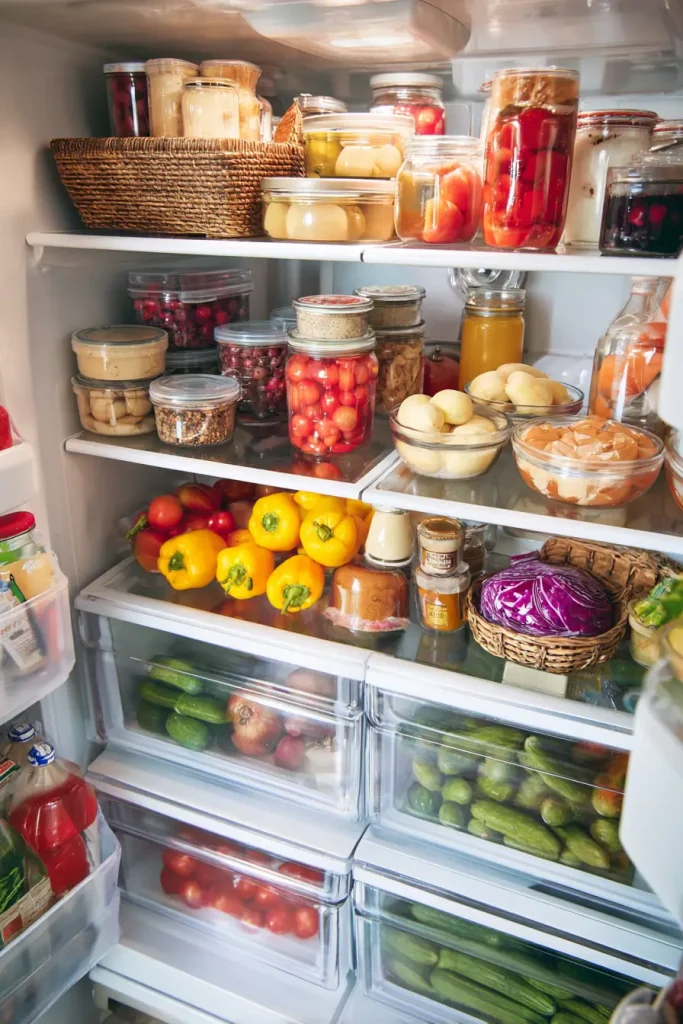
Your kitchen system is only as strong as what is in it.
And that comes down to how you shop.
Families who cook every day but shop randomly end up at the store two or three times a week. Each trip takes 40 to 45 minutes when you include travel. That is over two hours per week just getting groceries.
One organized shop per week fixes this. Build a categorized list before you go: produce, protein, dairy, pantry staples, snacks. Moving through the store by category is faster and means you forget less.
Always check your fridge and pantry before you write the list. Buy only what is missing. This alone stops duplicate buying and cuts your grocery bill.
Grocery pickup has made this even easier. Walmart, Target, and Instacart all offer pickup or delivery options that have grown more than 40% in use since 2020. You place your order, drive to the store, and someone loads your car. The active time on your end is under five minutes.
Research from the Cornell Food and Brand Lab shows that families who shop with a written list spend 20 to 30% less per trip than those who shop without one.
Pick a consistent grocery day, Sunday or Monday works well for most families. Align it with your meal planning session. Shop. Unpack. Restock the snack station. Prep your batch cooking. All on the same day.
One organized trip feeds a full week of smooth daily cooking.
18. Build Daily Kitchen Habits That Keep Your System Working
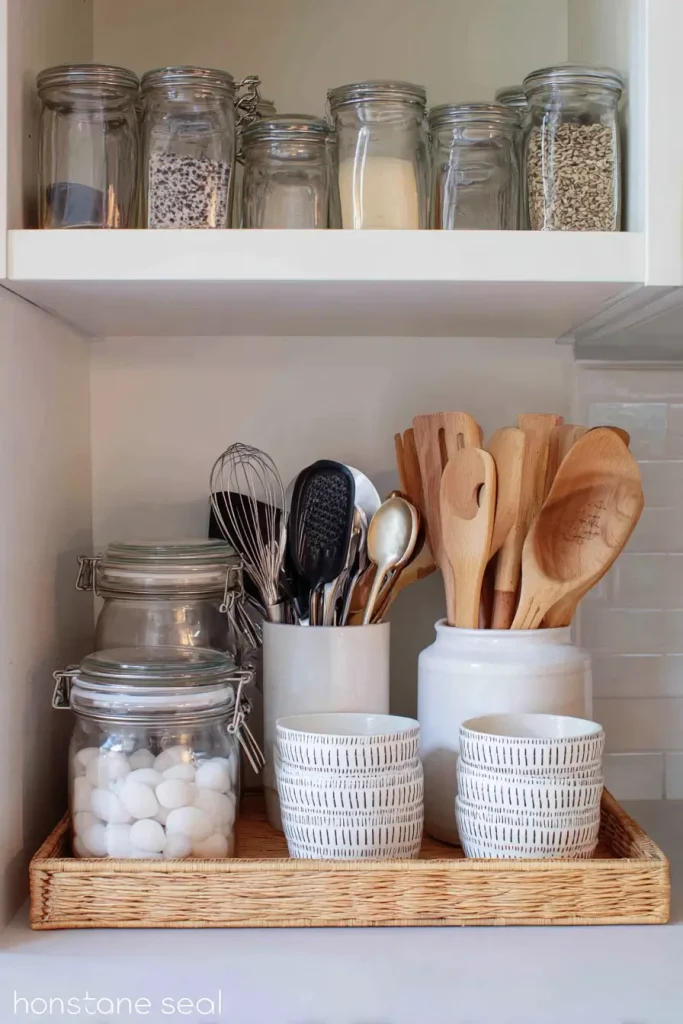
A well-organized kitchen falls apart without habits to maintain it.
The setup gets you started. The habits keep it running.
The most important habit is the end of night reset. It takes 10 minutes. Clear the counters, wipe the surfaces, put everything back where it belongs, and set out anything you need for tomorrow morning. That is it. You wake up to a kitchen that is ready, not one you have to clean before you can even start.
Habit stacking helps here. James Clear’s book Atomic Habits, which has sold over 10 million copies, teaches this principle. You link a new habit to something you already do. Link the kitchen reset to the end of dinner cleanup. You are already in the kitchen. You are already cleaning. You add 10 minutes and the whole system stays intact.
Use the “one in, one out” rule for kitchen tools. Every time you buy something new, something old leaves. This stops accumulation. Kitchen drawers and cabinets fill up fast, and a cluttered kitchen is harder to cook in even when everything else is organized.
Do a weekly kitchen audit on Sunday. Check what needs restocking. Check what is expiring. Make sure your prep station, spice system, and fridge organization are still in order. This takes 15 minutes and keeps small problems from becoming big ones.
Post your meal plan, your grocery list, and your pantry inventory where you can see them in the kitchen. Make the system visible.
Your kitchen will not maintain itself. But with a handful of simple daily habits, 10 minutes a day keeps it running like a well-organized, efficient space where cooking feels good instead of exhausting.
Start With Two Ideas Today
Cooking every day for a family is real work. Your kitchen should make that work easier, not harder.
You do not need to do all 18 things at once. Pick one idea you can do in the next 20 minutes. Maybe that is clearing your counters. Maybe it is moving your pans to a better cabinet. Maybe it is setting up a snack drawer for your kids.
Then pick one slightly bigger project for this month. A prep station. A pantry zone system. Under-cabinet lighting.
Build one piece at a time. In 30 days your kitchen will feel completely different.
These kitchen ideas for families who cook every day are not about having a perfect kitchen. They are about having a kitchen that works as hard as you do.
Meta Description: 18 practical kitchen ideas for families who cook every day. Fix your layout, storage, and habits to make daily cooking faster and less stressful.

- 20 Bathroom Wall Decor Ideas That Elevate a Plain Space - March 13, 2026
- 16 Garden Decor Ideas That Make Outdoor Spaces Feel Like Another Room - March 13, 2026
- 17 Bedroom Ideas for Couples in Small Apartments - March 13, 2026