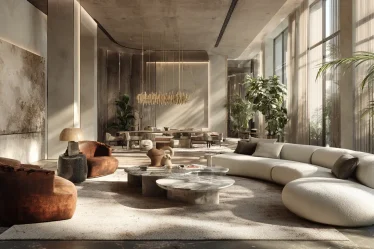
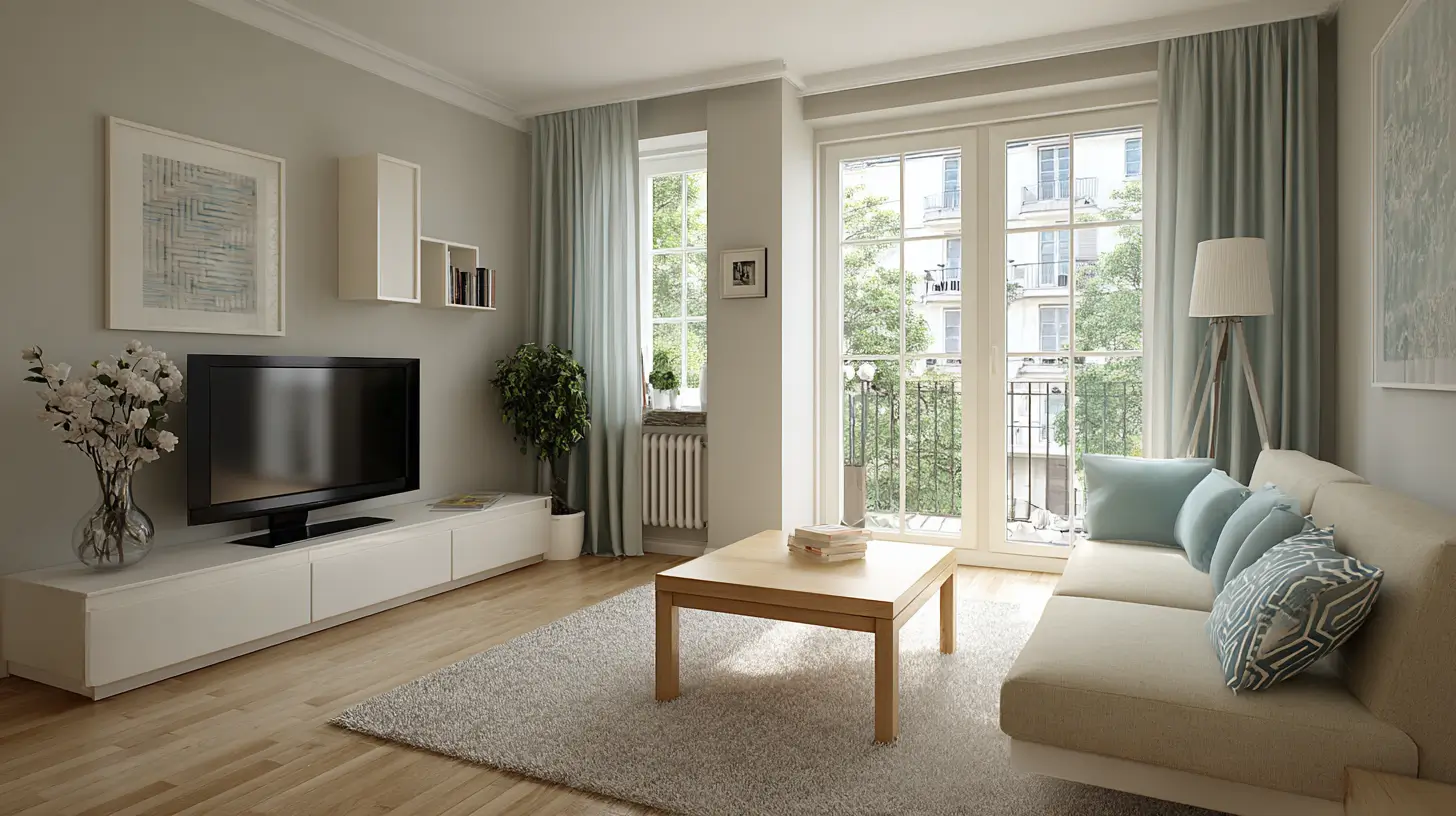
Your living room feels like a closet with a couch in it. You move the furniture around. It still feels wrong. You look at Pinterest and everything seems impossible to copy in your tiny space.
You are not alone. The average new apartment in the U.S. has shrunk by over 10% in the last decade. More people are renting smaller spaces and trying to make them work. The good news? A small living room is a fixable problem. You do not need to knock down walls. You do not need to spend thousands.
These 15 small apartment living room ideas are practical, budget friendly, and renter safe. Each one gives you something specific to try today. No fluff. No vague tips like “keep it minimal.” Just real ideas that work.
1. Pick a Sofa That Actually Fits Your Room
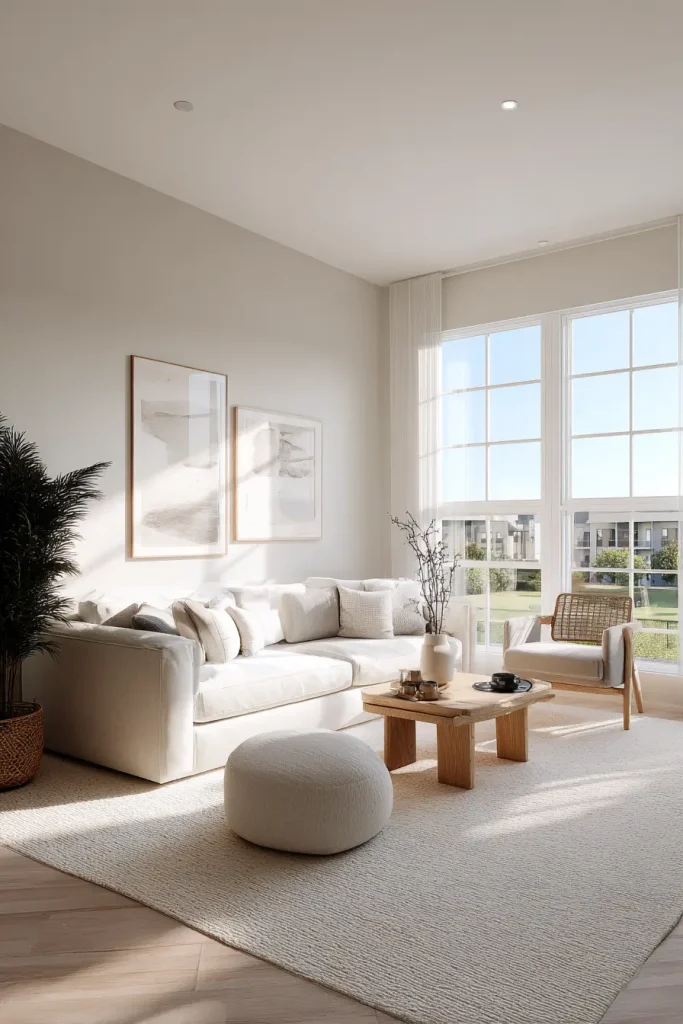
Your sofa is probably too big. That is the first thing most designers will tell you when they walk into a small apartment.
A sectional can swallow a small living room whole. Instead, choose a 2 or 3 seat sofa with visible legs. The gap between the sofa and the floor makes the room look bigger. It lets your eye travel under the furniture, which creates a sense of open space.
Here is a simple sizing rule: your sofa should be no longer than two thirds of the wall it sits against. So if your wall is 12 feet wide, your sofa should be 8 feet or less. Measure before you buy.
Avoid sofas with big rolled arms. Track arms or slope arms are slimmer and take up less visual space. Light or neutral fabric works better than dark upholstery in a small room. Dark colors absorb light and make the space feel heavier.
According to a Houzz Small Spaces Report, 61% of apartment owners said buying furniture that was too big was their biggest decorating mistake. Do not make that same mistake.
Quick action: Measure your wall right now. Multiply by 0.66. That is your max sofa length.
2. Use Mirrors to Make the Room Feel Twice as Big
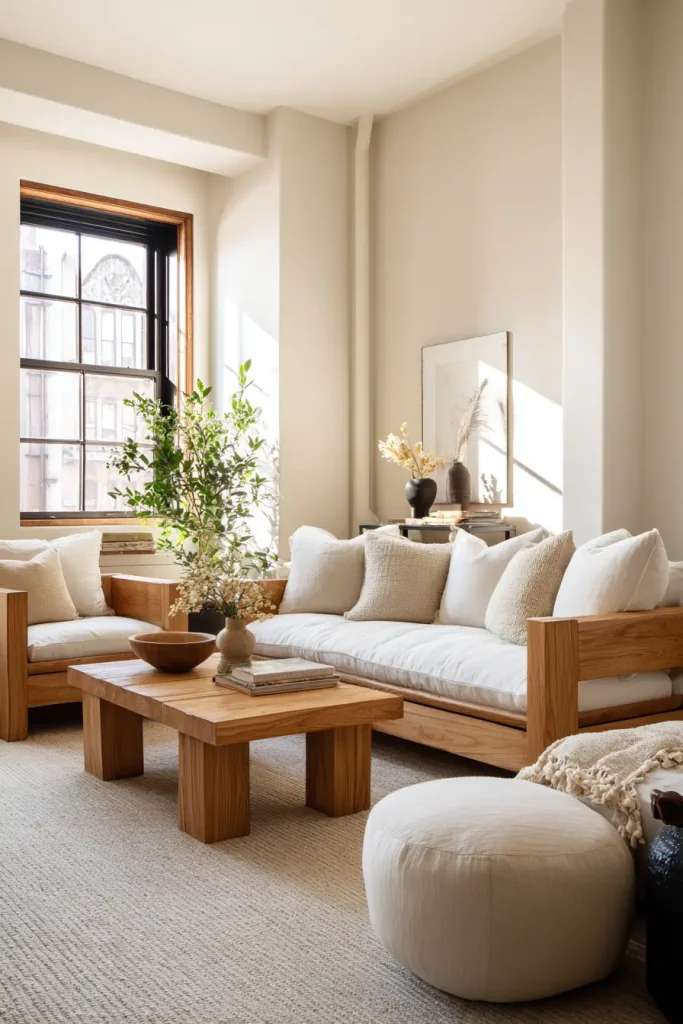
Mirrors are the closest thing to a cheat code in small space decorating. One large mirror placed across from a window bounces natural light around the room. It creates the illusion of depth. It makes the room feel like it goes on further than it does.
You do not need an expensive mirror. A simple 24 by 36 inch mirror hung on the wall opposite your biggest window will do the job. Or lean a full length floor mirror against a corner. This adds the feeling of height without drilling a single hole.
Mirrored furniture works too. A coffee table with a glass or mirrored top breaks up the visual weight on the floor. A mirrored sideboard reflects the room back at itself.
One warning though: do not cover a wall with a bunch of small mirrors. A gallery of little mirrors looks cluttered. It defeats the purpose. One big mirror beats ten small ones every time.
Quick action: Walk to the wall across from your biggest window. That is exactly where your mirror goes.
3. Paint Your Walls a Light Color
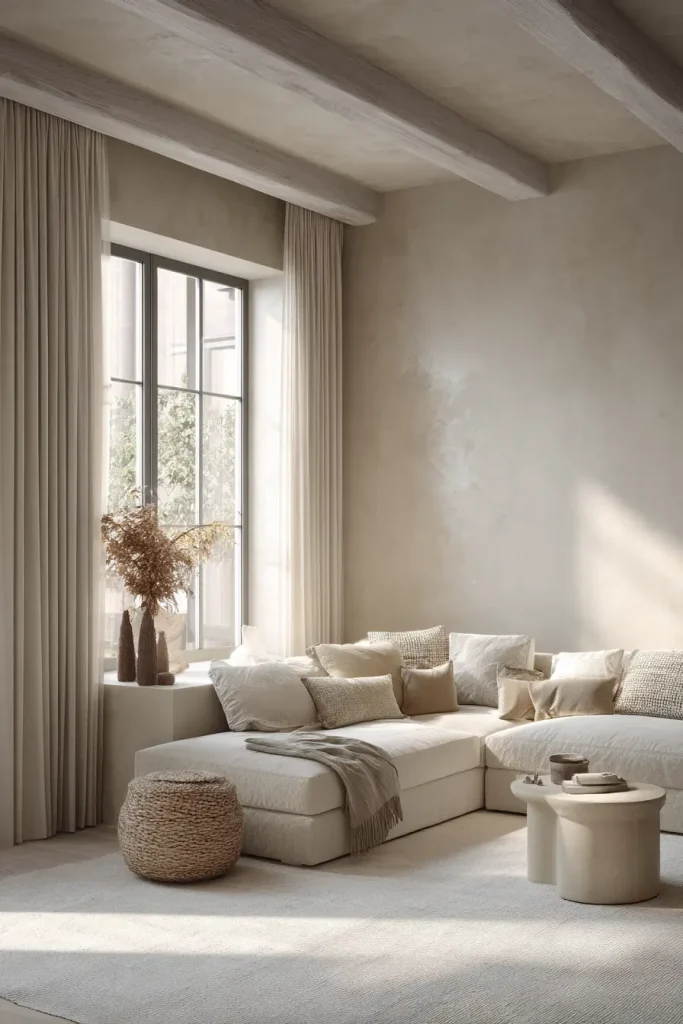
Dark walls shrink a room. Light walls open it up. This is not an opinion. A University of British Columbia study found that people consistently rated lighter rooms as more spacious than darker ones, even when the rooms were the exact same size.
You do not have to paint everything white. Warm whites and soft neutrals work just as well. Good options include Benjamin Moore White Dove, Sherwin Williams Alabaster, or any pale greige tone. These colors reflect light without feeling cold or sterile.
Once your walls are light, keep everything in a similar color family. When your sofa, rug, and walls all belong to the same tone range, the room reads as one unified space. That makes it feel bigger. When you mix lots of different colors, the eye does not know where to land. The room feels busy and small.
You can add a dark accent wall, but only on the far wall. This creates depth. It pulls the wall away from you visually. Never paint the wall behind your sofa dark. That will make the ceiling feel lower and the room feel boxed in.
Quick action: Check if your current paint color is lighter or darker than white copy paper. If it is darker, it may be shrinking your room.
4. Stop Pushing All Your Furniture Against the Walls
This is the most common mistake in small living rooms. And it is completely backwards.
Most people push every piece of furniture tight against the wall to save space. Interior designer Bobby Berk has called this a small room myth. When you do that, you end up with a big empty hole in the middle and furniture hugging the edges. The room feels like a waiting room.
Try pulling your sofa 6 to 12 inches away from the wall. Just a few inches. This creates a walkable border around the furniture. That border signals space to the eye. It looks like there is more room, not less.
Use a rug to hold the floating arrangement together. The rug acts as an anchor. It tells the eye that everything sitting on it belongs to the same zone.
Yes, this feels weird the first time. Try it anyway. Most people who do it say they wish they had done it sooner.
Quick action: Pull your sofa 8 inches from the wall tonight. Live with it for two days before deciding.
5. Use Your Walls Vertically for Storage and Shelving
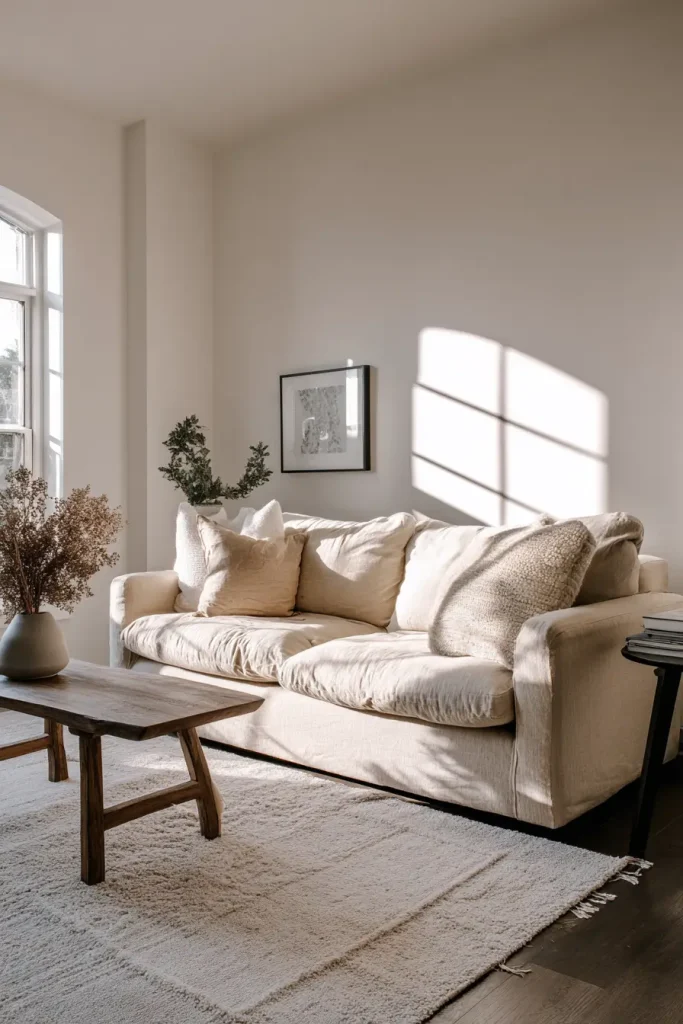
Most people only use about half their wall space. Everything stays at eye level or below. But the wall space above your head is free real estate.
Floor to ceiling bookshelves draw the eye upward. That makes the ceiling feel higher. Most apartments have 8 to 9 foot ceilings. Try mounting shelves at 7 or 8 feet. Even if you do not fill every shelf, the vertical line tricks the eye into reading the room as taller.
IKEA Billy bookcases are a go to for this. At 93 inches tall, they come close to ceiling height in most apartments. You can add an extension unit to close the gap completely. They are affordable and easy to customize.
Keep the lower shelves neat. Books stacked sideways, small boxes, organized items. Style the upper shelves loosely with a few objects and books. The contrast between tidy lower shelves and curated upper shelves looks intentional.
One more thing: do not put a low, wide TV stand in a small living room. Mount your TV on the wall. Use vertical storage instead. A wide horizontal surface fills the room. A wall mounted TV frees up floor space.
Quick action: Look up at your walls right now. Any empty wall space above 5 feet is wasted storage you are not using.
6. Buy Furniture That Does More Than One Thing
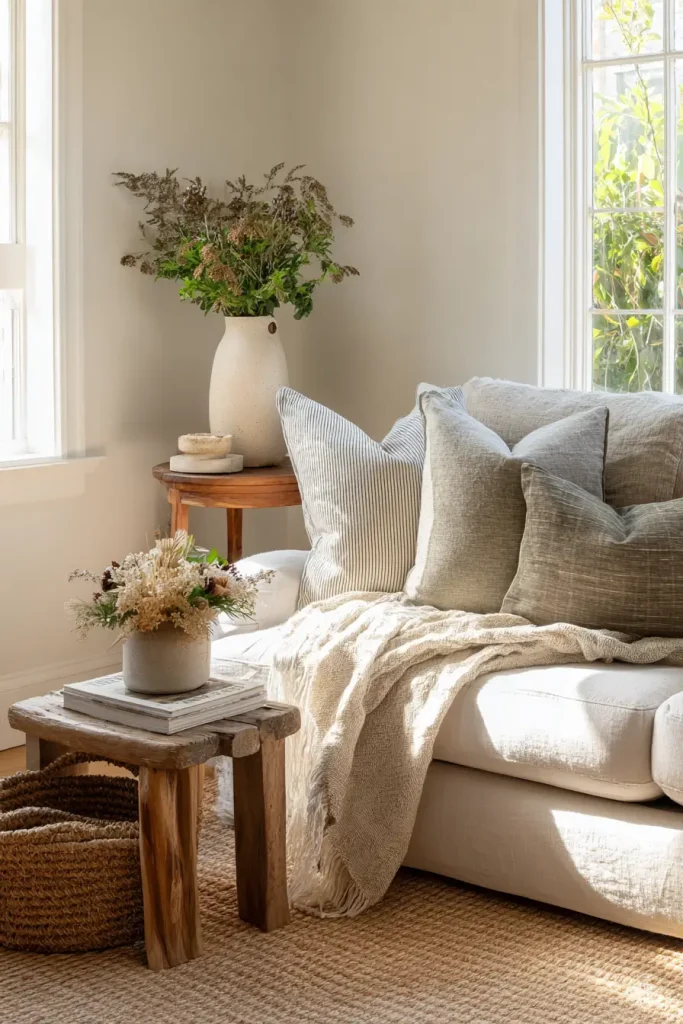
In a small apartment, every piece of furniture should earn its space. If it only does one job, think twice about keeping it.
An ottoman with storage inside is a coffee table, extra seating, and a hidden storage bin all in one. Nesting tables can be pulled apart when you need them and stacked together when you do not. A daybed or sofa bed gives you seating by day and a guest bed at night.
Murphy beds have gotten a lot better in recent years. New designs fold out of what looks like a built in shelving unit. When the bed is up, your living room looks like a living room. This is worth looking at if you live in a studio.
The global market for multifunctional furniture was valued at 12.3 billion dollars in 2023, growing at over 6% per year. That growth is driven almost entirely by people living in small urban apartments who need furniture to work harder.
Before your next furniture purchase, ask yourself: does this do at least two things? If not, can you find a version that does?
Quick action: Look at your current coffee table. Could you replace it with a storage ottoman and gain hidden storage without losing surface space?
7. Get a Rug That Is Big Enough
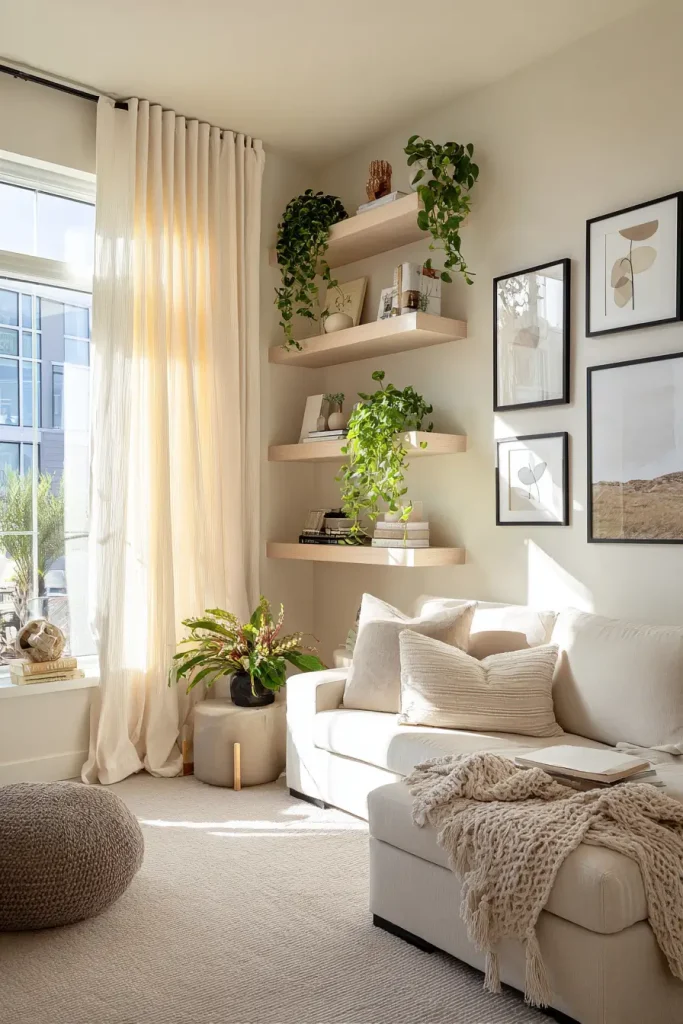
Almost everyone buys a rug that is too small. It is one of the most common and most fixable decorating mistakes in small living rooms.
A rug that is too small makes your furniture look like it is floating in the middle of nowhere. It chops the room into pieces. A correctly sized rug pulls everything together. It makes the space read as one complete zone.
The rule is simple: at least the front two legs of every sofa and chair should sit on the rug. If you can, go bigger and get all four legs on. West Elm and Lowe’s both publish rug sizing guides recommending a minimum 8 by 10 foot rug for a standard small living room. Most buyers choose a 5 by 8. That is usually too small.
Light colored rugs with a low pile extend the floor visually. They do not interrupt the eye as it scans the room. Dark rugs with a high pile feel heavy and make the space contract.
This tip has become one of the most shared pieces of interior advice on TikTok interior design accounts for good reason. It is simple, affordable to fix, and makes a visible difference immediately.
Quick action: Look at your rug right now. Are all sofa legs floating off it? Go one size up.
8. Let in as Much Natural Light as You Can
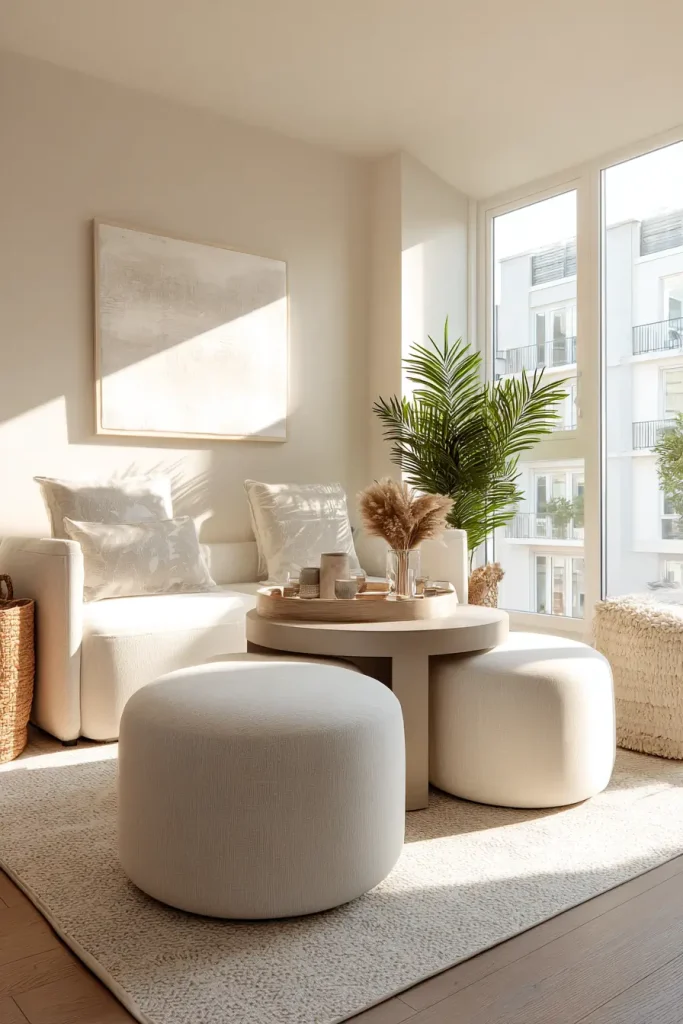
Natural light makes a room feel open. The lack of it makes even a large room feel small. This is one of the most important things you can control in a small apartment.
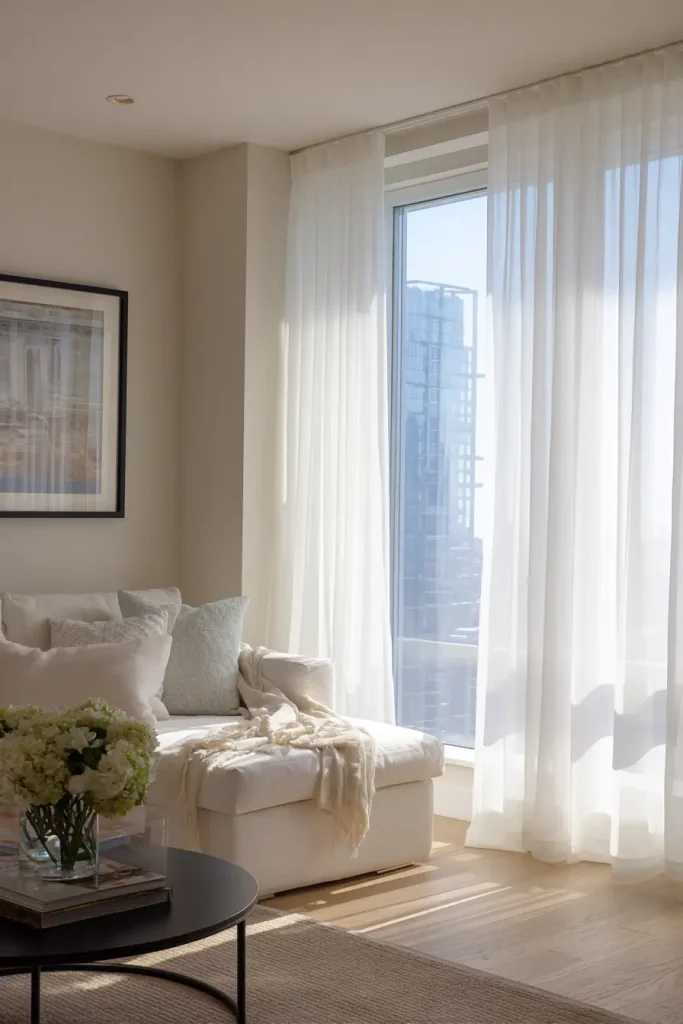
Start with your curtains. Most people hang curtains right at the window frame. Do not do this. Hang them as close to the ceiling as possible, and let them extend past the window on both sides. This makes the window look bigger and taller. The room gets more light and feels larger.
Use sheer curtains in your living room. They let light through while giving you some privacy. Heavy blackout curtains belong in the bedroom, not the living room. In the main living space, you want as much light as possible during the day.
Keep your windowsills clear. A windowsill full of plants, candles, and stuff blocks the bottom of the window. That cuts off light before it even gets into the room.
Zillow’s 2022 renter survey found that apartments with more exposed window area were rated up to 40% more desirable by renters. Natural light matters to people at a deep level.
Quick action: Move your curtain rod up to ceiling height this week. You will not believe the difference.
9. Choose Furniture You Can See Through or Under
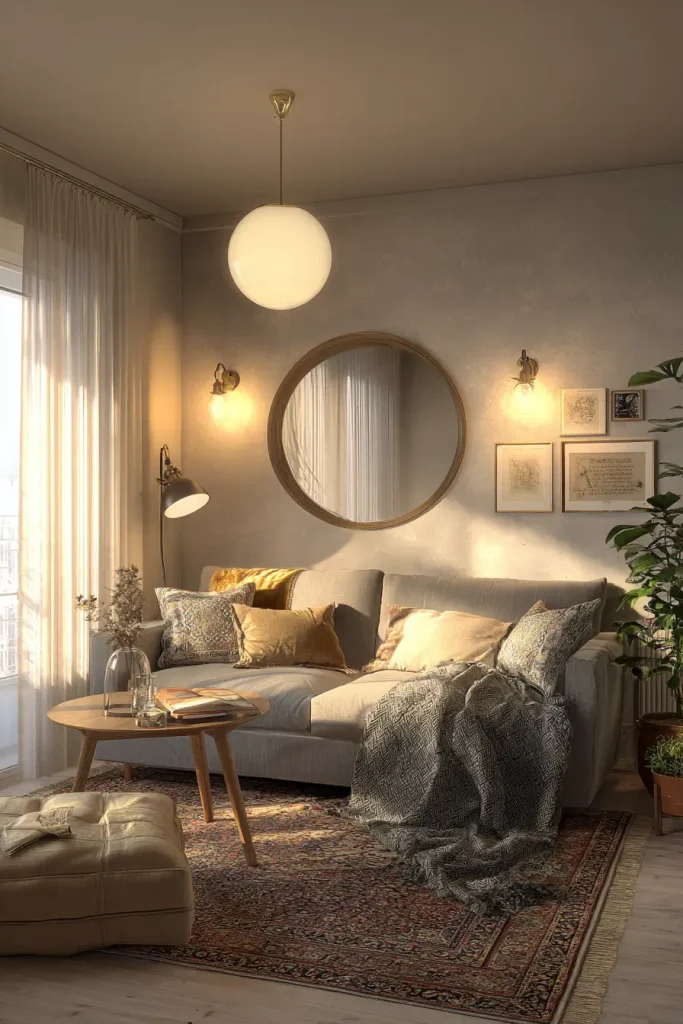
Every time your eye hits a solid object, it stops. In a small room, you want your eye to keep moving. Transparent and leggy furniture lets the eye travel further. That feeling of uninterrupted sightlines makes a room feel bigger.
Acrylic or lucite coffee tables are see through. Your eye passes right through them to the floor and the wall behind. Glass top side tables do the same thing. They give you a surface without adding visual weight.
Sofas and chairs with visible legs let you see the floor underneath. That strip of floor space, even if it is just 6 inches, tells your brain the room continues. Sofas that go all the way to the floor block that view and make the room feel heavier.
The Kartell Louis Ghost Chair became a design icon partly for this reason. It is a chair that barely registers visually. It seats a person without shrinking the room around them. That is the goal.
Quick action: Look at every piece of furniture touching your floor. Which ones could be replaced with a legged or transparent version
10. Create Clear Zones in Studio or Open Plan Apartments
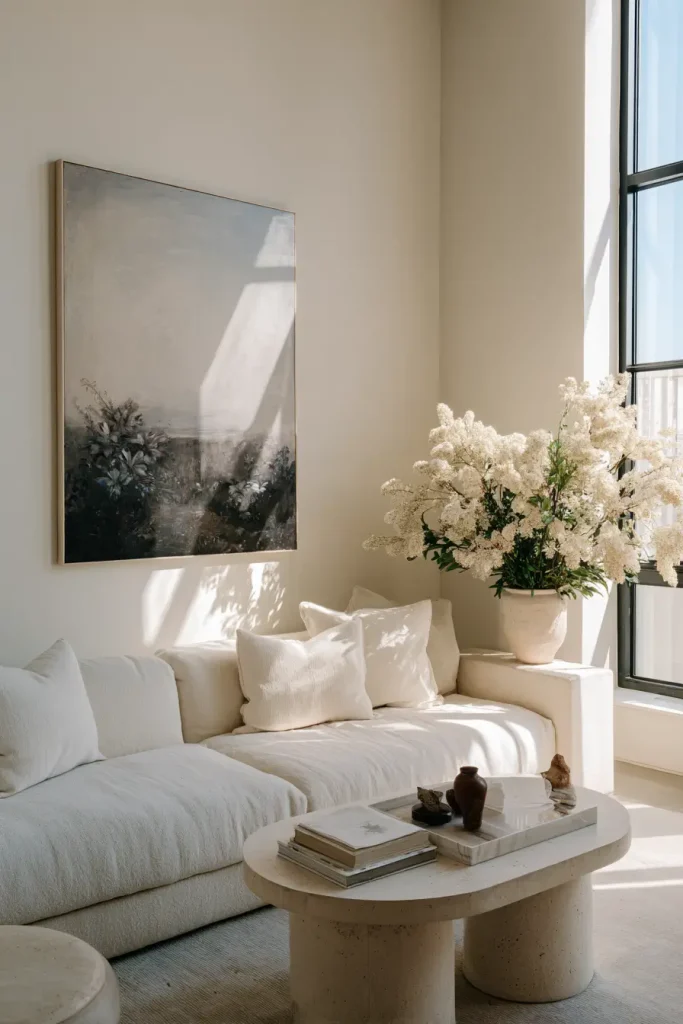
If you live in a studio or open plan apartment, you need to define your living room as its own space. If you do not do this, everything blurs together and the whole apartment feels like one messy room.
The easiest way to do this is with a rug. Place your rug in the living area. Position your sofa so that it faces the TV or the focal point of the room. That arrangement creates a zone, even without walls.
A bookshelf can act as a room divider. Place it with its back facing the sleeping area and its shelves facing the living area. It separates the spaces without blocking light.
Different lighting also signals different zones. A floor lamp in your living area and a pendant over your dining area tell the eye that these are separate spaces. Your brain reads them as distinct rooms even if there are no walls.
This matters more than ever now. About 43% of renters work from home at least part of the time, according to U.S. Census data. A defined living room gives you somewhere to go after work that does not feel like your office.
Quick action: Put tape on the floor to mark where your living room zone starts and ends. Does everything in the zone make sense together?
11. Get Rid of Clutter and Hide What You Cannot Get Rid Of
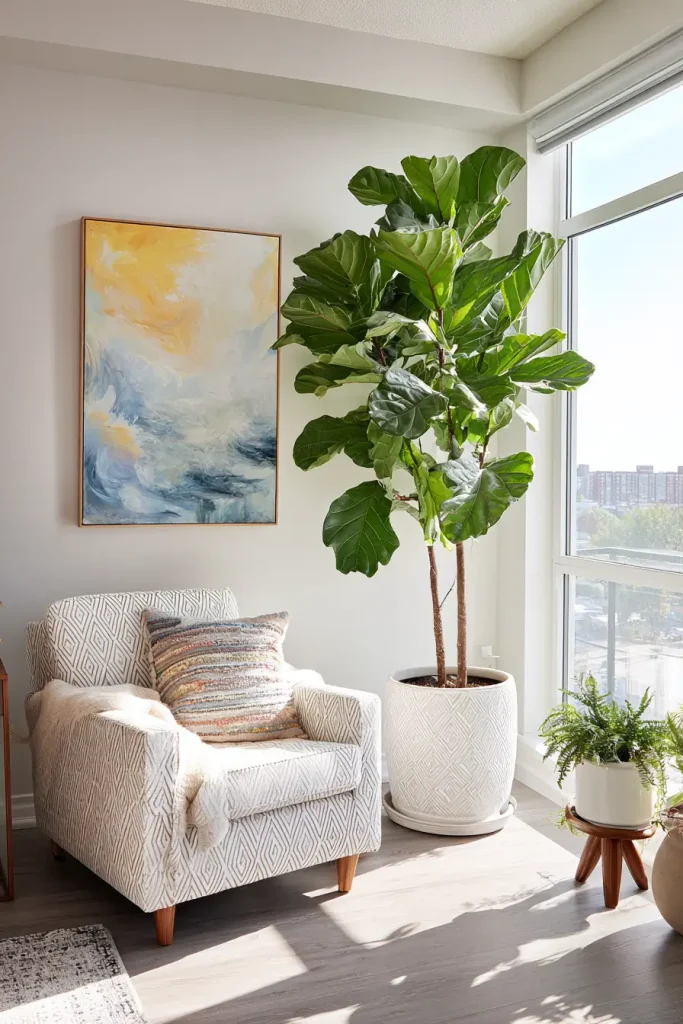
Clutter is the fastest way to make a small room feel even smaller. Every item sitting out is one more thing for the eye to bump into.
This does not mean you have to live like a monk. It means being selective about what stays out and what gets hidden. Closed storage, like baskets with lids, cabinets, and boxes, keeps the visual field clean. If something does not need to be seen, hide it.
A 2023 Real Simple survey found that 67% of people who decluttered their living room said it felt larger afterward, with zero physical changes to the space. That is how powerful clutter reduction is.
IKEA Kallax shelving units look like built in storage but cost a fraction of the price. Fill the cubbies with matching baskets. From a distance, it looks clean and custom.
One simple habit that helps: the one in, one out rule for decorative objects. Every time you bring something new into the living room, one thing has to leave. This keeps the room from filling up over time.
Quick action: Set a timer for 10 minutes. Walk through your living room and put away anything that does not need to be visible. See how the room changes.
12. Layer Your Lighting Instead of Using One Overhead Light
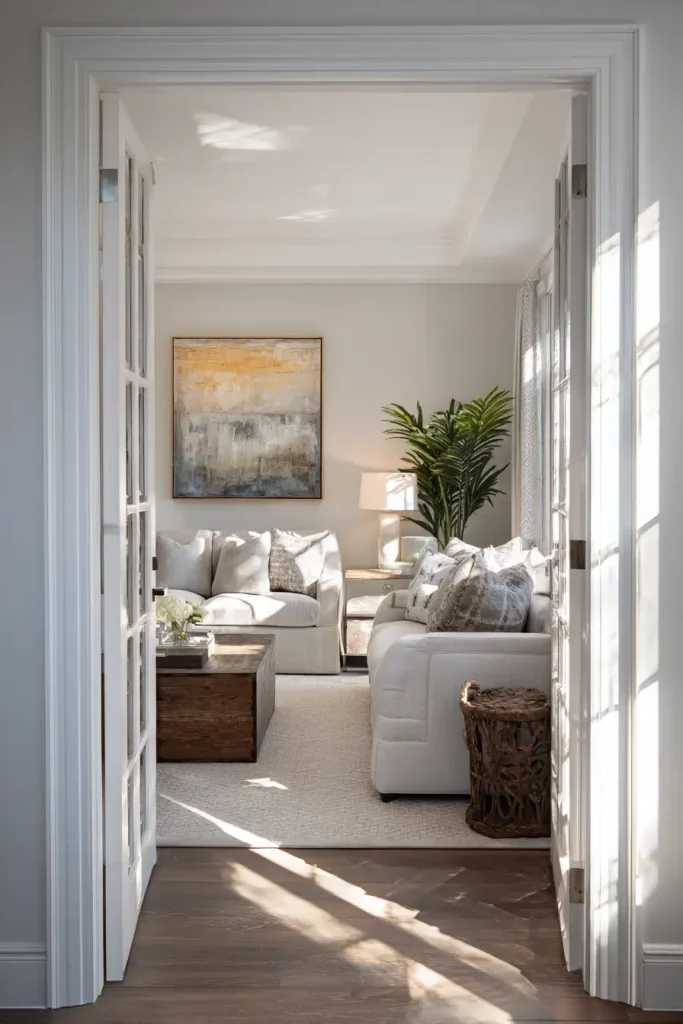
One overhead light flattens a room. It creates a single pool of dull light that makes everything look the same. This does not look spacious. It looks like a basement.
Good small room lighting uses at least three sources. One ambient source, like a floor lamp or your overhead light. One task source, like a reading lamp next to the sofa. One accent source, like an LED strip behind the TV or a small light highlighting a shelf.
Use warm bulbs. Look for bulbs between 2700 and 3000 Kelvin. This is labeled as warm white on the packaging. Cool or daylight bulbs above 4000 Kelvin can feel clinical and harsh in a living room.
Uplighting is especially useful in small rooms. When you put a lamp that throws light upward, the eye follows the light to the ceiling. That draws attention upward and makes the room feel taller.
LED strip lights have exploded in popularity since 2020. Google Trends shows a 200% increase in searches for them. They are cheap, easy to install, and make a noticeable difference.
Quick action: Add one floor lamp to a dark corner of your living room this week. Cost: $30 to $60. Impact: immediate.
13. Hang One Big Piece of Art Instead of a Gallery Wall
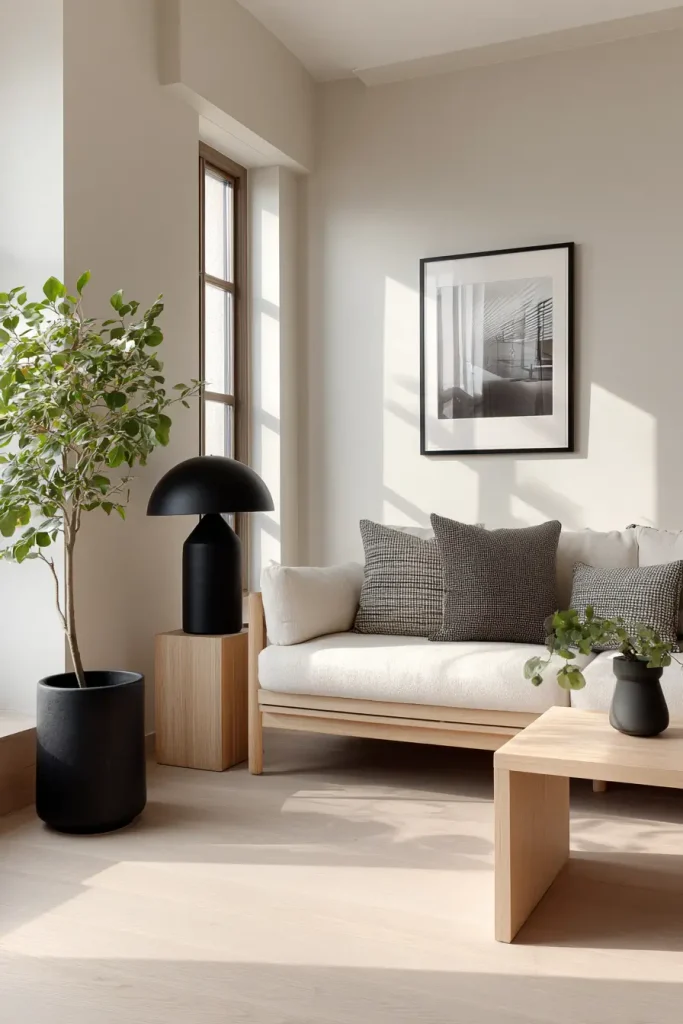
Gallery walls look great in large rooms. In small apartments, they make the walls feel busy and tight. One large piece of art is usually the better choice.
A single large painting or print creates a focal point. It gives the eye one place to land. That feels calm and spacious. A wall covered in 12 small frames gives the eye 12 places to land. That feels chaotic.
Hang your art at the right height. The center of the artwork should be 57 to 60 inches from the floor. This is the standard used by the Museum of Modern Art. It works because it puts art at average eye level. Most people hang art too high, which makes ceilings feel lower.
Vertical art makes walls feel taller. Horizontal art makes walls feel wider. Choose based on what your room needs more of.
Your art does not have to be expensive. A large print from Society6, Etsy, or even a poster in a simple frame works fine. The size matters more than the price.
Quick action: Measure the center of your current art. Is it at 57 to 60 inches? If not, adjust it.
14. Add Plants Without Wasting Floor Space
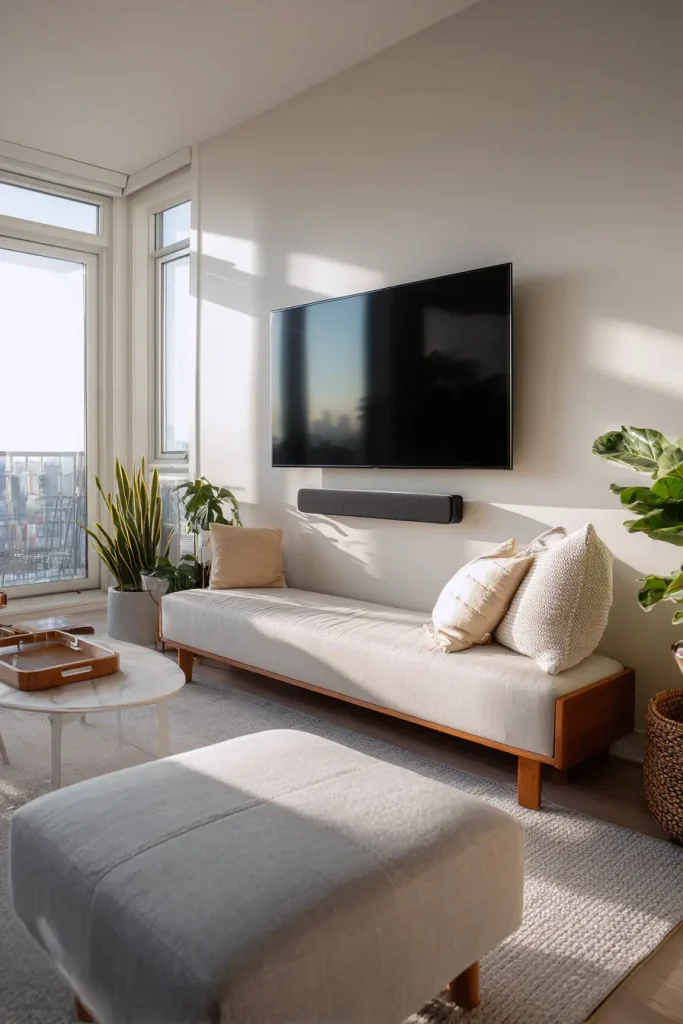
Plants make a room feel alive. They add texture and color. Research published in the Journal of Physiological Anthropology in 2021 found that indoor plants reduce stress and increase the feeling of comfort in small spaces.
But if you put pots all over the floor, you are eating up the space you just worked to create.
The fix is to go up. Hang plants from ceiling hooks in macrame planters. Mount wall planters that take up zero floor space. Use a plant stand that lifts a single pot to eye level without spreading out across the floor.
One large statement plant beats a collection of small ones in a small room. A fiddle leaf fig or monstera in one corner takes up less visual space than six little succulents scattered around. Less but bigger.
U.S. houseplant sales grew 50% between 2019 and 2023 according to Garden Center magazine. People want plants in their homes. The trick in a small apartment is keeping them off the floor.
Quick action: Pick one floor level pot that you can move to a hanging planter or wall mount. Free up that floor space.
15. Keep Your Materials Consistent Throughout the Room
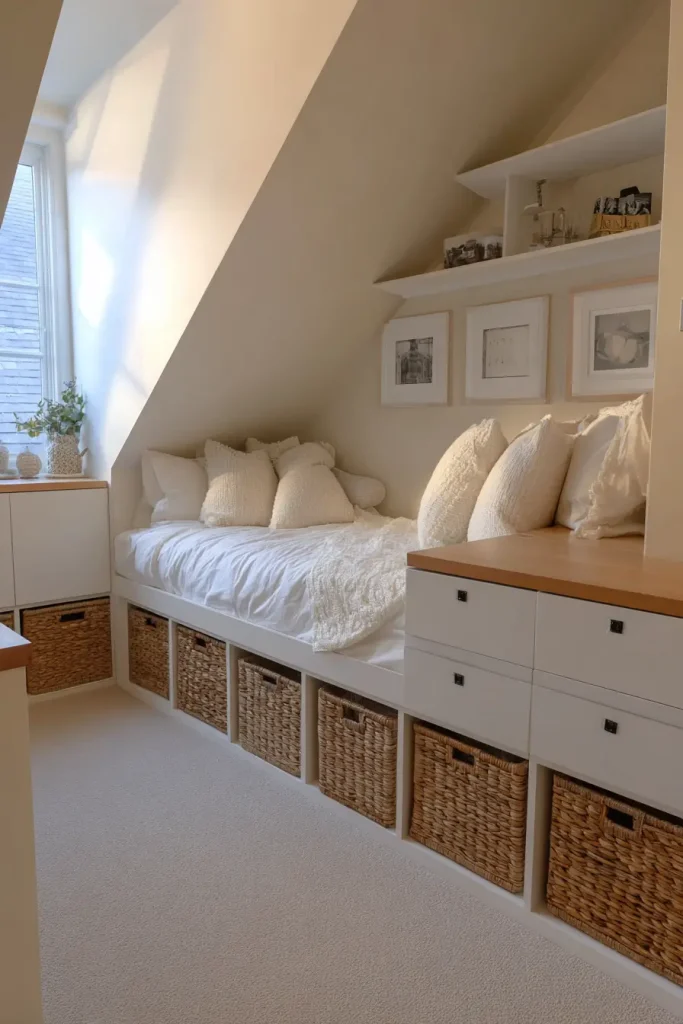
Too many different materials in one room create visual noise. Wood, plastic, velvet, metal, rattan, acrylic, all in one small room and the space starts to feel chaotic even if it is technically tidy.
Pick two or three materials and use them throughout the room. For example, warm wood, white linen, and matte black metal. Now use those three materials consistently. Wood legs on your sofa, wood coffee table, wood picture frames. White linen throw pillows, white lamp shade. A matte black lamp base, matte black curtain rod, matte black bookshelf hardware.
When you repeat materials, the room reads as intentional. It looks designed. And a well designed room always feels more spacious than a random one.
This is a core principle of both Scandinavian and Japanese interior design, both of which developed as direct responses to small space living. The book The Kinfolk Home covers this well if you want to read more.
Monochrome does not mean boring. You can have a lot of texture and visual interest within a single material palette. A rough linen pillow, a smooth ceramic vase, and a woven basket can all be the same warm neutral tone and look completely rich together.
Quick action: Count how many different materials are currently in your living room. If it is more than five, find two or three to remove or replace.
Make Your Small Living Room Work for You
You do not need to do all 15 of these at once. That would be overwhelming and expensive.
Start with three. The three that will make the biggest difference right now, for most people, are these: get a rug that is big enough, hang your curtains at ceiling height, and pull your sofa away from the wall. Those three changes cost almost nothing and take less than an afternoon.
Once those are done, work through the rest one at a time. The goal is a living room that feels good to be in. A room that does not stress you out. A room you are not embarrassed to have people over to.
Square footage is fixed. How your room feels is not. The right living room ideas for small apartments can turn even the tightest space into somewhere you actually want to spend time.

- 17 Classy Living Room Ideas for a Cozy Elegant Look - April 23, 2026
- 16 Dark Moody Living Room Ideas That Feel Rich and Warm - April 22, 2026
- 14 Elegant Bedroom Trends for 2026 You’ll Love - April 22, 2026