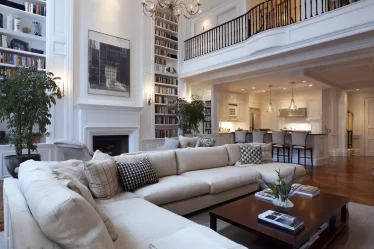

Your sofa is doing all the work. And your living room is suffering for it.
Most people buy one sofa, push it against the wall, and call it done. The room feels stiff. Conversations feel awkward. And the space never quite looks like the ones you save on Pinterest.
The good news? You don’t need a designer or a big budget to fix it. You just need better ideas.
This guide gives you 16 real seating ideas that work in real homes. Small spaces. Rental apartments. Open floor plans. Every budget. Each idea is specific, practical, and something you can act on today.
Let’s get into it.
Why Your Seating Setup Matters More Than Any Decoration You Own
Before we get to the ideas, here’s something worth knowing.
Interior designers will tell you this every time: furniture placement shapes how a room feels more than paint color, art, or throw pillows ever will. The way you arrange seats decides where people walk, where they sit, and whether conversations happen naturally or not.
Here’s the most common mistake people make. They push every piece of furniture against the wall. It feels logical. More floor space, right? But it actually makes the room feel smaller and colder. People sit far apart. The center of the room becomes a dead zone.
The fix is called floating furniture. You pull pieces away from the wall and group them closer together. This creates a conversation zone that feels warm and intentional.
According to Houzz’s 2024 Home Study, 48% of homeowners renovating their living rooms said “better use of space” was their top goal. Not better furniture. Better use of what they already had.
That’s what this list is about.
1. The Classic Sectional, Done Right

The sectional gets blamed for a lot of design problems it didn’t actually cause. Most of the time, the problem is size, not style.
A sectional that’s too big for the room feels overwhelming. One that’s too small looks awkward floating in space. The fix is a simple rule: the sofa should never be longer than two thirds of the wall it faces. Measure before you buy.
Once you have the right size, think about the space between the sofa and your coffee table. The sweet spot is 18 inches. Close enough to reach your drink. Far enough to walk through comfortably.
For fabric in 2026, boucle and performance velvet are the two materials showing up everywhere. Boucle (the soft, loopy textured fabric) looks high end and hides light wear surprisingly well. Performance velvet is great if you have kids or pets because it wipes clean easily.
Best picks by budget:
- Budget: IKEA SÖDERHAMN sectional (modular, starts around $600)
- Mid range: Article Timber Sectional
- Investment: Crate and Barrel Lounge II
Start by measuring your wall. The sofa should never go beyond two thirds of it.
2. One Armchair Can Change the Whole Room

This is the easiest upgrade most people skip.
A single accent chair placed next to your sofa instantly makes the room look more put together. It adds a second seating option. It breaks the visual monotony of one long couch. And it gives the room a layered, designed feel without spending a lot.
Placement matters here. Don’t put the chair parallel to the sofa. Angle it at roughly 45 degrees toward the sofa instead. This small shift makes the seating feel like a group rather than furniture lined up in a store.
Chair styles that are trending right now in 2026: curved back chairs, barrel chairs, and slipper chairs. All three work in small rooms because they have compact footprints.
Pair the chair with a small ottoman or footstool. Now it’s also a reading spot, a guest seat, and a design moment all at once.
Best picks by budget:
- Budget: IKEA POÄNG (around $150, genuinely comfortable)
- Mid range: West Elm Swivel Base Chair
- Investment: CB2 Monarch Chair
Angle it. Don’t line it up. That one change makes all the difference.
3. Two Loveseats Instead of One Big Sofa

Here’s an arrangement most people haven’t tried.
Instead of one large sofa, use two smaller loveseats facing each other. This works beautifully in rooms that are square shaped or used mostly for conversation and entertaining. It creates a natural back and forth between two groups of people.
If your room is under 180 square feet, a single loveseat is almost always a smarter choice than a full sofa. It takes up less visual space and leaves room for other pieces.
In 2026, curved loveseats and asymmetrical shapes are having a big moment. They soften a room that might otherwise feel boxy. Domino and Apartment Therapy both covered the dual loveseat layout in 2024 and 2025, and it’s still one of the most pinned living room setups online.
Best picks by budget:
- Budget: IKEA SÖDERHAMN 2 seat section
- Mid range: Article Ceni Loveseat
- Investment: Joybird Eliot Loveseat
Rooms under 180 square feet almost always work better with a loveseat than a full sofa.
4. Floor Cushions and Poufs Are Not Just for College Dorms

Floor seating has grown up.
What used to feel casual or temporary now looks intentional in the right setting. Japandi style rooms (a mix of Japanese minimalism and Scandinavian warmth) use floor seating as a design feature, not an afterthought. Pinterest’s 2025 trend report listed Japandi living rooms as one of the top searched aesthetics. Floor seating is central to that look.
The practical version: add two or three large floor cushions near your existing seating. Use them when you have guests. Store them in a basket when you don’t. They cost almost nothing and add flexibility to any room.
For back support, look for floor cushions with a backrest or lean them against a low cabinet. This makes extended sitting actually comfortable.
Great options that are washable: Yogibo Max for a lounger feel, or IKEA ALSEDA pouf for a simpler, sculptural look.
Why this works for families: Kids naturally gravitate to the floor anyway. This just makes it intentional.
Add one pouf to your current setup and see how often people actually use it.
5. Ottomans Do More Work Than You Think

Most people use an ottoman as a footrest. That’s the smallest thing it can do.
A large rectangular ottoman in the center of a seating group works as extra seating for four people. It works as a coffee table with a tray on top. It works as a landing spot for books, remotes, and everything else that ends up on your actual coffee table.
Cocktail ottomans are the biggest and flattest version. They work best in the center. Storage ottomans are slightly smaller and lift open. Use those near the sofa for blankets and kids toys.
One genuinely popular DIY: take an IKEA KALLAX cube shelf unit, lay it on its side, add a cushion on top, and you have a storage bench and ottoman in one. This idea has been saved millions of times on Pinterest and it actually works as well as it looks.
A simple rule: If guests come over and you’re short on seats, ottomans should be your first answer.
Put a tray on your ottoman tonight. It immediately reads as a coffee table, not just a footstool.
6. Built In Window Seats Use Space That’s Being Wasted Right Now

Look at your bay window or alcove. That’s seating space you’re probably not using.
A built in window seat turns an architectural quirk into the best seat in the house. It’s also one of the few furniture additions that can add perceived value to a home.
The cost range is wide. A DIY build using plywood and a cushion from a fabric store runs around $200 to $500 in materials. A professionally built version with storage underneath and custom cushions can run $1,500 to $4,000. HomeAdvisor puts the average cost at around $1,000 to $5,000 depending on the complexity.
The key fabric tip: window seats get more sun than any other piece of furniture in the room. Choose a solution dyed acrylic fabric (the same type used in outdoor furniture) or a performance fabric with a UV fade rating. Regular upholstery will look washed out within a year.
This Old House and Bob Vila both have free, detailed tutorials for DIY window seat builds. Both sites are reliable for this type of project.
Don’t stuff the cushion with throw pillows. Two or three max. Let the seat breathe.
7. A Chaise Lounge Is More Practical Than It Looks

People think chaise lounges are formal. They’re not anymore.
A chaise is one of the most used pieces of furniture in a home when placed right. It’s the spot where people lie down to watch a movie. Where they sit sideways to read. Where guests put their coats. It works harder than people expect.
Placement depends on your room size. In a small room, push it against a wall to save floor space. In a larger room, float it at an angle near the sofa as a separate seating zone.
One thing many people don’t know: chaises come in left arm and right arm configurations. This refers to which side the back extends to when you’re sitting on it. Always draw your room layout before ordering, because getting this wrong is frustrating and most retailers have strict return policies on large furniture.
Best picks by budget:
- Budget: IKEA GRÖNLID chaise add on section
- Mid range: Burrow Nomad Chaise
- Investment: Amber Lewis x Loloi collection pieces
Measure the arm configuration before you buy. Left arm and right arm are not interchangeable.
8. A Bench at the End of Your Sofa Adds Seats Without Adding Bulk

This is the most underrated seating trick in interior design.
A long upholstered or wooden bench placed in front of or across from a sofa adds seating for two more people. It takes up almost no extra visual space. It can also replace a coffee table entirely if you add a tray on top.
Upholstered benches feel warmer and more finished. Wooden benches with simple lines work better in modern or minimal rooms. Either way, keep the bench lower than the sofa seat height so it doesn’t compete visually.
Storage benches are especially smart in living rooms used by families. The interior holds blankets, board games, and kids toys. The surface works as seating, a footrest, or a display spot for books and a candle.
A viral DIY that actually works: Two hairpin legs attached to a butcher block from a hardware store. Sand it, oil it, add legs, and you have a bench for around $80. This format shows up constantly on Pinterest for good reason.
Best picks by budget:
- Budget: IKEA HEMNES bench
- Mid range: CB2 Colette Upholstered Bench
9. Two Matching Chairs Create a Room That Feels Designed

Symmetry is one of the easiest design principles to use. And one of the most underused.
Place two matching chairs on either side of a fireplace. Or flanking a console table. Or across from your sofa. The effect is immediate. The room feels balanced and intentional, not randomly assembled.
You don’t have to match perfectly. The most interesting version uses the same chair silhouette in two different fabrics. Same shape, different texture or color. This adds visual interest while keeping the symmetry that makes a room feel calm.
The thing to avoid: making it look too formal or hotel lobby-like. The fix is simple. Add one asymmetrical element nearby. A stack of books on one side but not the other. A floor lamp on just one side. Small imperfections signal that real people live there.
Designers like Nate Berkus and Jeremiah Brent use paired accent chairs in almost every living room they feature. It shows up in Architectural Digest and Elle Decor year after year because it works every time.
Match the shape. Mix the fabric. Break the symmetry with one small detail.
10. Curved Sofas Are the Biggest Furniture Shift in Years

This is not a passing trend.
Curved and kidney shaped sofas have been growing in popularity since 2022 and show no signs of slowing down in 2026. Google search data shows a consistent multi year rise in “curved sofa” searches. House Beautiful named curved furniture a top trend for 2025 and the momentum has carried forward.
Why do they work? The curved shape naturally draws people toward each other. Everyone on the sofa faces slightly inward, which makes conversation easier. It’s a physical design feature that changes how people interact in the space.
Curved sofas work best in square rooms and open floor plans. They struggle in narrow rectangular rooms because the shape takes up more visual width.
Brands currently doing this well: Article, H&M Home (surprisingly good quality at that price point), Anthropologie Home for a statement piece, and Crate and Barrel’s newer collection.
One styling rule: Keep surrounding furniture low and simple. The sofa is the statement. Let it be.
11. Modular Seating Is the Best Option for Renters

You move. Your furniture should move with you.
Modular seating systems are made of individual connected pieces that you can rearrange into different configurations. L shape, U shape, straight line, pit sofa. The same pieces work in a small apartment and a large house because you add or remove sections.
This is the fastest growing category in living room furniture. Wayfair’s 2024 Furniture Trend Report listed modular seating as the number one growing segment. The reason is practical. People are moving more often and buying furniture that adapts to new spaces instead of furniture that locks them into one layout.
The honest downside: cheaper modular sofas sometimes have connectors that loosen over time. And fabric consistency across pieces can be an issue if you add sections later from a different batch. Buy all your sections at once if you can.
Best picks by budget:
- Budget: IKEA SÖDERHAMN (modular, starts around $600)
- Mid range: Burrow or Joybird
- Investment: Cozey or Maiden Home
Buy all sections at the same time to keep fabric color consistent.
12. The Conversation Pit Is Back and It Looks Nothing Like the 1970s

The original conversation pit was sunken into the floor and filled with shag carpet. That version is not coming back.
The modern version uses layered area rugs and low floor cushions to create a defined zone that feels separate from the rest of the room. No construction needed. No structural changes. Just intentional furniture placement at a lower level than the surrounding space.
This works best in open floor plan homes where the living room blends into a dining area or kitchen. A pit layout creates a clear visual boundary that says “this is the seating area” without needing walls.
Pinterest searches for “conversation pit” grew significantly in 2023 and 2024 and continue rising. Architectural Digest featured the format in their 2024 year in review. The TikTok interior design community has pushed it into mainstream awareness.
To try it without commitment: lay a large low pile rug, add four floor cushions around a low coffee table, and surround the edge with your existing sofa. See how the room feels before investing further.
You can create this look for under $300 with a rug and cushions. No contractor required.
13. Smart Guest Seating That Doesn’t Look Like an Afterthought

Folding chairs don’t have to be embarrassing.
The problem isn’t the folding chair. The problem is buying cheap, ugly ones and hiding them until guests arrive. The better approach is to buy one or two design forward folding or stackable chairs that look good in the room all the time.
Hay’s About A Chair is one of the most popular examples. It’s lightweight, available in multiple colors, and stacks cleanly. It looks at home in a well decorated living room on a regular Tuesday. When guests come, pull out two more from the closet.
IKEA NISSE is the budget version. Simple, inexpensive, and not embarrassing to have visible.
For storage: wall mounted hooks near the entryway work for folding chairs. So does a closet rail with S hooks. If the chair is beautiful enough, lean it against a wall as a design element.
Best picks under $100 per chair:
- IKEA NISSE
- IKEA TEODORES
- Target’s Threshold Upholstered folding chair
Buy chairs you’re comfortable leaving out. That’s the real test.
14. Rattan and Wicker Indoors Is a Real Design Choice, Not a Mistake

Using outdoor style materials inside has been a growing trend for three years and it’s now fully mainstream.
The reason is biophilic design, which is basically the idea that bringing natural materials and textures into a home makes people feel calmer and more comfortable. Rattan, wicker, teak, and powder coated steel all bring that natural texture into a living room without needing actual plants or wood paneling.
The key to making it work: don’t use bare outdoor furniture. Add cushions in a warm indoor fabric. Add a wool or jute rug nearby. Layer a throw blanket over the arm of the chair. These touches signal that the piece belongs inside and wasn’t just dragged in from the backyard.
Both Dezeen and Architectural Digest named biophilic design a top trend for 2024 and 2025. It continues into 2026 because it’s not a style trend in the traditional sense. It’s a response to how people actually feel in their homes.
Best brands for indoor rattan seating:
- Serena and Lily (investment level)
- West Elm rattan collection (mid range)
- Target Threshold rattan chairs (budget friendly, widely available)
Add one indoor textured cushion and a throw. That’s what makes it feel like a home, not a patio.
15. A Reading Nook Is a Seating Zone, Not a Room Addition

You don’t need an extra room to have a reading nook. You need a corner, a good chair, and one light source.
That’s genuinely it.
Pick the corner of your living room that gets the least foot traffic. Place one high back chair or egg chair there. Add a floor lamp directly next to it, positioned over your shoulder for reading. Put a small side table within arm’s reach. Add a soft rug under the chair to define the zone.
The chair creates the intention. The light makes it functional. The rug makes it feel like its own space within the larger room.
Chair types that work best here: IKEA STRANDMON wing chair (under $350, genuinely comfortable for long reading sessions), Wayfair egg chairs in the $200 to $500 range, or a HAY Mode Lounge Chair if you want something more design forward.
You can build this entire setup for under $400 if you shop smart.
To make it feel separate without walls: use a bookshelf as a partial divider, or hang a pendant light overhead to define the zone from above.
One chair, one lamp, one rug. That’s a reading nook.
16. The Curved Bench or Half Moon Seat Is the Statement Nobody Expects

This one surprises people.
A curved bench, crescent bench, or half moon upholstered seat is one of the most photographed pieces of furniture on interior design accounts right now. It reads as sculptural. It works as extra seating. And it fills corners and bay windows in a way that rectangular furniture never quite does.
It works best in rooms that already have a neutral base. If your walls, sofa, and rug are all calm and simple, a curved bench in a bold color or interesting texture becomes the focal point without overwhelming anything else.
Where to place it: in a bay window, in a wide hallway that connects to the living room, or as a second seating piece across from a sofa in a larger room. Don’t put it in a tight space. It needs room to be seen.
Where to find them:
- Anthropologie Home (higher end, truly beautiful options)
- H&M Home (surprising quality at lower price points)
- Wayfair has a growing selection in the $300 to $700 range
This is the idea that will make visitors ask where you got it.
How to Use This List Without Getting Overwhelmed
Don’t try to use all 16 ideas. That’s not the point.
Pick one idea that fits your room size, your budget, and the problem you actually have. If your room feels empty and cold, add an accent chair. If you never have enough seats when friends come over, buy a stylish folding chair and two good ottomans. If you want the room to look more designed without spending much, rearrange what you have and float it away from the walls.
Great living room seating ideas are not about filling the room. They’re about making the space actually work for the people who live in it.
One good change beats 16 half finished ones every time.

- 18 Scandinavian Bedroom Ideas That Are Calm & Livable (2026) - March 31, 2026
- 17 Kids Bedroom Ideas That Grow With Them - March 31, 2026
- 17 Industrial Bedroom Ideas for Urban Apartment Dwellers - March 31, 2026