
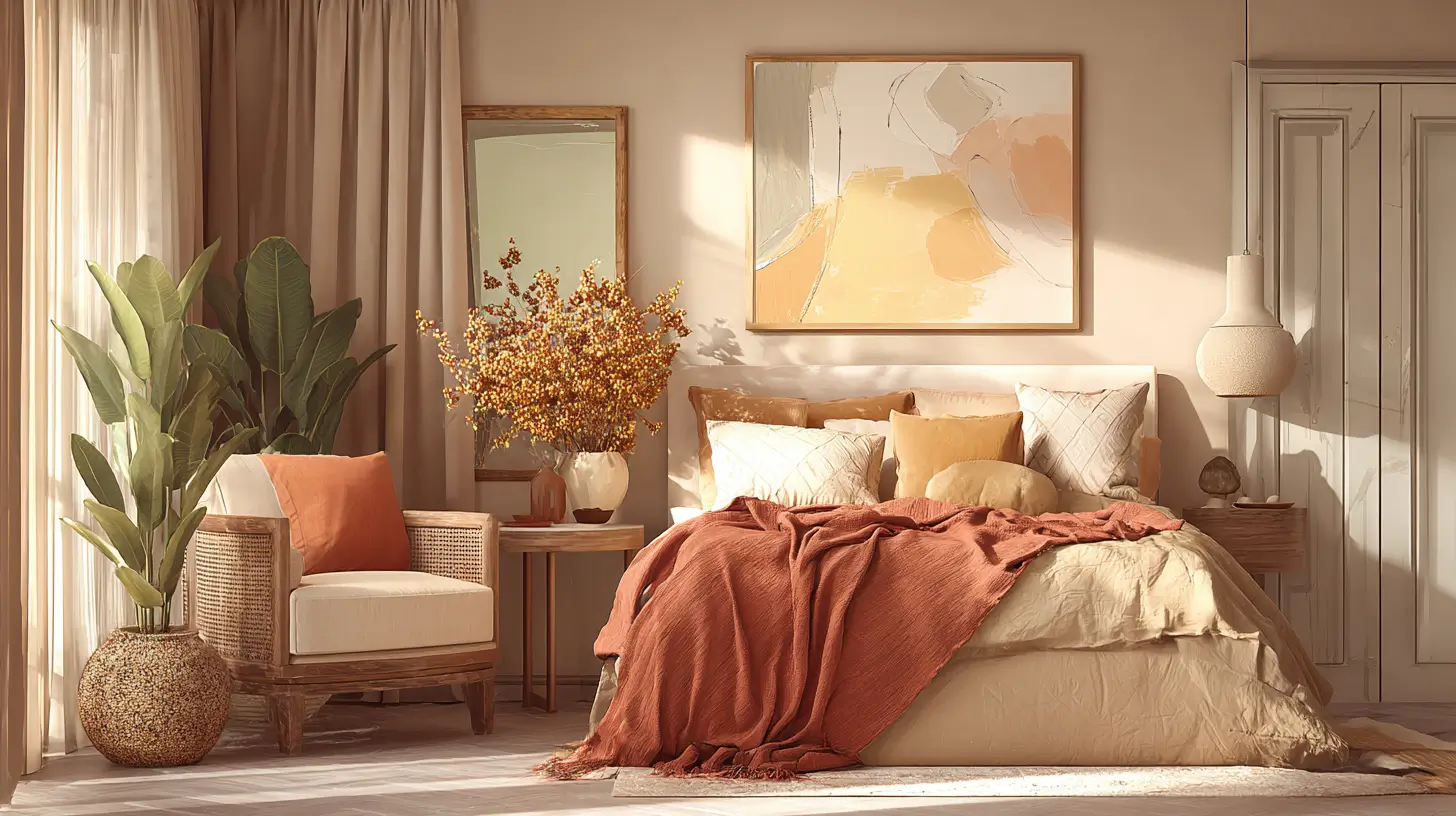
A practical guide for renters and homeowners who want more space without moving or renovating
The Problem With Small Bedrooms (And Why Most Advice Doesn’t Work)
Your bedroom feels like a box. You clean it. You tidy it. You rearrange the furniture for the third time this year. And it still feels cramped.
You scroll through Pinterest and see gorgeous small bedrooms that look open and airy. But when you try to copy them, something is off. Your room still feels small.
Here’s the truth: most people try to fix the wrong things. They buy more storage bins. They get a smaller bed. They paint one wall a bold color. None of that addresses the real issue.
The real issue is how your eye reads the room.
Your brain decides if a room feels big or small based on visual cues. Light, color, furniture height, mirror placement, and even where you hang your curtains all send signals. Get those signals right and a 100 square foot room can feel like 200. Get them wrong and even a large room feels tight.
The good news? None of these fixes require a contractor. Most cost little or nothing. And some you can do today.
This guide covers 7 proven strategies. Each one is practical, specific, and works in 2026 whether you rent or own.
1. Paint Your Walls a Light Color (And Your Ceiling Too)

Color is the fastest and cheapest thing you can change. And it makes one of the biggest differences.
Light colors reflect more light. That makes walls feel farther away. Dark colors absorb light and pull walls inward. This is not a design opinion. It is how the human eye works.
The best colors for small bedrooms right now are warm whites, soft greiges (gray plus beige), and pale sage greens. These tones are all over small bedroom design in 2026 because they are calm, light, and work with almost any furniture.
Three specific paint colors worth trying:
Sherwin Williams Alabaster (SW 7008). This is a warm, creamy white. It never looks cold or sterile. Designers use it constantly in small spaces.
Benjamin Moore White Dove (OC 17). Slightly warmer than pure white. Works especially well if your room gets limited natural light.
Behr Painter’s White (W-B-600). A budget friendly option available at Home Depot. Similar warmth to the options above.
Now here is the trick most people skip. Paint your ceiling the same color as your walls, or one shade lighter.
Most bedrooms have a bright white ceiling with colored walls below. That creates a hard visual line where the wall ends and the ceiling begins. Your eye stops there. The room feels shorter.
When ceiling and walls are the same color, that line disappears. Your eye travels upward without stopping. The room feels taller.
Interior designer Emily Henderson has written about this technique repeatedly on her blog. She calls it one of the easiest and most overlooked tricks in small space design.
Do this first: Pick one of the three paint colors above. Order a sample pot. Paint a 12×12 inch square on your wall and live with it for two days before committing.
2. Place Mirrors Where They Double Your Space

Mirrors are the only decorating item that literally adds visual square footage to a room.
A well placed mirror creates the impression of depth. It bounces light. It makes your eye think there is more room behind the glass. Done right, a single mirror can make your bedroom feel almost twice as deep.
The key word is placement. A badly placed mirror does the opposite. It reflects clutter, makes the room feel busier, and adds nothing.
Where to put mirrors for maximum effect:
Opposite a window is the best spot. The mirror catches natural light and reflects it back into the room. It creates the illusion of a second window. This works even with small mirrors.
On or next to the door is the second best option. A full length mirror here doubles the perceived depth of the room every time you enter.
On the wall at the end of a narrow room. If your bedroom is long and thin, a large mirror on the short wall at the far end makes the room feel less like a hallway.
What to avoid: Never place a mirror where it reflects your bed directly. That can feel unsettling. Also avoid placing mirrors where they reflect piles of clothes or a messy desk. A mirror amplifies whatever it shows.
For renters who cannot drill into walls, lean mirrors are the answer. The IKEA HOVET full length mirror is one of the most reviewed products in this category. It leans against the wall, requires no mounting, and costs around $150. You will find it all over Reddit threads in r/malelivingspace and r/femalelivingspace with before and after photos showing the difference.
If you want mirrored wardrobe doors, the IKEA PAX system lets you customize the size and finish. This is one of the highest return on investment changes you can make in a small bedroom because it serves two purposes: storage and visual expansion.
Quick rule: Place your mirror so it reflects either a window or an empty wall. Not clutter.
3. Choose the Right Size Furniture (Most People Go Too Big)

This is the mistake almost everyone makes.
You buy a large bed because you want to be comfortable. Then you add a matching dresser. Then a pair of bulky nightstands. Suddenly 60% of your floor is covered in furniture and there is almost no open space left.
Open floor space is what makes a room feel big. The more floor you can see, the larger the room feels. This is why furniture choices matter more than room size.
Here is what to look for in small bedroom furniture:
Furniture with legs. A bed frame, nightstand, or dresser that sits on visible legs creates breathing room at floor level. Your eye can see under the furniture. The floor looks longer and wider. Compare this to a platform bed that sits flush on the floor. It blocks everything underneath and the room feels heavier.
Low profile bed frames. A tall headboard or a thick mattress stack raises the visual horizon. Your eyes stop at that height instead of traveling to the ceiling. A lower bed frame keeps the horizon low and makes the ceiling feel higher.
The right bed size for the room. A king bed in a 10 by 12 foot room leaves almost no circulation space. If you can walk around your bed on all three sides with at least 24 inches of clearance, your bed fits. If you cannot, it is too big.
The IKEA HEMNES bed frame comes up constantly in small bedroom discussions. It has visible legs, a modest height, and comes in several sizes. It is honest about what it is, not a designer piece, but it does the job well.
Float furniture slightly from the wall. This sounds strange but it works. Pulling a bed or dresser 2 to 3 inches away from the wall creates a subtle sense of depth behind it. Your brain reads that gap and interprets it as more space. Several interior designers on Apartment Therapy have pointed this out as one of their go to tricks.
Never block a window with furniture. Natural light is a free space expander. If a dresser or chair cuts off even part of your window, move it. The light you gain is worth more than the floor space the furniture takes.
4. Layer Your Lighting So the Room Has Depth

Here is something most people do not think about: bad lighting makes a room feel smaller.
A single overhead light flattens everything. Shadows disappear. The walls look closer. The room looks like a box lit from directly above.
Layered lighting does the opposite. It creates depth. Different light sources at different heights make the room feel dimensional. That sense of dimension makes it feel bigger.
The three layers of bedroom lighting:
Ambient light is your main source. This is usually an overhead fixture or ceiling light. It fills the room with general brightness.
Task light is focused. This includes reading lights, desk lamps, or wall sconces next to the bed.
Accent light adds warmth and depth. LED strip lights behind a headboard or under a bed frame are the most popular version of this right now. They create a soft glow that makes furniture look like it is floating. That floating effect adds perceived depth to the lower half of the room.
LED strip lighting is searched over 40 million times on Pinterest. Bedroom LED lighting ideas has been one of the top home trends for two years running. This is not a fad. It works visually and it is cheap. Most LED strips cost under $20 on Amazon.
Color temperature matters. Warm white light (2700 to 3000K) feels cozy but can make a small room feel a bit smaller. Cool white light (4000 to 5000K) feels more open and airy. For a small bedroom, consider using cool white for your main overhead light and warm white for accent lighting. This gives you openness plus warmth.
For curtains: Use sheer panels during the day. Sheer fabric lets natural light pass through while still giving privacy. More natural light means a bigger looking room. If you need blackout curtains for sleeping, layer a blackout liner behind the sheer. You get both.
Budget recommendation: The Govee LED strip lights on Amazon are under $20, easy to install with adhesive backing, and compatible with Alexa and Google Home. They have over 100,000 reviews. They are not fancy but they work.
5. Store Smarter So Your Floor Stays Clear

Clutter on the floor makes a room feel half its size. The fix is not buying more storage bins. The fix is using the storage space you already have but are not using.
The biggest untapped storage space in most bedrooms is under the bed.
A standard bed frame sits about 8 to 12 inches off the ground. That space running the full length and width of your bed is often completely empty. Or filled with random boxes and dust.
Replace that with flat under bed storage containers and you gain the equivalent of a full extra closet. IKEA makes flat storage boxes specifically sized for this. Vacuum compression bags work even better for seasonal items like extra bedding or winter clothes.
Vertical space is your second biggest opportunity.
Most people fill their bedroom walls from eye level down. Everything from eye level to the ceiling is empty air. That is wasted storage space.
A floor to ceiling wardrobe uses that full height. Tall floating shelves do the same. When you store things higher up, you free up floor space below. And drawing the eye upward makes the ceiling feel higher.
The IKEA MALM bed with built in storage drawers is one of the most widely reviewed beds for small spaces. The drawers replace the need for a separate dresser entirely. That is one less piece of furniture on your floor.
Multi function furniture is worth the investment. An ottoman at the foot of your bed that opens for storage. A nightstand with two shelves instead of one flat surface. A headboard with built in shelving. Each piece does double duty and reduces how many separate items you need in the room.
The 20 minute rule: Set a timer. Spend 20 minutes removing items from your bedroom that do not belong there. Old magazines, gym bags, chargers, random items on the dresser. Move them out. This costs nothing and the change in how the room feels is immediate.
A 2024 editorial in Real Simple found that removing just 20% of visible items from a bedroom made it feel measurably calmer and larger. You do not need to throw things away. Just move them to a closet, another room, or proper storage.
6. Hang Your Curtains High and Wide (This One Change Is Shocking)

Most people hang curtain rods right above the window frame. That is the wrong place.
When the rod sits just above the window, your eye registers exactly where the window ends and the wall begins. The window looks like a small rectangle in the wall. The ceiling looks low.
Move the rod up. Mount it 4 to 6 inches below the ceiling line instead. Then let the curtains hang all the way to the floor.
Now your eye follows the fabric from floor to ceiling without interruption. The window looks enormous. The ceiling looks much higher than it actually is. Interior designers call this the curtain height trick. It is one of the most dramatic changes you can make for under $50.
Go wide too. Extend the rod 6 to 8 inches past the window frame on each side. When the curtains are open during the day, they sit to the sides of the window without blocking any glass. The window appears wider. More light gets in.
Both Apartment Therapy and The Spruce have published this tip multiple times because reader feedback consistently calls it one of the most effective changes they have ever made.
Fabric choice matters. Sheer linen curtains are the top choice for small bedrooms in 2026. They are lightweight, let light through, and have a relaxed texture that does not feel heavy in a small space. A simple set of IKEA LISELOTTE or Amazon Basics linen curtains works well and costs around $30 to $50.
Avoid heavy velvet, thick patterns, or very dark curtains unless you layer them over sheers. Heavy drapes on a small window make the wall look like it is closing in.
Pattern direction on textiles matters too. Vertical stripes on curtains, rugs, or bedding draw the eye upward and make ceilings feel taller. Horizontal stripes do the opposite. When in doubt, go with no pattern at all. Solid colors give the eye nowhere to stop.
7. Reduce Visual Noise So the Room Feels Calm and Open

Here is something most design articles skip over: the brain gets overwhelmed by too much visual information.
When there are too many objects, too many patterns, too many colors, and too many textures all competing for attention at once, your brain reads the room as crowded. Even if there is actually enough space.
A 2023 study from Princeton University found that clutter directly competes with your brain’s ability to focus. It elevates cortisol, the stress hormone. That is a real physical response to a messy room, not just a preference.
The fix is not buying new furniture or changing your layout. The fix is removing things.
The 3 to 5 rule for surfaces. Pick up everything from one surface in your bedroom, a dresser, a nightstand, a desk. Put back only 3 to 5 items maximum. Everything else finds a home elsewhere. This single rule changes how every surface in the room looks.
The one in, one out rule. Every time you bring something new into the bedroom, something else leaves. This stops clutter from slowly building back up. It works because it forces a decision at the point of purchase instead of six months later.
The Japandi approach. In 2026, Japandi style is one of the most popular aesthetics for small bedrooms globally. Japandi is a mix of Japanese and Scandinavian minimalism. It uses natural materials like wood and linen, a limited color palette of warm neutrals, and very few decorative objects. The result is a room that feels intentional, not sparse.
Searches for “Japandi bedroom” have grown by over 300% on Pinterest in the past two years. If you want inspiration, searching that term will give you hundreds of real examples you can adapt.
You do not have to fully commit to Japandi. But the principle behind it applies to any style: fewer objects, cohesive colors, and nothing on display that does not earn its place.
What to Do Right Now (Start Here)
You do not need to do all 7 things at once. In fact, do not try to. Pick one and do it this week.
If you want the biggest impact for the least money, start with your curtains. Move the rod up to within 4 to 6 inches of the ceiling. Extend it past the window on each side. This takes 30 minutes and costs nothing if you already have a rod.
If you want a bigger change, start with paint. Pick Sherwin Williams Alabaster or Benjamin Moore White Dove and paint the walls and ceiling the same color. A gallon of paint costs around $30 to $50 and one weekend of work will change how your room feels completely.
If you are not ready to change anything structural yet, spend 20 minutes removing things from surfaces and from your floor. Clear space is free. And it makes an immediate difference.
Every one of these changes works on its own. They work even better together. But you do not need to do them all at once to see results.
Your room does not need to be bigger. It needs to be smarter.

- 16 Japanese Minimalist Living Room Ideas for Total Visual Calm - March 16, 2026
- 17 Farmhouse Hallway Ideas That Feel Warm and Welcoming - March 16, 2026
- 17 Vintage Bedroom Ideas With a Modern Twist (2026) - March 16, 2026