
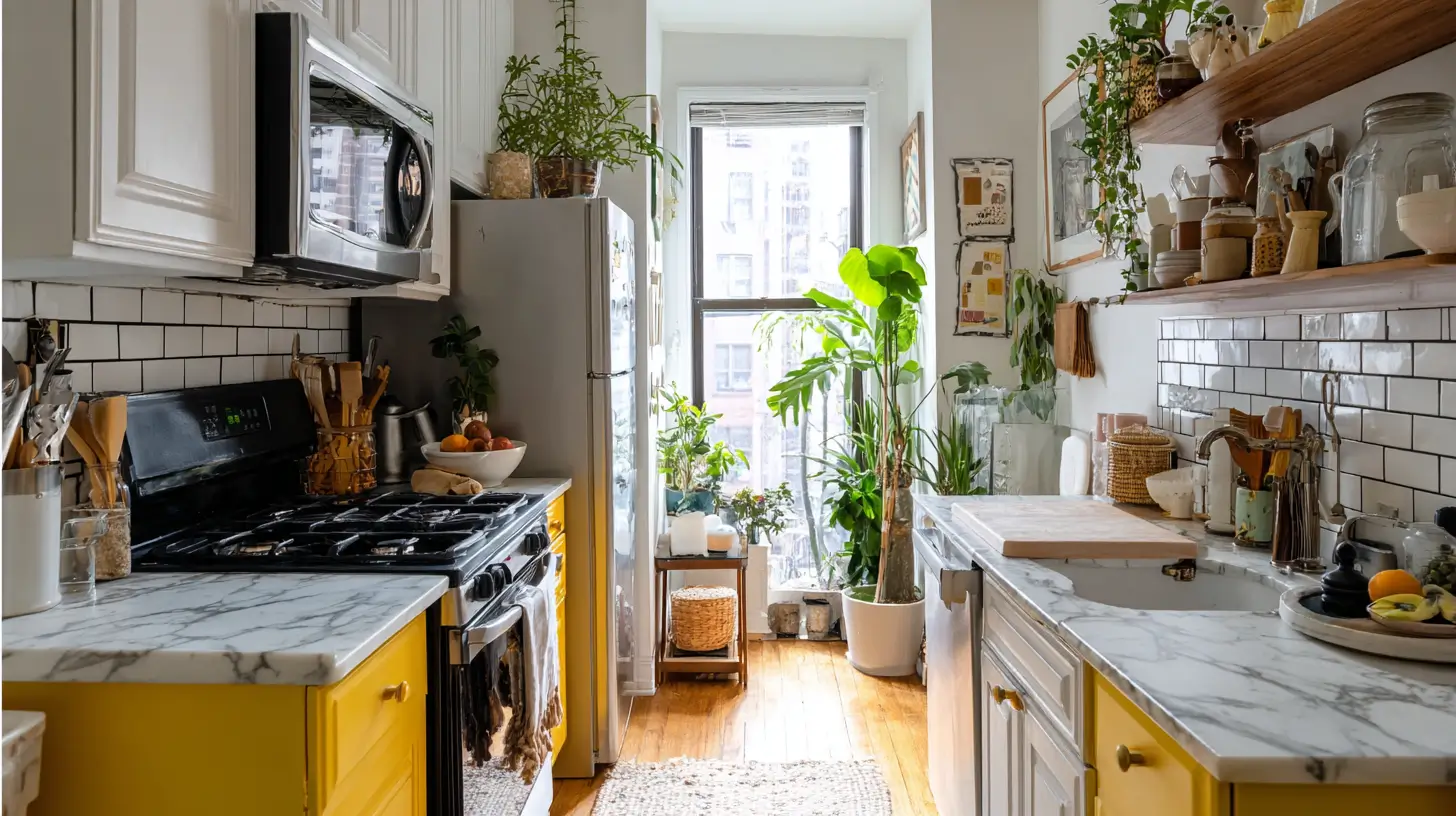
Your landlord owns the walls. But they don’t own your creativity.
If you rent your home, you know the feeling. You look at your kitchen and want to fix it. But you stop yourself. What if you drill a hole in the wrong place? What if the paint peels? What if you lose your deposit?
So you do nothing. And the kitchen stays ugly.
Here’s the truth: you have more options than you think. In 2026, there are more renter-friendly products, smarter storage tools, and better no-damage solutions than ever before. You don’t need a drill. You don’t need permission. You just need a plan.
This guide gives you 16 small kitchen ideas for renters that are 100% deposit-safe. Every idea on this list requires zero permanent changes. Most cost under $30. All of them work in real apartments, right now.
Pick one. Do it this weekend. Your kitchen can feel like yours without costing you a cent of your deposit.
Why Renters Feel Stuck in Small Kitchens (And Why That Changes Today)
Most renters assume the same thing: “no drilling” means “no options.” That’s not true.
There are 44 million renter households in the United States. Most of those people are living in kitchens they haven’t touched since move-in day. The reason is simple. They’re scared. The average security deposit is one to two months of rent. Nobody wants to risk that over a shelf.
But here’s what most renters don’t know. There’s a legal difference between “damage” and “normal wear and tear.” Putting up a Command hook is not damage. Using peel-and-stick tiles that come off cleanly is not damage. Swapping out cabinet knobs and storing the originals in a bag is not damage.
You are allowed to make your home feel like home. You just need the right tools.
The average renter stays in one place for about two and a half years, according to U.S. Census data. That’s 900 days of living in a kitchen that doesn’t work for you. Two and a half years is long enough to justify making changes.
The 16 ideas below are all renter-friendly kitchen upgrades. None of them require a single hole in the wall.
1. Put Up a Peel-and-Stick Backsplash to Transform Your Kitchen Fast

Your backsplash is the first thing people notice in a kitchen. If yours is plain white tile or bare wall, one pack of peel-and-stick tiles can change everything.
These are not the cheap, bubbly stickers from ten years ago. In 2026, peel-and-stick backsplash tiles look like real subway tile, marble, and mosaic. From three feet away, most people cannot tell the difference.
Smart Tiles, Aspect Tiles, and NuWallpaper all make solid renter-safe options you can find on Amazon or at Home Depot. A full backsplash area costs between $20 and $80 depending on the size.
Here is how to apply them so they come off cleanly later. Clean the wall with rubbing alcohol first. Let it dry completely. Press each tile firmly from the center out. When you move out, peel them back at a 180 degree angle, slow and steady. The adhesive releases without pulling paint.
One warning: these do not stick well to textured walls. If your wall has a bumpy or rough surface, test a small corner first before covering the whole area.
Quick Facts: Cost: $20 to $80. Time to install: 45 minutes. Damage risk: Zero.
2. Add a Freestanding Kitchen Island or Rolling Cart

No counter space is one of the most common complaints in small rental kitchens. The fix is simple. You bring your own.
A freestanding kitchen island or rolling cart adds prep space and storage without touching a single wall. When you move, it moves with you.
Look for a cart with locking wheels, at least one drawer, and a lower shelf for pots. The IKEA RÅSKOG cart is under $40 and works well in tight spaces. If you want something sturdier, the Seville Classics Bamboo Kitchen Island gives you a full butcher block top and two shelves for around $80.
The best part is that these carts do more than one job. Roll it to the counter while you cook. Push it against the wall when you eat. Use it as a coffee station in the morning and a prep table at night.
In a small kitchen, every piece of furniture needs to work harder than one thing.
Quick Facts: Cost: $40 to $120. Time to set up: 20 minutes. Damage risk: Zero.
3. Use Command Hooks to Create a Wall Organizer Without Drilling

The inside of your kitchen walls is wasted space. Command hooks let you use it without touching anything permanently.
3M Command hooks are the gold standard for no-damage hanging. The large wire hook models hold up to 7.5 pounds each. That is enough for a heavy mug, a small pan, or a bunch of kitchen tools.
Here is what you can hang: oven mitts, measuring cups, pot lids, mugs, small colanders, dish towels, and lightweight pans. Line up six to eight hooks in a row and you have something that looks close to a pegboard organizer.
The key to removing them without damage is following the instructions exactly. Pull the tab straight down, slow and steady. Do not yank. Do not twist. If you do it right, the strip releases without pulling paint off the wall.
The newer 3M Command wire hook range handles more weight than the older plastic models. If you haven’t bought Command hooks in a few years, it’s worth checking out the current lineup.
Quick Facts: Cost: $10 to $20 for a starter pack. Time to install: 5 minutes. Damage risk: Zero if removed correctly.
4. Install a Tension Rod Under the Sink in 60 Seconds

Open the cabinet under your kitchen sink right now. Chances are it looks like a black hole. Cleaning supplies piled on top of each other. Bags stuffed in the back. No organization at all.
A tension rod fixes this in under a minute.
Buy a basic spring-loaded tension rod from any hardware store for about $5. Wedge it horizontally inside the cabinet, about halfway up. Now you have a hanging bar. Hang spray bottles by their trigger handles. Hang small bags. Hang cleaning cloths on a clip hook.
This frees up the entire floor of the cabinet for stackable bins. Put a Simplehuman stackable bin set on the bottom shelf and you have turned a messy cabinet into a real storage system.
This same trick works inside pantry doors. Use a tension rod to hold spice packets, foil rolls, and plastic wrap boxes so they stop falling out every time you open the door.
Quick Facts: Cost: $5 to $15. Time to install: 60 seconds. Damage risk: Zero.
5. Hang Over-the-Cabinet-Door Organizers on Every Door

Your cabinet doors have two sides. Most renters only use one.
Over-door organizers hook onto the top edge of a cabinet door with no screws and no adhesive. They just sit there. You can remove them in seconds.
Here is what to store on them: cutting boards, aluminum foil boxes, plastic wrap, spice jars, small bottles, and cleaning supplies. One organizer on the inside of your pantry door can hold ten to fifteen items that used to crowd your shelves.
OXO Good Grips makes an over-door organizer with a non-slip grip on the hook so it doesn’t rattle. Rev-A-Shelf makes a door-mounted spice rack that holds up to 20 jars.
One thing to check before you buy: measure the thickness of your cabinet door edge. Most organizers fit standard doors, but some custom cabinets have thicker frames.
Quick Facts: Cost: $15 to $35. Time to install: 30 seconds. Damage risk: Zero.
6. Swap Cabinet Hardware for a Cheap, High-Impact Upgrade

This is the fastest kitchen transformation you can make. It costs under $40 and takes about 30 minutes.
Your cabinet knobs and pulls are almost certainly ugly. That’s not your fault. Landlords install the cheapest hardware they can find. The good news is: you can swap them out and swap them back when you leave.
Here’s the method. Unscrew every original knob and pull. Put them in a labeled zip-lock bag. Store the bag somewhere safe, like the back of a cabinet. Install new hardware. When you move out, reinstall the originals in 20 minutes.
New hardware costs $1 to $5 per piece on Amazon or at Home Depot. For a kitchen with 20 cabinets and drawers, you’re looking at $20 to $40 total for a complete look change.
Popular styles in 2026: matte black pulls, brushed gold knobs, and white ceramic handles. Any of these will make a dated kitchen look 10 years newer.
Quick Facts: Cost: $20 to $40 total. Time to complete: 30 minutes. Damage risk: Zero if you keep the originals.
7. Add Under-Cabinet Lighting With Zero Wiring Required

Most rental kitchens have one overhead light. It’s usually not enough. The counter feels dark. Cooking feels harder than it should.
The fix doesn’t require an electrician or a landlord’s permission.
Battery-powered LED puck lights stick under your cabinets with adhesive pads and take about 10 minutes to install. Plug-in LED strip lights run along the underside of cabinets and plug into a nearby outlet. Both options cost between $15 and $50 and make a noticeable difference.
Warm white light (around 2700K) makes a small kitchen feel cozy and clean. Cool white light (around 4000K) is better if you do a lot of food prep and want to see colors clearly.
Motion-activated cabinet lights are a big trend in 2026. They turn on when you open a cabinet door and off when you close it. No app, no wiring, no fuss.
The Govee plug-in LED strip lights and the LITOM rechargeable under-cabinet lights are two solid options available right now.
Quick Facts: Cost: $15 to $50. Time to install: 10 to 15 minutes. Damage risk: Zero.
8. Use Peel-and-Stick Wallpaper on One Wall or Inside Cabinets

You don’t have to wallpaper an entire room to get the effect. One wall is enough.
Peel-and-stick wallpaper uses a removable adhesive that releases cleanly from most painted walls. The key word is “most.” Always test a small patch in a hidden corner before covering a large area.
Use it on the wall behind open shelving, inside the backs of cabinets for a pop of color, or as a shelf liner that looks intentional. Brands like Chasing Paper, Tempaper, and RoomMates all make high-quality removable options in 2026.
To apply it without bubbles: start from the top and use a squeegee or a flat credit card to press it down as you go. Work in sections. Don’t stretch it.
To remove it: peel back from a corner at a slow, steady angle. Warm the surface slightly with a hair dryer if it resists.
Cost ranges from $30 to $100 depending on how much wall you’re covering.
Quick Facts: Cost: $30 to $100. Time to apply: 45 to 90 minutes. Damage risk: Very low if applied and removed correctly.
9. Declutter Before You Organize (This Step Saves You Money)

Here is the truth that most kitchen organization guides skip. If your kitchen has too much stuff, no storage product will save you.
You don’t need more storage. You need less stuff competing for the same space.
Start with a 15-minute kitchen audit. Pull everything out of one cabinet at a time. Ask three questions about each item: Do I use this at least once a month? Do I own two of this? Can I store this somewhere other than the kitchen?
Anything that fails all three questions gets donated or tossed.
The one-in, one-out rule is simple. Every time you bring a new kitchen item in, something old goes out. This keeps clutter from building back up after you’ve organized.
Professional organizers consistently say the same thing: countertop clutter is the number one visual problem in small kitchens. Clear counters make a small kitchen look twice the size.
This step costs nothing. But it will make every other idea on this list work better.
10. Mount a Magnetic Knife Strip Without a Single Screw

A knife block takes up valuable counter space. A knife drawer is actually dangerous. A magnetic knife strip solves both problems.
In 2026, you can buy adhesive-backed magnetic knife strips that hold up to 10 pounds without screws or wall anchors. They stick flat against the wall with heavy-duty adhesive pads and release cleanly when you move out.
The Vonshef adhesive magnetic knife strip and the Ouddy 16-inch magnetic bar are two well-reviewed options that renters use specifically for their no-drill setup.
A few safety rules. Mount the strip at adult eye level so children cannot reach it. Make sure the magnets are strong enough to hold your heaviest knife before you put them all on. Test each knife individually first.
Bonus use: magnetic spice tins stick to these strips too. You can hang small metal spice containers right next to your knives and free up even more cabinet space.
Quick Facts: Cost: $20 to $40. Time to install: 5 minutes. Damage risk: Low.
11. Buy Stackable and Nesting Cookware That Takes Up Half the Space

This is not a storage hack. It’s a buying decision. But it might be the highest-impact change on this list.
Non-stackable pots and pans are the biggest cabinet space waster in small kitchens. If your cookware can’t nest inside itself, you’re using two to three times more space than you need to.
Stackable cookware sets with nesting designs cut cabinet usage dramatically. Caraway Home’s cookware set comes with its own nesting storage system. GreenPan makes a ceramic stackable set with detachable handles so the pans sit completely flat on top of each other.
Apply the same thinking everywhere. Nesting mixing bowls instead of standard ones. Collapsible colanders. Stackable measuring cups and spoons. Joseph Joseph’s Nest 9 Plus bowl set fits nine bowls in the same space a single large bowl used to take.
This is a one-time purchase that follows you to every rental you ever live in.
Quick Facts: Cost: $60 to $200 for a full cookware set. Long-term payoff: saves cabinet space in every future kitchen.
12. Use a Rolling Bar Cart as Extra Pantry Space

Your kitchen probably doesn’t have enough pantry space. A rolling bar cart gives you a whole extra shelving unit that costs less than a dinner out.
A basic bar cart costs between $40 and $120. It rolls on wheels, sits against any wall, and holds dry goods, small appliances, cookbooks, or wine. When you move, it comes with you.
In 2026, using a bar cart as a coffee station is one of the most popular small-space kitchen setups on Pinterest and TikTok. Keep your coffee maker, mugs, beans, and sugar all in one rolling station. Roll it wherever you need it. Roll it out of the way when you don’t.
The Nathan James Cora Bar Cart is a top seller on Amazon for under $100. The IKEA RÅSKOG cart in a larger size works well as a pantry extension for canned goods and snacks.
Match the finish to your kitchen. Black wire carts look modern. Wood and bamboo carts feel warm. Both work.
Quick Facts: Cost: $40 to $120. Time to set up: 15 minutes. Damage risk: Zero.
13. Hang a Tension Curtain Rod to Store Pots Without Wall Damage

This hack costs under $15 and works in more places than you’d expect.
Buy a spring tension curtain rod. Install it between two walls or cabinet walls with no screws at all. It holds in place by pressing outward against both sides. Now hang S-hooks from the rod and hang your pots, pans, ladles, and colanders from those hooks.
This works in a narrow gap between the fridge and the wall. It works inside a deep lower cabinet as a pot lid organizer. It works in a pantry closet to hold bags and aprons.
S-hooks cost about $6 for a pack of 20 on Amazon. The curtain rod itself costs $5 to $10. Total setup: under $15 and under 5 minutes.
This is one of the most shared kitchen hacks on social media right now because it looks professional but costs almost nothing.
Quick Facts: Cost: $10 to $15. Time to install: 5 minutes. Damage risk: Zero.
14. Double Your Counter Space With Tiered Organizers

Counter space is the most valuable real estate in a small kitchen. Most renters use only one level of it.
A tiered shelf riser sits on your counter and creates two levels of usable space in the footprint of one. Put spices, oils, and small containers on the raised level. Keep things you grab every day on the lower level.
The rule is simple. If you don’t use it every day, it doesn’t belong on the counter. Move it to a cabinet, a cart, or a drawer.
For 2026, matching organizer sets in bamboo, black wire, or white ceramic make your counter look clean and styled instead of cluttered. The key is consistency. Mix and match materials look messy. Pick one and stick to it.
A 3-tier bamboo countertop shelf from Amazon runs about $25. The Kamenstein paper towel holder with a built-in spice rack is another smart two-in-one option that saves space.
Quick Facts: Cost: $20 to $50. Time to set up: 10 minutes. Damage risk: Zero.
15. Add a Freestanding Ladder Shelf for Open Storage

Most rental kitchens have one problem: not enough shelf space. A freestanding ladder shelf leans against the wall and adds four to five shelves of storage without touching anything.
Lean it in a corner or against an empty wall. Use it to store cookbooks, small appliances, plants, baskets with snacks, or extra pantry items. The weight of the shelf keeps it in place without anchors or screws.
Look for ladder shelves under 14 inches deep so they don’t stick out too far into a small kitchen. Bamboo and wood finishes look good in most rental kitchens. Metal finishes add an industrial look.
Amazon sells several solid options under $60. The Furinno or Zeny ladder shelves are affordable and well-reviewed.
One honest note: ladder shelves can tip if loaded unevenly. Always put heavier items on the lower shelves and lighter items up top.
Quick Facts: Cost: $40 to $80. Time to set up: 15 minutes. Damage risk: Zero if freestanding.
16. Make a Small Kitchen Look Bigger With Mirrors and Light Colors

This one is about what the eye sees, not just how much space you have.
Peel-and-stick mirror tiles on your backsplash reflect light and make the kitchen feel bigger. Achim Home Furnishings makes mirror tiles with adhesive backs that apply flat and peel off cleanly. A standard pack covers about 4 square feet and costs around $20.
Light-colored accessories do the same thing. White canisters, light wood cutting boards, cream-colored dish towels. These make a small kitchen feel open. Dark colors close a space in.
Add one or two small herb plants on the windowsill. Basil, mint, or rosemary in a simple white pot costs under $5 at a grocery store. Plants add life without clutter.
If your rental has heavy window curtains, swap them out for sheer panels that clip onto the existing rod. More natural light changes how a kitchen feels more than almost anything else on this list.
None of these changes touch a wall permanently. All of them make the room feel better.
Quick Facts: Cost: $20 to $50 total. Time to set up: 20 minutes. Damage risk: Zero.
Start With One Idea This Weekend
You don’t need to do all 16. You don’t need to spend $300 in one weekend.
Pick the one idea that solves your biggest kitchen problem right now. If you have no counter space, start with the rolling cart or the tiered shelf. If your cabinets are chaos, start with the over-door organizers and the tension rod under the sink. If the kitchen just feels ugly, start with the peel-and-stick backsplash or new cabinet hardware.
Small kitchen ideas for renters don’t have to be complicated. The best renter-friendly kitchen upgrades are the ones you actually do.
Your deposit is safe. Your landlord doesn’t need to know. And your kitchen can finally feel like it belongs to you.

- 18 Small Bathroom Ideas for Renters With No Damage Solutions - March 13, 2026
- 19 Mudroom Ideas That Are So Organized You’ll Actually Want to Come Home - March 13, 2026
- 19 Small Hallway Ideas That Make a Big First Impression - March 13, 2026
