
Introduction
We’ve all been there. You walk into your new living room with big dreams of a perfect sofa and cozy chairs. Then you see it: a diagonal wall, a fireplace that’s not centered, or a hallway cutting right through the middle of the room.
Standard advice tells you to put the sofa against the longest wall. But in an awkward room, that rule often fails. You end up with wasted space, furniture that blocks walkways, and a room that never feels right.
This guide gives you 15 fresh ideas for 2026. You’ll learn how to work with long narrow rooms, L‑shaped spaces, off‑center features, and more. No fluff—just real solutions you can use this weekend.
1. The Long Narrow “Bowling Alley” Layout
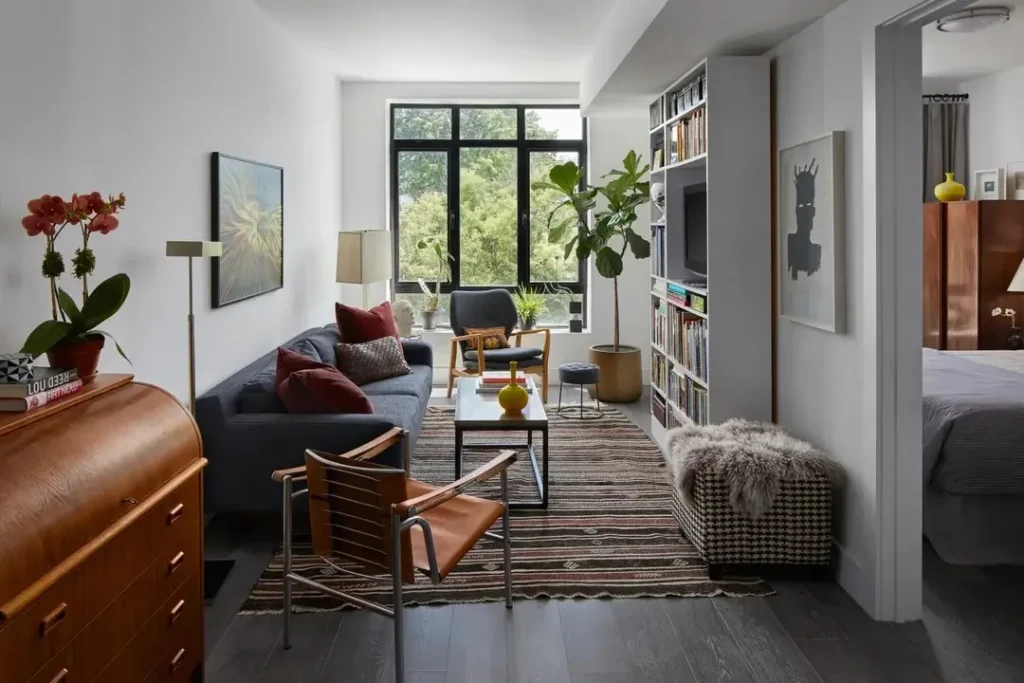
Key Idea: Break the room into zones instead of lining everything up against the walls.
You have a window at one end and a wall at the other. Every instinct says to push the sofa against the long wall to “open things up.” But that only makes the room feel longer and skinnier.
Instead, try this:
- Zone, don’t line up. Create two separate areas. Put a seating group near the window and a reading nook or small workspace near the entrance. Each zone feels intentional, and the hallway in between becomes a natural path.
- Use a narrow console behind a floating sofa. Pull the sofa away from the wall and place a shallow console table behind it. This creates a clear separation between the seating zone and the walkway without eating up space.
- Ditch the single ceiling light. One bright fixture in the middle makes a narrow room feel like a tunnel. Use floor lamps and wall sconces to draw the eye side to side. That breaks the length visually.
- Add a “landing strip” at the far end. A low bench or a pair of swivel chairs placed near the far wall gives you flexible seating. They don’t block the view, but they anchor the end of the room.
According to the NKBA’s 2026 trend report, 68% of homeowners now prefer “flexible zones” over traditional open concept layouts. Your narrow room is actually a perfect candidate for this shift.
The goal: Interrupt the sightline. Make the space feel like a series of useful pockets, not one long hallway.
2. L‑Shaped Rooms & The Corner Conundrum
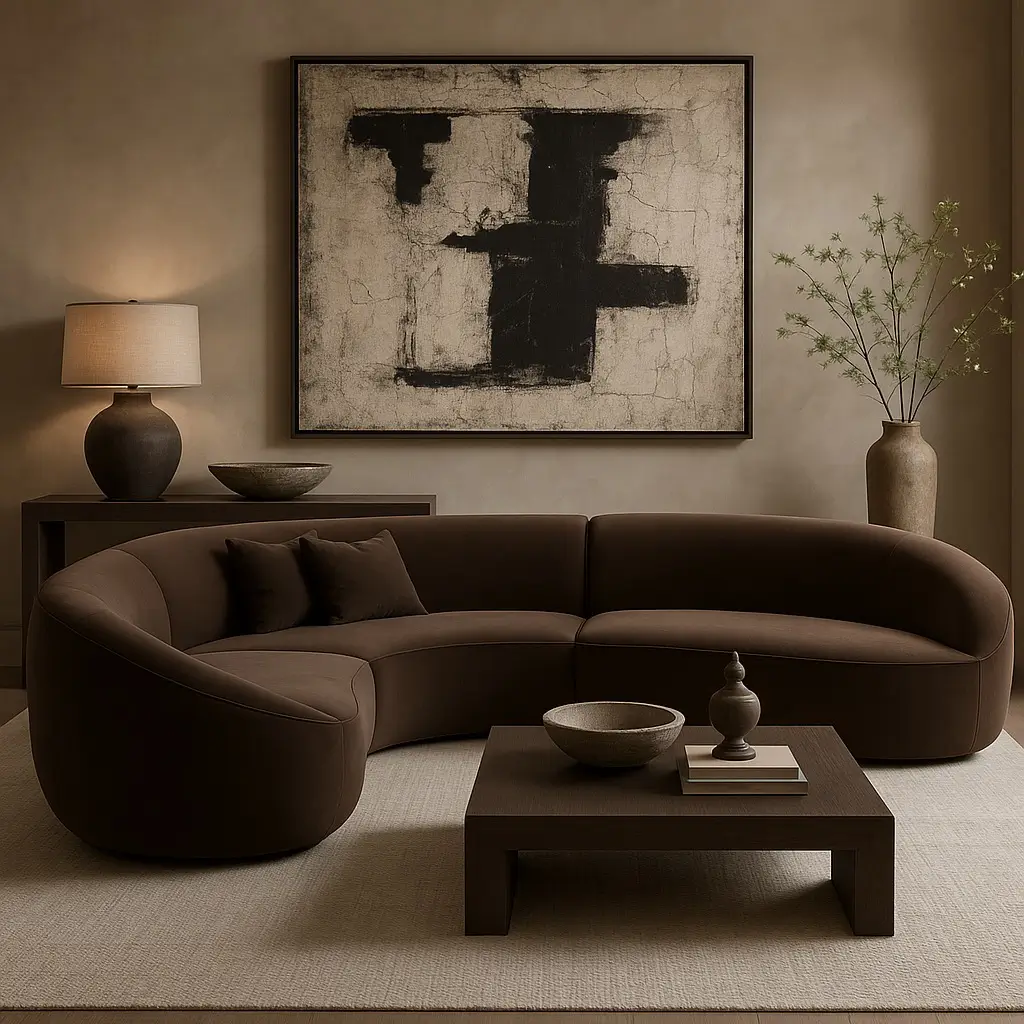
Key Idea: Let the room’s shape guide your furniture. Don’t fight the L.
An L‑shaped room often feels like two half‑rooms stuck together. People try to force one big seating area that spans both legs, and it never fits right.
Here’s how to make it work:
- Follow the L with your sofa. An L‑shaped sectional that matches the corner of the room anchors the space. It fills the corner without creating awkward gaps.
- Use a “bridge” piece if there’s a walkway. Sometimes a hallway or doorway splits the L. Put a large area rug under the main seating zone, then add a pair of swivel chairs that can face either the TV or the conversation area. Swivel chairs adapt to whatever you’re doing.
- Turn the smaller leg into a separate moment. Instead of trying to stretch the living room into that nook, give it its own job. A small wet bar, a home office desk, or a game table fits perfectly without making the living area feel oversized.
Lighting matters too. Hang a pendant light or use a table lamp in the smaller nook. That visual signal tells people “this is a different zone.”
The goal: Embrace the L. When you treat each leg as its own purpose, the whole room feels planned, not accidental.
3. Square Rooms with Off‑Center Features (Fireplaces / TV)
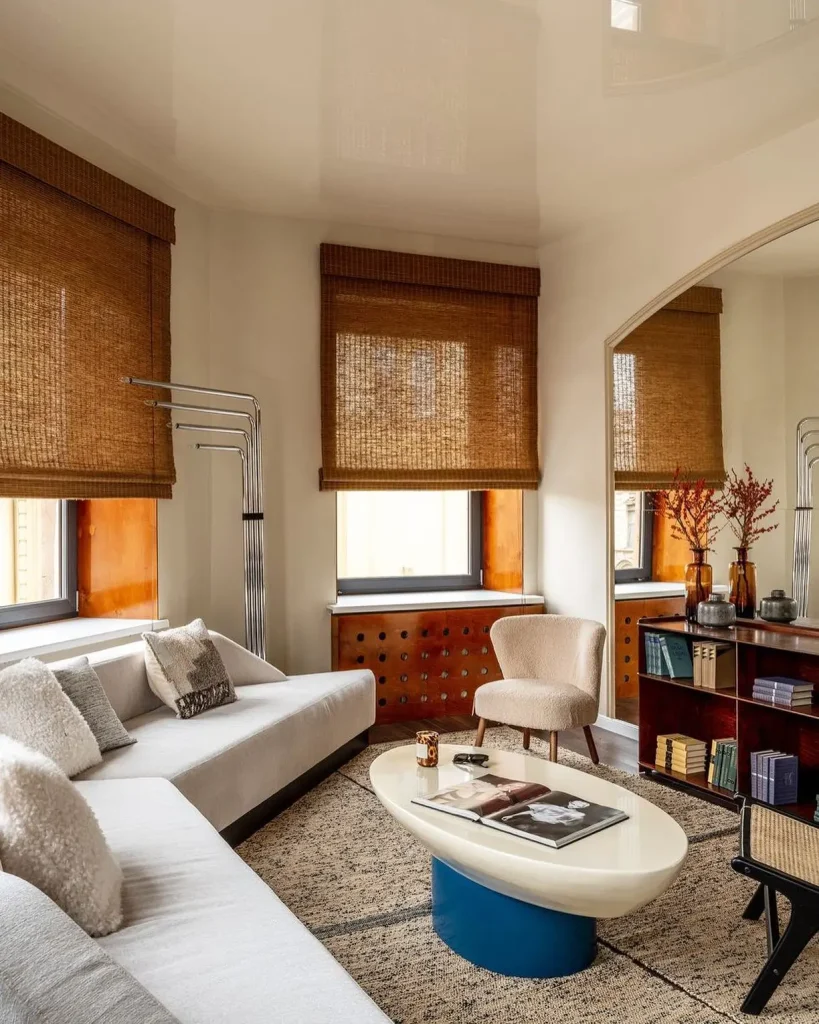
Key Idea: Balance the room with asymmetry, not forced symmetry.
A fireplace or TV that sits off‑center drives people crazy. The natural reaction is to try to center everything on it. That usually leaves a huge awkward gap on one side and a cramped feel on the other.
Try these moves instead:
- Stop centering the sofa on the fireplace. Place the sofa perpendicular to the fireplace. Then use a large piece of art or a gallery wall on the opposite wall to balance the visual weight. Your eye moves across the room, not just to the off‑center feature.
- Separate the TV from the mantel. In 2026, designers are moving away from mounting TVs over fireplaces. It puts the screen too high and makes the mantel feel crowded. Instead, use a standing easel TV stand or a media console on a nearby wall. Keep the mantel for art and decor.
- Angle the furniture toward the corner. Place the sofa and a couple of accent chairs at slight angles, aiming toward the corner where the fireplace and TV live. This creates a cozy cluster that feels intentional, even if the fireplace isn’t perfectly centered.
Designer Sarah Sherman Samuel often solves off‑center fireplaces with large organic‑shaped coffee tables. The table becomes the visual anchor, so your eye doesn’t obsess over the misaligned fireplace.
The goal: Make the room feel balanced without forcing everything to line up. Angled seating and smart wall treatments give you that balance.
4. Small & “Shoebox” Shaped Spaces
Key Idea: Stop trying to make it look bigger. Make it feel intentional.
When a living room is small and rectangular, people panic and try to shrink it further with tiny furniture. That usually makes the space feel cramped and cluttered.
Here’s a better approach for 2026:
- Go vertical. Hang curtains from ceiling to floor, and mount the rod wider than the window. This tricks the eye into thinking the room has more height and width.
- Use transparent furniture. An acrylic or glass coffee table takes up zero visual space. It holds your drinks and books without weighing down the room.
- Limit case goods. Apartment Therapy’s small spaces survey found that 72% of renters prefer multifunctional furniture. Follow their lead: stick to three main cabinets, consoles, or shelving units. More than that, and the room starts to feel stuffed.
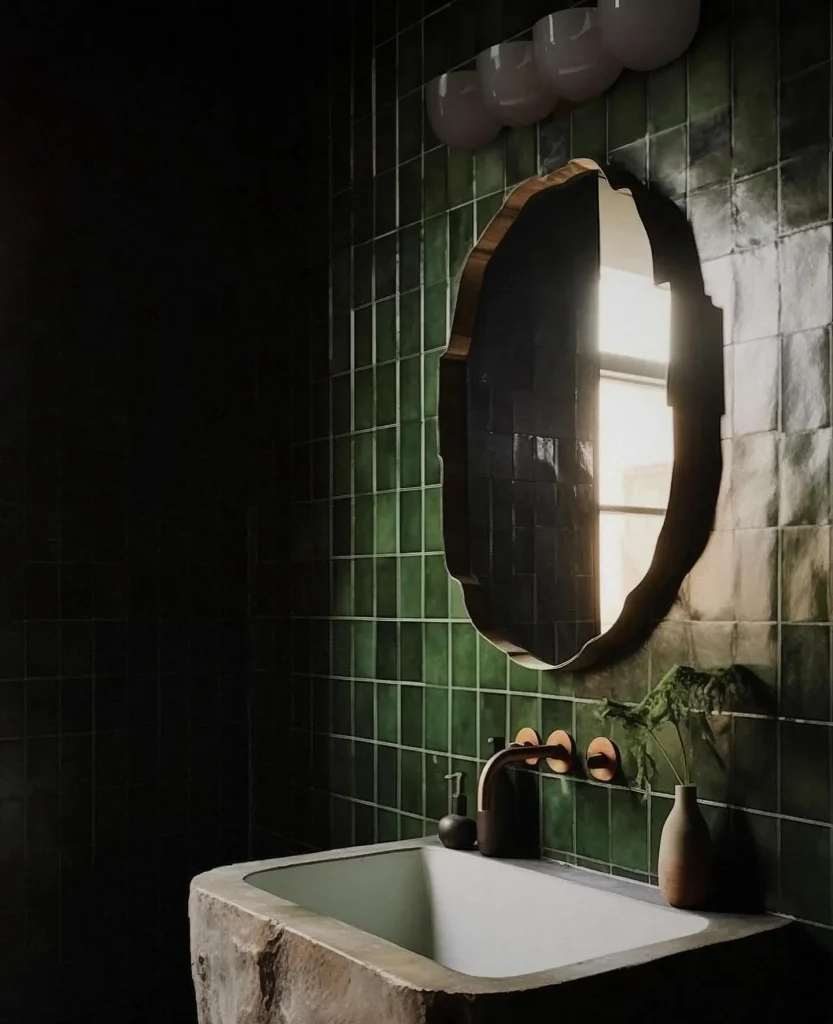
- Embrace the “jewel box” trend. Instead of trying to make the space feel big, paint it in a deep, rich color. In 2026, designers use moody hues to make small rooms feel luxurious and intentional. Think dark green, navy, or terracotta. The room feels like a cozy retreat, not a cramped box.
The goal: Stop fighting the size. Use color, scale, and transparency to create a space that feels designed, not downsized.
5. Rooms with Slanted Ceilings or Dormers
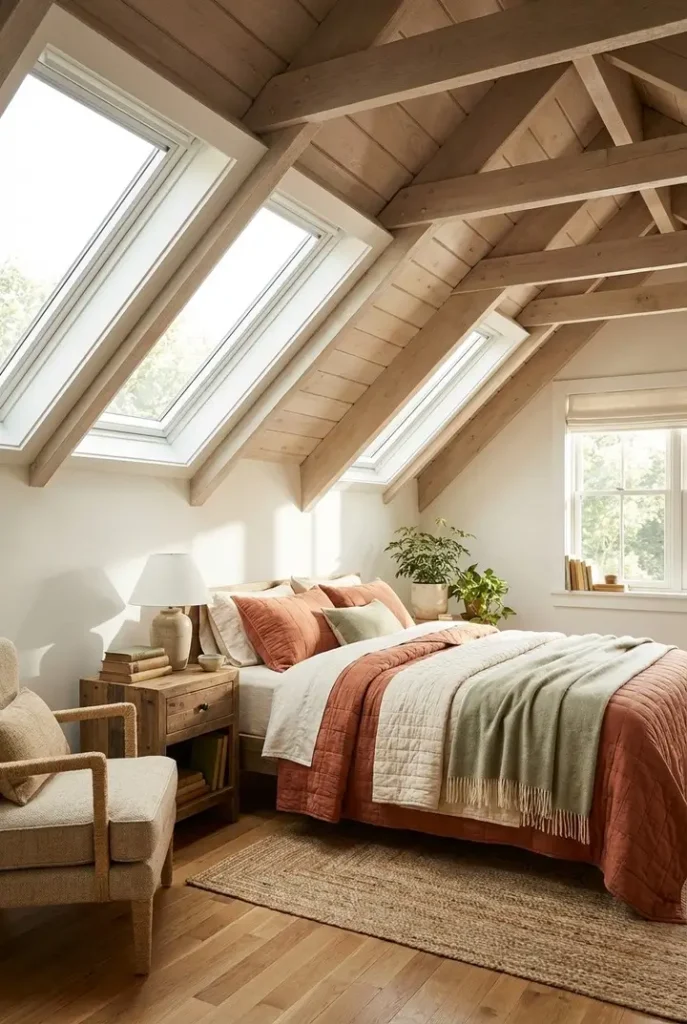
Key Idea: Put low things under the slope, and make the knee wall work for you.
Slanted ceilings create instant character, but they also create dead zones. The low side of the room often ends up empty because “nothing fits.”
Here’s how to use every inch:
- Choose low‑profile seating. Under the slope, use floor cushions, backless benches, or low‑slung sofas like the Ligne Roset Togo. You keep headroom where you need it, and the low furniture highlights the architecture.
- Create the look of built‑ins. If custom cabinets are out of budget, run a row of identical IKEA BESTA units along the knee wall. Paint them the same color as the wall to make them disappear visually, or a contrasting color to make them a feature.
- Turn dead zones into dedicated spots. That awkward space under the slope is perfect for a pet nook, a collection of large plants (biophilic design is huge in 2026), or a small library with low bookshelves.
Emily Henderson’s “Rule of Thirds” for art on slanted walls is worth remembering: hang art so its center sits about two‑thirds of the way up the vertical section of wall, before the ceiling starts to angle.
The goal: Make the slope part of the design, not a problem to hide. Low furniture and built‑in‑style storage turn an awkward ceiling into an asset.
6. Rooms with Multiple Doorways (Pass‑Through Spaces)
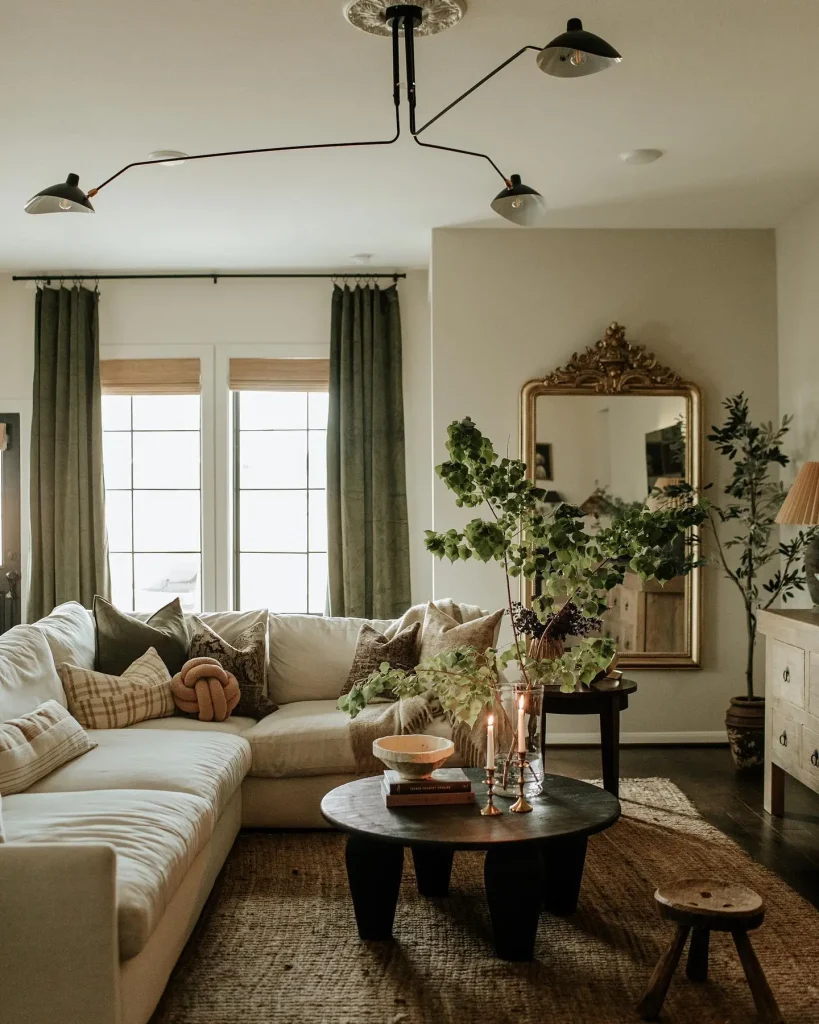
Key Idea: Create an island of furniture in the middle, and let the pathways flow around it.
A room with doors on two or three sides feels like a hallway people live in. Furniture gets shoved against walls, and there’s never a clear seating zone.
Fix it with these steps:
- Use the “arrow” layout. Place the sofa parallel to the main traffic flow, right in the middle of the room. Add a sofa table behind it to catch keys, remotes, or drinks. Now you have a solid seating zone with a clear path around both ends.
- Bring in symmetry. Use matching armchairs on either side of the biggest doorway. That creates a sense of order and makes the chaos of multiple doors feel intentional.
- Anchor with a rug. A large, durable rug (wool or indoor/outdoor) defines the seating zone. It signals to your brain, “This is the room. The floor around it is the hallway.”
- Choose rounded furniture. In high‑traffic areas, sharp corners are a hazard and they visually block flow. An oval coffee table or a curved sofa keeps movement smooth.
Chris Loves Julia, a popular design blog, often handles pass‑through rooms by using light‑colored rugs to lift the seating zone off the floor. The contrast between the rug and the surrounding floor makes the path feel like a separate hallway.
The goal: Make the seating area feel like its own room, even if it’s surrounded by doors. A central island of furniture gives you that clarity.
Conclusion
No matter how awkward your room shape, you have more options than pushing the sofa against the longest wall. The three things that matter most: identify your shape—narrow, L‑shaped, slanted, or full of doors—zone the space with rugs and floating furniture, and scale your pieces to fit the obstacles.
Start by sketching your floor plan with measurements. Mark where doors swing, where traffic naturally flows, and where the fireplace or TV sits. Then pick the idea that matches your shape.
Which of these 15 layouts feels like the right fit for your home? Drop a comment below, or pin this guide to your “Home Layout” board so you have it when you’re ready to move furniture.
With these living room layout ideas for awkward room shapes 2026, you can stop fighting the floor plan and start enjoying a home that actually works for you.

- 17 Classy Living Room Ideas for a Cozy Elegant Look - April 23, 2026
- 16 Dark Moody Living Room Ideas That Feel Rich and Warm - April 22, 2026
- 14 Elegant Bedroom Trends for 2026 You’ll Love - April 22, 2026

