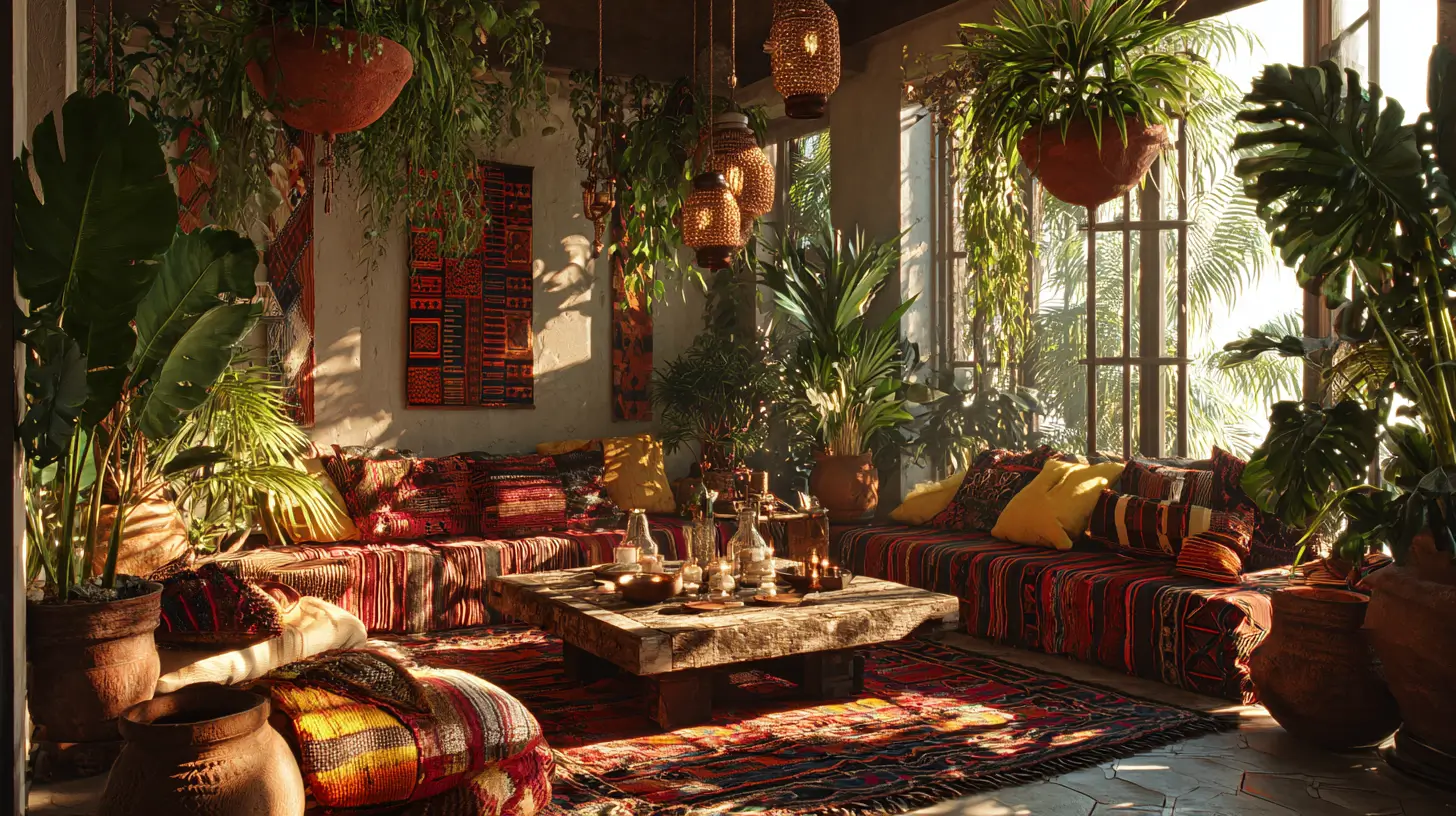
Your home should tell your story. And in 2026, one of the most exciting ways to do that is through Afrohemian decor. It is a style that turns your walls, floors, and plants into something that feels personal, warm, and full of life.
But here is the problem most people run into. You love bold patterns. You love plants. But every time you try to put them together, something feels off. Too busy. Too random. Like you threw a bunch of things in a room and hoped for the best.
That is exactly what this article fixes.
You will get 15 specific, real ideas for building an African boho living room that feels curated, not chaotic. Each idea tells you which plant to pair with which print, what to buy, and what it will cost.
And the timing is right. Pinterest reported a 220% jump in searches for Afrohemian home decor going into 2026. Over the past six years, 88% of Pinterest trend predictions came true. This is not a passing phase. It is a full design movement, and people are ready for it.
What Is Afrohemian Decor Anyway?
Afrohemian decor mixes two styles. The first is Afrocentric design, which is inspired by African art, bold patterns, handcrafted textiles, and visual heritage. The second is Bohemian style, which is relaxed, layered, and eclectic.
Put them together and you get something that feels lived in, soulful, and expressive.
It is not the boho style from the early 2000s. That was all macrame and muted beige. Afrohemian decor goes deeper. It uses richer colors, stronger patterns, and materials that have real cultural meaning. Think handwoven baskets, mudcloth pillows, carved wood stools, and lush greenery in terracotta pots.
And plants are not just decoration here. They are part of the design. Interior design studio Urbane Eight put it well: plants are not just accents in Afrohemian spaces, they are woven into the story of the home.
One important note before you start. Interior designer Reynolds, quoted in Apartment Therapy in February 2026, said it clearly: source from African artisans or Black-owned makers when you can. It adds authenticity and supports the communities behind this style.
The 5 Foundations You Need to Know Before You Start
Before you buy anything, get these five rules into your head.
1. Start with a warm color palette. Ochre, clay, burnt sienna, deep brown, olive, and sand are your base colors. Balance them with black accents so nothing looks washed out.
2. Layer your textures. Rattan, jute, clay, and woven fibers are your best friends. Mix them together and the room feels rich even before you add prints.
3. Pick one anchor piece first. Choose one strong focal point, a statement rug, a large piece of art, or a woven wall hanging. Then build everything else around it.
4. Choose your plants before you style. This is a real rule from professional designers. Plants take up space. If you add them last, the room will feel crowded. Place them first, then fill in around them.
5. Less is more. You do not need dozens of patterned pillows. You need a few really good pieces that tell a story. That quote comes directly from Reynolds at Apartment Therapy, and it is the single best piece of advice for this style.
15 Afrohemian Home Decor Ideas with African Prints and Plants
Idea 1: Start with a Mudcloth Anchor Piece
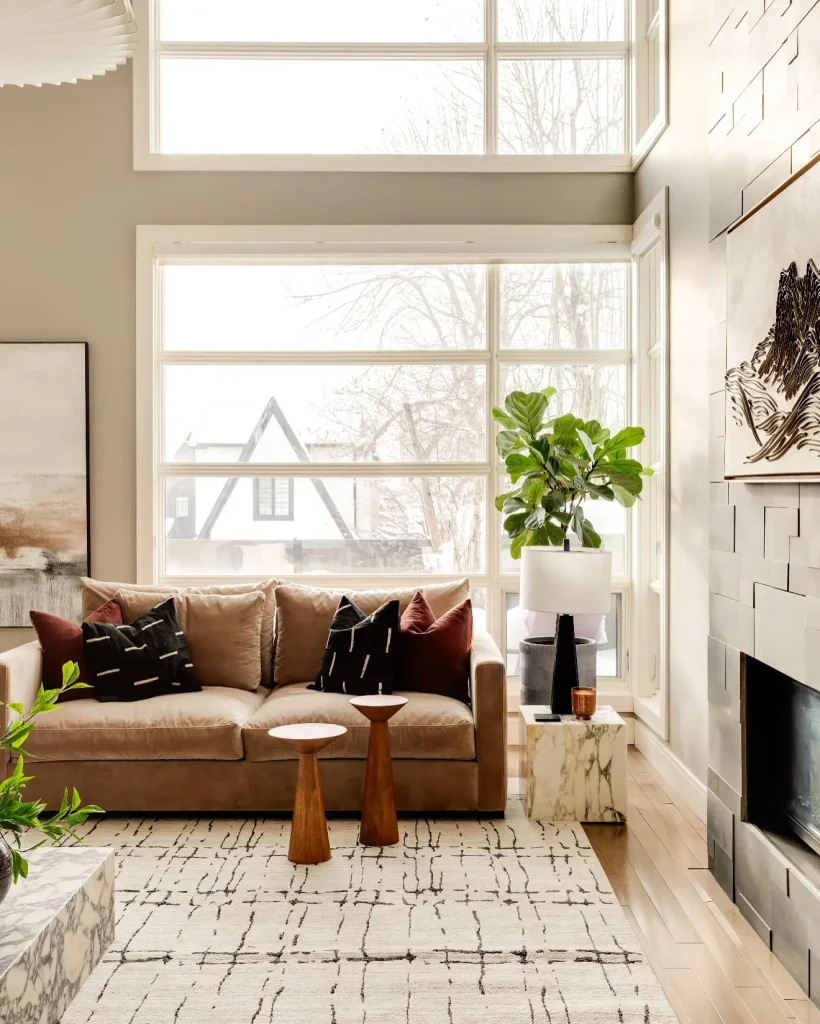
Picture a cream sofa, one geometric pillow, a framed piece on the wall, and a tall plant in the corner. That is the whole idea. Simple. Strong. Done.
Mudcloth comes from Mali in West Africa. It is a hand-dyed cotton fabric with geometric patterns in black, white, and earth tones. It looks bold but never loud. And it works as a pillow, a framed art piece, a table runner, or a throw draped over a chair.
How to use it: Put a mudcloth pillow on a neutral sofa. Frame a small mudcloth square and hang it on the wall above. That is your anchor.
Plant pairing: A Monstera Deliciosa in a terracotta pot next to the sofa. The dark green leaves contrast with the pale geometric pattern and make the whole setup feel grounded.
Where to buy: Search “authentic mudcloth Mali” on Etsy. You can also find it at AARVEN and local African craft markets.
Cost: A cream sofa + mudcloth pillow + framed fabric + Monstera in a terracotta pot can cost under $150 total when you shop smart.
Idea 2: Layer a Kuba Cloth Pattern on Your Walls
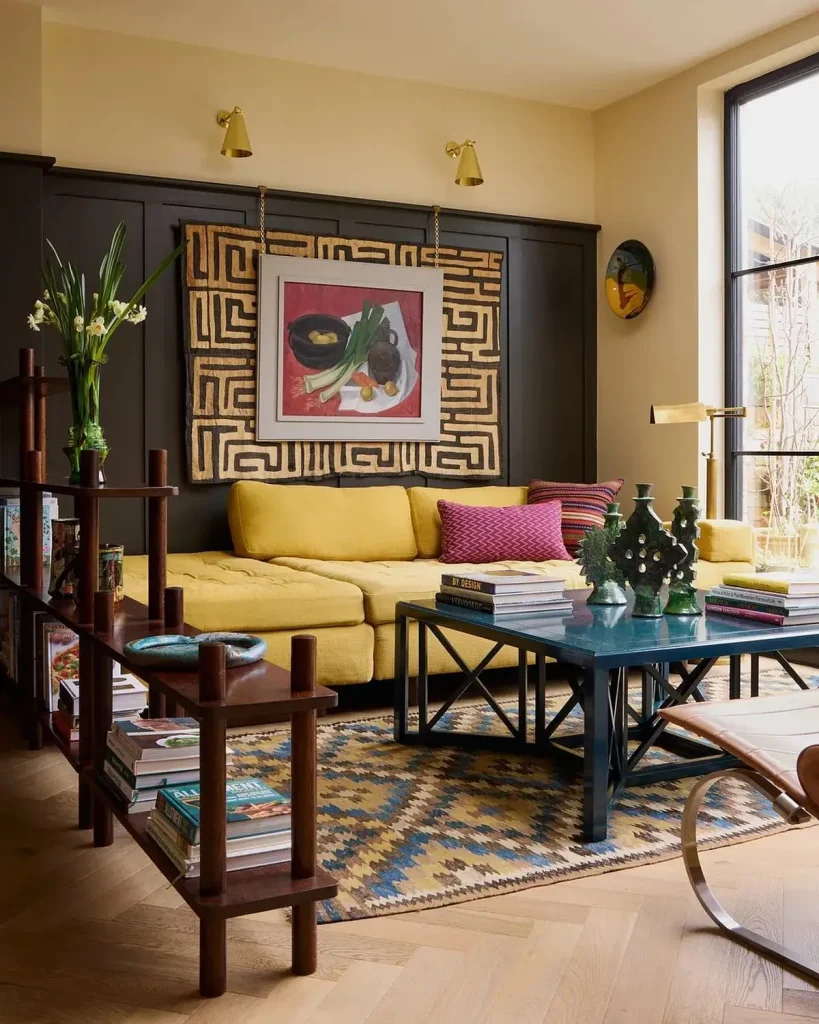
Kuba cloth comes from the Congo. It is handwoven from raffia palm fiber and covered in graphic, geometric patterns. Interior designer Beth Diana Smith, CEO of Beth Diana Smith Interior Design, said it well in Apartment Therapy: large scale framed pieces and wall hangings create instant impact and serve as a powerful focal point.
Kuba cloth does exactly that.
How to use it: Frame a piece and hang it as oversized wall art. Or use a Kuba cloth fabric panel as a curtain. Both options fill a wall with pattern without feeling heavy.
Plant pairing: A rubber plant or snake plant on a wooden side table beneath the framed piece. The upright leaves echo the vertical lines in the Kuba pattern.
Budget tip: You do not need to buy original Kuba cloth. Search “Kuba cloth print fabric” on Spoonflower or Amazon. Cut it to size and drop it in a $15 IKEA Ribba frame. It looks the same on a wall.
Idea 3: Build an Ankara Print Gallery Wall
Ankara fabric, also called wax print fabric, is bright, patterned, and full of personality. It comes in hundreds of color combinations and works in almost any room.
A gallery wall using Ankara prints, wooden masks, and flat woven baskets creates a layered, textured display that feels collected over time rather than bought in one afternoon.
How to build it: Pick 3 to 5 items at different heights. Mix a framed Ankara print, a small wooden mask, and two flat baskets. You do not need matching frames. Mix wood tones and simple black frames for an eclectic look.
Color tip: Pull one color from your Ankara fabric and repeat it in your plant pots. It ties the wall to the rest of the room.
Plant pairing: A trailing Pothos hanging above or beside the gallery wall. The vines soften the edges of the frames and add organic movement to all those straight lines.
Where to buy Ankara fabric: Search “Ankara fabric by the yard” on Etsy or visit a local African fabric shop.
Idea 4: Use Kente Cloth as a Statement Textile
Kente cloth is one of the most recognizable African textiles in the world. It comes from the Akan people of Ghana and is traditionally woven in bold stripes of gold, green, red, and black.
It deserves respect. Use it as art, not as a costume.
How to use it: Drape a Kente throw across the foot of a bed or the arm of a sofa. You can also use it as a table runner on a wooden dining table. Let it be the color star of the room and keep everything else in neutral, earthy tones.
Plant pairing: A Bird of Paradise plant. Its bold, upright leaves and tropical energy match Kente’s strong visual presence without competing with it.
Key rule: Keep the surrounding palette simple. Terracotta walls, natural wood furniture, and neutral cushions let the Kente cloth speak without the room looking chaotic.
Idea 5: Choose Your Plants Before You Style Anything Else
This one is not optional. It is the rule that most people skip, and it is exactly why their Afrohemian room ends up feeling cluttered.
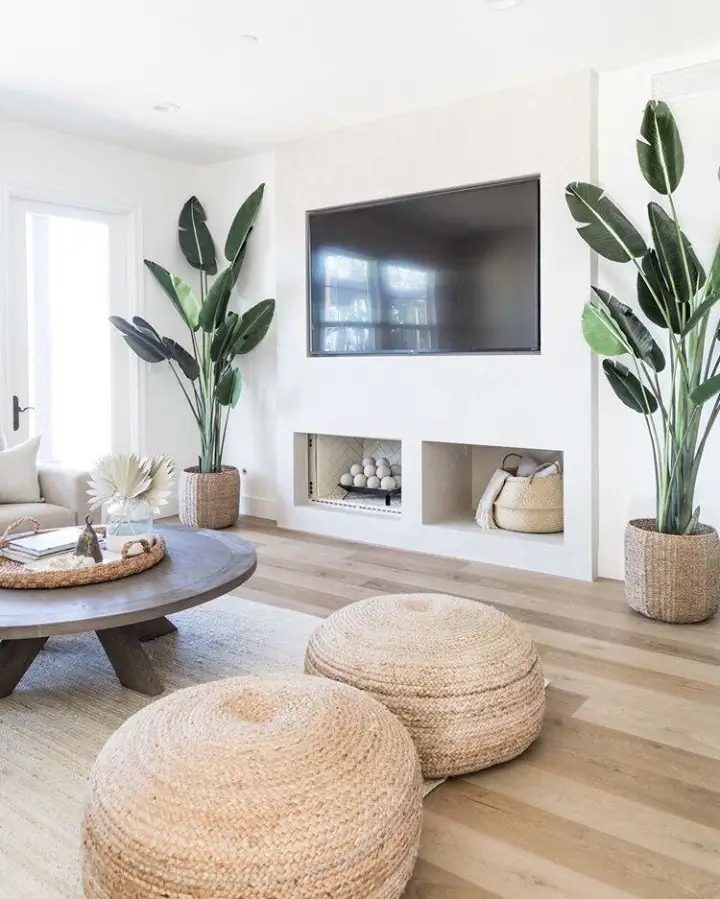
Plants take up real space. A tall Bird of Paradise in a large terracotta pot can anchor an entire corner. A cluster of three plants at different heights can fill a wall without a single piece of art. If you add plants last, after the furniture and textiles and art are already in place, you will run out of room and the plants will look squeezed in.
Best plants for Afrohemian decor:
- Monstera Deliciosa: bold, dramatic leaves for statement spaces
- Bird of Paradise: tall, architectural, great for corners
- Snake plant: upright, low maintenance, works in almost any light
- Parlor Palm: soft and tropical, adds height without bulk
- ZZ plant: low maintenance, glossy leaves, great for lower light
Pot rule: Use earthy pots. Terracotta, unglazed clay, or woven baskets. Avoid shiny ceramic or plastic pots. They break the organic feel.
Placement tip: Group 2 or 3 plants of different heights in one corner instead of spreading single plants around the room. A grouped arrangement reads as intentional. Scattered plants read as an afterthought.
Idea 6: Build Your Room on a Terracotta and Ochre Foundation
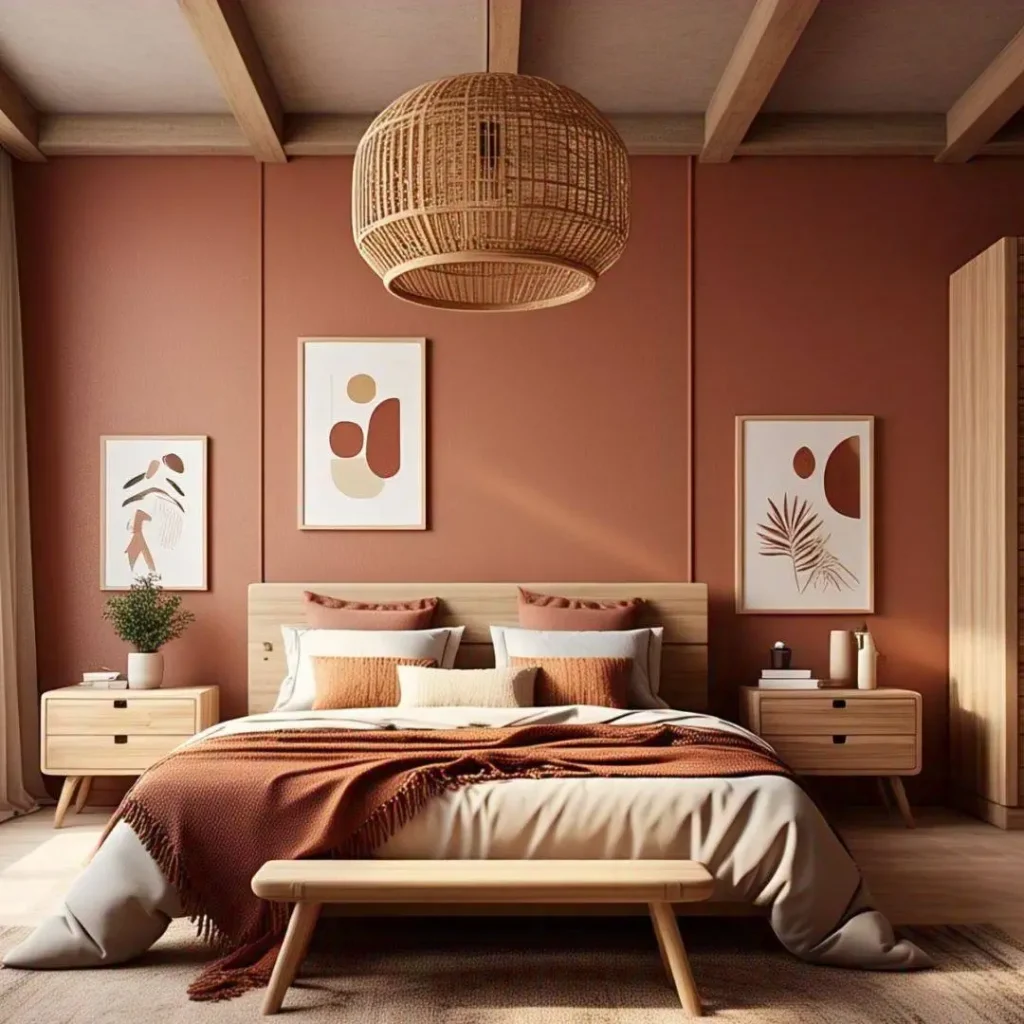
The Afrohemian color palette is not complicated. It mimics natural landscapes. Terracotta, rust, clay, deep brown, mustard, and olive green are the core colors. They echo African pigments and natural earthiness.
You do not need to repaint your whole home. One terracotta accent wall changes the entire mood of a room. A terracotta-colored armchair does the same thing on a smaller budget.
How to layer the palette:
- Terracotta on one wall or in a large chair
- Ochre in cushions, lamp shades, or a side table
- Olive green through plants and textiles
- Deep brown through wood furniture and rattan accents
Plant pairing: A Calathea Orbifolia in a terracotta pot. Its cream and green striped leaves look stunning against a terracotta wall. The colors echo without clashing.
Budget reality: According to research from DIY Beyond, an Afrohemian makeover can cost between $100 and $1,500 depending on your choices. Handmade textiles and woven baskets sit at the affordable end. You do not need to spend big to get the look right.
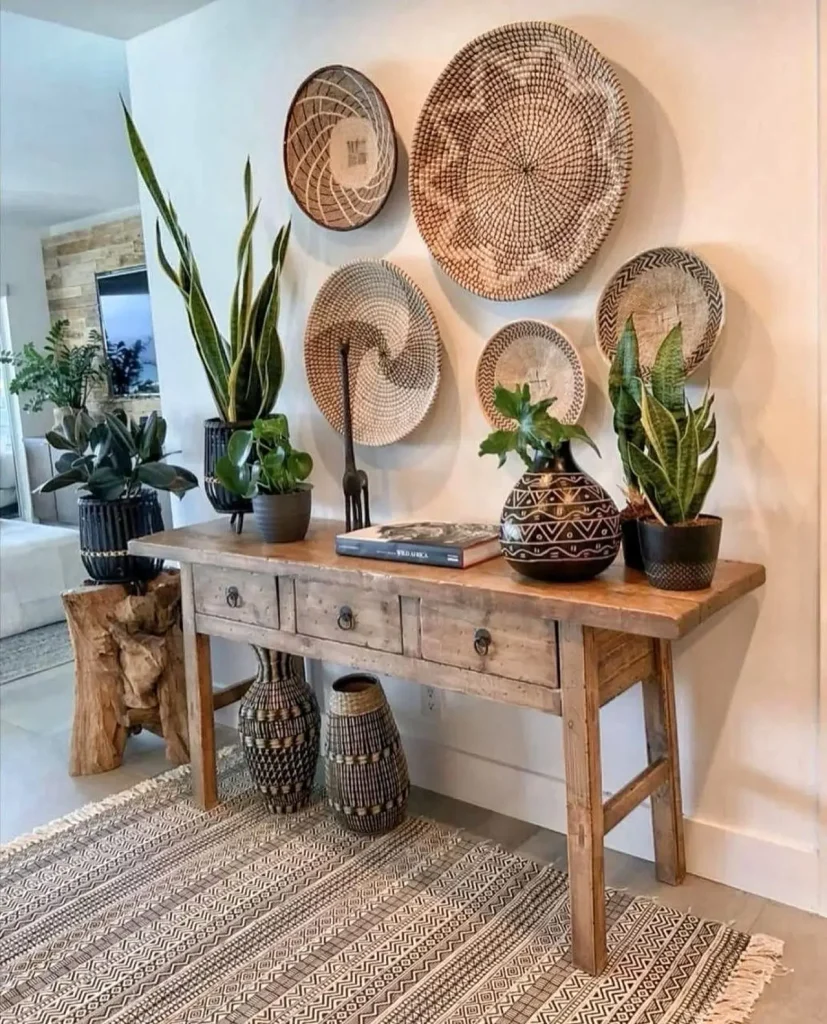
Idea 7: Hang Woven Baskets as Wall Art
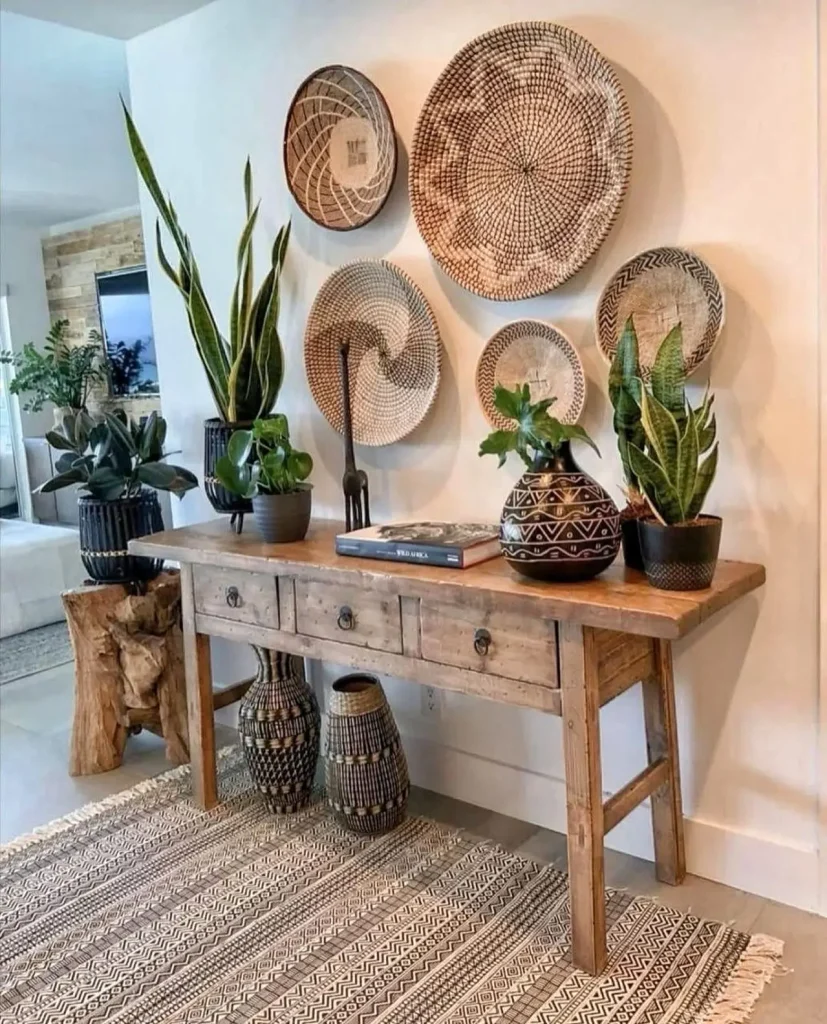
Woven baskets are one of the most practical things you can do in an Afrohemian home. Beth Diana Smith said in Apartment Therapy that baskets in varied sizes and patterns offer unexpected storage while adding texture and cultural storytelling at the same time.
They look good. They are useful. And they are relatively affordable.
How to arrange them: Use 5 to 9 baskets in an asymmetrical cluster. Start with the largest basket in the center. Build outward with smaller ones. Do not line them up in a perfect grid. The informal arrangement looks more natural and authentic.
Mix basket types: Try flat Binga or Tonga baskets from Zimbabwe alongside round coiled baskets from West Africa. The difference in shape and texture makes the whole display more interesting.
Plant pairing: Hang a small trailing Pothos or String of Pearls inside one of the hanging woven baskets. It turns the basket into a living art piece and blurs the line between decor and nature.
Where to buy: AARVEN, Ten Thousand Villages, Novica, or Etsy. Search “African wall basket” for a wide range of options.
Idea 8: Layer Two Rugs for Depth
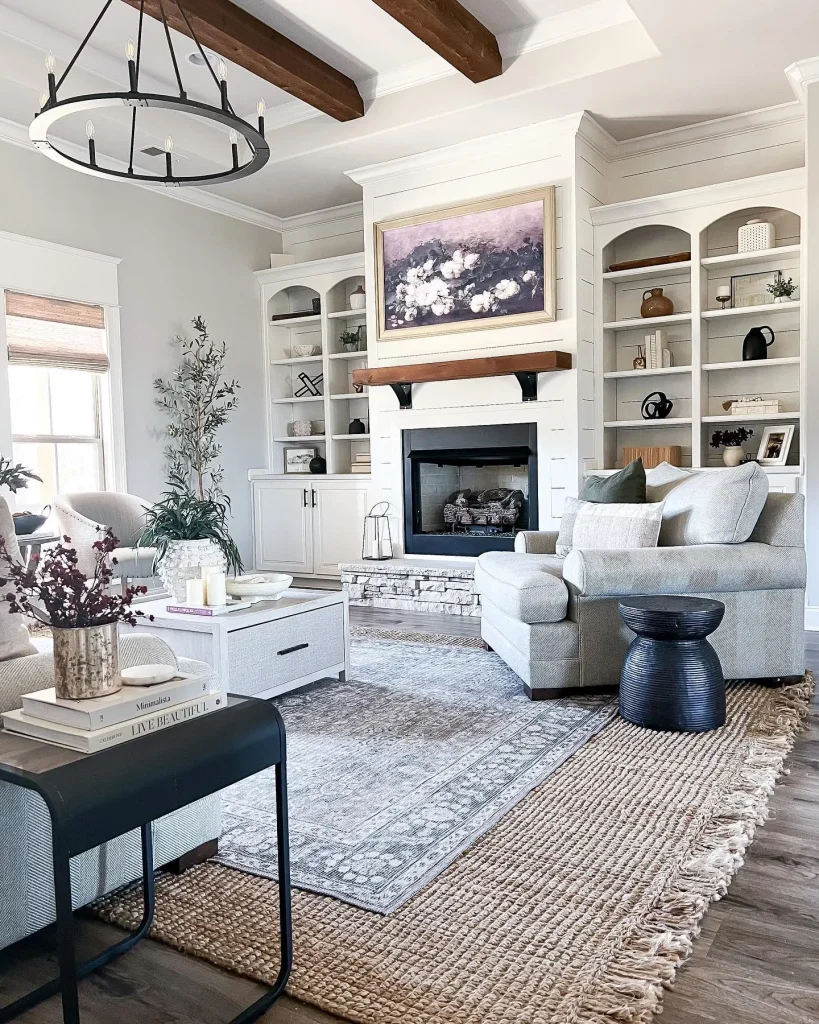
One rug is a floor covering. Two rugs layered together is a design statement.
The formula is simple. Place a natural fiber rug as your base, then layer a patterned rug on top of it at a slight angle. The natural rug grounds the space. The patterned rug adds color, print, and personality.
Base rug: Jute or sisal in natural beige. IKEA’s LOHALS rug is a popular and affordable option that works perfectly here.
Top rug: An African-inspired geometric print or a mudcloth pattern rug. Look for one that picks up the ochre or terracotta tones already in your room.
Size rule: The top rug should be 60 to 70 percent the size of the base rug. You need both visible for the layering effect to work.
Plant pairing: A large floor plant like a Fiddle Leaf Fig or Majesty Palm at the corner of the layered rugs. It anchors the whole textile arrangement and stops it from feeling flat.
Idea 9: Style a Plant and Print Shelf Display
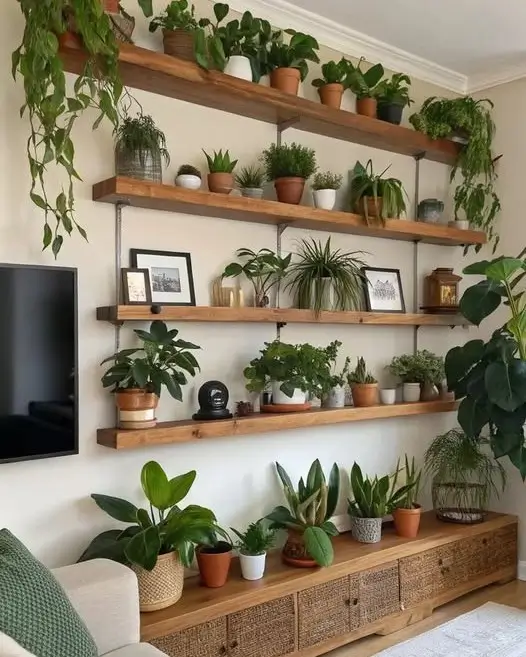
A wooden or rattan shelf unit is one of the easiest ways to build an Afrohemian vignette without committing to a full room makeover.
The trick is in how you fill each shelf. Do not just line things up. Layer them.
The formula for each shelf:
- One plant (proportional to the shelf depth)
- One cultural object (a carved wooden figure, a small ceramic, or a basket)
- One folded textile or a book with an African art cover leaning against the back
Print tip: Lean a small framed Ankara or mudcloth print against the back of one shelf. It adds pattern without overpowering the objects in front of it.
Best plants for shelves: Small succulents, trailing Pothos, or compact snake plants. These stay in proportion and do not crowd the shelf.
Visual rule: Group items in odd numbers. Three objects per shelf looks better than two or four. It is a basic design principle that applies everywhere.
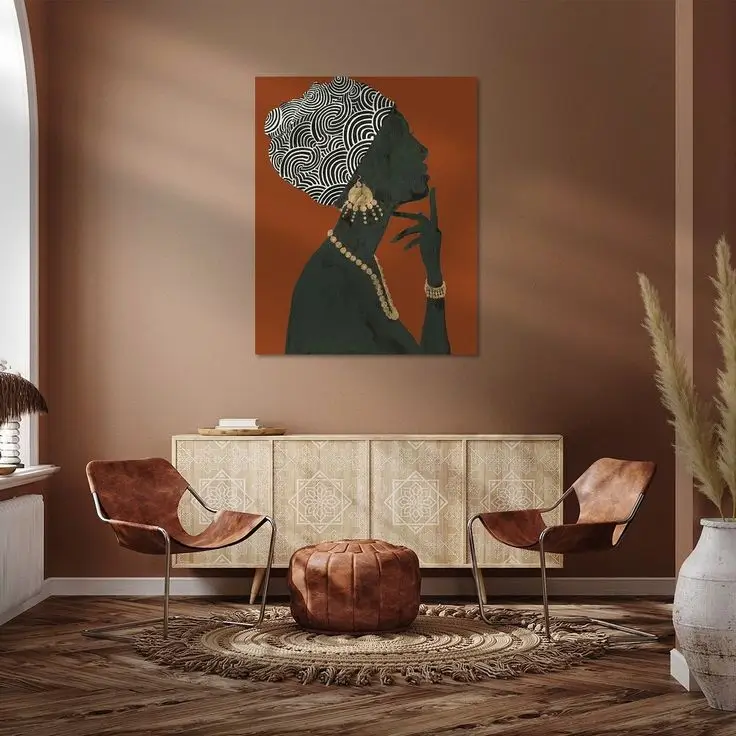
Idea 10: Use One Piece of Oversized African Wall Art as Your Room Anchor
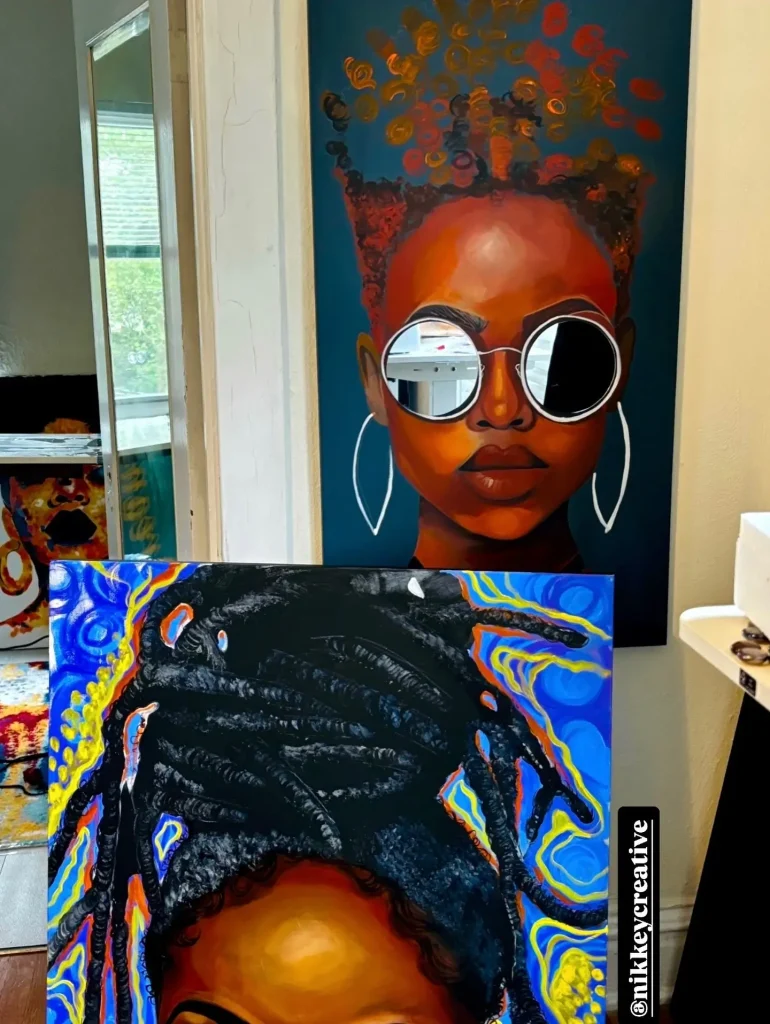
Some rooms need one strong moment. One piece of art that tells the whole story of the space.
In an Afrohemian room, that piece should be large. Not medium. Large.
Beth Diana Smith explained it in Apartment Therapy: large scale framed pieces or wall hangings create instant impact and serve as a powerful focal point. Colorful imagery and bold patterns help visually anchor the Afrohemian style and bring cultural storytelling into the space.
Options to consider:
- Abstract paintings in earthy tones celebrating Black identity
- A large Kuba cloth wall hanging
- A portrait in bold, saturated color
- A framed African wax print in an oversized format
Sizing tip: The art should be at least two thirds the width of the sofa or bed it hangs above. Smaller than that and it will look lost on the wall.
Plant pairing: Two matching tall snake plants, one on each side of the artwork. They frame the piece like living columns. No extra styling needed.
Where to find it: Etsy (search “African woman abstract art print”), Society6, or find Black artists selling directly on Instagram.
Idea 11: Build a Cozy Low-Seating Floor Nook
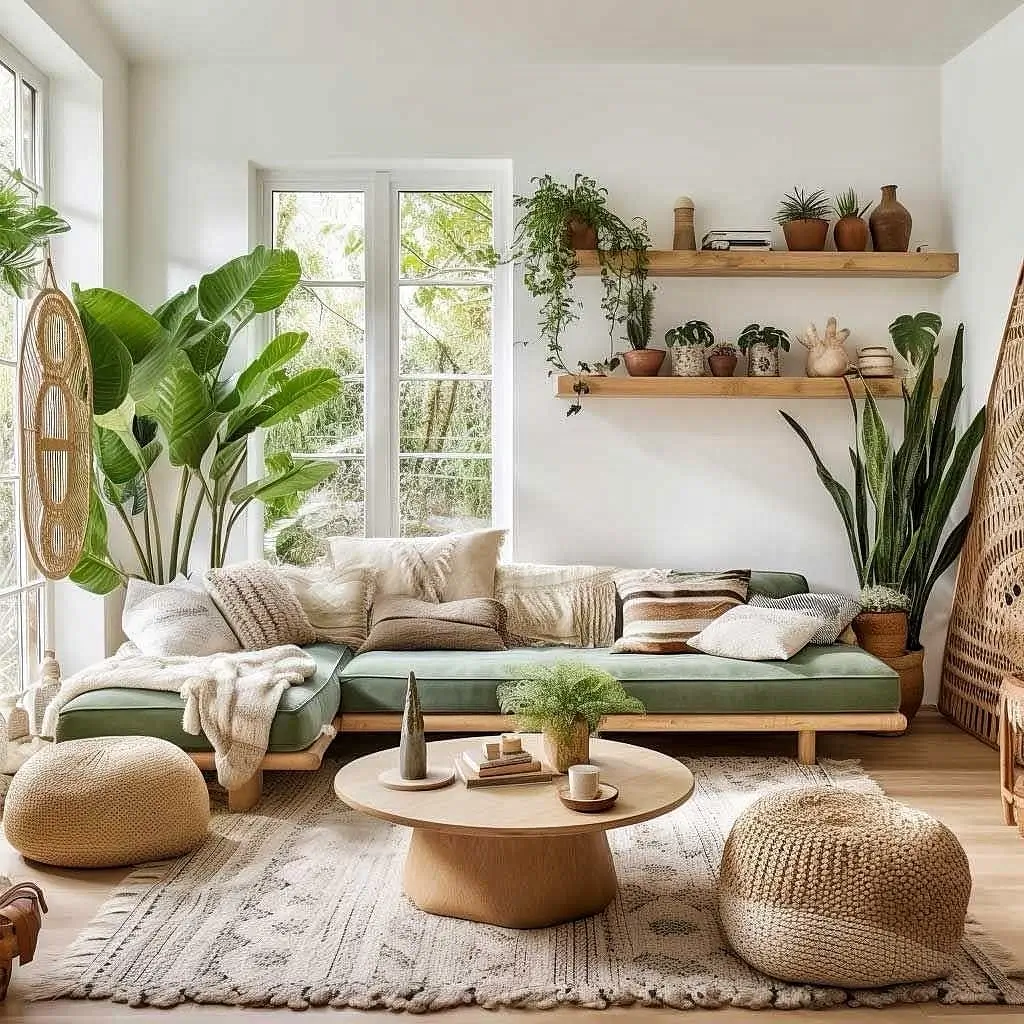
Low seating changes the feel of a room. It makes everything slower, warmer, and more relaxed. And relaxed is at the core of the Afrohemian style.
You do not need to buy new furniture for this. A Moroccan floor pouf, a few stacked cushions in Ankara print fabric, and a flat woven basket used as a side table is enough to create a full nook.
How to build it:
- Start with a jute rug as the base
- Add a floor pouf or a low chair
- Stack two or three Ankara print cushions on the seating
- Drape a mudcloth throw over one side
- Use a flat woven basket next to it as a side table for a candle and a cup
Plant pairing: A Parlor Palm or Boston Fern in a woven basket beside the nook. The soft, arching fronds frame the seating and add lush texture at ceiling height without taking up floor space.
Lighting: Add a rattan floor lamp nearby. The warm amber light it casts makes the whole nook feel like a proper retreat, not just a corner of the room.
Idea 12: Bring African Prints into the Bedroom Through Bedding
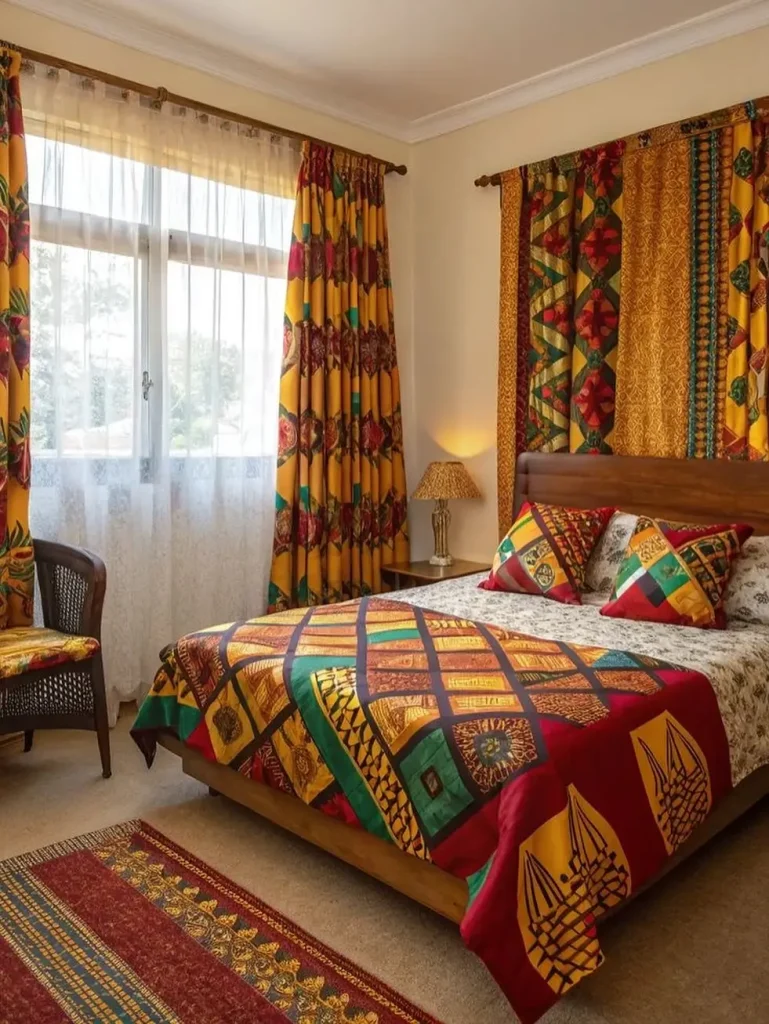
The bedroom is often the last room people think about when it comes to bold decor. But it is actually the easiest room to start with.
You do not need to repaint. You do not need new furniture. You just need to change what is on the bed.
How to do it:
- Start with neutral base bedding in white or natural linen
- Layer a Kente or Ankara print throw across the foot of the bed
- Add 2 or 3 mudcloth or African print cushions against your regular neutral pillowcases
- Stop there. Do not pile on more.
The rule: A bedroom should feel calm. Two or three African print pieces against a neutral base is enough. More than that and the room starts to feel restless.
Plant pairing: A Calathea Medallion or Peace Lily on the bedside table. Both plants handle lower bedroom light well. And the Calathea’s boldly patterned leaves naturally echo the print textiles on the bed. It is a small detail, but it makes the whole room feel intentional.
Bonus: Peace Lily is also an air-purifying plant. That is a practical benefit on top of the visual one.
Idea 13: Group African Ceramics and Handcrafted Pottery with Small Plants
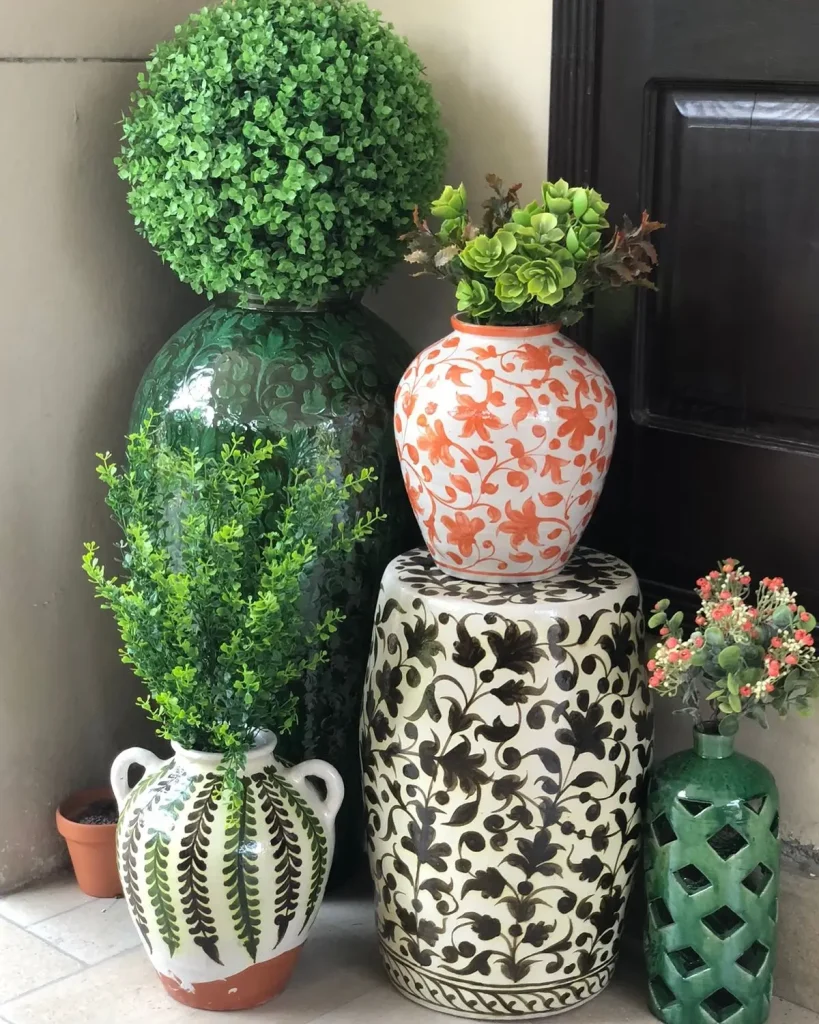
Handcrafted pottery is one of the easiest ways to add Afrohemian character to a room without spending a lot of money. And the rule here is simple: they do not need to match.
In fact, variety is the whole point. Slight differences in glaze, color, and shape make a collection feel authentic. A perfectly matched set of pots looks mass-produced. A cluster of slightly different ones looks collected.
How to style it:
- Group 3 to 5 handmade ceramic pots of different heights on a windowsill, console table, or dining table
- Plant each one with a succulent, small cactus, or air plant
- Mix glazed and unglazed surfaces for contrast
- Place the tallest pot at the back, shortest in front
Good news for budget shoppers: Basic terracotta pots from any garden center look authentically Afrohemian when grouped together like this. You do not need to buy expensive artisan pieces to make this work. Though if you want the real thing, search “African ceramic pot handmade” on Etsy.
Idea 14: Pair Natural Materials with African Print Textiles
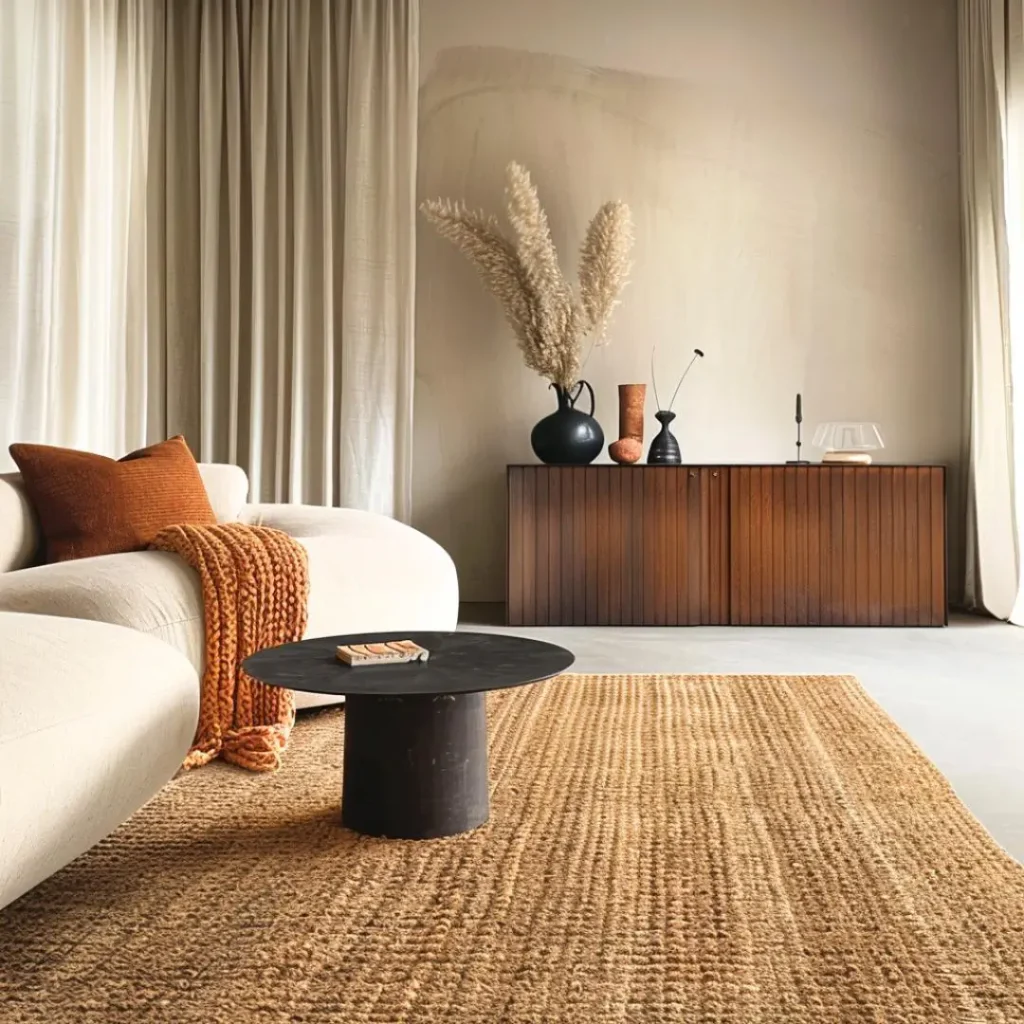
Natural materials are what stop an Afrohemian room from looking like a fabric store exploded. They ground all the pattern and color in something organic and earthy.
Rattan, cane, bamboo, sisal, jute, raw wood, carved wood, terracotta, and handmade ceramics all belong here. Use them as furniture, frames, lamp bases, shelving, and pot covers.
Practical combinations that work:
- Rattan chair plus an Ankara print cushion
- Wooden coffee table plus a mudcloth table runner
- Jute lampshade next to a wax print fabric panel
Plant pairing: A Bamboo Palm or Chinese Evergreen in a rattan plant stand. The rattan echoes the woven textures in the textiles and the bamboo material in the plant reinforces the natural theme.
Budget tip: IKEA’s rattan and bamboo range works well as a base. The BUSKBO rattan armchair, the JASSA range, and the SINNERLIG bamboo pieces are all affordable starting points. Layer African prints on top of them and the whole thing comes together quickly.
Idea 15: Build a Complete Plant and Print Corner from Scratch
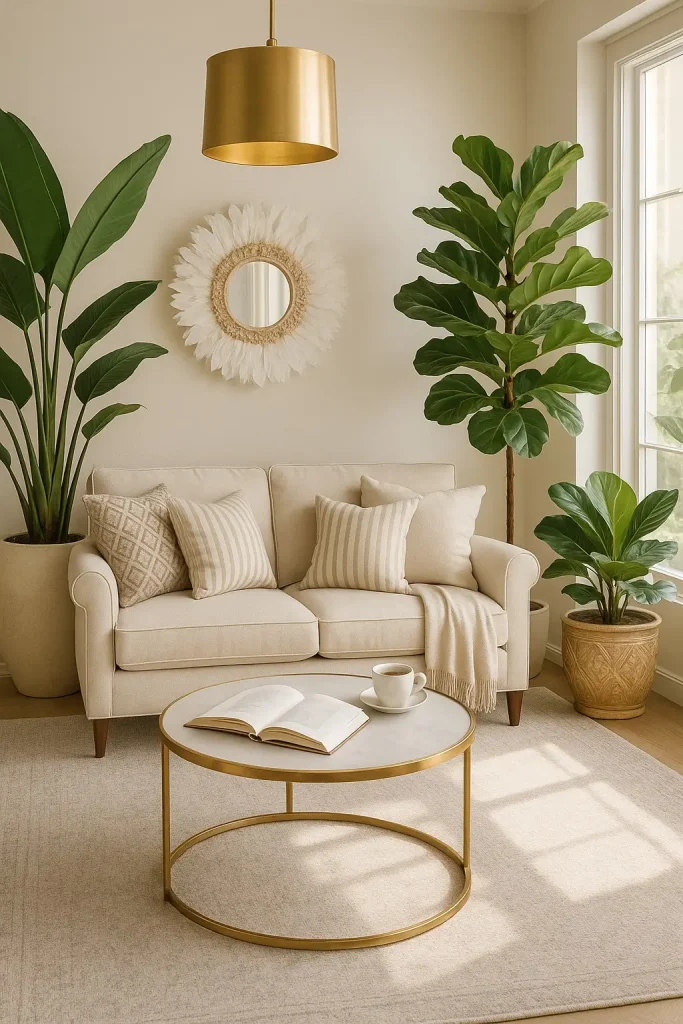
This is the starter project. You can do it in a weekend. You can do it for under $200. And when it is done, you will have a corner of your home that looks completely transformed.
Step by step:
- Pick a corner near a window. Natural light keeps your plant healthy and makes the whole corner feel alive.
- Lay a jute base rug first. Then layer a smaller African print or geometric patterned rug on top at a slight angle.
- Add a tall floor plant. A Bird of Paradise or Fiddle Leaf Fig in a terracotta pot works best here. Place it right in the corner.
- Set a small wooden or rattan side table next to the plant.
- Hang one piece of African wall art above the side table, or create a small woven basket cluster on the wall.
- Add a floor pouf or low chair nearby. Drape one mudcloth throw over it and place one African print cushion on top.
- Finish with a rattan floor lamp. Warm light pulls everything together.
Estimated costs:
- Jute base rug: $20 to $40 (IKEA LOHALS)
- Patterned top rug: $25 to $50
- Tall floor plant: $20 to $60
- Wooden or rattan side table: $30 to $60
- African print wall art: $15 to $40
- Floor pouf: $40 to $80
- Rattan lamp: $30 to $60
Total: roughly $180 to $390 depending on where you shop.
And here is the real point. This corner will feel more like you than anything you have bought from a big box store. That is what Afrohemian home decor actually delivers. Not just a style. A space that reflects who you are.
Where to Start Shopping
You do not need to spend a lot of money to get this right. Here are the most reliable places to find pieces for each budget.
For African textiles and prints: Etsy is your best starting point. Search “authentic mudcloth Mali,” “Kuba cloth fabric,” or “Ankara fabric by the yard.” Read reviews and check seller locations to find authentic pieces.
For ethical artisan baskets and crafts: AARVEN sells handcrafted African baskets and homewares with direct artisan sourcing. Ten Thousand Villages and Novica both carry fair trade African goods at accessible prices.
For affordable base furniture: IKEA. The BUSKBO rattan chair, LOHALS jute rug, and SINNERLIG bamboo range are all solid starting pieces to build Afrohemian character on top of.
For custom African print fabric: Spoonflower lets you order African-inspired fabric by the yard. Use it for cushion covers, curtain panels, or to frame as wall art.
For art: Search “African woman abstract art print” on Etsy or Society6. Or find Black artists selling original work directly on Instagram. Supporting the source always adds more meaning to the piece.
Your Next Step
You do not need to redo your whole home. Start with one idea.
Idea 15, the corner build, is the easiest place to begin. It costs under $200, takes a weekend, and gives you a complete Afrohemian space you can actually see and photograph.
Once you have one corner right, the rest of the room becomes easier. You will know what colors work. You will know which plants fit the scale. You will have a reference point to build from.
When you finish, share it. Use the hashtags #Afrohemian and #AfricanBohoLiving on Pinterest or Instagram. There is a whole community of people building spaces exactly like this one.
Afrohemian home decor is not about buying a look. It is about building a feeling, one African print and one plant at a time.

- 17 Classy Living Room Ideas for a Cozy Elegant Look - April 23, 2026
- 16 Dark Moody Living Room Ideas That Feel Rich and Warm - April 22, 2026
- 14 Elegant Bedroom Trends for 2026 You’ll Love - April 22, 2026