
That blank wall above your sofa is not a problem. It is a chance to fake a $10,000 designer look for under $200.
You have probably tried filling your walls with cheap frames. Or generic canvas prints. Or nothing at all. The result feels flat. It looks sparse. Or worse, it screams “budget.”
This article gives you 15 specific wall decor ideas that look expensive. You will learn styling rules about scale, texture, and placement. No DIY skills required. Just smart choices.
Let’s fix your walls.
1. Go Big With One Oversized Piece (Not a Gallery Wall)
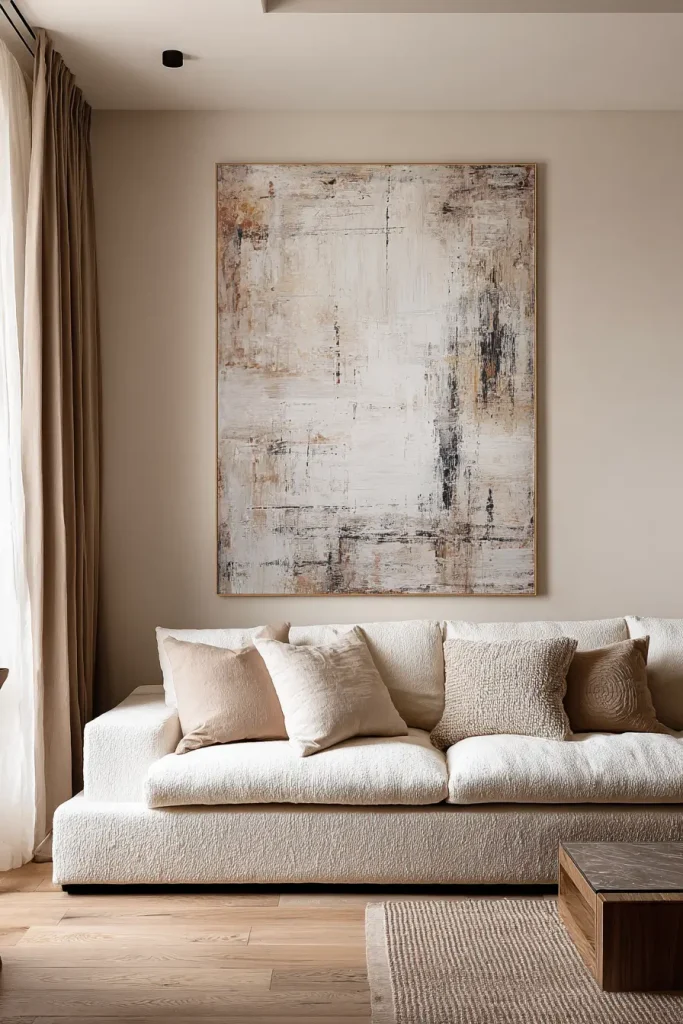
Most people buy art that is too small. A tiny frame on a big wall looks lost. That is the fastest way to look cheap.
One large piece does the opposite. It fills the space. It becomes a focal point. And it costs less than buying ten small frames.
Where to find affordable oversized art:
- Vintage shops (look for large oil paintings from the 1970s)
- Printable downloads from Etsy (search “oversized canvas digital download”)
- Fabric stretched over a cheap frame (linen or raw cotton works best)
The sizing rule: Your art should be two thirds to three quarters the width of your sofa. Measure your sofa. Then double that number. That is your minimum width.
Example: A 48 by 60 inch linen canvas print from an Etsy seller costs about $65 total if you buy the digital file and stretch it yourself on a DIY wood frame.
Pro tip: In 2026, organic textures like raw edge canvas and linen are replacing glossy photo prints. Flat and shiny looks cheap. Bumpy and natural looks expensive.
So go big or go home. Measure your sofa. Then buy art that scares you a little.
2. Use Textural Wall Hangings Instead of Flat Prints
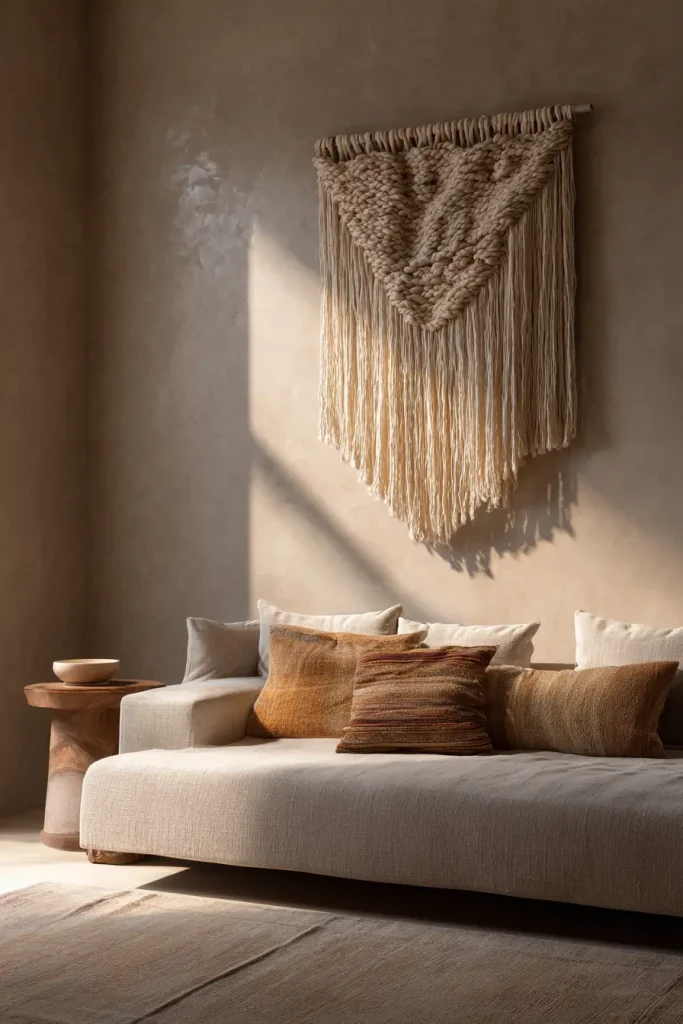
Flat is cheap. Texture is expensive. That rule never fails.
A glossy poster in a plastic frame screams dorm room. A woven wall hanging made of wool, cotton rope, or wood beads feels like art.
What works in 2026:
- Organic fiber hangings (undyed wool or jute)
- Knotted macrame with modern asymmetry (not the 1970s owl pattern)
- Raw edged burlap stretched on a simple bar
Example: A large 36 inch woven wall hanging from a local artisan on Facebook Marketplace costs $40 to $80. It looks higher end than a $120 mass produced print.
Cheap trap to avoid: Anything with glitter, plastic beads, or synthetic shiny thread. Real materials only.
Pro tip: Touch your art. If it feels cold and slick, swap it for something warm and bumpy.
Textured art makes people want to reach out. That is the sign of good design. If your wall hanging feels interesting, you win.
3. Lean a Large Mirror on the Floor (Don’t Hang It)
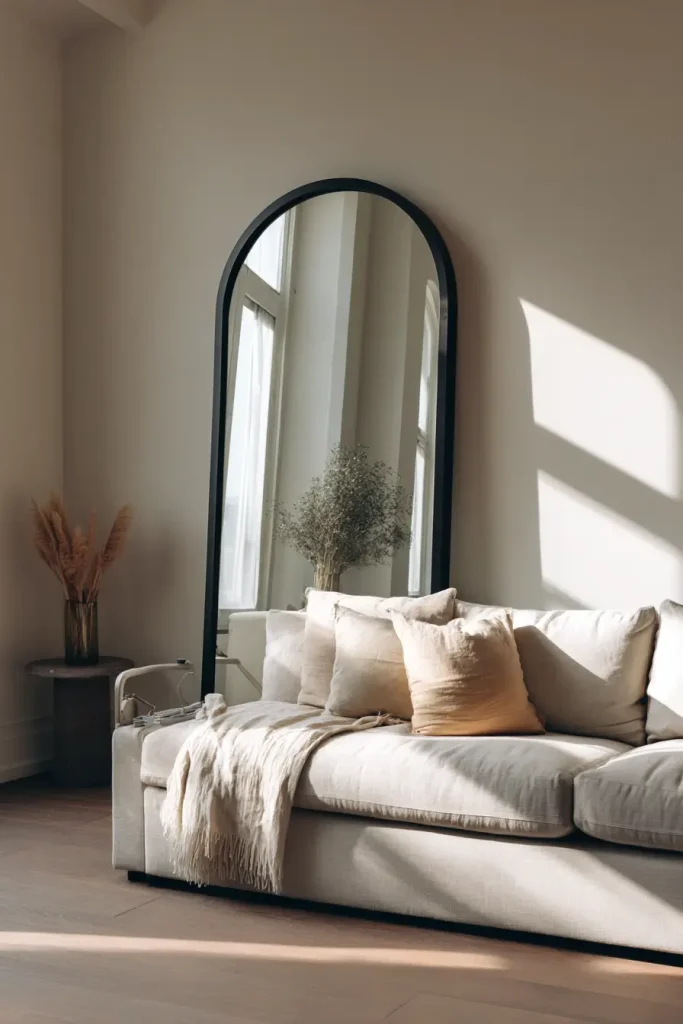
Hanging a mirror is a missed opportunity. Leaning a mirror creates confidence.
A leaned mirror says you did not just buy it. You collected it. You placed it there on purpose.
Best mirrors for leaning:
- Arched (very popular in 2026)
- Sunburst (mid century style)
- Simple beveled rectangle without an ornate plastic frame
Example: IKEA’s Hovet mirror is 63 inches tall. When hung, it looks like a basic mirror. When leaned against the wall behind your sofa, it looks like a designer statement.
Where to put it: Behind your sofa. Or against an empty corner wall. Never in a doorway or walking path.
Pro tip: Find a cheap mirror at a thrift store. Spray paint the frame matte black or aged brass. Those are the top metallic colors for 2026.
Another pro tip: Remove the glass from an old mirror and just lean the empty frame. It becomes sculpture.
Lean it today. Thank me tomorrow.
4. Create a Salon Wall With a Unifying Element
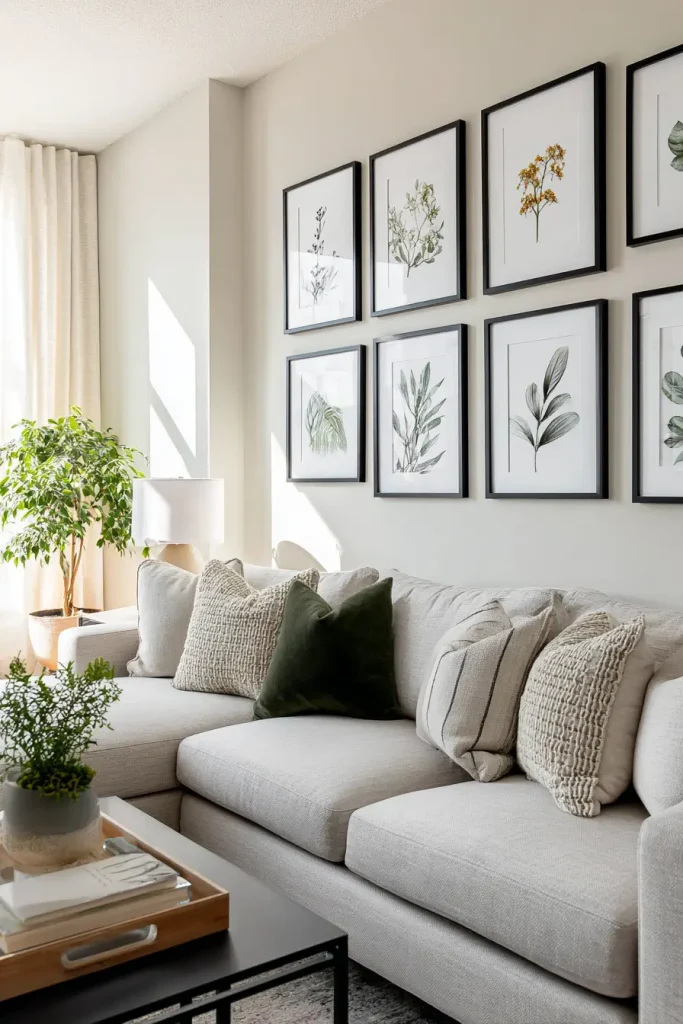
Gallery walls fail for one reason only. No cohesion.
You see random frame sizes, different colors, mismatched art styles, and weird spacing. That looks like you threw things at the wall and kept what stuck.
The fix is simple:
- Same frame color (black or natural wood only)
- Same mat size (white or off white, two inches or wider)
- Consistent subject matter (all black and white photos OR all botanical prints. Not both.)
Spacing rule: Two to three inches between frames. Measure it. Be consistent.
Example: Nine IKEA Ribba frames in black, size 8 by 10 inches. Fill them with free printable botanical art from a museum’s open access collection. Total cost about $70. It looks like $500.
Pro tip: Before you hammer any nails, lay the frames on the floor in your desired arrangement. Move them around. Take a photo. Adjust. Then hang.
Designers say inconsistent spacing is the top mistake that makes gallery walls look cheap. Same frames. Same spacing. Done.
5. Install a Single Floating Shelf With Curated Objects
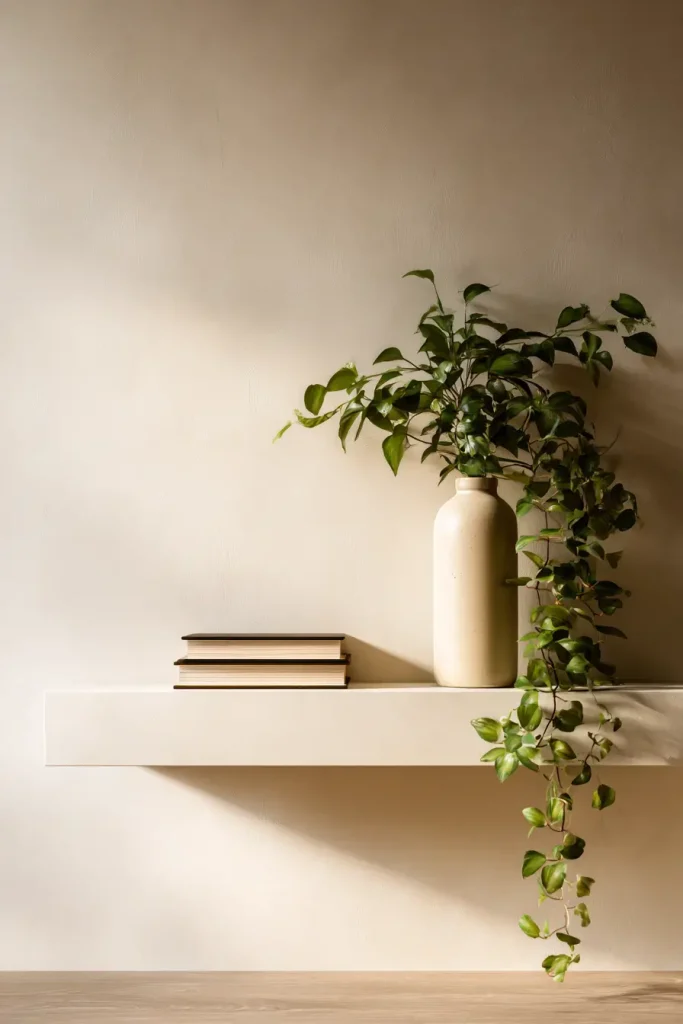
A shelf with nothing on it is a dust collector. A shelf with too many small trinkets looks like a garage sale.
The right shelf has three objects. That is it.
The rule of threes:
- One tall object (a vase or a candlestick)
- One medium object (a stack of two or three coffee table books)
- One organic object (a small trailing plant)
Example: A 48 inch white floating shelf costs $25. A thrifted ceramic vase is $8. Three used coffee table books are $15. A pothos cutting is free from a friend. Total $48.
What to avoid: Souvenir trinkets, tiny figurines, or more than five items. Each object needs breathing room.
Pro tip for renters: Use Command strips to install floating shelves. No nail holes. They hold up to 20 pounds.
A shelf is a stage. Put three good actors on it. Leave the extras backstage.
6. Hang a Large Scale Tapestry as a Focal Point
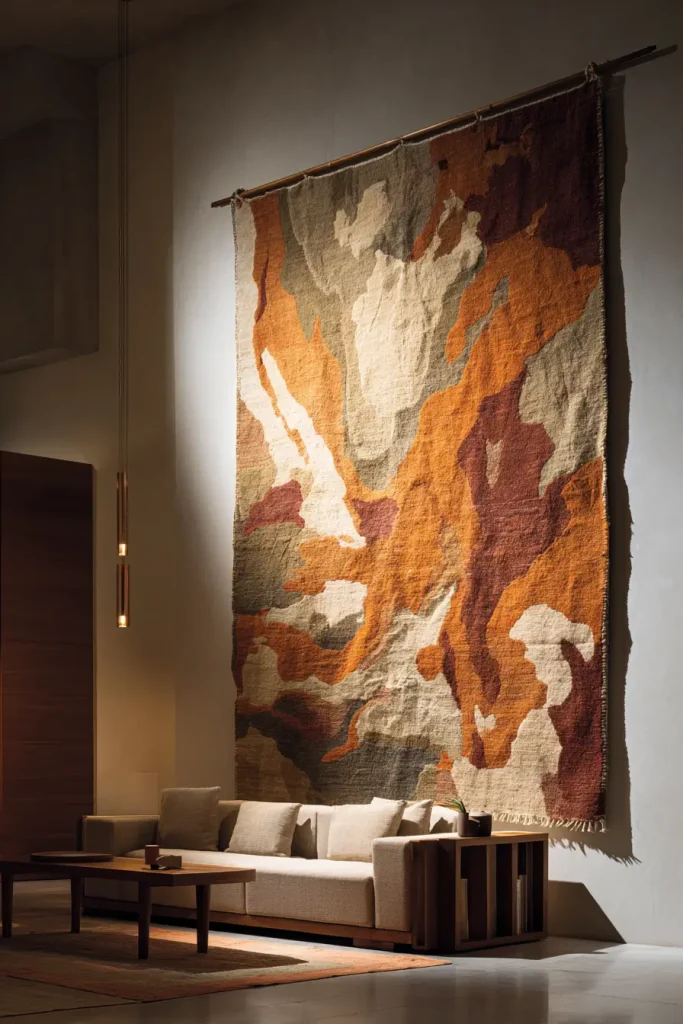
Dorm tapestry? No. Woven art? Yes.
The problem with cheap tapestries is the fabric. Polyester with a blurry photo print looks bad. A woven, hand blocked, or mudcloth pattern looks like investment art.
What to look for in 2026:
- Abstract organic shapes (no flowers or butterflies)
- Warm earth tones (terracotta, ochre, olive)
- Cotton or wool (never polyester)
Mounting trick: Do not use thumbtacks. Use an invisible magnetic dowel or a wooden clothes rack. This creates a “gallery of fabric” look.
Example: A 60 by 80 inch mudcloth inspired cotton tapestry from Society6 or Redbubble costs about $90. Hang it with a $12 tension rod. It looks like a commissioned piece.
Pro tip: Iron the tapestry before hanging. Wrinkles look accidental. Flat looks intentional.
Hang it like a painting, not a bedsheet. Your wall deserves that respect.
7. Frame a Large Scarf or Piece of Fabric
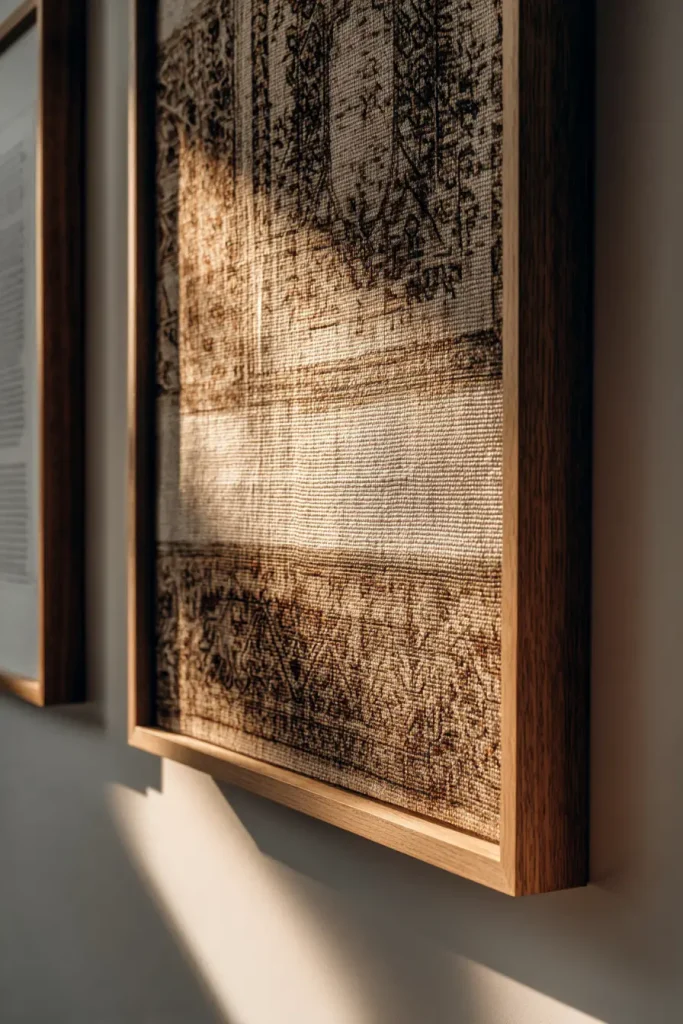
The best art is in your closet.
Vintage silk scarves, Japanese noragi fabric, or Indian block print cloth all make incredible wall art. And they cost almost nothing.
How to do it:
- Buy a cheap IKEA frame (the bigger the better)
- Remove the print that came with the frame
- Stretch your fabric over the backing board
- Close the frame and hang it
Example: A vintage Hermès style scarf from eBay costs $15. A 24 by 24 inch frame is $20. Total $35 for a custom art piece that looks like an heirloom.
Pro tip: Iron the fabric first. Then use a light spray adhesive to keep it taut against the backing board. No wrinkles, no sagging.
Another pro tip: Frame just a section of a larger fabric. A close up of a pattern often looks more abstract and modern.
One scarf. One frame. One hour. That is all you need.
8. Cluster Plates in an Asymmetrical Grid
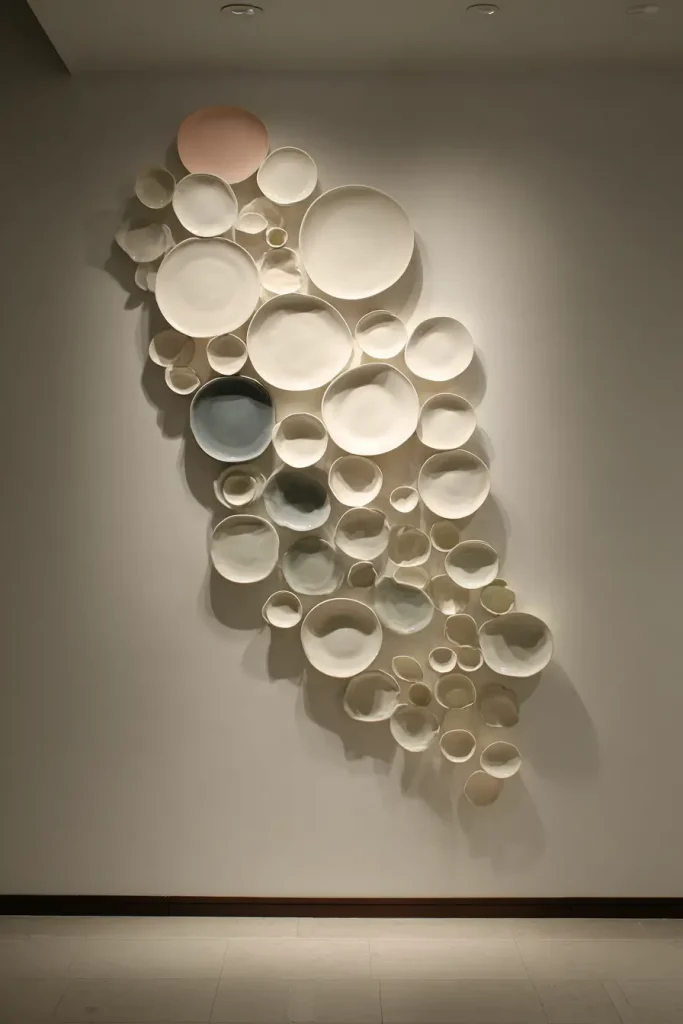
Plates on walls sound weird. Then you see it. And you cannot unsee how good it looks.
The key is not using souvenir plates with decals. Use plain porcelain, wood, or brass plates. White plus one accent color works best.
What you need:
- 5 to 9 plates (thrift stores have them for $2 to $5 each)
- Plate hangers (Amazon sells 12 for $10)
- Kraft paper and painter’s tape
Layout trick: Trace each plate on kraft paper. Cut out the circles. Tape them to your wall. Move them around until you like the arrangement. Then hang the plates on the paper circles.
Example: Seven mismatched white porcelain plates clustered in a cloud like arrangement. Total cost under $40. It looks like a curated art installation.
Pro tip: Only use white plus one accent color like navy or terracotta. More colors turn it into grandma’s kitchen.
Trace, hang, step back. You will be surprised how good it look
9. Paint a Simple Color Blocked Shape
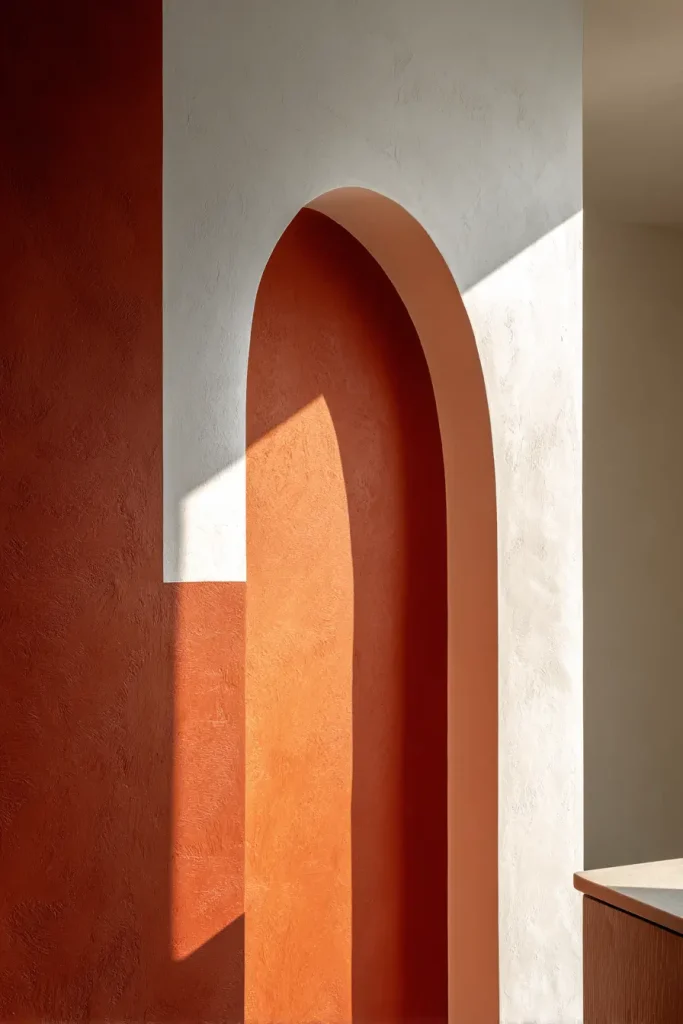
Paint is the cheapest art supply you can buy. One sample pot costs less than $10.
The trick is not painting a whole wall. Paint one shape. An arch. A half circle. An oversize squiggle.
Best for renters: Use peel and stick removable paint samples. Brands like Samplize make them. You stick them on the wall like a giant sticker. No mess. No permanent change.
Shapes that work in 2026:
- Arched doorway silhouette (very popular on TikTok)
- Half circle near the ceiling
- Oversize squiggle across two thirds of the wall
Colors to use: Deep jewel tones (emerald, sapphire) or muted clay (terracotta, ochre). Never neon. Never primary red, blue, or yellow.
Example: A 4 foot tall arched “window” painted in Sherwin Williams “Coral Clay” on a white wall. Cost: $15 for a sample pot plus $8 for an angle brush.
Pro tip: Use painter’s tape to get clean edges. Remove the tape while the paint is still wet. That prevents peeling.
Peel it off when you move. Or paint over it. No harm done.
10. Mount a Vintage Style Wall Clock as Art
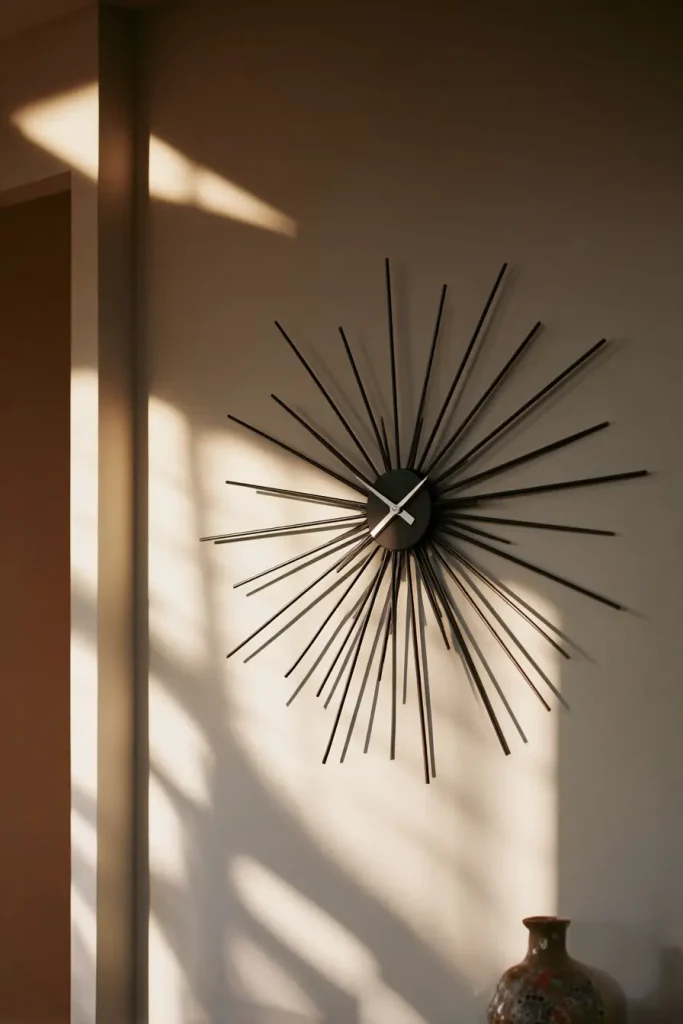
Clocks tell time and tell taste. A cheap plastic clock from a big box store looks like a clock. A large vintage style clock looks like sculpture.
Rules for clock art:
- Diameter of 18 inches or more (small clocks look like afterthoughts)
- Silent movement (no ticking. You will go crazy.)
- Metal or wood frame (no plastic)
Best styles for 2026:
- Mid century starburst
- Schoolhouse (white face, black numbers)
- Industrial cage
Where to find them: Thrift stores (remove the old movement if it is broken). Amazon or Target for new reproductions under $50.
Example: A 24 inch matte black starburst clock from Target’s Opalhouse line costs $45. Hang it alone on a large wall. No other art needed.
Pro tip: Remove the glass front. This reduces glare and makes the clock read more like a sculpture than an appliance.
Remove the glass for sculpture vibes. Leave the glass for kitchen vibes. Your choice.
11. Use Wall Mounted Planters With Trailing Plants
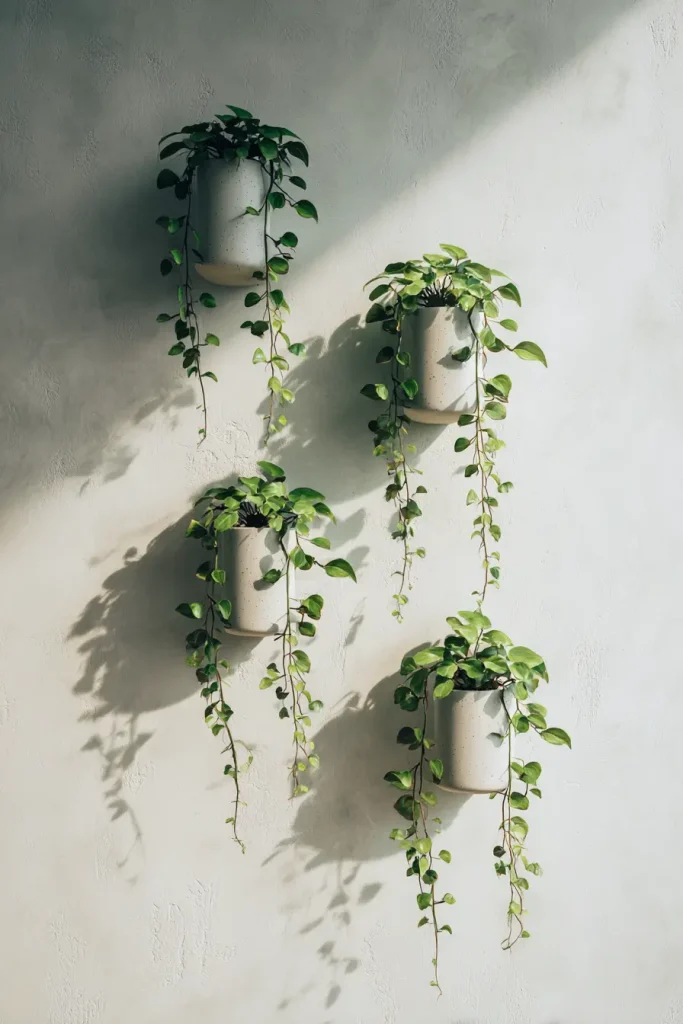
Living walls sound expensive. They are not.
Ceramic wall pockets or mounted test tubes cost almost nothing. Add a hardy plant, and you have living art that changes over time.
Best plants for beginners:
- Pothos (nearly impossible to kill)
- String of pearls (looks delicate but is tough)
- Hoya (waxy leaves, slow growing)
Arrangement rule: Use odd numbers. Three or five planters at different heights looks intentional. Two or four looks like a mistake.
Example: Three ceramic wall pockets from IKEA cost $10 each. Three small pothos cuttings are free from a friend. Total $30 for a living wall installation.
Pro tip: Water the plants in place. Use a small watering can with a long spout. Or take the planters down once a week and soak them in the sink.
Data point: The 2026 National Gardening Survey reported that indoor plant decor grew 42 percent since 2023. “Living walls” is a top search term.
Three plants. One wall. Zero death (if you remember to water).
12. Frame Children’s Art Like Fine Art
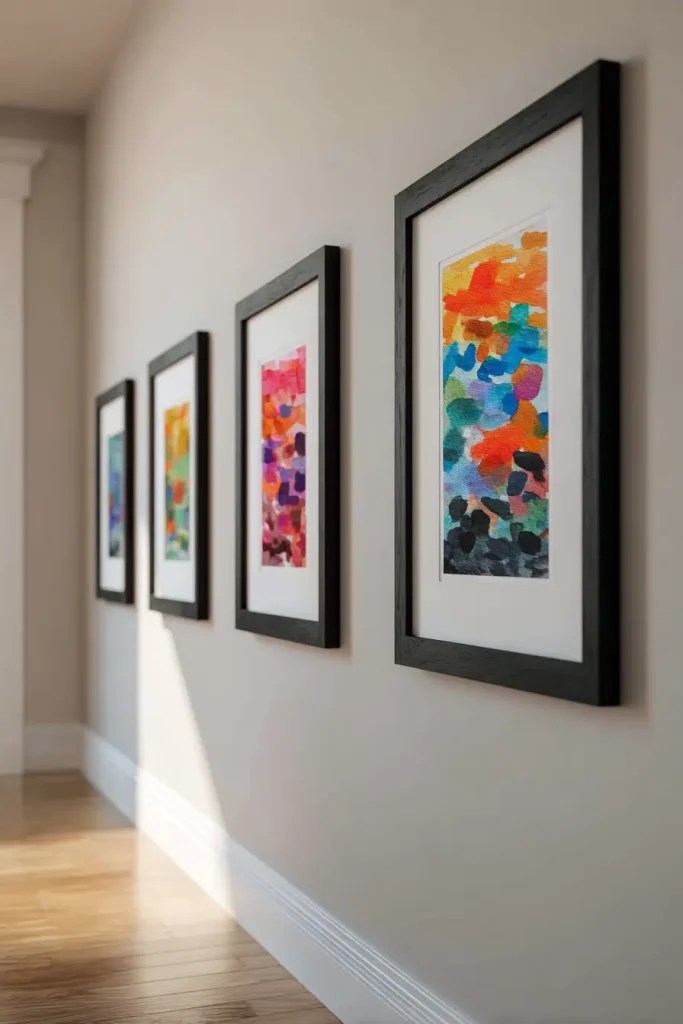
Kids make better abstract art than most adults. They have no fear. They use color without overthinking.
But taping a drawing to the fridge looks cheap. Framing it looks brilliant.
How to do it right:
- Choose only one to three best pieces (not the whole fridge)
- Use a mat (white or off white, two inches wide)
- Use a simple black frame with glass
Example: A child’s abstract finger painting in an 11 by 14 inch matted frame from Michaels costs $12. Guests will ask who the artist is. That is a great conversation starter.
Pro tip: Photograph the art. Print it at Walgreens for 35 cents. Frame the print. Keep the original safe in a folder. You can rotate new art every season.
Another pro tip: Frame the art without a mat for a modern, edgy look. But only if the paper goes to the edge of the frame.
Mat it. Frame it. Own it. Your kid will feel like a real artist.
13. Hang a Pair of Matching Sconces (Plug In or Battery)
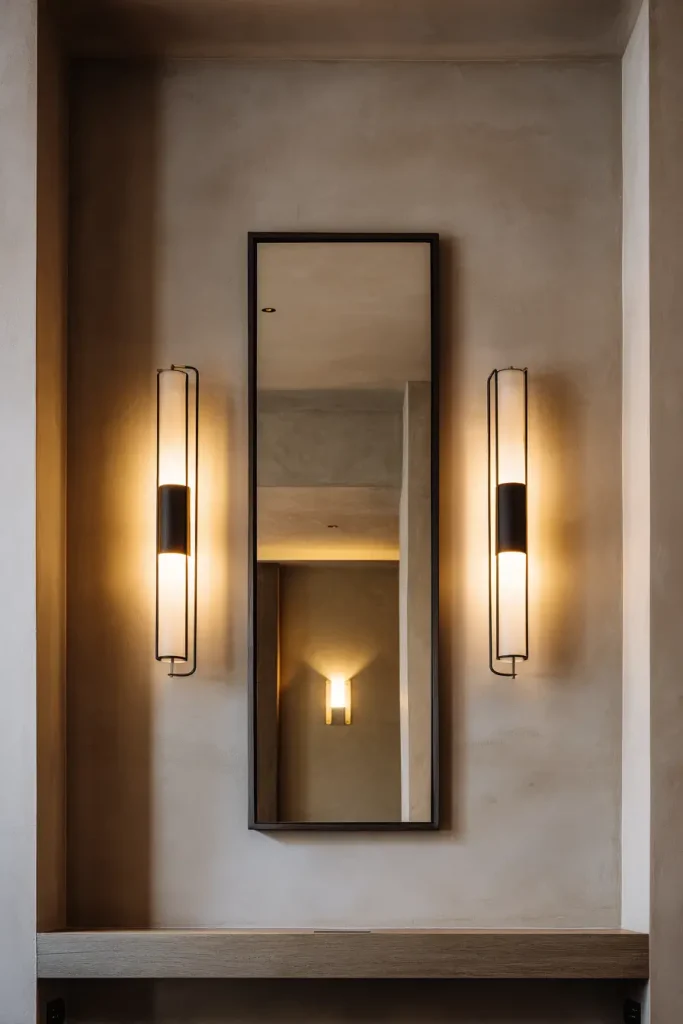
Light is decor. Most people forget that.
A pair of matching sconces flanks a mirror, a piece of art, or a TV. The symmetry reads as intentional and expensive.
The best part: You do not need an electrician. Use plug in sconces with cord covers. Or use battery operated LED sconces with a remote.
Where to find them: Amazon sells plug in black metal sconces for about $35 each. Cord covers are another $10.
Placement rules: Hang them so the center of each sconce is at eye level (about 60 inches from the floor). Space them the same distance from the center object.
Example: Two plug in black metal sconces at $35 each. Cord covers painted to match your wall. Total $70 for a lighting upgrade that looks like $500.
Pro tip: Use warm white bulbs (2700 Kelvin). Cool white light looks like an office. Warm light looks like a hotel lobby.
Plug it in. No electrician needed. Your wall will glow with purpose.
14. Install Peel and Stick Wallpaper on One Wall
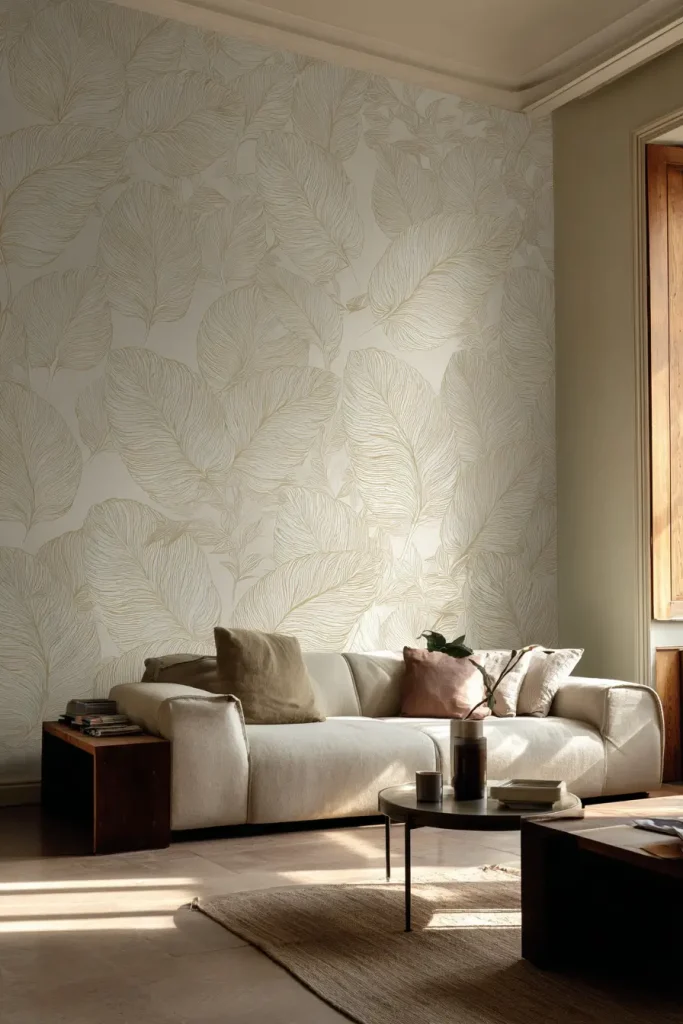
Wallpaper terrified renters for decades. Not anymore.
Removable wallpaper in 2026 is truly repositionable. It leaves no residue. You can stick it, peel it, and stick it again.
Best patterns for a high end look:
- Large scale botanical (leaves bigger than your hand)
- Subtle geometric (not busy)
- Hand drawn stripe (imperfect lines look expensive)
Patterns to avoid: Tiny busy prints, fake brick, fake wood, or anything with glitter.
Pro trick: Only paper three quarters of the wall. End with a clean horizontal line. This looks like wainscoting or a designer accent wall, not a full commitment.
Example: One roll of removable wallpaper from Chasing Paper or Rifle Paper Co. costs $40 to $80. That covers a 60 by 80 inch accent wall behind your sofa.
Data point: A 2025 report from Grand View Research showed removable wallpaper sales grew 27 percent year over year, driven by renters.
Stick it. Love it. Peel it when you move. No damage, no drama.
15. Curate a Small, Rotating Art Ledge
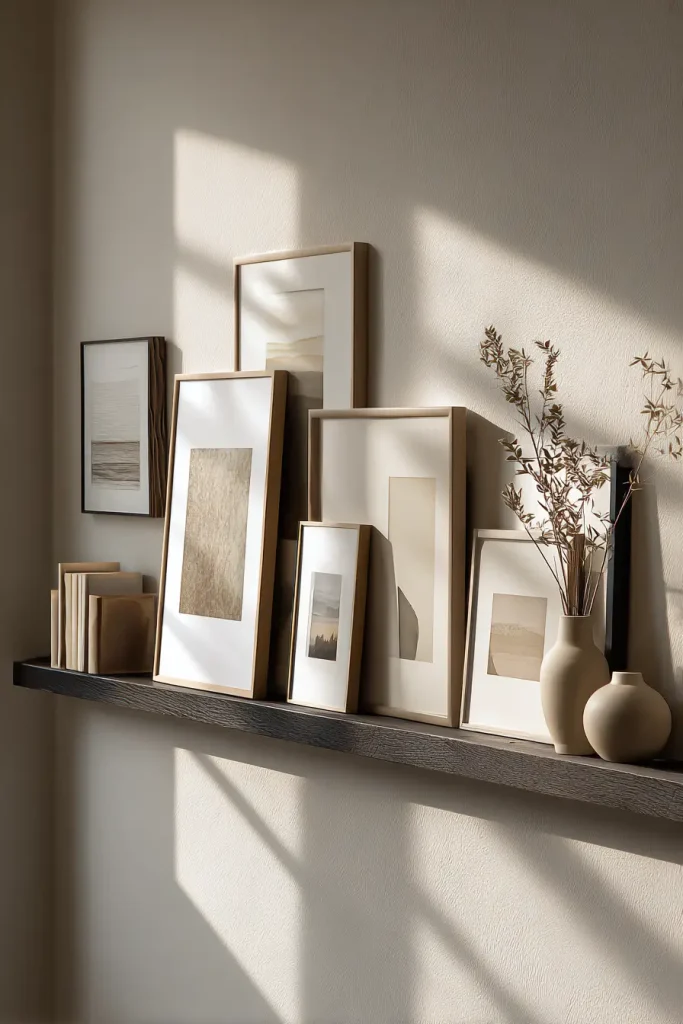
Commitment issues? Get an art ledge.
An art ledge (also called a picture rail) is a shallow shelf made specifically for frames. You lean art on it instead of hanging it. Swap pieces whenever you want.
How it is different from a floating shelf: An art ledge is shallower. Maybe two inches deep. It is made for frames, not for objects (though you can add a small vase).
The rule: Lean, don’t hang. Overlap pieces slightly. This creates a collected, layered look.
Example: A 48 inch art ledge from IKEA (Mosslanda model) costs $15. Add five thrifted prints at $2 to $5 each. Swap the prints every three months. Total cost under $40.
Where to find cheap art to swap:
- Thrift stores (look for original watercolors or signed prints)
- Museum open access downloads (print them at a copy shop)
- Old calendars with nice images
- Postcards from your travels
Pro tip: Add one small object to the ledge, like a ceramic bud vase or a smooth rock. It breaks up the line of frames and adds texture.
Swap every season. Never get bored. Your walls will always feel fresh.
Conclusion
Cheap looking walls come from three mistakes: small scale, mismatched frames, and flat textures.
The 15 ideas above fix those mistakes. They focus on one large piece, intentional cohesion, and natural materials. Most cost under $50.
Here is your challenge: Choose just one idea this weekend. Take a before photo. Try the idea. Take an after photo. You will see the difference immediately.
Pin this guide for your next wall. Share it with a friend who is tired of blank walls. And remember: expensive taste does not require an expensive wallet.
For more wall decor ideas for living rooms that actually look expensive, bookmark this page. Your walls will thank you.

- 17 Classy Living Room Ideas for a Cozy Elegant Look - April 23, 2026
- 16 Dark Moody Living Room Ideas That Feel Rich and Warm - April 22, 2026
- 14 Elegant Bedroom Trends for 2026 You’ll Love - April 22, 2026


