
Introduction
Getting older changes how you move, sleep, and recover. The bedroom should make life easier, but in many homes, it does the opposite. Poor lighting, slippery floors, bad bed height, and clutter can turn a normal night into a real safety risk.
This matters more than many families think. Falls are one of the biggest risks for older adults, and many happen at home. Your bedroom is one of the main problem areas because it is used in low light, often when you are tired, unsteady, or rushing to the bathroom. Source notes show that 1 in 4 seniors fall each year, and many falls happen inside the home.
The good news is simple. You do not need a full remodel to make a bedroom safer. A few smart changes can lower risk, improve sleep, and help seniors stay independent longer. In this guide, you will find 17 practical bedroom ideas for seniors aging in place, along with why each one matters.
Why bedroom safety matters for seniors
A bedroom looks harmless, but it creates several risks at once. It is used in the dark. It includes standing, turning, bending, and walking. It also contains furniture corners, rugs, cords, and uneven pathways.
Source notes also show that a senior is treated for a fall every 11 seconds. That number explains why bedroom safety is not just a comfort issue. It is a health issue.
If you improve the bedroom first, you can often make a fast impact. Better lighting, better support, and a clearer layout can help reduce stress for both seniors and caregivers.
1. Choose an adjustable bed
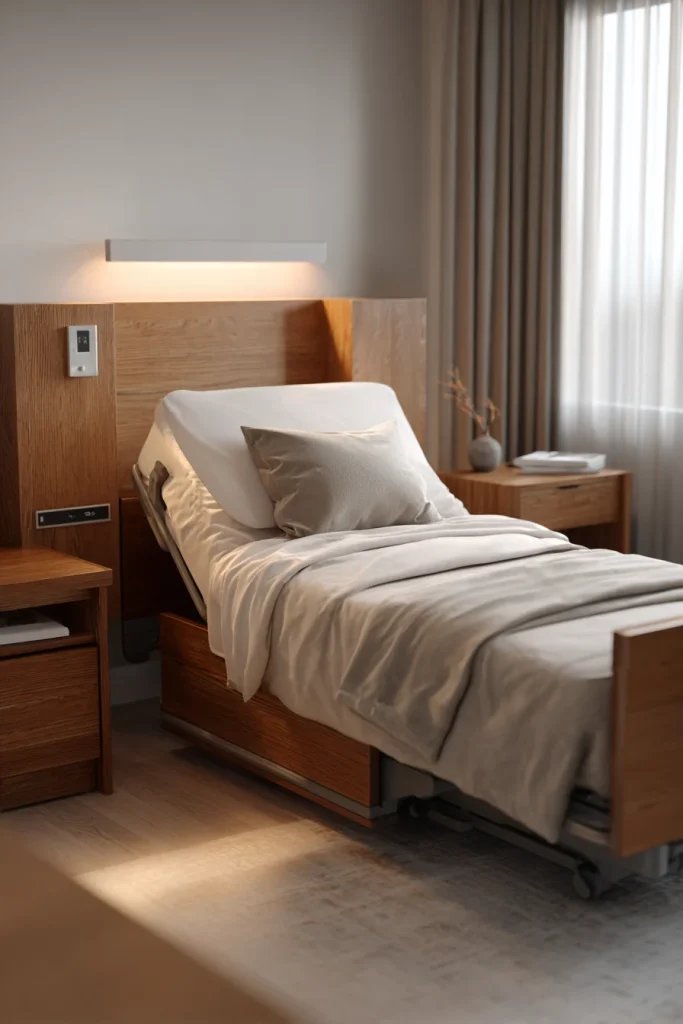
An adjustable bed can make daily movement much easier. It helps seniors sit up with less strain and change positions without using too much effort. This can be helpful for people with arthritis, back pain, swelling, or limited mobility.
The real benefit is simple. It reduces the effort needed to move from lying down to sitting up. That means less struggle at the start and end of the day.
Source notes also mention adjustable beds as a useful option for mobility support.
2. Fix bed height first
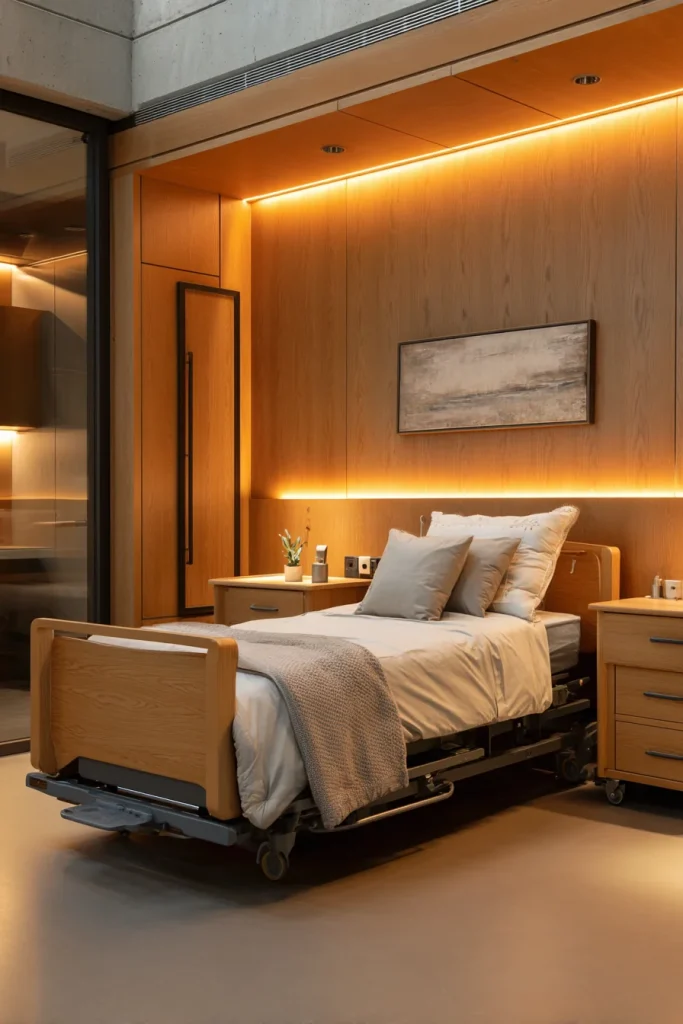
Bed height affects safety more than most people realize. If the bed is too low, standing up takes more strength. If it is too high, feet may not land firmly on the floor.
A safer setup is when both feet can rest flat on the ground while sitting on the edge of the bed. This gives better control during transfers.
This is often one of the fastest fixes because it may only require a frame change, riser removal, or mattress adjustment.
3. Add bed rails for support
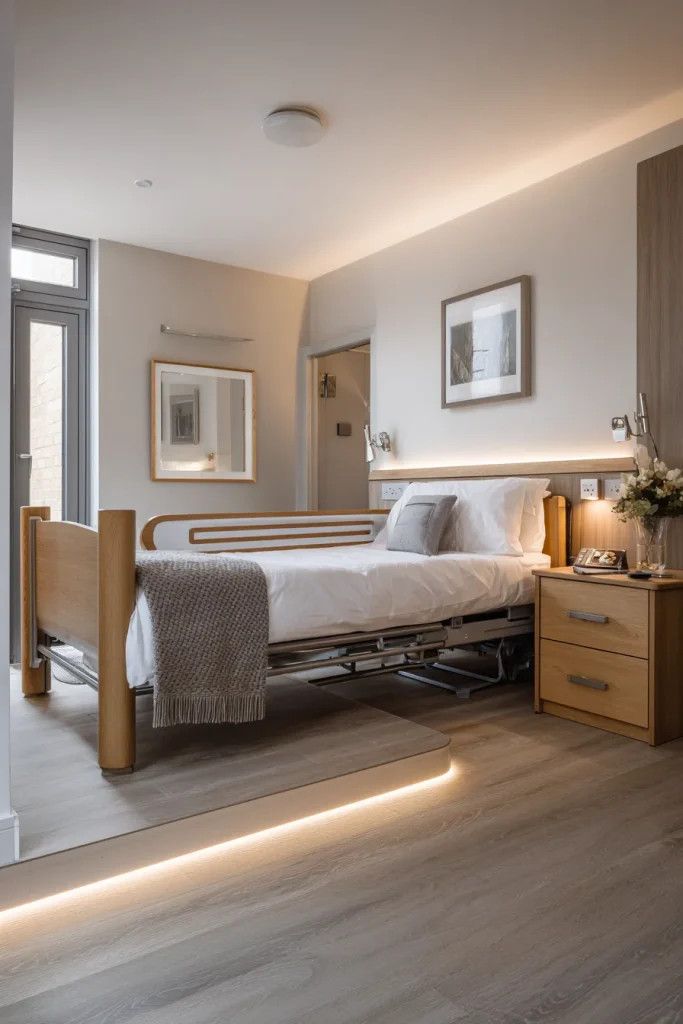
Bed rails can give seniors a steady handhold when getting in or out of bed. They are useful for people who feel weak, dizzy, or unsteady when changing position.
They should be chosen carefully. A well-fitted support rail can improve balance. A poor one can create new risks. That is why this idea works best when it matches the user’s actual mobility needs.
The key benefit is confidence. When a senior feels stable, everyday movement becomes less stressful.
4. Pick furniture with rounded corners
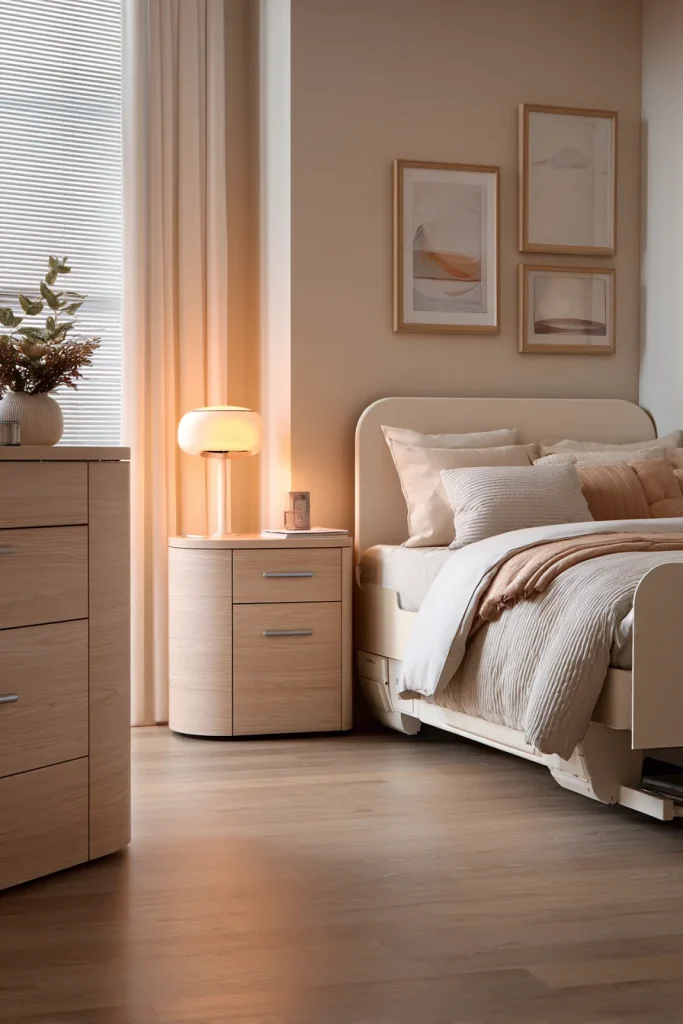
Sharp furniture edges are a hidden danger, especially at night. A corner on a nightstand or dresser may not seem like a big issue until someone stumbles into it.
Rounded edges reduce the chance of cuts, bruises, and impact injuries. This is a simple bedroom design choice, but it adds real safety.
It is also a good example of how aging in place works best. You remove risk before it becomes an emergency.
5. Keep a stable nightstand within easy reach
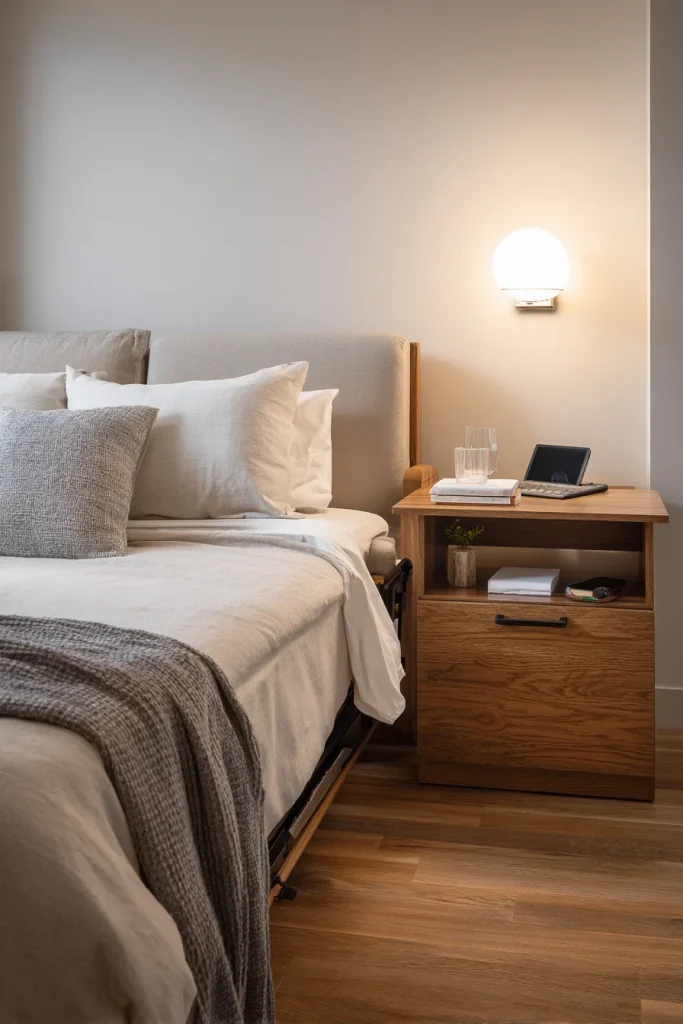
A good nightstand should be close enough to reach without twisting or leaning far out of bed. It should also be strong enough that it will not slide or tip if someone puts weight on it.
This helps in three ways. It keeps daily items easy to access. It reduces awkward stretching. And it gives a small point of support during movement.
Place glasses, water, medicine, a lamp, and a phone on this table so nighttime needs stay close.
6. Install motion sensor night lights
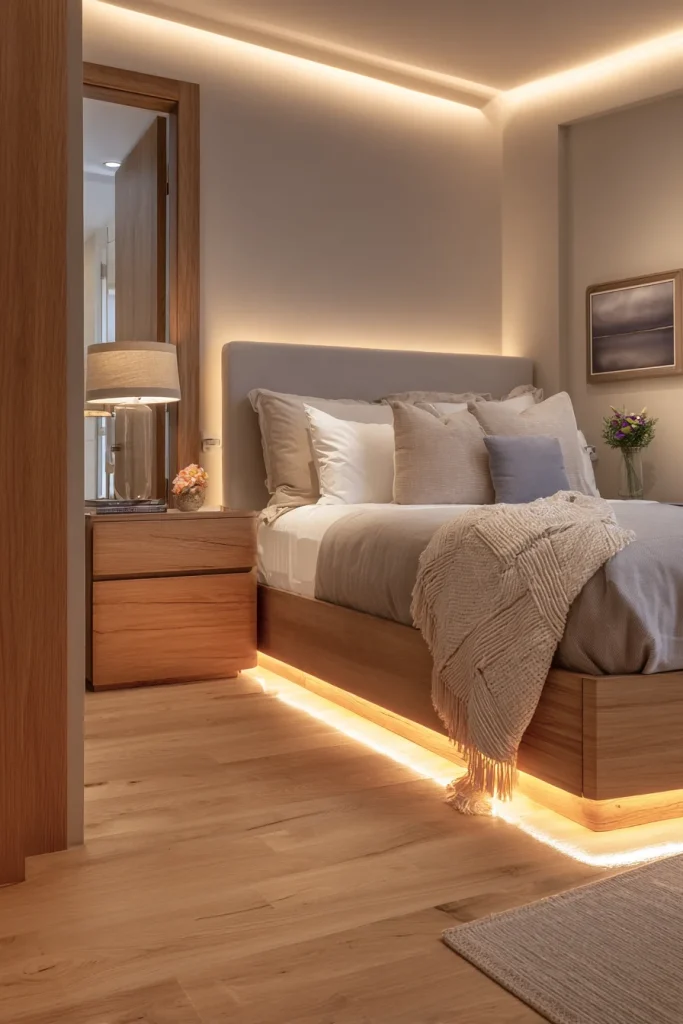
This is one of the best low-cost upgrades for senior bedroom safety. Motion sensor lights turn on when a person gets up. That means there is no need to search for a switch in the dark.
Source notes identify poor lighting as a major fall risk and point out that many falls happen during nighttime movement.
This idea works well near the bed, along the path to the bathroom, and near the doorway.
7. Use layered lighting
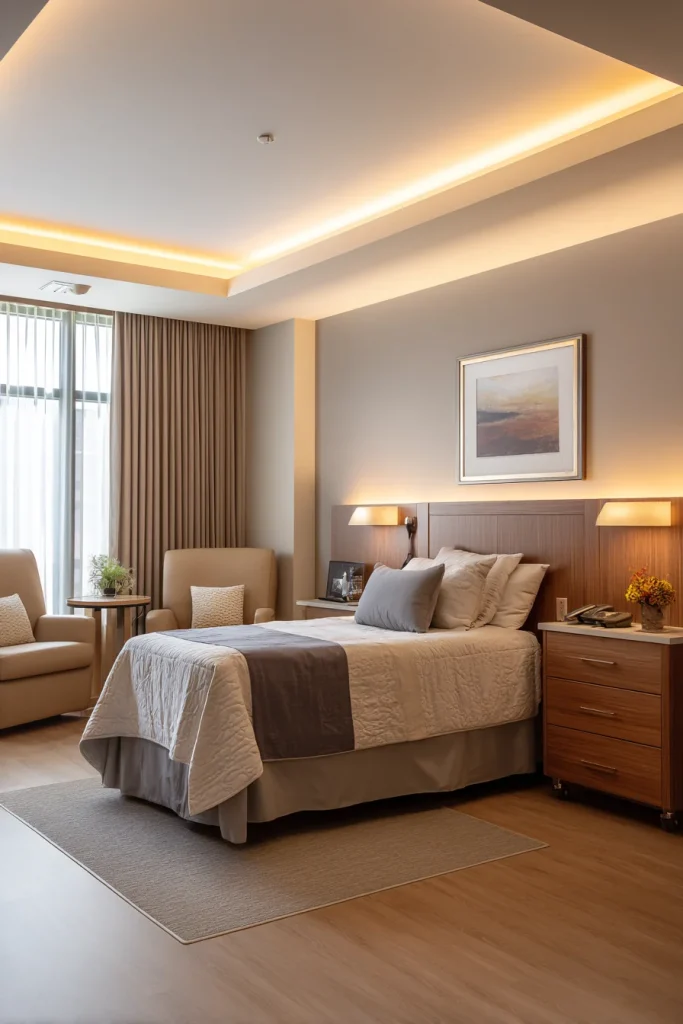
One bright ceiling light is not enough. Seniors need even, practical light in the places where they actually move and read.
Layered lighting means using more than one source. A ceiling light gives full room brightness. A bedside lamp helps with reading and evening routines. Accent or pathway lights help with nighttime walking.
The benefit is better visibility without harsh glare. This makes the room easier to use all day and night.
8. Move light switches closer to the bed
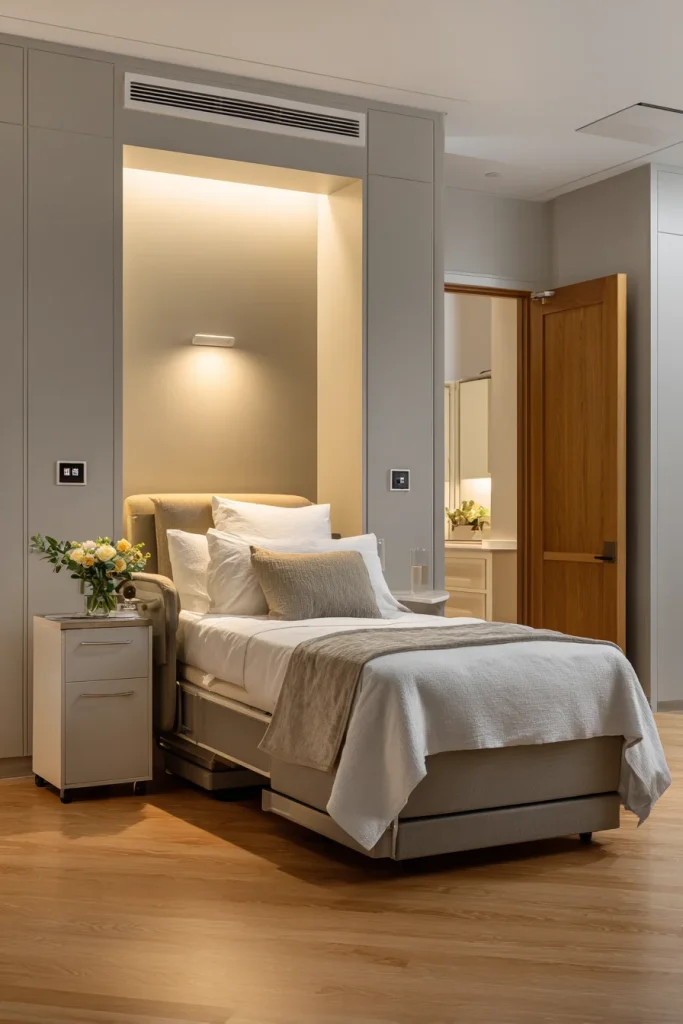
If a senior must cross the room to turn on the light, the setup is already unsafe. Light switches should be easy to reach from the bed and from the doorway.
This is a small change, but it solves a common problem. Many falls happen during short, simple movements when people assume they will be fine. Then they walk in the dark and lose balance.
Easy lighting access removes that risk.
9. Use non slip flooring
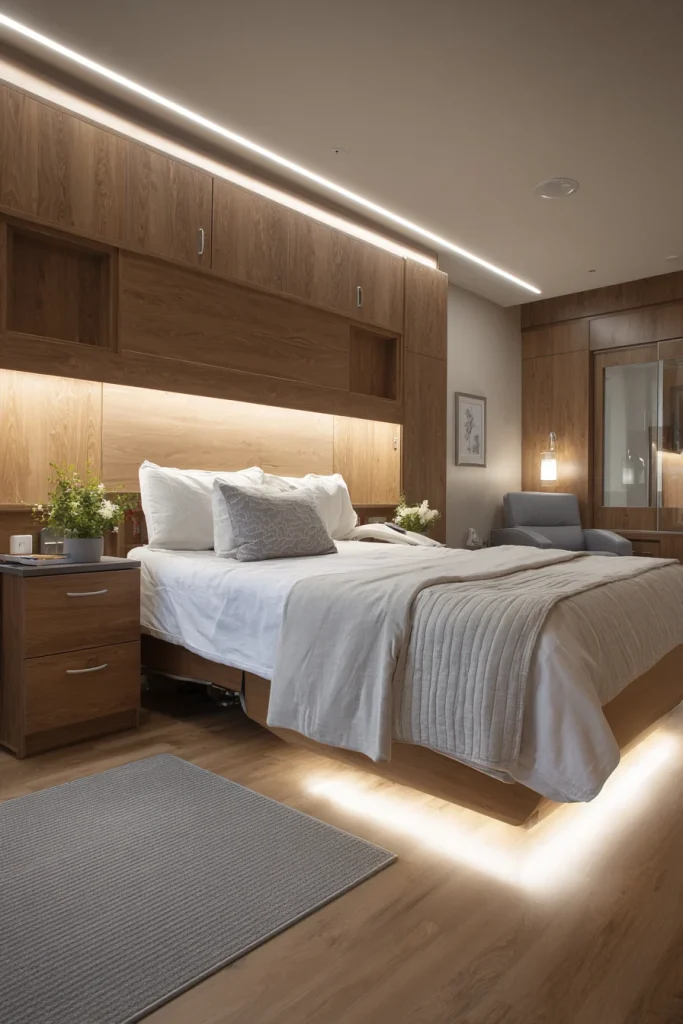
Flooring matters because grip matters. A slippery floor can turn one weak step into a serious fall.
If possible, use flooring with more traction. If replacing the floor is not realistic, use non slip mats in the highest risk spots. Just make sure they stay flat and secure.
Source notes say indoor falls are a major problem and point to flooring as one of the practical areas to fix.
10. Remove loose rugs
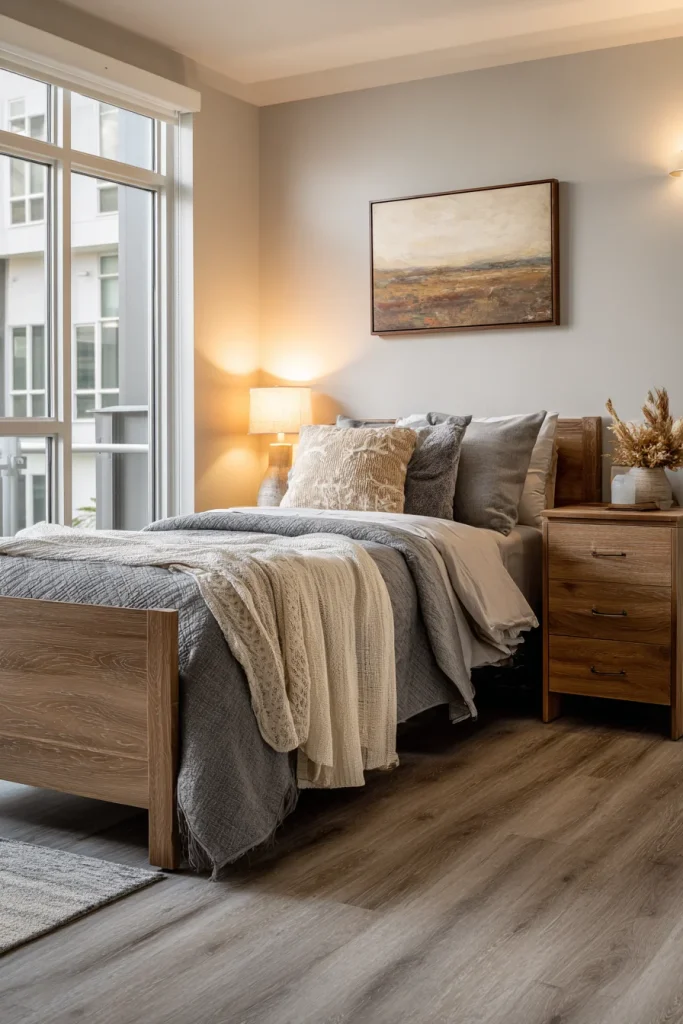
Loose rugs are one of the most common trip hazards in a bedroom. They slide, bunch up, and catch feet or walkers.
The safest option is usually to remove them. If a rug must stay, it should be secured firmly so it cannot shift.
This is a very simple fix, but it has a big payoff. Many people ignore rugs because they look harmless. In reality, they often create one of the easiest fall risks to prevent.
11. Keep a clear path to the bathroom
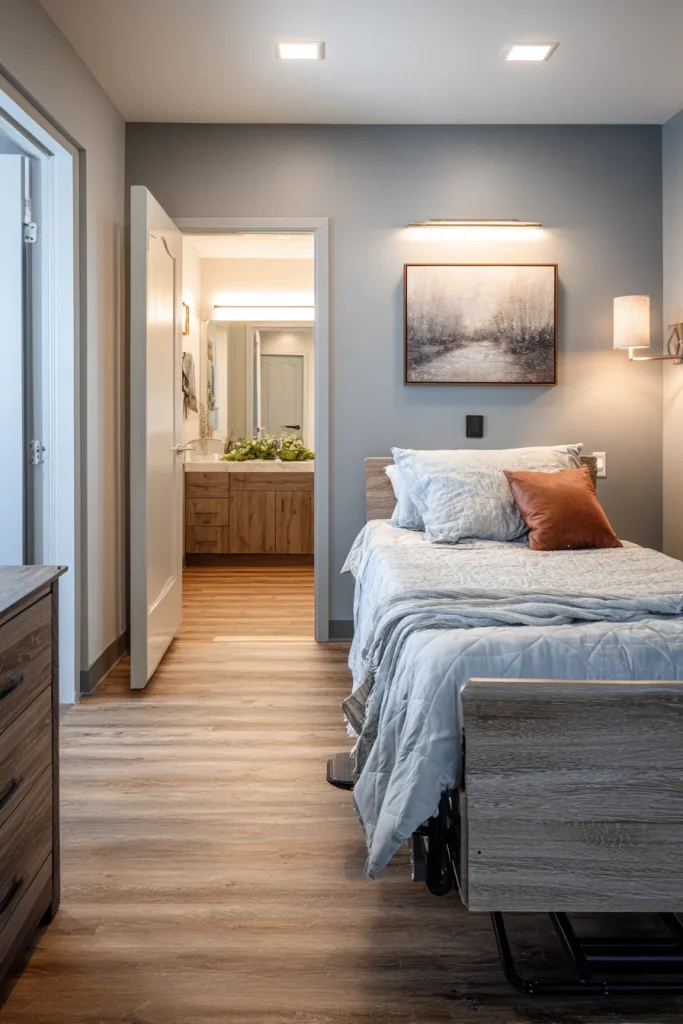
This is one of the most important bedroom layout rules for seniors. The path from the bed to the bathroom should be direct, open, and free of clutter.
That means no baskets, cords, stools, extra chairs, or storage boxes in the walkway. It also means enough space to move with a cane or walker if needed.
Source notes highlight nighttime bathroom trips as a common fall moment. That makes this fix a priority, not a small detail.
12. Install grab bars near the bed
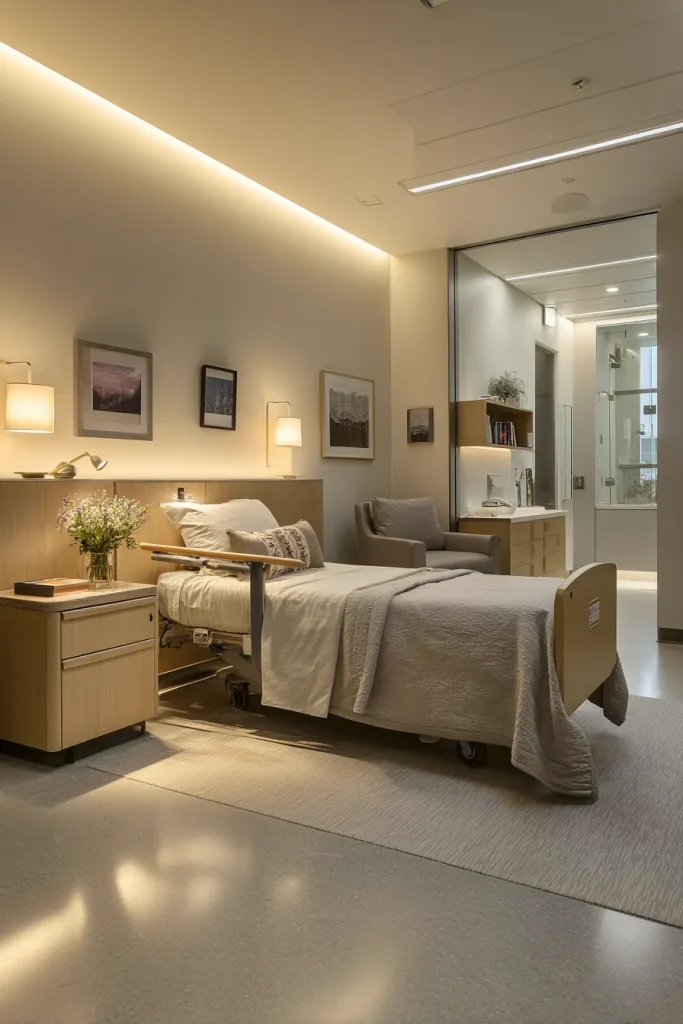
Grab bars are often discussed for bathrooms, but they can also help in the bedroom. A bar near the bed can support standing, sitting, and steady turning.
This is most helpful for seniors with weak legs, poor balance, or recent recovery from illness or surgery.
The biggest benefit is control. A stable support point can make the difference between safe movement and a fall.
13. Leave enough room for walkers and canes
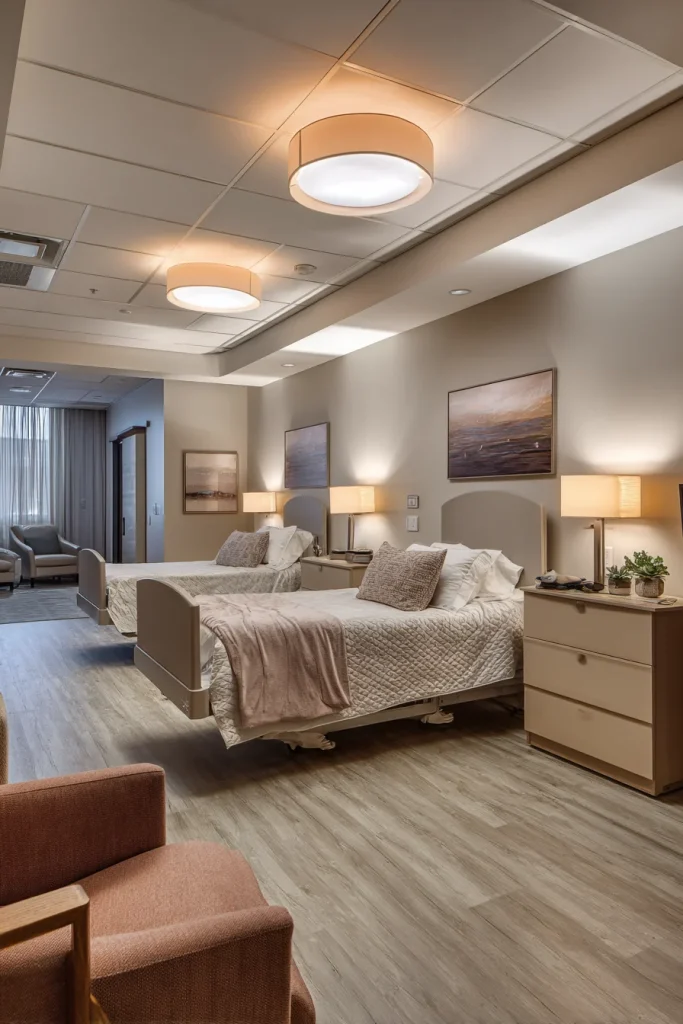
A bedroom may look fine until mobility equipment enters the picture. Then it becomes clear that many layouts are too tight.
Seniors need enough open space to turn, step, and move safely with a cane, walker, or caregiver nearby. Narrow gaps between bed, dresser, and walls increase the chance of bumping or losing balance.
When planning bedroom design for elderly safety, open floor space is often more useful than extra furniture.
14. Switch to lever style door handles
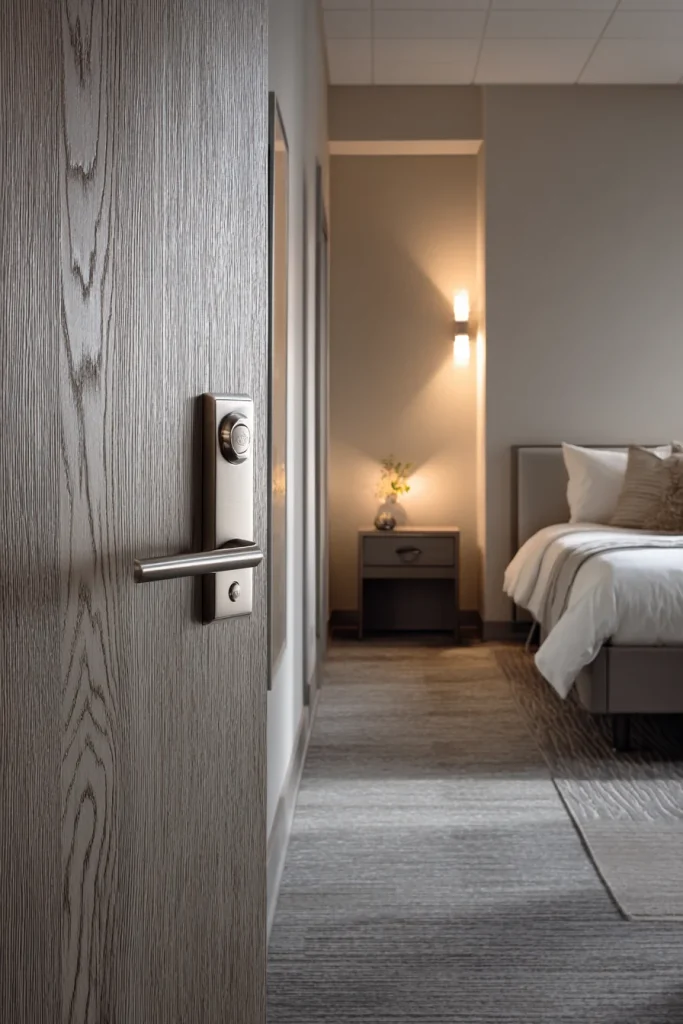
Round knobs can be hard to grip for seniors with arthritis, weakness, or hand pain. Lever handles are easier to use because they need less force and less twisting.
This change is simple, but it improves daily access right away. It also helps in urgent moments when a person needs to move quickly and cannot struggle with a stiff knob.
Source notes list lever style handles as a useful aging in place home modification.
15. Add an emergency alert system
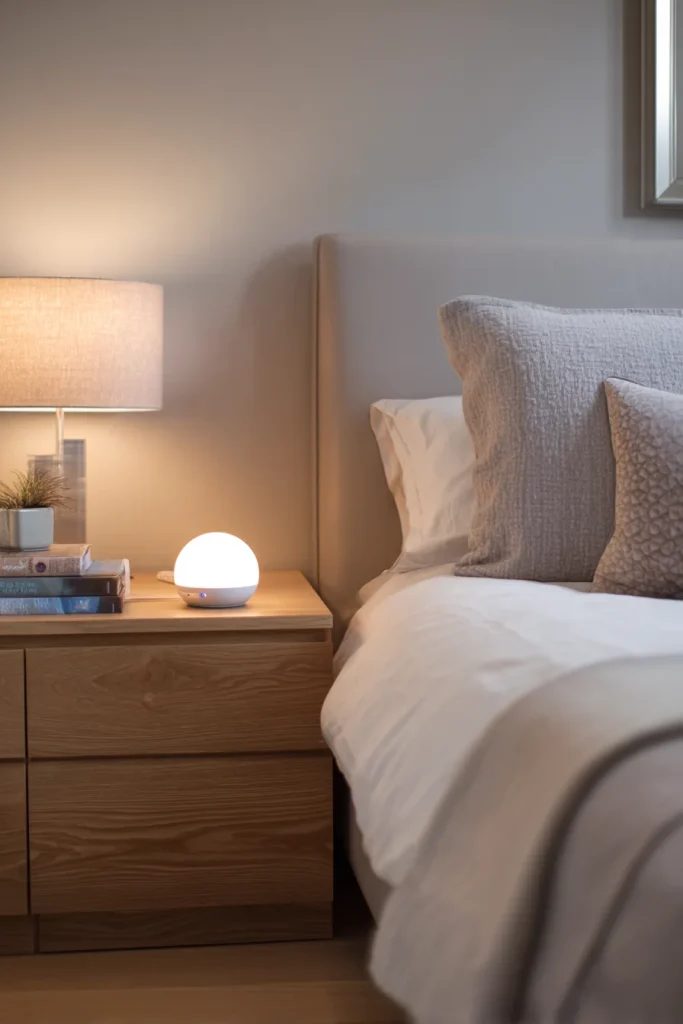
An emergency alert system gives seniors a way to call for help fast after a fall or medical issue. This is valuable for people who live alone or spend long periods without someone nearby.
The benefit is not just emergency response. It also gives peace of mind to family members and caregivers.
Source notes include emergency alert systems as a smart safety addition for aging in place.
16. Use voice control for lights and devices

Voice assistants can help seniors control lights, reminders, alarms, and other devices without getting out of bed. That reduces unnecessary movement and helps at night.
This can be useful for people with pain, limited mobility, or vision problems. It also adds convenience without major construction.
Source notes point to smart home tools as a growing part of senior safety and independence.
17. Control room temperature and bedding comfort
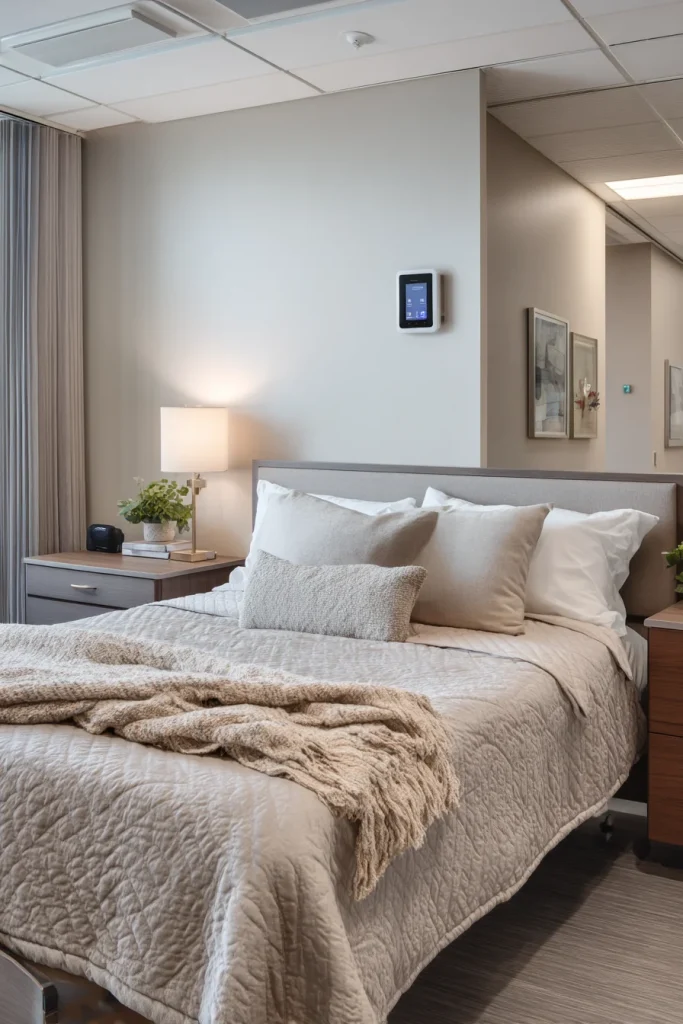
Comfort affects safety more than people think. If a room is too hot, too cold, or hard to sleep in, seniors may wake more often, move more often, and feel more tired during the day.
Breathable bedding, easy to manage blankets, and a steady room temperature can improve sleep and reduce discomfort. This matters because poor sleep can affect balance, focus, and energy.
A safe bedroom should not only prevent falls. It should also support real rest.
Low cost upgrades that make the biggest difference
If the budget is tight, start with the changes that cost less but solve common risks fast.
Motion sensor lights are a strong first step. Removing loose rugs is another. Clearing the path to the bathroom costs nothing. A better bedside lamp or stable nightstand can also help right away.
This is useful for readers because it shows that senior bedroom safety does not always require a full renovation. Small actions still matter.
Common bedroom mistakes that make falls more likely
Some bedrooms create problems without anyone noticing. A bed that is too soft can make standing harder. Poor lighting can leave dark spots around the room. Too much furniture can block movement. Decorative rugs can become trip hazards.
Another common mistake is focusing only on comfort and ignoring function. A room may look nice but still fail the basic safety test.
Aging in place works best when the room is simple, clear, and easy to use.
Final thoughts
The best bedroom ideas for seniors aging in place are the ones that make daily life easier right now. They do not need to be expensive. They do not need to be fancy. They just need to reduce risk and support independence.
Start with the basics first. Fix lighting. Check bed height. Remove tripping hazards. Clear the path to the bathroom. Then add support tools based on real needs.
That is how a bedroom becomes safer, calmer, and more comfortable for the years ahead.

- 17 Classy Living Room Ideas for a Cozy Elegant Look - April 23, 2026
- 16 Dark Moody Living Room Ideas That Feel Rich and Warm - April 22, 2026
- 14 Elegant Bedroom Trends for 2026 You’ll Love - April 22, 2026