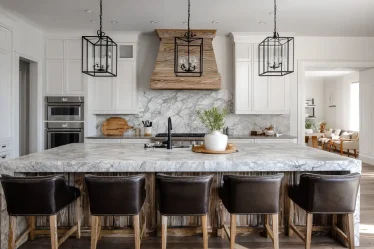
The marble subway tile you loved in 2022 is now the “landlord special” of 2026. You know the one. White, brick-laid, and everywhere.
Here’s the problem. You’re planning a kitchen update. You open Pinterest. You see a hundred different tiles. And you have no idea which ones will look old by 2028.
This guide solves that. You’ll learn 16 data-backed backsplash trends for 2026. You’ll also learn 3 materials to skip and the exact colors that add resale value. No fluff. Just what works right now.
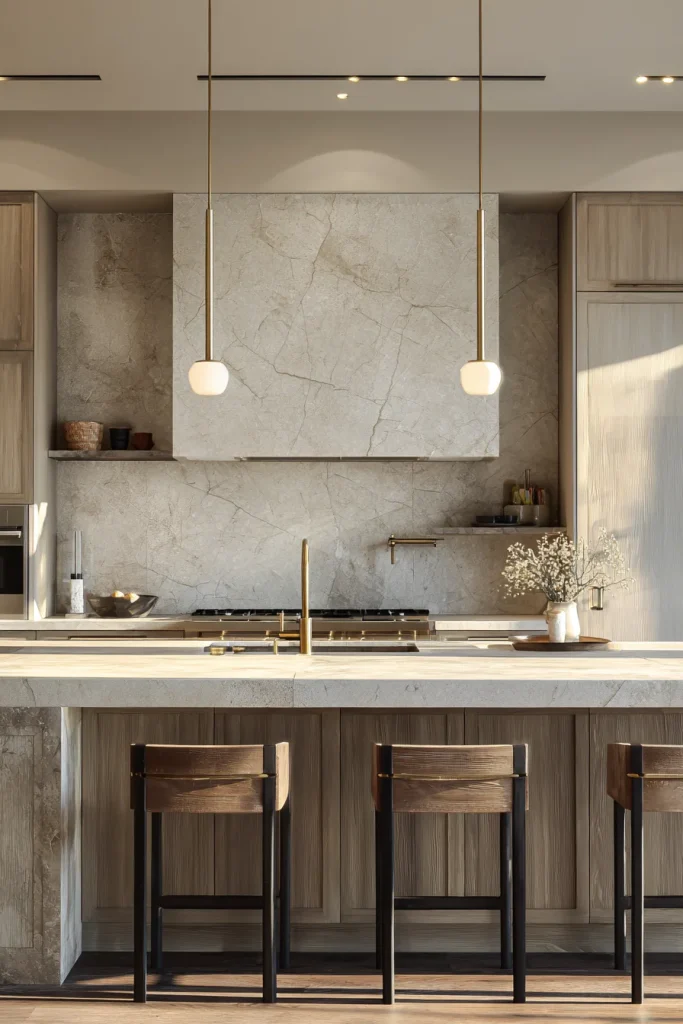
Let’s get into it.
1. The Death of Generic Subway Tile: Enter “Vertical Stack” & “Zellige 2.0”
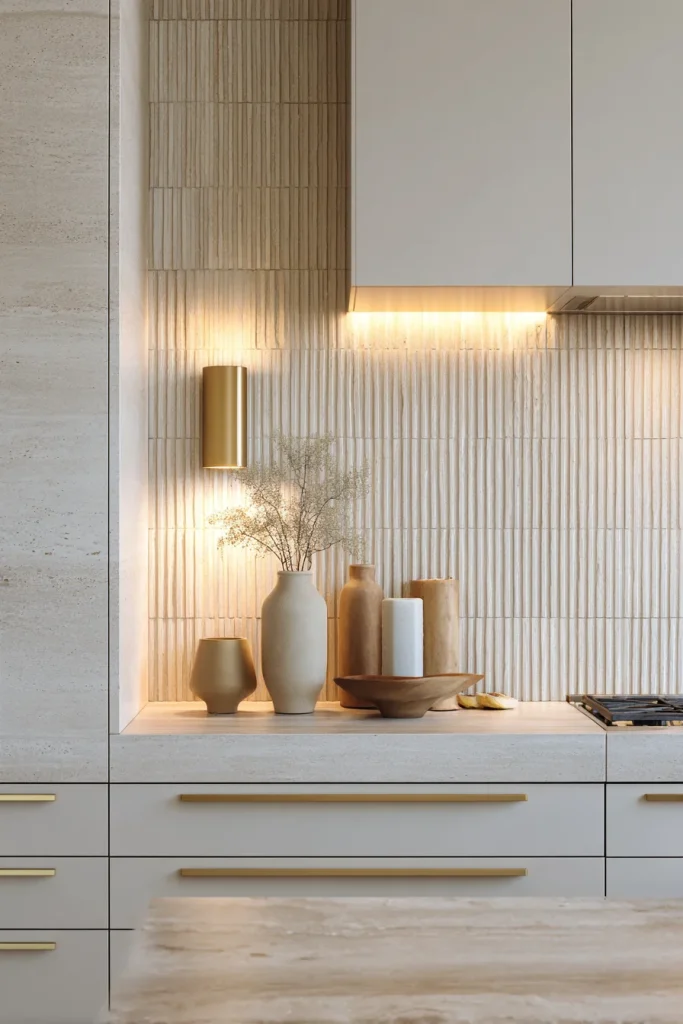
Walk into any 2026 design showroom, and you’ll see one thing missing: the brick pattern. It’s fading fast. Houzz’s 2025 Renovation Report shows brick-lay subway tile is down 18% year over year.
Why? Grout lines. Too many of them. They trap grease and look busy.
The fix is simple. Vertical stack. That means 1×3 or 2×6 tiles laid straight up and down, not staggered. Houzz data shows vertical stack installation grew 210% in luxury kitchens last year.
And what about Zellige? The handmade, wavy clay tile? It’s being replaced by “engineered irregularity.” Same wavy feel, but consistent color. Easier to clean.
So if you love ceramic, just rotate it 90 degrees. That’s trend #1.
2. “Moody Biophilic” – Forest Green & Deep Teal (Not Sage)
Sage green had a good run. 2022 to 2024. But it’s overexposed now. You see it in every rental flip.
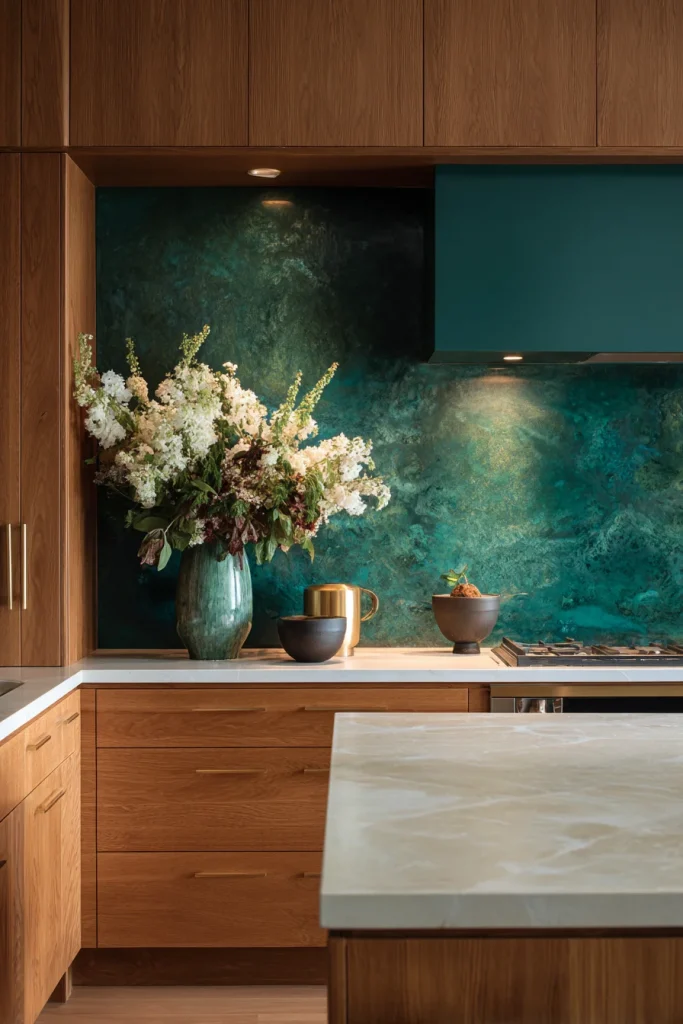
The 2026 color shift is darker. Richer. The Sherwin-Williams 2026 Color Forecast calls out deep emerald, cypress, and teal as the new nature-inspired tones.
Here’s the stat that matters. According to the NKBA 2026 Design Trends report, 43% of designers are specifying deep green ceramic for backsplashes over any other single color.
Pair these dark greens with unlacquered brass or oil-rubbed bronze fixtures. The contrast is sharp. And skip white cabinets with green tile. Go with natural wood or cream instead.
Key takeaway: Go deep or go home. No more pale sage.
3. Full Slab Porcelain (No Grout, No Cracks)
Imagine a backsplash you never have to scrub grout lines on. That exists.
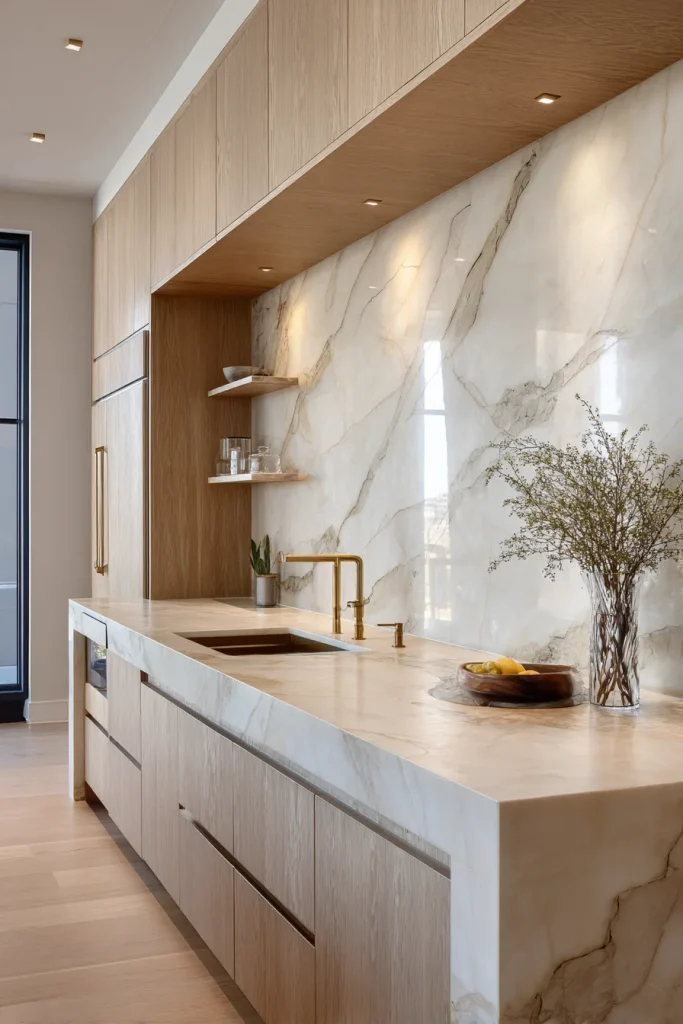
It’s called a full porcelain slab. Think 6mm or 12mm thick. One piece from countertop to upper cabinet. No tiles. No grout. No cracks.
The best brands for this are Neolith and Dekton. They make slabs that look like marble or concrete but don’t stain or etch.
Here’s the cost reality. Full slab runs $50 to $100 per square foot installed. Premium tile plus labor plus sealing runs $40 to $80. So it’s close. And you get zero maintenance.
Ask your fabricator for “mitered edges” to hide the thickness where the slab meets the wall. That’s the pro move.
4. Recycled Glass & Aluminum Composite (The “Circular” Look)
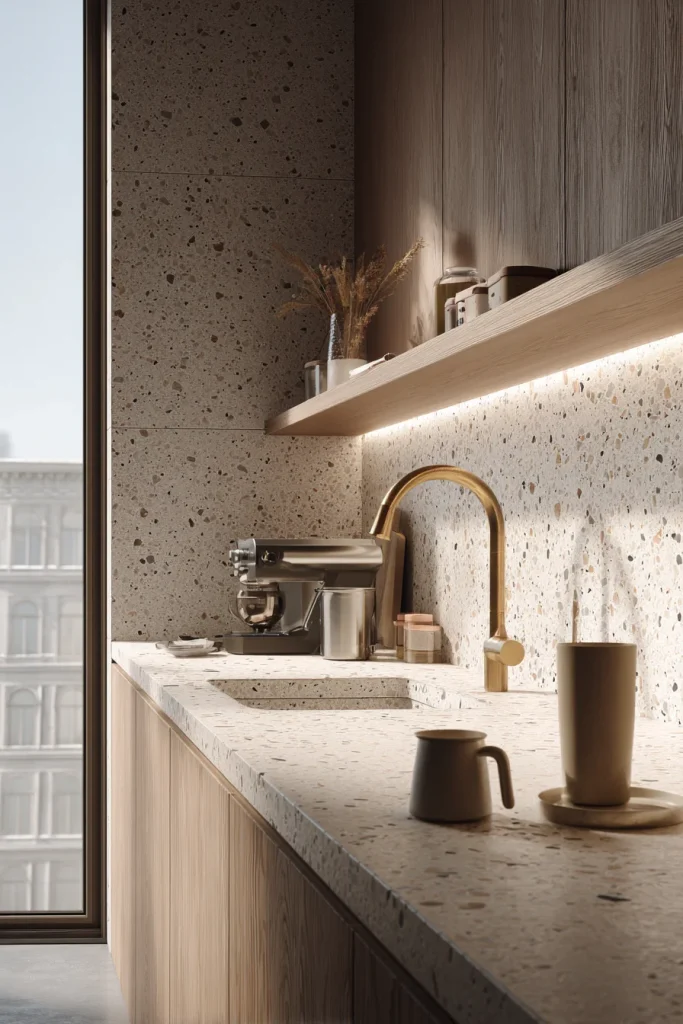
New EPA regulations took effect in January 2026. They incentivize recycled content in home building materials. Tile companies listened.
The result? Terrazzo made from post-industrial glass chips and aluminum shavings. It looks like tiny flecks of metal and glass suspended in a matte binder.
Glossy recycled glass is out. Too 2010s. Matte is the only finish that works now.
Market research from Grand View Research (October 2025) projects the recycled tile market to grow 22% each year through 2028. That’s not a small trend. That’s a shift.
Look for brands like Fireclay’s “Reclaimed” series. They publish exactly how much recycled content is in each tile
5. “Hydro-Ceramic” 3D Tiles (Tactile + Water-Activated)
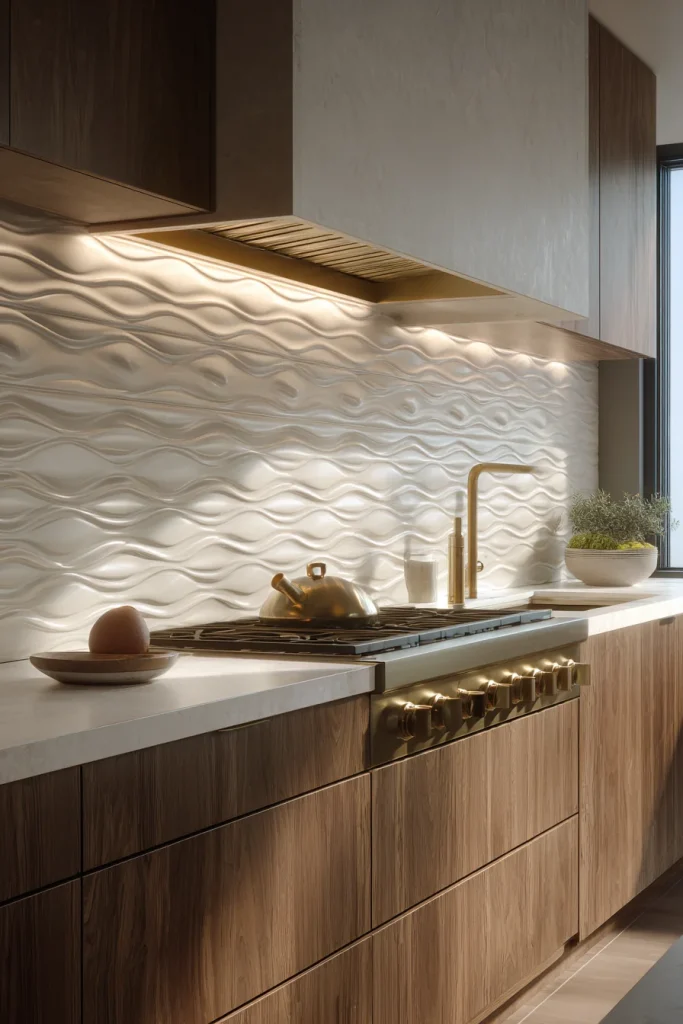
Flat, 2D tiles are boring. In 2026, people want to touch their backsplash.
Enter “nubbly” textures. Scallops. Flutes. Ripples. These are 3D ceramic shapes that cast shadows and feel interesting under your fingers.
New UV-stable resins allow these 3D shapes to go behind gas ranges without melting. That wasn’t possible two years ago.
The best examples? Cle Tile’s “Ridge” collection (vertical flutes) and Fireclay’s “Melt” series (drippy, melted wax look).
One warning: These cost more. Expect $30 to $60 per square foot. But you only need them on one wall, not the whole kitchen.
6. The “Anti-Range Hood” Metallic Panel
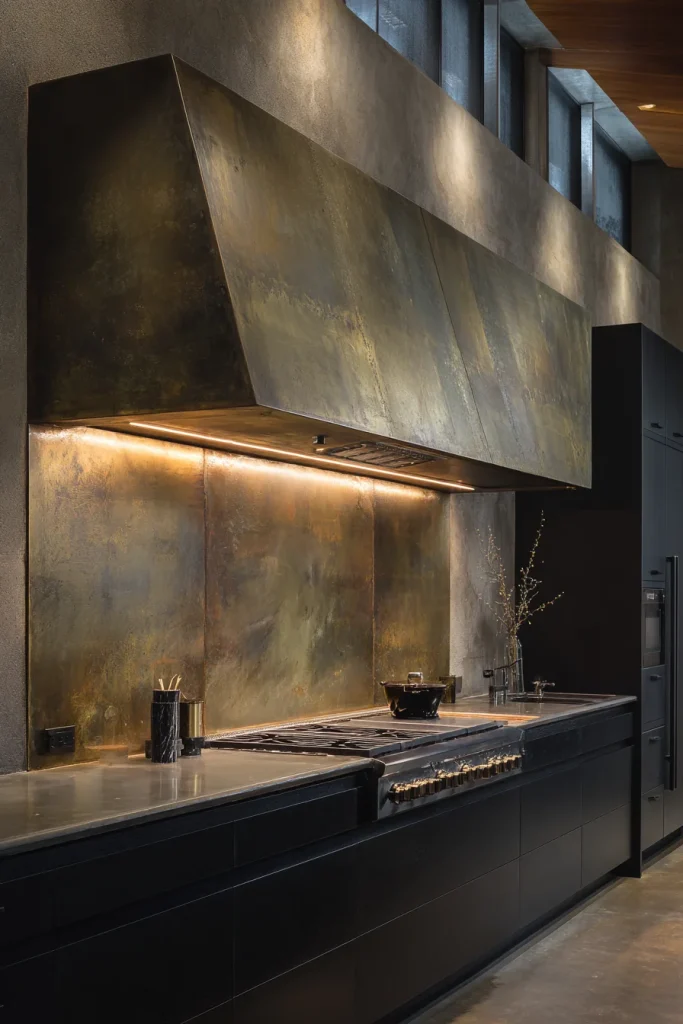
Here’s a radical idea. Don’t use tile behind your range at all.
Instead, install a single laser-cut brass or copper panel. It’s one sheet. No grout. No edges. And it acts as a heat shield.
The look is not shiny and new. Patinas are trending. Oxidized, brushed, slightly worn metal. It hides splatter better than anything else.
This works best in modern or industrial kitchens. Pair it with black or slate cabinets. And keep the rest of the backsplash simple. The metal panel is the art piece.
7. Terrazzo 2.0 – Monochromatic with Flecks (Not Confetti)
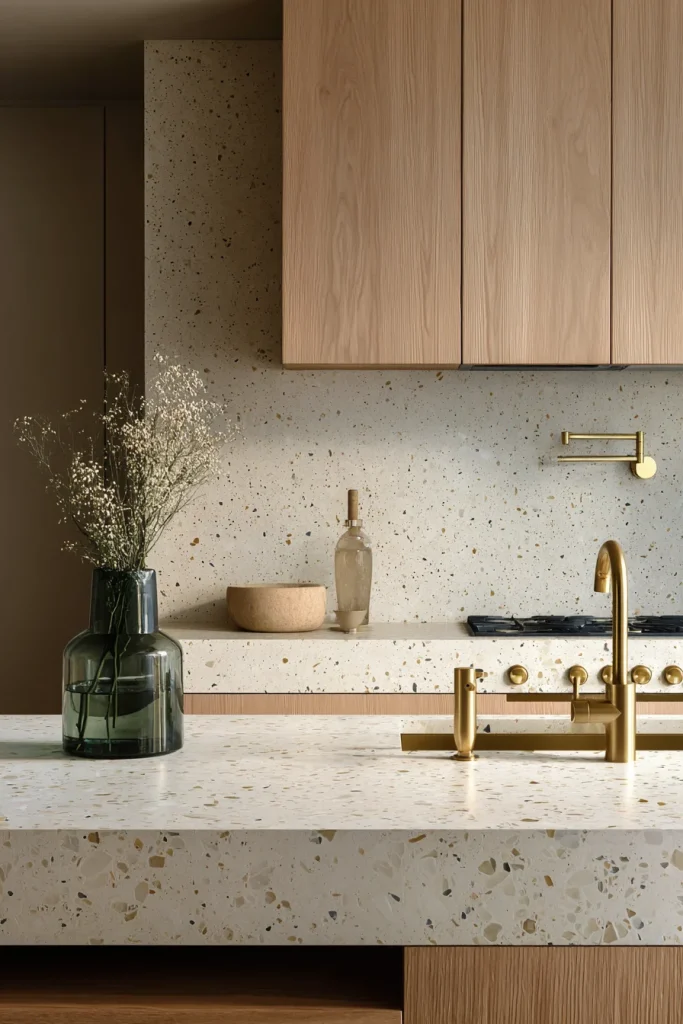
Terrazzo got a bad rap. The old version (2020 to 2023) had large, colorful chips. Pink, blue, yellow. It looked like a preschool floor.
But 2026 terrazzo is not your grandma’s confetti. It’s monochromatic. Same-color base plus micro-flecks in black, white, or gold.
Pinterest’s 2026 Trend Predictor shows searches for “monochrome terrazzo” are up 89%. People want the texture without the circus.
Order a sample and hold it 3 feet away. If you see distinct colors from that distance, send it back. You want the flecks to blend into a single tone.
Matte or honed finish only. Glossy terrazzo is dead.
8. Backlit Onyx & Agate Slices (The “Ambient Glow”)
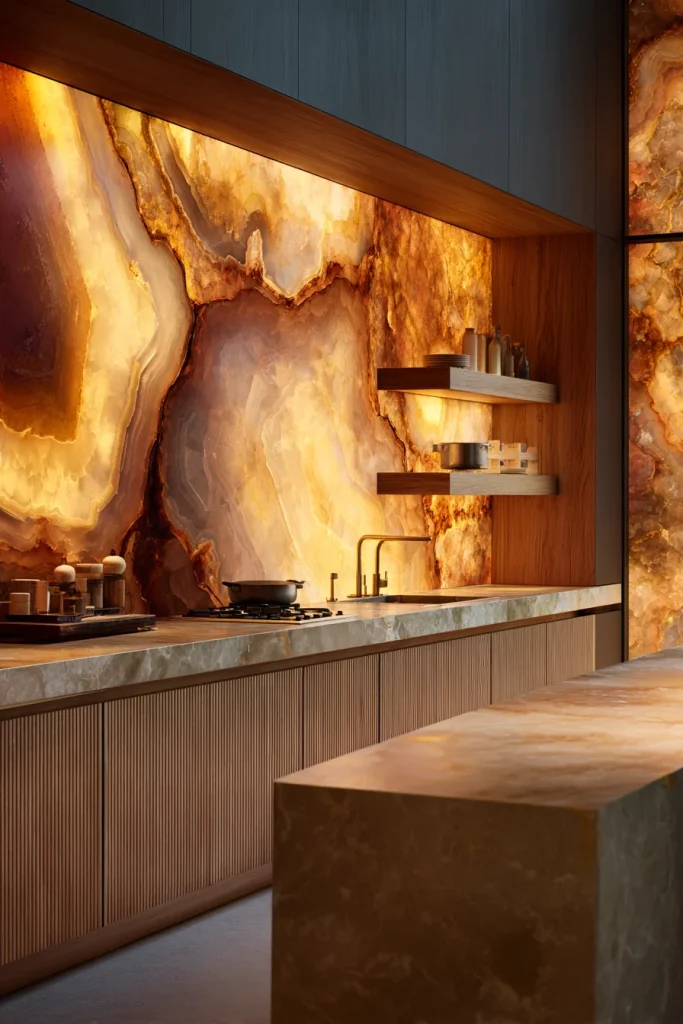
Smart lighting has moved to the backsplash. Not under the cabinets. On the wall itself.
Real onyx is beautiful but expensive ($200+ per square foot). The 2026 solution is resin-bonded agate sheets. They cost about $40 per square foot and look 90% as good.
These sheets are semi-translucent. You install a dimmable LED backlight system behind them. Then you can change the mood from bright white to warm amber.
Hardware you’ll need: Lutron Caseta dimmer. Hardwired LED tape with a remote driver. This is not a DIY job. Hire an electrician.
The result is a backsplash that glows like a sunset. Perfect for evening dinner parties.
9. Concrete with Fiber Mesh (No Cracking)
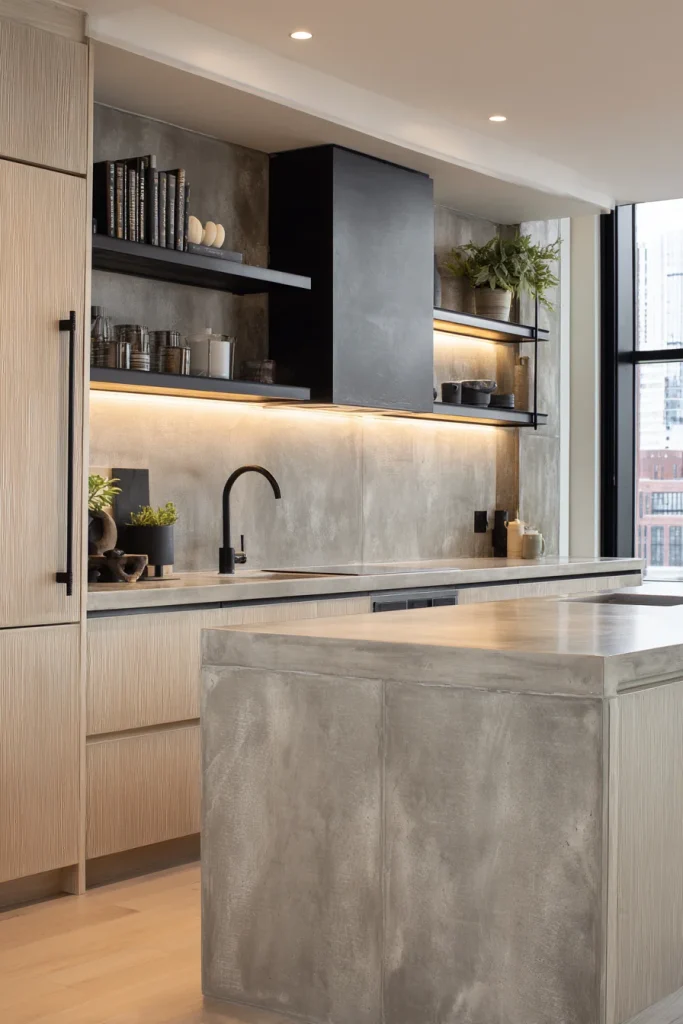
Old concrete backsplashes had one big problem. They cracked. Especially behind the stove where heat dried them out.
The 2026 formula is GFRC. Glass Fiber Reinforced Concrete. It allows for 24-inch by 48-inch panels that flex without breaking.
This look is best for industrial-modern or Japandi styles. Pair it with light oak cabinets and black steel shelves.
One downside: Concrete is porous. You must seal it every two years. But GFRC stains less than old concrete mixes.
Ask your concrete fabricator for “integral color.” That means the pigment goes through the whole slab, not just the top layer. Scratches won’t show.
10. Large-Format Hexagon (4″ to 8″ – Not Mosaic)
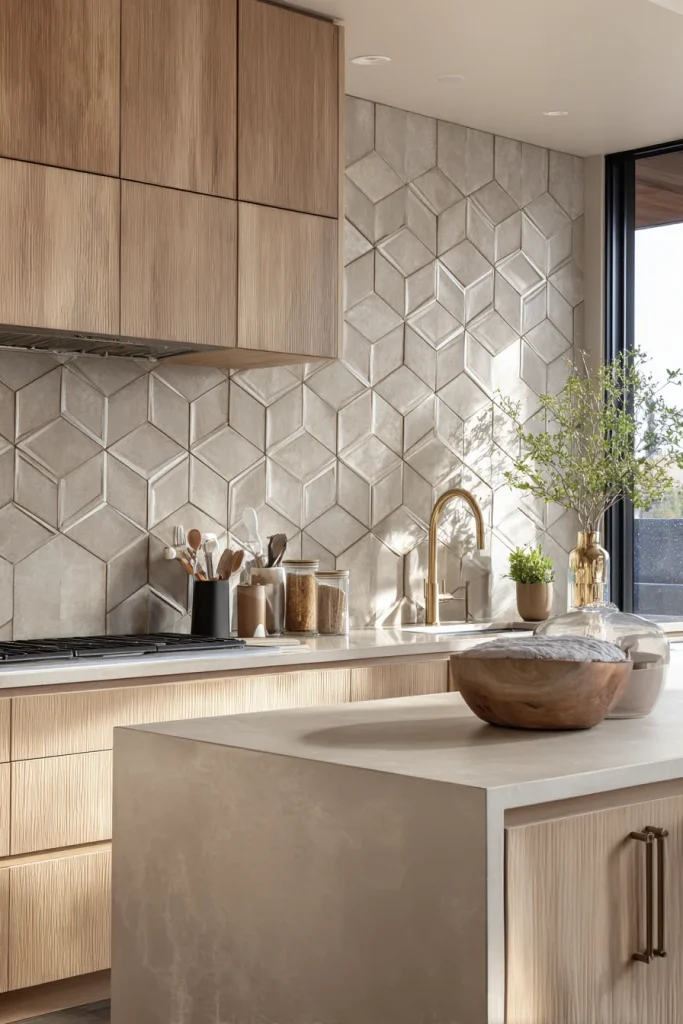
Penny rounds are now dated. Too much grout. Too many small pieces. They peaked in 2019 and have been falling since.
The replacement is oversized hexagons. Minimum 4 inches. Up to 8 inches across.
Why hexagons? They feel modern without being weird. And large-format means fewer grout lines.
Installation rule: Use 1/16-inch grout lines. Match the grout color to the tile color. This makes the hexagon shape pop without the grid looking busy.
Designer Sarah Sherman Samuel said it on her YouTube trend recap last year: “Small mosaics scream 2010s. Big hexagons are the grown-up version.”
11. “Chalkboard” Slate (Magnetic + Writeable)
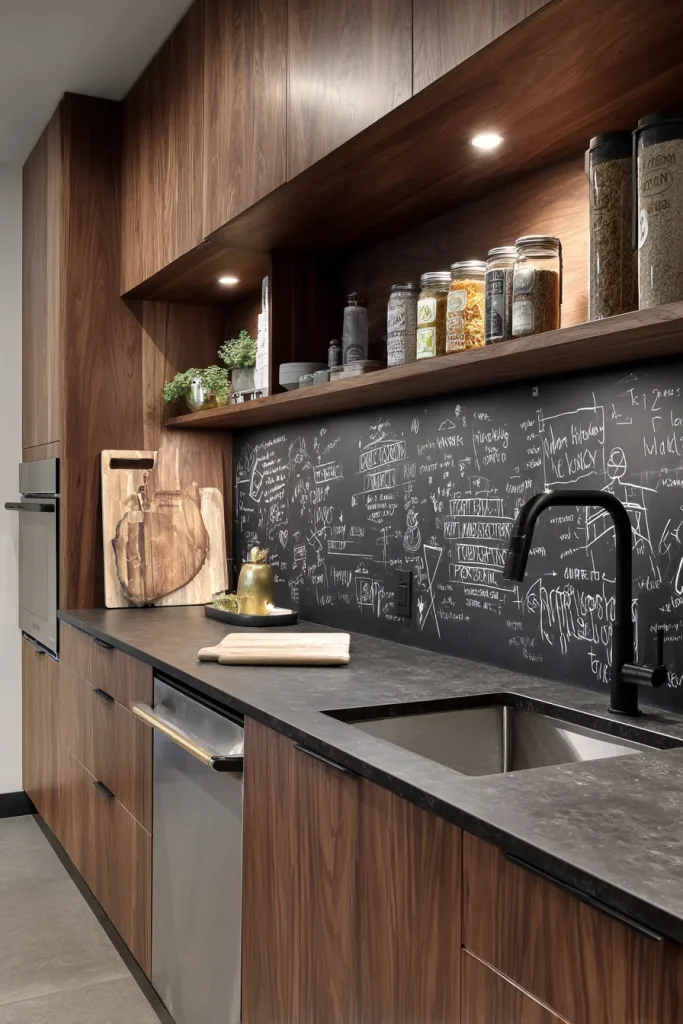
This is a function-first trend. Slate tiles that are both magnetic and dry-erase.
Here’s how it works. You install natural slate. Then you seal it with a matte nano-coating that lets you write on it with chalk markers. The iron content in slate makes it naturally magnetic.
You can hold knives, spice tins, or recipe cards right on the backsplash. Then write your grocery list next to the stove.
This is perfect for family command centers. Put it near the coffee maker. Leave notes. Stick photos.
But you must use the right sealer. Regular slate sealer will smudge. Look for “dry-erase rated nano-sealer” from brands like StoneTech.
12. Kiln-Formed Glass Wave Tiles (Artisan, Not Mass-Produced)
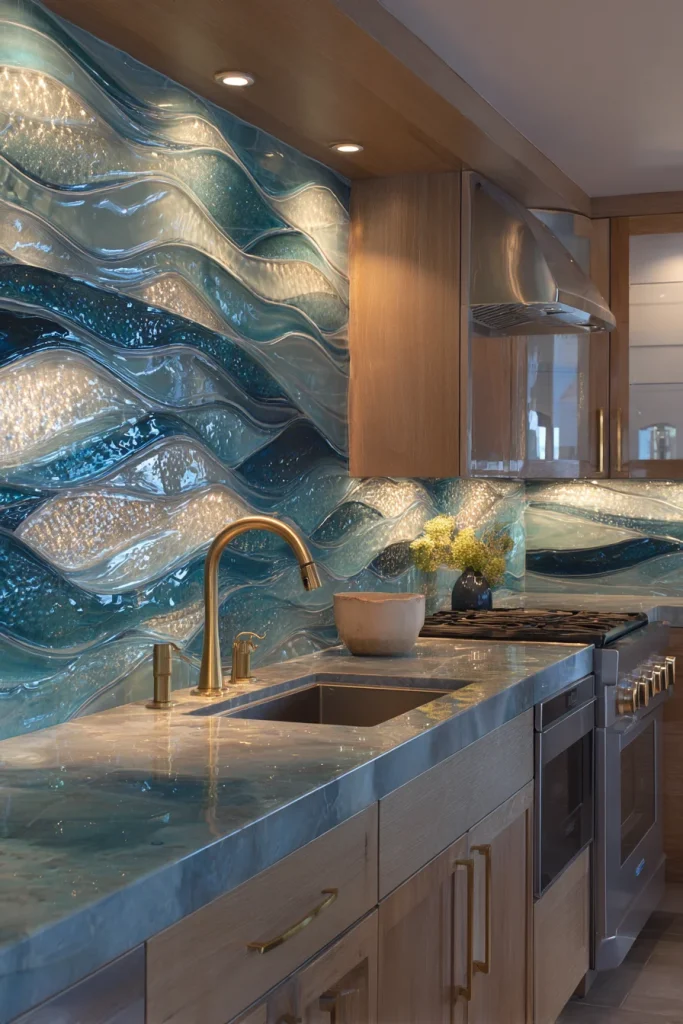
Cheap machine-made glass tiles are out. You know the ones. 1-inch squares on a mesh sheet. They look like a swimming pool from 2005.
In 2026, people want hand-kilnformed glass. Each tile is slightly different. Bubbles inside. Undulating edges. Colors that shift from seafoam to deep blue.
Where to find it: Niche Modern makes stunning wave tiles. Also check Etsy for local glassblowers. Search “kilnformed glass backsplash tile.”
Expect to pay $50 to $80 per square foot. But you only need a small accent area. Behind the sink or range.
Pro tip: Back these tiles with white thinset. It reflects light through the glass and makes the color brighter.
13. Stainless Steel “Continuous” (Commercial + Minimalist)
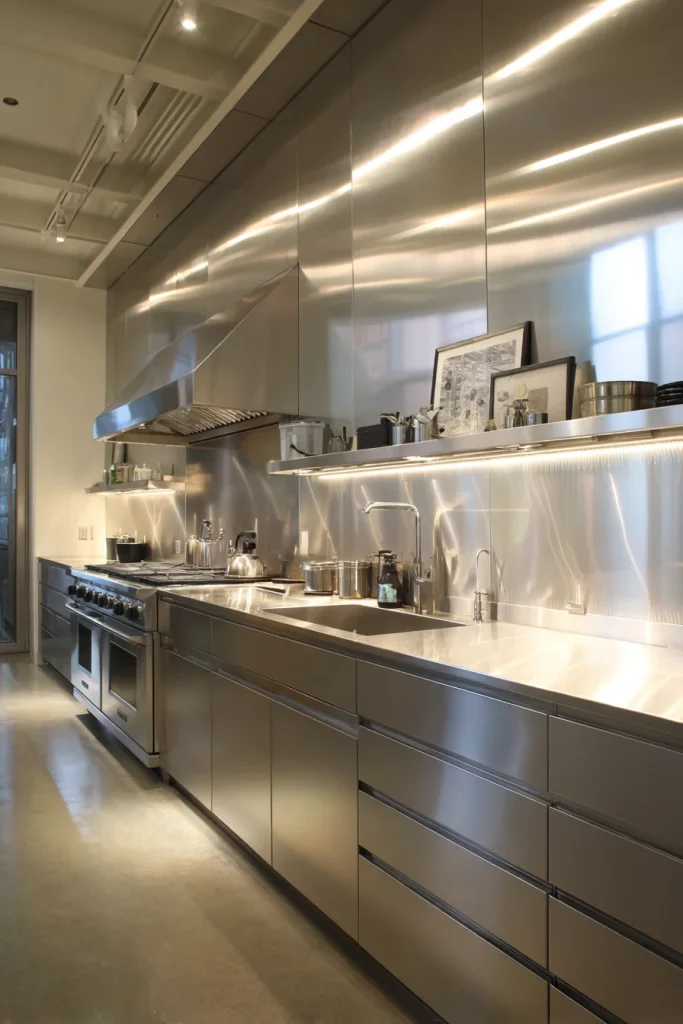
Not your diner-style 4×4 stainless tiles. Those look like a greasy spoon.
The 2026 version is full sheets of #4 brushed stainless steel. No visible seams. And the sheet has a magnetic backing.
Why magnetic? Because you can attach spice racks, knife strips, and tablet holders directly to the backsplash. No drilling holes.
Cleaning is stupid easy. Wipe with a microfiber cloth and stainless cleaner. Grease doesn’t stick like it does on tile grout.
This look works best in ultra-minimalist or professional-style kitchens. Pair with slab-front cabinets and integrated appliances.
One catch: Stainless shows fingerprints. Go with #4 brushed finish (not mirrored) to hide smudges.
14. Biophilic “Mosscrete” (Preserved Moss + Concrete)
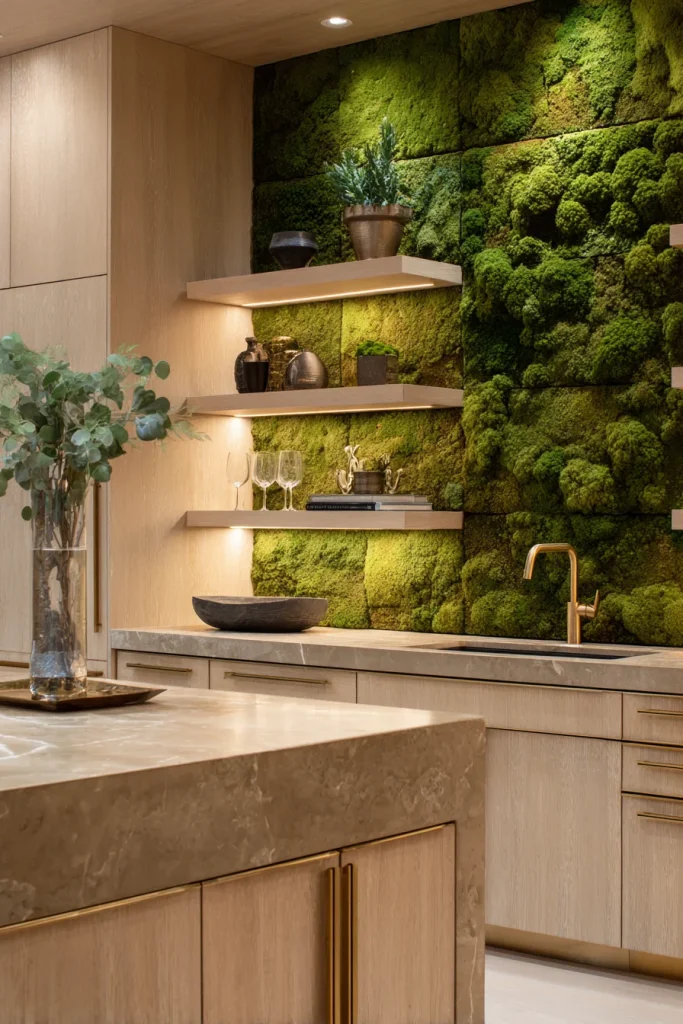
Living walls sounded great. Then people realized you have to water them. And trim them. And deal with bugs.
The 2026 solution is preserved moss stabilized into concrete tiles. Real moss. But dead and treated so it never changes color. No water. No light. No maintenance.
These tiles absorb sound too. Kitchens are loud. Mosscrete cuts echo.
Companies like “Moss Tile” (UK/EU) and “Preserved Living” (US) make these. They cost $30 to $50 per square foot.
Best placement: As a 2-foot by 3-foot panel behind an open shelf. Not the whole backsplash. Too much texture can be overwhelming.
The color stays bright green forever. No fading
15. Iridescent & “Holo” Tiles (For Accent Only)
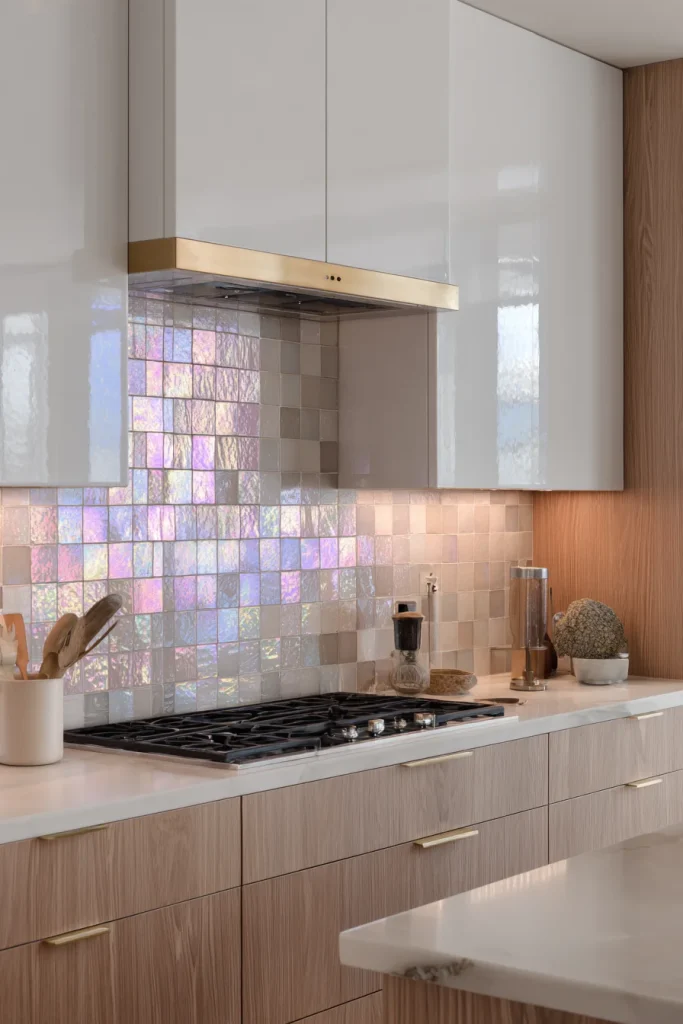
Gen Z is influencing home design now. And they like color shift.
Iridescent tiles have a pearlescent finish. They look pink from one angle, silver from another, and blue from a third.
But here’s the rule: Do not do a full backsplash with these. It will look like a nightclub bathroom.
Instead, use a 2-foot by 2-foot accent behind the range. Let it pop against a neutral background (white, gray, or beige tile everywhere else).
These tiles work best in powder rooms or wet bars attached to the kitchen. Not the main cooking area.
Look for “holo ceramic” or “pearlescent glass” at tile shops. And always see a sample in your actual kitchen light. Fluorescent light kills the effect.
16. What to AVOID in 2026 (The “Fast Fashion” of Tile)
Just because a tile is cheap on Facebook Marketplace doesn’t mean you should buy it. Here’s what to skip in 2026:
Brick-lay subway tile. Peaked in 2019. Now it says “builder grade.”
Penny rounds. Too much grout. Too dated. Peak year: 2019.
High-gloss white tile. Shows every drop of water. Also very 2010s.
Fake tumbled travertine. The beige, rounded-edge stuff. It looks like a hotel bathroom from 2008.
Any mosaic sheet with multiple colors. Confetti look is out.
These are the top items on overstock tile sites as of late 2025. There’s a reason they’re discounted.
Stick to the 16 trends above, and your kitchen will feel current through 2030.
Conclusion
The 2026 backsplash is bold, textured, and sustainable. You’re moving away from small, grout-heavy mosaics. You’re moving toward full slabs, vertical-lay ceramics, and functional surfaces like magnetic slate.
Here’s your action plan. Pick two trends from this list. One for the main backsplash. One for a small accent behind the range. Order samples. Tape them to your wall. Live with them for three days.
Then go to a tile showroom and ask specifically for “vertical stack” or “GFRC concrete” samples. If the salesperson looks confused, show them this article.
Save this guide to Pinterest. Share it with your contractor. And build a kitchen that doesn’t look old in 2028.

- 17 Classy Living Room Ideas for a Cozy Elegant Look - April 23, 2026
- 16 Dark Moody Living Room Ideas That Feel Rich and Warm - April 22, 2026
- 14 Elegant Bedroom Trends for 2026 You’ll Love - April 22, 2026