
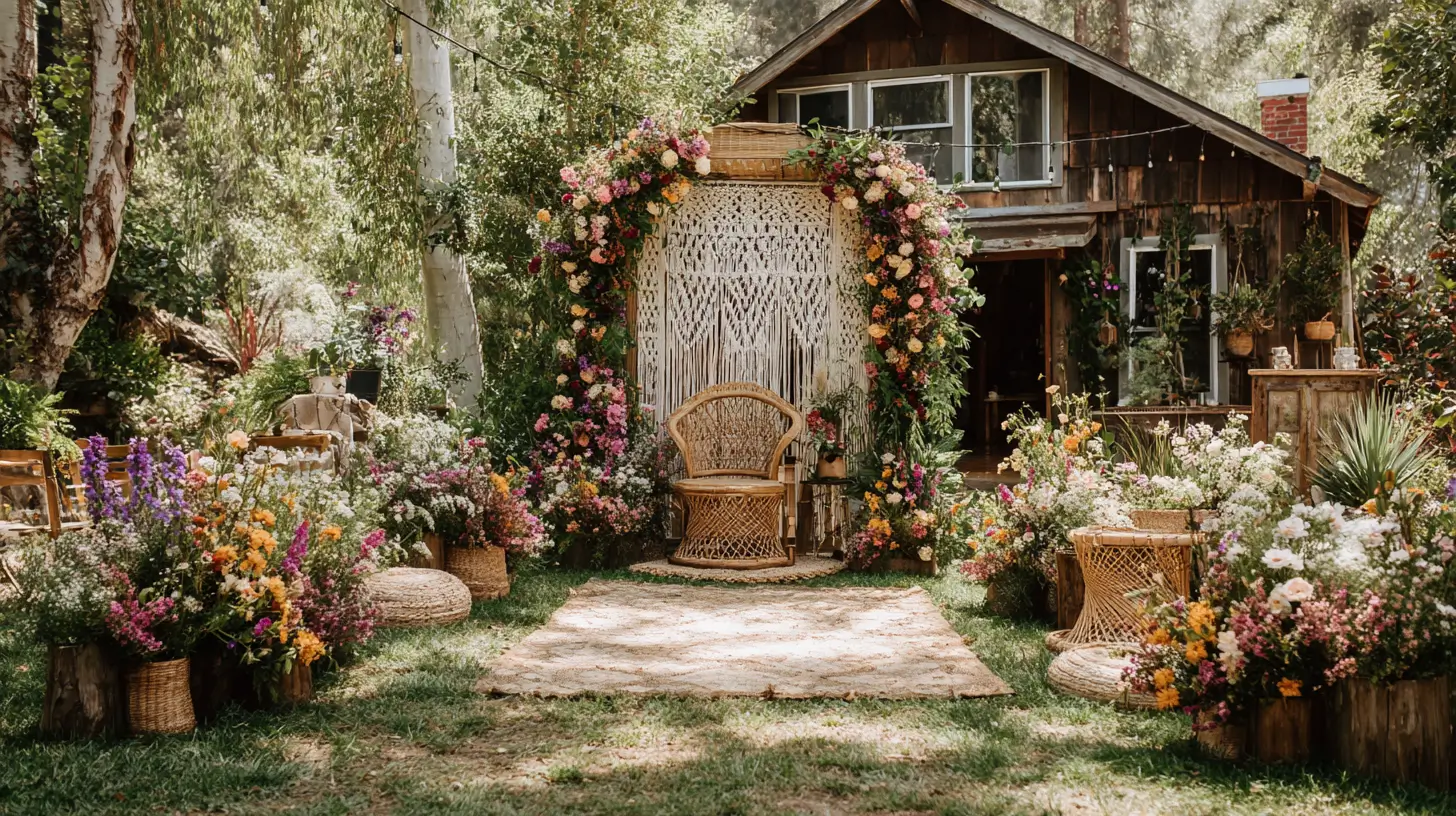
You want a garden that feels alive, personal, and beautiful. But every idea you find online looks like it costs a fortune or needs a professional to pull off.
It doesn’t have to be that way.
Boho garden style is built on things you can actually get: wildflowers from a seed packet, rope from a craft store, old pots from a charity shop. The whole point is that it looks collected, not designed. Imperfect, not polished.
This guide gives you 20 specific ideas you can start this weekend. Some cost nothing. Most cost under $30. All of them work in small spaces, big gardens, patios, and balconies.
Pick three ideas that excite you. Start there.
What Makes a Garden “Boho”?
Boho isn’t a style you buy. It’s a feeling you build over time.
The look comes from three things layered together: wild plants, natural materials, and handmade details. You mix rough textures with soft ones. You let things grow a little loose. You add objects that tell a story.
A formal garden has straight edges and matching pots. A boho garden has a terracotta pot next to a woven basket next to a patch of wildflowers growing wherever they want. That contrast is the whole point.
It’s also one of the most practical garden styles you can choose in 2026. Wildflowers need almost no maintenance once established. Natural materials like jute and stone last for years. And because the style celebrates imperfection, you can’t really get it wrong.
Pinterest’s trend data consistently places naturalistic and boho garden aesthetics in the top search categories for home outdoor spaces. The RHS (Royal Horticultural Society) reports that wildlife-friendly garden features, including wildflower patches and pollinator plants, have grown steadily in popularity year after year. People want gardens that feel good and do good at the same time.
That’s exactly what this style gives you.
5 Wildflower Ideas That Do the Work for You
Idea 1: Sow a Wildflower Meadow Patch (Even a 4×4 Ft Square Works)

You don’t need a field. You need a patch of bare soil and a good seed mix.
Clear the grass or weeds from your chosen spot. Scratch the soil surface with a rake. Scatter your seeds thinly, press them down gently, and water. That’s it.
The best time to sow is early spring or autumn. For 2026, look for pollinator-certified wildflower mixes from American Meadows (americanmeadows.com) in the US or Pictorial Meadows (pictorialmeadows.co.uk) in the UK. Both sell mixes suited to different soil types and climates, so you’re not guessing.
What grows: cornflower, poppy, ox-eye daisy, nigella, and phacelia. They look completely wild. They attract bees and butterflies. And they cost about $10 to $15 for enough seed to fill a generous patch.
Why it works: A wildflower patch gives your boho garden an anchor. Everything else you add around it ties back to that natural, growing, living center.
Pro tip: Don’t weed the patch for the first season. Many wildflower seedlings look like weeds when they first sprout. Let them grow before you pull anything.
Idea 2: Build a Wildflower Tower With Stacked Terracotta Pots

This one is perfect if you have a patio, balcony, or a tiny corner that needs something tall and interesting.
Stack three terracotta pots in descending sizes. The largest sits on the ground. A medium pot goes on top of it, offset to one side. The smallest sits on top of that. Plant each one with trailing or upright wildflowers.
Good choices: cornflower and poppies in the top pot, nasturtiums trailing down from the middle, creeping thyme in the base. The whole tower ends up around 60 to 80 cm tall and looks like something you’d find in a French countryside garden.
You can find terracotta pots at any garden center, Lidl, Aldi seasonal aisles, or online. A set of three in mixed sizes usually costs $15 to $25.
Why it works: It adds height without taking up ground space. And terracotta is one of the most “boho” materials you can use. It ages beautifully, growing more attractive as it weathers.
Idea 3: Grow a Cutting Patch So Your Garden Comes Indoors Too

A cutting patch is a small section of garden you grow purely for picking. You bring the flowers inside, put them in jars and bottles, and suddenly your home and your garden feel like one connected space.
For a boho cutting patch, grow: cosmos (airy and romantic), nigella (aka love-in-a-mist, with incredible seed heads), cerinthe (unusual blue-purple, very structural), and ammi (like white lace). These all work in borders, raised beds, or large pots.
Sarah Raven’s website (sarahraven.com) is one of the best places to source cutting flower seeds in the UK. In the US, Floret Farm (floretflower.com) is excellent and well-trusted.
Why it works: This idea connects your outdoor boho garden to your indoor boho decor. The flowers you grow outside end up in vintage bottles on your kitchen table. It makes the whole thing feel intentional.
Idea 4: Replace Mulch With a Living Wildflower Ground Cover

Most people mulch to suppress weeds. But in a boho garden, you can grow your ground cover instead.
Creeping thyme spreads slowly between paving stones or along path edges. It stays low, smells incredible when you step on it, and flowers purple in early summer. Chamomile does the same thing and smells like apples. White clover is another option. It fixes nitrogen in the soil, feeds bees, and stays green all season.
All three are drought-tolerant once established. None of them need much attention after planting. You can buy plug plants or grow them from seed.
Why it works: Living ground cover looks far more interesting than bark chip or gravel. It’s also better for soil health and pollinators. And it fits perfectly in a boho garden because it blurs the edges between path and planting.
Idea 5: Let Self-Seeders Do the Planting for You

This is the laziest idea in this whole guide. And one of the best.
Some plants drop seeds at the end of the season. Those seeds germinate the following spring, often in unexpected spots. In a formal garden, this is a problem. In a boho garden, it’s the whole design strategy.
Plants that self-seed reliably: borage (bright blue flowers, pollinators love it), foxglove (tall spires, shade tolerant), aquilegia (delicate, comes in dozens of colours), and verbena bonariensis (tall purple stems that look stunning in clusters).
The RHS recommends allowing self-seeders in garden borders as part of their advice on sustainable, wildlife-friendly gardening. It reduces the need to buy new plants each year and creates that natural, “it grew this way” look that boho style depends on.
Why it works: After the first year, these plants cost you nothing. They just keep coming back, popping up where they decide to, filling gaps you didn’t plan. That unpredictability is exactly right for this style.
5 Macrame Garden Decor Ideas You Can Make or Buy

A quick note before this section: outdoor macrame needs to be weather-aware. Natural cotton rope will eventually degrade if left wet for long periods. For permanent outdoor pieces, use polypropylene macrame cord, which looks identical but handles rain and humidity far better. For pieces you can bring indoors when it rains, natural cotton is fine and looks better.
Idea 6: Hang a Macrame Plant Holder From a Tree Branch

This is the classic boho garden move. And it works every single time.
Find a strong, horizontal tree branch. Hang a macrame plant hanger from it. Plant it with something trailing, like string of pearls, trailing nasturtiums, or a small fern.
You can buy ready-made outdoor macrame plant hangers on Etsy (search “outdoor macrame planter”). There are thousands of handmade options, many from small UK and US makers, starting from around $15 to $25. Or search YouTube for “macrame plant hanger tutorial” and make one yourself. Channels like HGTV Handmade and Soulful Notions have clear, beginner-friendly tutorials posted in 2024 and 2025.
For a 3-pot cascading version, hang three hangers at different heights from the same branch. Use terracotta pots in each. Stand back and it looks like something from a magazine.
Why it works: It adds vertical interest without building anything. And it connects two of the key boho elements instantly: natural fibers and living plants.
Idea 7: Make a Macrame Wall Panel for Your Fence

A bare fence is a wasted surface. A macrame wall panel turns it into a feature.
You need: a length of driftwood or thick dowel as your rod, natural jute or cotton rope, and about two hours. The basic knot used in macrame is called a square knot. It takes about 10 minutes to learn from a YouTube tutorial.
Weave dried flowers, seed heads, or small sprigs of eucalyptus into the knots as you go. These dry in place and add texture and colour. When it’s finished, seal it with an outdoor fabric protector spray (available from hardware stores) to help it resist moisture.
The result is a piece of wall art that costs under $20 and looks completely bespoke.
Why it works: Fences are often the biggest visual element in a garden. Turning yours into an art piece changes the entire feeling of the space.
Idea 8: Use a Macrame Hanging Basket for Herbs

This is functional boho. You grow things you actually use, displayed in a way that looks beautiful.
Hang a macrame basket near your kitchen door or on a sunny fence. Plant it with trailing rosemary, thyme, or nasturtiums (the flowers are edible too). The herbs stay accessible for cooking. The basket adds texture and softness to a hard wall or post.
Look for macrame hanging baskets with a solid liner, not just open knotted rope, so the compost stays in. Etsy has hundreds of options. So does Amazon, though quality varies, so check reviews.
Why it works: It solves the problem of where to put herbs in a small garden while looking far better than a plain plastic pot screwed to a wall.
Idea 9: Style Your Outdoor Table With a Macrame Runner

You don’t have to put macrame in a plant. It works on a table too.
Lay a hand-knotted macrame table runner down the center of your outdoor dining table. Add bud vases with wildflower cuttings (from your cutting patch in idea 3). Use stone or terracotta plates. Set out a candle or two.
The whole table takes 10 minutes to style and looks completely intentional. Better Homes and Gardens and HGTV both featured outdoor table styling with natural fiber runners as a key outdoor living trend in 2025.
You can buy macrame table runners on Etsy for $20 to $40, or search YouTube for “DIY macrame table runner” to make one. It’s an easier project than a wall panel and a good starting point if you’ve never tried macrame.
Why it works: It transforms outdoor dining from functional to atmospheric. And it takes no permanent installation at all.
Idea 10: Frame Your Garden Gate With a Macrame Swag and Pampas Grass

Your garden entrance deserves an idea of its own.
A macrame swag is a decorative piece you hang over an arch, gate, or doorway. Combine it with a few stems of dried pampas grass, some eucalyptus, and maybe a string of small wooden beads. The result is an entrance that feels welcoming and personal.
For a permanent outdoor installation, use polypropylene macrame cord rather than natural cotton. It handles all weather conditions and looks nearly identical. Bring the dried botanicals inside over winter.
You can find macrame swag tutorials on YouTube by searching “boho garden gate decor” or “macrame arch swag.” Several creators posted new tutorials in 2025 with step-by-step guidance.
Why it works: First impressions matter. A styled garden entrance signals that the whole space has been thought about. It also photographs beautifully for anyone who wants to share their garden on social media.
5 Natural Texture Ideas That Cost Almost Nothing
Idea 11: Use Woven Baskets as Planters

Rattan, seagrass, and woven water hyacinth baskets are everywhere right now. IKEA, H&M Home, TK Maxx, and most garden centers sell them in multiple sizes.
Line the inside of the basket with a coconut coir liner (a few dollars at any garden center) to hold the compost in. Plant with succulents, ferns, trailing ivy, or small flowering plants. Group three baskets together in different heights.
They age well outdoors and look better as they weather. If one eventually deteriorates, it’s cheap enough to replace.
Why it works: Woven baskets add instant warmth and softness. They contrast beautifully against hard surfaces like paving, brick, or timber.
Idea 12: Lay a Pebble Path With River Stones

A pebble path made from river stones creates a natural, organic feel that no paving slab can replicate.
You don’t need cement. Lay the stones into a bed of sharp sand, pressed tightly together. The sand holds them in place once settled. Create a flowing, curved path rather than a straight line. Mix stone sizes. Add moss between gaps if you want a softer look.
River stones are sold by the bag at most garden centers or can be ordered by the sack online. A small path using 3 to 4 bags of mixed stone costs around $30 to $50.
Why it works: Paths guide how people move through a garden. A natural stone path says “this garden was built by hand, not by machine.” That feeling is central to the boho aesthetic.
Idea 13: Group Terracotta Pots in Odd Numbers

Single pots look lonely. Pairs look symmetrical and formal. Groups of three, five, or seven look relaxed and collected.
Mix aged terracotta with new pots. To age a new pot quickly: mix plain yogurt with water to a thin paste, paint it onto the pot, and leave it outside. Moss will start to grow within a few weeks.
Plant each pot differently. One with tall ornamental grass. One with trailing nasturtiums. One with a compact lavender. The variety is the point.
Why it works: This is one of the simplest and cheapest styling moves in gardening. And it has an immediate visual impact.
Idea 14: Use a Piece of Driftwood as a Focal Point

Every good garden has a focal point. Something your eye travels to first.
In a boho garden, a large piece of driftwood works perfectly. Sit it in a gravel or pebble bed. Surround it with ornamental grasses and a few wildflowers. Add a small macrame hanging on a spike nearby.
You can find driftwood on beaches, in rivers, or buy it from garden centers and online suppliers. Large sculptural pieces cost $20 to $60. Smaller pieces are often free.
Why it works: Driftwood is organic, unpredictable in shape, and completely natural. It grounds the whole garden and gives every other element something to relate to.
Idea 15: Layer Outdoor Rugs in Natural Fibers

Layering rugs on a patio is one of the fastest ways to transform the space.
Use a large jute or sisal rug as the base. Add a smaller flatweave rug on top, placed at a slight angle. Add floor cushions, a low table, and some potted plants. The patio becomes a room.
Weatherproof jute and natural fiber rugs are available from Ruggable (good for UK and US), Dunelm, and Wayfair. Look for rugs described as “outdoor safe” or “UV resistant.” Prices start at around $40 for a medium size.
Why it works: Rugs define a space. They tell people “sit here, this is where we gather.” That sense of a dedicated outdoor living space is what makes a boho garden feel complete.
3 Upcycled Ideas That Cost Almost Nothing
Idea 16: Turn Old Wooden Crates Into a Tiered Herb Garden

Wine crates, fruit crates, and wooden pallets are easy to find for free or almost free. Freecycle, local Facebook Marketplace, or the back of a greengrocer’s shop are good places to look.
Sand the wood lightly to remove splinters. Brush on exterior wood oil or outdoor varnish to weatherproof it. Stack two or three crates at different heights. Fill each one with potting compost and plant your herbs.
Trailing nasturtiums spilling out of the top crate look especially good. They grow fast, flower in orange and yellow, and the leaves and flowers are edible.
Why it works: It’s free, sustainable, and functional. And stacked crates have huge visual personality. They look hand-built because they are.
Idea 17: Use Glass Bottles as Garden Edging or Vases

Collect wine bottles, olive oil bottles, or any glass bottle with an interesting shape.
For path edging: push bottles upside down into the soil along a path edge, with the bases pointing up. Alternate green and clear glass for colour variation. It creates an unusual, whimsical border that costs nothing.
For display: group 5 to 7 bottles on a garden shelf or a low wall. Fill some with water and single wildflower stems. Leave some empty. Mix heights and glass colours.
Why it works: It’s genuinely free. And it photographs incredibly well for anyone sharing their garden on Instagram or Pinterest. The light through coloured glass in the afternoon is beautiful.
Idea 18: Turn an Old Ladder Into a Plant Display

An old wooden ladder leaned against a wall or fence becomes instant garden furniture.
Hang macrame plant hangers from the rungs (connecting back to idea 6). Sit small terracotta pots on the steps. Weave fairy lights through the frame for evening atmosphere. Lean a large piece of driftwood against the base.
This one idea pulls together four or five others from this list. It becomes a focal point, a planting display, and a lighting feature all at once.
Check charity shops, reclamation yards, or again, Facebook Marketplace for old wooden ladders. Most cost $5 to $15.
Why it works: It adds strong vertical structure without any building or permanent installation. And it gives you a place to display lots of small elements that would otherwise feel scattered.
2 Lighting and Atmosphere Ideas for Evening Gardens
Idea 19: Weave Solar Fairy Lights Through Wildflowers and Branches

Solar fairy lights have improved a lot. In 2026, good quality solar lights from brands like Litehouse (available on Amazon) or Lights4Fun (UK) hold a charge well and last all night from a single day of sun.
Warm white (2700K colour temperature) looks most natural and most boho. Cool white looks harsh against natural materials.
Weave the lights through ornamental grasses, drape them across a tree branch, or wind them through a wildflower patch that’s gone to seed. In the evening, the effect is soft, warm, and very atmospheric.
Why it works: Lighting changes how a garden feels after dark. And solar means no extension cables, no running costs, and no installation. It’s the easiest win in this whole list.
Idea 20: Build a Boho Fire Pit Corner With Natural Seating

This is the final idea and the most satisfying one. It’s where all the other ideas come together.
Choose a corner of your garden. Put a simple fire pit in the center. Surround it with large floor cushions in earthy tones. Burnt orange, terracotta, olive green, rust brown. Add a jute rug underneath. Hang a macrame piece on the nearest fence. Add a potted wildflower on one side and a lantern on the other.
That corner becomes a room. A place people actually want to sit in.
Simple steel fire pits start at around $40 to $60 from B&Q, Bunnings, or Amazon. Floor cushions in outdoor fabrics start at around $20 to $30 each.
Why it works: A boho garden isn’t just something you look at. It’s something you live in. The fire pit corner gives you a reason to be outside every evening, not just when the weather is perfect.
How to Pull Your Boho Garden Together
Now that you have 20 ideas, here’s how to actually use them without getting overwhelmed.
Start with one zone. Not your whole garden. Pick a corner, a wall, a patio section. Get that one zone feeling right before you expand.
Use the rule of three for texture. In every zone, aim to have at least three different textures working together. Something rough (terracotta, stone, driftwood). Something soft (rug, cushion, plant). Something woven (macrame, basket, rope). That combination is what makes a space feel layered and intentional.
Keep your colour palette small. Earthy neutrals as your base: terracotta, cream, tan, grey, brown. Then 2 to 3 wildflower colours on top: whatever your seed mix produces. More than five colours in one zone starts to feel chaotic rather than boho.
Accept that it builds over time. The best boho gardens aren’t finished in a weekend. They grow. You add things, move things, let plants spread into gaps. That process is the style. A boho garden a year from now will look better than it does today. And better still the year after that.
Photograph it in the golden hour, the hour after sunrise or before sunset. The warm light hits natural textures and warm colours in a way that looks incredible. If you want to share your garden, that’s when to take the photos.
You’re Ready to Start
Boho garden style is not about having the most things. It’s about the right things, placed with intention, and allowed to grow into themselves.
You have 20 ideas here. Some you can do today with what you already own. Others need a short shopping list. A few will take a season to come to life.
Pick the three that feel most like you. Get those right. Then build from there.
Your perfect boho garden grows one idea at a time.

- 16 Japanese Minimalist Living Room Ideas for Total Visual Calm - March 16, 2026
- 17 Farmhouse Hallway Ideas That Feel Warm and Welcoming - March 16, 2026
- 17 Vintage Bedroom Ideas With a Modern Twist (2026) - March 16, 2026


