

You have a small outdoor space. Maybe it’s a balcony. Maybe it’s a patio the size of a parking spot. And every time you look at it, something feels off. It looks cluttered. Or empty. Or like you just gave up.
Here’s the truth: most garden advice is written for people with yards. Big ones. That advice does not work for you.
But small spaces can look stunning. Better than big ones, actually. The secret is not more plants or more money. It is intention. Every choice you make should have a reason.
These 15 ideas will show you exactly how to do that. You can start this weekend. You do not need a designer. You do not need a big budget. You just need a plan.
Why Intentional Design Matters More Than Space Size
Most people with small outdoor spaces make the same mistake. They fill the space. They buy plants when they see them. They add furniture because it was on sale. The result looks busy and random.
Intentional design is different. Every item earns its spot. Every plant serves a purpose. The space feels calm and complete, not crowded.
More people are working with small spaces than ever before. Urban gardening has grown steadily over the past several years. But having plants is not the same as having a garden that works.
Think of it this way. A well designed small garden is like a well edited bookshelf. You see exactly what is there. Nothing fights for attention. Everything belongs.
The 15 ideas below build on each other. You do not need to use all of them. Pick the ones that fit your space and your life.
Idea 1: Give Your Space One Focal Point
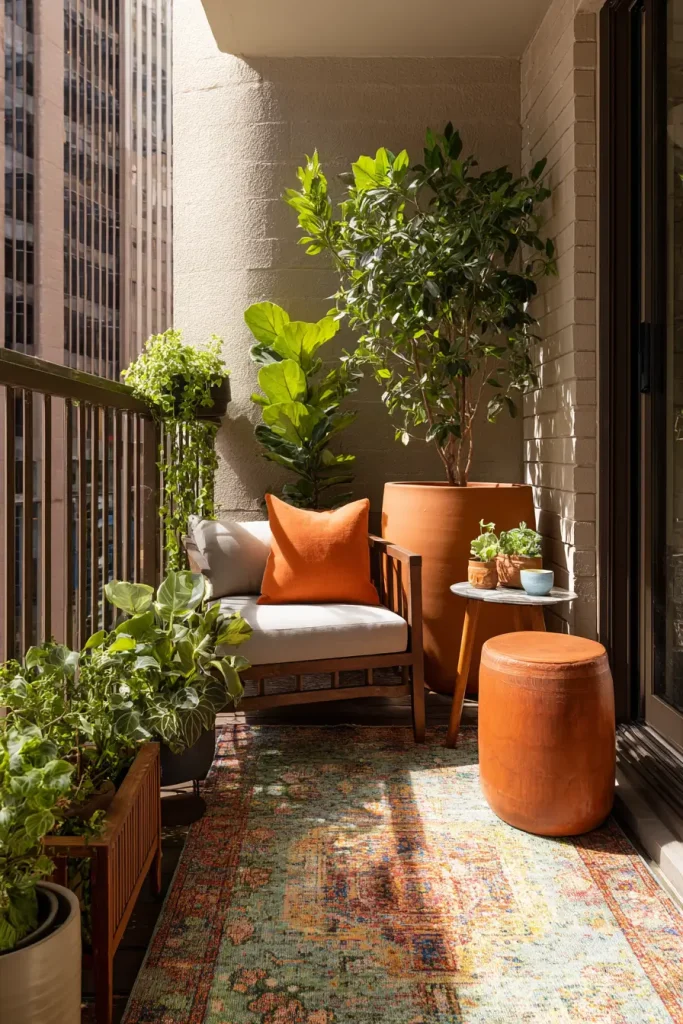
A small space needs one thing to look at first. One anchor. Without it, the eye does not know where to go, and the whole space feels restless.
Your focal point can be a large statement pot. A small water feature. A sculptural plant. One piece of garden art. It does not need to be expensive. It needs to be deliberate.
Place it at the farthest visible point from where you enter the space. This pulls the eye forward and makes the space feel deeper than it is. A single large terracotta pot planted with a bold leafy plant does this perfectly on a narrow balcony.
Research into small space garden satisfaction consistently shows that spaces with one deliberate focal point feel more cohesive than those without. The ones that feel random mostly lack this anchor entirely.
Budget for this: $30 to $200 depending on what you choose. Start here before you buy anything else.
Idea 2: Use Your Walls as Growing Space
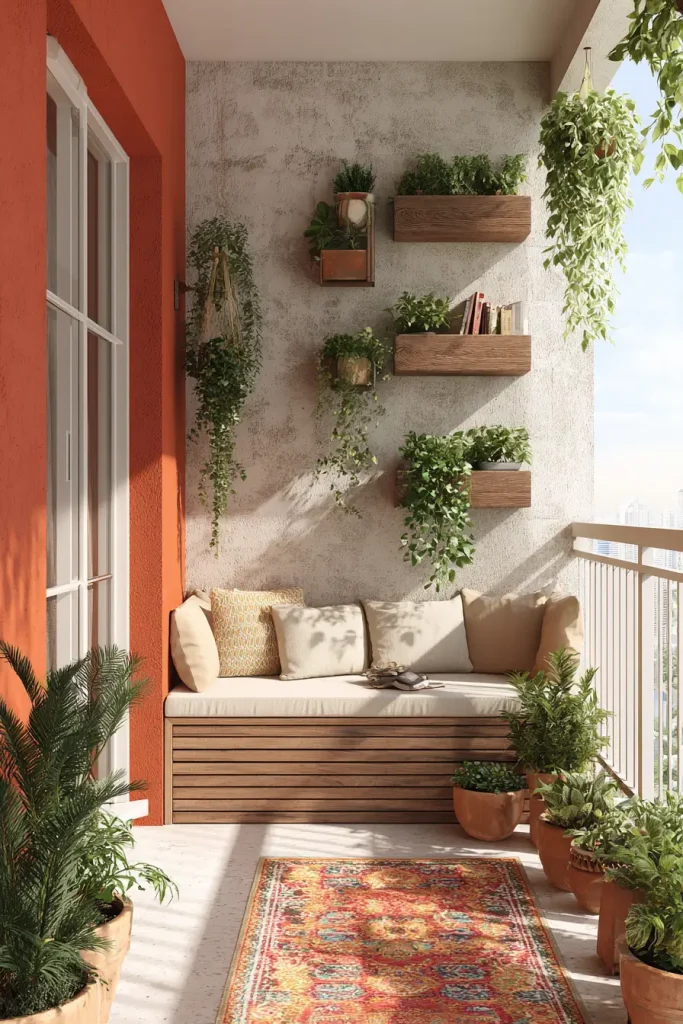
The floor of your small space is limited. Your walls are not. Most people ignore vertical space completely. That is a big missed opportunity.
Wall mounted planters, a simple trellis, or a pegboard system can turn a blank wall into a green feature. For shaded walls, pothos and ferns work well. For sunny walls, try jasmine or climbing roses.
A basic freestanding shelf unit, treated for outdoor use, costs under $30 and lets you stack herbs or small plants upward instead of outward. It is one of the most popular small space garden hacks for good reason. It works.
Vertical gardening has been a top urban garden trend for several years running. It is popular because it solves a real problem. You get more growing space without taking any floor space away.
Before you mount anything on a balcony wall, check the weight limit. Most balconies handle wall mounted planters easily. A full soil trough is a different story. When in doubt, ask your building manager or check your lease.
Idea 3: Group Your Containers With a Purpose
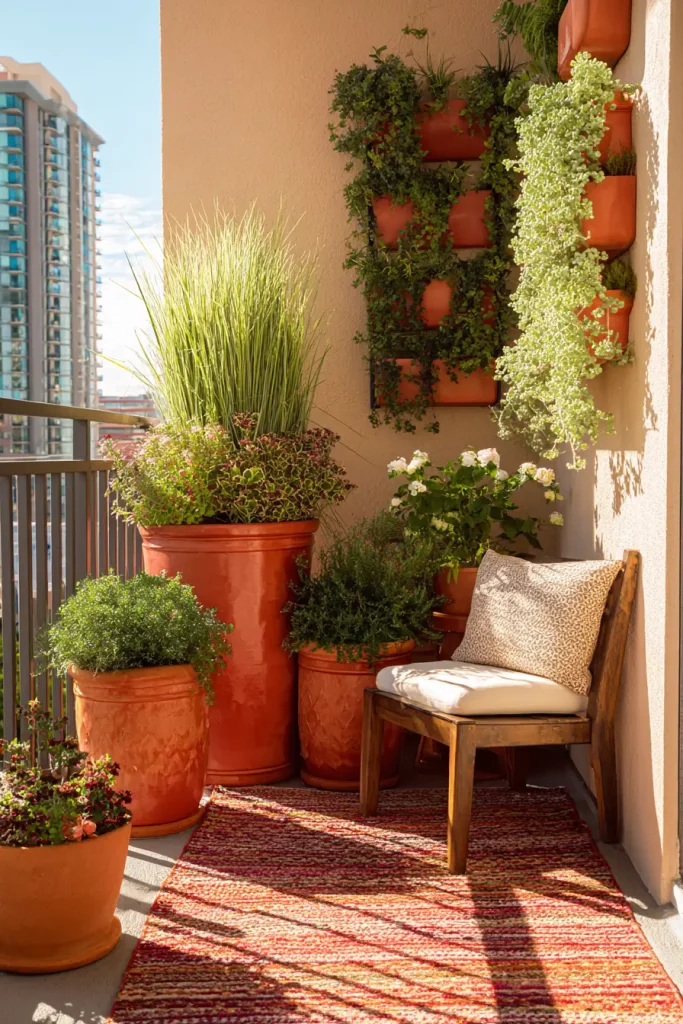
Random pots scattered around a small space look like clutter. Grouped containers look designed. The difference is just arrangement.
Use the odd number rule. Group 3 or 5 pots together, not 2 or 4. Odd numbers look more natural to the eye. Vary the heights. Vary the pot sizes. Keep the material or color consistent so they read as a set.
The thriller, filler, spiller formula works well for container planting. One tall dramatic plant as the thriller. One medium bushy plant to fill the middle as the filler. One trailing plant that spills over the edge as the spiller. This gives every pot a sense of movement and completeness.
Container gardening is the number one gardening activity for people with limited outdoor space. That is not a surprise. Containers are flexible, movable, and work on any surface.
Switch to lightweight fiberglass pots if you are on a balcony. They look exactly like stone or terracotta but weigh a fraction of the amount. This matters a lot on an upper floor where weight restrictions apply.
Idea 4: Pick a Color Palette and Stick to It
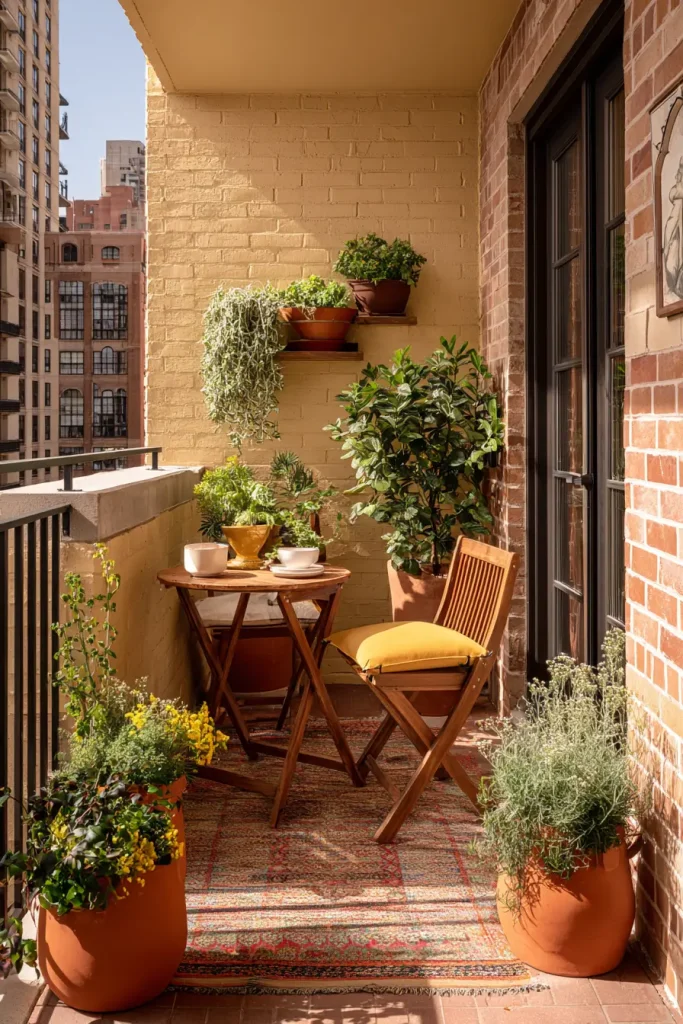
Here is one of the fastest ways to make a small garden look designed. Choose two or three colors. Use only those. Everything else falls into place.
Cool tones like white, silver, and soft blue make tight spaces feel larger. They reflect light and create a calm, open feeling. Warm tones like terracotta, rust, and yellow feel cozy. They work well in shaded spots or north facing spaces.
Match your palette to your outdoor furniture if you have any. If your chairs are dark grey, a palette of white flowers and silver foliage will look intentional. The same plants next to bright orange chairs would look like a mistake.
Earthy, muted tones are dominating outdoor design right now. Warm grey, dusty sage, and soft brown work well together. These tones also happen to suit most natural plant colors without clashing.
You do not need to replace everything to shift your palette. Start with your pots. Painting old terracotta pots the same color instantly makes a mismatched collection look cohesive. A $5 pot of outdoor paint goes a long way.
Idea 5: Add Scent to Make the Space Feel Special
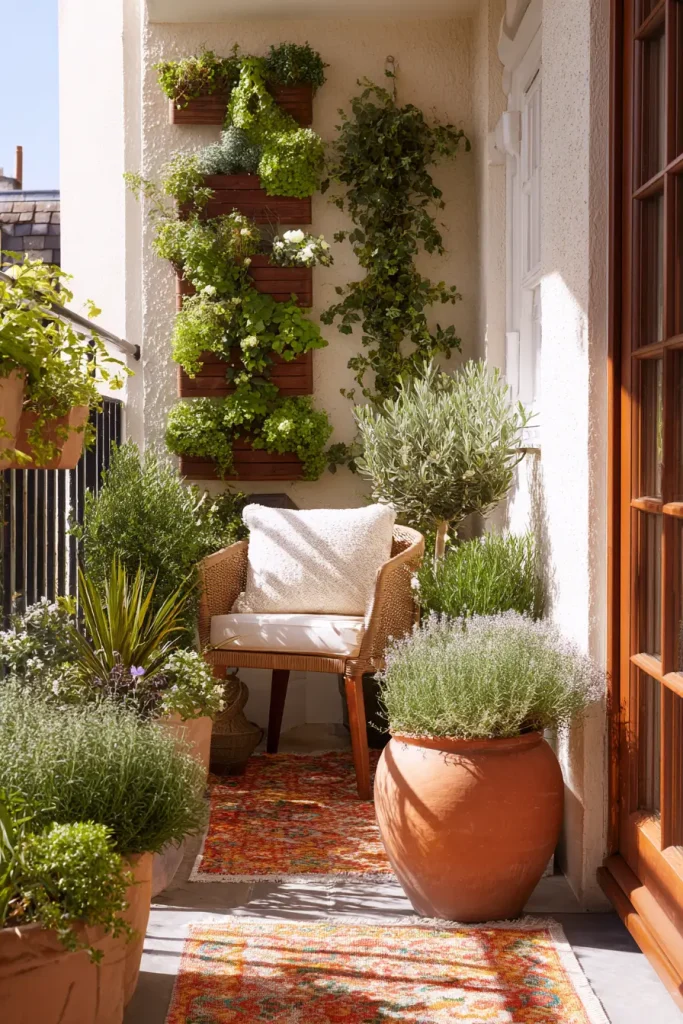
This idea costs almost nothing and most people never think of it. Scent makes a small outdoor space feel luxurious. It adds a whole sensory layer without taking up any visual space.
Position scented plants right where you sit or near the door you use most. You want to walk through the scent or sit next to it. Lavender in a pot next to a chair is simple and effective.
Good scented container plants for 2026: lavender, sweet alyssum, chocolate cosmos, gardenia, and star jasmine. For spaces you use in the evenings, try moonflower or night blooming jasmine. Both release their scent after dark when most outdoor spaces go unused.
Studies on gardening and wellbeing consistently find that scent is more closely linked to relaxation than color or sound. It is one of the most underused tools in small garden design.
You only need one or two scented plants to notice the effect. More than that and the scents compete with each other. One well placed lavender plant near your seating area is enough.
Idea 6: Use Furniture That Does Two Things at Once
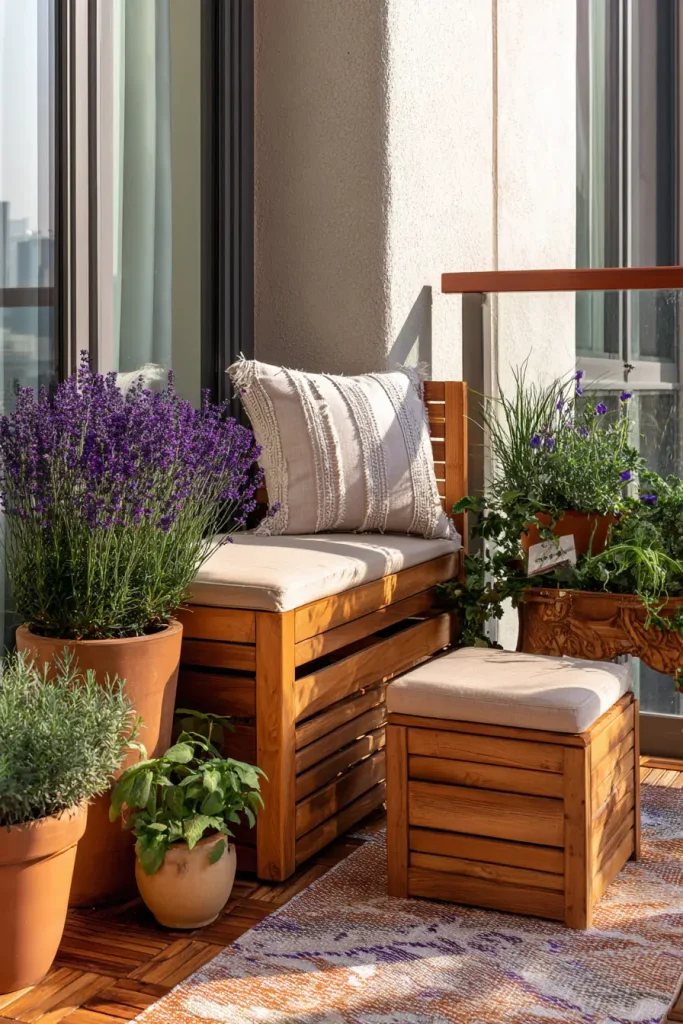
In a small space, every item needs to justify the floor area it takes up. Furniture that also holds plants is one of the smartest investments you can make.
Planter benches give you seating and greenery in the footprint of one item. Storage ottomans with planter lids give you hidden storage and a growing surface. Raised planter tables let you grow herbs at counter height while also acting as a surface for drinks or food.
Interest in multipurpose outdoor furniture has grown sharply. Searches for planter benches and storage planters have increased year on year as more people look for ways to make small spaces work harder.
You can also do this yourself. A basic wooden bench with a planter box screwed to one armrest takes an afternoon and costs around $40 in materials. You get exactly the size you need and it fits your space perfectly.
The principle is simple. One item that does two jobs takes up less room than two items doing one job each.
Idea 7: Layer Your Lighting for Use After Dark
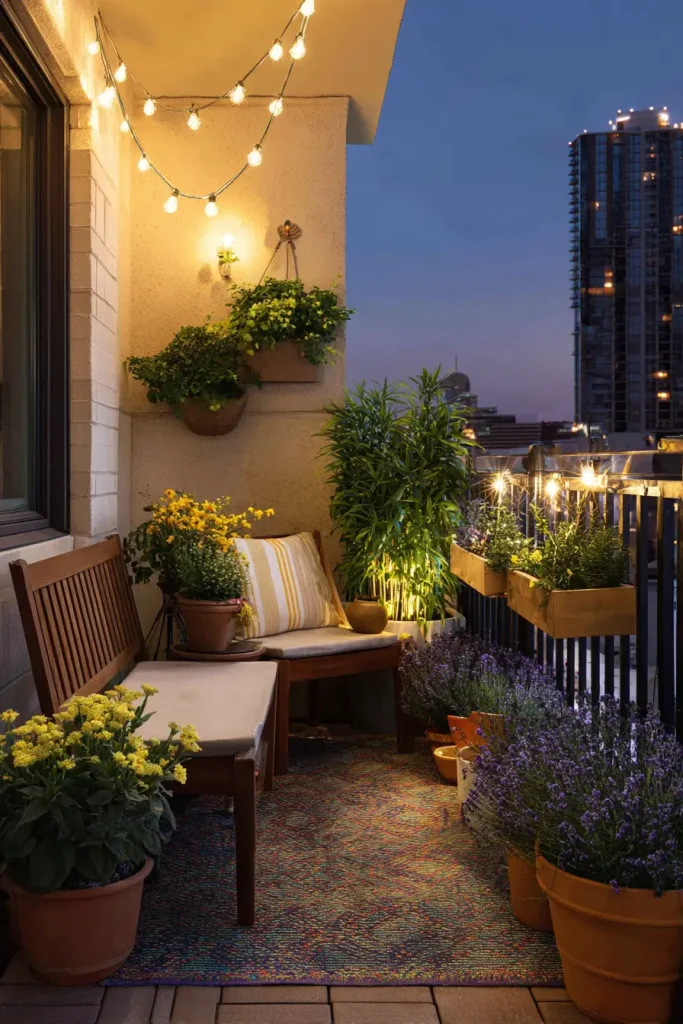
Outdoor lighting doubles the time you actually spend in your small garden. A space you use for two hours in the evening is twice as valuable as one you leave empty after sunset.
The three layer lighting approach works well outdoors. Ambient light sets the overall mood. String lights or a lantern work here. Task lighting goes where you need it to see, like a small clip on light near a reading chair. Accent lighting highlights specific plants or features, like a solar stake light pointed at your statement plant.
Always choose warm white bulbs for outdoor use. The color temperature you want is around 2700K. Cool white light looks harsh outside at night. Warm white looks inviting and calm.
Solar lighting in 2026 is genuinely reliable now. Older solar lights were weak and inconsistent. Current models hold charge well and produce real usable light even after a cloudy day.
Outdoor lighting is consistently ranked as one of the highest impact, lowest cost upgrades for small spaces. You can transform the feel of a balcony with $30 worth of string lights and an afternoon.
Idea 8: Create Zones Even in a Tiny Space
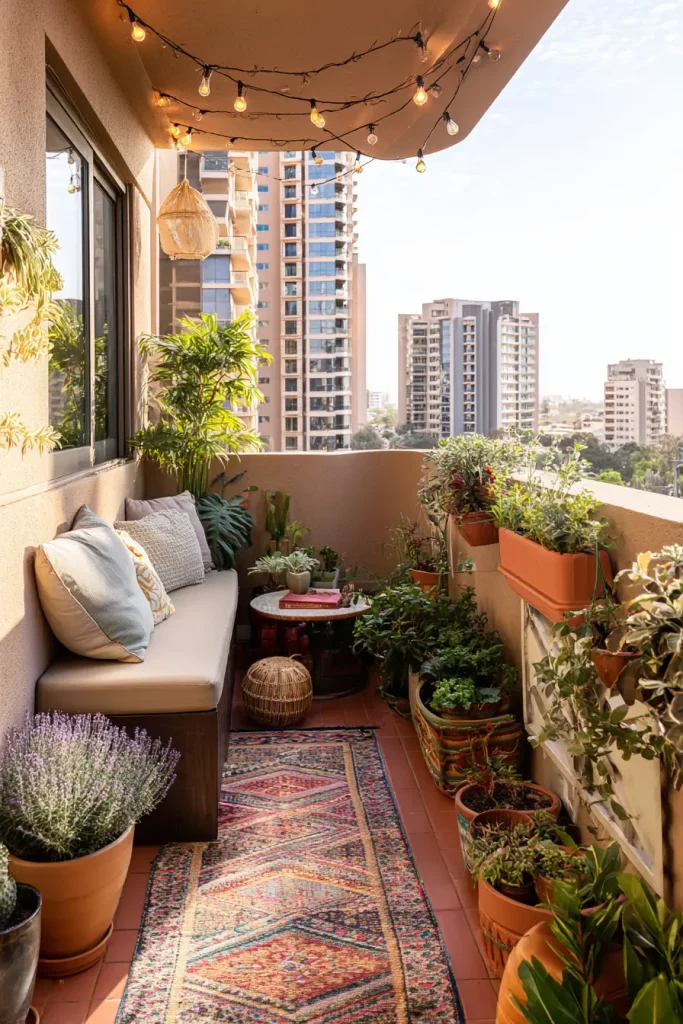
Zoning sounds like something that only applies to large gardens. It does not. Even a 6 foot wide balcony can have two zones. And the moment it does, it feels purposeful.
A zone does not need a wall. It needs a visual signal. An outdoor rug defines a seating zone. A row of planters divides a green area from a dining area. A low trellis acts as a soft divider without blocking light or airflow.
Choose one or two zones maximum for a very small space. Trying to fit a dining area, a lounge area, and a garden area into 50 square feet will just feel cramped. Pick the one or two functions you use most and design for those.
Lack of defined zones is one of the most common complaints among people with small outdoor spaces. The space works fine physically. It just feels undefined and purposeless.
For rugs, polypropylene is the right material for outdoor use. It handles rain, UV exposure, and foot traffic well. It does not hold mold. It cleans with a hose. Avoid natural fiber rugs outdoors. They rot.
Idea 9: Grow Food and Make the Space Work Harder
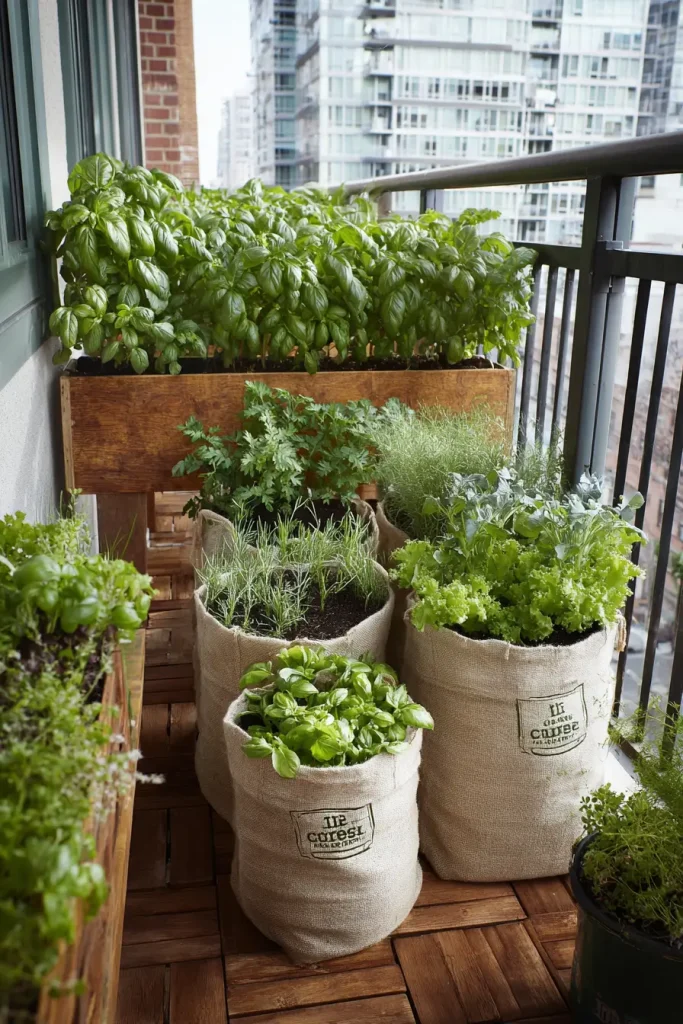
A small space that produces food feels more alive than one that just looks nice. And growing food in containers is much easier than most people expect.
The best edibles for containers in 2026 are dwarf tomatoes, cut and come again lettuce, herbs like basil and chives, strawberries, and chillies. All of these grow well in limited space. All of them produce real usable food throughout the season.
Grow bags are one of the most practical tools for this. They are cheap, flexible, lightweight, and surprisingly productive. A 10 gallon grow bag filled with good quality potting mix will grow a solid crop of tomatoes on a sunny balcony.
The square foot gardening method adapts well to containers. Divide your container space into a simple grid. Plant one type of food per section. This maximizes what you grow in minimal space without overcomplicating things.
Set realistic expectations. You will not feed your family from a balcony. But you will have fresh herbs every week. And that genuinely changes how you cook day to day.
Idea 10: Use Mirrors to Make the Space Feel Bigger
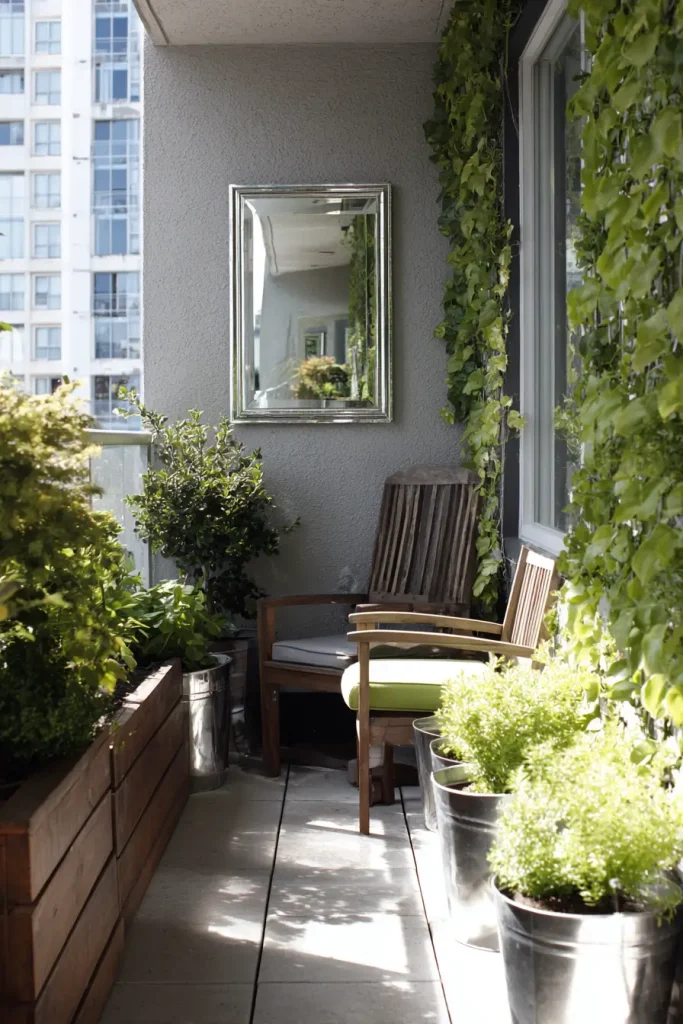
A well placed outdoor mirror can make a small garden feel twice the size. This is a classic designer trick and it works in real everyday spaces, not just magazine shoots.
The key is placement. Mount the mirror on a fence or wall that faces into the garden. Make sure it does not face direct sunlight. A mirror pointed at the sun acts like a lens and can scorch plants or create a fire hazard. The reflected heat can reach extremely dangerous temperatures.
Outdoor safe mirrors use acrylic or stainless steel backing instead of standard glass backing. These do not corrode or crack in changing weather the way indoor mirrors would.
Mirrored mosaic tiles are a cheaper option that gives a similar effect. You can cover a section of fence with a mosaic panel for under $50 and achieve the same sense of expanded space.
Metallic and shiny pots have a similar effect on a smaller scale. They bounce light around darker corners and make tight spaces feel less closed in. Even one or two metallic pots in a shaded corner makes a noticeable difference.
Idea 11: Choose Plants That Match the Scale of Your Space
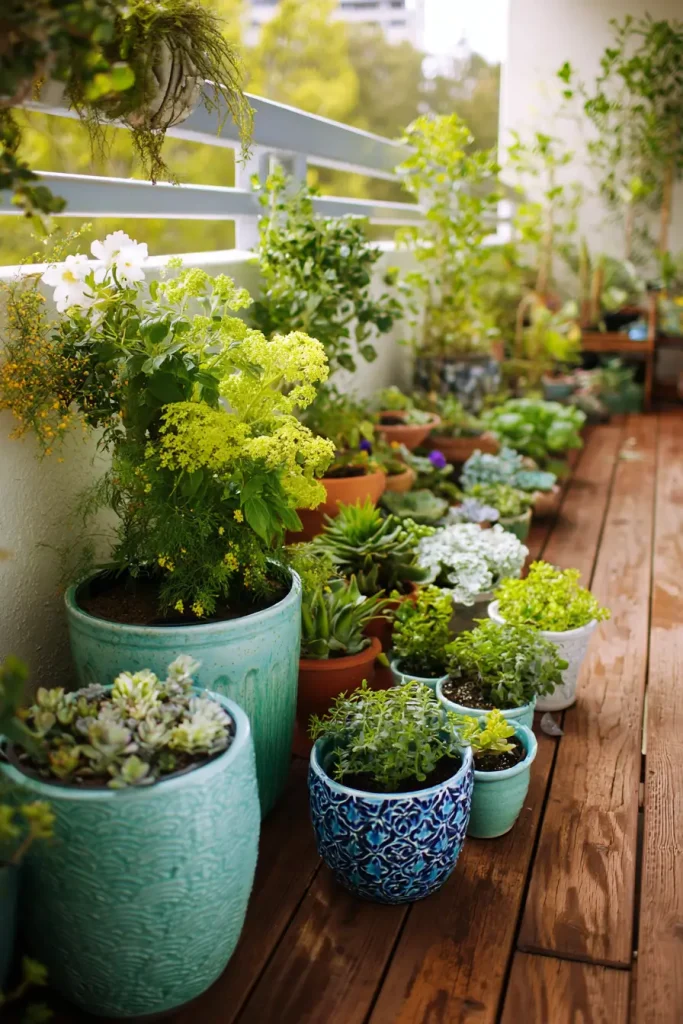
Scale is one of the most ignored rules in small space gardening. The wrong size plant makes a small garden feel chaotic. The right size plant makes everything feel balanced.
A general rule that works well: the tallest plant in your space should not be taller than one and a half times the height of its container. This keeps proportions balanced and stops the space from feeling top heavy or unstable.
Avoid what designers call plant soup. That is when you mix too many different species with different shapes, colors, and textures and none of them connect. The space ends up looking like a display shelf at a garden center rather than a designed space.
Repetition is your friend. Using the same plant in three different spots creates a visual rhythm. It makes a small space feel intentional even when the planting is simple.
Good structural plants for small spaces in 2026: Japanese maple in a container, a potted olive tree, ornamental grasses, and dwarf bamboo in a contained planter. These all have strong shapes that hold the space together through different seasons.
Idea 12: Add a Small Water Feature for Calm and Sound
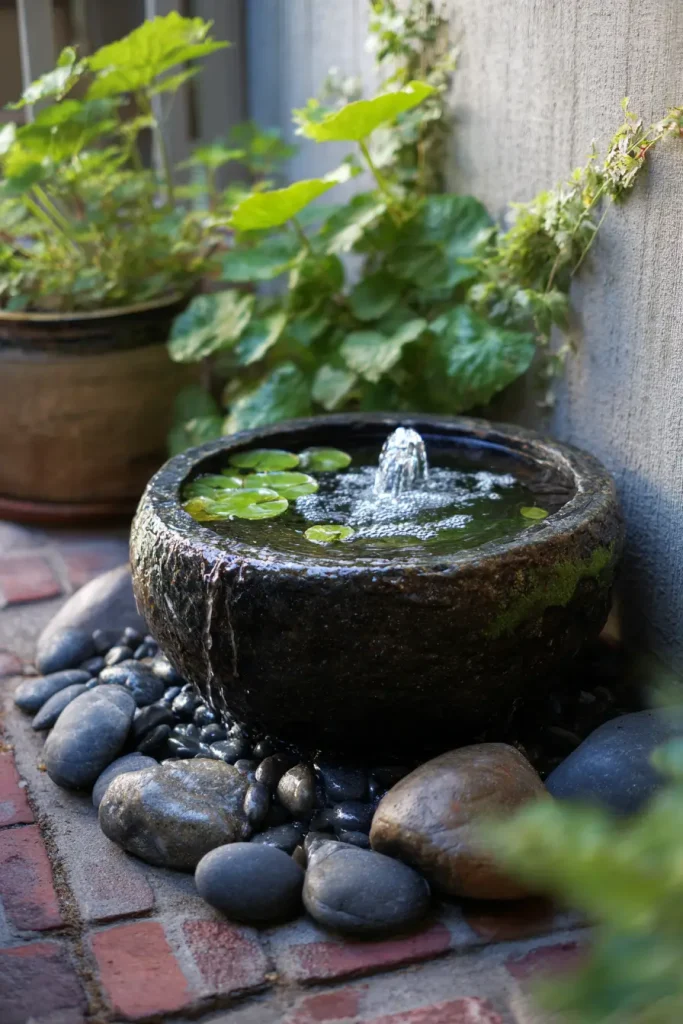
You do not need a pond to have moving water in your garden. A tabletop water feature the size of a mixing bowl can change the entire feel of a small space.
The sound of moving water has real benefits. Research into outdoor wellbeing consistently finds that ambient water sound reduces perceived stress. It also masks street noise and traffic, which matters enormously for urban spaces where that background noise never fully stops.
Solar powered bowl fountains work well for small patios and balconies. They need no wiring and no electrician. They run on sunlight during the day and many models have a small battery that keeps them going into the evening.
One maintenance point: stagnant water breeds mosquitoes. Moving water does not. But if your fountain is switched off for more than a few days, use mosquito dunks in the water. They are safe for plants, pets, and children and stop any larvae from developing.
Wall fountains are worth considering for very tight spaces. They mount flat against a wall and take up zero floor area while still providing the sound and movement of water.
Idea 13: Choose One Statement Plant and Make It Count
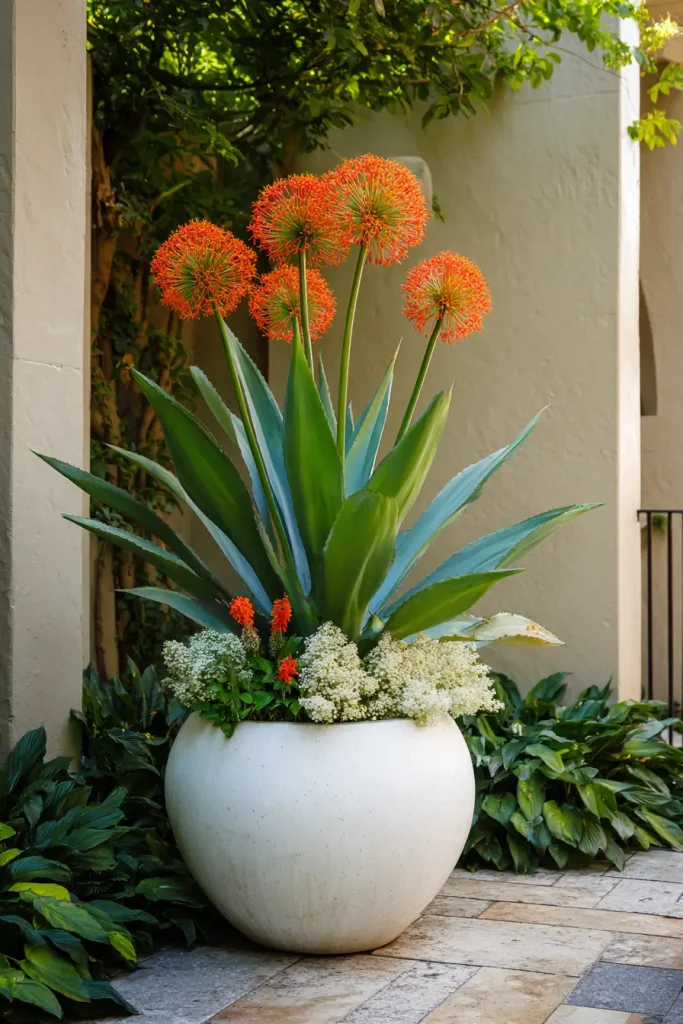
One extraordinary plant does more for a small garden than twenty ordinary ones. A statement plant is the thing people notice first when they look at your space. It gives the garden personality and a sense of confidence.
Bold, architectural plants with strong shapes work best. In 2026, good statement plant choices for containers include agave, giant alliums, tree ferns, bird of paradise, and banana plants for mild climates. These have forms that hold attention without needing to be in flower.
Interest in bold individual plants over fussy mixed planting schemes has grown significantly. People are simplifying. One strong plant instead of many competing ones is a design choice, not a lazy one.
You can find unusual statement plants through independent nurseries, specialist online plant sellers, and even local plant swaps and markets. Do not limit yourself to what the big garden centers have in stock.
Think of a statement plant as a long term investment. One plant at $80 that anchors your whole space and lasts for years is better value than twenty small plants that look lost and need replacing every season.
Give it the right pot size. A statement plant in a pot that is too small looks stressed and wrong. Give it room to grow and it will reward you for years.
Idea 14: Pay Attention to What Is Underfoot
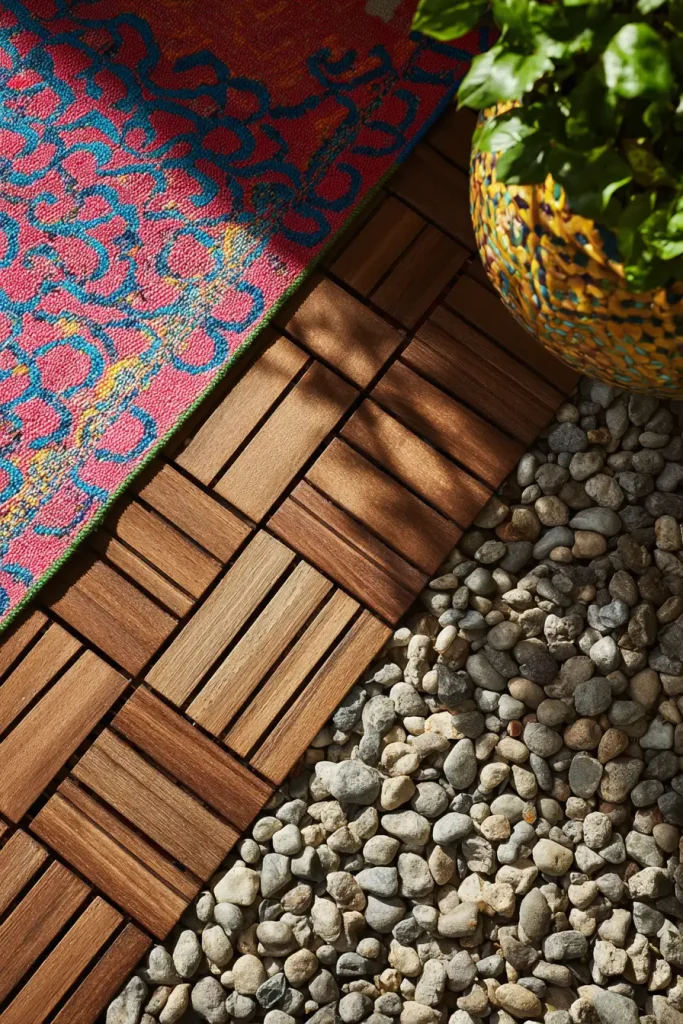
The floor of a small outdoor space matters more than most people realize. A bare concrete slab makes everything placed on top of it look temporary. A finished floor makes the whole space feel permanent and considered.
You have several good options without any major construction work. Interlocking deck tiles click directly onto concrete with no tools and no adhesive. They come in composite wood, stone effect, and porcelain finishes. A 10 square foot area takes about an hour to cover. Prices start at around $1.50 per square foot for basic composite options.
Outdoor rugs are the fastest option. They change the look and feel of a space in minutes. They also help define your seating zone as covered in idea 8, so one purchase does two jobs.
For ground level spaces, pea gravel in a contained timber or metal frame works well. It drains perfectly, suppresses weeds, and needs almost no maintenance through the year.
Outdoor flooring upgrades consistently rank among the highest satisfaction, lowest cost improvements for small patios. The floor is one of the first things people notice but one of the last things they think to address.
Idea 15: Plan for All Four Seasons, Not Just Summer
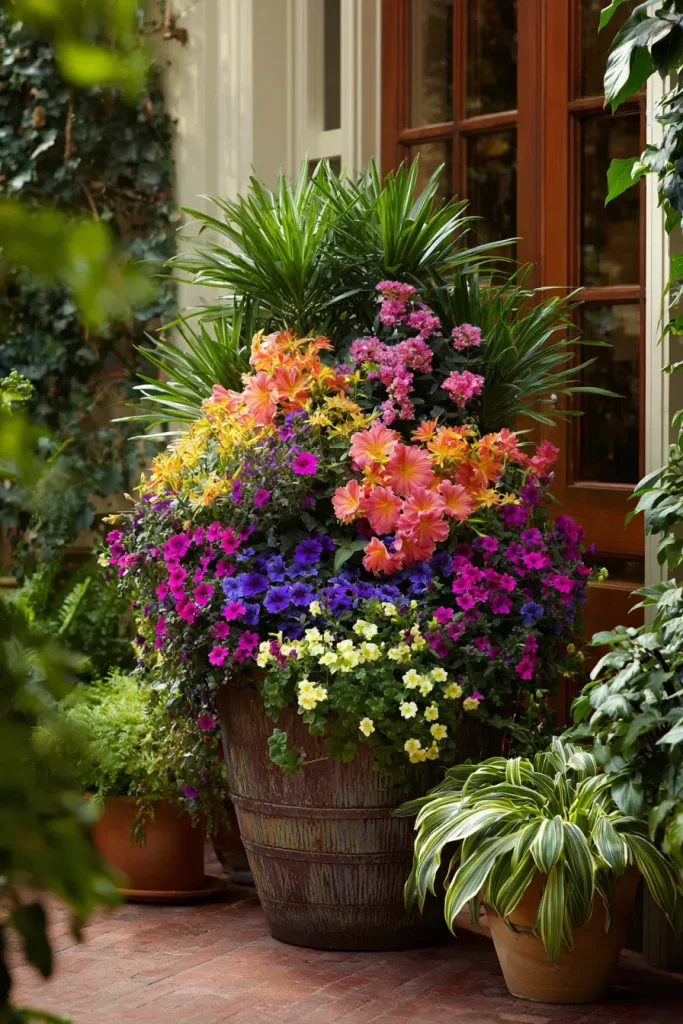
Most small gardens look great in July and completely abandoned in January. Intentional design means thinking about all four seasons before you plant anything.
The structure comes first. Evergreen plants give you visual interest all year. They are the backbone of the space. Then you layer seasonal plants around them. You swap those out as seasons change without touching the main structure underneath.
Winter interest plants that work well in containers: hellebores, ornamental kale, cornus stems which turn red and orange in the cold months, and cyclamen. These are not as flashy as summer flowers. But they mean your space looks cared for all year, not just for three months.
Research consistently finds that fewer than a third of small space gardeners feel their outdoor area looks good during winter. That is a lot of wasted months in a space you could be enjoying.
A simple four season container approach that actually works: one evergreen structural plant that stays all year. One seasonal flowering plant that you swap every three to four months. One textural foliage plant for year round interest. Three plants. All four seasons covered. No complicated planning required.
Now Pick One and Start
You do not need to do all 15 of these things. You do not need to start from scratch.
Pick one idea from this list. Just one. The focal point is a good first choice because everything else builds around it. Or start with vertical space if your floor area is very tight. Or fix the floor first if that is what bothers you most when you look at your space.
The goal is not a perfect garden. The goal is a space that feels like yours. One that looks like someone made choices on purpose.
Small garden ideas for tiny outdoor spaces work when you treat the constraints as a starting point, not a problem. Your space is small. That means every choice counts. And that is actually a good thing.
Start this weekend. Pick one thing. See what happens.

- 17 Classy Living Room Ideas for a Cozy Elegant Look - April 23, 2026
- 16 Dark Moody Living Room Ideas That Feel Rich and Warm - April 22, 2026
- 14 Elegant Bedroom Trends for 2026 You’ll Love - April 22, 2026

