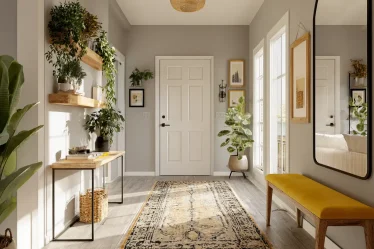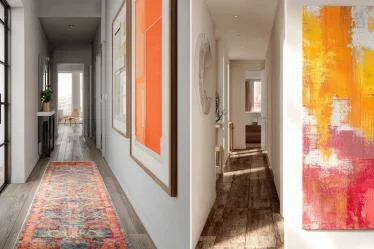

Your hallway is the first thing people see when they walk into your home. And most of the time, it looks like an afterthought.
No art. A bare lightbulb. Maybe a pile of shoes near the door. You’ve walked past it a thousand times and barely noticed it. But your guests notice it the moment they step inside.
The good news? You don’t need a big budget or a contractor to fix it. You just need the right ideas.
This guide gives you 17 farmhouse hallway ideas you can actually use. Some take a weekend. Some take 10 minutes. All of them will make your hallway feel warmer, cozier, and more like the rest of your home.
Let’s get into it.
Why Your Hallway Sets the Tone for Your Whole Home
Most people spend their decorating money on living rooms and kitchens. The hallway gets ignored.
But here’s the thing. Your hallway is the first room anyone sees. It shapes how people feel about your whole home before they even sit down. Environmental psychology research shows people form impressions of a space within seconds of entering it. That first feeling sticks.
Farmhouse style works especially well in hallways. It’s built on warm textures, simple materials, and cozy details. Those things don’t need a lot of space to make an impact.
The most common mistakes in hallways are easy to fix. No lighting, no texture, too much clutter, and nothing personal. This guide covers all of it. And every idea here works whether you rent or own your home.
1. Add Shiplap, Beadboard, or Board and Batten to Your Walls

Plain walls are the fastest way to make a hallway feel boring. A little wall texture changes everything.
Shiplap is the most well-known farmhouse wall treatment. Joanna Gaines brought it into millions of homes through HGTV’s Fixer Upper, and it’s still going strong. You can install real shiplap planks, or use peel-and-stick panels if you rent. Brands like Stikwood make peel-and-stick wood panels that look surprisingly real.
Beadboard is cheaper and works great as wainscoting on the lower half of your wall. It adds texture without taking over a small space.
Board and batten looks great in taller hallways. It gives a clean, classic farmhouse feel that pairs well with almost any color.
For paint, try Benjamin Moore White Dove or Sherwin-Williams Alabaster on the upper wall. Both are warm whites, not cold or blue-toned.
According to Angi, professional shiplap installation costs between $1,000 and $3,500 depending on room size. DIY peel-and-stick options bring that cost way down.
Start here: Order a sample pack of peel-and-stick shiplap panels before committing. Test one on your wall for a few days.
2. Put Down a Runner Rug Before You Do Anything Else

A runner rug is the single fastest upgrade you can make to a hallway. It adds warmth, color, texture, and comfort all at once.
Jute and sisal rugs are the most popular farmhouse choices. They’re natural, durable, and go with almost everything. The downside is they can feel rough underfoot and are hard to clean. Cotton blend runners are softer and easier to wash.
Ruggable makes washable runner rugs that go straight into your washing machine. They’re a smart pick if you have kids, dogs, or muddy boots coming through the door. The Magnolia Home rug line by Loloi is another solid option, with farmhouse patterns designed by Joanna Gaines.
For sizing, leave 4 to 6 inches of floor showing on each side of the runner. This makes the hallway look intentional, not like the rug is too small or too wide.
Runner rugs range from $40 to $300 depending on material and size.
Start here: Measure your hallway length and width before buying. Write it down so you don’t guess wrong at checkout.
3. Fix Your Lighting First If the Hallway Feels Cold

Bad lighting is the number one reason hallways feel unwelcoming. Overhead fluorescents make everything look flat and harsh.
Swap your ceiling fixture for a flush-mount lantern-style light. This one change makes a bigger difference than most people expect. It immediately reads as farmhouse and casts a warmer, softer light.
Bulb color temperature matters. Look for bulbs between 2700K and 3000K. That range gives you a warm, golden glow. Anything above 3500K is too cool and clinical. The GE Relax HD and Philips Warm Glow dimmable LEDs are both good picks at any hardware store.
If you rent and can’t change the fixture, battery-operated wall sconces are a real option. Brands like Puck Lights and others on Amazon offer wireless sconces that look like real hardwired ones.
Good lighting brands for farmhouse fixtures include Kichler, Progress Lighting, Pottery Barn, and Shades of Light.
Start here: Replace your current bulb with a 2700K warm LED today. It costs about $4 and takes 30 seconds.
4. Hang a Large Mirror to Open Up the Space

A hallway without a mirror is a missed opportunity. Mirrors do two things at once. They make the space look bigger, and they give you a place to check yourself before you walk out the door.
Arch mirrors are the most popular farmhouse style right now. They add a soft, rounded shape to a space that’s usually all straight lines. Barn wood framed mirrors and sunburst styles work well too.
For placement, hang the center of the mirror at 57 to 60 inches from the floor. That’s the standard eye level for most adults.
If you have a console table (more on that in a moment), hang the mirror above it and make sure it’s slightly narrower than the table. That proportion looks balanced.
Leaning a large mirror against the wall is a good option for renters. The Anthropologie Gleaming Primrose mirror and Target’s Threshold arch mirrors are both popular choices at very different price points.
Start here: Search “arch mirror” on Target or Wayfair and filter by your budget. You’ll find more options than you expect.
5. Install Hooks or a Peg Rail for Coats and Bags

A farmhouse hallway should be beautiful and useful at the same time. Wall hooks do both.
A Shaker-style peg rail is one of the most classic farmhouse touches you can add. It’s a simple wood board mounted on the wall with wooden pegs sticking out. You can buy pre-made rails or build one for $30 to $80 in materials at any home improvement store.
If you prefer individual hooks, cast iron styles look great and feel authentic. House of Antique Hardware and Pottery Barn both carry farmhouse-style hooks that look like they’ve been there for decades.
The key is to hang them at the right height. Adult coat hooks work best at 60 to 66 inches from the floor. If you have kids, add a lower row of hooks at 42 to 48 inches.
Professional organizers like The Home Edit call this your “drop zone.” Everything that comes through the door has a place to go. When things have a home, your hallway stays tidy.
Start here: Pick one wall, measure 60 inches up from the floor, and mark the spot. That’s where your first hook goes.
6. Add a Bench for Sitting, Storing, and Styling

Every entryway needs a place to sit. That’s a basic rule in home staging guides. And in a farmhouse hallway, the bench is also one of your best styling opportunities.
You don’t need a big bench. A simple wooden slatted bench, a linen-upholstered seat, or even a repurposed church pew works well. If storage is tight, look for lift-top benches or ones with drawers built in underneath.
Style the bench with intention. A folded throw blanket, a small basket on the floor below, and a pair of clean boots placed neatly nearby look warm and lived-in without feeling messy.
Pair the bench with hooks directly above it and you’ve created a mini mudroom, even in a small hallway.
Good options to look at include the IKEA HEMNES shoe bench, Birch Lane’s farmhouse bench styles, and Ashley Furniture cottage benches. Prices range from $80 to $400.
Start here: Measure the wall where you want a bench. If you have at least 18 inches of depth, you can fit one comfortably.
7. Try Wallpaper or Limewash Paint Instead of Shiplap

Shiplap isn’t the only way to add texture to your walls. Wallpaper has made a serious comeback, and the new options are much better than what your grandparents had.
For farmhouse hallways, look for patterns like buffalo check, soft florals, toile, or subtle botanicals. Grasscloth wallpaper is a great choice too. It has a natural woven texture that looks expensive and feels very farmhouse.
Magnolia Home Wallpaper (made by York Wallcoverings), Rifle Paper Co. x York, and Spoonflower are all real brands worth browsing in 2026. Wallpaper installation typically costs $300 to $1,000 depending on pattern complexity, according to Angi.
If wallpaper feels like too much, try limewash paint. It’s a technique where you apply diluted paint in layers to get a textured, aged look on your wall. Portola Paints makes a limewash product that’s popular with DIYers and looks genuinely beautiful. It’s one of the more creative alternatives to shiplap and costs far less.
Start here: Order a peel-and-stick wallpaper sample from Spoonflower or a small can of limewash from Portola Paints before committing.
8. Add Plants That Actually Survive in Your Hallway

Plants bring life to any room. In a farmhouse hallway, they add the kind of organic texture that no product can fully replace.
The challenge is that hallways are usually low on natural light. The good news is several plants do well in low light conditions.
The best options for low-light hallways are pothos, ZZ plants, snake plants, and cast iron plants. All of them are nearly impossible to kill. Pothos are especially forgiving and can hang in a trailing basket from a shelf or hook.
For pots, think terracotta, galvanized metal buckets, or woven baskets. All three look at home in a farmhouse hallway. Terracotta pots cost $5 to $25 at most garden centers.
If you genuinely cannot keep plants alive, use dried botanicals instead. Dried pampas grass, cotton stems, and eucalyptus bunches last for months with zero care.
You can order plants from The Sill or Bloomscape and have them delivered to your door.
Start here: Buy one pothos plant and hang it in a woven basket near your highest light source in the hallway.
9. Use a Console Table as Your Hallway’s Command Center

If your hallway is wide enough, a console table is one of the most useful pieces of furniture you can add.
It gives you a place to drop your keys, display a lamp, show off a small plant, and switch things out seasonally. Style it using this simple formula: lamp plus a stack of books plus one small plant plus a tray to corral small items. That four-part combination works almost every time.
Look for reclaimed wood styles, turned-leg farmhouse designs, or industrial pipe-and-wood combos depending on your taste. Target’s Threshold line, Birch Lane, and Wayfair’s Andover Mills collection all have good farmhouse options.
For narrow hallways, look for consoles that are 10 to 12 inches deep. They exist and they make a real difference in tight spaces. Always keep at least 36 inches of walkway clear, which is the general minimum for comfortable movement through a hallway.
Start here: Try the “odd number rule” when styling your console. Group 3 or 5 items together. Even groupings look too formal for a farmhouse space.
10. Fill in the Gaps With Baskets and Woven Storage

Baskets might be the most useful farmhouse accessory. They look good and they solve real storage problems.
In a hallway, baskets can hold shoes, umbrellas, dog leashes, mail, or anything else that tends to pile up near the door. A large seagrass basket on the floor stores boots. A smaller rattan basket on a shelf catches keys and sunglasses.
Common basket materials for farmhouse style include seagrass, water hyacinth, rattan, and cotton rope. All of them work. Pick based on what you like the look of.
You can find good baskets at World Market, H&M Home, TJ Maxx, HomeGoods, and Amazon. Prices typically range from $12 to $60.
Hanging small baskets on the wall is another option if floor space is limited. A row of three matching baskets on a wall adds texture and storage at the same time.
Start here: Look at what’s currently piling up near your front door and find one basket to contain it.
11. Add One Vintage or Antique Piece for Real Character

A farmhouse hallway with all new furniture can look a little too polished. One genuine vintage piece changes that.
You don’t need to spend a lot. Look for things like old metal signs, milk glass vases, galvanized metal containers, or ironstone pitchers. These items have texture and age that new products can’t fully copy.
Where to find them in 2026: Facebook Marketplace is one of the best sources for cheap, local finds. Chairish.com has a strong selection of vintage furniture and decor. Etsy has thousands of vintage sellers. And estate sales in your area are still one of the best ways to find something truly unique.
The key is to have one “anchor piece.” That’s one hero item that holds the whole space together. Everything else can be new. But that one piece gives the hallway a story.
Start here: Search “vintage farmhouse decor” on Facebook Marketplace or Chairish this week. Set a budget before you look.
12. Choose a Paint Color That Actually Feels Warm

Farmhouse style does not mean everything has to be white. That’s one of the most common misconceptions.
Real farmhouse color palettes use warm neutrals. Think creamy whites, soft greiges, dusty sage green, and warm clay tones. These colors feel lived-in and cozy, not sterile.
Some specific colors worth testing on your walls:
Sherwin-Williams Accessible Beige (SW 7036) is a warm, classic greige. Benjamin Moore Pale Oak (OC-20) is soft and very popular in farmhouse homes. Sherwin-Williams Alabaster (SW 7012) is a creamy white with zero blue in it. Farrow and Ball Mole’s Breath is a sophisticated warm grey.
You can also use darker colors like charcoal or navy if your hallway has good lighting. The key is to keep the trim white. White trim makes any wall color feel intentional and clean.
Use the Sherwin-Williams ColorSnap visualizer or Benjamin Moore’s Color Portfolio app to test colors on a photo of your own hallway before buying a sample.
Start here: Pick two or three color samples from this list and order small test pots. Paint a 12-inch square on your wall before committing.
13. Create a Simple Gallery Wall That Tells Your Story

Art makes a hallway feel personal. Without it, even a beautifully styled hallway can feel like a furniture showroom.
Farmhouse art doesn’t have to be expensive. Botanical prints, black and white photography, hand-lettered signs, and vintage maps all work well. The frames matter as much as the art itself. Black metal, raw wood, and whitewashed frames all look right in a farmhouse space.
For a gallery wall in a narrow hallway, keep the grouping tight and consistent. Use the same frame color throughout or mix two that complement each other. Before hanging anything, lay your frames on the floor and arrange them until you like the layout. Then trace them on paper, tape the paper to the wall, and use the paper as your guide for nails.
For free or low-cost prints, search “farmhouse printable art” on Etsy. You’ll find thousands of options you can download, print, and frame the same day. Artifact Uprising and Minted are good options for printed photo art.
Start here: Pick three frames in the same finish and find three pieces of art you love. That’s all a gallery wall needs to start.
14. Plan for Seasonal Changes in Your Hallway

Your hallway is the easiest room in your home to refresh by season. It doesn’t take much. A few swapped items can completely change the feel.
Fall works well with small pumpkins, dried wheat bundles, plaid throws draped over a bench, and lanterns with warm candles inside.
Winter and Christmas respond well to greenery garlands along a shelf, white string lights, pinecones in a basket, and plaid textiles.
Spring is about fresh stems in a simple pitcher, lighter linen textures, and soft greens.
Summer calls for lavender bundles, clean white linens, and simple woven textures.
The trick to making seasonal changes easy is the “swap box” method. Keep one clearly labeled storage box per season. When you change the hallway, you put last season’s items directly into the box and bring out the next one. No hunting around, no mess.
McGee and Co. releases seasonal home decor collections throughout the year if you want a curated starting point. IKEA SAMLA boxes are cheap and stackable for seasonal storage.
Start here: Create one “fall box” or “winter box” right now with what you already own. You’ll be ready when the season comes.
15. Work With a Small Hallway, Not Against It

A narrow hallway doesn’t mean you have to give up on farmhouse style. It just means you need to be smarter about what you use.
Three rules for small farmhouse hallways: go light with color, use mirrors, and build vertically.
Light wall colors reflect more light and make the space feel less cramped. A large mirror doubles the perceived depth. And vertical storage, like tall hooks, stacked frames, or floor-to-ceiling shiplap, draws the eye up instead of making the walls feel close.
Instead of a console table, use floating shelves. The IKEA LACK shelf is only 4.5 inches deep and mounts flush to the wall. It gives you display space without eating into your walkway.
For slim furniture, look for consoles 10 to 12 inches deep. They exist and they make a real difference. Just always keep at least 36 inches of clearance for walking through.
Apartment Therapy has a strong archive of small entryway ideas with real before-and-after photos. It’s worth searching their site for inspiration.
Start here: Measure your hallway width right now. If it’s under 48 inches, commit to no furniture wider than 12 inches deep.
16. Use Color, Wood Tones, and Textiles to Tie It All Together

Once you have your big pieces in place, look at the hallway as a whole. Does it feel cohesive? Or does it look like a collection of separate ideas?
Cohesion in a farmhouse hallway usually comes down to three things. Consistent wood tones, a controlled color palette, and repeated textures.
You don’t need to match everything. But mixing too many wood tones, too many colors, or too many patterns makes a small space feel chaotic.
A simple rule: pick two wood tones, one warm neutral wall color, and two or three textures like jute, linen, and wood. Stick to those throughout. Every item you add should fit within that framework.
Your lighting fixtures, hooks, and mirror frames should ideally share a finish. Matte black and aged brass are both popular farmhouse hardware finishes right now and work well together.
Start here: Look at your hallway and count how many wood tones and metal finishes are in the space. If you have more than three of either, start editing.
17. Add Scent and Texture for the Full Welcome Experience

A truly welcoming hallway does more than just look good. It feels good too.
Scent is one of the most underrated parts of a welcoming home. Research published in the Journal of Environmental Psychology shows that scent affects how people feel about a space almost immediately. A simple reed diffuser near the door, a candle on your console table, or a bundle of dried lavender hanging from a hook all do the job.
Real brands worth trying: Nest New York reed diffusers, the Magnolia candle line by Joanna Gaines, and Mrs. Meyer’s Clean Day seasonal scents.
Tactile warmth matters too. A soft rug underfoot, a textured throw over a bench, and a smooth wooden bowl on the console table all give people something pleasant to feel as they move through the space.
Finally, add one personal detail. A family name sign, a monogram, a photo that means something to you. Etsy has thousands of personalized farmhouse signs made to order. That one personal touch is what makes a hallway feel like your home, not a catalog photo.
Start here: Pick a scent you love and add one diffuser or candle near your front door this week.
You Don’t Need to Do All 17 at Once
Pick one idea from this list and start there. Just one.
Maybe it’s a jute runner rug. Maybe it’s swapping your ceiling bulb for a warmer one. Maybe it’s hanging three hooks and finally giving your coats a home.
Small changes add up fast in a hallway because the space is small. One good decision changes the whole feel of it.
Your hallway doesn’t have to be forgettable. These farmhouse hallway ideas prove that even the most overlooked space in your home can feel warm, personal, and worth walking through every single day.

- 16 Japanese Minimalist Living Room Ideas for Total Visual Calm - March 16, 2026
- 17 Farmhouse Hallway Ideas That Feel Warm and Welcoming - March 16, 2026
- 17 Vintage Bedroom Ideas With a Modern Twist (2026) - March 16, 2026