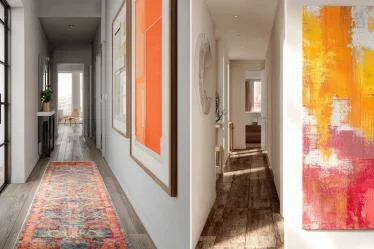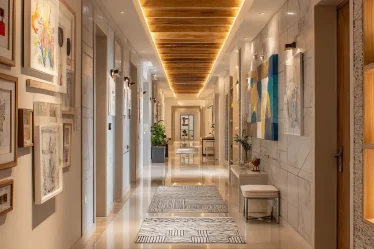
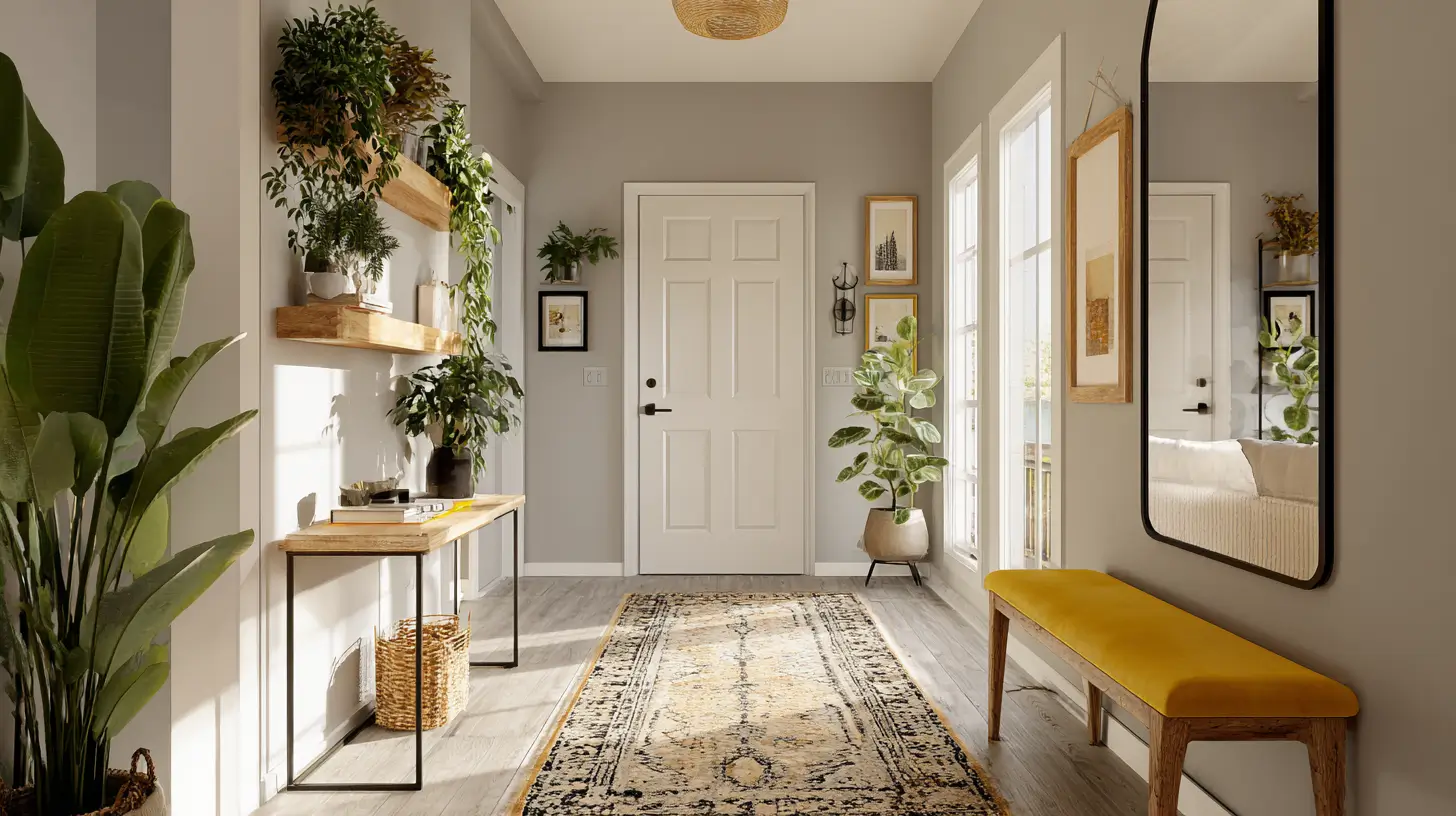
Introduction
Your hallway is the first thing you see every time you come home. And if it feels like a tunnel, that mood follows you into every room.
Most hallways are an afterthought. They are too tight for furniture. Too dark for comfort. And most design advice either skips them completely or tells you to knock down walls. That is not helpful.
Here is the truth. A narrow hallway does not have to feel like a closet. With the right color, light, and a few smart choices, it can be the first great space in your home.
This guide gives you 17 specific ideas. Not vague tips. Real moves you can make this weekend. Some cost almost nothing. Others take a bit more time and money. All of them work.
You will learn how paint color changes the way a hallway feels. How to place a mirror so it doubles your light. What flooring tricks fool the eye. And how lighting alone can make a 36-inch hallway feel twice as open.
You do not need to renovate. You do not need to move walls. You just need to control what your eye sees when you walk in.
1. Why Narrow Hallways Feel Claustrophobic (And What Is Actually Causing It)
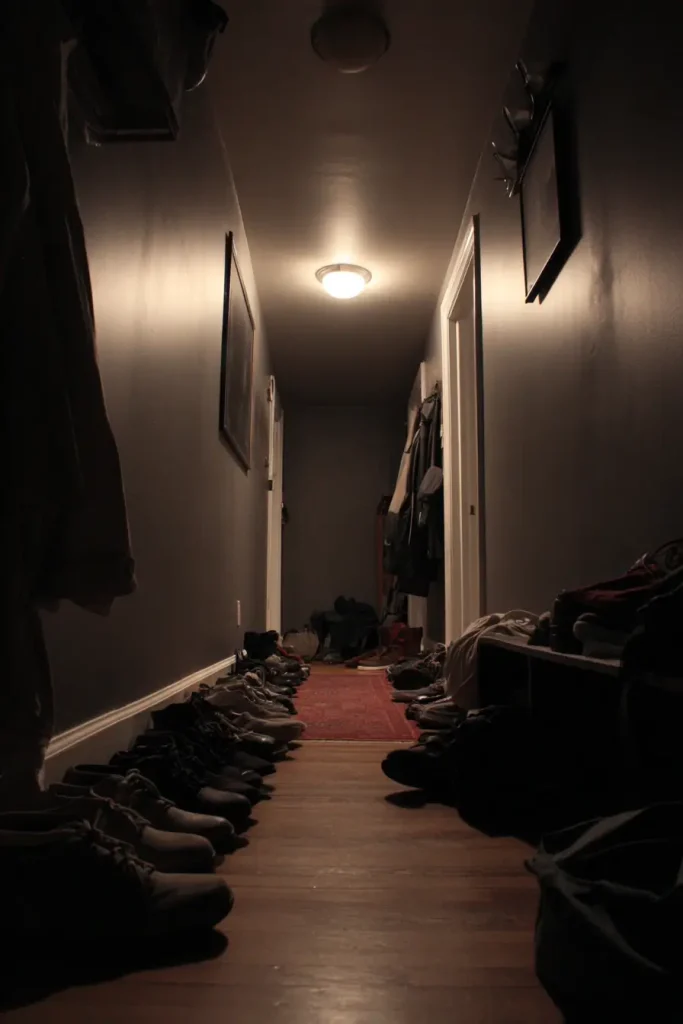
Before you fix something, you need to know why it feels wrong. Most narrow hallways feel bad for three specific reasons. Once you understand these, every other tip in this guide will make more sense.
The Three Real Problems
The first problem is poor lighting. When a hallway only has one overhead light, shadows fall straight down. That pushes the walls in visually. Your brain reads it as tight and uncomfortable.
The second problem is visual clutter. Shoes on the floor. A pile of bags. A coat rack overflowing. Each item takes up space, yes. But more importantly, each item gives your eye something to stop at. The more stops, the smaller the space feels.
The third problem is wall color. Dark or warm-toned walls absorb light instead of bouncing it back. The result is a space that feels cave-like, even on a bright day.
Why Most Hallways Start Narrow
Homes built before 1980 typically have hallways 36 to 42 inches wide. That is the minimum required by the International Residential Code. It was a building code decision, not a design one.
So if your hallway feels impossible, that is not your fault. It was built to be the narrowest thing legally allowed.
Quick Fact: The International Residential Code sets the minimum hallway width at 36 inches. Most older homes were built to this minimum. It was never meant to be comfortable. It was just legal.
The good news is that your brain is easy to fool. Width is not just physical. It is also visual. Control what your eye sees, and you control how big a space feels. That is exactly what the next 16 ideas do.
2. Paint and Color Strategies That Open Up Narrow Hallways
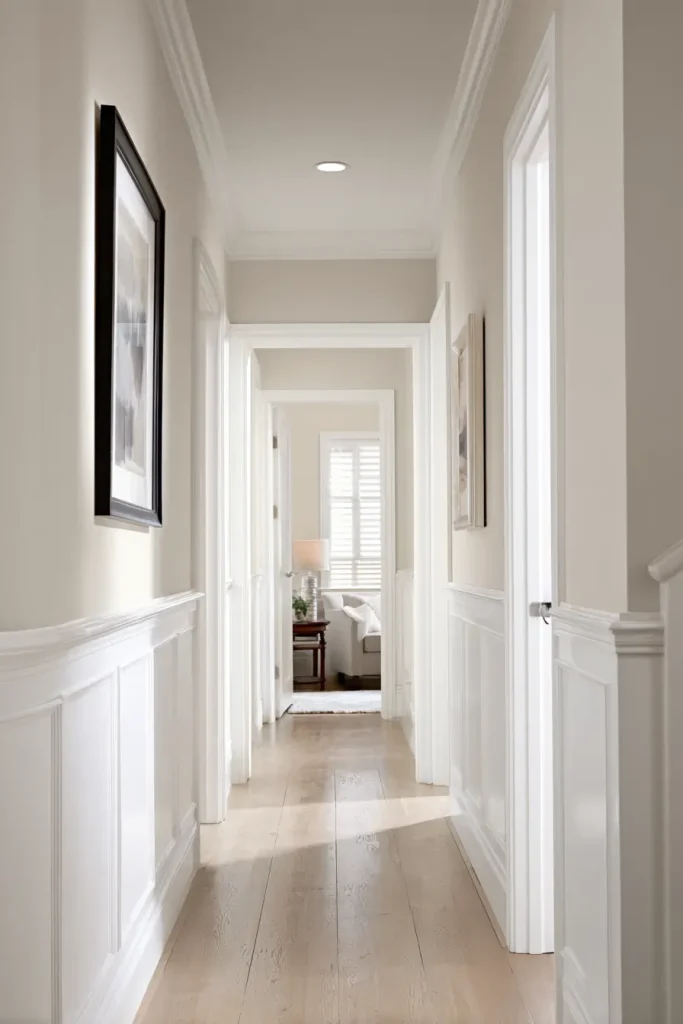
Paint is the cheapest fix in this entire guide. It also has one of the biggest effects. Most people pick the wrong color and do not know why the hallway still feels small after painting.
Here is the reason. Not all light colors are equal. What matters is something called LRV: Light Reflectance Value. This is a number between 0 and 100. Higher numbers mean more light bounces back into the room. For narrow hallways, choose a paint with an LRV of 65 or above.
You can find the LRV for any paint on the Benjamin Moore or Sherwin-Williams websites. It is listed right on the product page. This one number will save you from choosing a color that looks light on the chip but still makes your hallway feel dim.
The Color Drenching Technique
Color drenching means painting the walls, trim, ceiling, and baseboards all the same tone. No contrast. No breaks. It sounds odd, but it works because sharp lines between surfaces highlight where the ceiling ends and the wall begins. That line makes short ceilings look shorter and narrow walls look tighter.
When everything is the same tone, those lines disappear. The space reads as one continuous surface. The result is a hallway that feels larger and more intentional.
Pinterest saw a 340 percent rise in color drenching searches between 2023 and 2025. It is not just a trend. It is a technique that genuinely changes how a space feels.
Paint Colors That Work
Benjamin Moore White Dove OC-17 (LRV: 85.4) is a clean, warm white that never looks cold. Sherwin-Williams Alabaster SW 7008 (LRV: 82) is soft and creamy and works well in low light. Farrow and Ball Elephants Breath is a pale greige that reads as sophisticated, not sterile.
One more tip. A slightly darker color on the far end wall of the hallway actually helps. It gives your eye a destination to travel toward. That forward pull makes the hallway feel longer and more open, not smaller.
3. Mirror Placement That Multiplies Space Without Looking Gimmicky
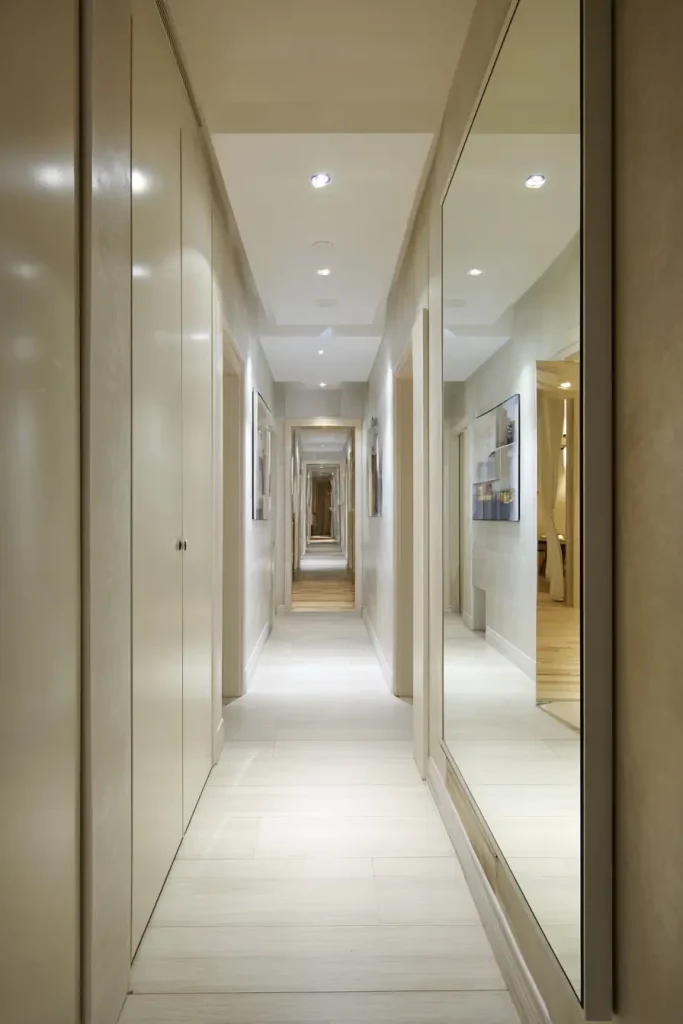
Mirrors are one of the most overused and misused design tools in small spaces. Done wrong, they look desperate. Done right, they genuinely double the perceived size of a hallway.
The most common mistake is hanging too many small mirrors. A grid of six little mirrors reads as a craft project, not a design choice. One large mirror reads as intentional.
Where to Put the Mirror
Place it across from your light source. If there is a window at the end of the hallway, hang the mirror on the opposite wall. If you have a sconce on the left wall, put the mirror on the right. The mirror throws the light back across the space, and your eye reads it as a second source of light.
The result feels like the hallway just got 30 percent brighter. It did not. But your brain thinks it did.
What Size and Style to Choose
In a hallway under 10 feet long, a large framed mirror that fills most of the wall height works best. In a longer hallway, you can consider floor-to-ceiling mirror panels for a more dramatic effect.
One thing to avoid: do not hang a mirror that reflects the front door directly. It creates a visual loop that feels disorienting. Angle it slightly or position it so it reflects deeper into the home, not back at the entrance.
For budget, the IKEA NISSEDAL mirror is a large-format, simple-frame option under $100. For a mid-range look, Anthropologie arched mirrors deliver a high-design feel for under $400. For the most affordable custom option, local glass shops often cut mirror panels cheaper than any retail framed piece.
4. Lighting Techniques That Make Hallways Feel Wider and Taller
Overhead lighting alone is the single biggest reason hallways feel like closets. When the only light comes from above, it throws shadows straight down the walls. Those shadows make the walls look closer together.
The fix is layered lighting. This means adding at least two types of light at different heights and angles.
Wall Sconces Change Everything
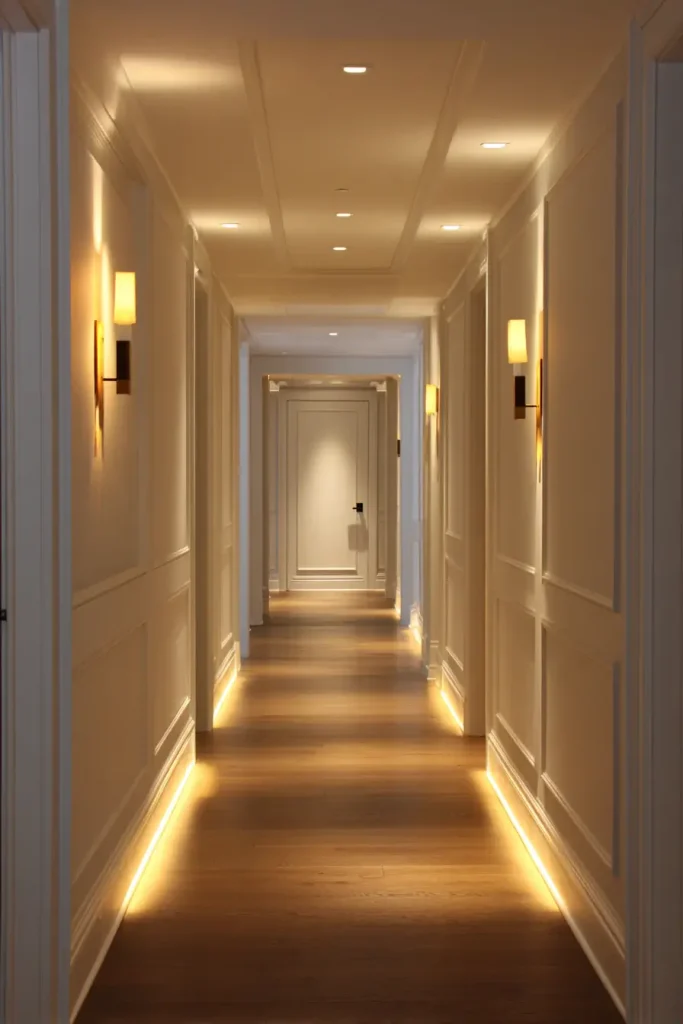
Wall sconces placed 60 to 66 inches from the floor cast light sideways across the walls. That sideways light makes the walls appear to push apart. Your eye reads the increased brightness as increased width.
You do not need to hardwire them. Plug-in sconces exist for renters and are easy to install with just a nail or adhesive strip. CB2, West Elm, and Schoolhouse Electric all carry slim plug-in options in the $80 to $200 range.
Recessed Lighting in a Line
A single row of recessed lights running down the center of the ceiling pulls your eye forward toward the end of the hallway. This gives the space a sense of depth and direction. It says: there is somewhere to go here.
LED Strip Lighting
LED strips placed under a floating console, along the baseboard, or inside a built-in shelf add a low layer of light that makes the floor plane feel wider. A full hallway run costs $15 to $30.
Color Temperature Tip: Use warm white bulbs in the 2700K to 3000K range in hallways. Cool white bulbs (4000K and above) feel clinical and harsh in enclosed spaces. Warm light feels open. Cool light feels tight.
5. Flooring Choices and Patterns That Direct the Eye
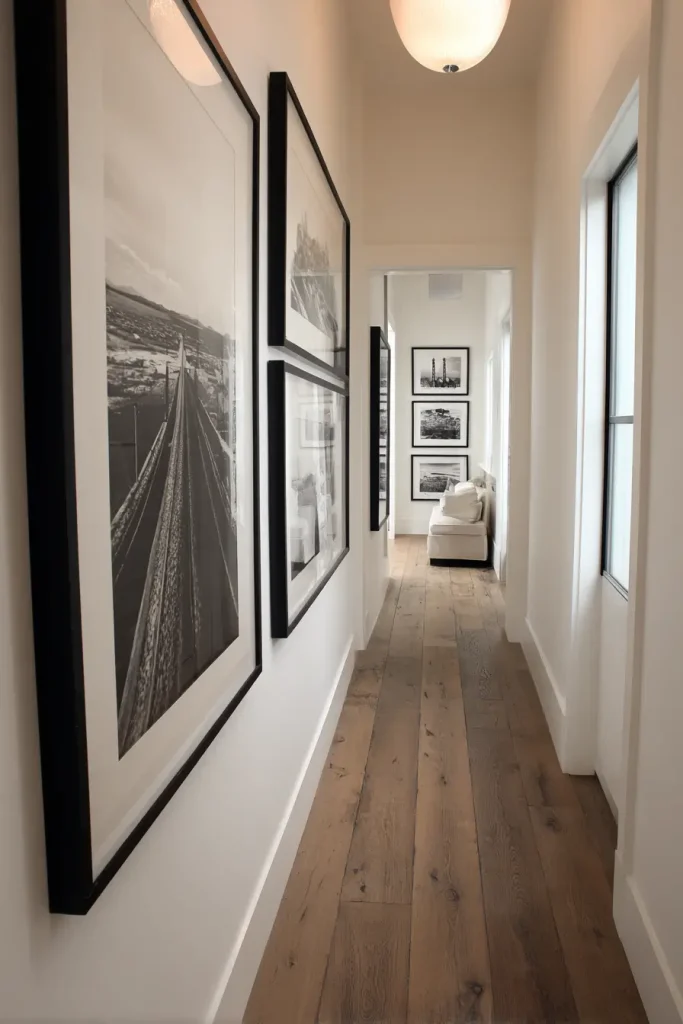
The floor in a narrow hallway works like a road. The direction it points, and the pattern it shows, tells your brain which way to go. Get this wrong and the hallway feels like it ends too soon. Get it right and it feels like it goes on.
The 45-Degree Diagonal Trick
Installing tile or plank flooring at a 45-degree diagonal is one of the most effective visual tricks in small-space design. When planks run straight down the hallway, the parallel lines emphasize how narrow the space is. When those same planks run diagonally, the eye has to cross the width to follow the pattern. That cross-movement reads as more space.
Long Planks Running Lengthwise
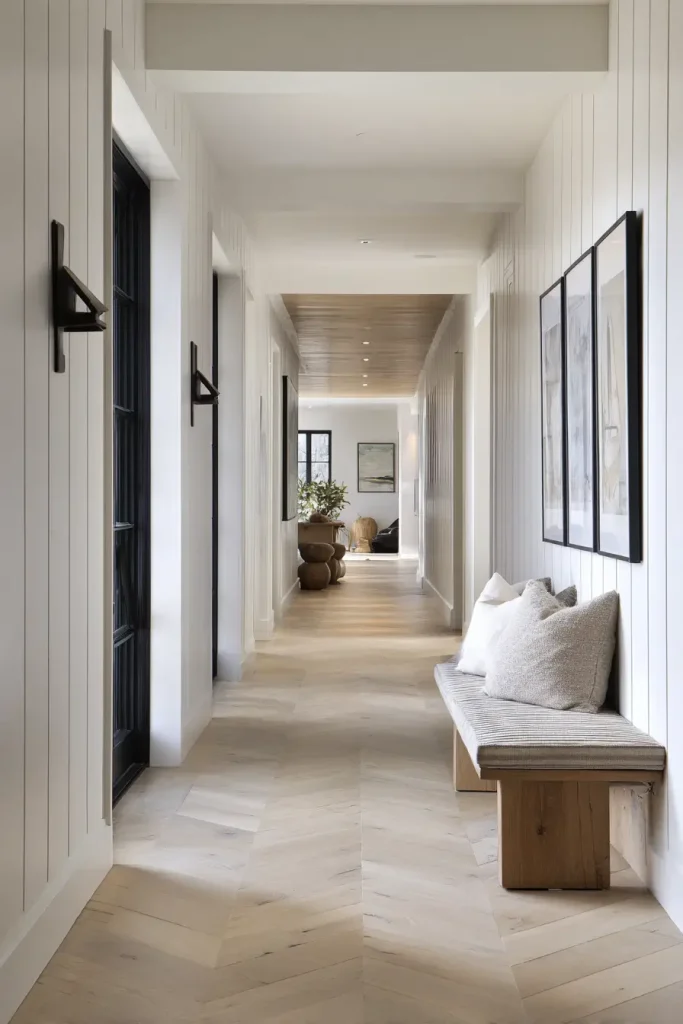
If diagonal installation is not possible, run long planks straight down the length of the hallway. This pulls the eye forward and makes the hallway feel like it extends further than it does. Avoid short planks with many seams. Seams create visual stops.
Keep Flooring Continuous
One of the most effective tricks costs nothing extra. Use the same flooring in the hallway as in the rooms it connects to. When the floor material changes at a doorway, your eye reads the hallway as a separate, smaller zone. When it flows through, the spaces merge and the hallway feels like part of something bigger.
For a budget option, herringbone LVP in a light oak finish from LifeProof at Home Depot runs around $3 to $5 per square foot. For a clean modern look, large-format tiles (24 by 24 inches) with thin grout lines give a seamless, almost wall-to-wall appearance.
6. Smart Storage Solutions That Do Not Eat Into the Walkway
Storage in a narrow hallway is a real need. Keys, shoes, coats, bags. These things have to go somewhere. The mistake most people make is using furniture that sticks too far out from the wall.
Built-In Recessed Niches
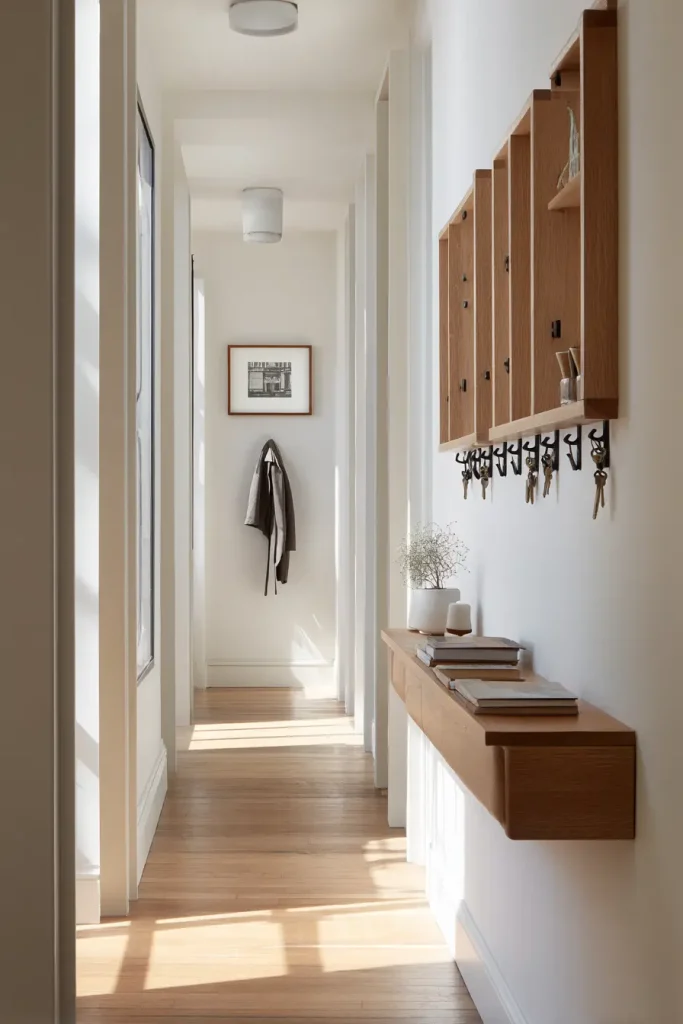
The single best storage move in a narrow hallway is a recessed niche cut between wall studs. Wall studs are typically 3.5 inches apart. That is enough space for hooks, keys, mail, or a small shelf with no protrusion into the walkway at all.
This is a DIY project that appears in hundreds of YouTube tutorials. Search for “stud bay niche entryway” on YouTube and you will find step-by-step walkthroughs from creators like Young House Love. The material cost is usually under $50.
The 12-Inch Depth Rule for Furniture
If you want a console table or shoe storage, the depth should be no more than 12 inches. Anything deeper starts to feel like an obstacle. You want to slide past it, not work around it.
The IKEA HEMNES shoe cabinet is 13 inches deep with a clean white finish that looks almost built-in. The West Elm narrow entryway storage bench offers dual function as a seat and hidden shoe storage for around $399. Floating shelves mounted above 72 inches from the floor provide storage that sits above the visual field entirely.
Always Wall-Mount Coat Storage
A freestanding coat tree takes up floor space on all four sides. A wall-mounted hook strip takes up zero floor space. In a narrow hallway, this is not a small difference. It is the difference between a hallway that feels usable and one that feels blocked.
7. Vertical Design Elements That Add Height and Drama
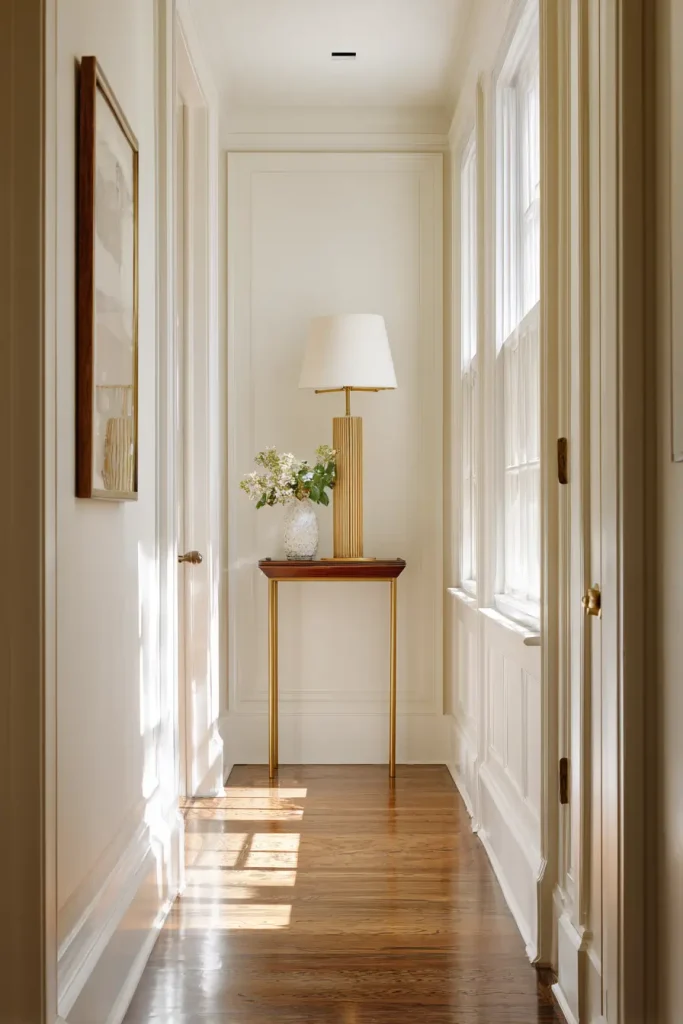
When you cannot make a hallway wider, make it feel taller. Height is the other dimension most people forget. A hallway that feels tall feels more open, even if the walls are still close together.
Board and Batten Paneling
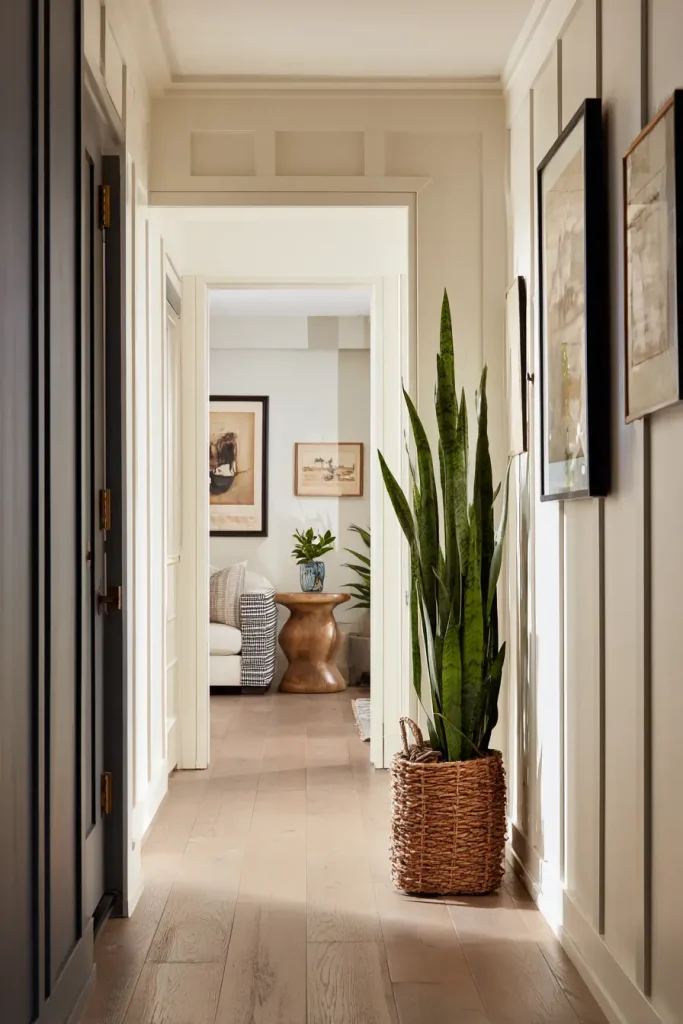
Vertical board and batten paneling on the lower half of the wall draws the eye upward. The vertical lines point to the ceiling and make it feel further away. This is one of the most popular hallway upgrades on Pinterest and Instagram right now. It works every time.
Paint the paneling the same color as the upper wall for a seamless look. Or use a slightly darker tone below the rail for a classic two-tone effect.
Portrait Orientation for Art
Hang art vertically instead of horizontally in a narrow hallway. A tall, narrow print reinforces the upward direction. A wide, horizontal print emphasizes the width of the wall, which is exactly what you are trying to distract from.
Tall Plants as Architecture
A single tall plant, a 6-foot snake plant or a columnar cactus, acts like a living architectural column. It draws the eye up and adds a natural element without taking up meaningful floor space. More on plants in idea 14.
8. Wallpaper and Wall Treatments That Add Depth, Not Weight
The right wallpaper in a narrow hallway does something paint cannot do on its own. It adds depth. It gives the eye something to travel into rather than just bounce off.
Trompe L’Oeil and Perspective Prints
Trompe l’oeil is a design term for artwork that tricks the eye. In wallpaper, this means prints designed to look like arches, windows, open landscapes, or deep corridors. When you stand at one end of a hallway and your eye sees what looks like a window or archway ahead, the brain reads it as open space. The physical dimensions do not change. The feeling does.
The Accent End Wall
If full-room wallpaper feels like too much, use it only on the far end wall of the hallway. This creates a destination. Your eye is drawn toward the pattern, which pulls you through the space. The hallway feels longer and more purposeful.
Renter-Friendly Options
Peel-and-stick wallpaper quality has improved significantly in the last few years. Brands like Chasing Paper and Tempaper produce designs that look high-end and remove cleanly. If you rent, these are genuinely good options now, not a compromise.
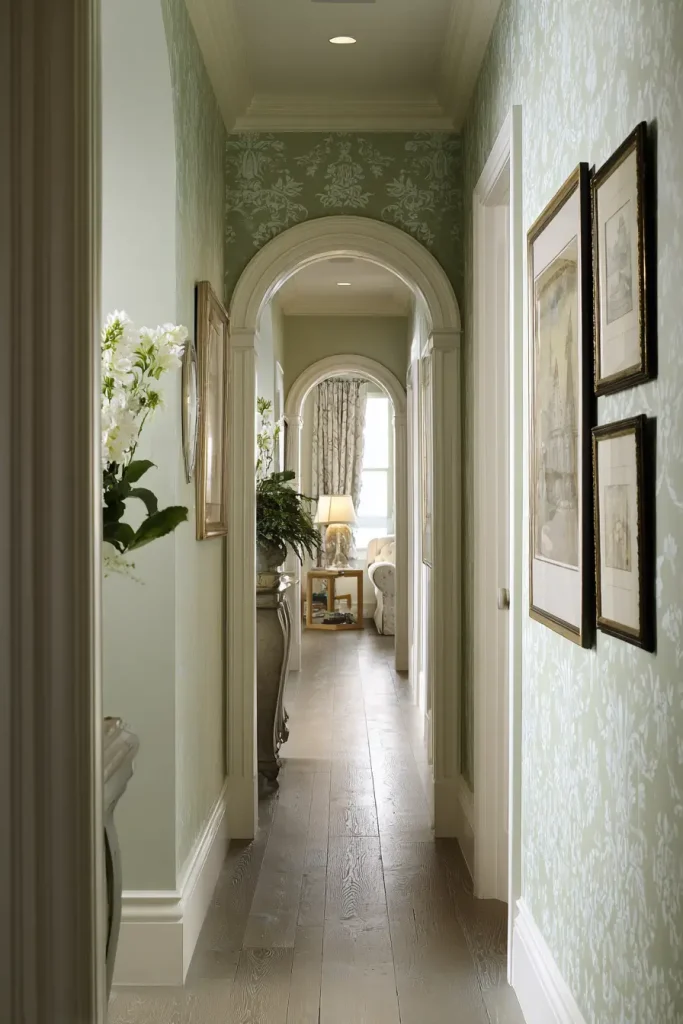
One rule for patterns in tight spaces: choose a design with a small repeat. Large-scale patterns in narrow hallways feel overwhelming and actually close the space in further.
9. Art and Gallery Wall Formulas That Work in Tight Spaces
Art in a narrow hallway is tricky. Too much and it feels chaotic. Too little and it feels bare. The goal is to add visual interest without adding visual noise.
One Large Piece Beats a Crowded Gallery
If you are deciding between one large print and a wall of small frames, choose the large print. In a narrow hallway, a gallery wall with many different sizes, colors, and styles creates too many places for the eye to stop. One large piece reads as calm, intentional, and designed.
If You Want a Gallery Wall
Align all frames to a single horizontal line at the top or center. This brings order to the arrangement. Keep all frames within a 48 to 60 inch vertical band measured from the floor. This keeps the visual weight centered and avoids making the top of the wall feel heavy.
Black and white photography works especially well in hallways because it removes the problem of competing colors. One visual system, not five.
Art That Creates Depth
Look for art with depth cues. A landscape with a road or path stretching into the distance. A photograph of a long empty corridor. An architectural image with strong perspective lines. These images trick your brain into seeing space that is not there.
10. Runner Rugs: Length, Pattern, and Placement Rules
A runner rug in a hallway is one of those things that looks wrong when it is wrong and completely right when it is right. The difference is almost always about size.
Go the Full Length
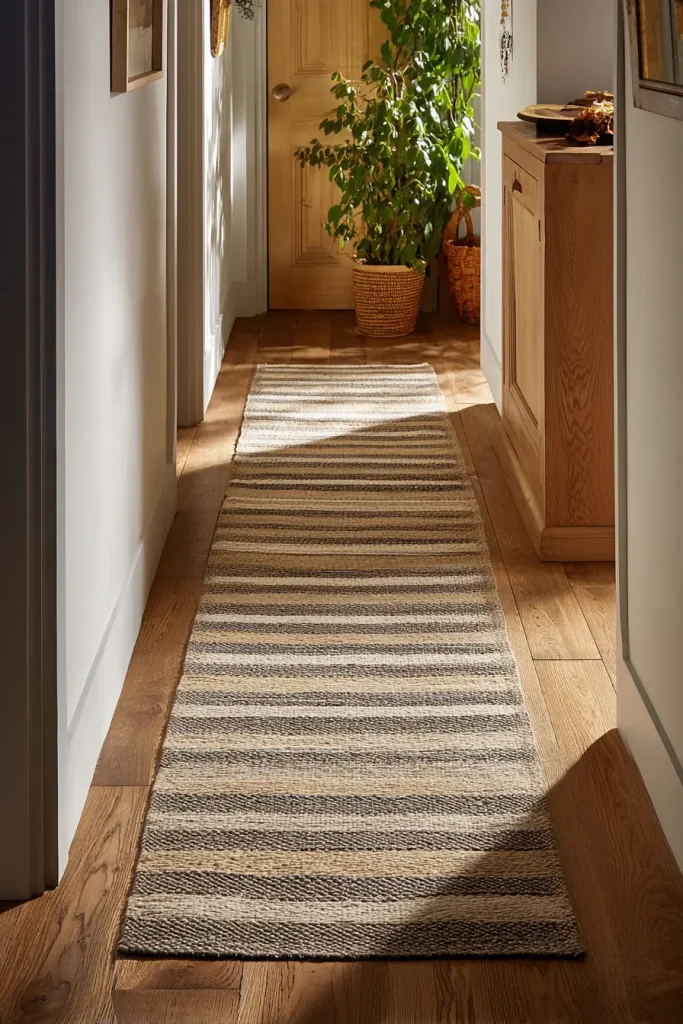
The runner should run the full length of the hallway. Leave 4 to 6 inches of floor showing on each side. A runner that stops short makes the hallway feel cut off. A runner that runs the full length anchors the space and makes the whole hallway feel like one complete zone.
Most people buy a runner that is too short. Measure your hallway before you buy anything.
Patterns That Help
Lengthwise stripe patterns in a runner make the eye travel forward. That movement adds the perception of depth. Low-pile or flat-weave runners are easier to keep clean in a high-traffic area and do not add visual bulk to an already tight space.
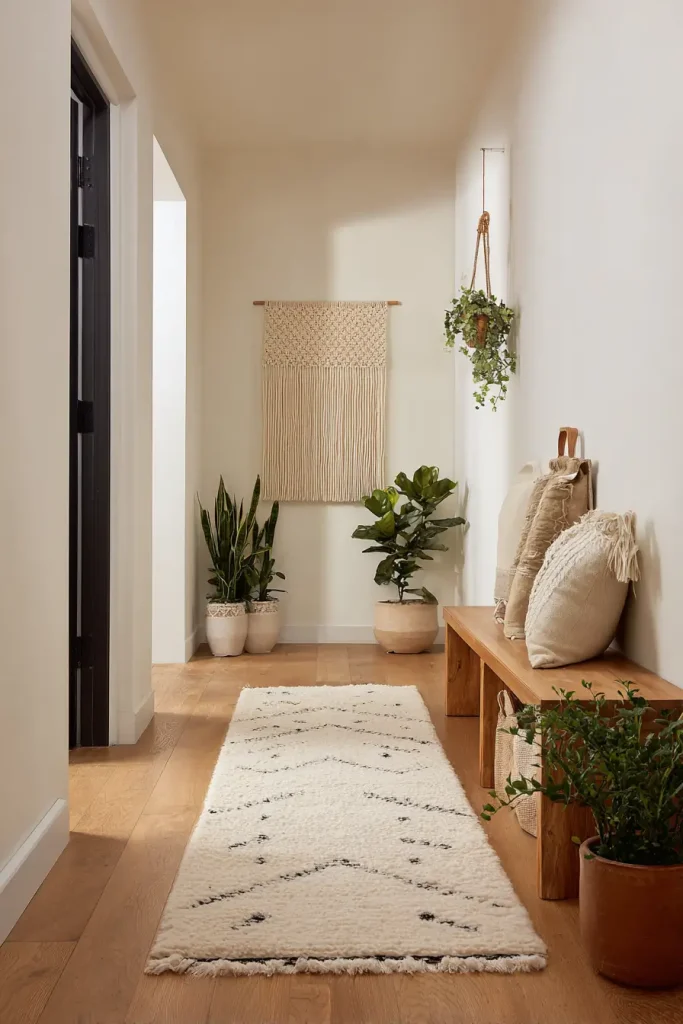
Ruggable washable runners are a practical choice for high-traffic hallways. They are machine washable and come in dozens of patterns. Beni Ourain-style runners offer a warm, minimal, neutral tone that works with almost any wall color.
Important: Always use an anti-slip pad under a hallway runner. This is not optional in a high-traffic narrow space. Slipping on a rug in a tight hallway is dangerous.
11. The Role of Scent and Sound in a Small Hallway
This one surprises people. But a hallway is the first sensory experience of your home. Before your eye has processed the color or the mirror, your nose has already registered the smell. And your ears have already heard how the space sounds.
Scent Design
A diffuser with a light, clean scent, something like citrus, linen, or eucalyptus, signals openness and freshness before anything visual registers. It sounds small, but the effect on how welcoming a space feels is real.
Avoid heavy, deep scents in enclosed spaces. Think of the smell of a coat closet. Heavy musk and similar deep scents do the olfactory version of dark paint: they make the space feel denser and more enclosed.
Sound Absorption
A bare hallway with hard floors and empty walls echoes. That hollow sound makes the space feel cold and oversized in all the wrong ways. It draws attention to the lack of softness.
A runner rug absorbs floor noise. A textile wall hanging or fabric art absorbs wall echo. Plants add soft surfaces too. These are not just visual fixes. They change how the space sounds and feels when you walk through it.
12. Furniture Scale Rules for Narrow Hallways
The wrong furniture in a narrow hallway does not just look bad. It actually makes the hallway harder to use. Here are the rules that prevent that.
The 12-Inch Depth Rule
No furniture piece in a narrow hallway should stick out more than 12 inches from the wall. This includes consoles, benches, and shelving units. Anything deeper starts to physically and visually narrow the walkway.
Choose Furniture With Legs
Furniture that sits directly on the floor creates a visual block. You see a solid mass. Furniture with exposed legs lets you see the floor underneath. Your eye reads the visible floor as open space, and the piece feels lighter and less intrusive.
One Statement Piece Is Enough
A single slim console with one well-chosen lamp reads as intentional. Three small side tables, a basket, and a row of hooks reads as cluttered. Edit down to one anchor piece and let the walls do the rest.
In hallways under 8 feet long, skip floor furniture entirely. Use wall-mounted options only. The floor is too precious in a short space to give any of it away.
13. Ceiling Treatments That Change Everything
Most people ignore the ceiling entirely. That is a missed opportunity. The ceiling is the one surface in a hallway that has no furniture, no doors, and no clutter. It is the cleanest canvas you have.
Color Drench the Ceiling
As covered in idea 2, painting the ceiling the same color as the walls removes the hard line where they meet. That line is what makes low ceilings look low. Without it, the ceiling visually recedes and the room feels taller.
Linear Ceiling Lighting
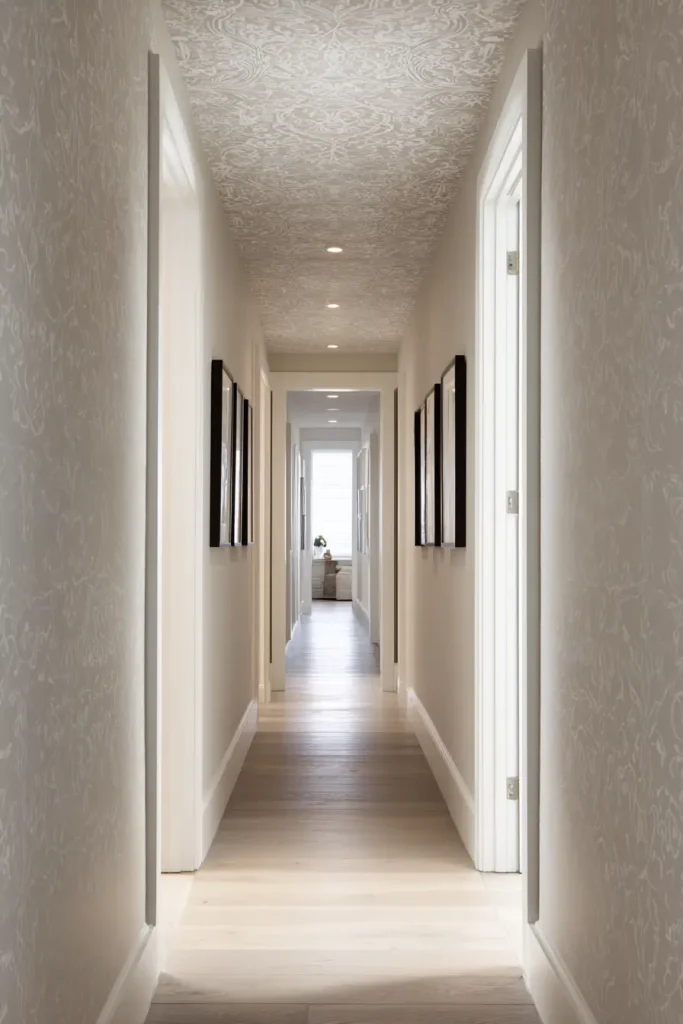
A track of recessed lights or an LED strip running down the center of the ceiling does two things at once. It adds light, which is always good in a hallway, and it draws the eye upward and forward. That upward pull adds perceived height.
Ceiling Wallpaper
This is a bold move but a very effective one. A patterned wallpaper on the ceiling above a simple neutral hallway creates drama and directs people to look up. When you look up, you see height. The ceiling literally feels further away because your eye is actively engaging with it.
Avoid dark paint on any ceiling in a hallway under 8 feet. It compresses the space in the most uncomfortable direction possible.
14. Plants and Greenery in Narrow Hallways: What Actually Survives
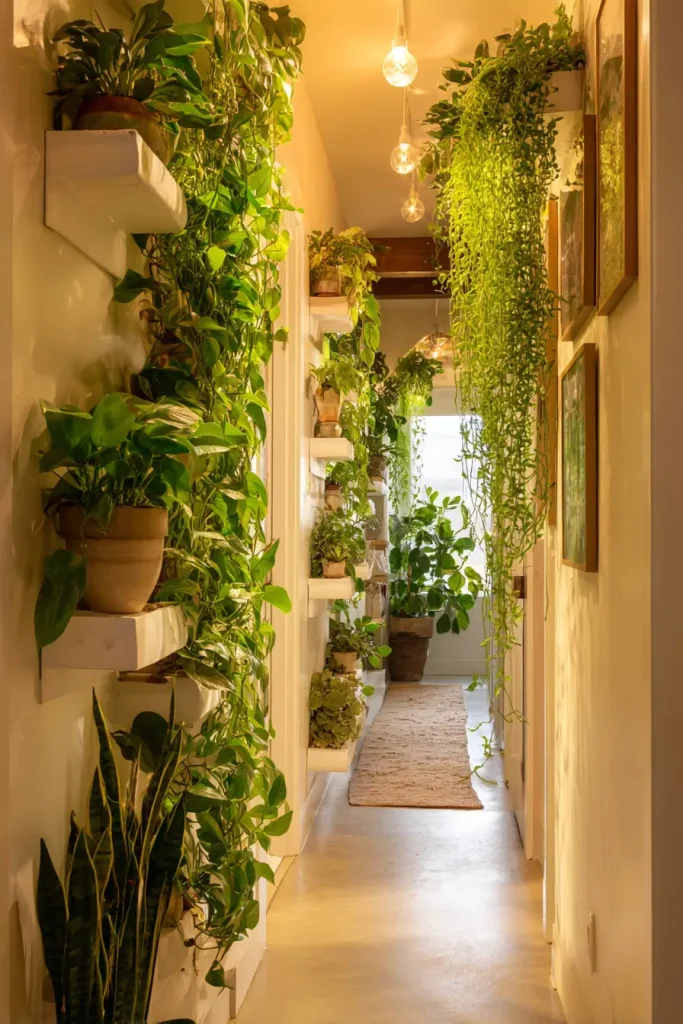
Plants make a hallway feel alive. The problem is that most hallways have very low light. You need to choose plants that are honest about this reality.
Low-Light Plants That Work
Pothos is nearly impossible to kill and trails beautifully from a high shelf. ZZ plants thrive in low light, have an architectural shape, and need very little maintenance. Snake plants are tall and vertical, which is perfect for reinforcing the upward direction you want in a narrow space. Cast iron plants live up to their name and handle low light and neglect without complaint.
How to Place Them
A single tall snake plant in a corner adds a living architectural element without blocking passage. Wall-mounted planters or vertical pocket planters save floor space entirely. Trailing pothos on a high shelf cascades down and adds movement and organic softness to hard surfaces.
Avoid wide, bushy plants that spill into the walkway. In a 36-inch hallway, a plant that takes 12 inches of width has just taken a third of the available space.
15. Lighting Fixtures as Decor: Choosing Statement Pieces That Fit
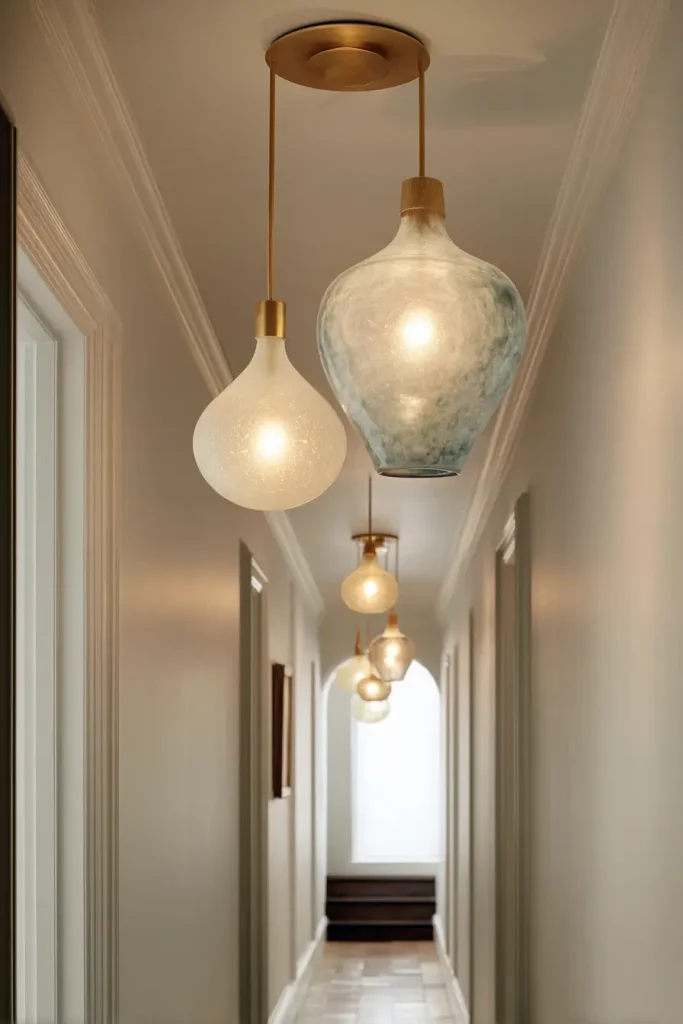
A nice light fixture in a hallway is one of the fastest ways to make the space feel designed. It says someone thought about this. And that signal of intention is exactly what transforms a functional corridor into a real room.
What to Choose Based on Ceiling Height
In hallways with ceilings under 8 feet, flush-mount fixtures are the safe choice. But safe does not mean boring. There are flush-mounts with sculptural shapes, aged brass finishes, and handblown glass shades that look genuinely beautiful.
In hallways with ceilings 9 feet and above, a small pendant or semi-flush lantern works well. A lantern-style pendant brings a foyer feel to any hallway, regardless of size.
For Renters
Plug-in wall sconces are one of the best-kept secrets in rental design. They require no electrical work. You plug them in, run the cord discreetly along the wall or through a cord cover, and you have a proper sconce. CB2 carries slim plug-in options from $129 to $199.
One finishing tip that makes everything look more cohesive: match the metal finish of your light fixture to your other hardware. If your hooks are matte black, get a matte black fixture. If your console has brushed brass legs, look for a brass sconce. Matching finishes read as deliberate, not accidental.
16. Decluttering the Hallway: The Design Move Most People Skip
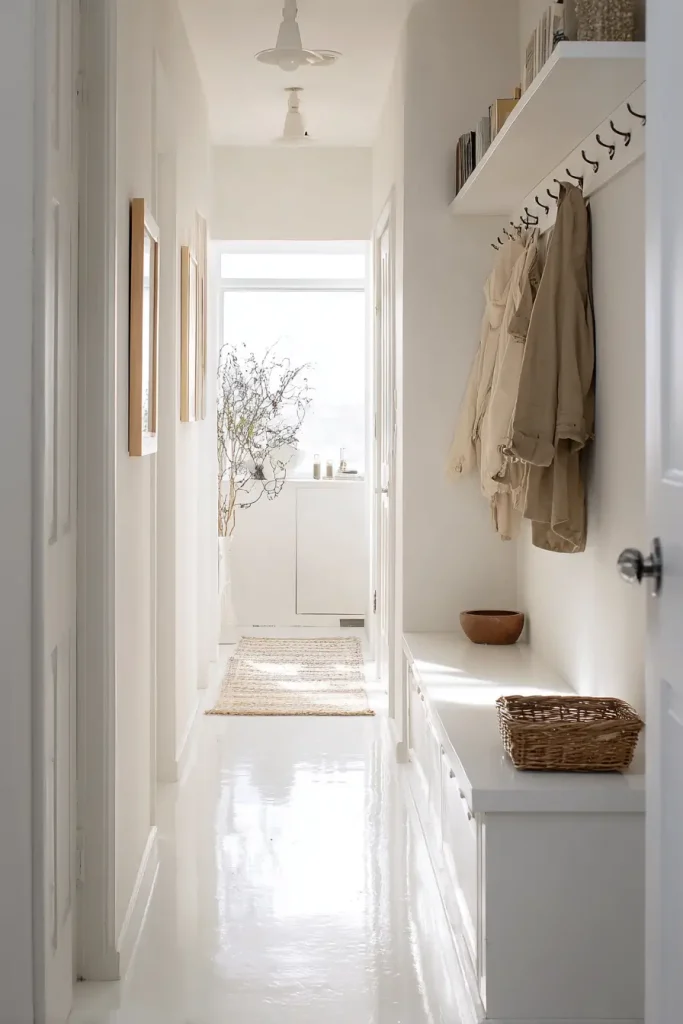
This is the most important idea in the guide. And it costs nothing.
A hallway with 30 percent less stuff in it will always feel bigger than a hallway with better decor. You can add the perfect mirror, the ideal rug, and the right light. But if the floor has four pairs of shoes, three bags, and a pile of mail on the console, none of it will matter.
The One Function Per Surface Rule
Each surface or storage zone in your hallway should do exactly one job. The console is a landing zone for keys and one small bowl. That is it. The hook strip holds coats. Just coats. Not scarves, bags, and last season’s hats all tangled together.
When every surface has one clear job, the space reads as organized and intentional. When surfaces collect random items, the space reads as chaotic regardless of how good the furniture is.
The Seasonal Rotation System
Winter coats do not belong in the hallway in July. Off-season items belong in a closet or storage. Rotate what is in the hallway to match what you actually use right now. This single habit, more than any design trick, keeps a narrow hallway feeling spacious.
Honest truth: most hallways do not need more design. They need less stuff. Before you buy anything, spend 20 minutes removing everything that does not need to be there. The hallway will immediately feel bigger, and you will see clearly what it actually needs.
17. Putting It All Together: A Layered Design Formula for Any Narrow Hallway
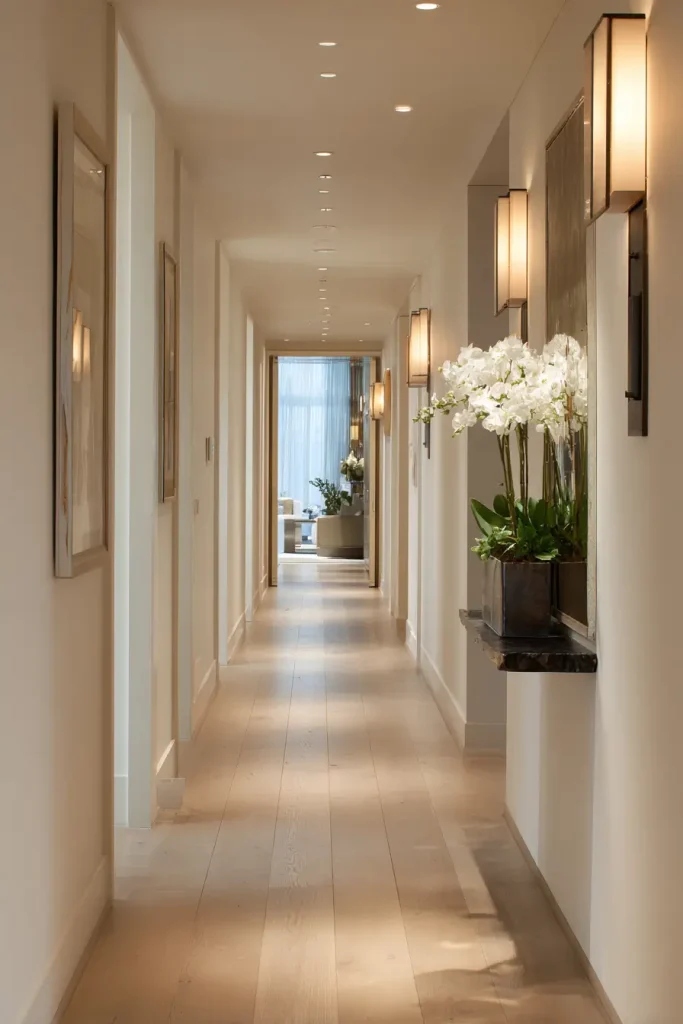
You do not need to do all 17 things at once. In fact, trying to do everything at once is how hallways end up feeling overdone. Here is a simple order of operations that works for any narrow hallway.
Start With the Bones
Paint and flooring first. Everything else second. These are the surfaces that define the whole space. Get them right and the room starts to work before you add a single object.
If you can only do one thing right now, repaint with a color that has an LRV above 65 and drench the ceiling the same tone. That single move will change more than almost anything else on this list.
Layer in Lighting Before Furniture
Lighting changes how every other element looks. Add a wall sconce or update your existing fixture before you buy a new console. The lighting will show you clearly what the space still needs.
Choose One Focal Point
Pick one: a large mirror, a piece of art, a wallpapered end wall, or a dramatic plant. Build everything else around it. A hallway with one strong focal point feels curated. A hallway with five competing focal points feels busy.
The Finished Hallway Test
Stand at one end of your hallway and look straight ahead. Ask yourself one question: does my eye travel forward comfortably? If yes, you are done. If your eye keeps stopping at clutter, a piece of furniture, or a bare patch of wall, that is what still needs attention.
That forward movement is the goal. When your eye moves through the space easily, the hallway stops feeling like a problem. It starts feeling like a room.
Conclusion
Narrow hallways only feel claustrophobic when they are treated as afterthoughts. Every idea in this guide works by controlling what your eye sees: directing attention upward, forward, and outward through smart use of light, color, reflection, and scale.
You do not need to do all of this at once. Start with paint color, lighting, and one large mirror. Those three changes alone can transform how a hallway feels in a single weekend.
The biggest shift is mental. Stop thinking of your hallway as a corridor to get through. Start thinking of it as the first room in your home. It sets the tone for everything that comes after it.
Whether your narrow hallway is three feet wide or just starved of light, the right small hallway decorating ideas make it the first great space in your home, not the one you rush through.

- 17 Classy Living Room Ideas for a Cozy Elegant Look - April 23, 2026
- 16 Dark Moody Living Room Ideas That Feel Rich and Warm - April 22, 2026
- 14 Elegant Bedroom Trends for 2026 You’ll Love - April 22, 2026