
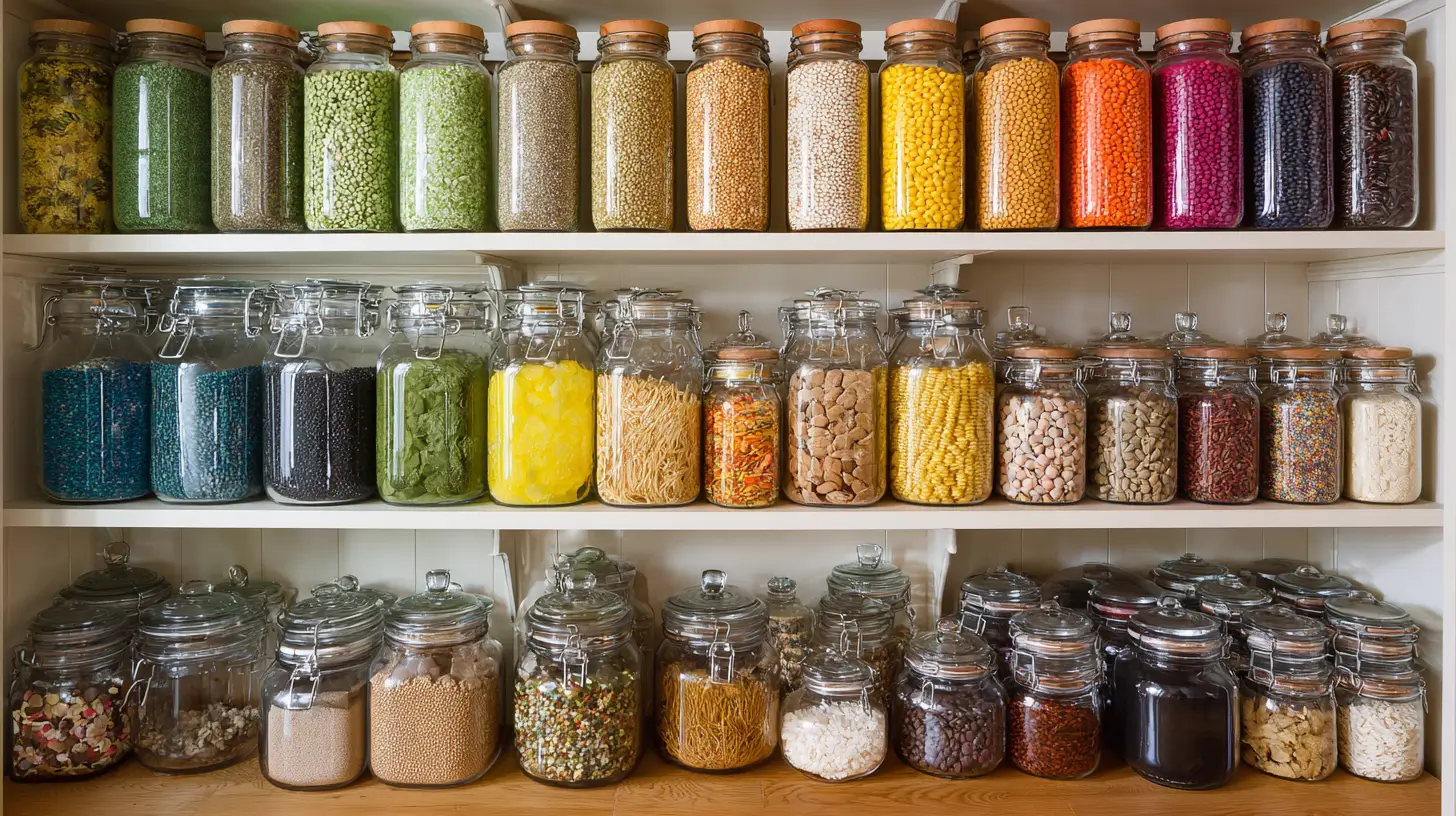
If your pantry looks like a cereal box explosion every time you open the door, you are not the problem. The system is.
Most pantry organization advice is written for people who already love organizing. They have label makers. They have color coded bins. They spend weekends reorganizing their spice drawers for fun.
That is not you. And that is okay.
You need a system that takes 20 minutes to set up and basically runs itself. No label maker. No Pinterest boards. No buying 40 matching containers that you will never refill.
These 18 pantry organization ideas are built for real life. Some cost nothing. Some cost five dollars. All of them actually work even when you are tired, busy, and absolutely do not want to organize anything.
Why Your Last Pantry Organization Attempt Failed
Before we get to the ideas, let us be honest about why the last attempt did not stick.
You probably set it up perfectly. Everything had a place. It looked great for about two weeks.
Then real life happened. You were in a rush. You shoved the crackers in the wrong spot. One thing led to another. Now it looks exactly like it did before.
Here is the real issue. Most organization systems are designed for photos, not for people.
A 2022 survey by the National Association of Productivity and Organizing Professionals found that 54% of Americans feel overwhelmed by clutter at home. But fewer than 20% keep any organized system going for more than three months.
The system collapsed because it required too much effort to maintain. Not because you failed.
The good news is that the fix is simple. You need a system with fewer rules, not more. The more categories you create, the faster the whole thing falls apart. Decision fatigue is real. When putting something away feels like a quiz, you stop doing it.
Every idea on this list is designed to be forgiving. Good enough beats perfect every time.
Idea 1: Zone Your Pantry in 15 Minutes (No Products Needed)

Before you spend a single dollar, spend 15 minutes rearranging what you already have.
This is called zoning. And it is the single most useful thing you can do for your pantry.
The idea is simple. Group things by how often you use them, not by what they are.
Zone 1: Daily use. Eye level, front and center. Coffee, oatmeal, protein bars, whatever you reach for every single day.
Zone 2: Weekly use. Slightly higher or lower. Canned goods, pasta, cooking oils, things you use a few times a week.
Zone 3: Rarely used. Top shelf or back. Baking supplies, specialty ingredients, holiday items.
Here is a real example. Move your coffee, oatmeal, and granola bars to one shelf. That is your morning shelf. You do not have to think about it. You just open the door and grab.
James Clear, author of Atomic Habits, calls this environment design. When you make the right choice the easiest choice, you actually make it. Rearranging your pantry to match your real habits is free and takes one afternoon.
This one change alone will cut your “where is the pasta?” moments in half.
Idea 2: The $5 Fixes That Make the Biggest Difference

You do not need a $200 organizing kit. You need a few cheap things that solve specific problems.
Here are the five best budget fixes, listed by the problem they solve.
Problem: You can never see what is in the back of deep shelves. Fix: A turntable (also called a lazy Susan). Spin it to reach anything. Around $8 at Walmart or Amazon.
Problem: Snacks and packets go everywhere. Fix: Clear bins from the dollar store. Group everything loose into one bin per category. Under $3 each.
Problem: You have no room for small items like spice packets or granola bars. Fix: An over door pocket organizer. Hangs on the pantry door. No drilling needed. Around $15 to $20.
Problem: Open chip bags fall over and go stale. Fix: Binder clips. Clip the bag shut and hang it from a shelf edge. Costs almost nothing.
Problem: Cans take up too much shelf space. Fix: A tension rod across the back of a shelf creates a second level for cans to lean against. Free if you already have one.
Pick one of these. Just one. That is how this works. You do not have to do all five today.
Idea 3: The First In, First Out Rule That Saves You Money

The average American family wastes over $1,500 worth of food every year. A big chunk of that comes from pantry items that get pushed to the back and forgotten until they expire.
There is a simple fix for this. It is called First In, First Out, or FIFO.
The rule is this: when you bring home new groceries, put them behind the older ones. Older items stay in front. You use the front stuff first.
You do not need labels. You do not need a system. You just need to remember one thing: new stuff goes in the back.
Once it becomes a habit, it takes about 10 seconds per grocery trip. And it stops that moment where you find three cans of chickpeas, two of which expired last year.
The TikTok “pantry deep dive” trend in 2024 showed this clearly. Creator after creator was pulling expired food out of the back of their pantries. The stuff in the front was fine. The stuff in the back was a graveyard.
FIFO fixes that permanently.
Idea 4: Should You Decant? Here Is the Honest Answer

Decanting means moving food from its original packaging into clear containers. It looks beautiful. It also has real trade offs.
Here is the honest take: most people should not fully decant their pantry.
It costs money. It takes time. And you have to keep refilling those containers every time you buy more. If you miss a week, you end up with a half empty container and a full bag sitting next to it anyway.
That said, decanting works well for about five categories. Flour, sugar, rice, pasta, and cereal. These are things you use constantly, they come in annoying bags that rip, and they look the same in any container.
For everything else, skip the decanting.
The lazy version of this is called the bin in bag method. Keep the original bag. Just put it inside a clear bin. You get the visual clarity without the refill hassle. It works almost as well.
If you do want to decant, OXO Pop containers are the most recommended option on the market. They have been rated number one by Wirecutter and Good Housekeeping in multiple years. IKEA’s 365+ series is a cheaper option that works nearly as well.
But again. You do not have to decant anything if you do not want to.
Idea 5: How to Double Your Usable Space in a Small Pantry

According to a 2023 Houzz survey, the number one kitchen frustration for homeowners is lack of storage space.
Here is the thing though. Most small pantries have more usable space than people realize. It is just being wasted vertically.
Use the back of the door. This is the most overlooked storage surface in any pantry. An over door organizer can hold spice packets, granola bars, foil, parchment paper, and a dozen other small items that eat up shelf space.
Add shelf risers. These cheap inserts create two levels inside one shelf. You double your capacity without adding any shelves.
Use under shelf baskets. These hang from an existing shelf and give you an extra row of storage underneath it.
Consolidate duplicates. Most pantries have three half empty bottles of the same soy sauce. Combine them. You just made space.
Stop ignoring the top shelf. It is awkward to reach, yes. But it is perfect for bulky rarely used items like large bags of rice, extra paper towels, or holiday baking supplies.
You probably have 30% more usable space right now. It is just sitting in the vertical zone you have been ignoring.
Idea 6: The 10 Minute Weekly Reset That Keeps Everything Working

Here is the truth most organization articles skip. Setting up your pantry is not the hard part. Keeping it that way is.
The reason most systems fall apart is that people treat organization as a one time project. You set it up once and hope it stays. It never does.
The fix is a 10 minute weekly reset. Not a deep clean. Not a reorganization. Just a quick scan every week to pull things back into place.
Here is exactly what that looks like.
Step 1: Open the pantry. Look at what is in front. Step 2: Pull anything that rolled to the back or got misplaced. Put it back where it belongs. Step 3: Check expiry dates on two or three items. Toss anything expired. Step 4: Consolidate anything half empty. Combine two open bags of the same thing. Step 5: Close the door.
That is it. Ten minutes.
The best time to do this is while your coffee brews on Sunday morning. This is called habit stacking, a concept from BJ Fogg’s Tiny Habits research at Stanford. You attach the new behavior to something you already do automatically. It stops feeling like a chore and starts feeling like part of the routine.
Idea 7: Do You Actually Need Labels? A Real Answer

No. Most people do not need labels.
Here is why. If your containers are clear, you can see what is inside them. Labels are only necessary when you cannot tell the difference between contents. Flour and powdered sugar look similar in a container. Most other things do not.
Labels also break down fast in households with multiple people. You label everything carefully. Then your partner puts the oatmeal in the pasta spot because it was the first open space. The label system becomes a lie. Now it is more confusing than before.
If you really want labels, here is the laziest approach that actually works: masking tape and a marker. Write the category on the tape. Stick it to the bin. If it changes, peel it off and write a new one. Free. Takes 10 seconds. Easy to update.
If you want something that looks nicer, chalkboard label sets on Amazon run about $6 to $10. They are easy to rewrite.
The main distinction worth making is between item labels and category labels. Item labels (PASTA, OATMEAL, FLOUR) are high maintenance. Category labels (SNACKS, BAKING, GRAINS) are low maintenance. If you are going to label anything, label the zone, not every individual container.
Idea 8: Spice Storage That Does Not Require Reorganizing Everything

Spices are the most annoying part of any pantry. They are small, they fall over, and you somehow end up with four half empty jars of cumin.
You do not need to overhaul your entire spice situation. You just need one of these three approaches.
Option 1: The frequency shelf. Pull out your 10 most used spices and put them somewhere visible and easy to grab. Salt, pepper, garlic powder, cumin, paprika, whatever you reach for constantly. Everything else goes behind or above. You stop digging through 30 jars to find the one you need.
Option 2: Magnetic strips. Magnetic spice strips mount on the inside of a cabinet door or a wall and hold metal tins. They free up an entire shelf. Products like the Kamenstein wall mounted magnetic rack are popular for this. Works especially well in small pantries.
Option 3: A drawer insert. If you have a deep drawer, a spice drawer insert lays everything flat so you can see every label at once. This is the best option but it costs more, usually $20 to $40.
The alphabetical spice rack that everyone buys does not work. Nobody thinks “I need something that starts with P.” You think “I need the smoky red one.” Organize by how you actually cook, not by the alphabet.
Idea 9: How to Stop the Canned Goods Avalanche

Cans are a problem. They look identical, they are heavy, they roll, and they always somehow bury the one you want.
The simplest fix is a gravity fed can rack. You load cans in the top, they roll forward as you remove them from the front. It automatically keeps things in First In, First Out order. The SimpleHouseware stackable can rack costs under $25 on Amazon and holds about 36 cans.
If you do not want to buy anything, use the meal grouping method instead. Put all your pasta night ingredients together: canned tomatoes, pasta, jarred sauce. Put all your soup ingredients together. You are not organizing cans by type. You are organizing them by how you actually use them.
This sounds like a small change. But it cuts down decision making at dinner time and makes cooking feel faster.
Idea 10: The Snack Bin That Stops the Cabinet Ransacking

You know the scene. Someone wants a snack. They open the pantry. They start moving things around looking for options. Three things fall off a shelf. Nothing gets put back properly.
Fix: one clear bin labeled SNACKS. Everything snack related goes in it. Chips, crackers, granola bars, fruit snacks, whatever counts as a snack in your house.
When someone wants a snack, they grab the bin, look through it, and put it back. Nothing else gets disturbed.
This works just as well for kids as it does for adults. You can also make it a teaching moment for kids: the snack bin is what you have access to, full stop.
Refill the bin during your weekly reset. Keep it in the most accessible zone of your pantry. That is the whole system.
Idea 11: Baking Supplies Need Their Own Zone

Most people bake occasionally. Not constantly. So baking ingredients get scattered across multiple shelves and get forgotten between uses.
Then you go to bake cookies and spend 15 minutes finding the vanilla extract, the baking soda, and the brown sugar from three different spots.
The fix is a baking zone. Everything you need to bake goes on one shelf or in one handled bin.
Flour, sugar, brown sugar, baking powder, baking soda, vanilla, cocoa powder, chocolate chips, all of it in one place.
The handled bin is the better option because you can pick up the whole thing and carry it to the counter while you bake. One grab and your workspace is set up.
This also stops the “buying flour you already have” problem. If it is all in one zone, you can see at a glance whether you are out.
Idea 12: Every Pantry Has a Chaos Shelf. Here Is What to Do With It

You have one shelf that is just… a mess. Miscellaneous stuff. Things without a clear category. The spot where things land when you do not know where else to put them.
Do not try to eliminate this shelf. You will fail. Instead, contain it.
Get one bin for that shelf. Everything that does not have a home goes in that bin. When the bin is full, that is your signal to toss or find a real home for things. Not before.
The one bin rule is the key part here. You are not giving chaos a home. You are giving it a limit.
Idea 13: Where to Store Onions, Garlic, and Potatoes (Most People Get This Wrong)

Root vegetables do not belong in the fridge. Cold temperatures actually make potatoes convert starch to sugar faster, which changes the texture and taste when you cook them.
Onions, garlic, potatoes, and shallots all belong in a cool, dark, well ventilated spot. That is usually your pantry.
Here is the important part: potatoes and onions should not be stored together. Onions release gases that speed up potato spoilage. Keep them in separate bins.
Use ventilated storage only. Wire mesh baskets or breathable fabric bins work well. Sealed containers trap moisture and cause faster rot.
The UC Davis Postharvest Technology Center publishes free storage guidelines for produce. Their recommendations confirm that proper pantry storage can double the shelf life of root vegetables compared to fridge or sealed container storage.
Idea 14: Too Much Stuff Is the Real Problem (Not Too Little Space)

When a pantry stops working, most people think they need more space. Usually the real problem is too much stuff.
Before you buy any organizational products, do a pantry audit. Pull everything out. Toss anything expired. Get rid of duplicates you do not need. Donate unexpired non perishables you will not realistically use.
Most food banks accept unexpired canned and packaged goods. Feeding America at feedingamerica.org can help you find a location near you.
The one in, one out rule helps prevent future overflow. When you bring home a new bottle of olive oil, toss the almost empty one or use it first. You stop accumulating duplicates.
An audit takes about 30 minutes. Do it once and your pantry has 20% more space immediately.
Idea 15: Digital Tools That Actually Help in 2026

You do not need an app. But if you are the type of person who likes tracking things on your phone, a few apps make pantry management easier.
Pantry Check lets you log what you have and set expiry date reminders. OurGroceries syncs grocery lists across household members so nobody buys a third bottle of soy sauce. Out of Milk combines shopping lists with pantry tracking.
Before using any of these, verify their current app store ratings since the app landscape changes fast.
If you do not want to deal with apps, the photo shelf method works just as well. Before every grocery trip, take a photo of your pantry with your phone. You have a real time inventory in your pocket at the store. No app needed. Costs nothing.
Idea 16: Renter Friendly Pantry Organization (No Drilling Required)

If you rent, most traditional pantry advice does not apply to you. You cannot drill into walls or install permanent shelving.
These options work without any tools or damage.
Freestanding shelving units. IKEA’s HYLLIS shelf is under $30 and adds an entire extra column of storage without touching a wall.
Command strip hooks. 3M states their command strips hold up to five pounds per strip. That is enough for small hooks and lightweight over door organizers.
Over door organizers with adjustable hooks. These hang from the door frame without hardware and hold a surprising amount.
Tension rod shelf dividers. A tension rod across the inside of a cabinet creates sections for upright storage of baking sheets, cutting boards, or trays.
A rolling cart. IKEA’s Raskog cart has become popular as a portable pantry station. It rolls out when you need it and tucks away when you do not. Works especially well in small kitchens with no dedicated pantry.
Idea 17: Produce and Bread Storage You Are Probably Doing Wrong

Bread stored in the fridge gets stale faster. The cold temperature speeds up a process called starch retrogradation. Room temperature or a bread box is better for short term storage.
For longer storage, freeze bread and thaw slices as needed.
Tomatoes lose flavor in the fridge. Store them at room temperature until cut.
These are small changes. But they reduce food waste and improve the food you actually eat.
Idea 18: The “Good Enough” Pantry Is the Goal. Not the Perfect One.

Here is the last idea, and honestly the most important one.
Your pantry does not need to be perfect. It needs to work.
The real goal is this: you should be able to find anything in your pantry in under five seconds. That is it. That is the whole bar.
If your pantry meets that bar, it is organized enough. Whether it looks like a magazine photo does not matter. Whether your containers match does not matter.
Herbert Simon, a Nobel Prize winning economist, coined the term “satisficing.” It means choosing a solution that is good enough rather than chasing the optimal one. In real life, satisficing beats perfectionism almost every time, because satisficing actually gets done.
Perfectionism is what causes people to abandon their systems. You set it up beautifully. One shelf gets messy. Instead of doing a quick fix, you feel like you need to start over. So you do nothing. The whole thing falls apart.
A good enough pantry that you maintain beats a perfect pantry that you abandon in three weeks.
Give yourself permission to let it be imperfect. Fix the one messy shelf. Move on. That is a real system.
Start With One Thing This Week
Pick one idea from this list. Just one.
You do not need to do all 18. You do not need a full weekend project. You do not need to buy anything today.
Zone your pantry in 15 minutes. Or get one clear bin for snacks. Or put a turntable on a deep shelf that has been annoying you for months.
One small change makes the next one easier. That is how this actually works.
These pantry organization ideas are not about having a beautiful pantry. They are about saving time, cutting food waste, and not feeling stressed every time you open that door. Start somewhere. Today.

- 16 Japanese Minimalist Living Room Ideas for Total Visual Calm - March 16, 2026
- 17 Farmhouse Hallway Ideas That Feel Warm and Welcoming - March 16, 2026
- 17 Vintage Bedroom Ideas With a Modern Twist (2026) - March 16, 2026
