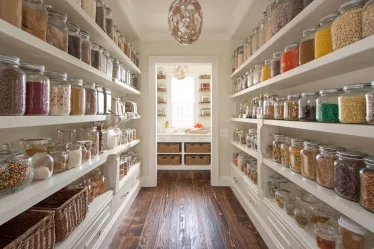
A tiny pantry can feel like the most frustrating part of your kitchen. You open the door and things fall forward. Cans hide in the back. Snacks get crushed. You buy duplicates because you cannot see what you already have. The shelves feel crowded. The space feels smaller every week. But here is something important. A small pantry is not the problem. A lack of system is the problem.
In 2026, tiny pantry design is smarter, cleaner, and more intentional than ever before. Designers are no longer trying to make small spaces hold more. They are trying to make them hold better. That means vertical organization, slim storage solutions, thoughtful lighting, and clear category planning.When done correctly, a tiny pantry can feel calm. It can feel structured. It can feel beautiful. Even a narrow closet pantry or a single cabinet can become highly functional when every inch is planned with purpose.
The goal is not to add more shelves randomly. The goal is to design a smart storage system that reduces clutter and improves daily life. These 16 ideas will show you how to transform your tiny pantry into a space-saving, well-organized, and visually pleasing part of your kitchen.
1. Use Floor-to-Ceiling Shelving to Capture Every Inch
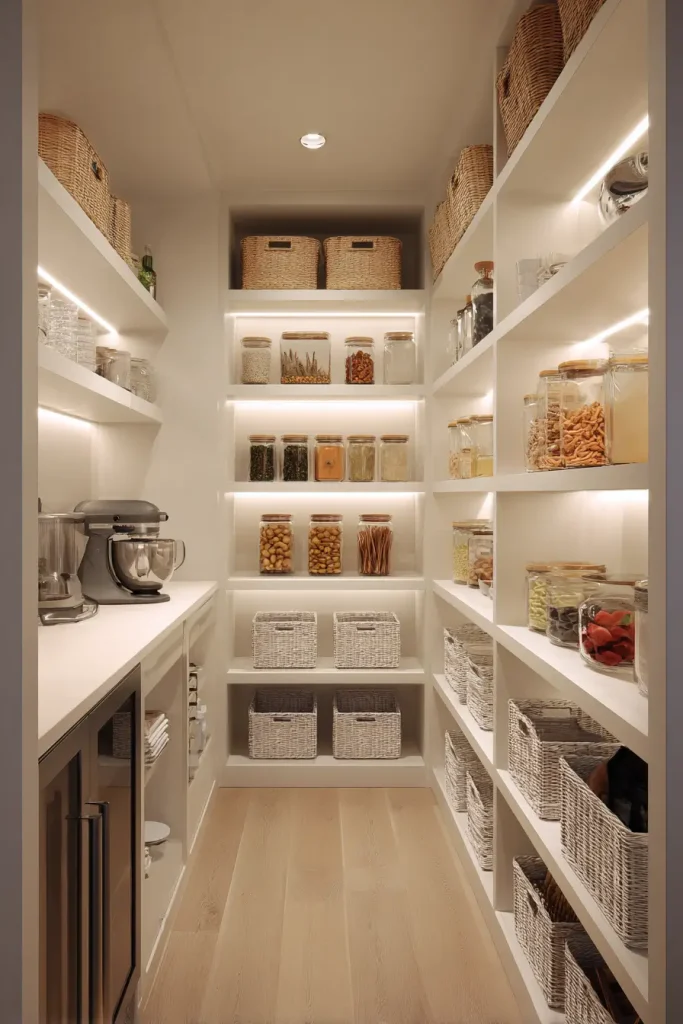
Most tiny pantries waste vertical space. There is often a gap above the highest shelf that sits unused. In small pantry design for 2026, that empty air is no longer ignored. Floor-to-ceiling shelving instantly increases storage without increasing square footage. By extending shelves upward, you create room for bulk goods, rarely used appliances, or seasonal items. The key is organizing by frequency of use. Everyday essentials should stay at eye level, while occasional items can live higher.
To prevent upper shelves from looking chaotic, use matching storage bins or neutral baskets. Consistency keeps the pantry visually calm even when it is full. When the eye sees uniform containers instead of scattered packaging, the space feels organized instead of crowded. Vertical planning is the foundation of smart pantry organization.
2. Install Pull-Out Shelves to Eliminate Hidden Clutter
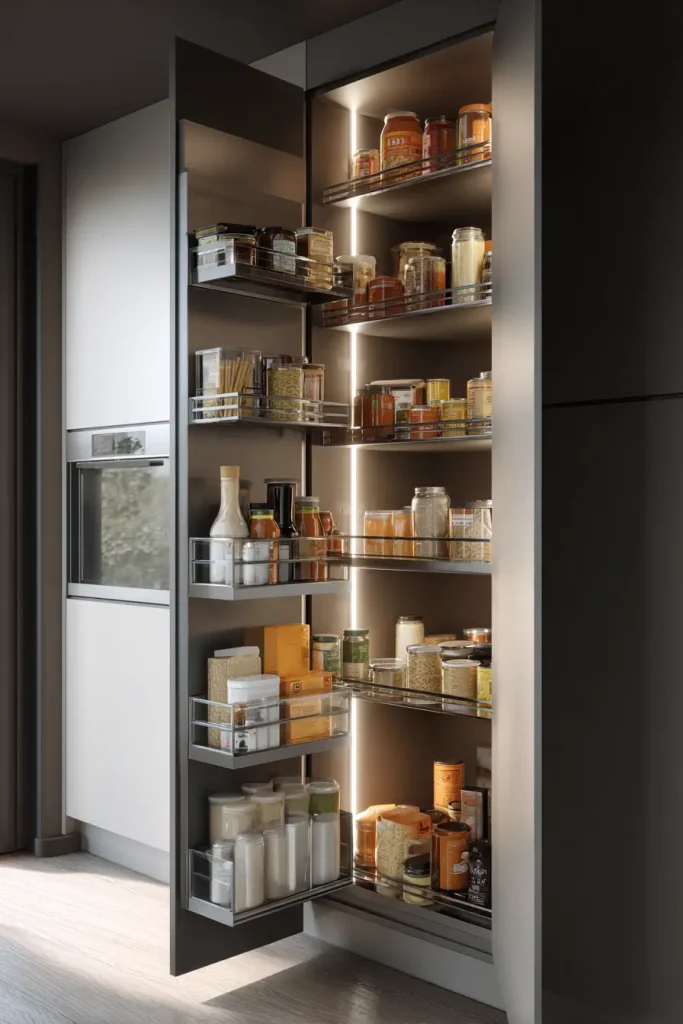
Deep shelves are one of the biggest challenges in a tiny pantry. Items get pushed to the back and forgotten. Food expires quietly. You end up overbuying because visibility is poor. Pull-out shelves solve this problem completely. In 2026 pantry design trends, sliding drawers are becoming essential in small spaces. They bring everything forward with one smooth motion. You can see every can, every jar, every box at once. This improves not only organization but also efficiency. When groceries are easy to see, meal planning becomes easier. Waste decreases. Stress decreases. A small pantry feels more manageable because nothing is hidden. Accessibility is one of the most important elements of space-saving design.
3. Maximize Door Storage for Smart Extra Space
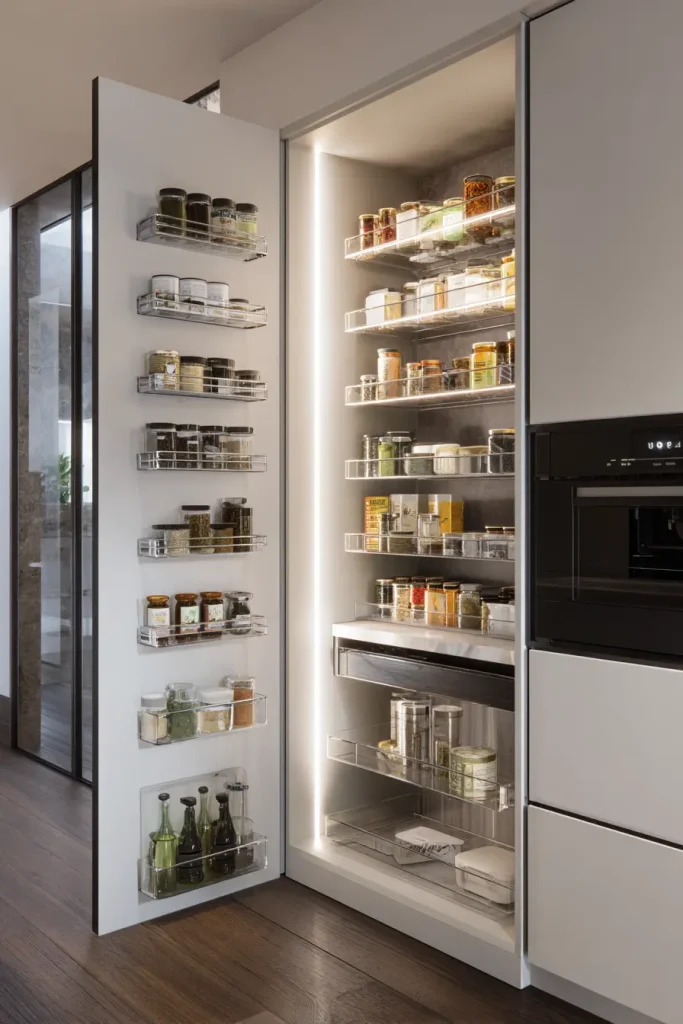
The back of the pantry door is often forgotten. In a tiny pantry, that is wasted opportunity. Slim door racks can hold spices, condiments, small jars, or snack packs. This frees up main shelves for larger items and reduces overcrowding. In 2026, minimal metal racks or clear acrylic organizers are popular because they keep the look light and modern. The beauty of door storage is that it adds function without taking up walking space. It expands storage without expanding the footprint. When designing a small pantry, always look behind the door.
4. Switch to Clear Containers for Visual Calm
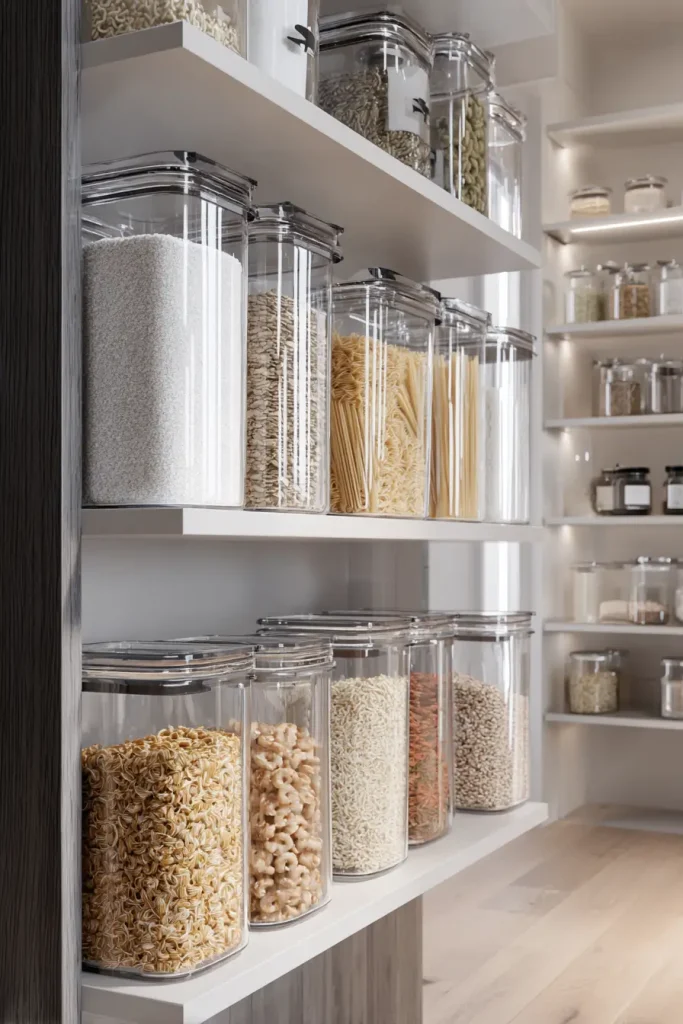
Packaging is one of the biggest causes of visual clutter. Bright boxes and crinkled bags make shelves look chaotic. Clear containers change everything. They create uniformity. They allow you to see quantities instantly. They reduce overbuying and confusion. In 2026, matching airtight containers are a top pantry trend. They create a streamlined, almost luxurious look inside small spaces. Flour, rice, sugar, pasta, cereal, and grains look clean and organized when transferred into simple containers. Add subtle labels in clean fonts to maintain structure. When everything looks cohesive, the pantry feels bigger.
5. Create Defined Zones for Easy Maintenance
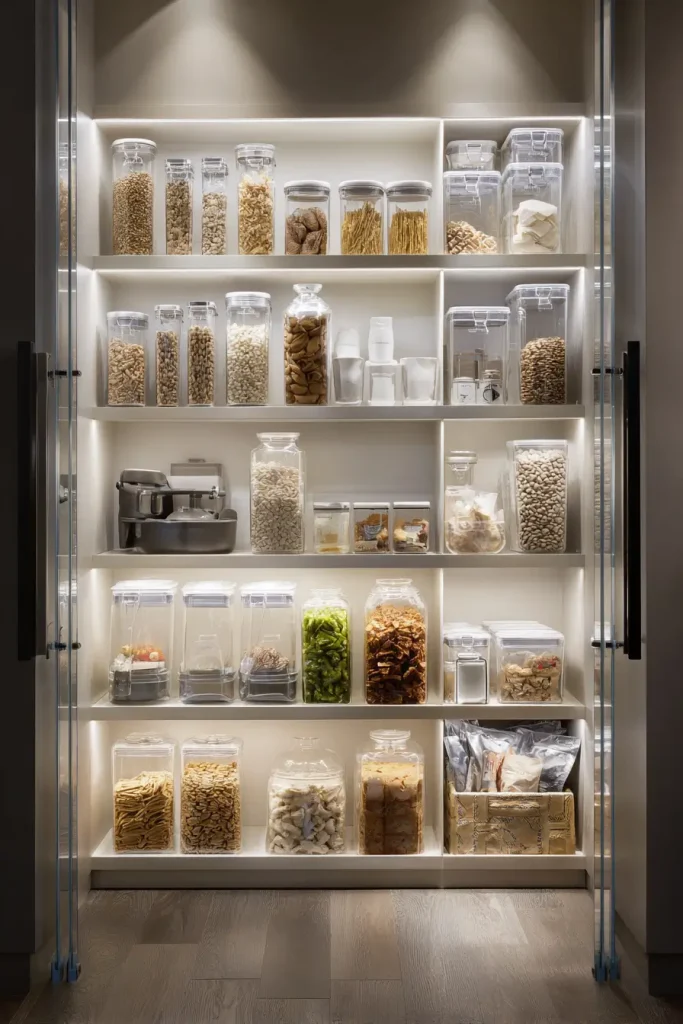
Without categories, even the most beautiful pantry will fall apart. Tiny pantry design in 2026 emphasizes zoning. Group similar items together. Breakfast items in one area. Baking supplies in another. Snacks in a separate section. Canned goods organized by type. Zoning reduces daily mess because everyone in the home knows where items belong. It turns random storage into a system. Systems create long-term organization. And long-term organization is what makes a tiny pantry successful.
6. Add Vertical Dividers for Awkward Items
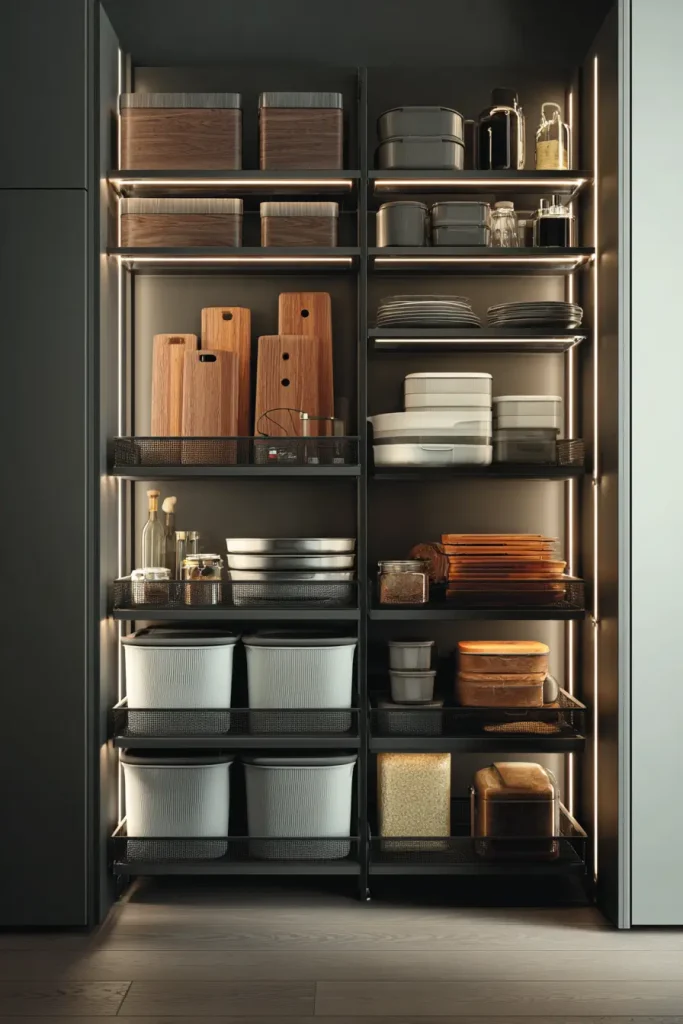
Baking trays, cutting boards, and large lids often waste horizontal shelf space when stacked flat. Vertical dividers allow these items to stand upright. This saves space and prevents messy piles. It also makes grabbing what you need effortless. In small pantry layouts, thinking vertically instead of horizontally creates more breathing room.
7. Use Adjustable Shelving for Flexibility
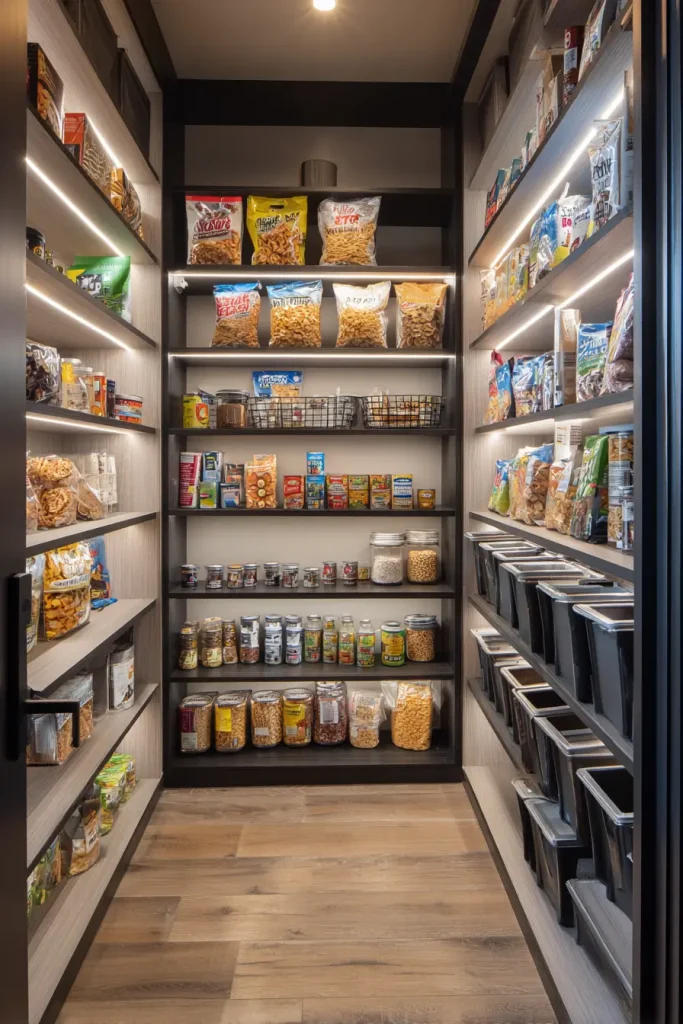
Pantry needs change over time. Fixed shelves limit flexibility. Adjustable shelving allows you to customize heights based on what you store. Tall cereal boxes need different spacing than short cans. When shelves can move, your pantry adapts. In 2026 small kitchen design, flexibility is more important than fixed structure. A pantry that adapts stays organized longer.
8. Install Soft LED Lighting for a Spacious Feel
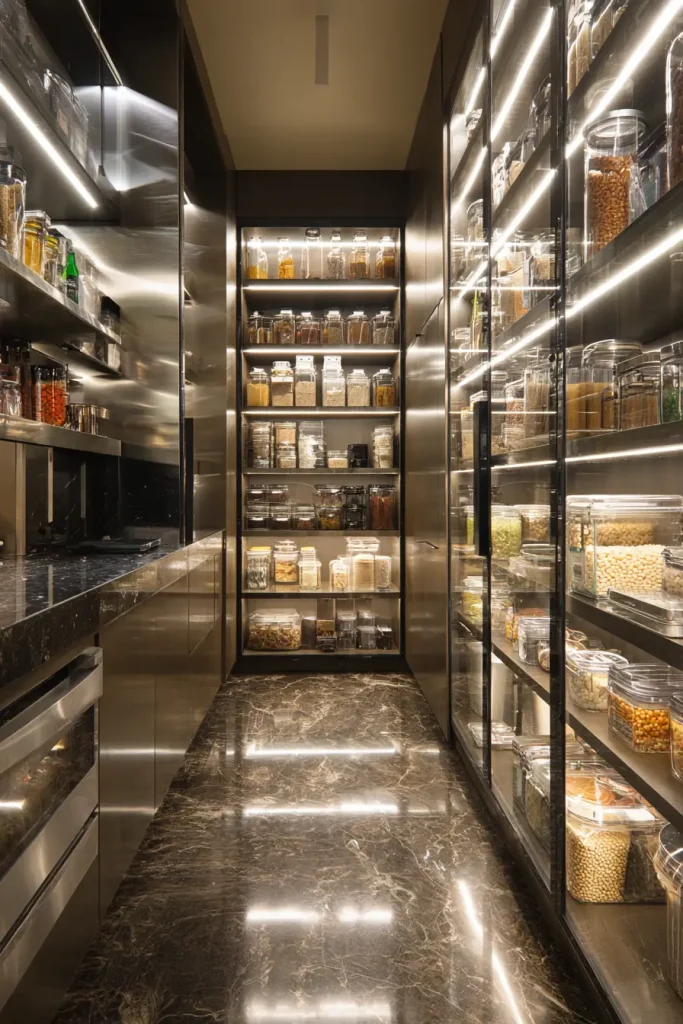
A dark pantry feels cramped. Shadows make shelves look deeper and more crowded.Soft LED strip lighting under shelves brightens every level. It improves visibility and makes the pantry feel larger.Lighting transforms the mood of small spaces. When everything is clearly visible, the pantry feels open instead of overwhelming.
9. Use Stackable Bins to Double Shelf Space
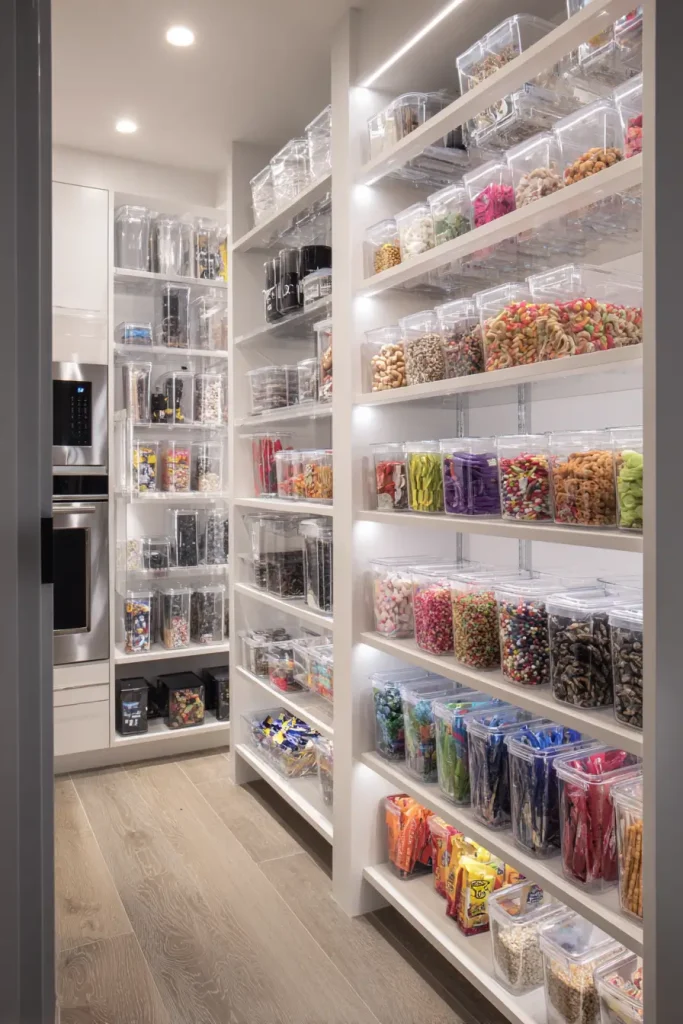
Stackable bins allow you to use the full height of each shelf. Instead of spreading items out horizontally, you build upward in an organized way.Clear or neutral stackable bins are trending in 2026 because they maintain a clean aesthetic. They separate snacks, packets, and smaller items while keeping everything visible.Stacking reduces clutter without reducing access.
10. Incorporate a Slim Rolling Storage Cart
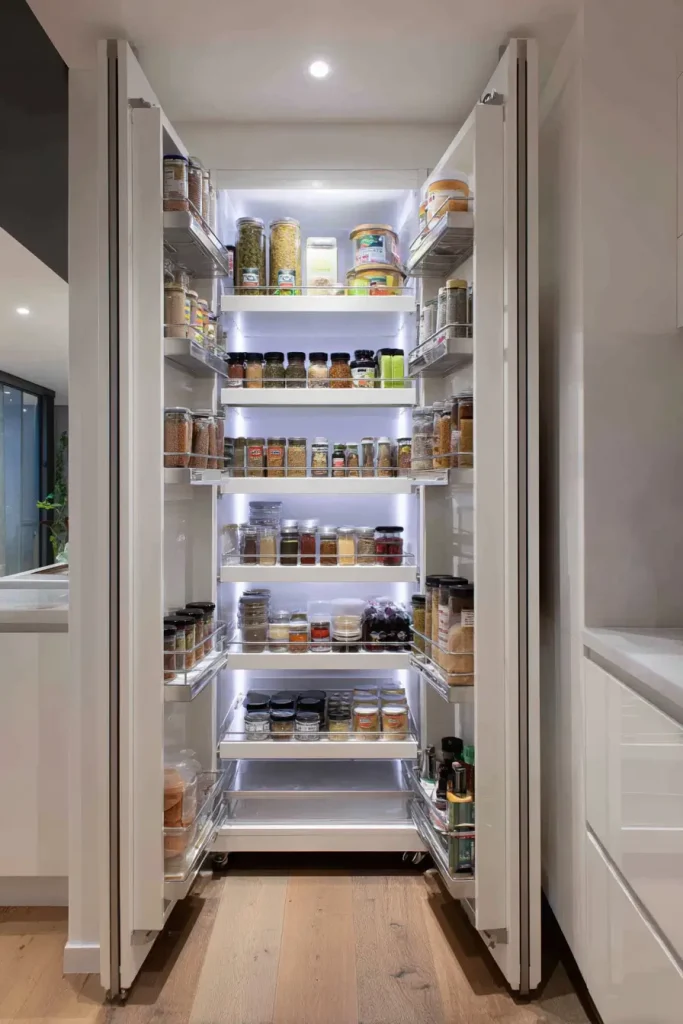
If your pantry is narrow, a slim rolling cart can slide into unused gaps. It provides vertical storage for spices, jars, or condiments.When pulled out, it offers full access. When pushed in, it disappears neatly.Rolling storage is one of the smartest space-saving ideas for tight kitchens in 2026.
11. Keep the Floor Clear to Avoid Crowding
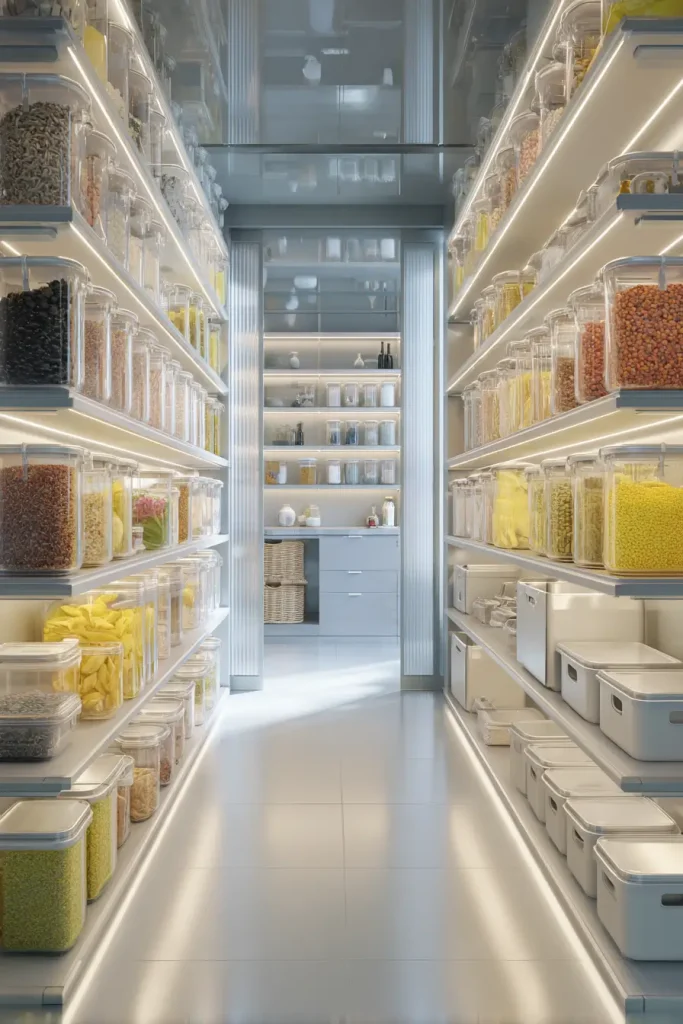
Items stacked on the pantry floor instantly make the space feel smaller.Instead, use shelves and bins to lift storage upward. If floor storage is necessary, keep it contained in matching baskets.Visible floor space creates the illusion of openness.
12. Label Everything for Long-Term Success
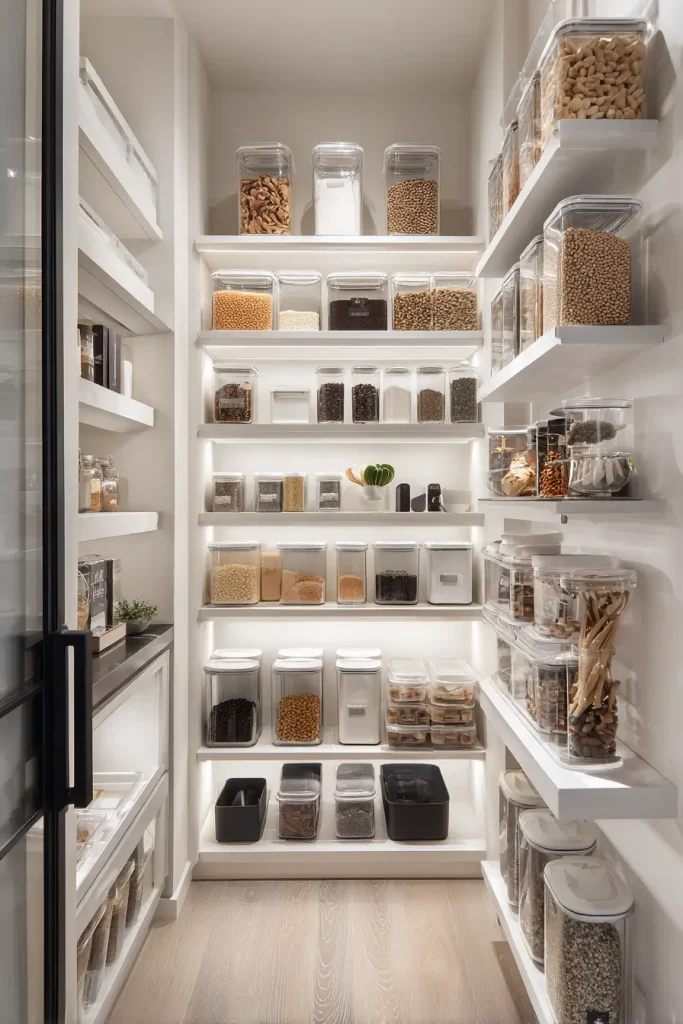
Labels create clarity. They guide where items belong. They reduce random placement.In modern tiny pantry design, labels are clean, simple, and minimal. They support organization without adding visual noise.Consistency makes maintenance easy.
13. Use Warm Neutral Colors to Enhance Space
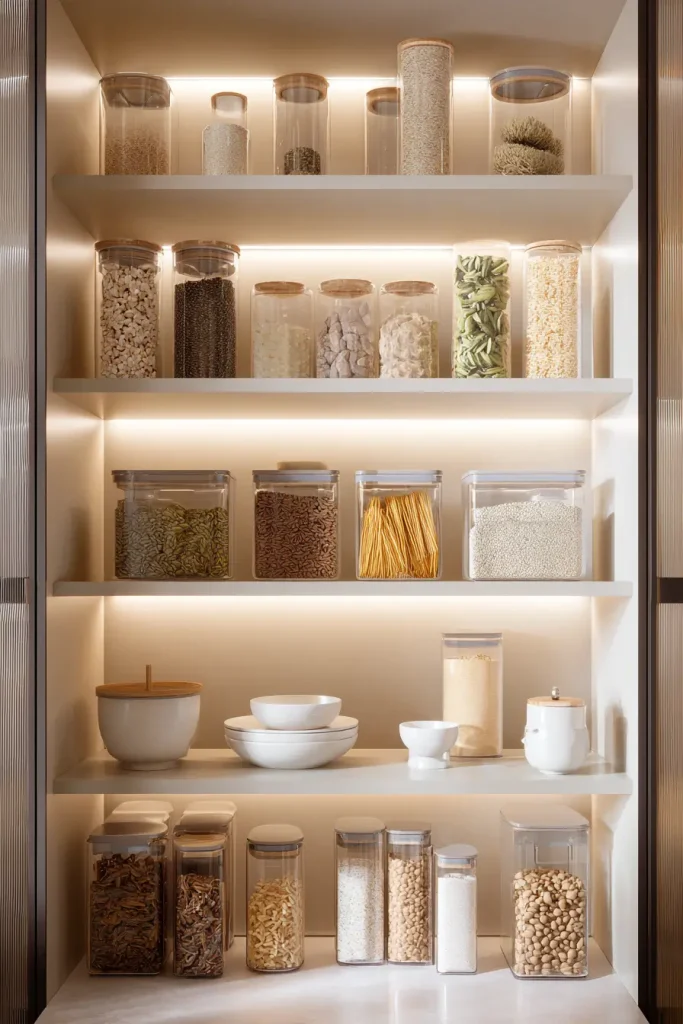
Color impacts how small spaces feel. Bright colors can feel busy. Dark colors can feel tight.Warm white, soft beige, and light greige reflect light and create calm. In 2026, tiny pantry design leans toward warm neutrals that match modern kitchens.A cohesive color palette makes the pantry feel intentional rather than separate.
14. Utilize Corner Shelving for Hidden Potential
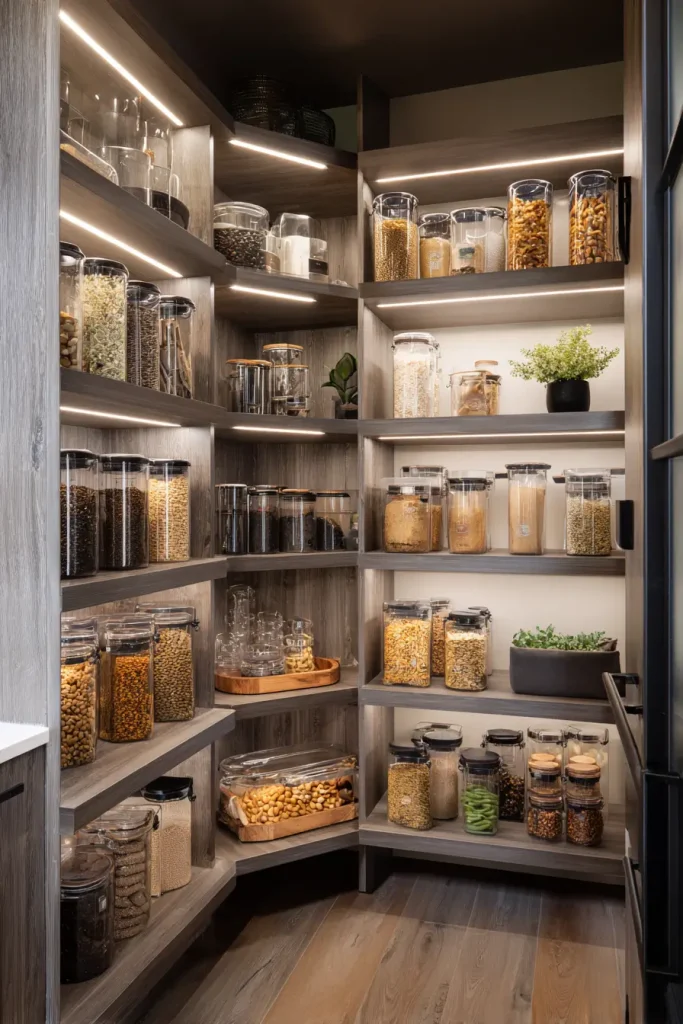
Corners often waste valuable space. Custom corner shelves or rotating organizers make those areas functional.When every inch is used thoughtfully, even awkward angles become useful.Efficiency defines smart pantry design.
15. Choose Slim Open Shelving for Airiness
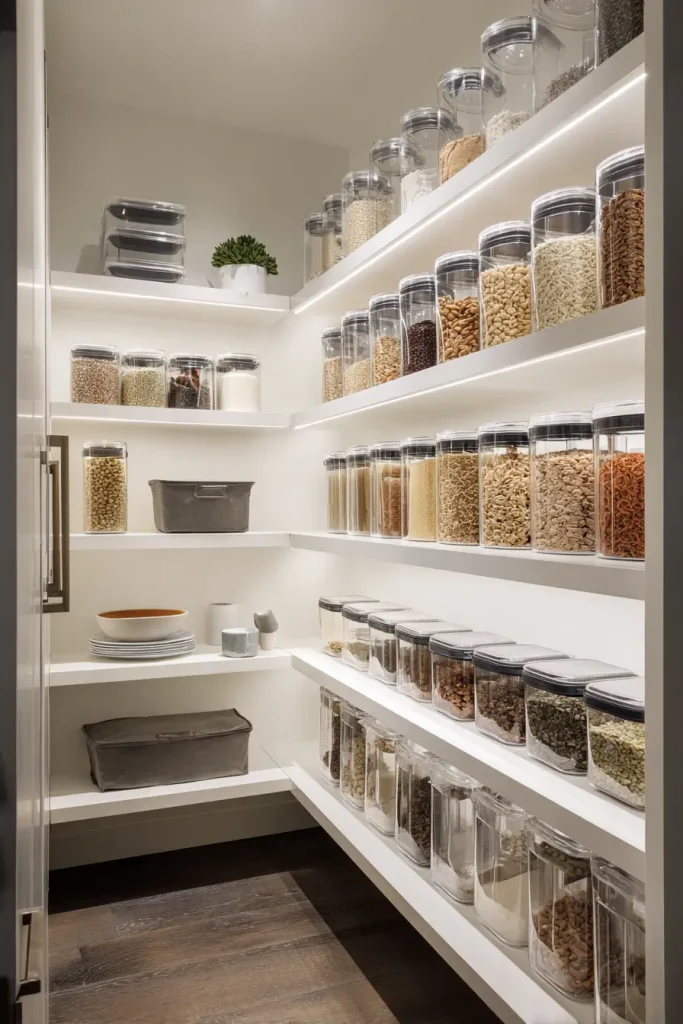
In extremely small pantry closets, heavy cabinets can feel bulky.Slim open shelves maintain visibility and create a lighter feel. The key is disciplined organization to avoid visual clutter.Open shelving works best when containers are uniform and thoughtfully arranged.
16. Embrace a Minimal Stock Philosophy
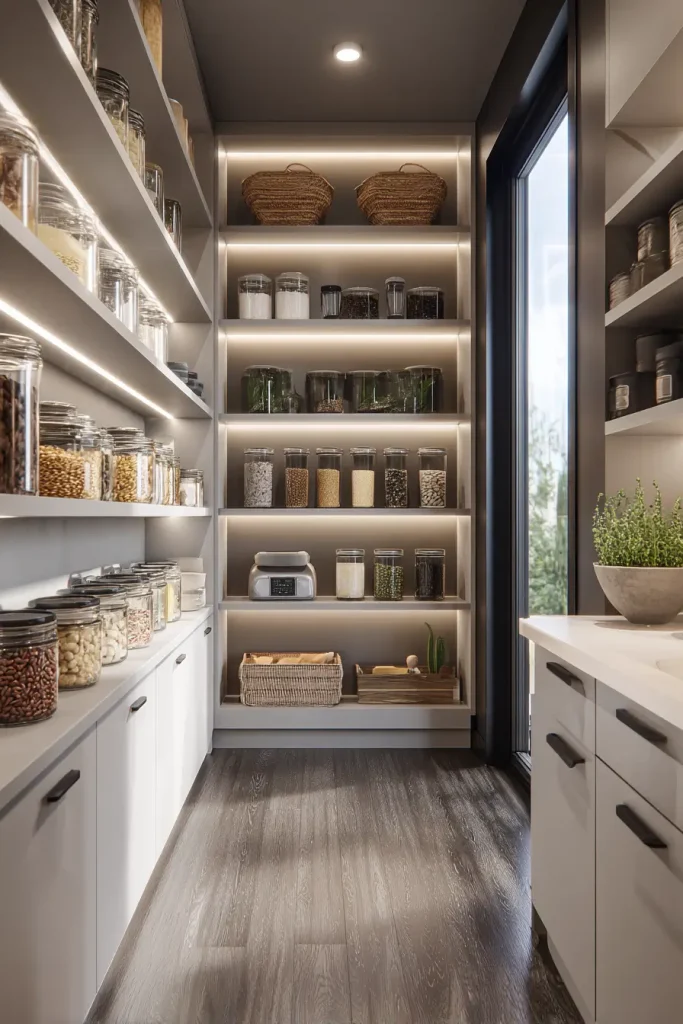
The biggest secret to tiny pantry success is not design. It is mindset.Overstocking creates stress. Keeping only what you regularly use keeps the pantry manageable.In 2026, intentional storage is a major trend. A well-edited pantry feels spacious, clean, and calm.
Final Thoughts
Tiny pantry design in 2026 is about smart organization and thoughtful space-saving solutions. It is about building systems instead of stuffing shelves. It is about visibility, vertical planning, and minimal clutter.When you use pull-out shelves, clear containers, labeled zones, and proper lighting, your small pantry transforms into a highly functional space.You do not need more square footage. You need better strategy.With intention and structure, even the smallest pantry can feel organized, modern, and beautifully efficient.

- 17 Classy Living Room Ideas for a Cozy Elegant Look - April 23, 2026
- 16 Dark Moody Living Room Ideas That Feel Rich and Warm - April 22, 2026
- 14 Elegant Bedroom Trends for 2026 You’ll Love - April 22, 2026