Introduction
Your bookshelf could be the centerpiece of your room—or the thing everyone overlooks. Too often, people pile books and decor on shelves without a plan. The result? A cluttered, unbalanced display that makes even the nicest items look cheap. You might have expensive books, designer vases, or family photos, but if they’re stacked haphazardly, the whole shelf feels messy.
The good news is that styling a bookshelf doesn’t require a degree in interior design. With a few simple tricks, you can turn your shelf into a display that feels organized, stylish, and personal. In this article, you’ll learn how to style a bookshelf like a professional interior designer. You’ll discover how to arrange books and decor in ways that balance color, texture, and height. You’ll also see how to mix personal items with stylistic touches to create a polished, inviting look.
By the end, you’ll have practical bookshelf styling ideas and interior design bookshelf tips you can apply immediately. Whether your space is small or large, minimalist or maximalist, these techniques will help your shelves stand out—and make your whole room look better.
Choose the Right Bookshelf Layout for Your Space
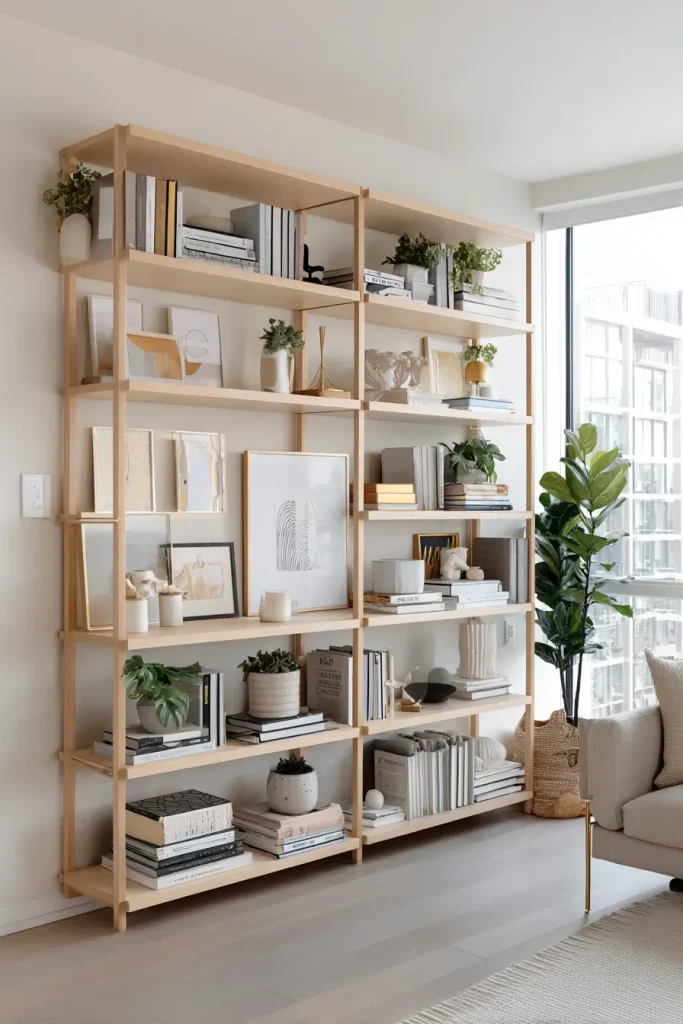
Before you even touch a book or a vase, it’s important to think about the layout of your bookshelf. The right layout sets the tone for your entire display. One of the most common mistakes is cramming everything onto shelves without considering scale, spacing, or the room itself. A well-planned layout helps your items look intentional and balanced.
Start by looking at your bookshelf and the room it lives in. If your ceiling is tall, vertical shelves can emphasize height, giving the room a sense of space. For wider rooms, horizontal shelving works well, allowing you to spread out decorative items. Think about the size of the furniture around it too. A large bookshelf in a small room can feel overwhelming if not arranged carefully, while a small shelf in a large space can disappear unless it’s styled to stand out.
Next, decide on a focal point for your bookshelf. This could be a piece of artwork, a unique book, or a special sculpture. The focal point draws the eye and makes the rest of the items feel intentional. For example, you could place a small framed painting in the center of the middle shelf and arrange books and decor around it.
Don’t forget negative space. Leaving breathing room between items prevents the shelf from looking cluttered. A good rule is to avoid filling every inch of shelf space. Instead, cluster items in small groups, leaving gaps that allow the eye to rest.
For inspiration, look at popular bookshelf dimensions from stores like IKEA or West Elm. A standard IKEA BILLY bookshelf is 31 inches wide and 79 inches tall, which works for most living rooms. West Elm’s Modern Bookshelf ranges from 36 to 48 inches wide, offering more space for decor and layering. Minimalist layouts often favor fewer items with lots of space, while maximalist layouts layer books, plants, and objects for a lively, textured effect.
By considering scale, focal points, and spacing, you set a strong foundation for everything else. The right layout transforms a random shelf into a curated display that feels professional and stylish.
Organize Books by Color, Size, or Theme
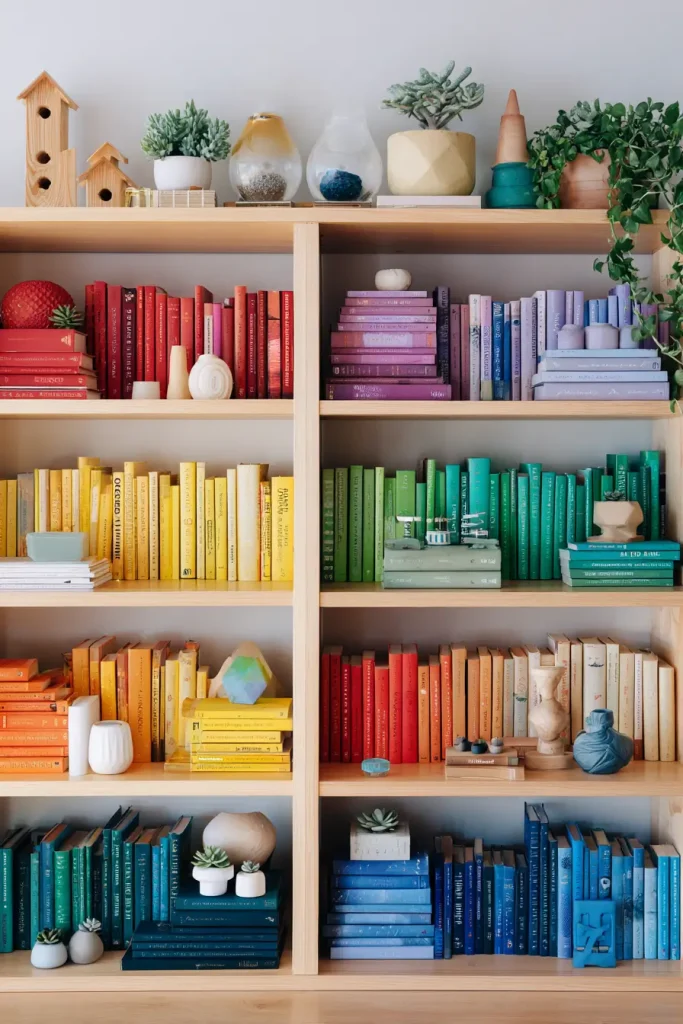
Books are the backbone of any bookshelf, but the way you organize them makes all the difference. There are several ways to approach this: by color, size, or theme. Each method has its benefits, and mixing approaches can create a unique, visually pleasing result.
Color-coding books is one of the most striking ways to style a bookshelf. Arranging books by color creates a clean, harmonious look. For example, you can group all red books together, followed by blues, greens, and neutrals. This approach works especially well for living rooms or offices where the shelf is visible from multiple angles. It’s not just pretty—it helps the eye move naturally along the shelf.
Grouping by height is another effective method. Place taller books at the ends or back of the shelf, and shorter books toward the front or middle. This creates balance and avoids the jarring effect of uneven stacks. Stacking a few books horizontally with a small decorative object on top adds layering and visual interest.
Themed shelves bring personality to your display. You could dedicate one shelf to travel books, another to cookbooks, and another to your personal favorites. Mixing themes with color and size considerations keeps the display organized yet playful.
Research shows that 67% of people feel calmer in visually organized environments. A neatly styled bookshelf not only looks good but also contributes to a sense of order in your home. Use before-and-after examples to see the dramatic effect. Even a small adjustment—like arranging books by theme instead of randomly—can make a shelf look like it was professionally styled.
Remember, there’s no single “right” way to organize books. Experiment with colors, heights, and themes until it feels balanced to your eye. Combine horizontal and vertical stacks, leave some space for decorative items, and rotate books occasionally to keep the display fresh.
Mix in Decorative Objects and Personal Items
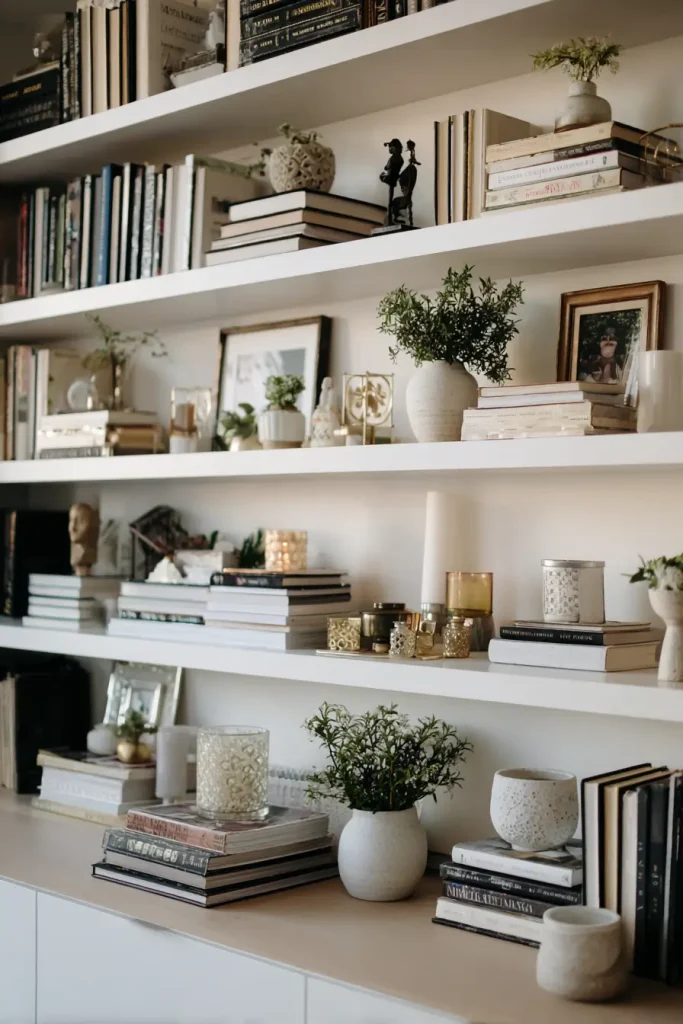
Once your books are organized, it’s time to add decorative objects and personal touches. Professional bookshelf styling is about layering items to create depth and interest. Books alone often look flat or boring. Adding plants, vases, candles, or small sculptures brings texture, color, and life to the shelves.
Start small. A tiny potted plant in front of a row of books adds greenery without overwhelming the shelf. Layering objects is key. For example, stack two horizontal books, then place a small ceramic vase on top. Place taller items behind shorter ones to create depth. Avoid lining everything up in a straight row—it looks rigid and uninviting.
Personal items make a shelf feel like it belongs to you. Family photos, souvenirs from trips, or small heirlooms tell a story. Mix these with stylish objects to avoid a cluttered or overly decorative feel. Interior designer Emily Henderson emphasizes that layering personal items with decorative objects gives shelves warmth and personality.
Small sculptures or collectibles break monotony. For example, a tiny bronze bird or a geometric paperweight placed near a stack of books can elevate the shelf instantly. Remember the rule of odd numbers—grouping three or five items together often looks more natural than an even number.
The goal is to create a visually engaging display where each shelf feels intentional but not forced. Alternate books, objects, and personal items across shelves to maintain rhythm. With a few thoughtful choices, your bookshelf can become the most stylish feature in your room.
Balance Open and Closed Storage
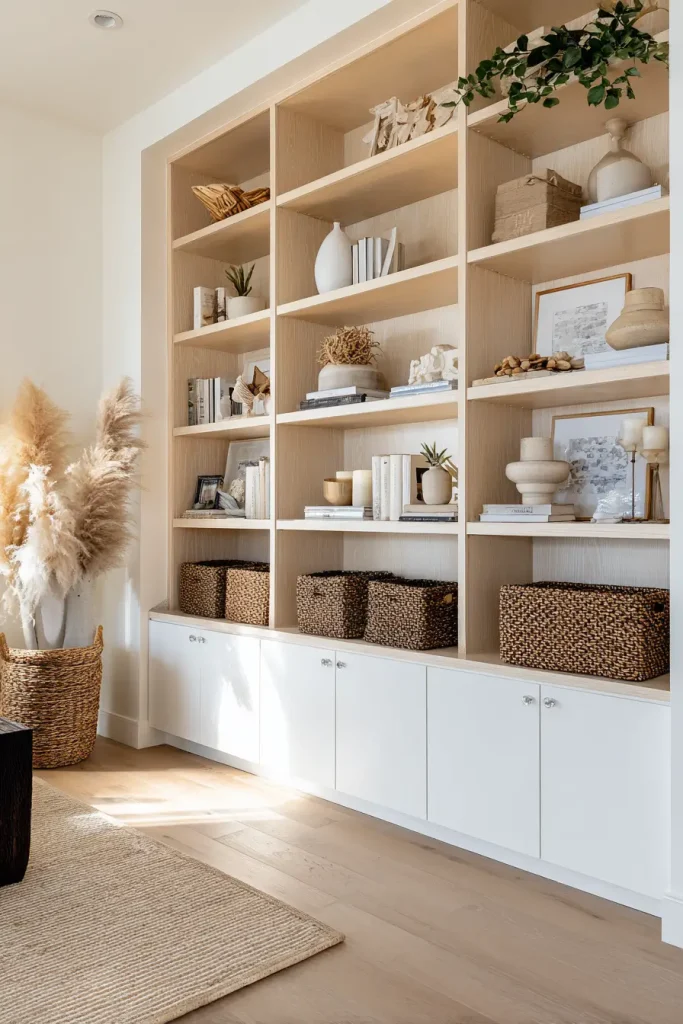
Bookshelves don’t always have to display everything. Open and closed storage should be balanced to keep your space organized and visually appealing. Baskets, boxes, and cabinet doors help hide clutter and create contrast with open shelves.
Use baskets or decorative boxes to store items you don’t want on display, like office supplies or magazines. For instance, woven baskets on the lower shelves add texture while keeping clutter out of sight. Open shelves are perfect for displaying books and decor, while closed cabinets provide hidden storage for less attractive items.
Rotating items seasonally keeps the display fresh. Swap summer decor for cozy winter accents. This small change prevents your bookshelf from feeling stale. Research also shows that open shelving can make rooms feel larger because the eye travels through the space, rather than stopping at opaque surfaces.
Stores like Pottery Barn mix open and closed storage on their shelves effectively. A few baskets at the bottom, books in the middle, and decorative objects on top create a balanced and professional appearance.
Balancing open and closed storage ensures your bookshelf is both functional and stylish. You can display your favorite items while keeping clutter hidden, making the shelf feel curated and intentional.
Pay Attention to Scale, Symmetry, and Layering
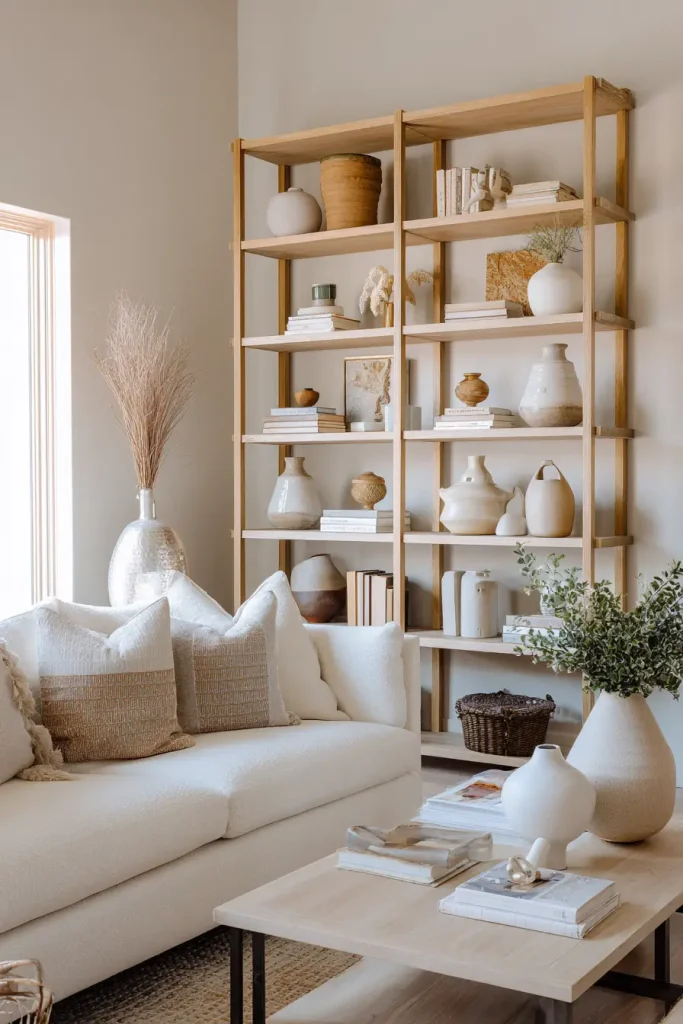
Scale, symmetry, and layering are the secret ingredients of professional bookshelf styling. A shelf with mismatched heights or random stacks feels chaotic, no matter how beautiful the items are.
Balance tall and short items to create visual flow. A tall vase on one side can be balanced with a stack of horizontal books on the other. Symmetry doesn’t always mean mirroring items exactly. Asymmetrical arrangements with a similar visual weight work just as well and can feel more natural.
Layering is essential. Place horizontal stacks of books in front of vertical rows, and add small objects on top of stacks. This creates depth and keeps the eye moving. Designer tip: follow the “rule of thirds”—divide the shelf into three sections and arrange objects so they form a pleasing triangle pattern.
Mirrored arrangements can create calm and order, while asymmetrical groupings feel dynamic. Mix the two approaches across different shelves for variety. Include a combination of books, decor, and personal items to create an engaging and professional look.
Pay attention to how objects relate to each other. Similar colors, textures, or heights should interact in a way that feels intentional. Layering adds dimension, while careful scaling and symmetry give the shelf structure.
Maintain Your Styled Bookshelf
A beautiful bookshelf doesn’t stay perfect on its own. Maintenance is key. Professional designers recommend spending just 15 minutes a month dusting and decluttering shelves.
Declutter every 3–6 months. Remove items you no longer love or rotate books to keep things fresh. Seasonal decor swaps are an easy way to refresh your display without buying anything new.
Dust is another factor. A polished shelf loses its charm if books and objects are covered in dust. Use a microfiber cloth and gentle cleaner to keep surfaces clean.
Even small, consistent efforts make a big difference. Maintaining your bookshelf ensures it continues to look intentional and professional. It also makes styling easier when adding new books or decor items.
Regular upkeep keeps your display inviting, functional, and stylish. You’ll feel proud of a bookshelf that always looks curated, even when life gets busy.
Conclusion
Styling a bookshelf involves more than just stacking books. It starts with planning your layout, organizing books by color, size, or theme, layering decorative and personal items, balancing open and closed storage, and maintaining your display over time. By paying attention to scale, symmetry, and layering, even a small or crowded shelf can look professional and stylish.
Start today by picking one shelf to transform. Apply these professional bookshelf styling tips, mix in personal items, and create a balanced, eye-catching display. With these strategies, your bookshelf will no longer be overlooked—it will become a centerpiece of your room that reflects both style and personality.

- 17 Classy Living Room Ideas for a Cozy Elegant Look - April 23, 2026
- 16 Dark Moody Living Room Ideas That Feel Rich and Warm - April 22, 2026
- 14 Elegant Bedroom Trends for 2026 You’ll Love - April 22, 2026