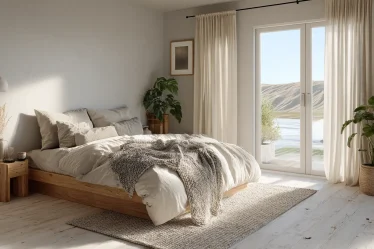

Your dorm room is probably smaller than you expected. A lot smaller.
Most college dorm rooms are between 130 and 180 square feet. And you might be sharing that space with another person. That leaves very little room for your stuff, your desk, your bed, and any sense of personal space.
The good news? You can fix most of this without spending a lot of money. You also cannot drill holes or paint walls in most dorms. So every idea in this list works within those limits.
Here are 17 small bedroom ideas for college students that actually work in 2026.
Why Your Dorm Feels So Cramped (And What To Do First)
Before buying anything, you need to understand the real problem.
Most students bring too much stuff. Then they put everything on the floor or on the desk. The room fills up fast. And once it fills up, it feels impossible to fix.
There are three things that make small dorms feel even smaller. First, no one uses the wall space. Second, there are no clear zones for sleeping, studying, or relaxing. Third, there is no system for keeping things organized.
The fix is simple to say but takes some effort to do. Treat your dorm like a tiny studio apartment. Every inch counts. Every item needs a home.
Before you buy a single storage bin, do this first. Go through everything you brought and ask: “Will I use this at least once a week?” If not, send it home or donate it. You cannot organize clutter. You can only remove it.
According to Niche.com’s student surveys, most freshmen say their room felt cramped within the first two weeks. It is not just you. It is the room. And it is fixable.
Idea 1: Use Bed Risers to Create Free Storage Space
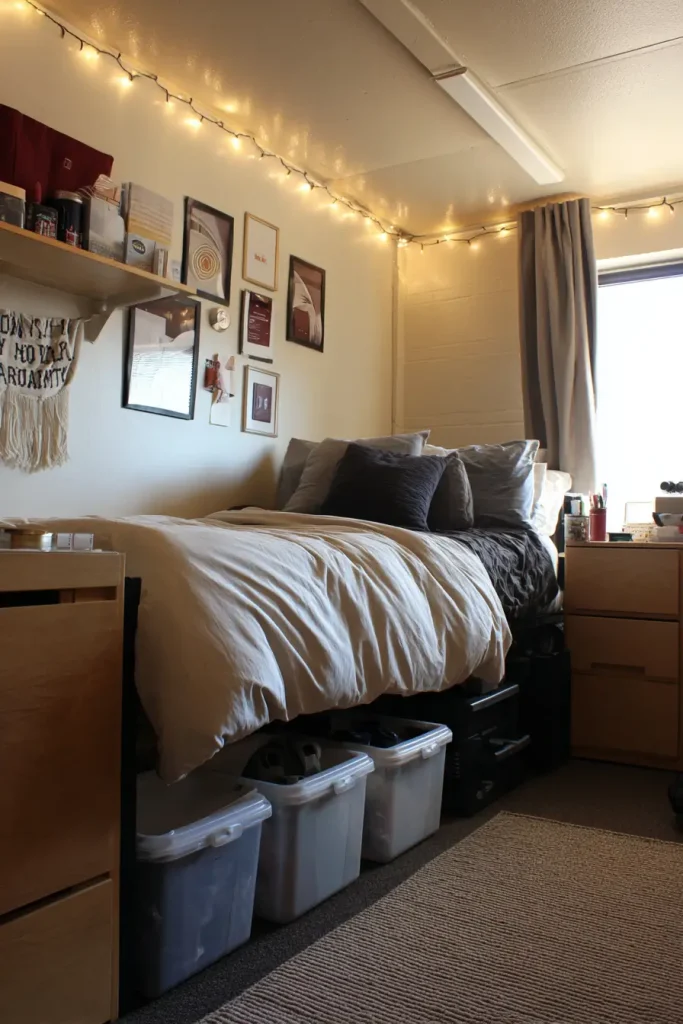
Most students walk past their biggest storage opportunity every single day. It is right under their bed.
A standard dorm bed sits close to the floor. There is almost no space to store anything under it. Bed risers fix that. They lift your bed 6 to 8 inches off the ground. That gap becomes storage space.
What can you store under there? Shoes. Extra bedding. Textbooks you are not using this week. Off-season clothes in flat bins. The list goes on.
The best setup is simple. Buy 8-inch bed risers (around $15 to $20 on Amazon). Then buy 2 or 3 flat rolling drawers to slide underneath. IRIS USA makes solid bins for about $15 to $25 each. You have basically built a dresser without using any floor space.
Check your dorm’s rules first. Most schools allow risers up to 8 or 10 inches. Some do not allow them at all. A quick search on your school’s housing page will tell you.
Total cost: under $50. Total new storage space: more than you think.
Idea 2: Loft Your Bed to Free Up the Entire Floor
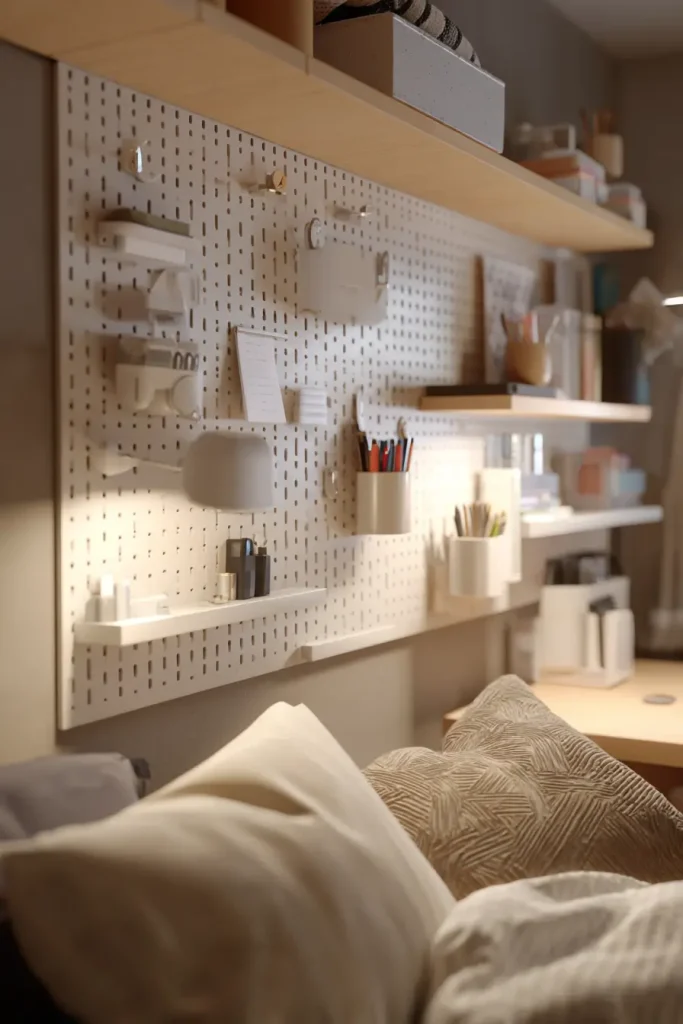
This is the biggest space move you can make in a dorm room.
When you loft your bed, you lift it up high enough to create a full living area underneath. We are talking about 30 to 40 square feet of usable space that was previously just… bed.
That space under a lofted bed can become a mini couch area, a full desk setup, or a place for a dresser and storage shelves. Students who loft their beds consistently say the room feels much bigger afterward.
Many schools offer free loft kits through the housing office. Some schools require you to use their kits instead of buying your own. Look this up before move-in day. It will save you time and money.
If your school allows personal loft frames, brands like MERF and Guidecraft make solid options. Prices range from $100 to $200. It sounds like a lot, but you are basically doubling your usable floor space.
Not every student wants to climb up to sleep. That is a fair point. But if you are open to it, lofting is the single most powerful small dorm room idea on this list.
Idea 3: Command Hooks and Strips Solve Almost Everything
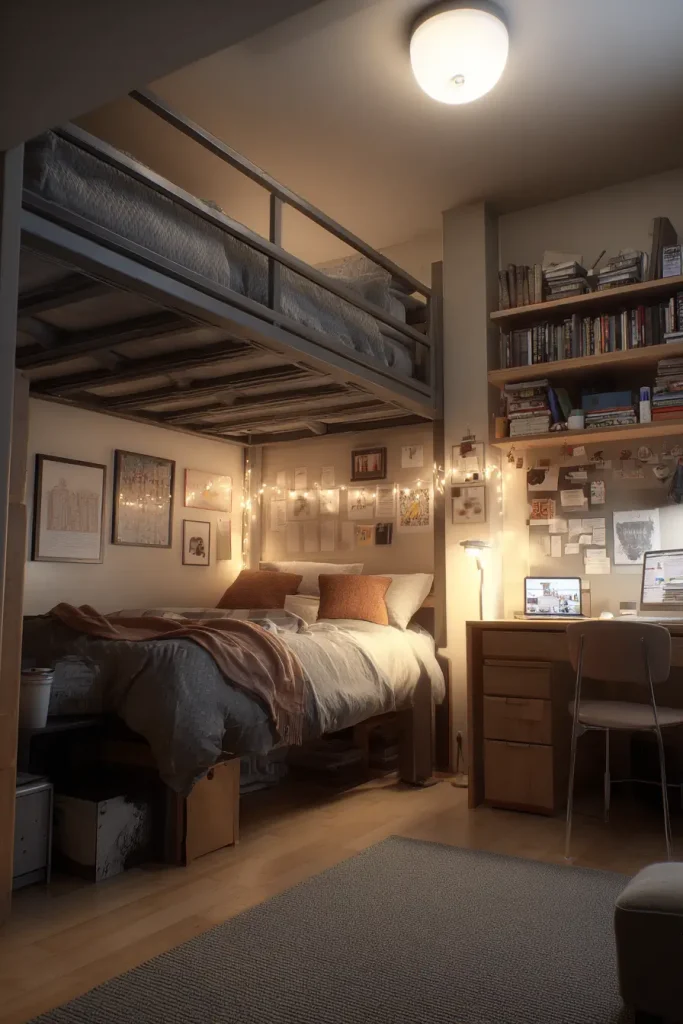
You cannot put nails in the wall. You cannot use tape that leaves marks. So what do you use?
Command hooks and strips from 3M are the answer. They stick to the wall, hold real weight, and come off cleanly when you remove them the right way.
Here is what you can hang with Command hooks: bags, hats, towels, headphones, coats, jewelry, and keys. Here is what Command strips can hold: picture frames, small mirrors, dry-erase boards, and even lightweight shelves.
The removal step matters. Do not just yank them off. Pull the tab straight down slowly. If you pull at an angle, you might take paint off the wall. The 3M website at command.com has a step-by-step removal guide. It takes about 30 seconds and saves your deposit.
You can find Command products at Target, Walmart, and Amazon. A pack of 10 hooks costs around $6 to $10. Buy more than you think you need. You will use all of them.
Idea 4: Install Shelves Without Drilling a Single Hole
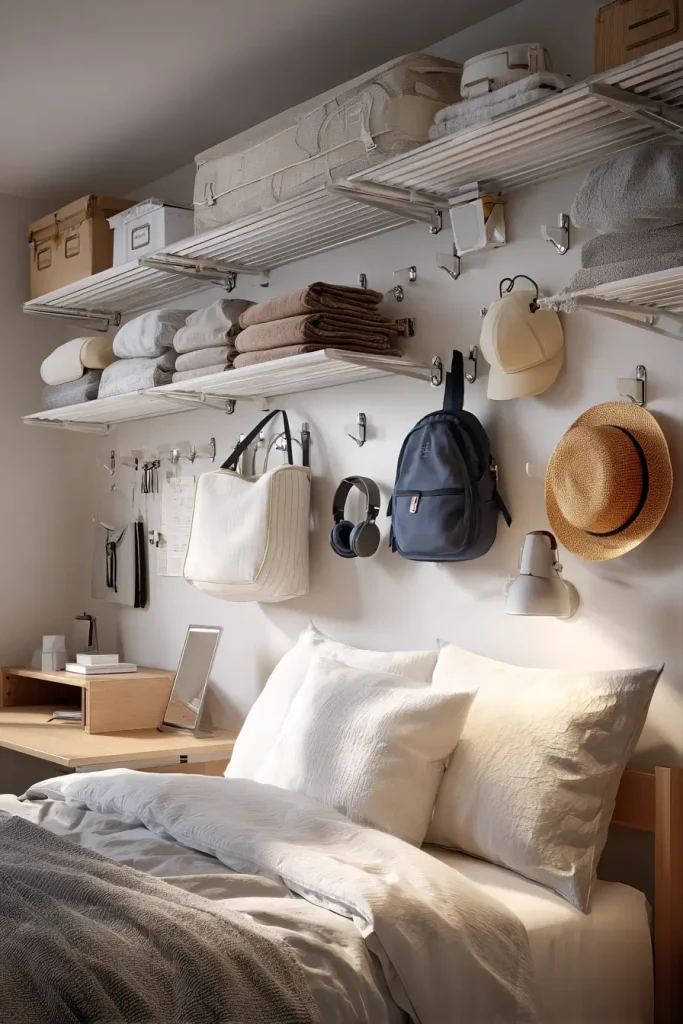
Your desk is probably already full. And the floor is not a great place for books or plants or your speaker.
Adhesive floating shelves fix this. No drill needed. They attach to the wall with strong adhesive strips and can hold 10 to 22 pounds depending on the brand.
Put one shelf above your desk. Use it for books, a small plant, your speaker, or a lamp. Put corner shelves in the dead space where two walls meet. That corner is wasted space in most dorm rooms.
A popular option is the BAYKA floating shelf set. A 3-pack costs about $20 to $35 on Amazon and has a 4.5-star rating with tens of thousands of reviews. That tells you students are actually buying and using these.
One honest note: adhesive shelves are not forever. The adhesive can weaken over time, especially in humid rooms. Do not put anything fragile or heavy on them. Stick to lightweight items and check them monthly.
Idea 5: Choose Furniture That Does Two Jobs at Once
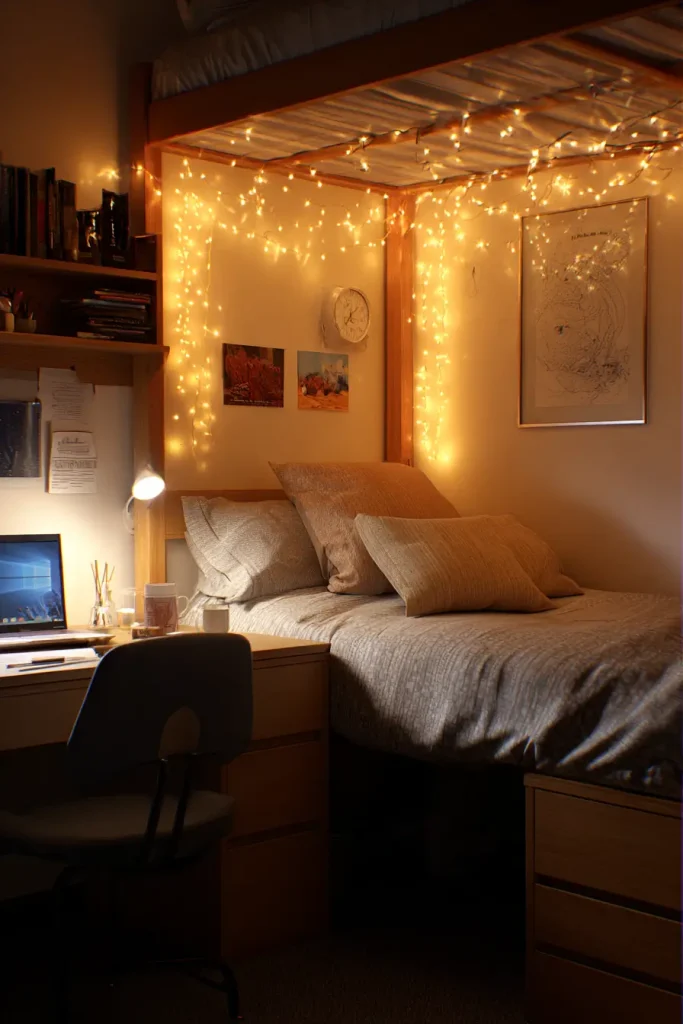
In a small dorm, one-purpose furniture is a waste of space.
Every piece of furniture you bring should do at least two things. If it only does one thing, think hard about whether you really need it.
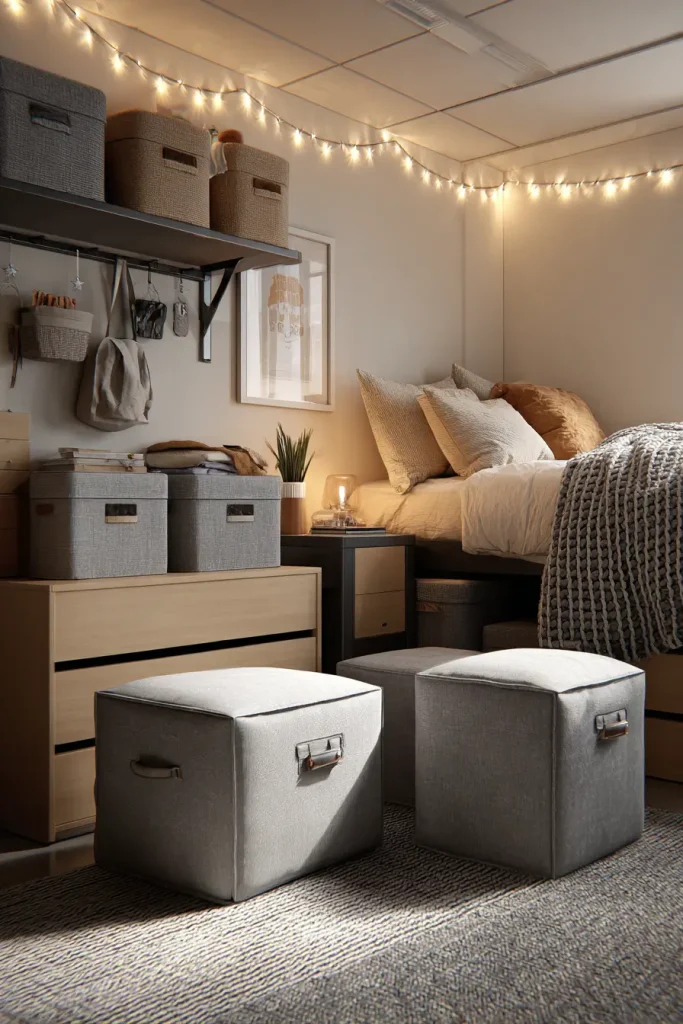
Here are some good examples. A storage ottoman is a seat, a footrest, a coffee table, and a storage bin all in one. A trunk works the same way. A cube organizer can be a bookshelf, a dresser replacement, and a room divider at the same time.
The IKEA KALLAX shelf is the most talked about dorm furniture on Reddit. Search for it on r/DormRoom and you will find hundreds of setups. Students use it as a TV stand with storage underneath, a dresser with fabric bins, and a way to divide a shared room into two separate zones. It costs around $60 to $80 depending on the size.
Before move-in day, write down every piece of furniture you plan to bring. Next to each item, write its two functions. If you cannot write two, leave it at home.
Idea 6: Use a Pegboard to Organize Your Desk Area
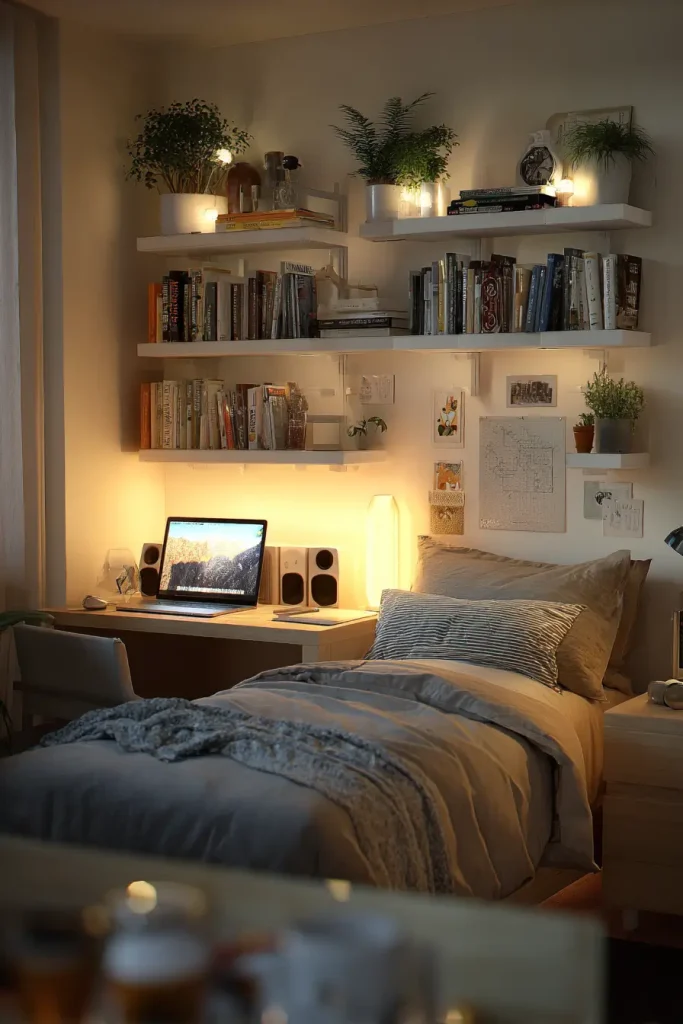
A messy desk makes it hard to focus. A clear desk helps you actually get work done.
A pegboard is a board with small holes in it. You hang accessories on the holes: hooks, small shelves, cups for pens, cable organizers. It turns a section of your wall into a fully organized storage system.
IKEA makes one called the SKADIS. It costs $15 to $30 depending on the size. You can add accessories made specifically for it, like small bins, shelves, and cord hooks. The whole setup keeps your desk surface clear without taking up any extra floor space.
You can attach a pegboard with heavy-duty Command strips if drilling is not allowed. Just check the weight of your accessories before you load it up.
This is especially useful for students who do a lot of drawing, have lots of tech gear, or just tend to spread things across their desk. If your desk looks like a paper storm hit it, a pegboard will help more than you expect.
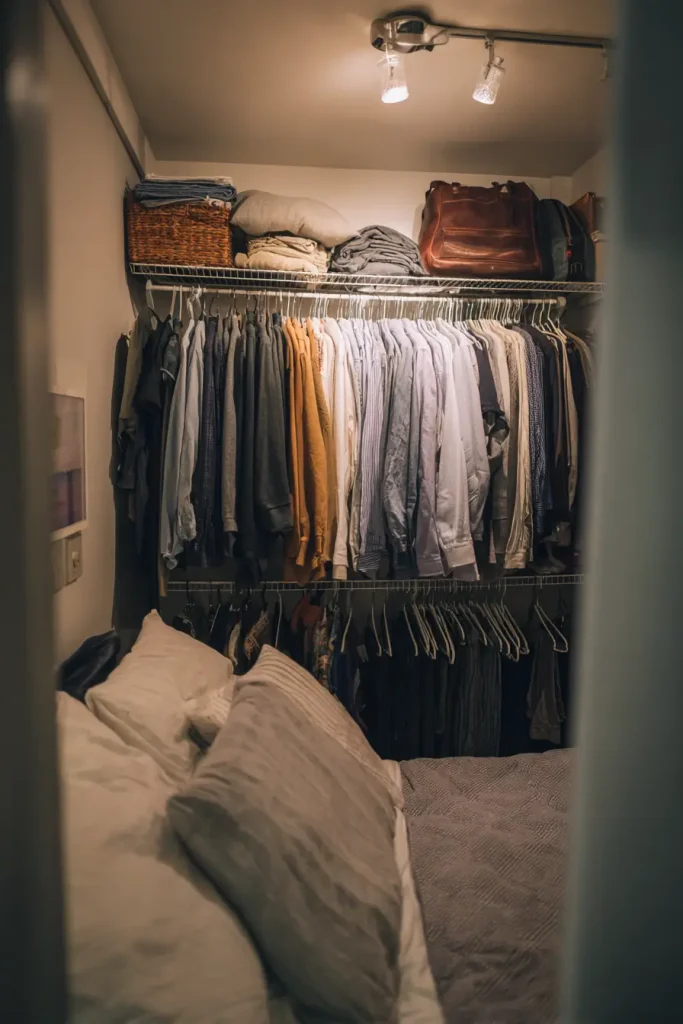
Idea 7: Double Your Closet Space With a Tension Rod
Your closet in a dorm room is probably one small rod and a shelf above it. That is it.
A tension rod costs $5 to $12 at any dollar store, Walmart, or Amazon. You place it across the lower half of your closet, below your existing rod. Now you have two rows of hanging space instead of one.
Hang shorter items like shirts, jackets, and folded pants on the top rod. Use the new bottom rod for shorter items, bag hooks, or another row of clothes. You just doubled your hanging storage for under $10.
Tension rods also work under the sink if your dorm has one. Hang cleaning spray bottles, small bags, or anything with a handle under there. You are using a spot that most students completely ignore.
This hack shows up constantly in dorm room TikTok videos. It is simple. It costs almost nothing. And it works.
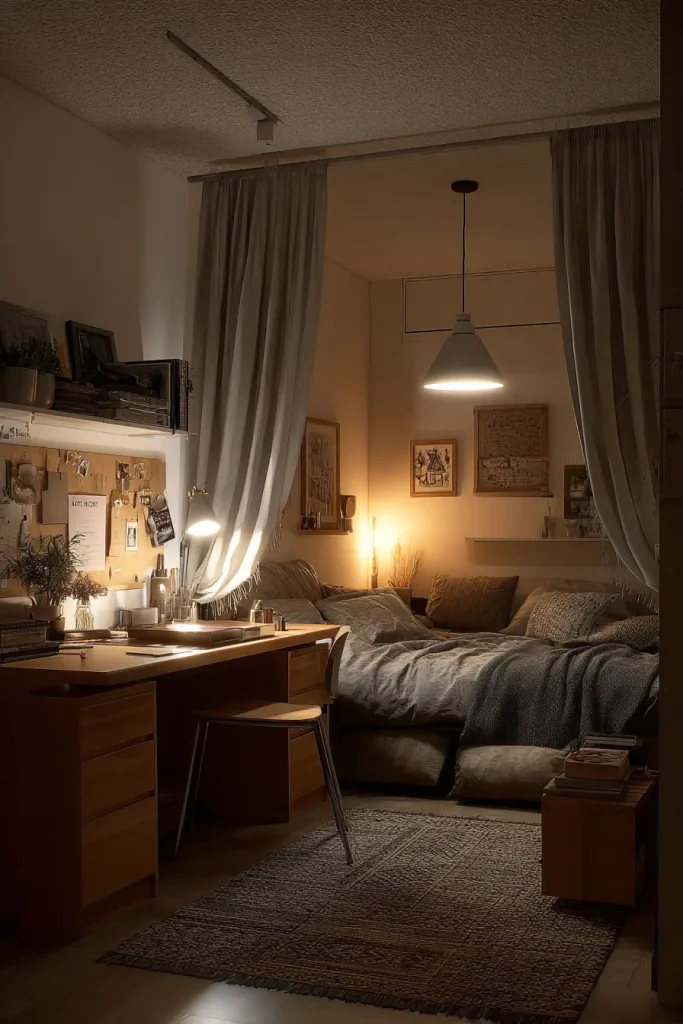
Idea 8: Create Zones So Your Brain Knows Where to Focus
This sounds like a design tip. But it is actually a mental health tip.
When your sleep space, study space, and relaxation space all blend together, your brain has trouble switching modes. You try to study on your bed and end up napping. You try to sleep and end up stressing about homework. The spaces blur together and everything feels harder.
Even in 150 square feet, you can create three clear zones. Use a rug to mark off the study area. Use different lighting to signal different activities. A warm lamp near the bed says “time to rest.” A bright, cool desk lamp says “time to work.”
If you hang curtains around your bed, it creates a separate sleep zone. You can find tension rod curtain setups that require no drilling. IKEA and Amazon both sell curtain panels for under $20.
The American Psychological Association has published research showing that your environment has a direct effect on focus and stress levels. Your room layout is not just about looks. It affects how you feel and how well you study.
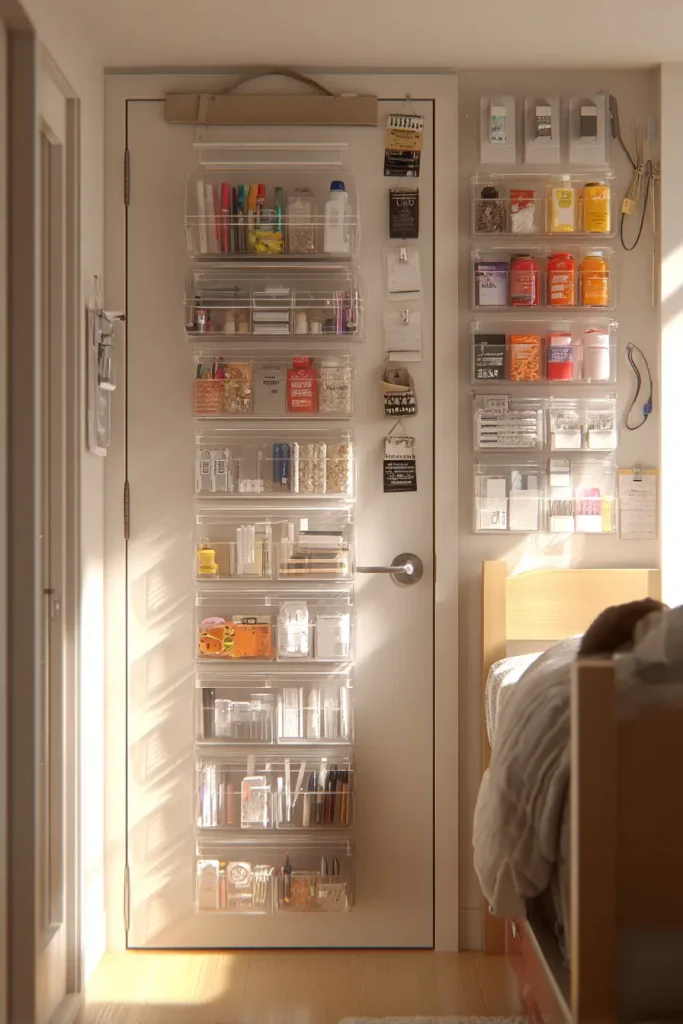
Idea 9: Put an Organizer on Every Door
Most students use their door as a way to walk in and out of the room. That is all.
But the back of your door is storage space. So is the back of your closet door. And if you have a bathroom, that door counts too.
Over-the-door organizers hang from the top of the door and hold a lot of stuff. A simple over-the-door shoe organizer has 24 pockets. You do not have to put shoes in it. Students use those pockets for snacks, school supplies, chargers, toiletries, and hair products.
Brands like SimpleHouseware and mDesign sell these for $15 to $25 on Amazon. They are removable, leave no damage, and can hold a surprising amount of stuff.
If you have one on your main door and one on your closet door, you have added storage for about 50 items without using any floor space at all.
Idea 10: Fix Your Lighting and the Room Feels Bigger
The fluorescent lights in most dorm rooms are harsh. They make the room feel like a hospital hallway. They also make everything look flat and cramped.
You can fix this easily and cheaply.
Start with LED string lights. They are allowed in most dorms, they cost about $10 to $15 on Amazon, and they make the room feel warm and cozy instead of cold and institutional. Wrap them around your headboard or along a wall shelf.
Add a clip-on desk lamp with adjustable color temperature. This lets you switch between warm light for evening and cool white light when you are studying. Good desk lighting also reduces eye strain during late-night sessions.
LED strip lights behind a lofted bed or along the bottom of a shelf add soft ambient light. Govee makes popular and affordable sets for about $15 to $30.
Good lighting makes a small space feel larger. It also makes the room feel like yours instead of a generic box. This is one of the easiest upgrades on the list.
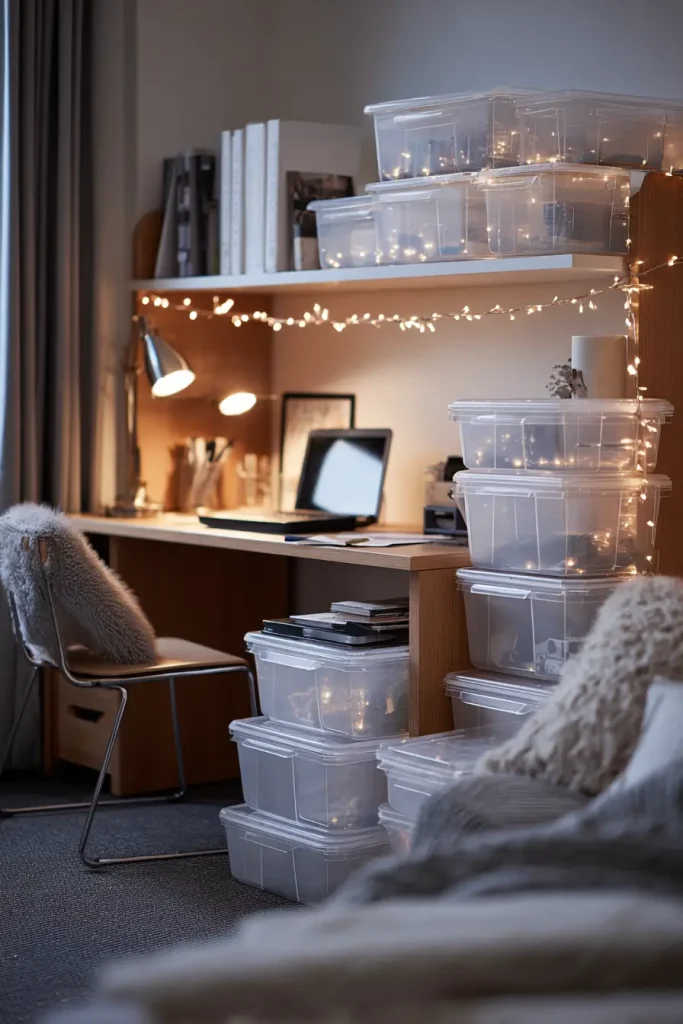
Idea 11: Use Matching Storage Bins to Cut Visual Clutter
Here is something most students do not think about. Mismatched storage bins make a room look messy even when it is technically organized.
When you have a pink bin next to a blue box next to a brown basket, the eye sees chaos. When everything matches, the eye sees order. The room feels calmer.
Pick one color or material and stick to it. White, grey, or clear bins are the easiest to match. Clear containers let you see what is inside without labeling. Slim drawer units in one matching color fit between a desk and a wall without taking up much space.
Good options include IKEA ALEX drawers, Sterilite slim drawers, and Amazon Basics clear bins. All are available for under $30 each.
You do not need to replace everything at once. Start with whatever is most visible, like the shelves above your desk or the top of your dresser. Small changes in visible areas make a big difference in how organized the room feels.
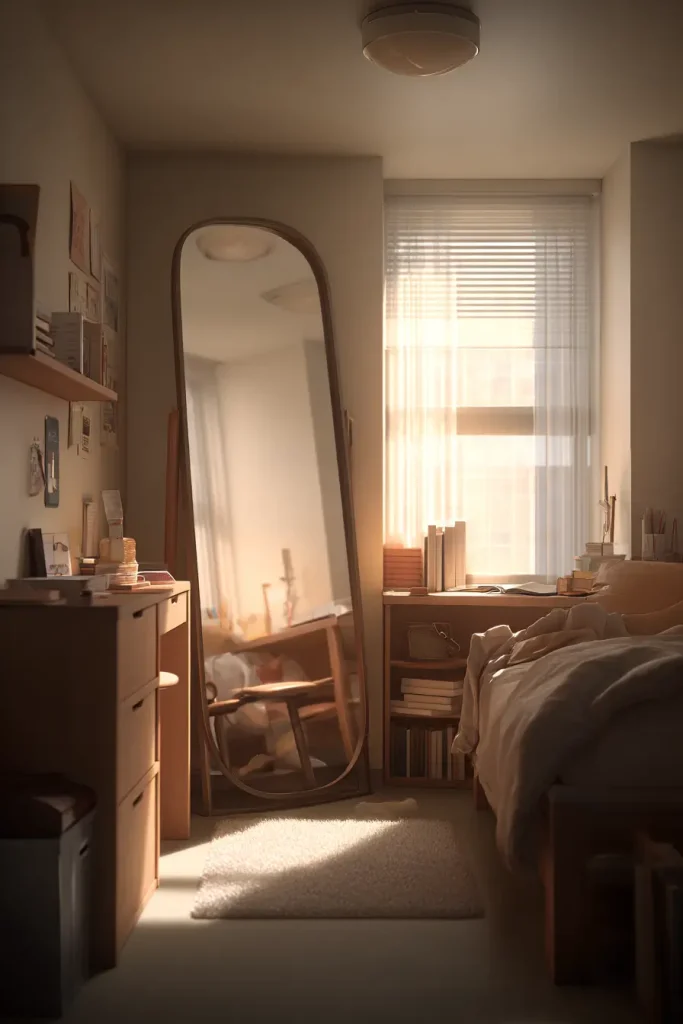
Idea 12: Hang a Mirror to Make the Room Look Bigger
This one is simple but it works.
Mirrors reflect light and make a room feel larger than it is. Interior designers use this trick in small apartments all the time. It works just as well in dorms.
A full-length mirror on the back of your door is the smartest use of a mirror in a dorm. It does not take up any wall space. It does not take up any floor space. And it gives you a place to check your outfit before class.
Adhesive mirror tiles are another option. They stick to the wall and can be arranged in a grid pattern. They cost about $10 to $20 for a pack. Position any mirror so it reflects a window if possible. That bounces natural light around the room and makes everything feel more open.
Apartment Therapy and Architectural Digest both list mirrors as the number one tool for making small spaces feel bigger. It costs almost nothing and the effect is immediate.
Idea 13: Go Vertical With Cube Storage Shelves
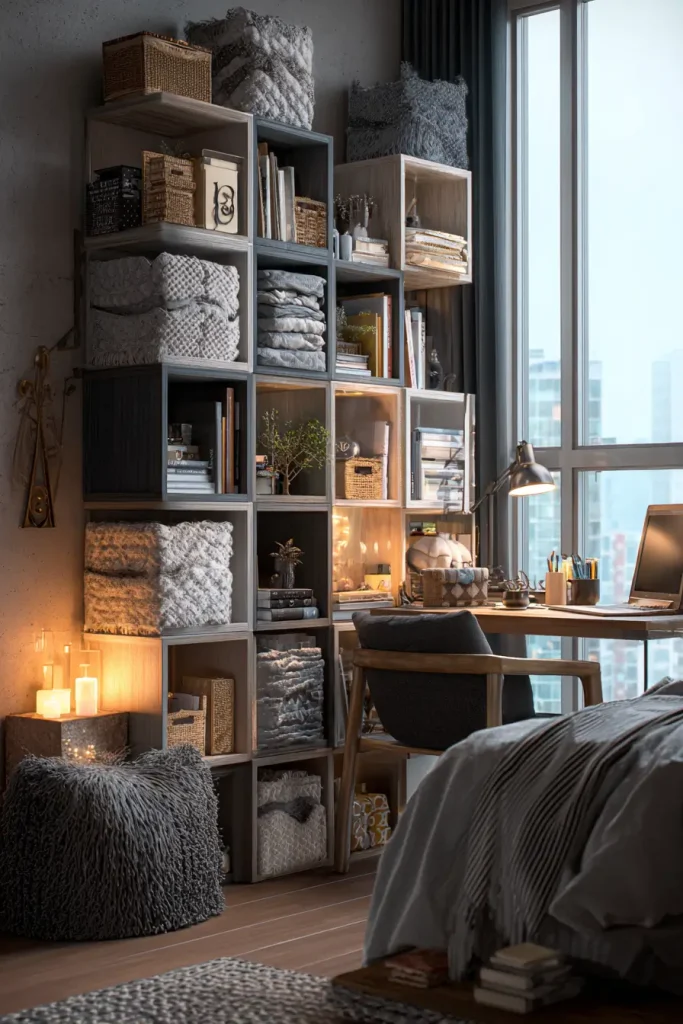
Most dorm rooms have high ceilings. Most students only use storage up to about waist height. That leaves a lot of usable wall space sitting empty.
Cube organizers go vertical. You stack them as high as you need. Fill them with fabric bins, books, shoes, or decorative items. Use the open cubes for display and the covered bins for things you want hidden.
IKEA KALLAX is the most popular option. A 2×4 unit costs around $60 to $80 and gives you 8 storage cubes. A 4×4 unit gives you 16. You can build a setup that works as a full dresser, a bookshelf, and a display unit all in one piece of furniture.
In a shared dorm room, a tall cube unit placed perpendicular to the wall can divide the room into two personal zones. Each person gets their own side. It is a simple solution that actually gives you and your roommate some privacy.
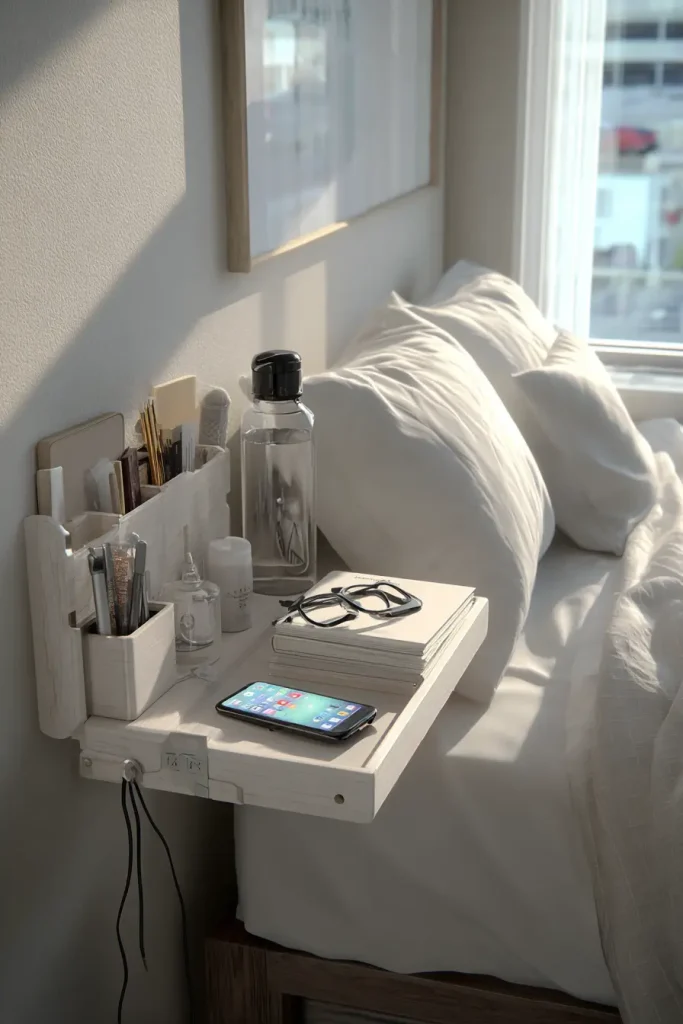
Idea 14: Swap Your Nightstand for a Bedside Caddy
A nightstand takes up 2 to 4 square feet of floor space. That is a lot in a 150-square-foot room.
A bedside caddy does the same job without touching the floor at all. It hangs over the side of your mattress or clips to the bed frame. You can store your phone, charger, glasses, a book, a water bottle, and a remote all in one place.
Brands like Everlasting Comfort and hanse make well-reviewed bedside caddies for about $10 to $20 on Amazon. Pair one with a clip-on reading light and you have completely replaced the nightstand without giving up any floor space.
This is one of the cheapest and most effective swaps on this list. Most students who try it say they do not miss the nightstand at all.
Idea 15: Pick a Color Palette and Stick to It
This tip costs almost nothing but it changes how the room looks completely.
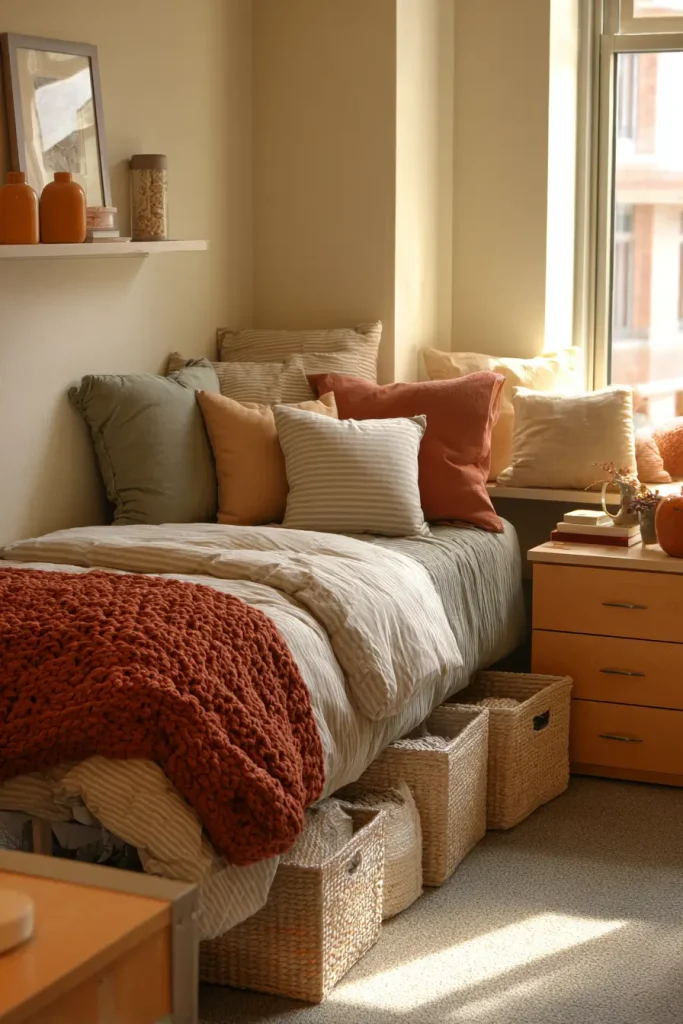
Small rooms feel even smaller when the colors are all over the place. Too many colors, patterns, and textures create visual noise. Visual noise makes rooms feel crowded.
Pick a simple base color. White, beige, and light grey are all good choices. Then pick one or two accent colors. Use those accent colors for your bedding, your rug, your storage bins, and your small decorative items.
For 2025 and 2026, Pinterest Predicts reports show that earthy tones, sage green, and warm neutrals are the most popular dorm aesthetics. These colors also happen to make small spaces feel calm and open.
The easiest way to start is with a coordinated bedding set. Target, Amazon, and Society6 all sell sets where the comforter, pillowcase, and throw pillow already match. When your bed looks pulled together, the whole room looks better.
Idea 16: Add Personal Touches That Do Not Take Up Space
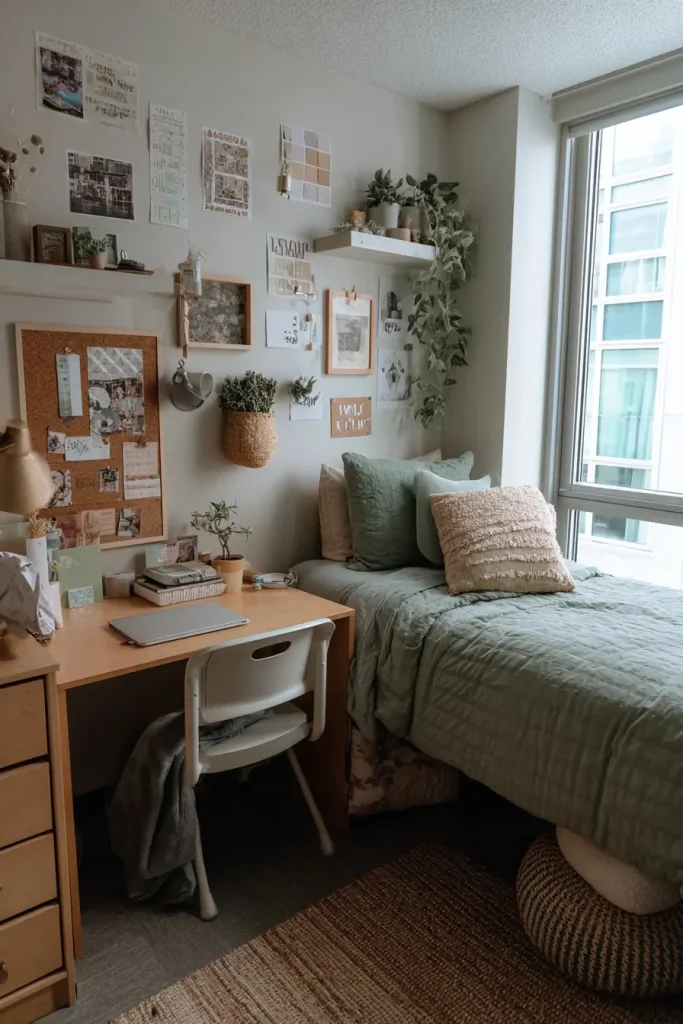
A dorm room that looks like a hotel room is depressing. But adding personality does not mean adding clutter.
The trick is to add things to your walls and shelves, not your floor.
Print out photos and tape them to the wall above your desk or along a shelf edge. Washi tape is removable and works well for this. A small corkboard hung with Command strips can hold photos, notes, and reminders in one tidy spot.
A single plant on a shelf adds life to the room. Small pothos or succulent plants are low maintenance and survive in most dorm conditions. They cost about $5 to $10 at most grocery stores.
Swap your generic dorm pillow for one in your accent color. Add a small rug if your school allows it. These small changes make the space feel like yours without adding clutter to the floor.
The goal is a room that looks like a person lives there, not a room that looks like a storage unit.
Idea 17: Do a 20-Minute Room Reset Every Month
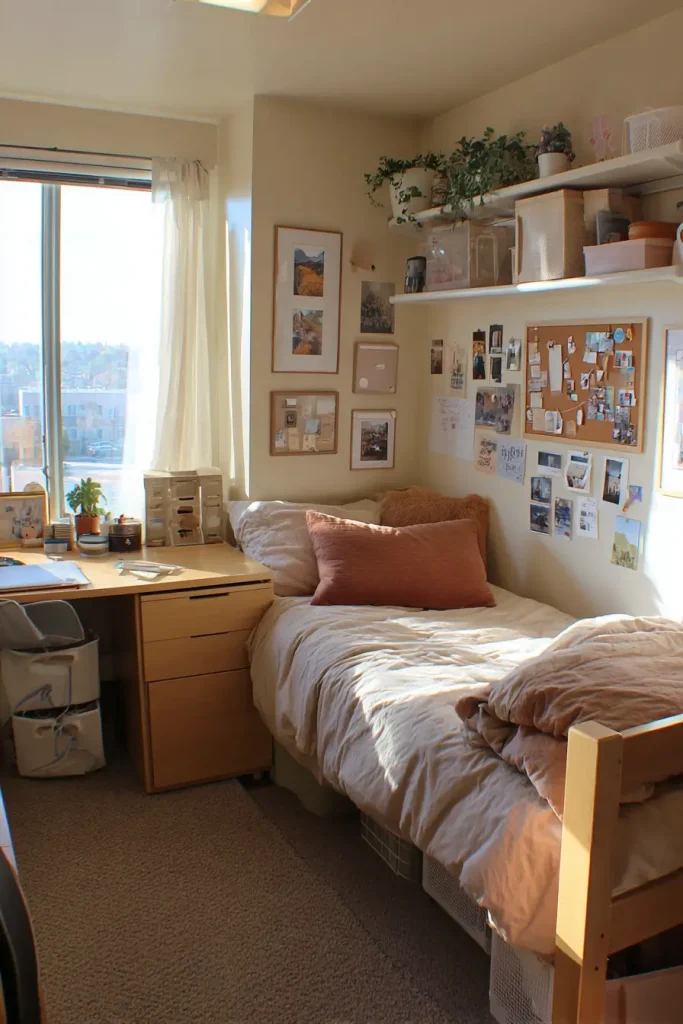
This last idea is about keeping the room working well over time. Not just in week one.
Small rooms fill up fast. You bring home free stuff from clubs. Your textbooks pile up. Random items appear on surfaces. Before long, the organized room you set up in September looks like a disaster by November.
A monthly reset stops that from happening.
Set a 20-minute timer once a month. Go through your visible surfaces. Throw away or recycle anything you do not need. Put things back where they belong. If something does not have a home, either give it one or remove it from the room.
Use the rule that works best in small spaces: if something new comes in, something old goes out.
Good times to do this reset: the last day of each month, the week before a break, or right after midterms. Tie it to something that already happens in your schedule so you do not forget.
Your dorm room is small. But with a system, it can stay functional and comfortable all year.
The Bottom Line
You do not need a lot of money to make your dorm room work better. You need the right ideas.
Start with three things this week. Put up bed risers or loft your bed to create storage space. Add an over-the-door organizer to your main door or closet door. Buy one set of matching storage bins for whatever is most visible in your room.
Those three changes alone will make the room feel different.
The rest of these small bedroom ideas for college students can be added over time. You do not have to do all 17 at once. Pick the ones that solve your biggest problem first and build from there.
A small dorm room is not a problem. It is just a space that needs a plan.
Meta Description: Transform your tiny dorm with these 17 small bedroom ideas for college students — storage hacks, decor tips, and budget-friendly solutions for 2026.

- 17 Classy Living Room Ideas for a Cozy Elegant Look - April 23, 2026
- 16 Dark Moody Living Room Ideas That Feel Rich and Warm - April 22, 2026
- 14 Elegant Bedroom Trends for 2026 You’ll Love - April 22, 2026