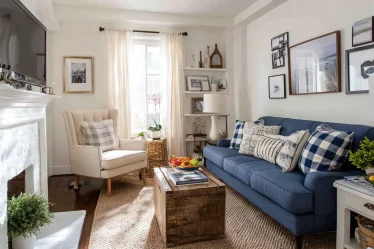

You walk into your living room. Sunlight pours in. It should feel amazing. But instead, you feel stuck. The window is huge. Standard blinds look tiny. Curtains from your last home look like a doll’s outfit. You want privacy. You want to control the light. But you also want it to look good.
You are not alone. Big windows are a design challenge. The wrong choice makes the room feel off. The right choice makes the whole house look better.
This guide gives you 16 ways to solve this. You will learn how to mix blinds and curtains. You will get ideas for any style, from modern to cozy. We will cover the hardware you need and the rules that make a big window look intentional, not like an afterthought. Let’s fix that wall of glass
The Foundation: Layering for Large Windows
Why do single treatments fail? Picture a postage stamp on a billboard. A small roller shade on a 12-foot window looks lost. It does not anchor the room. It just highlights how big the window is.
The trick is layering. Think of it as the “workhorse and statement” rule. The blind does the work. It blocks light, adds privacy, and insulates. The curtain adds the style. It brings in color, texture, and softness.
Here is a 2026 trend to watch. People are adding a third layer. This can be a valance or a cornice. It hides the hardware and gives the window a custom, built-in look. According to a 2025 Houzz study, 73% of homeowners now use at least two layers on their living room windows. That is up from 58% just a few years ago. Layered window treatments are no longer a luxury. They are the standard for dressing large windows with blinds and curtains in a way that feels finished.
16 Ideas for Every Style and Need
Here are 16 specific ways to handle those big windows. Each one solves a different problem.
1. The Layered Luxe: Sheer Shades + Heavy Drapes

Imagine waking up on a Saturday. The sun is bright, but you are not ready for full light. A sheer roller shade can fix that. It softens the glare and lets in a warm glow.
The heavy drapes do the rest. They add weight and texture. Use velvet or a thick linen blend. Mount the rod high and wide. This makes the window look bigger on purpose.
Here is a 2026 update. Look for “Solar+” fabrics. These sheer shades block UV rays. They protect your furniture but still let in that soft light. This combo gives you three modes: full privacy with drapes closed, soft light with sheers only, and a full view with both open.
Best for: Living rooms that need to work in the morning and feel cozy at night.
2. The Minimalist Architect: Motorized Roller Shades + Cassette

You want a modern look. You do not want to see any fabric bulk. A single motorized roller shade per window panel is the answer.
The secret is hiding the hardware. A cassette headrail holds the rolled-up shade. When you match its color to the wall, it almost disappears. It looks like a built-in part of the architecture.
And here is why motorization matters. You can connect it to Google Home or Alexa. Say “Movie time,” and all the shades come down at once. No cords. No pulling. Just clean, quiet function.
As a senior designer from The Shade Store put it, “The biggest request we get now is for ‘invisible’ window treatments. Homeowners want the function without seeing any cords or bulky hardware. Motorized cassettes are the answer.”
Best for: Modern lofts and homes where clean lines are the main goal.
3. The Natural Texture: Woven Wood Shades + Linen Curtains

Large windows can feel cold. Glass and drywall do not add warmth. Woven wood shades fix that. They use bamboo or grasses. The texture brings an organic, natural feel to the room.
Pair them with linen curtains. Choose unlined or lightly lined fabric. Keep the colors neutral. This combo works because it softens the hard edges of the glass.
It is also great for bringing the outdoors in. If you have a garden or a nice view, this treatment frames it like a natural painting.
Best for: Rooms with garden views or anyone wanting a calm, grounded feel.
4. The Grand Scale: Pinch Pleat Drapery as the Star

Sometimes you do not need blinds. If the window does not open, or if you just want one strong look, go with custom pinch-pleat drapes. This is a classic style where the fabric is folded and sewn at the top.
You will need a traverse rod. This is a rod with a cord or motor. It lets you move heavy fabric easily. You cannot pull 20 pounds of velvet by hand every day.
Here is a key rule. Extend the rod 12 to 18 inches past the window frame on each side. This ensures the fabric stacks on the wall, not over the glass. You keep the full view when the drapes are open.
Best for: Formal living rooms or spaces with large picture windows.
5. The Vertical Solution: Vertical Blinds (Reimagined)

Forget what you think about vertical blinds. The 1990s are gone. Modern vertical blinds use fabric vanes in neutral tones. You can even find wood options.
They are the most practical choice for sliding glass doors. They are also perfect for very wide windows. The vanes tilt for light control. They slide to one side to open the whole view.
To make them look high-end, add a stationary top treatment. A fabric-covered cornice hides the headrail. It adds a soft, finished look to a very functional product.
Best for: Patio doors and windows that are more than 10 feet wide.
6. The Color Pop: Bold Roman Shades + Neutral Drapes

Do you want the window to be the main event? Use a Roman shade in a bold pattern or color. Mount it inside the window recess. It sits flat against the glass when lowered.
Then frame it with simple, neutral drapes. Mount them floor to ceiling. The drapes should be a solid color. They act as a calm border around the bold center.
This draws the eye right to the shade. The window feels intentional. It looks like you planned the whole room around that one piece of fabric.
Best for: Adding personality to a room without changing the wall color.
7. The High-Tech Haven: Smart Zebra Shades Alone
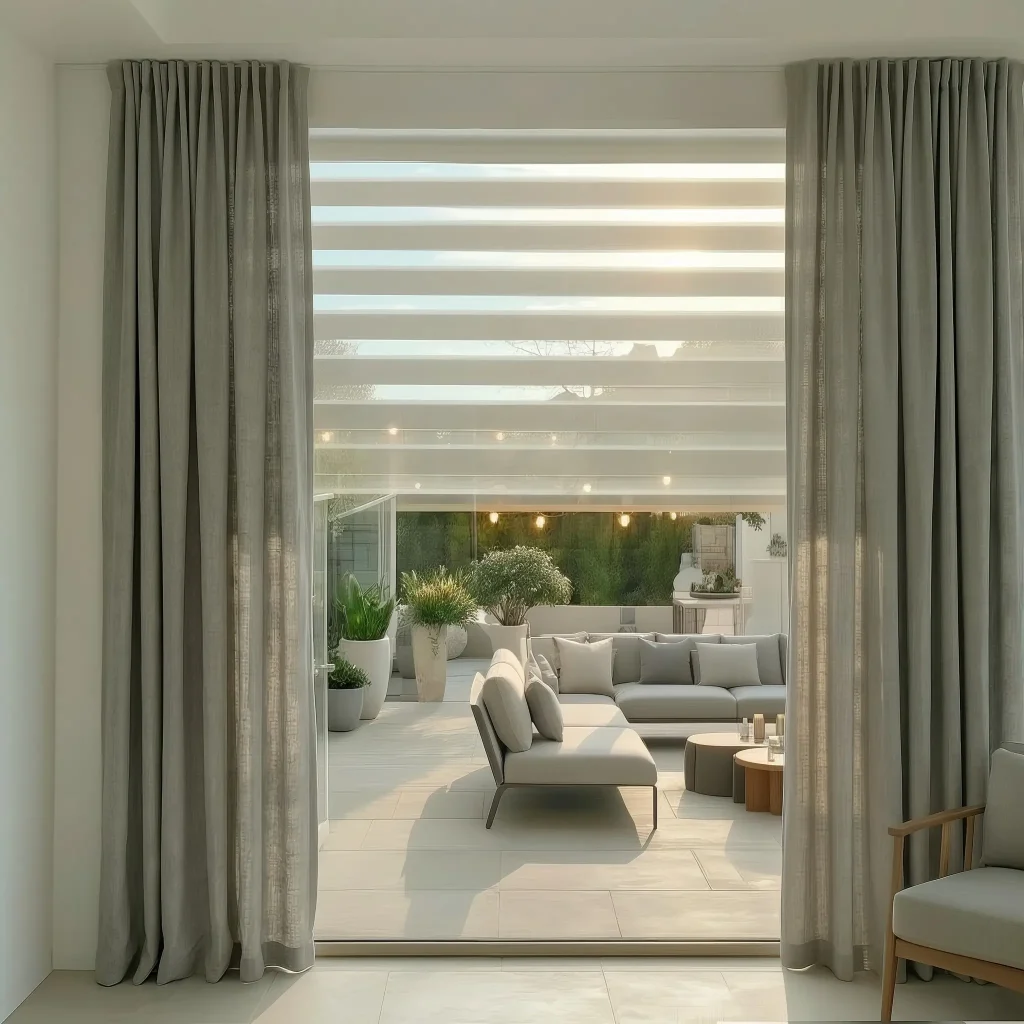
Zebra shades have alternating bands of sheer and solid fabric. You can adjust them to let in light while keeping privacy. They are a single product that does two jobs.
For large windows, motorization is not a luxury. It is a need. Pulling a cord on a 10-foot-wide shade is a workout. A motor makes it effortless.
Smart home use is growing fast. According to Statista, over 45% of US households will own a smart home device by the end of 2026. Adding motorized shades fits right into that trend. You can set them on a schedule to open at sunrise.
Best for: Tech-savvy homeowners who want function without a lot of fabric.
8. The Monochromatic Canvas: Paintable Blinds + Wall-to-Wall Drapes

Want the window to disappear? Here is how. Install paintable wooden blinds. Paint them the exact same color as your window trim.
Then cover the whole wall with drapes. Go from wall to wall. Go from floor to ceiling. Choose a drape fabric that matches your wall color.
When the drapes are closed, the window vanishes. You get a seamless, clean look. When you open the drapes, you see the blinds that match the trim. It is a subtle, high-design move.
Best for: Minimalist spaces where you want calm and quiet.
9. The Bay Window Solution: Custom Pinch-Pleat Curved Rod
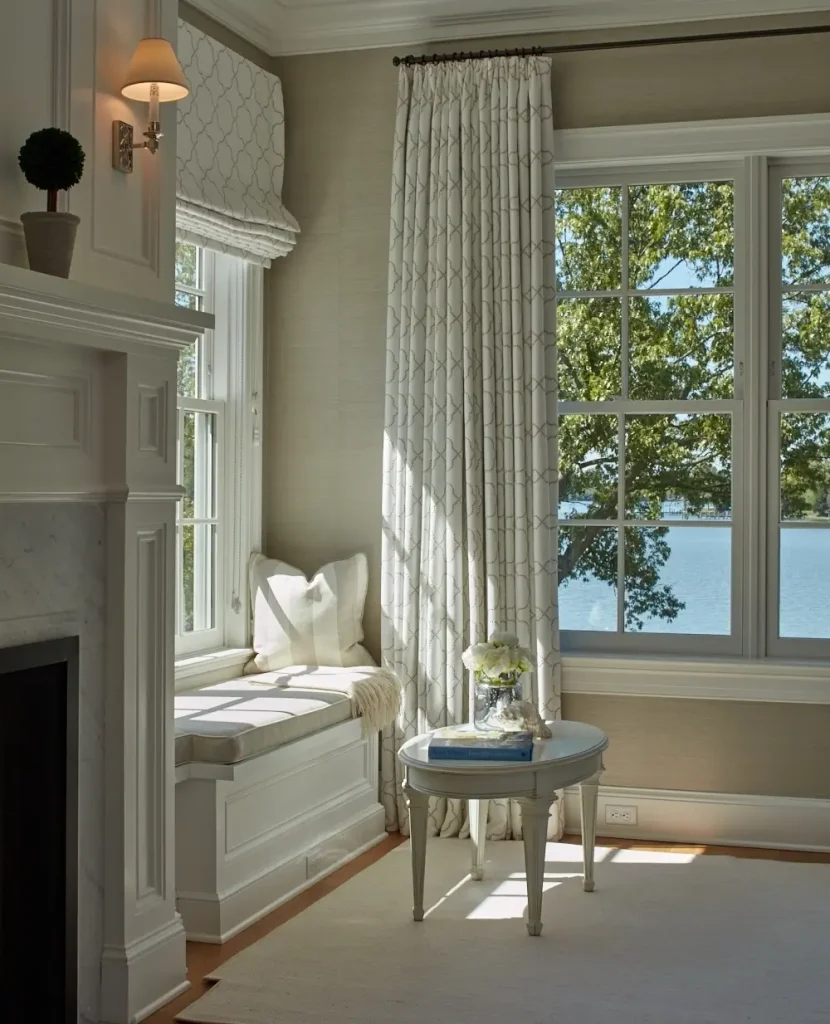
Bay windows are beautiful. They are also hard to dress. Standard curtain rods do not work. They look like they do not belong.
The fix is a custom-curved rod. It follows the exact angle of the bay. This lets the drapes follow the architecture, not fight it.
Inside-mount cellular shades on each window give you privacy and insulation. Then use the curved rod for decorative drapes. The fabric softens the hard angles. It makes the bay feel like a cozy nook instead of a design problem.
Best for: Homes with bay windows that feel too angular and cold.
10. The Industrial Edge: Aluminum Venetian Blinds + Leather Straps

This is for lofts and industrial-style homes. Large aluminum Venetian blinds give you precise light control. You can tilt the slats to aim light exactly where you want it.
Skip the fabric drapes. Instead, use wide leather straps as decorative side panels. Add brass hardware to mount them. The leather adds warmth. The brass adds shine.
This look uses no fabric bulk. It keeps the industrial feel while adding a unique, high-end touch. It is not a look you see in every home.
Best for: Loft apartments and modern homes with exposed brick or concrete.
11. The Budget-Friendly Hack: High & Wide IKEA Drapes + Cordless Blinds

You do not need custom drapes to look good. IKEA sells extra-long panels like SYRLIGAN or SANELA. They are affordable and come in good fabrics.
Here is the secret to making them look expensive. Mount the rod 6 inches from the ceiling. Extend it 12 to 18 inches wider than the window on each side. This creates the illusion of a much larger, grander window.
Use affordable, cordless cellular blinds inside the frame. They add insulation and privacy. The whole setup looks custom but costs a fraction of the price.
Best for: Renters or anyone on a budget who still wants a high-end look.
12. The Panel Track: The Modern Alternative to Drapes

Panel track blinds use large fabric panels on a track. They slide horizontally. They are perfect for very wide modern spaces.
Drapes bunch up when open. They create a stack of fabric on each side. Panel tracks slide flat. They cover the glass without taking up a lot of wall space.
You can even combine them with a roller shade behind them. If you have a home theater setup, this gives you a blackout layer. It is a clean, modern system.
Best for: Wide sliding doors and large, modern windows where you want a clean line.
13. The Layered Light: Top-Down/Bottom-Up Shades + Valance

Privacy without losing light. That is the promise of top-down/bottom-up cellular shades. You can lower the top to let in light. You keep the bottom closed for privacy. It works especially well on large windows where neighbors are close.
Add a fabric valance or a cornice on top. This hides the hardware. It also adds an architectural element. It makes the whole window look more built-in and finished.
This combo is perfect for street-level living rooms. You get natural light all day without feeling like you are on display.
Best for: Street-level rooms where privacy is a constant concern.
14. The Transitional Look: Faux Wood Blinds + Sweeping Grommet Drapes

Faux wood blinds are durable. They resist moisture. This makes them a good choice for living rooms that are open to the kitchen or dining area.
Pair them with grommet-top drapes. The grommets are the metal rings at the top. They slide easily on a thick, decorative rod. This makes it simple to open and close heavy fabric.
This look is classic. It works in traditional, modern, and everything in between. It is a safe bet that still looks pulled together.
Best for: Homes with open floor plans where one style needs to work in multiple areas.
15. The “One-Way” View: Day/Night Roller Shades
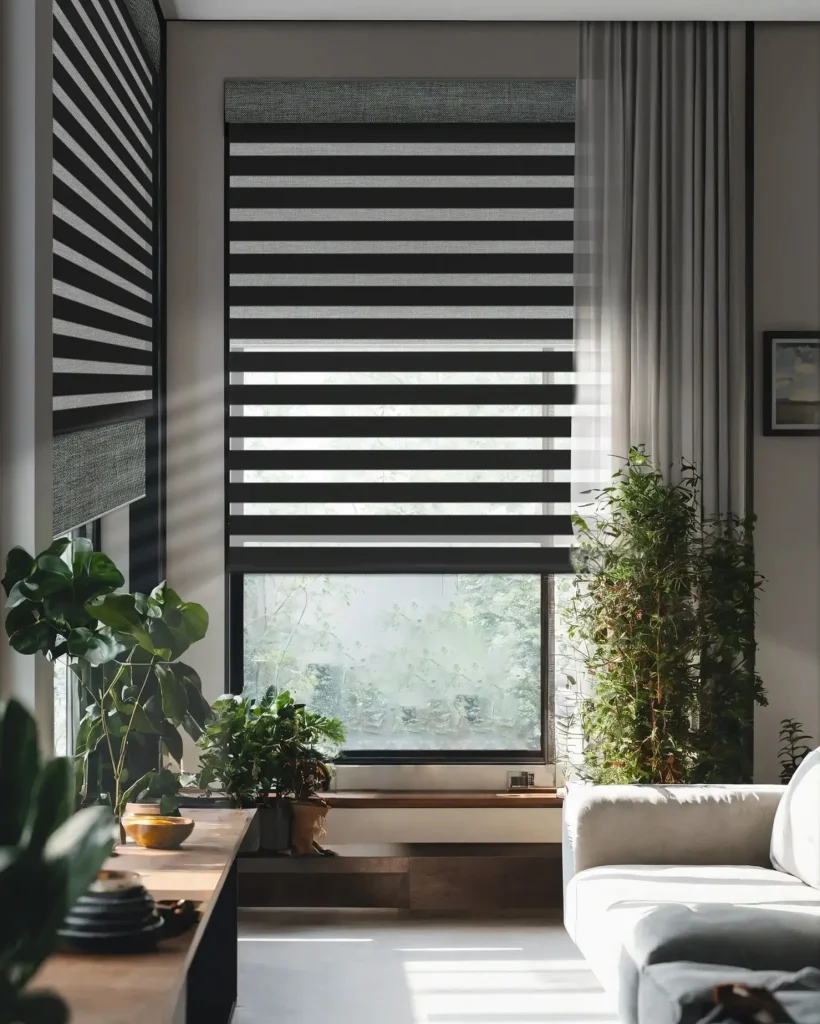
This is a smart solution for one problem. You want a view during the day. You want privacy at night. One system does both.
A single cassette holds two fabrics. One is transparent. One is opaque. You pull down the sheer fabric for daytime. You see out, but people cannot see in. You pull down the opaque fabric at night for full privacy and blackout.
It is a clean, simple system. It works especially well for large windows that face a busy street or a neighbor’s house.
Best for: Windows facing a public street or close neighbor.
16. The Maximalist: Velvet Drapes + Tassel Tiebacks

Large windows can handle big choices. Do not be afraid of them. Velvet drapes in jewel tones work because the window is large enough to support the visual weight.
Go floor to ceiling. Choose emerald, sapphire, or ruby. Add ornate tassel tiebacks to hold the fabric back during the day.
Skip the blinds. Let the drapes do all the work. This makes the window a dramatic focal point. It is bold. It is not for everyone. But when it works, it really works.
Best for: Formal living rooms or anyone who loves a bold, dramatic look.
Conclusion
Dressing large windows is about scale and function. You have to think about the size of the room and how you use the space. A motorized roller gives you a clean, modern look. Woven wood and linen bring warmth. Layered drapes and sheers give you flexibility.
The rules are simple. Mount your hardware high and wide. Use motorization if you can. It makes life easier. Always think about your main need. Is it light? Privacy? The view?
Ready to start? Grab a tape measure. Measure twice. Then order fabric samples. See how the light hits them in your space at different times of day. A small sample can save you from a big mistake.
With the right approach to dressing large windows with blinds and curtains, you can turn that wall of glass into the best part of your home.

- 16 Ideas for Dressing Large Windows with Blinds & Curtains - April 8, 2026
- How to Decorate a Bedroom From Scratch (Step by Step) - April 8, 2026
- 16 DIY Kitchen Ideas That Transform the Space Without a Contractor - April 8, 2026