
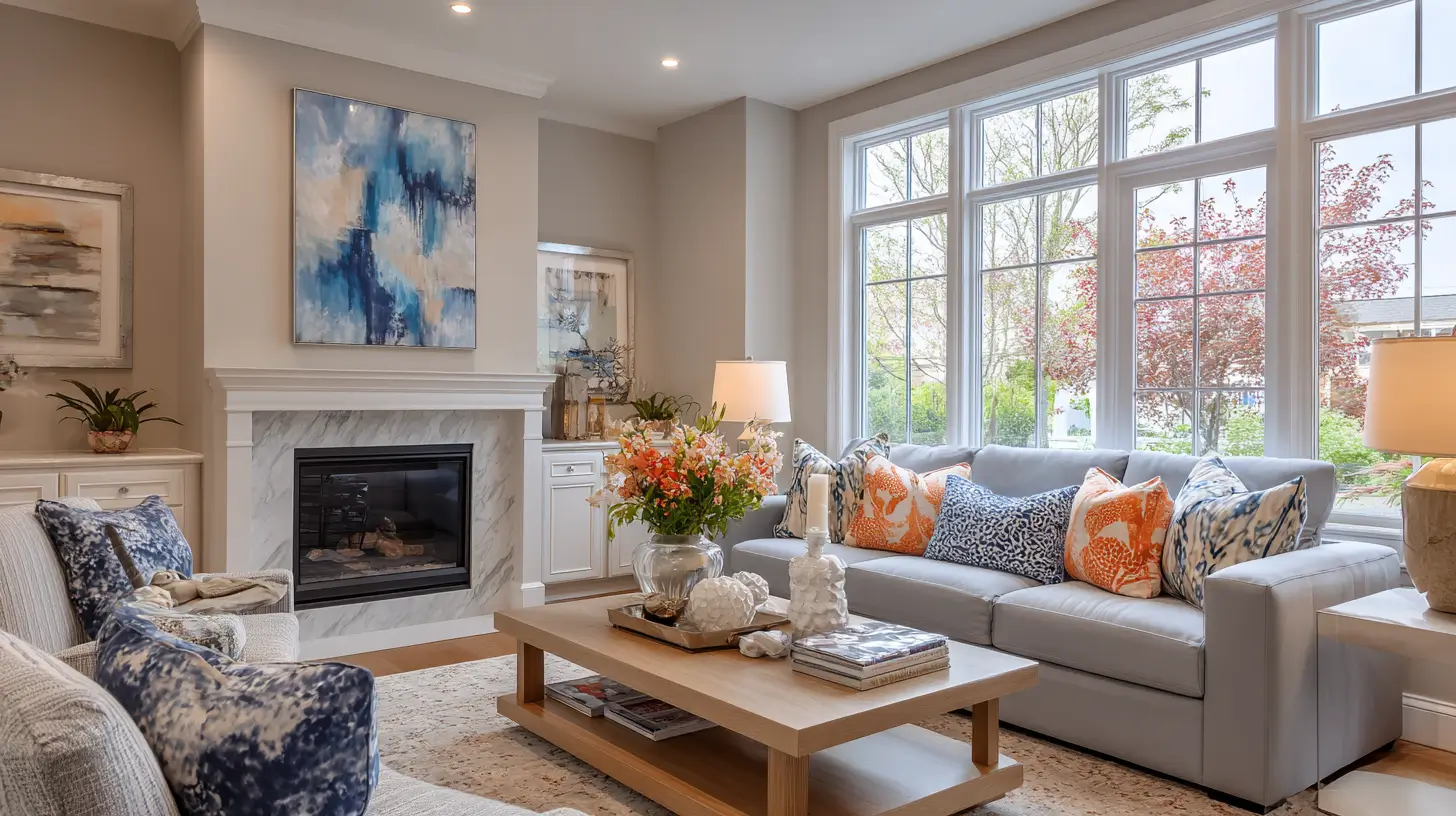
Most seniors are told they have to pick one. A living room that looks good. Or one that’s safe.
That’s not true.
You can have both. And this guide shows you exactly how.
Falls are the number one cause of injury death in adults over 65. The CDC reports 36 million fall injuries happen every year in that age group. But here’s what most people don’t realize: the biggest fall risks in your home are things you chose on purpose. A glass coffee table. A beautiful low sofa. A stunning area rug.
Good design doesn’t have to hurt you. It just needs to be smarter.
In this guide, you’ll get 17 specific ideas across five areas: furniture, lighting, flooring, technology, and color. Each one is practical. Each one looks good. And every single one can make your living room safer starting today.
Let’s get into it.
Why Your Living Room Deserves a Second Look in 2026
Right now, 10,000 baby boomers turn 65 every single day. That number continues through 2030.
And according to AARP’s Home and Community Preferences Survey, 77% of adults over 50 want to stay in their own homes as they age. Not a facility. Not assisted living. Home.
Here’s the money reality. Redesigning your living room might cost between $2,000 and $8,000 depending on how much you change. Assisted living costs over $54,000 per year on average, based on Genworth’s 2024 Cost of Care Survey. That’s not a close comparison.
The other thing worth saying: senior friendly design has changed a lot. It used to mean grab bars, beige walls, and hospital chairs. That’s not what it means anymore. Today’s age in place design looks like regular home design. Good furniture. Smart lighting. Thoughtful layouts.
The difference is just that every choice works harder for you.
Now here are the 17 ideas that make the biggest difference.
Furniture That Supports You Without Looking Medical
Idea 1: Pick Sofas and Chairs With a Higher, Firmer Seat

This is the most common mistake people make. A deep, plush sofa looks amazing in a showroom. It feels like a cloud when you sit down. But getting back up? That’s where it becomes a problem.
The right seat height for easy standing is between 17 and 19 inches from the floor. That puts your knees at roughly a 90 degree angle when sitting. You don’t have to struggle to push yourself up.
Also look for chairs where the armrests extend all the way to the front edge. That gives you something to push off of.
What to avoid: Sectionals lower than 16 inches. Sofas without armrests. Any seat that tilts you backward when you sit down.
Pro Tip: Bring a tape measure when shopping for furniture. Measure the seat height before you sit. Most salespeople won’t bring this up unless you ask.
Idea 2: Consider a Power Lift Recliner

A few years ago, lift recliners looked like medical equipment. Big, beige, and ugly. That’s changed.
La-Z-Boy, Ashley Furniture, and Pride Mobility all make lift recliners in 2025 and 2026 that come in leather, velvet, and modern fabric options. Prices run from about $400 on the low end to $2,500 for premium models.
What a lift recliner does: it tilts the whole seat forward slowly, helping you stand up without straining your hips, knees, or back. The best models also include a zero gravity recline position, which takes pressure off your spine and joints.
It’s worth being honest here. Some lift recliners still look clunky. But if you spend time choosing the right fabric and style, most guests won’t even know it’s a lift chair.
Idea 3: Replace Glass Coffee Tables With Something Safer

Glass coffee tables have sharp corners. If you trip or stumble, that corner is at shin height. That’s a serious injury risk.
The good news is that the alternatives look just as good. Better, in some cases.
Swap to one of these:
- A solid wood table with rounded edges
- An upholstered cube ottoman with a removable tray on top
- A wicker or rattan table with no glass
The ottoman option is smart for two reasons. It gives you a surface for drinks and remotes. And it gives you something soft to bump into instead of something sharp.
The ADA recommends 36 inches of clear pathway around furniture. Keep that in mind when you place anything new.
Idea 4: Arrange Furniture to Create Clear Walking Paths
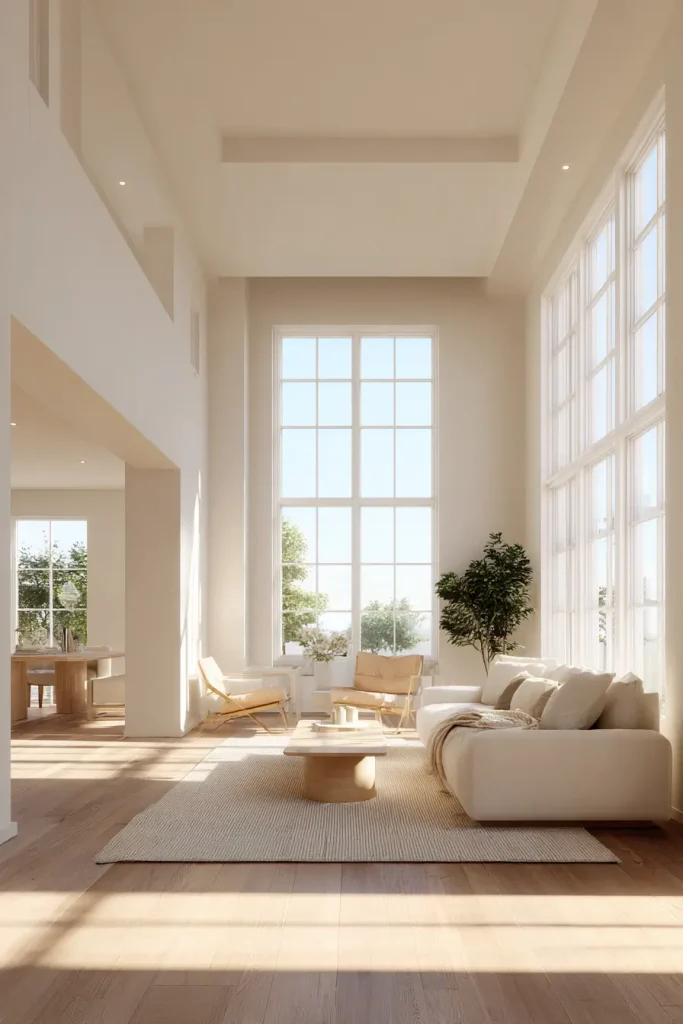
This one costs nothing. It just takes an afternoon.
Most living rooms are arranged for the best view or the best conversation flow. Neither of those considers how you walk through the room.
Walk your most common paths out loud. Where do you go from the sofa? To the TV? The kitchen? The front door? Every path you take regularly needs 36 inches of clear space. That’s the ADA standard for accessible walkways.
Move furniture to the edges of the room when possible. Keep the center clear. If you use a cane or walker, this matters even more.
Watch out for this: Furniture placed at angles creates awkward corners that are easy to clip with your hip or foot. Straight lines work better for safe movement.
Idea 5: Use Storage Furniture to Cut Clutter
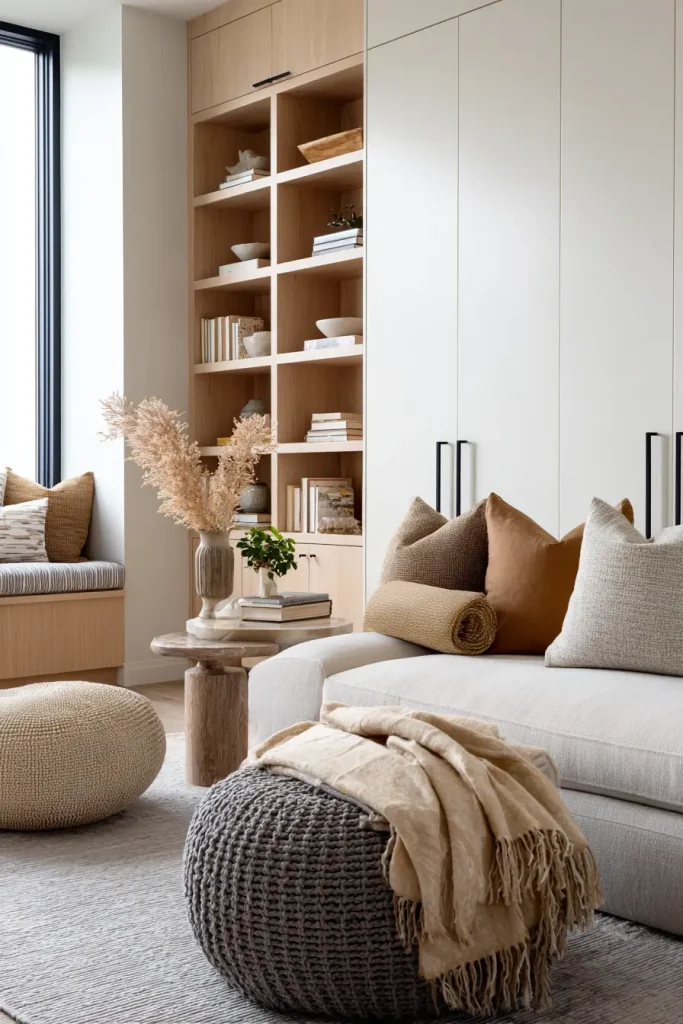
Clutter on the floor is a fall waiting to happen. Books, throw blankets, pet toys, charging cables. Any of these can catch your foot.
Storage furniture solves two problems at once. It keeps your living room looking clean. And it keeps the floor clear.
Good options that look great:
- Side tables with a small drawer or shelf underneath
- Storage ottomans that open on top
- Media consoles with closed cabinet doors
- Tall bookshelves that store items off the floor
One specific tip: get a side table with a built in USB charging port. That keeps your phone charger off the floor and removes one more cord from your walking path.
Lighting Changes That Cut Fall Risk and Look Beautiful
Idea 6: Use Three Types of Light, Not Just One
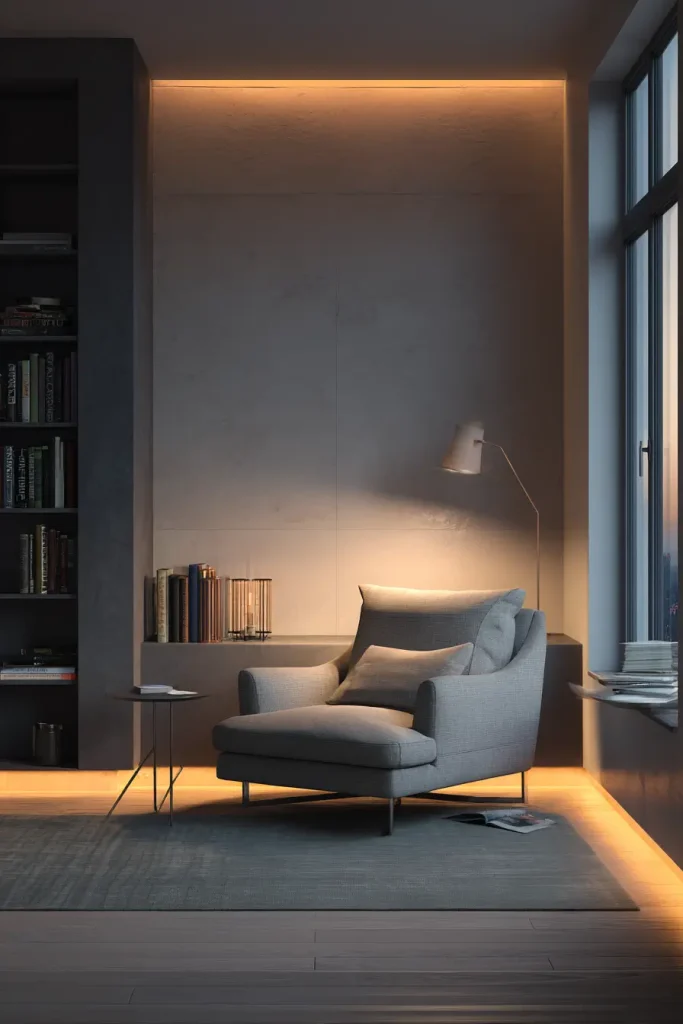
Most living rooms have one overhead light. Maybe a floor lamp. That’s not enough.
Adults over 60 need two to three times more light than younger adults for the same visual tasks, according to the American Optometric Association. And aging eyes are also more sensitive to glare. One bright overhead light creates both problems at once: not enough light in corners and too much glare from the fixture.
The fix is called layered lighting. Three types working together.
Layer 1: Ambient light. This is your main overhead light. Use it at medium brightness, not full blast.
Layer 2: Task light. A lamp next to your reading chair. Bright and directed at the page or screen. A 900 lumen LED bulb works well here.
Layer 3: Accent light. Small lights near the floor, along baseboards, or under shelving. These fill in dark corners and light the path to the hallway.
Together, these three layers give you bright enough light without glare. And they look intentional and designed, not just practical.
Idea 7: Add Motion Sensor Night Lights Along Your Path
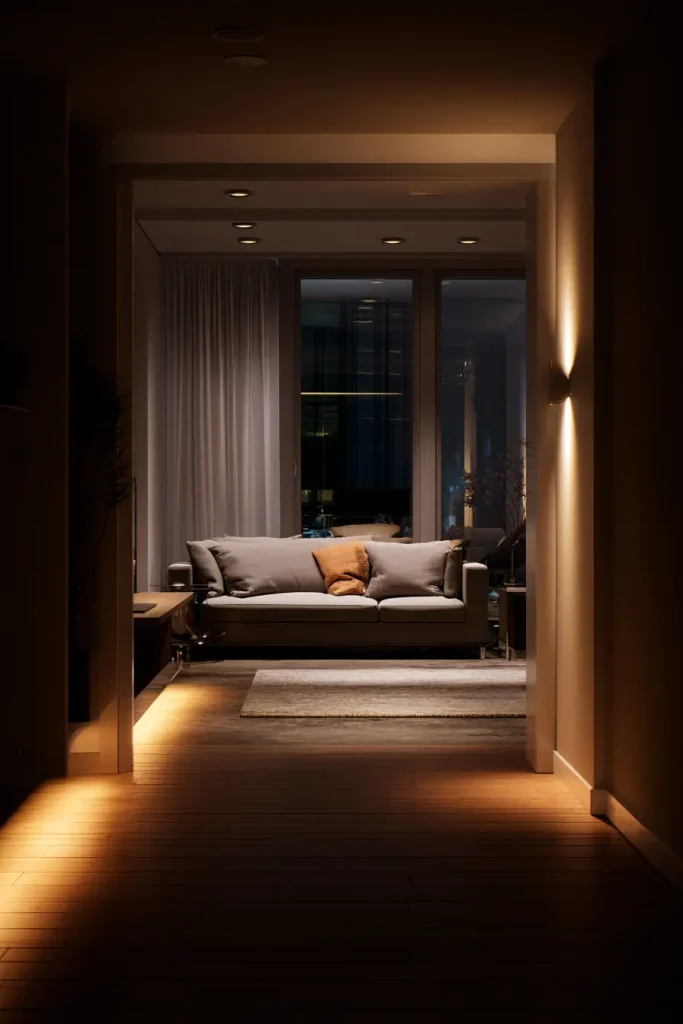
Most falls in the home happen at night or in low light. The National Council on Aging puts this figure at about 80% of all home falls.
You get up at 2am. The living room is dark. Your eyes haven’t adjusted. Your foot catches the edge of something.
Motion sensor plug in lights solve this for $10 to $30 each. They turn on automatically when you walk by and turn off after a minute or two.
Where to put them:
- At floor level near the sofa
- Between the living room and the hallway
- Near any change in floor level, even a single step
Brands like Mr. Beams, GE, and Maxxima all make small, low profile options that barely show when the lights are on during the day.
Idea 8: Switch to Smart Bulbs You Can Control With Your Voice

This isn’t just a gadget. It’s genuinely useful.
Fumbling for a light switch in the dark is dangerous. So is walking across a dark room to turn a lamp on. Smart bulbs connected to Amazon Alexa or Google Home let you turn any light on or off just by speaking.
“Alexa, turn on the living room light.”
That’s it.
A starter kit with two to four smart bulbs costs between $50 and $200. For seniors with arthritis, this also removes the pain of pushing small switches. And you can set schedules so lights come on automatically at sunset.
This is one of the easiest changes on this list. And one of the most useful daily.
Flooring and Rug Fixes That Could Prevent a Serious Fall
Idea 9: Secure Your Rugs or Remove Them
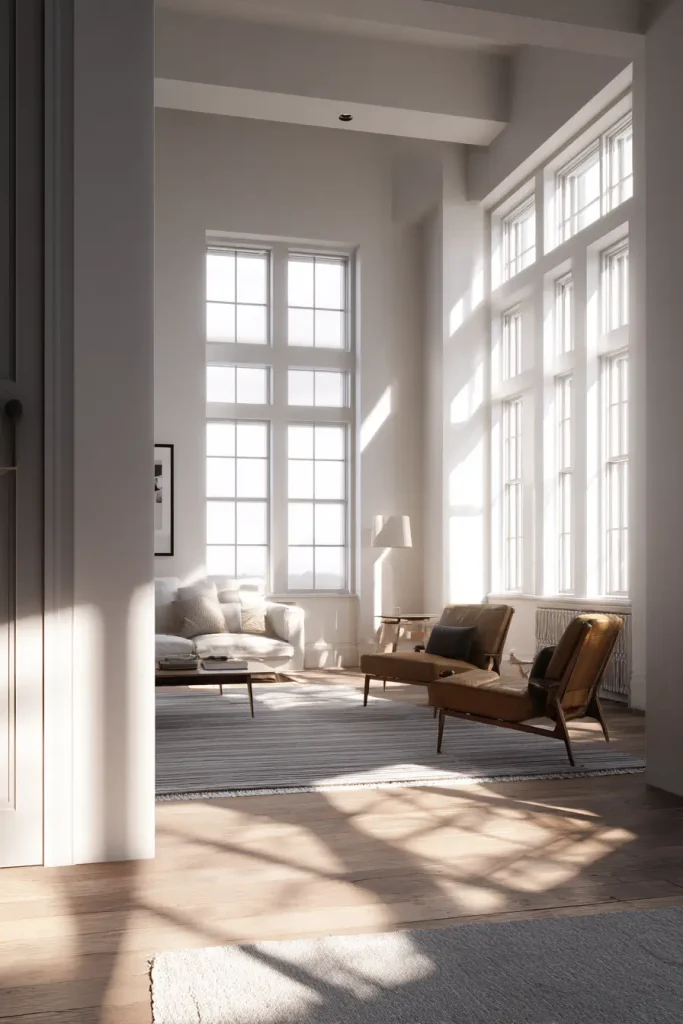
Loose rugs are the number one furniture related fall hazard in the home. The Consumer Product Safety Commission links rugs and carpets to over 38,000 fall injuries each year.
You have three options here.
Option 1: Remove the rug entirely. This is the safest choice. It feels like a big change, but most rooms look fine without a rug once you get used to it.
Option 2: Secure it properly. Use a non slip rug pad underneath (Gorilla Grip and Mohawk make good ones) plus double sided carpet tape along every edge. Check it monthly. Tape loosens.
Option 3: Replace it with a better rug. If you want to keep a rug, choose low pile, flat weave, with no fringe edges. Fringe catches feet. Thick pile creates an unstable surface.
The honest truth: if a rug has been in your home for years and you’ve never had a problem, option 2 probably works fine. But if the rug curls at the edges or slides at all, take it out.
Idea 10: Choose the Right Flooring if You’re Replacing

If you’re doing a bigger renovation or your current flooring is worn, this matters a lot.
Best choices for seniors:
Luxury Vinyl Plank (LVP) is probably the best all around option. It looks like real wood. It has a slight give underfoot that reduces joint impact. And it comes in matte finishes that don’t reflect light or create glare. Cost is usually $3 to $7 per square foot installed.
Cork flooring is naturally cushioned and very quiet. It reduces the impact when you walk and feels softer if you do fall. It looks modern and comes in natural tones that work with most color schemes.
What to avoid: Highly polished hardwood, glossy tile, or any floor with a high shine. These reflect light and make it harder for aging eyes to judge depth and distance.
The Mayo Clinic includes proper flooring as a top recommendation in fall prevention programs. It’s not just interior design. It’s a real safety factor.
Technology That Looks Like Home Decor, Not a Hospital
Idea 11: Use a Smart Home Hub as a Normal Part of Your Decor

Amazon Echo Show and Google Nest Hub look like small tablets on a stand. Most guests think they’re just a screen or a clock. They don’t look medical.
But for a senior living alone or with a spouse, these devices do a lot.
What they actually help with:
- Video calls with family, no fumbling with a phone
- Medication reminders on a screen you can see from across the room
- Weather and news in the morning without turning on the TV
- Emergency calling if you have a fall and your phone isn’t nearby
Prices range from about $50 for a smaller Echo Show to $230 for a larger Nest Hub Max.
Place it on a side table or bookshelf. Style it with a small plant or picture frame next to it. It blends right in.
Idea 12: Install Grab Bars That Look Like Decorative Hardware
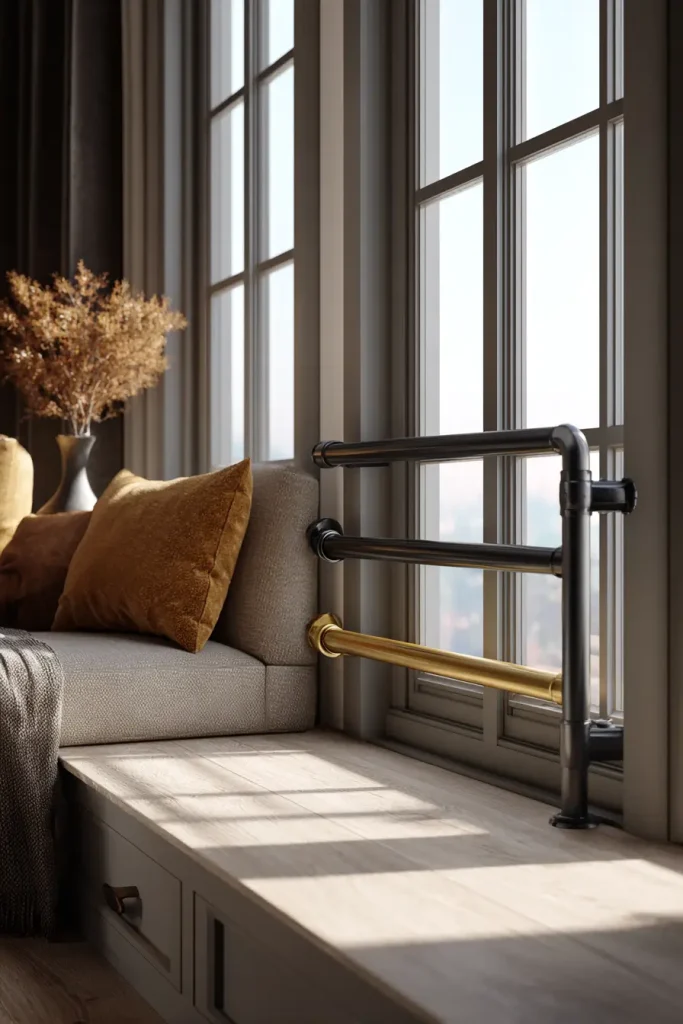
The word “grab bar” makes most people think of a white plastic tube bolted to a wall. That’s an old image.
Brands like Moen, Delta, and Seachrome now make grab bars in brushed gold, matte black, oil rubbed bronze, and polished nickel. They look exactly like decorative towel bars or curtain rods. Most guests would never guess their actual purpose.
These can be installed near your sofa, next to a step into a sunken room, or beside a window you open regularly. Anywhere you regularly shift your weight or change position is a good place to add support.
They are load bearing and meet ADA weight standards. A decorative looking bar that holds 250 pounds is just as effective as a clinical one.
Important note: Have these installed into wall studs by a handyman or CAPS certified contractor. Anchor bolts into drywall only are not strong enough.
Idea 13: Mount Your TV Properly and at the Right Height

This one gets overlooked. But neck and back strain from a poorly positioned TV is a real daily problem for seniors.
The ideal TV height is eye level when seated. For most people that’s about 42 to 48 inches from the floor to the center of the screen. Most TV stands place screens too low or too high.
A tilt adjustable wall mount lets you angle the screen toward your seating rather than fighting the position. It also clears floor space completely, which matters if you use a walker or wheelchair.
Wall mounted TVs have another benefit: no TV stand means no surface for clutter to collect, and no furniture to walk around.
Color and Visual Design for Eyes That Have Changed
Idea 14: Use High Contrast Colors Between Surfaces
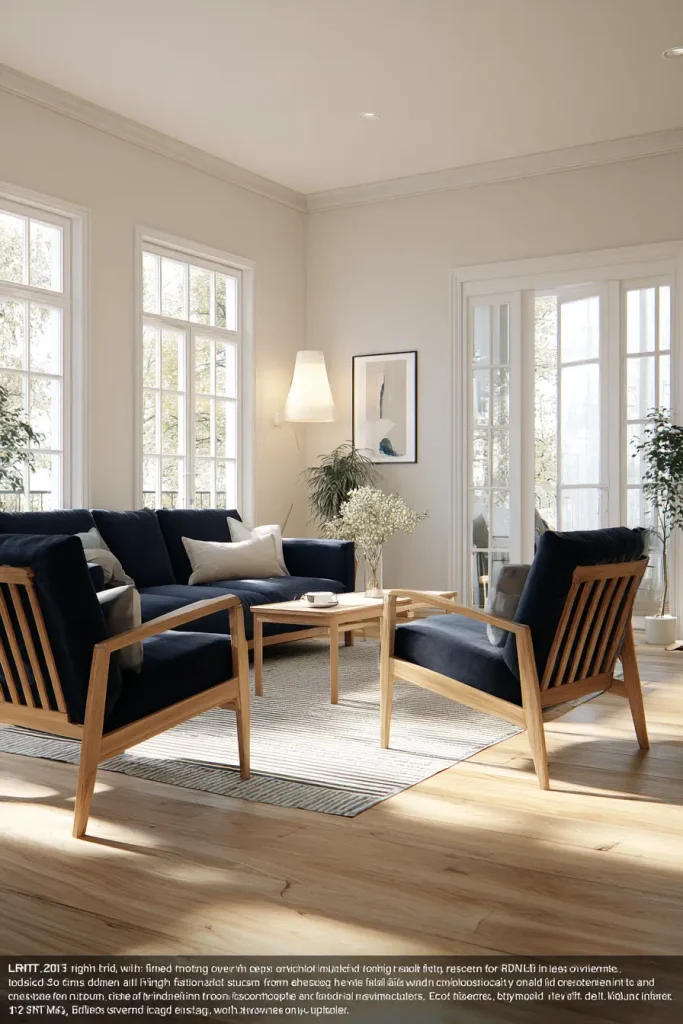
Here’s something most people don’t think about. Aging eyes lose contrast sensitivity. That means a light gray sofa on a light gray carpet can genuinely be hard to see clearly. Your brain doesn’t process the edge between them as sharply.
That lack of contrast creates missteps. You think the floor is higher or lower than it is. You misread where the furniture ends.
The fix is simple. Make sure your furniture and your floor are clearly different in tone.
Examples that work:
- Light wood floors with a dark navy or charcoal sofa
- Dark hardwood with a cream or tan furniture set
- Pale walls with furniture in a medium to deep tone
Also avoid busy patterns on rugs or floors. Geometric or highly patterned surfaces confuse aging eyes and make it harder to judge depth.
Benjamin Moore “Simply White” on walls paired with medium to dark furniture is a combination that’s both stylish and visually accessible.
Idea 15: Lean Into Warm Colors for a Calmer, Safer Feel
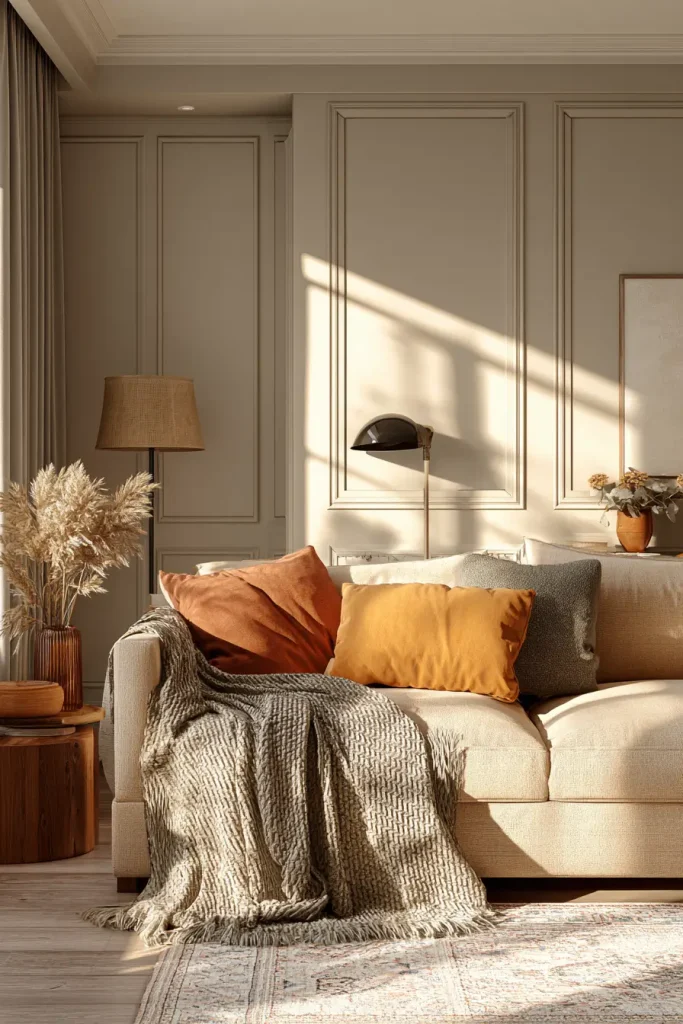
This is backed by real research. A 2022 study published in Frontiers in Psychology found that warm tones, including terracotta, warm beige, and soft sage, reduce anxiety in older adults compared to cooler, starker color schemes.
Beyond the research, warm colors just feel more welcoming. And a room that feels calm is a room you want to spend time in.
Practical suggestions:
Paint: warm whites, soft taupes, muted terracotta, dusty sage. Avoid cold whites, stark grays, or bright blues as dominant colors.
Bulbs: use bulbs rated between 2700K and 3000K. These produce a warm, golden light. Bulbs above 4000K produce a cool, bluish white that many seniors find harsh.
Textiles: warm tone throw blankets and pillows are an easy way to test a color palette before committing to paint.
Quick Fixes Under $100 That Make a Real Difference Right Now
Idea 16: Declutter Your Floor Completely
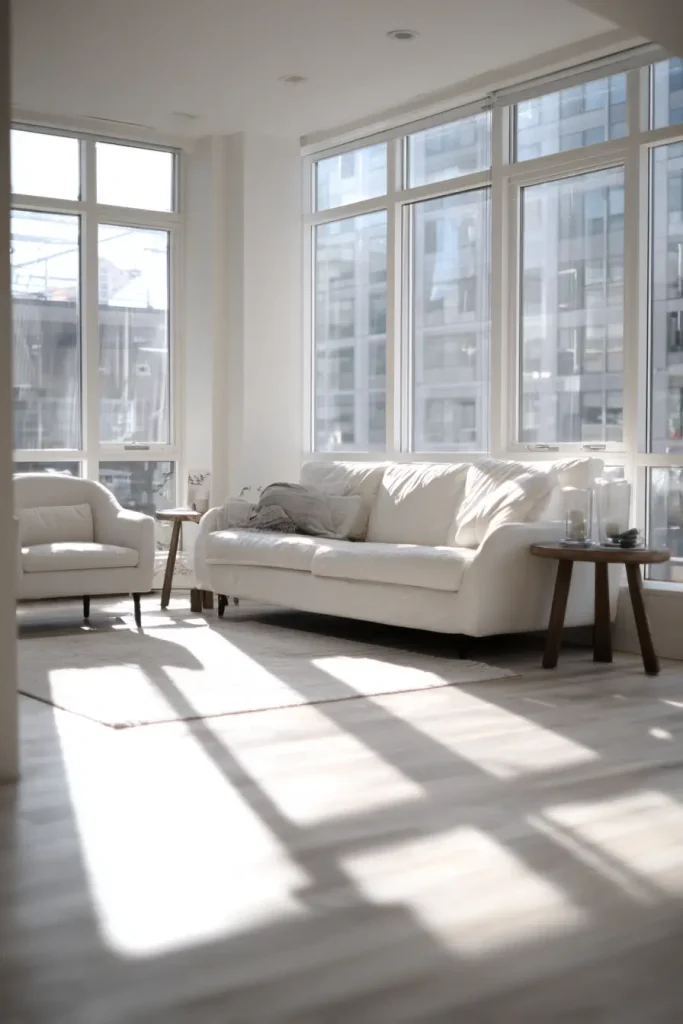
This is free. It just takes effort.
Walk through your living room and look only at the floor. Pick up everything that doesn’t need to be there. Charging cables. Extra throw pillows that fell. Pet toys. Stacks of books. Shoes near the door.
Then create a simple rule called the 12 inch floor rule. Nothing should live on the floor that doesn’t absolutely have to be there.
Move frequently used items to waist height. Put remote controls on a side table, not the couch cushion where they fall off. Put reading glasses in a small tray on the end table.
A clear floor is one of the fastest safety upgrades you can make. And it makes the whole room look tidier without buying anything.
Idea 17: Set Up a Fall Detection Device You’ll Actually Use
Medical alert devices have a bad reputation. Most seniors don’t want to wear one because they feel like a public announcement that something is wrong.
That’s changed in 2026.
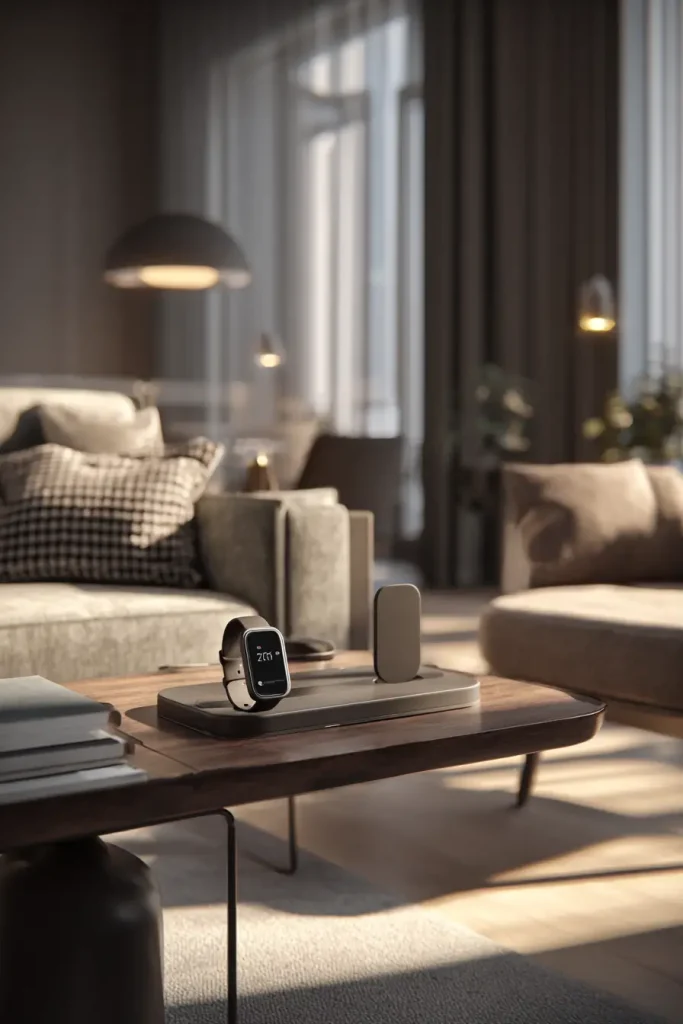
Apple Watch’s fall detection feature works automatically. If you fall and don’t respond within 30 seconds, it calls emergency services. It looks like a regular watch. Bay Alarm Medical and Medical Guardian also make wrist devices that look like fitness trackers, not medical equipment.
The real key here is placement. Set up a small charging station on your living room end table. Make it part of your routine to charge the device there every night. Treat it like your phone.
What to look for in a 2026 device:
- Automatic fall detection, no button press required
- Two way voice communication
- GPS for if you fall outside
- Battery life of at least 24 hours
The National Council on Aging estimates falls cost the US healthcare system $50 billion annually. The personal cost of an undetected fall is far higher.
Where to Start
You don’t have to do all 17 of these at once.
Pick one category that matters most right now. If lighting in your home is poor, start there. If your sofa is impossible to get up from, fix that first. If your rugs curl at the edges, deal with those today.
These living room ideas for seniors work because they respect two things equally. Your safety. And your taste.
A home you feel safe in is a home you love staying in. And staying in your own home, on your own terms, is worth every bit of effort it takes to get there.

- 17 Classy Living Room Ideas for a Cozy Elegant Look - April 23, 2026
- 16 Dark Moody Living Room Ideas That Feel Rich and Warm - April 22, 2026
- 14 Elegant Bedroom Trends for 2026 You’ll Love - April 22, 2026