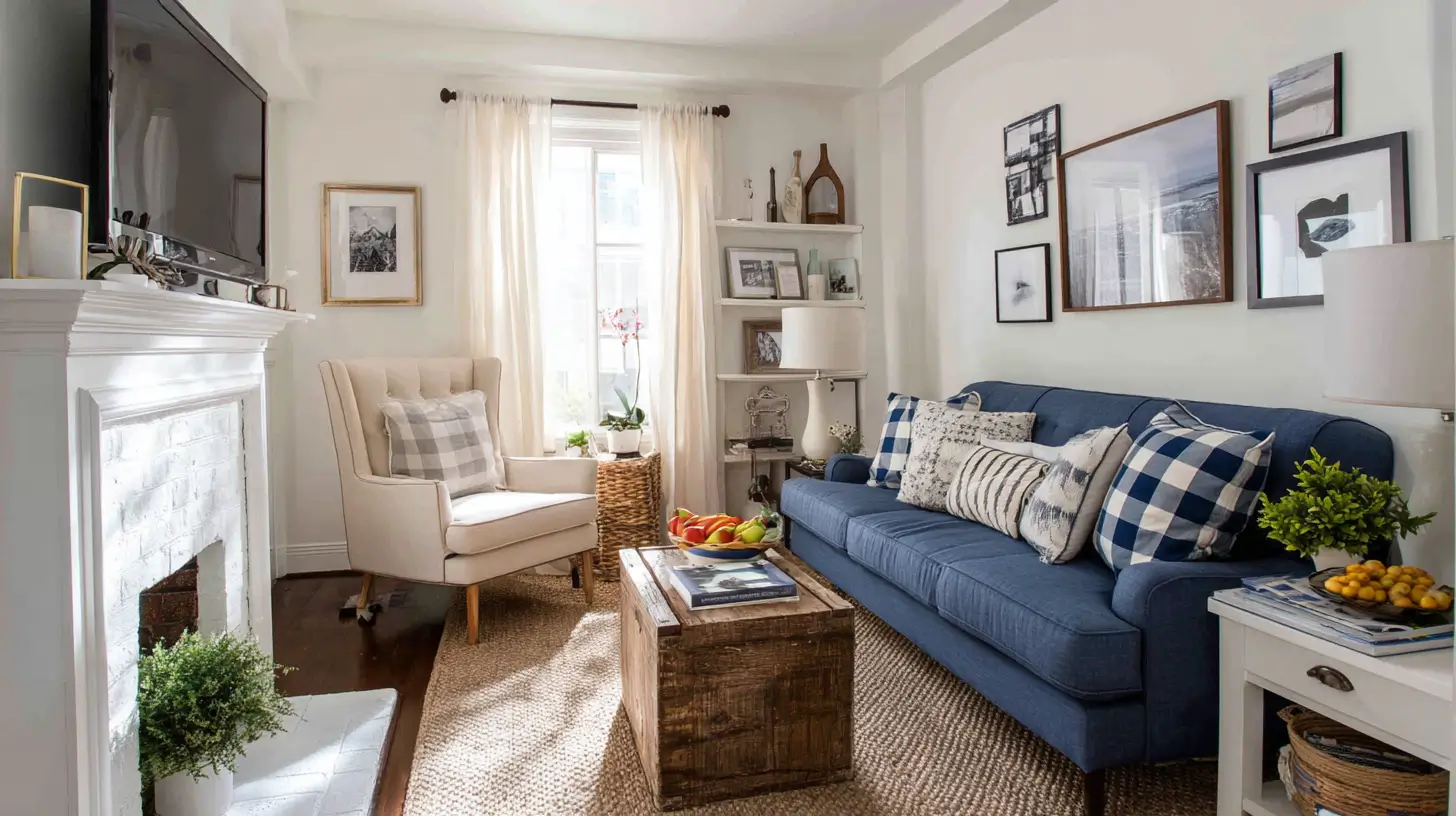
Your living room might be small. But it doesn’t have to feel small.
Most people with tiny living rooms make the same mistake. They buy more storage bins. They push everything against the walls. They paint it white and hope for the best. And then they still feel cramped.
The problem isn’t your square footage. It’s that nobody taught you the rules for small spaces. These rules are different from regular decorating advice. And once you know them, everything changes.
This guide gives you 17 real, specific ideas. Not vague inspiration. Actual things you can do this week. Some take 30 minutes. Some take a weekend. All of them work.
1. Start With Your Layout Before You Do Anything Else
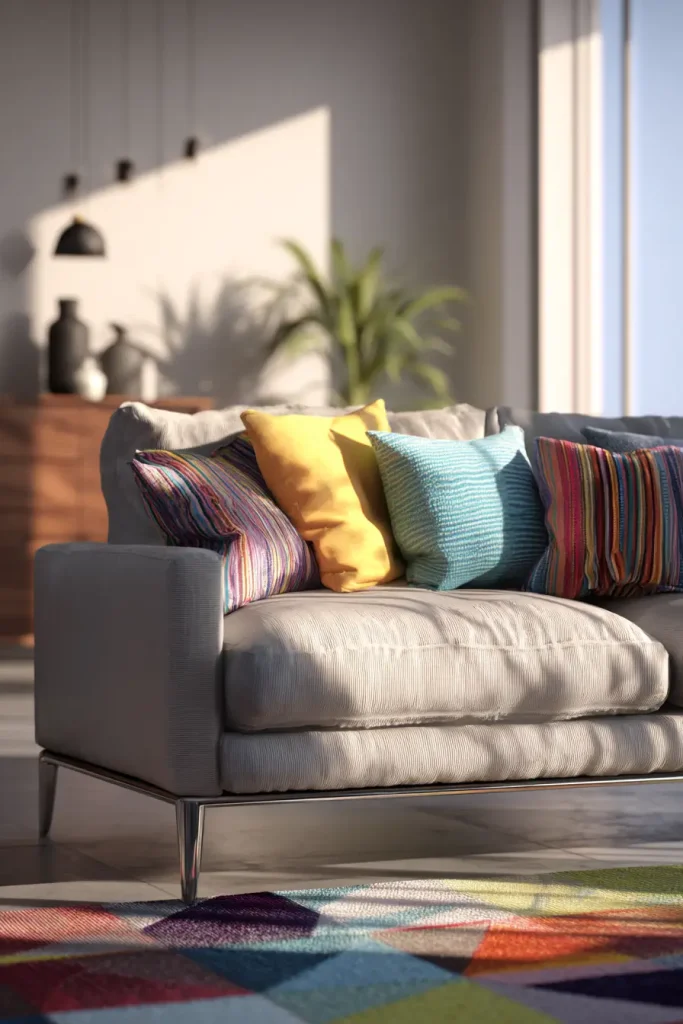
Here is the most common small living room mistake: pushing all your furniture against the walls.
It feels logical. More open floor space in the middle, right? But it actually makes the room feel smaller. When furniture hugs every wall, the room looks like a waiting room. There is no center. No sense of purpose.
The fix is called floating your furniture. You pull pieces a few inches away from the walls and group them together. This creates a conversation zone. The room suddenly has a reason to exist.
Before you move anything, find your anchor point. This is usually a window, a fireplace, or the wall where your TV lives. Everything else should face or connect to that point.
Also think about how you walk through the room. You need at least 36 inches between pieces for comfortable movement. That is a real number from the National Kitchen and Bath Association. Less than that and the room feels like an obstacle course.
Quick action: Grab a roll of painter’s tape. Tape out where your furniture would go before you move a single piece. This takes 20 minutes and saves a lot of regret.
The layout is the foundation. Get this right first. Everything else you add will work better because of it.
2. Pick One Statement Piece and Build Around It
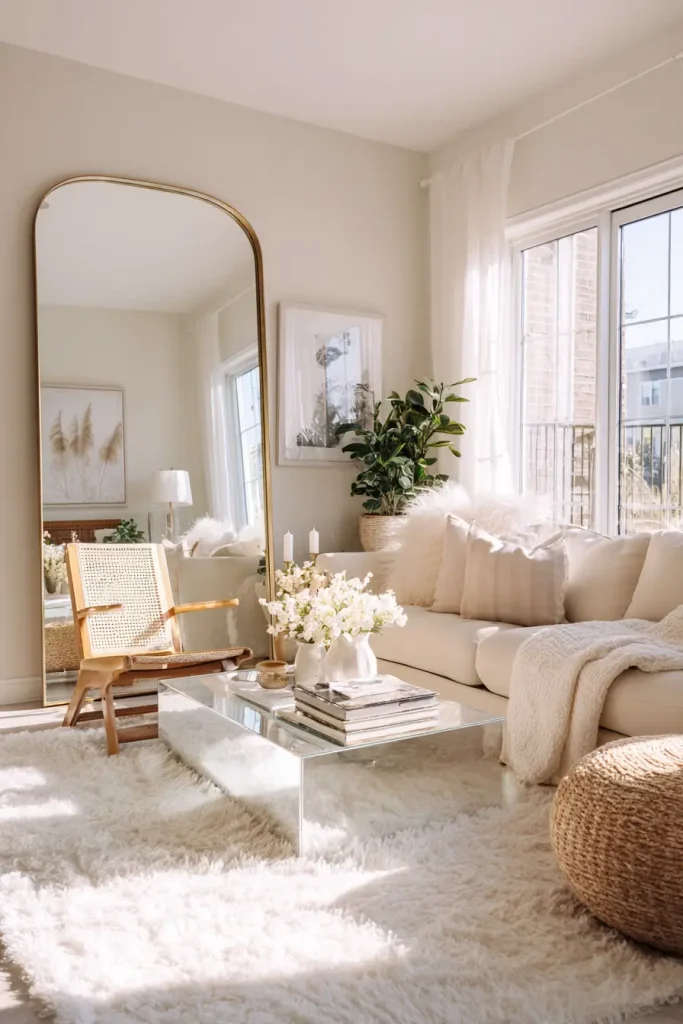
A small room with five medium bold pieces looks chaotic. A small room with one bold piece and calm everything else looks designed.
This is called the hero piece method. You choose one thing to be the star. Then you build around it quietly.
Your hero piece can be your sofa. It can be a large piece of art. It can be your rug. Pick one. The rest of your choices support it.
This also helps your budget. Put 60% of your furniture money into that one hero piece. Buy it well. Then spend less on the supporting cast.
A dark velvet sofa against white walls is a good example. The sofa does all the work. The walls, the rug, the side table, they all step back. The room feels intentional because there is a clear star.
You already know the 60-30-10 color rule even if you do not know the name. Sixty percent of the room is one neutral color. Thirty percent is a secondary tone. Ten percent is your accent. In a small room, this rule keeps things from getting busy.
The most common mistake is trying to make everything equally interesting. Pick your one thing. Let it lead.
3. Use the Right Size Rug
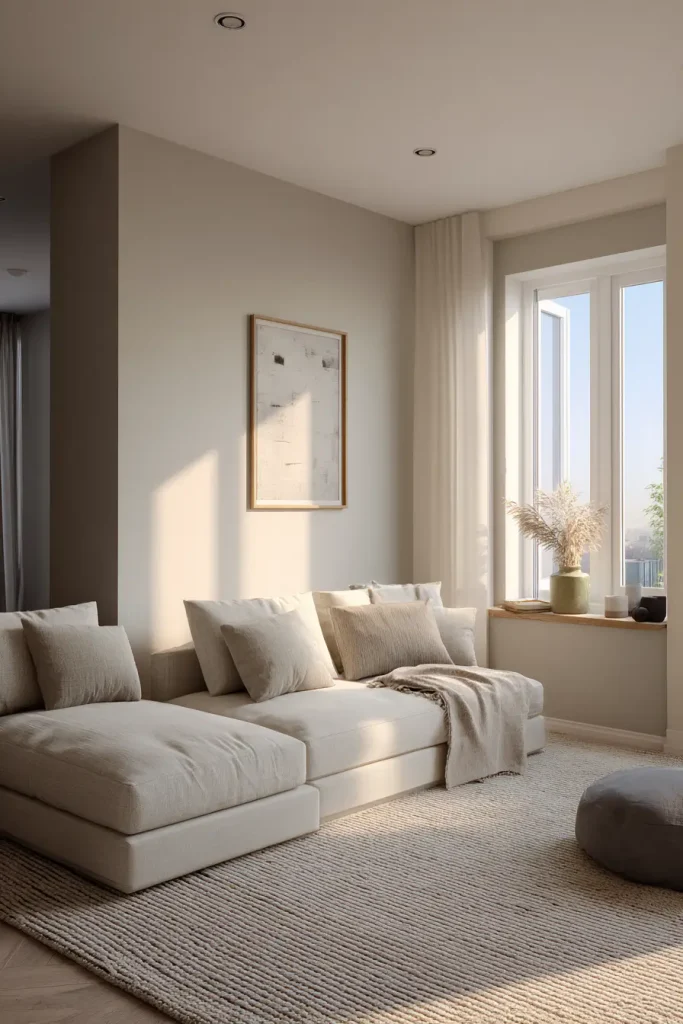
The single most common rug mistake in small living rooms is buying a rug that is too small.
A tiny rug floating in the middle of a room makes the room feel smaller, not bigger. It looks like an island. It breaks up the visual flow.
The rule for sofas is this: all front legs on the rug. Not just the coffee table. Not just one side. The front legs of every seat in your conversation area should sit on the rug. This ties the furniture together.
For a living room under 12×14 feet, a 5×8 rug is the absolute minimum. An 8×10 is usually better. When in doubt, go up a size.
Rugs also give you a free design trick in open plan spaces. You can use them to define zones. A rug under the sofa group says “this is the living area.” It creates a boundary without a wall.
Layering rugs can work. A flat weave jute under a smaller patterned rug, for example. But in a very small room, keep it simple. One good rug beats two competing ones.
Apartment Therapy has a rug sizing guide on their website that is worth bookmarking before you buy. It is free and saves you from expensive mistakes.
The bottom line: If your current rug looks small in your space, it probably is. Go bigger.
4. Use Your Walls All the Way to the Ceiling
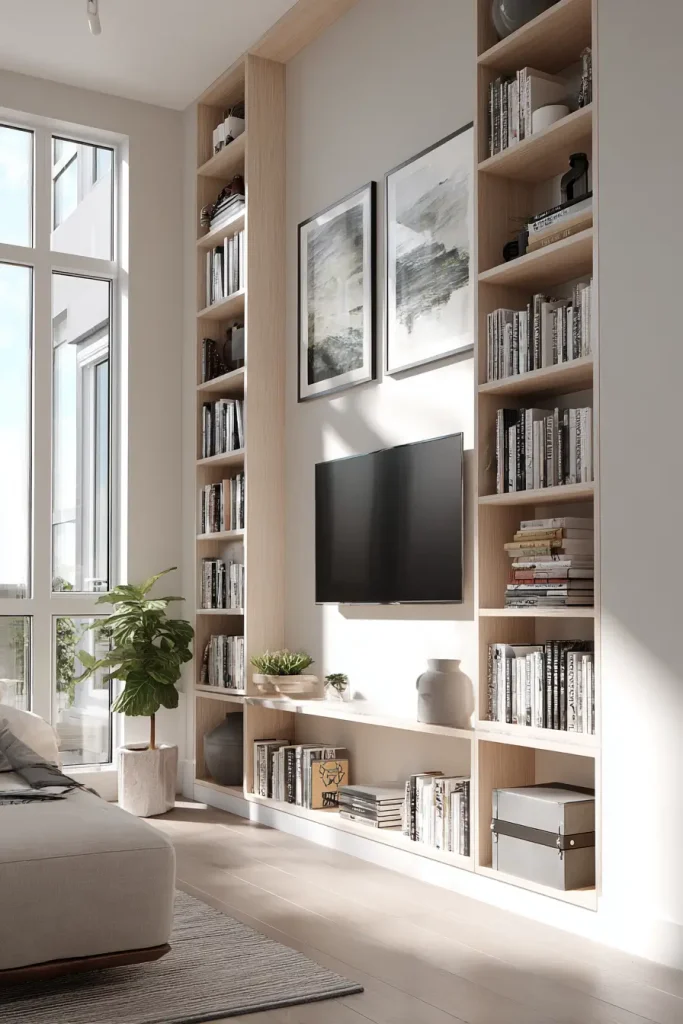
Your floor is full. Your walls, especially the top half, probably are not.
Going vertical is one of the best free moves in small space design. When you draw the eye up, the room feels taller. Studies in environmental psychology show that vertical lines create a perception of more space. You do not need a bigger room. You need to use the room you have, top to bottom.
Here is how to do it:
Hang shelves close to the ceiling. Not at five feet. At seven or eight feet. This makes the ceiling feel farther away. Fill the high shelves with books, baskets, or objects you do not reach for daily.
Hang art at 57 inches to the center. That is the standard museum height and it works in most rooms. Do not go lower just because your ceilings are low.
Use floating shelves instead of a large bookcase if you want less visual weight. A bulky bookcase blocks the wall. Floating shelves sit lightly.
Hang curtains close to the ceiling, not at the window frame. This is one of the highest impact, lowest cost changes you can make. It makes your windows look taller. It makes your ceiling feel higher.
If you have plants, put trailing varieties like pothos on high shelves. They hang down and draw the eye upward twice: once to the shelf and once following the vines.
Your walls have a lot more room than you think. Use them.
5. Buy Furniture That Does Two Jobs

In a small living room, single purpose furniture is a luxury you cannot afford.
Every piece you bring in should earn its spot. That means doing at least two things well.
The storage ottoman is the best example. It replaces your coffee table. It stores blankets, remotes, or board games inside. It doubles as extra seating when people visit. That is three jobs in one piece. This is worth buying well.
Nesting tables beat a traditional coffee table in narrow rooms. When you need them, they come out. When you do not, they tuck together and disappear.
Lift top coffee tables are another good option. The top lifts up to become a work surface. The inside holds storage. They are widely available at places like Wayfair or CB2 in 2026.
The IKEA KALLAX shelf is still one of the most versatile pieces for small rooms. Use it as a room divider. Use it as a TV stand with baskets inside. Use it as a bookshelf with the back against a wall. It works in multiple configurations without looking cheap.
Sofa beds make sense if guests sleep over regularly. Be honest with yourself. If no one ever stays over, a sofa bed just gives you a worse sofa. But if people do stay, it earns its place.
The question to ask before any purchase is: what else does this do?
6. Layer Your Lighting
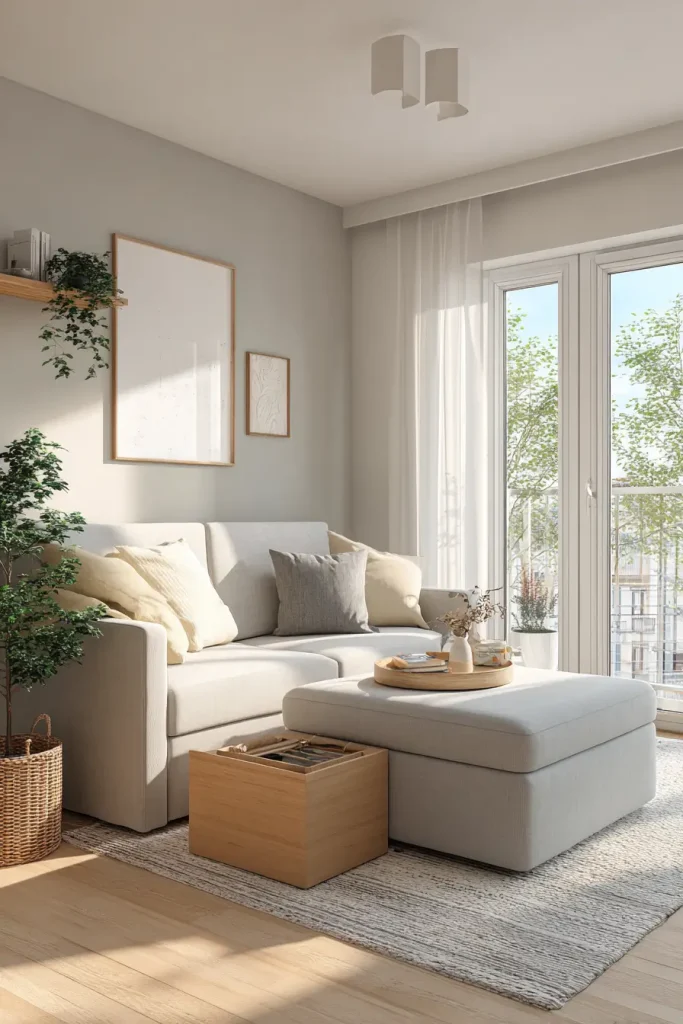
One overhead light is not enough. It flattens a room. It makes small spaces feel like a dorm.
Real rooms use three types of lighting together. This is called layered lighting and it is one of the biggest differences between a room that feels designed and one that does not.
The three layers are:
Ambient light is your general room light. This is what your ceiling fixture provides. It lights the whole room.
Task light is focused light for doing things. A lamp next to the sofa for reading. A light near your desk area if you have one.
Accent light is decorative. A lamp that glows warmly in the corner. A string of lights on a shelf. It creates atmosphere.
In a small room, accent and task lighting do the most work. They create warm pockets of light that make the space feel bigger and cozier at the same time.
Place a mirror directly across from a window, not next to it. A mirror next to a window adds nothing. A mirror across from a window reflects the light back into the room and doubles its effect.
For bulb temperature, stay between 2700K and 3000K. That is the warm white range. It makes a room feel calm and cozy. Cool white bulbs above 4000K make small rooms feel clinical.
Use a sconce on the wall instead of a floor lamp when floor space is tight. It gives you the same light without stealing a square foot of floor.
7. Stop Defaulting to White Paint
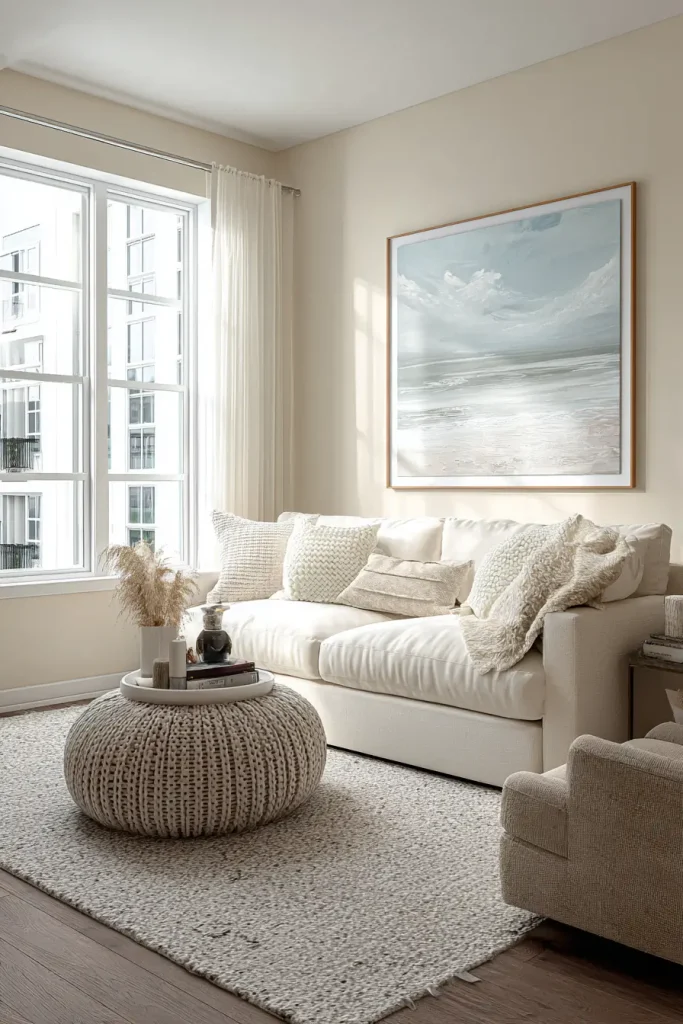
Everyone says paint your small room white to make it feel bigger. This is not always true.
Stark white can actually make a small room feel harsh and cold. It highlights every imperfect corner. And if your furniture is not perfectly selected, white walls expose that too.
What actually makes a room feel spacious is a cohesive color strategy. A monochromatic room, one where your walls, trim, and larger pieces are close in tone, feels calm and open. There are no visual interruptions. Your eye moves smoothly around the space.
A warm greige, a soft sage, or a muted terracotta can work beautifully in a small room. These tones have more depth than white but keep the room feeling put together.
Here is one of the best tricks in small space decorating: paint your ceiling the same color as your walls. When the ceiling is white and the walls are a different color, the ceiling feels like a lid pressing down. When they match, the eye does not stop at the wall top. The room feels continuous and taller.
Emily Henderson, who runs the blog Style by Emily Henderson and has been writing about small space color theory for years, puts it plainly. A monochromatic palette reads as sophisticated and spacious. It is not about lightness. It is about consistency.
For 2026, warm earthy tones are still very relevant. Benjamin Moore and Pantone have leaned into muted, grounded palettes. These work well in small spaces because they feel intentional, not safe.
8. Declutter With a System
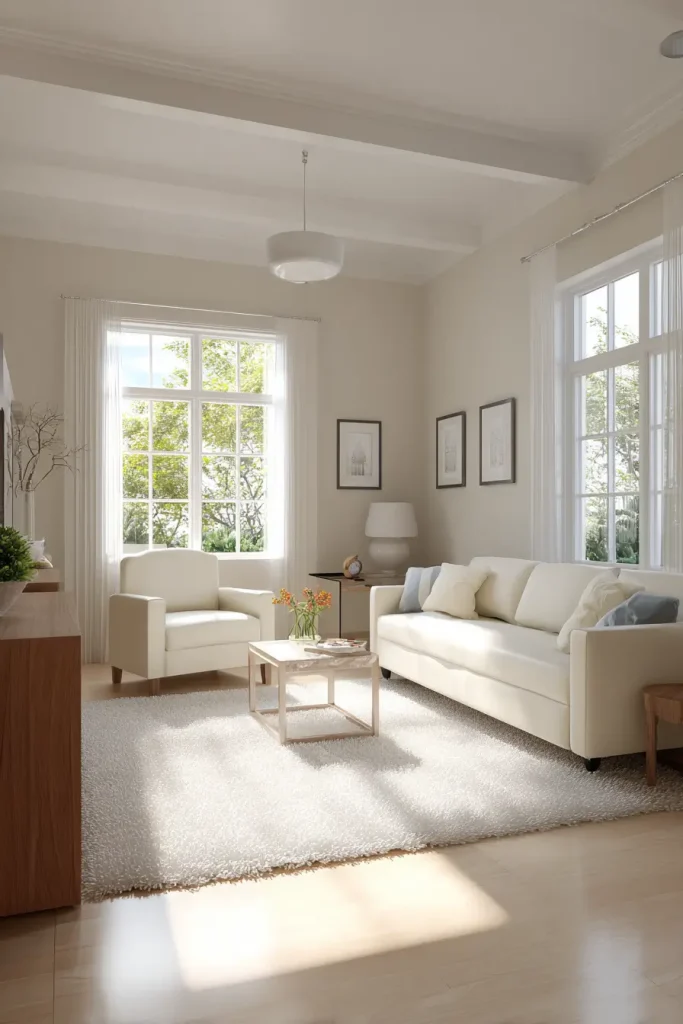
Decluttering once does not work. You need a system that keeps the clutter from coming back.
Start with the surface rule. Any visible surface in your living room should hold a maximum of three intentional objects. Not three piles. Three chosen things. A candle, a plant, a book you are reading. That is a surface that looks curated. Seven random objects on a coffee table look like a junk pile no matter how nice the objects are.
The one in, one out rule is simple. Every time something new comes into your living room, something else leaves. A new throw pillow means an old one goes. A new piece of art means an old one comes down. This keeps the room from slowly filling back up.
Cable clutter is a design problem most people overlook. One tangled cluster of cords behind a TV undoes a lot of good design work. Use cable management boxes or tie cables with velcro strips. This is a one hour project and the visual difference is significant.
Organizational psychologist Dr. Sherrie Bourg Carter has written about how physical clutter directly increases stress and reduces focus. A cluttered room is not just an aesthetic problem. It affects how you feel in the space.
Here is a quick system to use once a month:
- Look at every surface. Does each object have a reason to be there?
- Open every storage piece. Is it full? Does it need editing?
- Check cables and cords. Are they hidden or managed?
- Ask what does not belong in the living room at all.
- Remove one bag of things that do not serve the room.
Seasonal rotation also helps. Keep only what is relevant to the current season visible. Store the rest. This keeps the room feeling fresh without buying anything new.
9. Use One Large Mirror Strategically
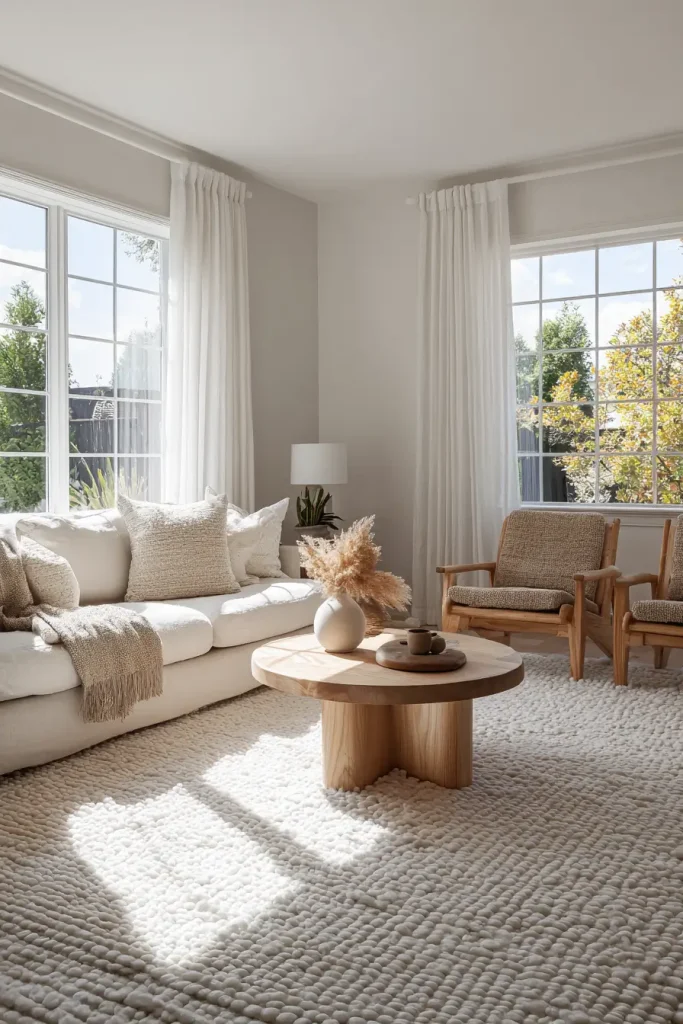
Mirrors work in small rooms. But most people use them wrong.
Three small mirrors on a wall do less than one large mirror. Small mirrors are decorative. A large mirror is architectural. It actually changes how the room feels.
Place a large mirror on the wall directly across from your window. It reflects natural light back into the room. The room gets brighter without a single light bulb. It also creates the illusion of a second window, which makes the room feel larger.
Do not place a mirror where it reflects clutter. A mirror across from a messy shelf doubles the mess. Place it where it reflects something good. Light, a plant, a tidy part of the room.
For renters who cannot drill into walls, a leaner mirror is the answer. It rests against the wall. No damage to the wall. It also tends to look a little more relaxed and current than a formally hung mirror.
Mirrored furniture like side tables or dressers can work in small rooms. But use only one mirrored piece. More than one creates visual chaos. The reflections compete with each other and the room starts to feel disorienting.
One large, well placed mirror. That is the rule.
10. Edit Your Art Down to What Counts

The difference between a collected look and a cluttered look is curation.
Cluttered is many things competing at once. Collected is fewer things chosen with intention.
In a small living room, one large piece of art almost always beats a gallery wall. A gallery wall can look great in a large dining room. In a small living room, it creates visual noise. Your eye does not know where to rest.
If you love the gallery wall look, keep it to one tight grouping. Same color frames, same general tone in the art. Space the pieces 2 to 3 inches apart. Treat the grouping as one large object, not as individual pieces.
Negative space is a real design choice. An empty wall is not a failure. It is breathing room. In a small room, breathing room makes everything else look better.
Rotate your art every few months. Swap one piece in and one piece out. This keeps the room feeling current without buying anything new. It also forces you to keep editing, which keeps the room sharp.
Before you hang anything, ask: does this piece add to the room or just fill space? If it is just filling space, it is working against you.
11. Add One Large Plant
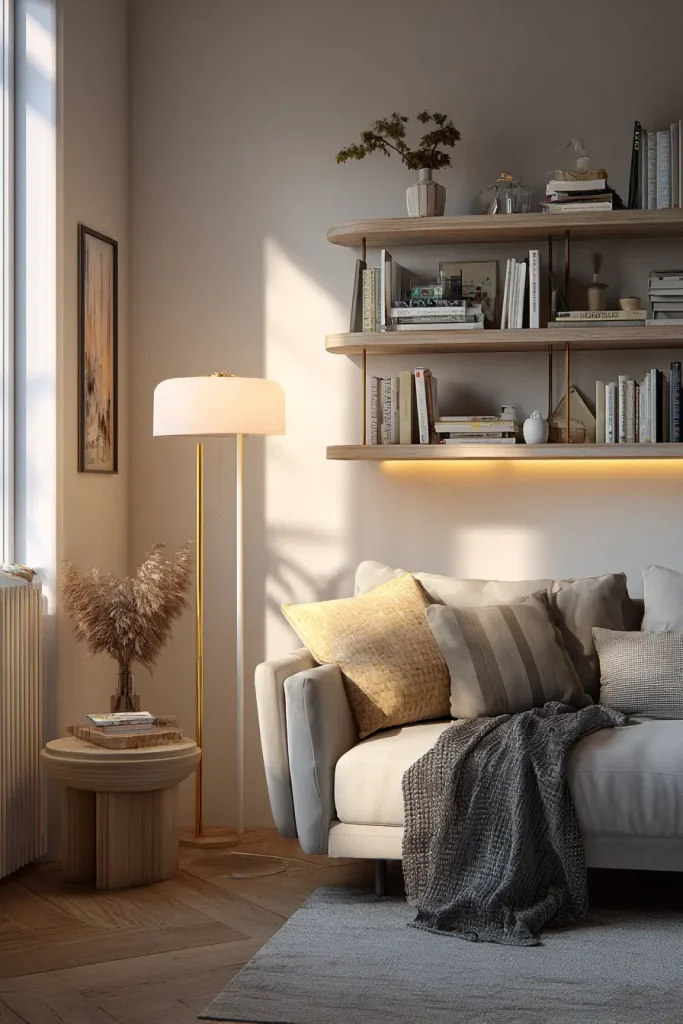
Plants add life to a room without adding visual weight. Unlike a new chair or lamp, a plant does not feel like more stuff. It feels like air.
The best move in a small living room is one large plant. A fiddle leaf fig, a monstera, a bird of paradise. One big plant in the right corner does more than six small succulents scattered around. The single large plant creates a focal point. The small ones just add noise.
For low light rooms, which most small apartments have, the most reliable plants in 2026 are:
- Pothos (almost impossible to kill, trails nicely from shelves)
- Snake plant (handles low light and irregular watering)
- ZZ plant (very low maintenance, glossy dark leaves)
Match your planter to your room’s color palette. A terracotta pot in a warm room. A matte white pot in a cooler, neutral room. A woven basket planter for a natural, relaxed look. The planter is part of the design, not an afterthought.
If your floor space is truly limited, try a wall mounted planter or a hanging plant from the ceiling. This puts the plant up high, draws the eye upward, and keeps the floor clear.
One good plant, well placed, does more than most furniture swaps.
12. Hang Your Curtains From the Ceiling

This is one of the highest return changes you can make in a small room. And it costs almost nothing if you already have curtains.
Most people hang curtains right above the window frame. This is wrong. It makes the window look small. It makes the ceiling look low. It makes the whole wall feel short.
The right way is to hang your curtain rod as close to the ceiling as possible. Four to six inches below the ceiling line at minimum. At ceiling height if you can. This makes your window look taller. It makes your ceiling feel higher. It makes the whole room feel more spacious.
Your curtain panels also need to be wide enough. Each panel should be 1.5 to 2.5 times the width of your window. This creates a full, soft look when they are open. Curtains that are too narrow look skimpy. They signal that you bought the cheapest option.
For color, match your curtains to your wall color as closely as possible. This extends the visual plane of the wall. The window becomes part of the wall rather than a separate element. The room feels wider.
Sheer curtains let in light but still give you some privacy during the day. Pair them with blackout curtains on the same rod for full coverage at night.
One last thing: iron your curtains. Wrinkled curtains wreck a room that is otherwise well designed.
13. Design for the View From the Door
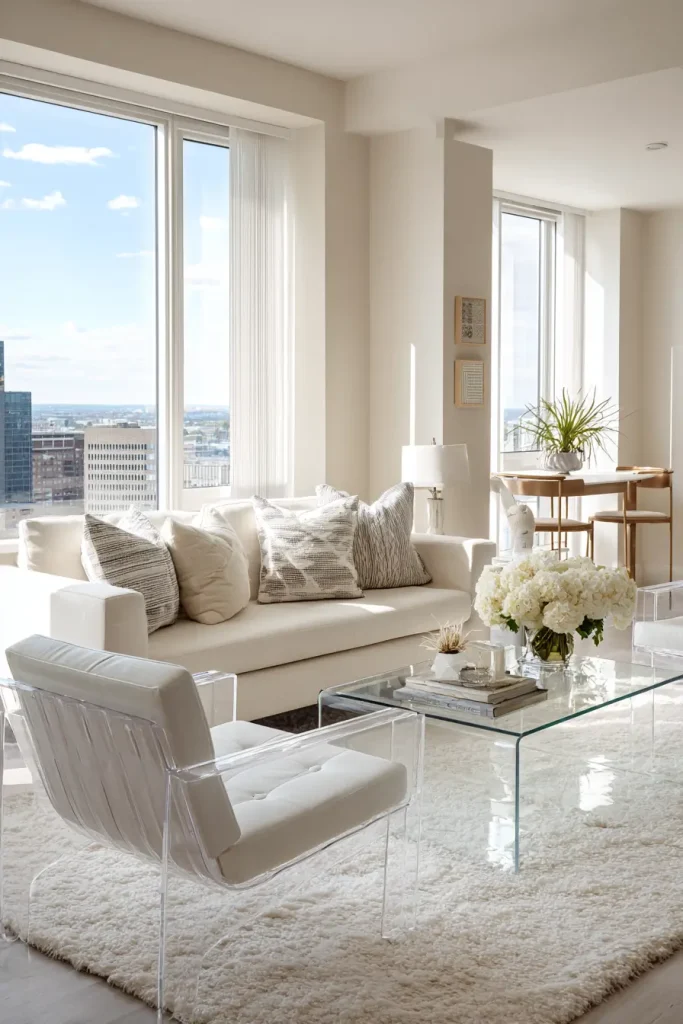
Most people design their living room from the inside. Sit on the sofa, look around, adjust.
But your first impression of any room comes from the door. That first glance, before you walk in, is what shapes how the room feels.
Stand at your door right now and look in. What is the first thing you see? Is it something good? A piece of art. A plant. A lamp glowing warmly. Or is it the back of your sofa, a pile of blankets, and a tangled cord?
The first thing your eye lands on should be something worth landing on. Designers call this the visual destination. It is the point inside the room that pulls you in.
Do not put tall furniture near the entrance. A tall bookcase right next to the door blocks the sightline into the room and makes the space feel closed off. Keep the area near the door lower and more open. Let the eye travel in.
Even small sensory details matter here. A room that smells good feels intentional. A room with soft background sound feels alive. These are easy to add and most people never think about them.
Create a small entry moment, even in a tiny living room. A small tray for keys. A hook for a bag. Something that signals that this space was thought about.
14. Add Texture Instead of More Stuff
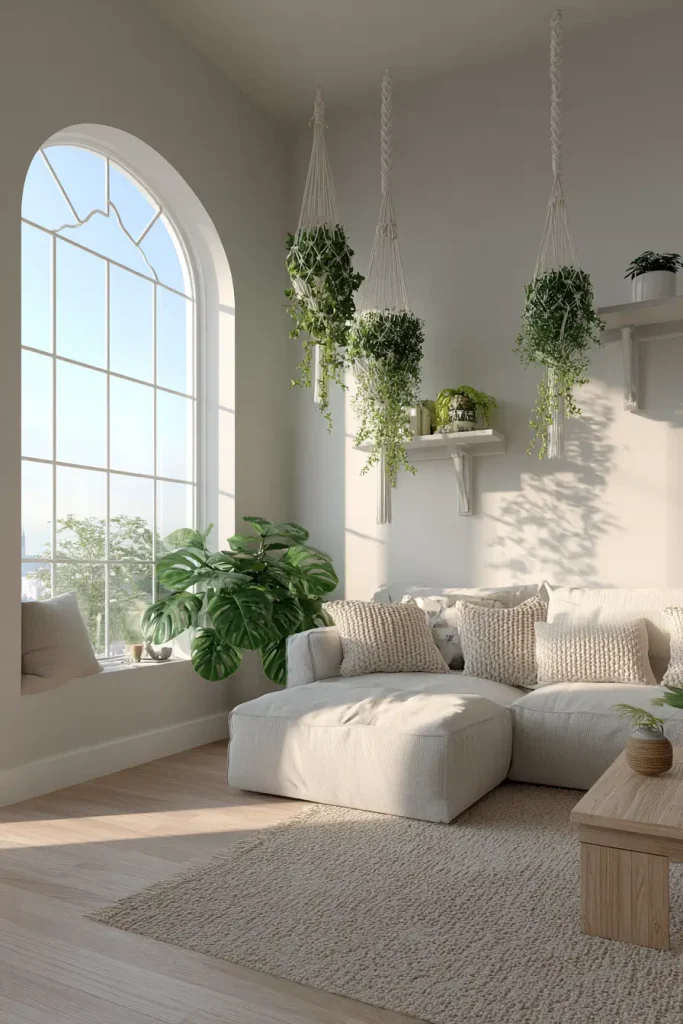
When a small room feels flat or boring, most people think they need more things. Usually what they actually need is more texture.
Texture adds visual richness without adding clutter. A linen throw on the sofa. A woven rug. A ceramic vase. A wood side table. These things make a room feel layered and warm. They do it without taking up space.
A good working formula is three to four textures in one room:
- One soft textile (linen, velvet, cotton)
- One natural material (wood, rattan, jute)
- One smooth surface (ceramic, glass, painted metal)
- One rough or woven element (a basket, a textured pillow, a knit throw)
Avoid shiny or highly reflective surfaces on large pieces. A glossy dining table or a lacquered credenza creates visual noise in a small room. It reflects everything around it. Matte and satin finishes work better for large surfaces.
Throw pillows and blankets are the easiest texture swap. Change them seasonally. You get a refreshed room for almost no money.
Texture also affects how a room feels physically, not just visually. A room with soft surfaces feels safer and calmer than one with hard surfaces everywhere. In a small room, that feeling of comfort matters.
15. Repeat Colors and Materials on Purpose

Here is what separates a room that looks designed from one that looks assembled: repetition.
When you repeat a color, material, or shape three times across a room, it creates visual rhythm. The room looks like someone thought it through. Without repetition, it looks like you bought things one at a time with no plan.
A simple example: black accents. A black lamp base. A black picture frame. A black plant pot. Three black accents spread across the room create a through line. Your eye connects them and reads the room as cohesive.
You do not need a lot of money or a designer to do this. You just need to notice what you already have and repeat it intentionally.
The most common mistake here is mixing too many wood tones. A light pine shelf, a medium walnut coffee table, a dark mahogany side table. Three different wood tones fighting each other. Pick two that are close in tone and stick with them.
Create one simple rule for your room and follow it. For example: all metals in the room will be brushed gold. Or: all upholstery will be linen or linen look. That one rule ties everything together without requiring design expertise.
Repetition is the shortcut to a room that looks considered.
16. Cut Down Your Tech Clutter
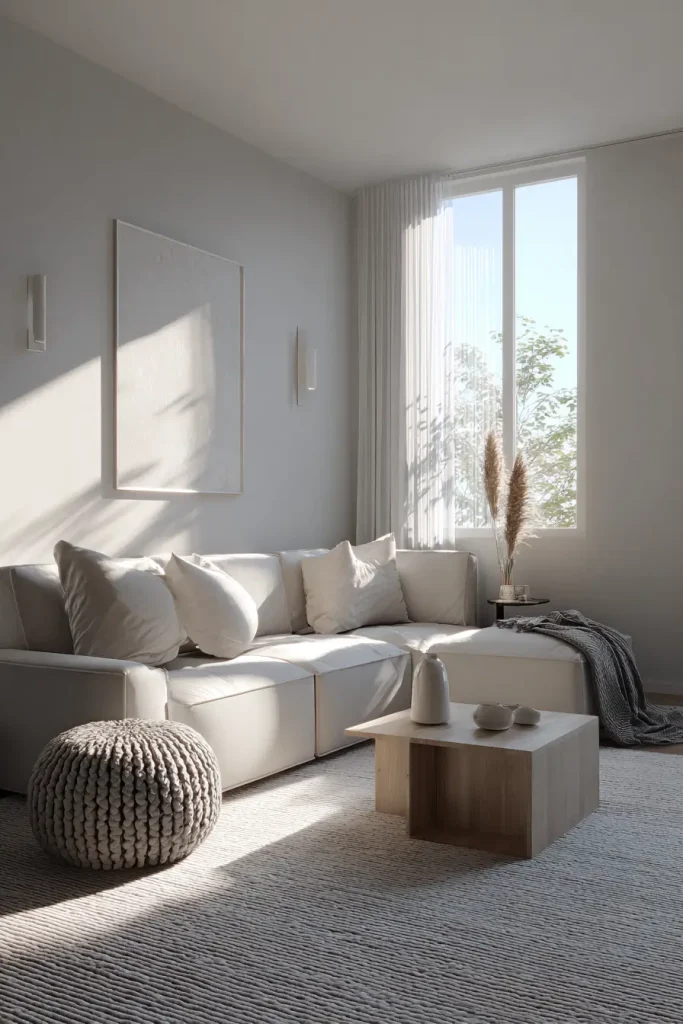
Your TV, your cables, your remote controls, your speaker. Tech is necessary in a living room. But in a small space, it takes up a lot of visual real estate.
Start with your TV size. There is a formula for this. Your viewing distance in inches divided by 1.5 to 2.5 gives you the ideal screen size in inches. So if you sit 8 feet away, that is 96 inches. Divided by 2 is 48 inches. A 50 inch TV is about right. A 75 inch TV in a small room is too much. It takes over the room visually.
Wall mount your TV if possible. Removing the TV stand gives you back a significant amount of floor space. A wall mounted TV also looks intentional. A TV on a stand with cables hanging behind it looks like a college apartment.
Cables are an underrated design problem. One cable management box or a simple cable tray behind your TV solves most of it. Velcro cable ties for the rest. This is a Saturday morning project and the visual difference is immediate.
Wireless speakers or a small soundbar beat a full speaker setup in a small room. They give you good sound without furniture.
Get a small tray or a drawer insert for remote controls. A cluster of remotes on the coffee table is visual noise. Off the surface and out of sight, the room immediately looks cleaner.
17. Make It Feel Like You
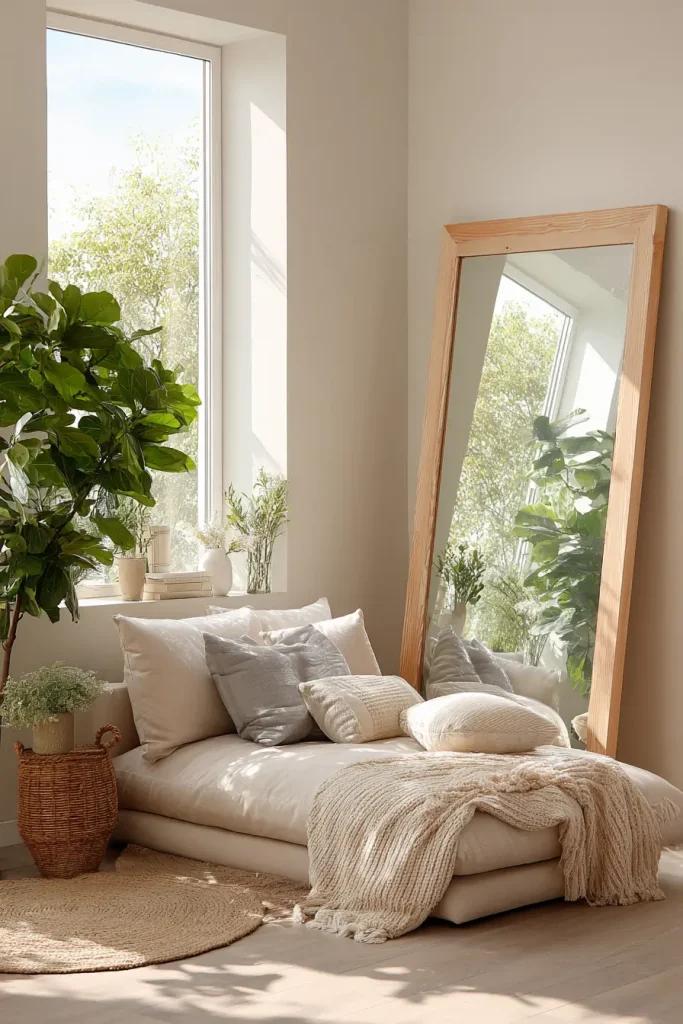
All 16 ideas above are tools. They are starting points. They are not rules you must follow perfectly.
The best small living rooms do not just look designed. They look like someone lives there. Someone specific.
Here is a quick exercise. Pick three objects in your living room that are uniquely yours. Not bought to fill space. Not bought because they looked good in a photo. Three things that actually mean something to you or reflect how you live.
Those three things should be visible. They should have a place of honor. Everything else around them should support them.
Intentional does not mean minimal. An intentional room can have books stacked everywhere if that is who you are. It can have a collection of vintage ceramics or kids’ drawings on the wall. Intentionality just means you chose it. It did not just accumulate.
One of the most practical things you can do: take a photo of your room from the door. Look at it on your phone. Your eye sees things in a photo that it misses in person. What stands out? What looks wrong? What looks right? Edit from there.
Then give yourself two weeks before you make any final decisions. Live in the layout. Sit in the new arrangement. See how the light changes at different times of day. A room reveals itself over time.
Your small living room can be one of the best rooms in your home. Not despite its size. Because of the thought you put into it.
Wrap Up
Small living rooms reward thought more than money.
You do not need more square footage. You need a layout that makes sense, furniture that earns its spot, and a few visual tricks that make the eye feel like the room is bigger than it is.
Pick one idea from this list and do it this week. Just one. See how it changes the room. Then come back and try another.
Small spaces respond quickly to good decisions. And one good decision usually leads to the next.
The best version of your small living room is closer than you think.

- 17 Classy Living Room Ideas for a Cozy Elegant Look - April 23, 2026
- 16 Dark Moody Living Room Ideas That Feel Rich and Warm - April 22, 2026
- 14 Elegant Bedroom Trends for 2026 You’ll Love - April 22, 2026