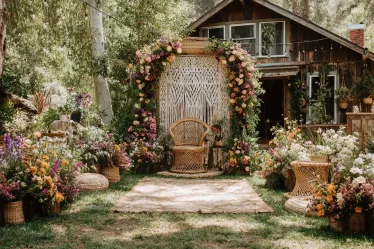
You don’t need a sprawling backyard, perfect soil, or years of experience to grow your own food. In fact, in 2026, the smartest gardens start several feet off the ground.
If you’re reading this, you probably feel stuck. Maybe you tried planting in the ground and spent more time pulling weeds than eating tomatoes. Maybe your yard is mostly clay, or you don’t have a yard at all. Or maybe you’re worried that gardening is too expensive or complicated to start from scratch.
Here’s the good news: raised beds remove almost all of those barriers. They give you control over the soil, make weeding easier, and let you garden in places you never thought possible—even on a balcony.
In this guide, you’ll find 18 raised garden bed ideas that are perfect for beginners. We’ll cover budget builds, small-space solutions, smart designs for 2026, and simple layouts that actually work. By the end, you’ll know exactly which idea fits your space, your budget, and your confidence level.
Let’s get growing. 🌱
1. Choosing Your First Raised Bed: Foundation & Material Ideas

You’re standing at the hardware store, staring at wood, metal, and plastic. Here’s how to pick without regret.
The 2026 Material Check
Cedar and galvanized steel are the top choices right now. Cedar resists rot naturally and lasts 10–15 years. Galvanized steel beds (like the popular modular kits) can last 20 years or more.
A word of caution: Don’t use old railroad ties. They’re often soaked in creosote, a toxic chemical that can leach into soil. Also, if you buy treated wood, look for “food-safe” labels. In 2026, most big-box stores sell safer options, but it pays to double-check.
Prefab vs. DIY
If you’re handy with a saw, you can build a simple 4×8 cedar bed for around $50–$80 in lumber. If you’d rather not mess with tools, kits from brands like Vego Garden or Greenes Fence are reliable. They come with all the hardware and clear instructions.
Depth Matters
- 6 inches deep: Good for shallow-rooted plants like lettuce, herbs, and radishes.
- 12 inches deep: The sweet spot for most vegetables—tomatoes, peppers, beans.
- 18 inches or more: Ideal for root crops (carrots, potatoes) and if you have poor native soil you want to completely replace.
Location, Location, Location
Place your bed where it gets 6–8 hours of direct sun daily. Watch your yard for a day or two. The spot that gets morning sun and afternoon shade is often a winner, especially in hot climates.
Stat: According to the National Gardening Association, 1 in 3 households now grow food, with raised bed sales up 25% since 2024. Steel beds alone have doubled in popularity.
Once you’ve got the box, the real magic happens inside. Let’s look at how to fill it without breaking the bank.
2. Budget-Friendly DIY Raised Bed Ideas (Starting from Scratch)

You don’t need a contractor. Some of the best beds are made from things you’d usually throw away.
1. Cinder Block Beds (No Tools Required)
Stack cinder blocks in a rectangle. No cutting, no screws. The holes in the blocks make perfect pockets for herbs like oregano or marigolds to deter pests. Pro tip: Fill the holes with potting soil, not just gravel.
2. Stock Tanks
Head to a farm supply store and grab a galvanized stock tank. They’re rodent-proof, look great, and hold up for years. Drill a few drainage holes in the bottom, and you’re done. A 2×4-foot tank costs about $80–$120.
3. Hugelkultur Bases

Filling a large bed with soil can cost $150–$300. Instead, fill the bottom third with logs, branches, and leaves. This is called hugelkultur. It saves money, retains moisture, and slowly releases nutrients. Top it with 12 inches of good soil.
4. Straw Bale Gardening
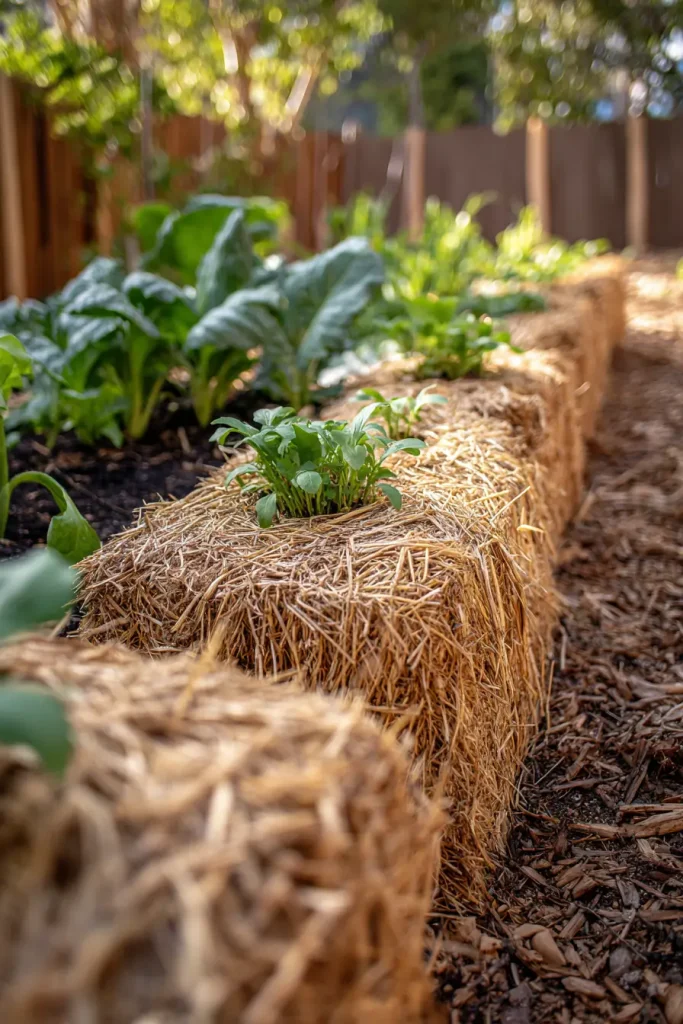
This is the ultimate no-build option. Buy a few straw bales, condition them with water and fertilizer for 10 days, then plant right into the top. By the end of the season, the bale breaks down into compost. Perfect if you’re just testing whether you like gardening.
Now that you’ve saved money on the structure, let’s maximize the space you’ve created.
3. Small Space & Urban Raised Garden Bed Ideas
Think you don’t have enough room? If you have a balcony or a 5×5 patch of sun, you have enough room.
5. Vertical Integration
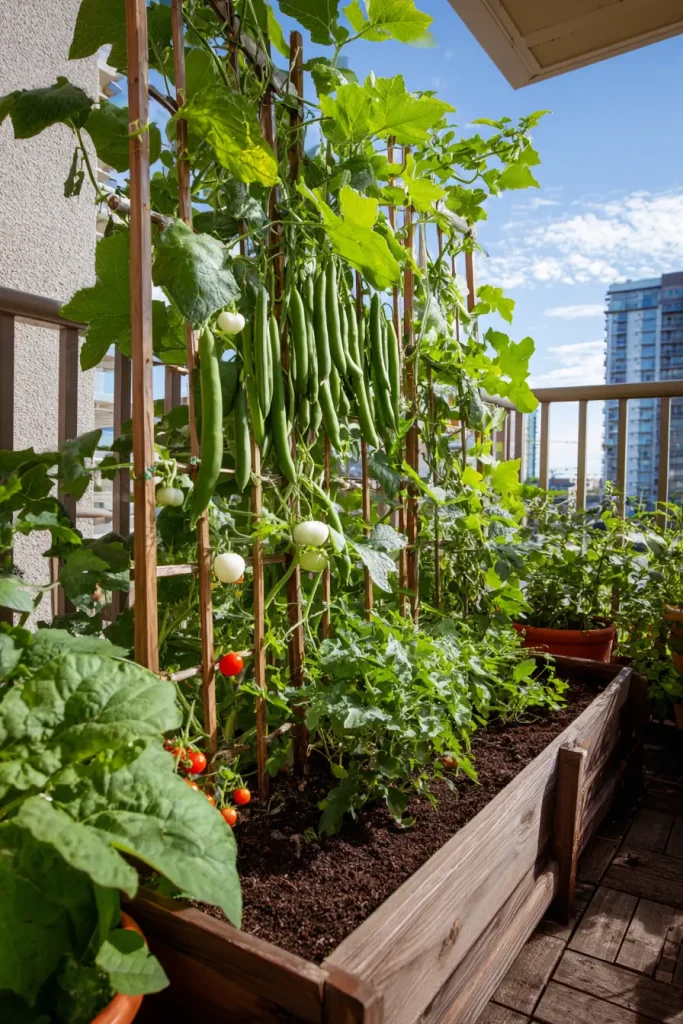
Add a trellis to the north side of your bed. Train cucumbers, pole beans, and indeterminate tomatoes upward. This triples your growing space in the same footprint. Urban farms using vertical methods report yields of up to 20 pounds of produce per square foot.
6. Railroad Gardens

Build narrow beds—2 feet wide by 8 feet long. They fit perfectly along a driveway, a fence line, or even a balcony railing. The narrow width lets you reach the center easily without stepping into the bed.
7. Keyhole Gardens

A circular bed with a compost basket in the center. As you add kitchen scraps to the basket, nutrients seep into the soil. This design is especially smart if you live in a dry area because it conserves water.
8. Mobile Gardens

Build a small bed (2×4 feet) and attach heavy-duty casters. You can roll it to chase the sun or tuck it away when you have guests. Renters love this option because it leaves no trace.
Whether you’re renting or owning, these designs prove that size isn’t a barrier.
4. Innovative & Smart Design Ideas for 2026
Gardening in 2026 isn’t just about putting seeds in dirt. It’s about working smarter with climate swings.
9. Self-Watering (Sub-Irrigated) Planters

These have a water reservoir at the bottom. Wicking material draws moisture up to the roots. You can buy SIP kits or build one using two plastic storage bins. They reduce watering frequency by up to 80% —a huge win for busy beginners.
10. The “Lasagna” Bed

Also called sheet mulching. Instead of digging up grass, lay down cardboard, then layers of compost, leaves, and straw. Water it well and wait a few weeks. The grass underneath dies and turns into soil. No tilling required.
11. Cold Frames & Hoops

Extend your season by adding PVC hoops over the bed. Throw on frost cloth in early spring or late fall. You can start planting cool-weather crops like kale and spinach a month earlier than your neighbors.
12. Pollinator Integration
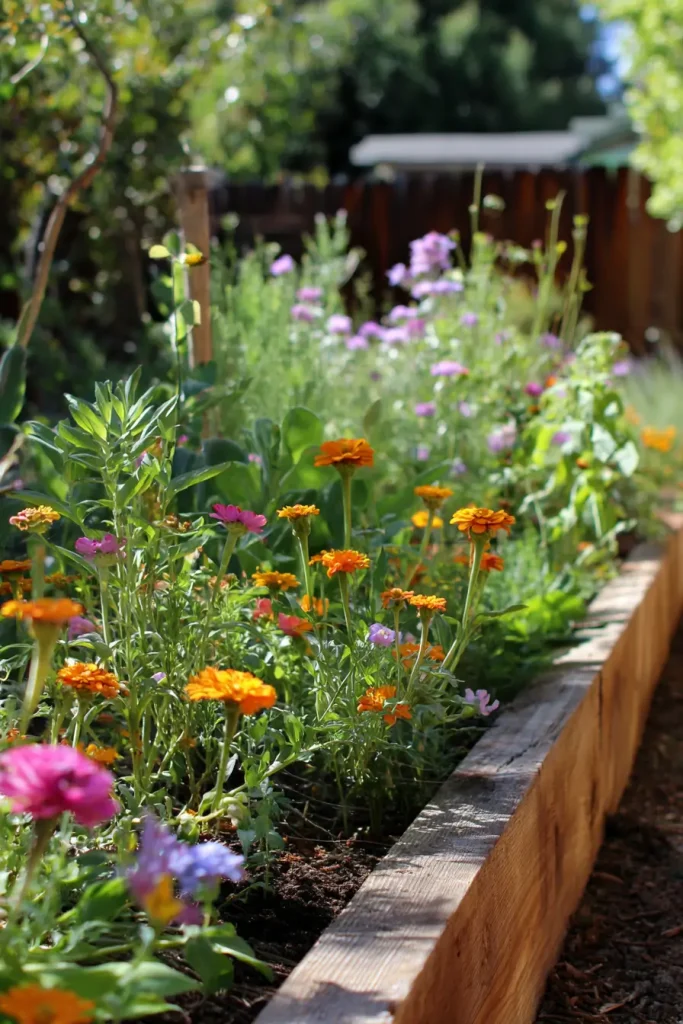
Leave a strip of native flowers along one edge of your bed. Bees and other pollinators will visit, and studies show vegetable yields can increase by 30% with good pollinator activity. Plus, it looks beautiful.
With these smart designs, you’re setting up a system that requires less work, not more.
5. Layout & Planting Ideas for Beginners
The structure is built, the soil is in. Now, how do you actually arrange the plants so they don’t strangle each other?
13. The 4×4 Square Foot Grid

Divide your bed into 1-foot squares. In each square, plant a specific number of crops:
- 1 tomato or pepper
- 4 lettuce heads
- 9 bush beans
- 16 carrots or radishes
This method yields 100% of the harvest in 20% of the space compared to traditional rows.
14. Companion Planting Layouts
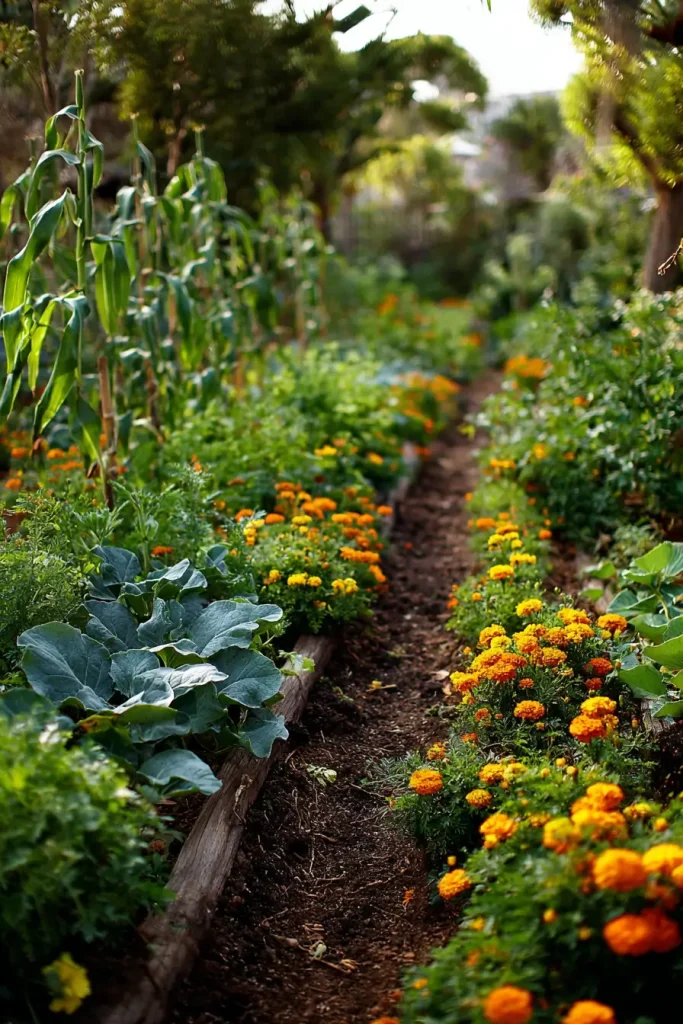
Try the “Three Sisters”: corn, beans, and squash. Corn provides a stalk for beans to climb. Beans fix nitrogen in the soil. Squash shades the ground, preventing weeds. And plant marigolds around the edges—they repel many common pests.
15. Succession Planting

Don’t leave empty spaces. When you harvest radishes (30 days), plant something new like bush beans in that same spot. Pair fast crops (lettuce, arugula) between slow crops (broccoli, peppers). You’ll get multiple harvests from one bed.
16. Accessibility Focus
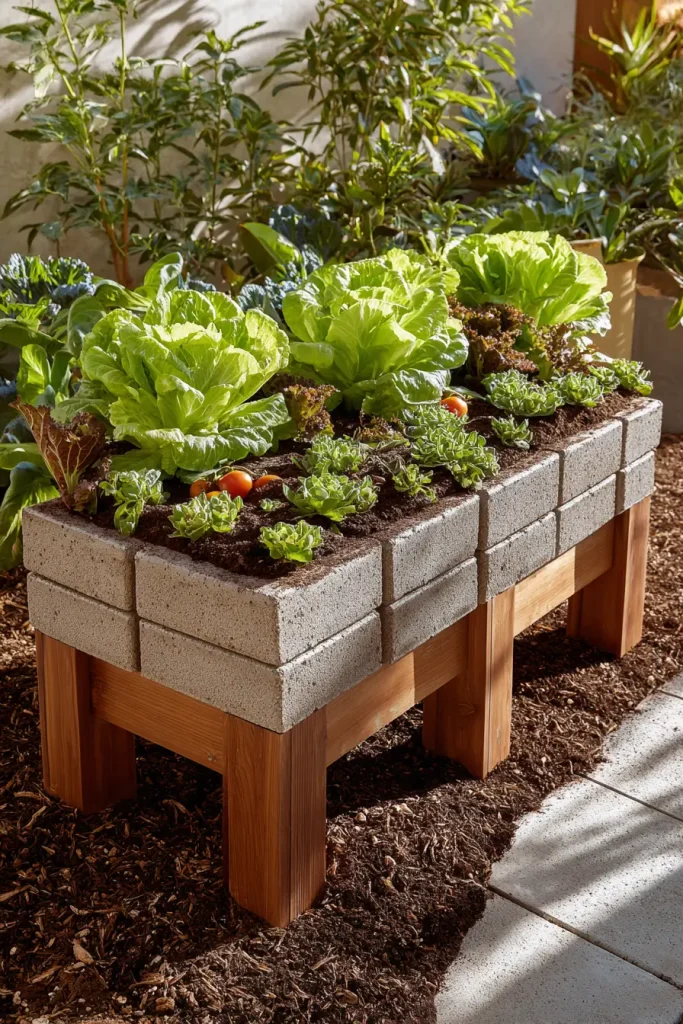
If bending is hard, build beds at waist height. You can use stacked cinder blocks, buy elevated metal beds, or add wooden legs. Gardening should be a joy, not a pain in the back.
By using these layouts, you’ll harvest more than someone with a yard three times the size.
6. Two More Ideas to Round Out the 18
We’ve covered the core ideas. Here are two more to give you a full set of 18.
17. Pallet Gardens

Find a heat-treated wooden pallet (look for the “HT” stamp). Stand it upright, staple landscape fabric to the back, fill with soil, and plant herbs in the slats. It’s a vertical garden that costs almost nothing.
18. Wicking Tub for Patios

If you only have a tiny patio, use a single large plastic tub (like a storage tote) and convert it into a self-wicking planter. Drill holes, add a perforated pipe for watering, and fill with soil. It’s a mini raised bed that can grow a surprising amount of food.
Conclusion
Starting a garden from scratch can feel overwhelming, but a raised bed removes the hardest parts: bad soil, back-breaking weeding, and the fear of failure.
We’ve walked through 18 raised garden bed ideas—from budget-friendly cinder blocks and stock tanks to space-saving vertical trellises and smart self-watering designs. You’ve seen how to pick materials that last, fill beds without spending a fortune, and arrange plants for the biggest harvest.
Now it’s your turn. Pick one idea from this list—just one. The one that fits your space, your budget, and your energy level. Set aside a weekend, gather the materials, and build it. Then plant something simple: lettuce, basil, or a cherry tomato.
You’ll be surprised how quickly that small patch of soil turns into a thriving oasis.
Ready to dig in? Explore these raised garden bed ideas and turn that patch of dirt—or patio—into something that feeds you.

- 17 Classy Living Room Ideas for a Cozy Elegant Look - April 23, 2026
- 16 Dark Moody Living Room Ideas That Feel Rich and Warm - April 22, 2026
- 14 Elegant Bedroom Trends for 2026 You’ll Love - April 22, 2026