
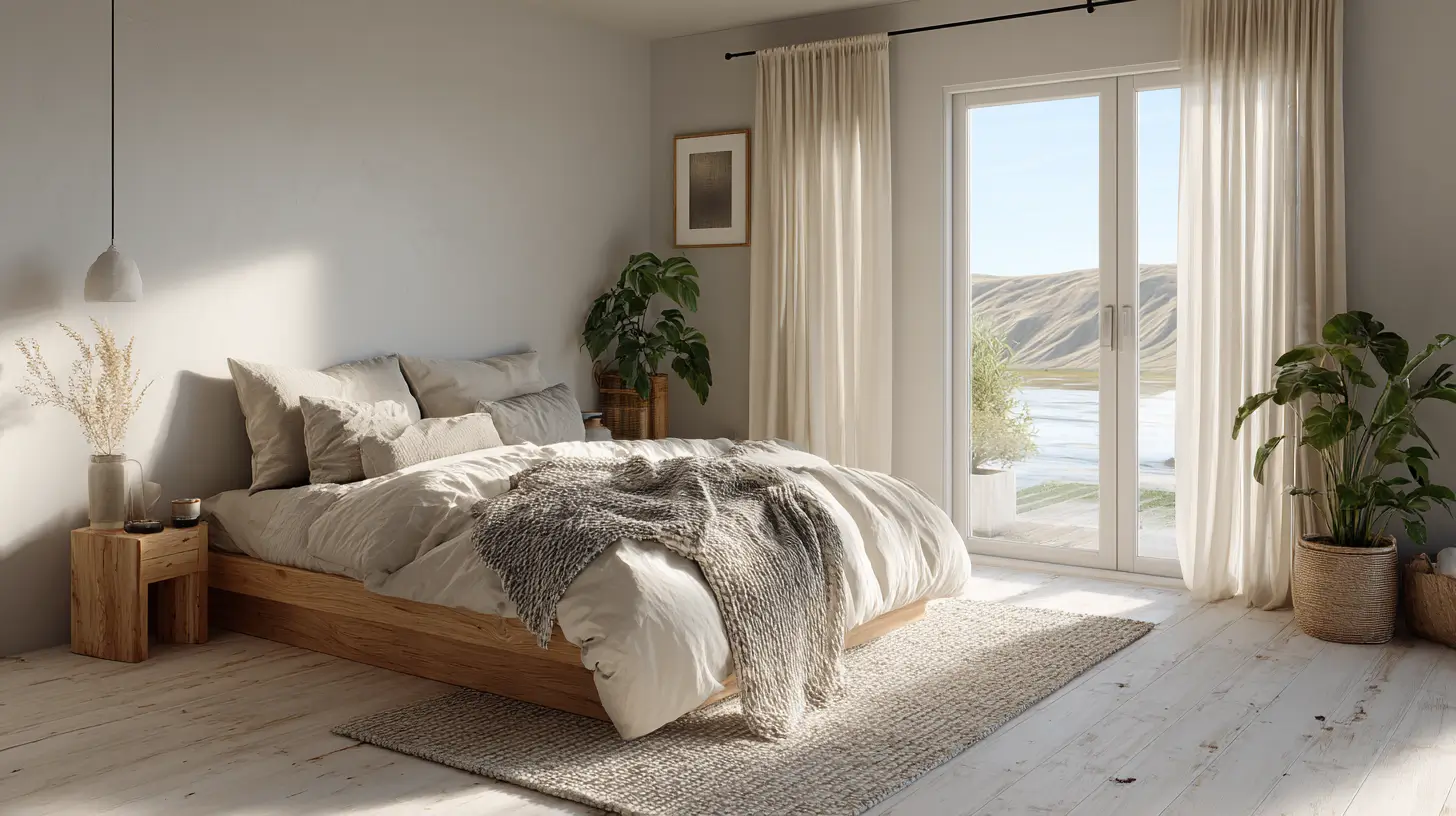
Introduction
In a world of constant notifications and digital noise, your bedroom shouldn’t feel like another screen. It should feel like an off-button.
You’ve probably tried to create a peaceful space before. Maybe you painted everything white. Maybe you bought minimalist furniture. But something still felt off. The room felt cold. Or sterile. Or impossible to keep looking “perfect” when real life happened—cables appeared, laundry piled up, and the calm vibe slipped away.
Here’s what nobody tells you: true Scandinavian design for 2026 isn’t about deprivation. It’s not about owning nothing or living in a showroom. It’s about curation. You’ll learn how to layer textures, integrate what we call “soft tech,” and use biophilic elements to create a space that feels both serene and functional.
These Scandinavian bedroom ideas work for real people with real lives. Let’s get started.
1. Start With a Muted, Earthy Palette (Not Just White)

That stark white wall isn’t doing you any favors.
For years, people thought Scandinavian style meant blinding white rooms. But the 2026 approach is warmer. Think mushroom, terracotta, slate blue, and sage green. These colors calm your nervous system instead of screaming “sterile hospital room.”
Here’s a simple formula to follow: the 60-30-10 rule. Use 60% neutral base (warm beige or greige), 30% earthy secondary (like sage or clay), and 10% natural accent (wood tones or black).
Stat: According to the 2026 Houzz Interior Design Trends Report, searches for “earthy neutral paint colors” increased by 40% year-over-year, overtaking “pure white.”
Instead of “Pure White” (SW 7007), try “Ancient Marble” (SW 6162) or “Accessible Beige” (SW 7036). These warm bases make your room feel like a hug, not a lab.
2. Layer Organic Textures for Tactile Warmth

A room with one texture feels flat. A room with three textures feels alive.
This is the Swedish concept of lagom—not too little, not too much. You want enough texture to feel cozy, but not so much that it feels chaotic.
The essential texture trio:
- Sheepskin (faux is fine) – drape it over the foot of the bed or a chair
- Linen – use 100% European flax sheets; skip ironing for that lived-in look
- Chunky-knit wool – add one throw, not five
Stat: A 2025 study in the Journal of Interior Psychology found that rooms with three or more distinct textures lowered cortisol levels by 15% compared to rooms with uniform textures.
The key? Layer, don’t pile. One sheepskin, one linen duvet, one chunky throw. That’s enough.
3. Invest in Low, Solid-Wood Furniture

Look at your bed frame. How tall is it?
Low-profile furniture does something interesting. It makes your ceiling look higher. More importantly, it grounds the space. Your eye rests instead of jumping around.
Expert Quote: “Low-profile furniture grounds a space,” says Aino Heinäsuo, a designer at the Finnish design firm Studio Lokal. “It forces the eye to rest and creates a sense of stability, which is essential for sleep.”
Solid wood matters more than you think. Particle board and MDF off-gas chemicals. Oak, ash, and pine don’t. Plus, solid wood lasts. You can sand it, repair it, and keep it for decades.
Consider the IKEA Hemnes series (solid pine) versus the Malm series (particle board). One you pass down. The other ends up on the curb.
Your nightstands don’t need to match perfectly. But they should match in tone. Two wood nightstands in similar shades create harmony without looking like a furniture catalog.
4. Embrace “Soft Tech” to Hide the Clutter
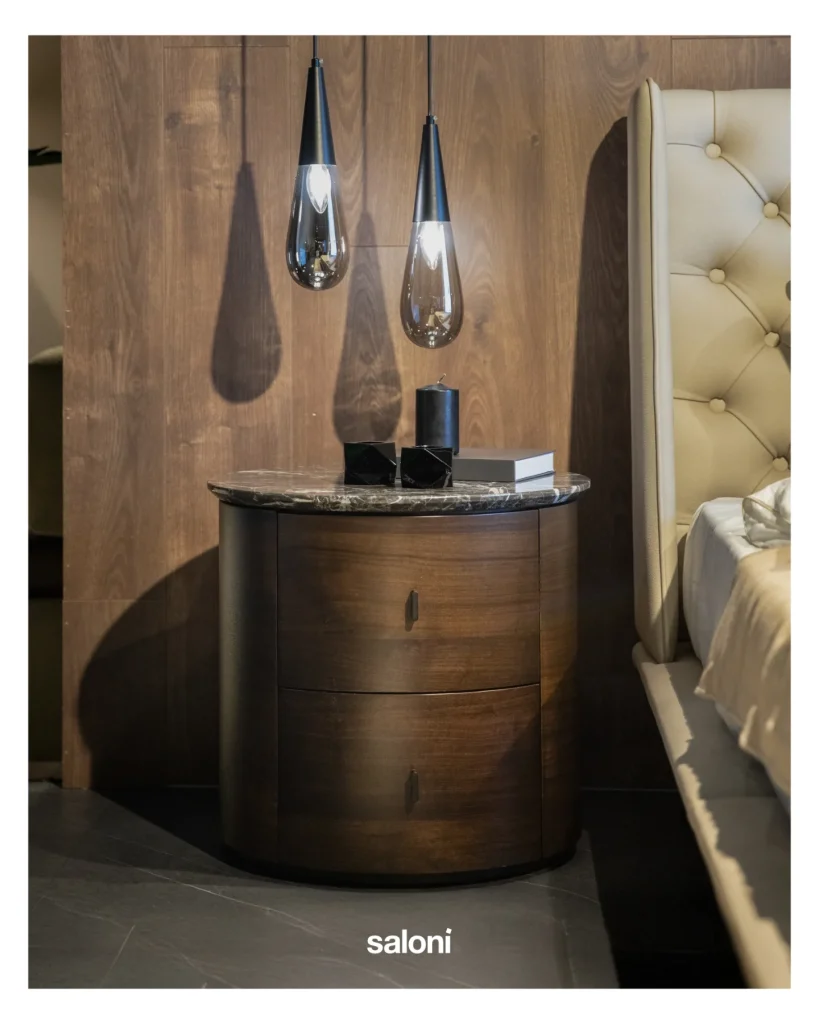
Let’s be honest. Your nightstand looks like a charging octopus.
Phones, watches, tablets, cords—they’re everywhere. It’s the 2026 version of clutter, and it’s ruining your sleep.
The Nordic approach to technology isn’t to banish it. That’s impossible. It’s to domesticate it. Hide it. Make it behave.
Stat: A 2026 Wirecutter survey noted that 68% of users find visible cords to be the number one disruptor of bedroom tranquility.
Here’s what works:
- Charging drawers – drill a hole in the back of your nightstand drawer and run cords inside
- Cord management boxes – the BlueLounge CableBox hides everything
- Leather cord ties – simple, cheap, and they look intentional
You can do this tonight for under $20. Buy some leather ties on Amazon or grab a small box from any hardware store. Your brain will thank you.
5. Use Black as an Anchoring Accent

Black in a calm bedroom? Yes. Here’s why.
Scandinavian design uses black not to feel dark, but to create contrast and depth. Without dark accents, a room feels floaty and unfinished.
But you have to use it right. The rule of three: black accents should appear at least three times in the room to look intentional.
Where to put it:
- Window frames
- Lamp hardware
- Thin photo frames
- A single piece of pottery
Example: The “Swedish Elegance” trend uses matte black window hardware against light walls to frame the outdoor view like a piece of art. Simple. Effective.
Don’t overdo it. Three small touches are plenty.
6. Maximize Natural Light with Reflective Surfaces
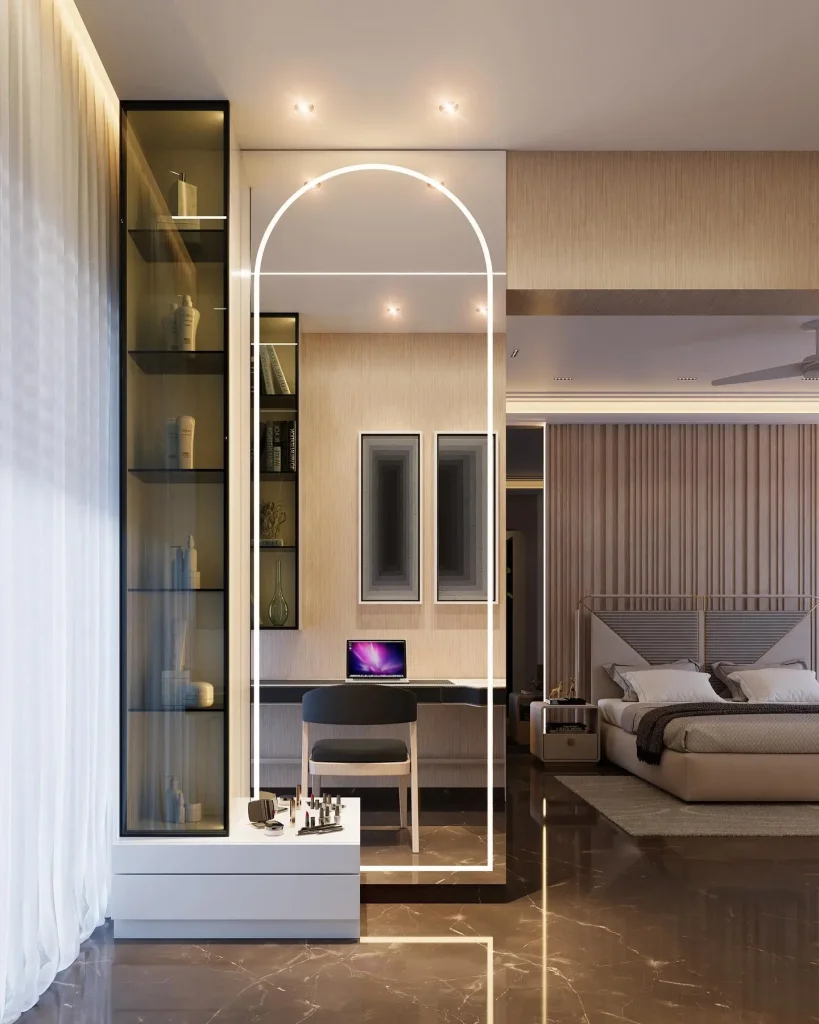
Nordic countries have long, dark winters. So Scandinavians learned to squeeze every drop of light out of their spaces.
You can do the same, even if you don’t live in Sweden.
Stat: According to the Velux “Healthy Homes” Barometer 2025, bedrooms with optimized daylight exposure correlate with 20% faster sleep onset.
Two moves make a huge difference:
- Place mirrors opposite windows – this bounces light deeper into the room
- Ditch heavy drapes – use sheer linen curtains or bamboo blinds instead
Your goal is an airy atmosphere. Light should move through the space, not get trapped by heavy fabric.
7. Introduce Biophilic Elements (Beyond a Fiddle Leaf Fig)

Plants are great. But what if you can’t keep them alive?
The 2026 trend is “biophilic by proxy.” That means using nature-inspired materials even when plants aren’t an option. Wool, stone, clay, wood—these materials mimic nature’s patterns and create a subconscious sense of safety.
Expert Quote: “Biophilia isn’t just about greenery,” notes biophilic designer Oliver Heath. “It’s about using materials that mimic nature’s patterns—like the grain in wood or the veining in marble—to create a subconscious sense of safety.”
If you do want plants, choose low-maintenance options:
- Snake plant – releases oxygen at night
- ZZ plant – thrives on neglect
Add botanical prints or landscape photography to reinforce the connection. Your brain reads these patterns as “safe” even if you don’t realize it.
8. Curate a “Slow” Gallery Wall
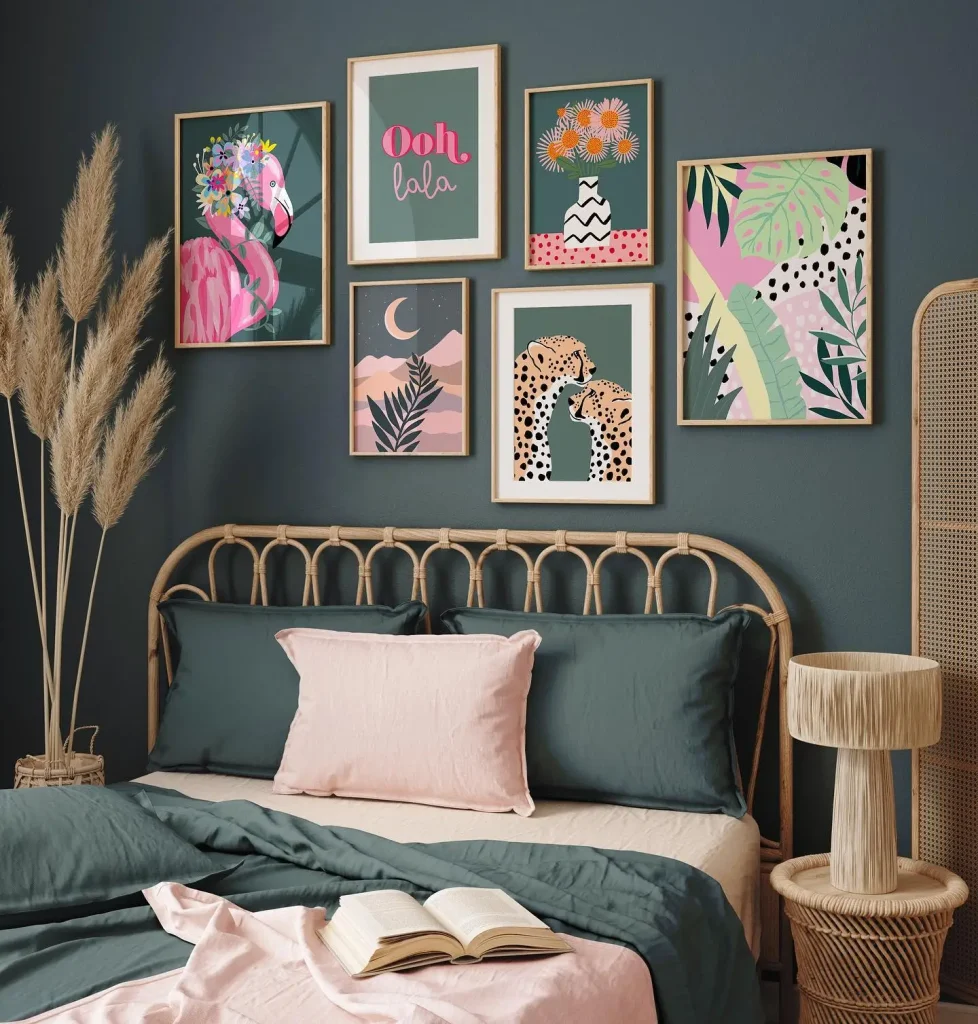
Mass-produced art from big box stores tells a story. It says, “I needed something to fill this wall.”
Your bedroom deserves better.
Stat: Etsy’s 2026 Trends Report highlights a 35% increase in searches for “custom family portrait art” and “local artisan prints” for bedroom spaces.
A “slow” gallery wall means:
- Personal photos
- Children’s art
- Local prints from artists in your area
- Vintage finds from flea markets
Use the same frame color—black or natural oak—to unify disparate pieces. This keeps the wall from looking like a collage of chaos.
Two layout options:
- Grid – clean, modern, organized
- Salon-style – eclectic, layered, more relaxed
Pick what matches your personality.
9. Prioritize a “Landing Strip” for Mental Clarity

Clutter accumulates on dressers. Keys, wallet, phone, random receipts. By bedtime, you’ve got a pile staring at you.
This matters more than you think. Marie Kondo was onto something. A clear surface leads to a clear mind before sleep.
The solution is simple: a designated valet tray.
Get a leather tray, a ceramic dish, or a small wooden bowl. Put it near your door or on your dresser. Every night, keys go in. Wallet goes in. Jewelry goes in.
That’s it. One small habit. One clear surface. One calmer mind.
10. Select Statement Lighting with Dimmers
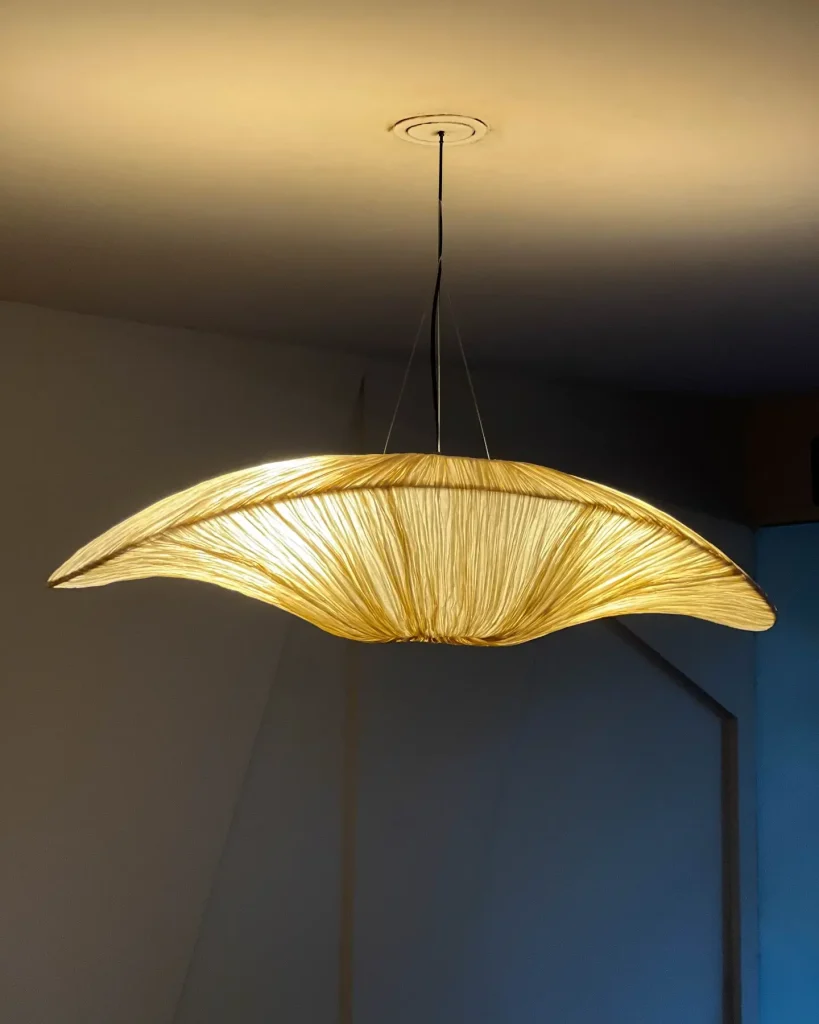
Overhead lighting is the enemy of a calm bedroom.
Think about it. You walk into your room and flick on that bright ceiling light. It’s jarring. It wakes you up. It tells your brain “time to be alert” when you need “time to wind down.”
Stat: The American Academy of Sleep Medicine recommends avoiding blue-light spectrum bulbs two hours before bed.
Here’s the fix: three-point lighting with dimmers.
- Ambient – ceiling light on a dimmer switch
- Task – bedside lamps for reading
- Accent – a picture light or small sconce for depth
Use bulbs with 2700k (Kelvin) or lower. That’s warm, golden light. Woven pendants in rattan or paper soften the light even more.
Pro tip: If you can’t rewire your ceiling light, plug-in sconces are a game-changer. They mount to the wall but plug into an outlet. No electrician needed.
11. Incorporate Handmade and Vintage Finds

A room full of brand-new furniture feels like a hotel. Nice, but not yours.
Scandinavian design embraces mångfald—diversity. Mix old with new. Add pieces with history.
Stat: ThredUp’s 2026 Resale Report indicates that 45% of millennials now prioritize buying used home goods specifically for the “unique, curated look.”
Where to look:
- Local flea markets
- Estate sales
- Facebook Marketplace
- Your grandparents’ basement
A vintage pottery vase. A mid-century stool. An old mirror with character. These pieces tell a story. They also make your space more sustainable.
One vintage find in a room changes everything. It adds warmth that new furniture can’t replicate.
12. Create a Cozy Nook (Even in a Small Space)

The Danes have a word for this: kosekrog. It means “cozy corner.”
Every bedroom needs a spot to sit that isn’t the bed. A place to put on socks. A place to read for five minutes. A place to just be.
If you have space, add a small chair, a pouf, a soft throw, and a stack of books.
If you don’t have floor space, here’s a 2026 trick: floor cushions. The IKEA “Sinnerlig” cushion paired with a wall-mounted sconce creates a reading nook without a footprint.
A cozy nook changes how you use your room. Instead of only sleeping there, you start living there.
13. Choose Unfussy Window Treatments

Heavy drapes collect dust. They block light. They feel old-fashioned.
Simple window treatments do three things: let light in, provide privacy, and look clean.
Options for 2026:
- Roller blinds in natural fibers – bamboo, jute, or linen
- Linen Roman shades – soft, textured, elegant
- Sheer panels – light, airy, effortless
But here’s the catch: blackout functionality still matters for sleep hygiene. The solution? “Top-down/bottom-up” cellular shades. You can lower them from the top to let light in while keeping the bottom closed for privacy. Smart. Simple. Very Scandinavian.
14. Add a Splash of Color with Bedding Only

Walls are expensive to repaint. Bedding is easy to swap.
This is the Scandinavian secret to seasonal design. Keep your walls neutral. Change your bedding when you want a new look.
Stat: Google Shopping data from Q1 2026 shows a 55% increase in searches for “terracotta linen duvet cover” compared to “grey duvet cover.”
Two trending colors for 2026:
- Terracotta – warmth, earthiness, comfort
- Eucalyptus – calm, freshness, subtle green
For a streamlined look, match your pillowcases to your duvet cover. Avoid mixing patterns unless you’re confident. Simplicity is more calming than complexity.
15. Incorporate Scent Memory (The Forgotten Sense)
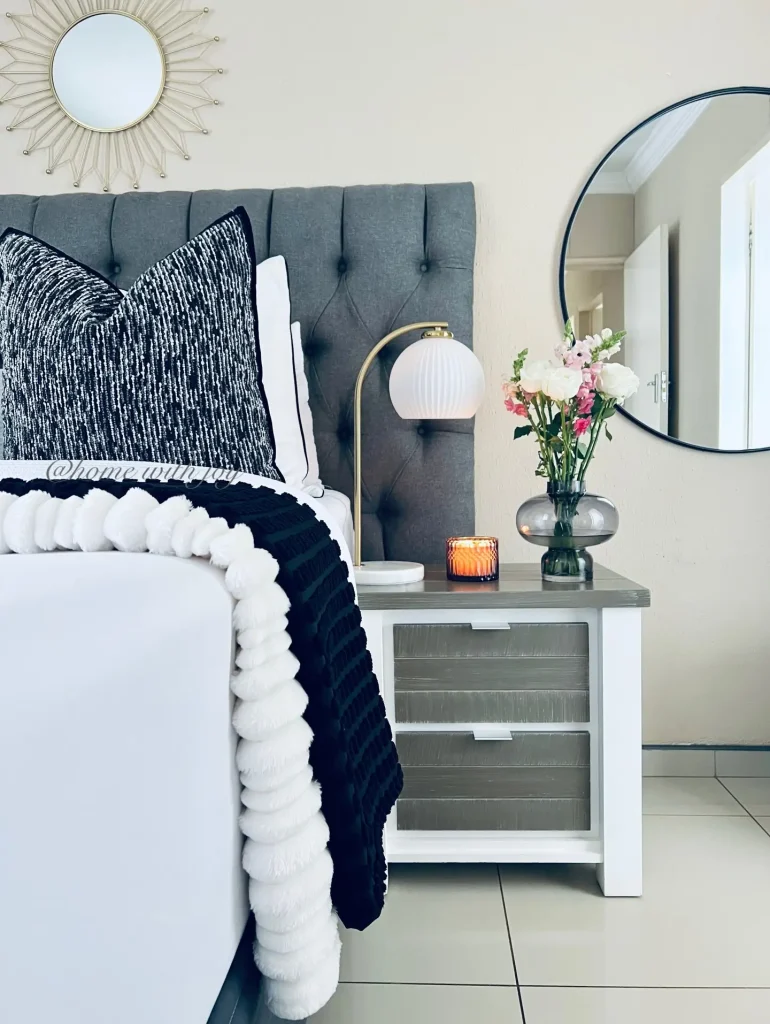
You’ve touched on texture. You’ve addressed light. But what about smell?
Scandinavian design takes olfactory seriously. The right scent creates a Pavlovian trigger for relaxation. Walk into your bedroom, smell cedarwood, and your brain starts preparing for sleep.
Expert Quote: “Scent is the fastest pathway to the limbic system, which controls emotion and memory,” says neuroscientist Dr. Rachel Herz. “Using a consistent, natural scent like birch or pine in the bedroom can create a Pavlovian trigger for relaxation.”
What to use:
- Beeswax candles – they purify air while burning
- Dried lavender bundles – simple, natural, no flame needed
- Essential oil diffuser – cedarwood or chamomile works best
Avoid synthetic plug-ins. They’re chemical cocktails that don’t actually relax you. Stick with natural options.
16. Hide the Bed (or Make It the Focal Point)
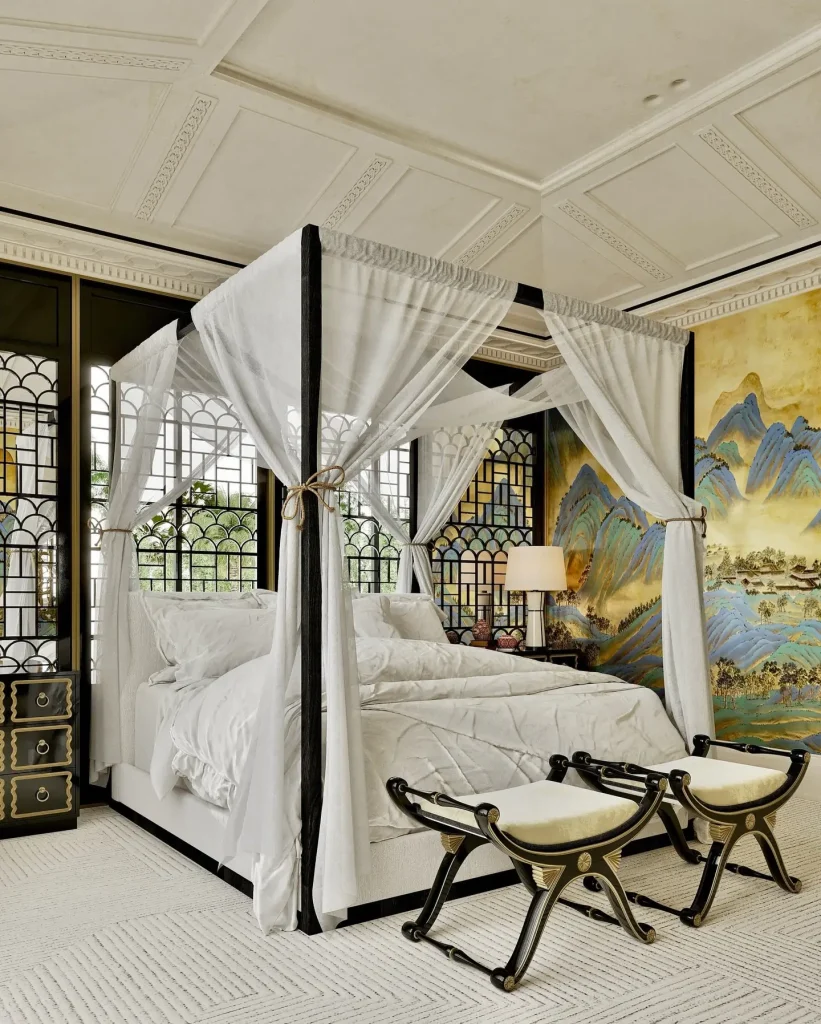
A bed that feels exposed doesn’t feel safe. That’s biology.
The 2026 trend is “sleep huts” or modern canopy beds. But you don’t need a full canopy. You just need to define your sleep zone.
Options:
- A large-scale headboard that anchors the room
- A canopy bed frame without heavy drapes (just the frame creates the cocoon effect)
- Positioning the bed against a solid wall, not under a window
Example: The IKEA “BRIMNES” headboard with integrated storage is a modern take on classic Scandinavian functionalism. It anchors the bed and adds storage without looking bulky.
The psychological benefit of “cocooning” is real. When your sleep zone feels defined, you sleep deeper.
17. Use Open Storage Sparingly

Open wardrobes look great on Pinterest.
In real life? They look like a mess unless you’re a professional organizer with unlimited time.
Stat: A Real Simple survey found that 80% of respondents found open closet systems to be “stress-inducing” unless they were impeccably organized.
Here’s the reality: closed storage is the Scandinavian secret to calm. Doors hide chaos.
If you must use open storage (like the IKEA “ELVARLI” system), only store items that look uniform. All white shirts. All folded KonMari style. No random colors peeking out.
For most people, a closed wardrobe or dresser is the better choice.
18. Finish With Functional Decorative Objects
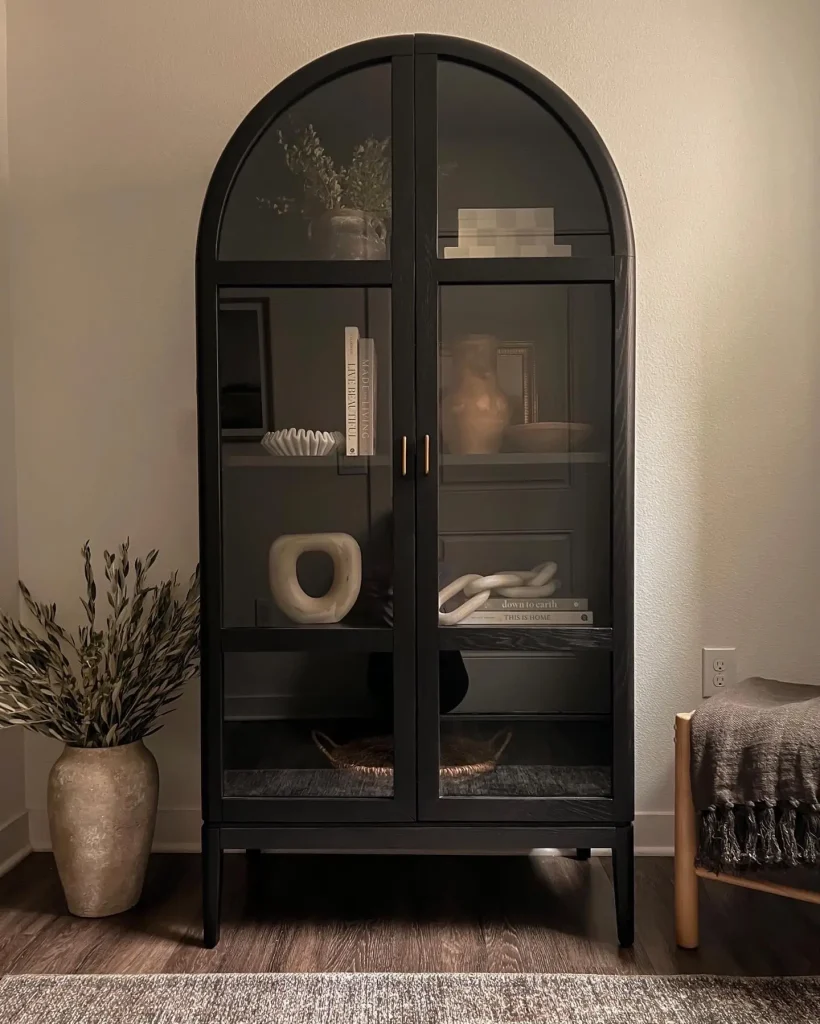
Here’s a hard truth: decorative objects with no function are just clutter.
Every item in your room should serve a purpose. And “looking beautiful” counts as a purpose. But that’s it. No “just because” trinkets.
The rule of three for surfaces: a book, a candle, a small vase. That’s enough.
Example: Instead of a collection of decorative balls (seriously, why do those exist?), use a stack of your favorite poetry books, a ceramic vessel that holds your jewelry, and a single seasonal branch in a vase.
Every object earns its place. Beauty is a purpose. But if it’s not beautiful and useful, reconsider it.
Conclusion
Scandinavian design for 2026 isn’t about owning nothing. It’s about owning the right things—things that support rest, function, and calm.
Start small. Swap your light bulbs for warmer tones tonight. Add a single sheepskin throw this weekend. Clear one surface. Choose one idea from this list and try it.
You don’t need to remodel your whole room. You just need to make better choices, one at a time.
With these 18 Scandinavian bedroom ideas, you’re not just decorating. You’re designing a sanctuary for the years to come. Pick one. Start today. And give yourself permission to sleep better.

- 17 Classy Living Room Ideas for a Cozy Elegant Look - April 23, 2026
- 16 Dark Moody Living Room Ideas That Feel Rich and Warm - April 22, 2026
- 14 Elegant Bedroom Trends for 2026 You’ll Love - April 22, 2026

