
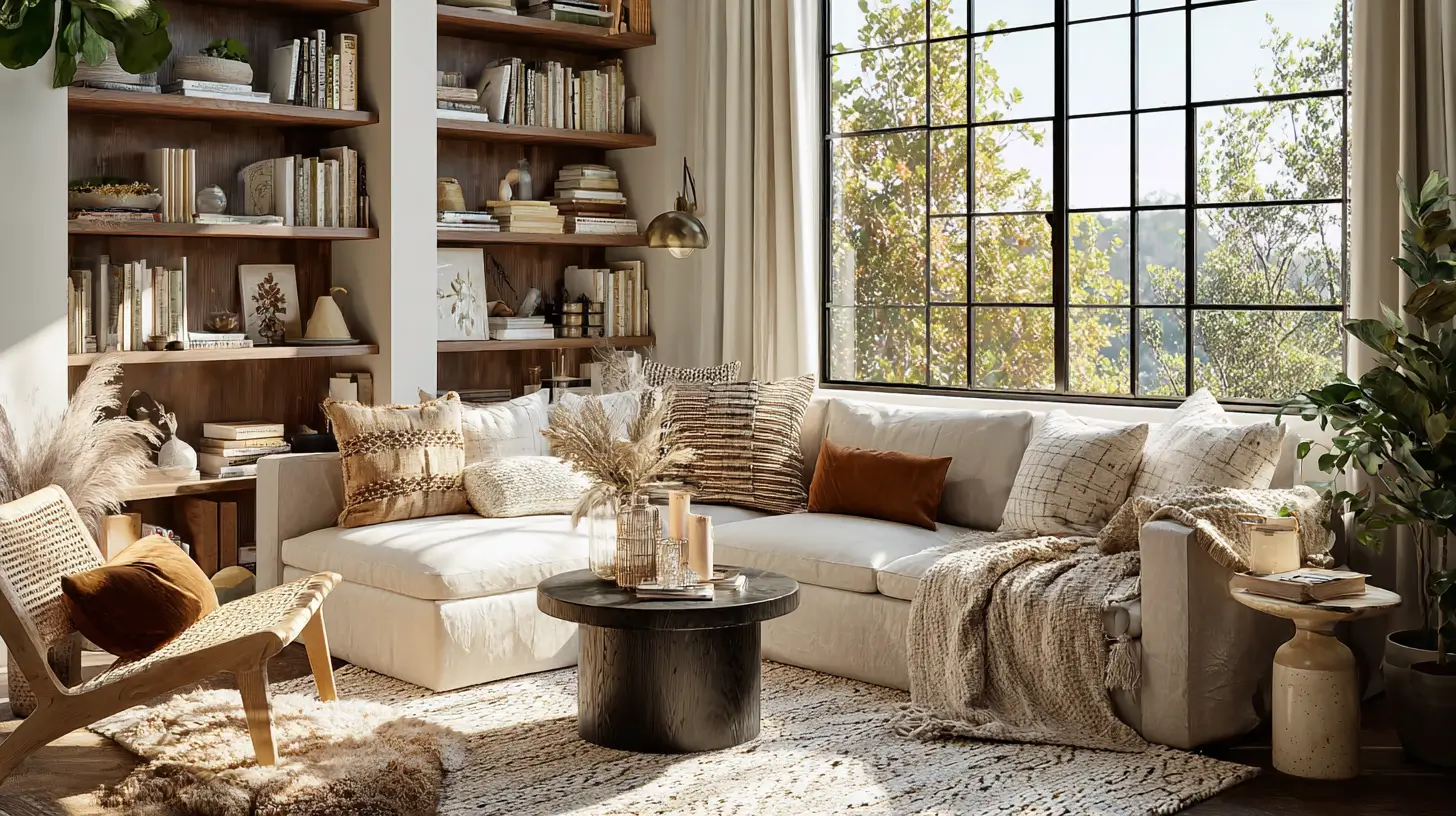
You don’t need a credit card or a trip to the furniture store to fall in love with your living room again.
If you’re reading this, you’ve probably been staring at the same layout, the same clutter, and the same dusty accessories for months. You feel like you need a renovation or a shopping spree to feel good about your space. But your budget—or your commitment to sustainability says no.
Good news: a fresh look doesn’t have to cost a single dollar.
In this guide, you’ll discover 15 actionable, immediate ways to transform your living room using only what you already own. We’ll cover layout psychology, styling tricks used by interior designers, and how to change the energy of a room without spending a cent. These living room refresh ideas work for renters and homeowners alike. Think of it as a budget living room makeover that proves no-cost home decor is not only possible—it often looks better than buying new.
Let’s get started.
The “Ground-Up” Layout Reset

Take a photo of your living room right now. I’ll wait. Now, cover the bottom half of the photo. See how the floor looks? If it looks like a waiting room with everything pressed against the walls, it’s time for a radical reset.
Most people push furniture to the walls thinking it makes the room bigger. Actually, it does the opposite. It leaves a dead zone in the middle and makes the space feel like a hallway.
Float your furniture.

Pull the sofa six inches off the wall. You’ll be surprised how that small move makes the room feel larger and more intentional. Then create conversation zones. Instead of lining everything up, place armchairs at an angle. Face seating toward each other, not the TV.
Check your traffic flow. You should have at least 30 inches of clear path to move around. If you’re squeezing past the coffee table, shift things.
Try a new focal point. If your room has a fireplace or a large window, turn your sofa to face that instead of the TV. You might find the room feels calmer and more balanced.
Before you strain your back, test this on paper: draw a quick floor plan. If it works, push. You’ve just reclaimed square footage you didn’t know you had.
The 30-Minute Declutter Detox

Clutter isn’t just visual noise. According to researchers at Princeton University, clutter competes for your attention and actually raises cortisol levels. That’s the stress hormone. So a messy room makes you feel anxious, even if you don’t realize it.
Here’s the fix: set a timer for 30 minutes. Grab a trash bag, a basket, and a microfiber cloth.
Clear every horizontal surface:

Coffee table, side tables, TV stand, bookshelves. Put everything in the basket. Now wipe each surface clean.
Before you put items back, edit them. Follow the “one-in, one-out” rule: for every decorative object you place, hide or donate one that was there before. Aim to leave about 30% of each surface empty. That negative space lets your eyes rest.
Hide the tech:
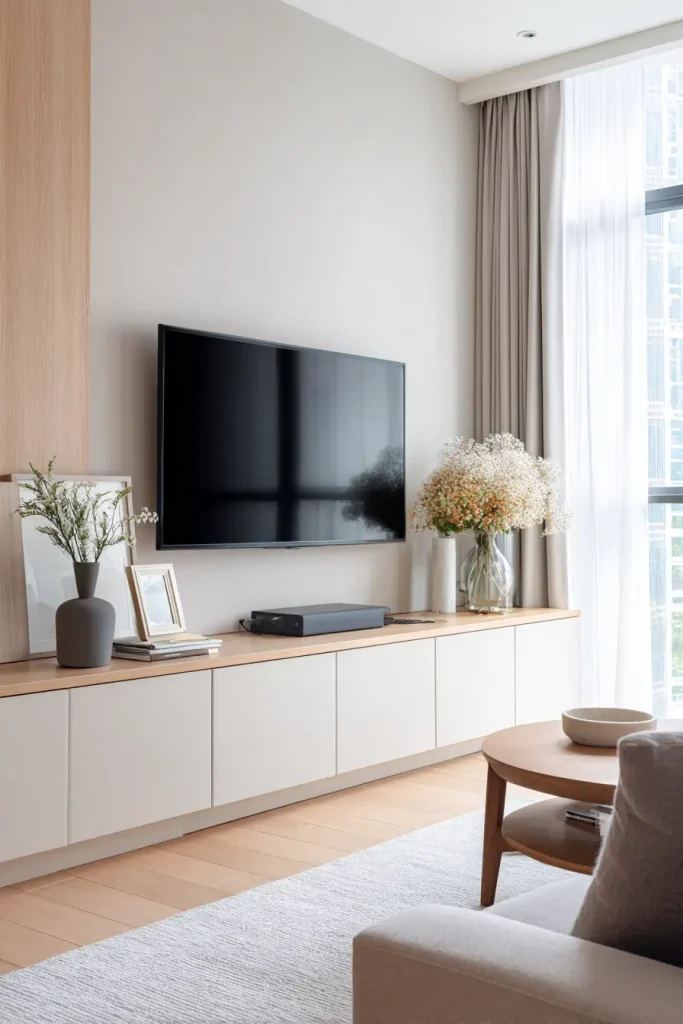
Those tangled cords behind the TV? Use binder clips or washi tape to bundle them. If you have a media console, close the doors when the TV is off.
When the timer goes off, stop. You don’t need to become a minimalist. You just need to be intentional. The visible floor space alone will feel like a new room. This is one of the most powerful declutter living room tips you’ll ever use.
Swap, Don’t Shop: The Accessory Exchange

Your house isn’t a museum. It’s a collection of resources. The best “new” decor is often hiding in the next room over.
Grab a laundry basket and walk through your home. Look for things you love but have grown used to: a mirror in the hallway, a throw blanket in the guest room, a ceramic vase in the kitchen. Put them in the basket.
Now bring them to your living room and experiment.
Swap textiles:
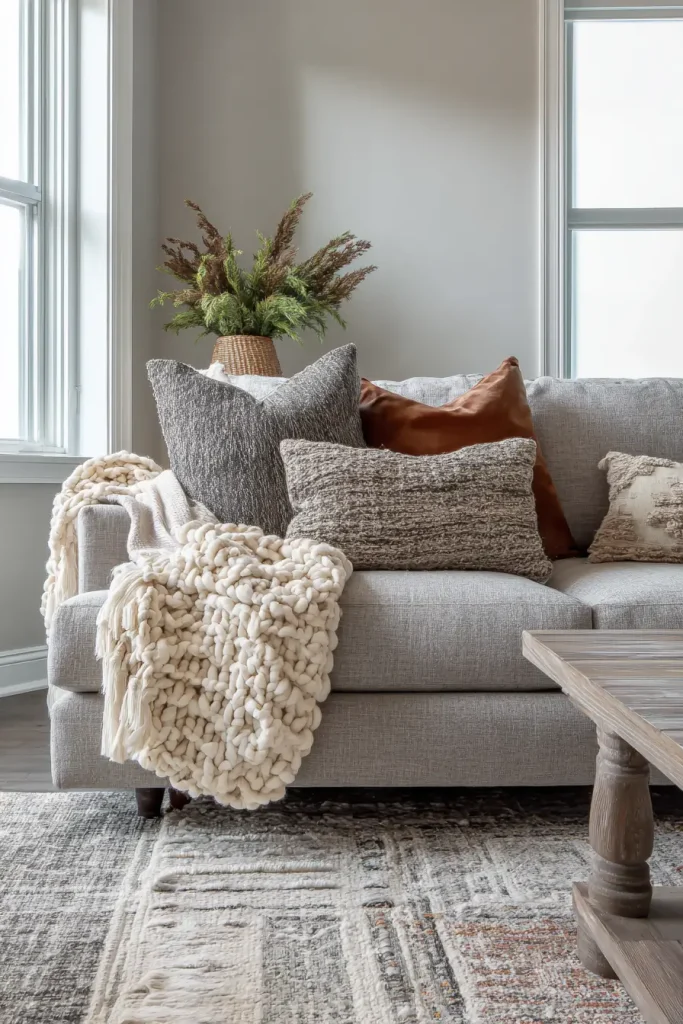
A wool throw from the bedroom can add texture to your sofa. A dining room rug might layer perfectly over your existing carpet.
Move lighting:

That small lamp on your nightstand could become a cozy corner light in the living room.
Rotate seasonally:

If you have winter-themed decor, pack it in a basket and swap in lighter pieces. Even switching cushion covers from dark velvet to linen changes the whole vibe.
One client told me she moved a large floor mirror from her hallway to a corner of the living room. Suddenly the room felt twice as bright. The mirror bounced light from the window and made the space feel airy.
Walk through your home with a laundry basket. Put in any items that feel stale in their current spot. Swap them with items from another room. It’s like trading cards, but for your interior design. This is no-cost home decor at its best.
Curate Your Bookshelves Like a Stylist

Bookshelves are often dumping grounds for random clutter. But with a little attention, they can become a statement piece.
Start by taking everything off. Dust the shelves. Now look at your books.
Remove the dust jackets:
Most hardcovers have beautiful cloth spines underneath. A shelf full of uniform neutral colors instantly looks more curated.
Play with orientation.

Stack some books horizontally to create “platforms” for decorative objects. Leave others vertical. Mix it up.
Add negative space

Don’t fill every inch. A good rule of thumb is the golden ratio: one‑third books, one‑third decorative items, one‑third empty space per shelf.
Group in odd numbers:

When placing objects like vases or small sculptures, group them in threes or fives. Odd numbers feel more natural to the eye.
Use what you already own. Pull a ceramic bowl from the kitchen, a small plant from another room, or a framed photo from a hallway. Suddenly your bookshelf tells a story instead of just storing stuff.
Art Rearrangement: The Gallery Wall Shuffle

You don’t need new art. You just need to move the art you have.
Consolidate:

Gather small frames from hallways, bedrooms, and bathrooms. Arrange them on the floor to create a salon-style gallery wall. It looks intentional and full of personality.
Plan with paper:

Trace each frame on newspaper, cut the shapes out, and tape them to the wall. Move the paper templates around until you like the layout. Then hang the real frames. No extra holes in the wall.
Go big:

If you have a large piece of art, try leaning it on the floor against a wall. It creates a casual, modern look that’s very popular in 2026.
Rotate seasonally:

Swap art from one room to another. A piece that felt stale in the dining room might feel fresh above the sofa.
Leaning art on mantels or sideboards is another trick. It adds depth and makes the room feel collected over time, not decorated in a day.
Biophilic Shift: Bring the Outside In (For Free)

Humans have an innate need to connect with nature. It’s called the biophilia hypothesis, and studies show that having plants in a room reduces anxiety and improves focus.
Propagate: If you already have a pothos or spider plant, cut a few stems and put them in water. Within weeks you’ll have new plants for free.
Forage:

Take a walk outside. Collect interesting branches, dried grasses, smooth stones, or pinecones. Arrange them in a vase or bowl.
Move your plants:

A plant that’s been sitting in a dark corner might thrive on a sunny windowsill. Changing its location changes the room’s energy.
Use what you have:

Clear glass jars, old water bottles, or ceramic mugs become beautiful vases. No need for fancy planters.
Even a small bit of greenery makes a difference. Place three cuttings in a row on a windowsill, or cluster a few stones in a bowl on the coffee table. It costs nothing but instantly makes the space feel alive.
The Lighting Transformation

Lighting can make or break a room. And you can completely change it without buying a single lamp.
Switch lamps between rooms:

That floor lamp in the home office might be perfect behind your sofa. A bedside lamp could add warmth to a dark corner.
Turn off the overhead light:

Overhead lights are harsh. Instead, use three or four table and floor lamps. This creates layered lighting: ambient, task, and accent. The room will feel softer and more inviting.
Swap lamp shades:

A shade that directs light upward creates a different mood than one that directs it downward. Try switching shades between lamps you already own.
Clean your fixtures:

Dust can reduce light output by up to 30%. A quick wipe of bulbs and shades makes everything brighter.
Try moving a floor lamp behind the sofa. It creates a cozy reading nook and draws people into the seating area. You’ll be surprised how much cozier the room feels.
Textile Therapy: Folding, Tucking, and Layering

Textiles are the easiest way to add softness and color. And you already have them.
Iron:

Wrinkled pillow covers and curtains make a room feel sloppy. A quick iron transforms them.
Fold throws with intention:

Instead of tossing a blanket over the sofa, try the “hospital corner” fold for a crisp look. Or drape it loosely over one arm for an effortless, organic feel. In 2026, the trend is imperfect draping—loose folds that look natural.
Flip cushions:

Many sofa cushions are reversible. Flip them to hide stains or wear.
Layer rugs:

If you have a small rug in another room, try layering it over your existing carpet. It adds texture and defines a seating area.
These small adjustments take minutes but make the room feel fresh and cared for.
Create a Visual “Anchor” Without a TV

The TV is often the default focal point. But when it’s off, it’s just a black rectangle. You can change that.
Close the console:

If your TV sits on a media console with doors, close them when the TV is off. If it’s mounted, lean a large piece of art against the wall in front of it. (Just move the art when you want to watch.)
Reposition furniture:

Face your sofa toward a fireplace, a large window, or a built-in bookcase. Even if you still watch TV, you can rearrange so the room doesn’t feel like it’s built around the screen.
Create a listening corner:

If you have a record player, set it up with a comfortable chair and a small side table. Make it a dedicated spot for music. It gives the room a new purpose.
For a temporary reset, try using a tablet or laptop for TV watching for a few days. You’ll see how the room feels when the big screen isn’t the star.
Scent and Sound: The Invisible Refresh
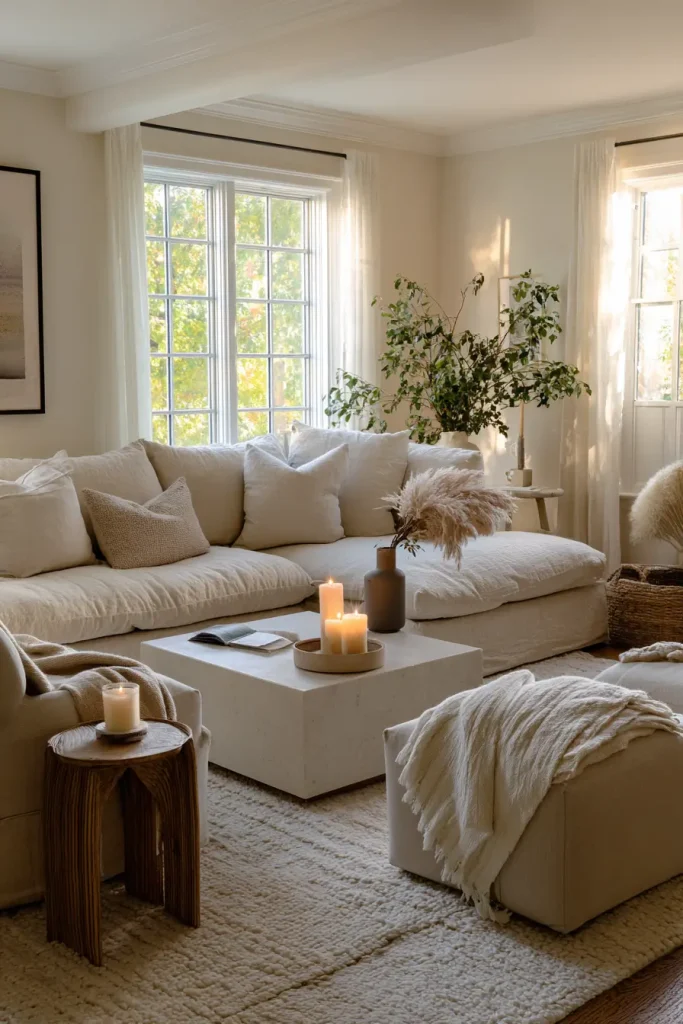
Sometimes the biggest change comes from what you can’t see.
Open the windows.
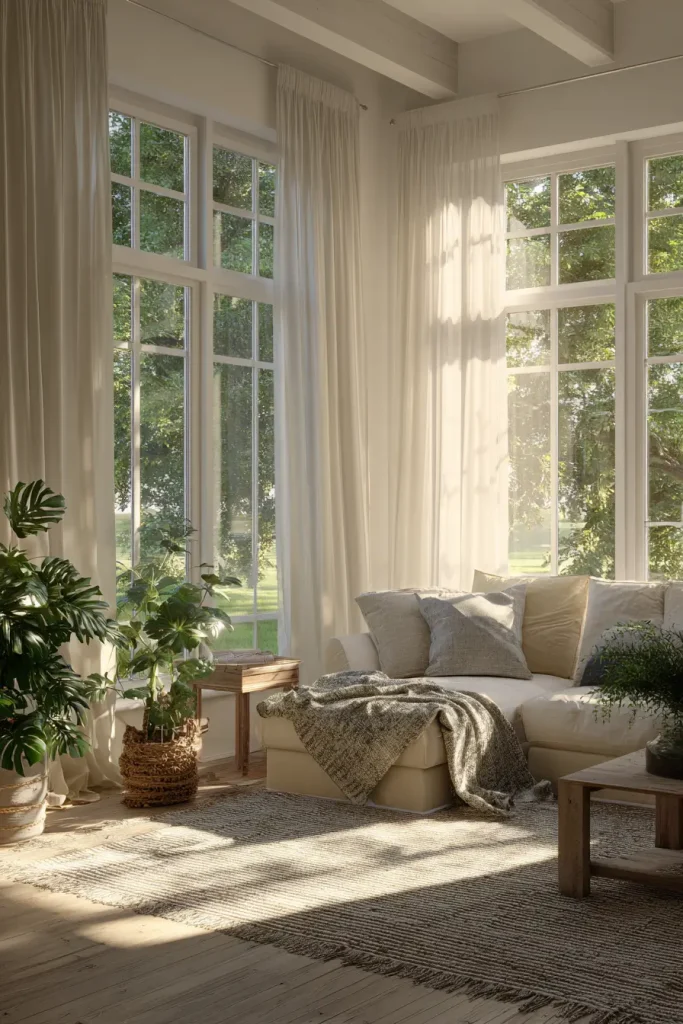
Cross‑ventilation pulls stale air out and fresh air in. It’s free and instantly makes a room feel cleaner.
Simmer something.

Put citrus peels, cinnamon sticks, or a few drops of vanilla in a pot of water on the stove. Low heat for an hour fills your home with a natural scent. No chemical air fresheners needed.
Curate a playlist:

Sound changes how we experience a space. Make a playlist that matches the mood you want—calm, energetic, cozy. Play it when you’re in the room.
Our sense of smell is directly linked to memory. Changing the scent changes how you remember the room. It’s a powerful, invisible refresh.
Conclusion
You don’t need new furniture, new paint, or a big budget to love your living room again. You just need to look at what you already own with fresh eyes.
By resetting the layout, decluttering with intention, swapping accessories from other rooms, and paying attention to light and texture, you can achieve a high-end look for zero dollars. These small actions add up to a space that feels calmer, more personal, and more functional.
Pick three ideas from this list and do them in the next hour. You’ll be surprised how different your space feels before dinner.
Start your living room refresh today. These budget living room makeover tactics prove that no-cost home decor is not only possible—it’s often more creative and personalized than buying new.

- 18 Scandinavian Bedroom Ideas That Are Calm & Livable (2026) - March 31, 2026
- 17 Kids Bedroom Ideas That Grow With Them - March 31, 2026
- 17 Industrial Bedroom Ideas for Urban Apartment Dwellers - March 31, 2026


