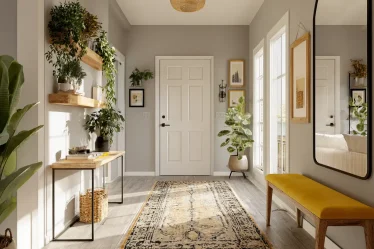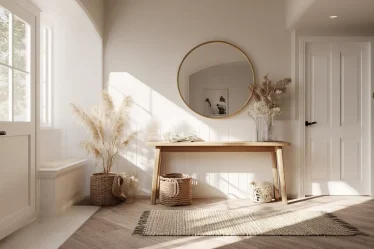

Does your hallway feel less like a welcoming entry to your home and more like an endless, forgotten tunnel you rush through to get to the “real” rooms?
You’re not alone. Long, narrow hallways are common in townhouses, ranch homes, and many new builds. They often end up dark, cramped, and wasted. You walk through them, but you never really use them.
That’s a missed opportunity. A hallway can be more than just a pass through. It can be a gallery, a library, or even a quiet spot to pause.
This guide gives you 16 long hallway ideas that actually work in 2026. You’ll learn about layered lighting, smart color tricks, architectural details, and furniture that fits tight spaces. Each idea is meant to break up the tunnel effect and turn your corridor into a part of your home you actually enjoy.
Let’s get started.
Conquer the Dark: Layered Lighting for Long Hallways
Most hallways suffer from a single overhead light. That one fixture creates harsh shadows and makes the space feel longer and narrower. It’s like a runway with no end.
The fix is layering light. You want multiple sources at different heights.
Idea 1: Wall sconces at eye level
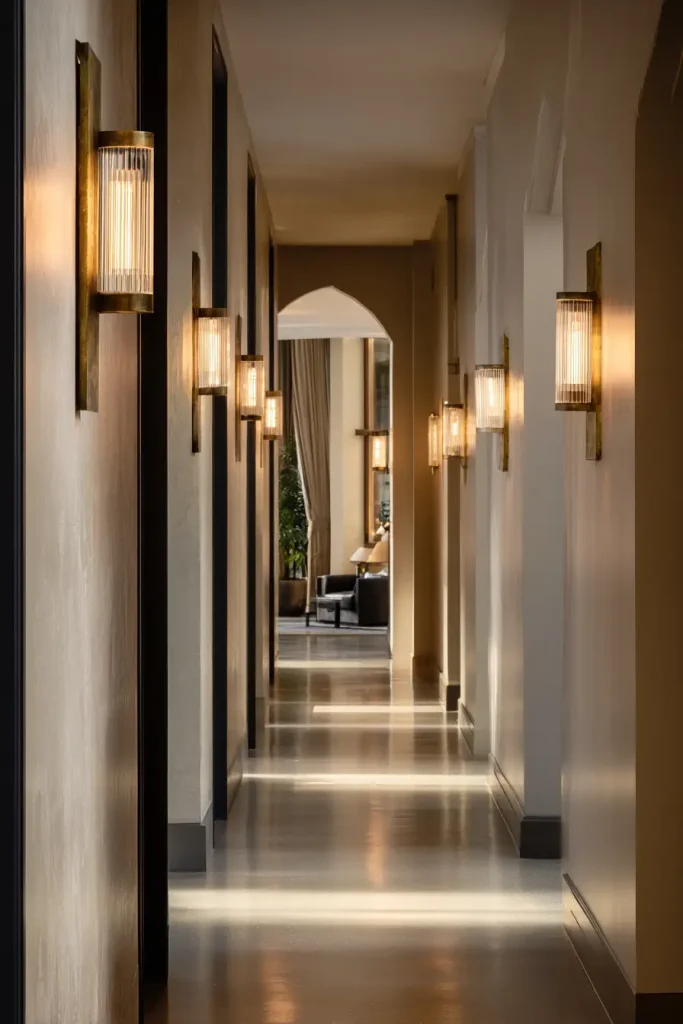
Place sconces 60 to 66 inches from the floor. This puts light at human height, where it feels comfortable. In 2026, fluted glass sconces and brushed brass finishes are popular choices. Space them evenly to create rhythm. Every time you walk past, your eye hits a pool of light, breaking the corridor into smaller segments.
Idea 2: Recessed linear lighting
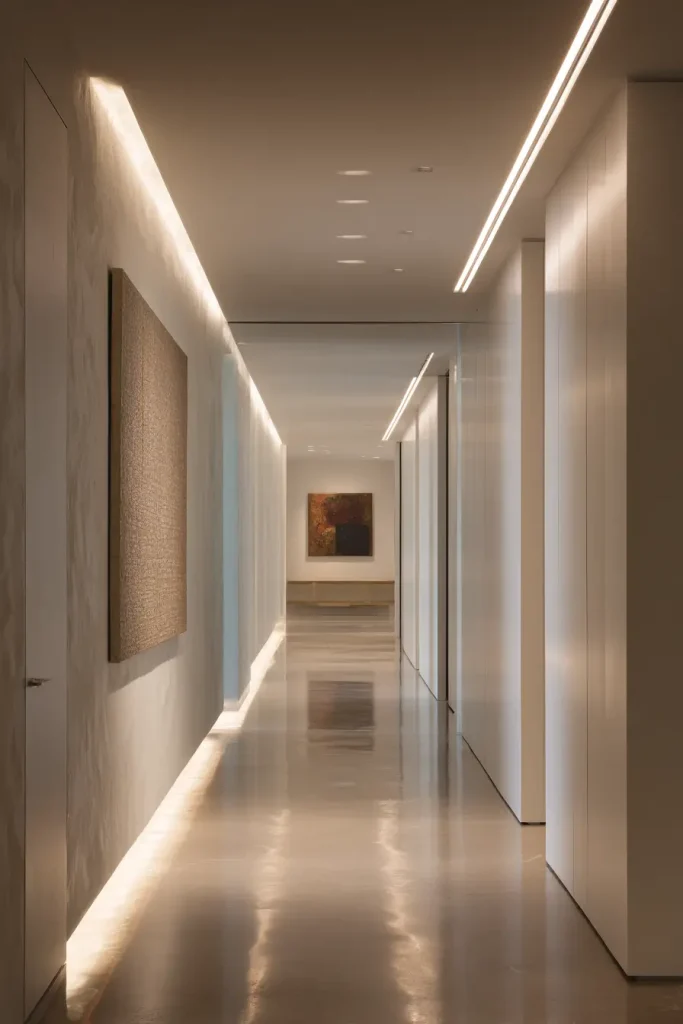
LED strips hidden in ceiling coves or along the baseboard give you an even, modern glow. They eliminate dark spots and make the ceiling feel higher. You can also use them to highlight a textured wall or a piece of art.
Idea 3: A series of pendants
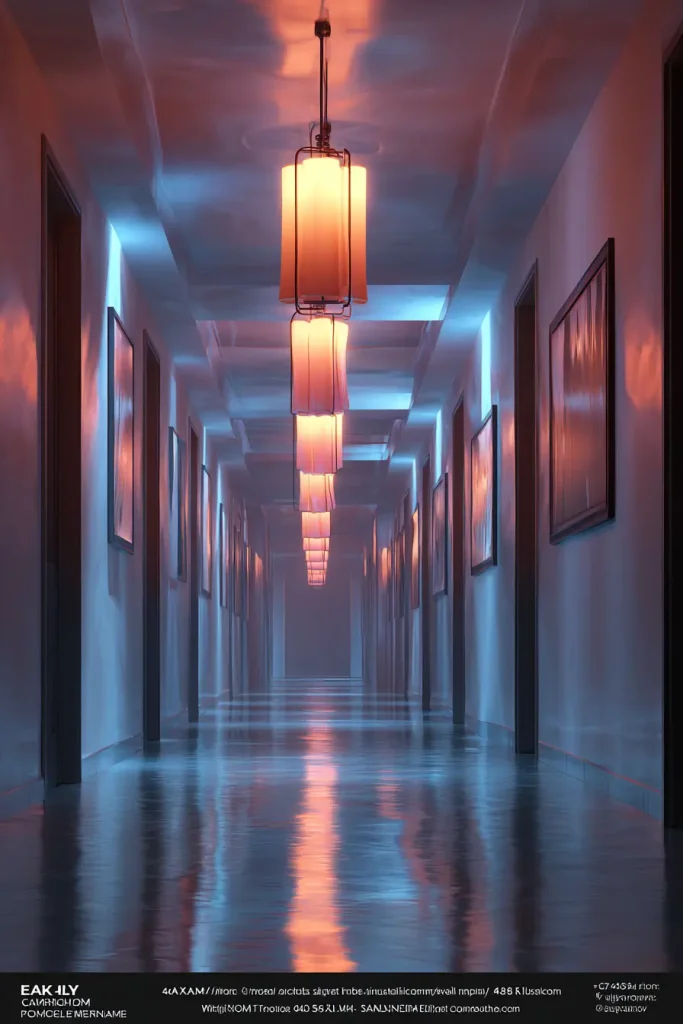
Instead of one ceiling light, hang three to five matching pendants in a row. They act like visual anchors. The space starts to feel like a curated gallery rather than a hallway.
Pro tip: Use smart bulbs that let you change color temperature. Warm light in the evening makes the space feel cozy. Cooler light during the day keeps it bright.
Break the Line: Color Blocking and Accent Walls
Once your lighting is layered, it’s time to look at the walls. A single neutral color from end to end only emphasizes the length.
Idea 4: Paint the far wall a bold color
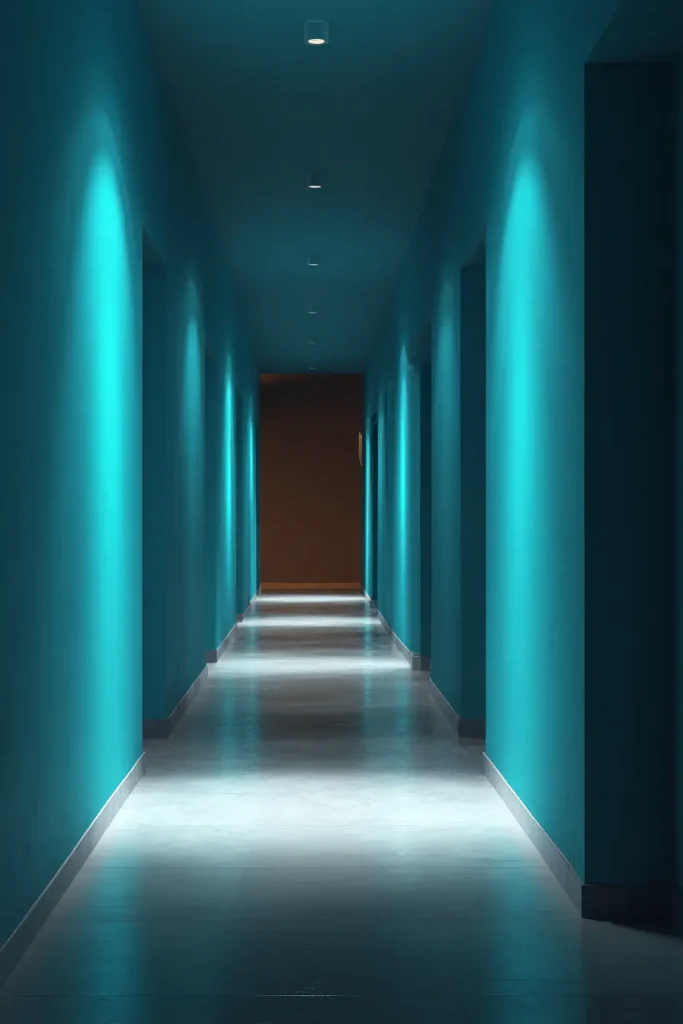
Pick a deep teal, terracotta, or charcoal. Paint only that one wall. Your eye will stop there. It creates a destination, a reason to look forward instead of down the endless line.
Idea 5: Two tone walls
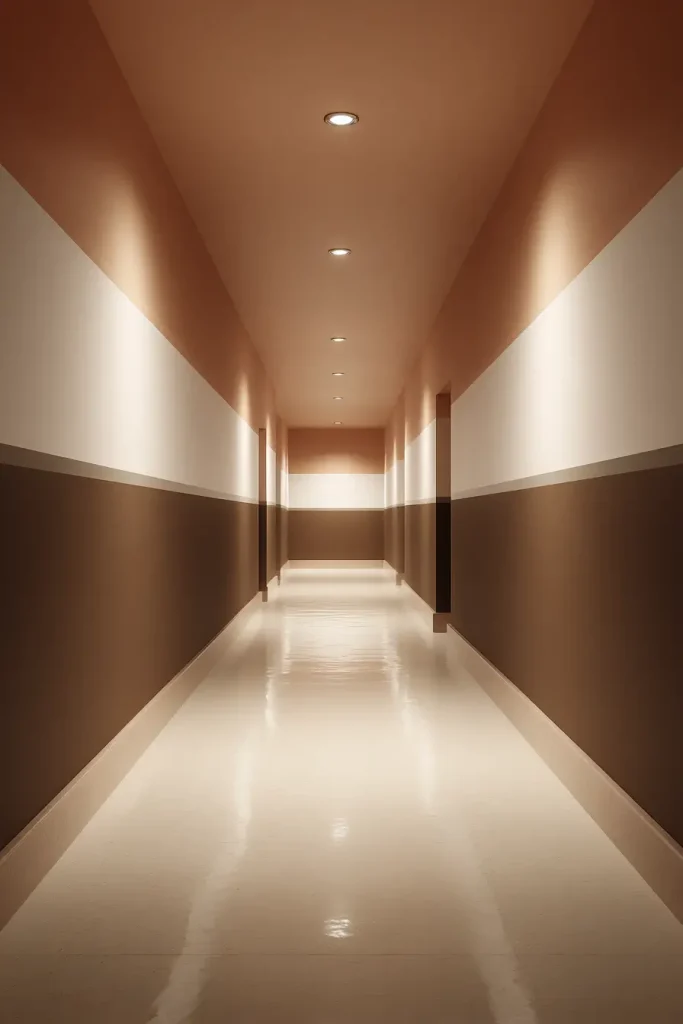
Paint the bottom third of the wall a darker shade and the top two thirds a lighter one. You can use a chair rail or simply let the colors meet. This grounds the space and actually makes the hallway feel wider.
Idea 6: Add textural wallpaper
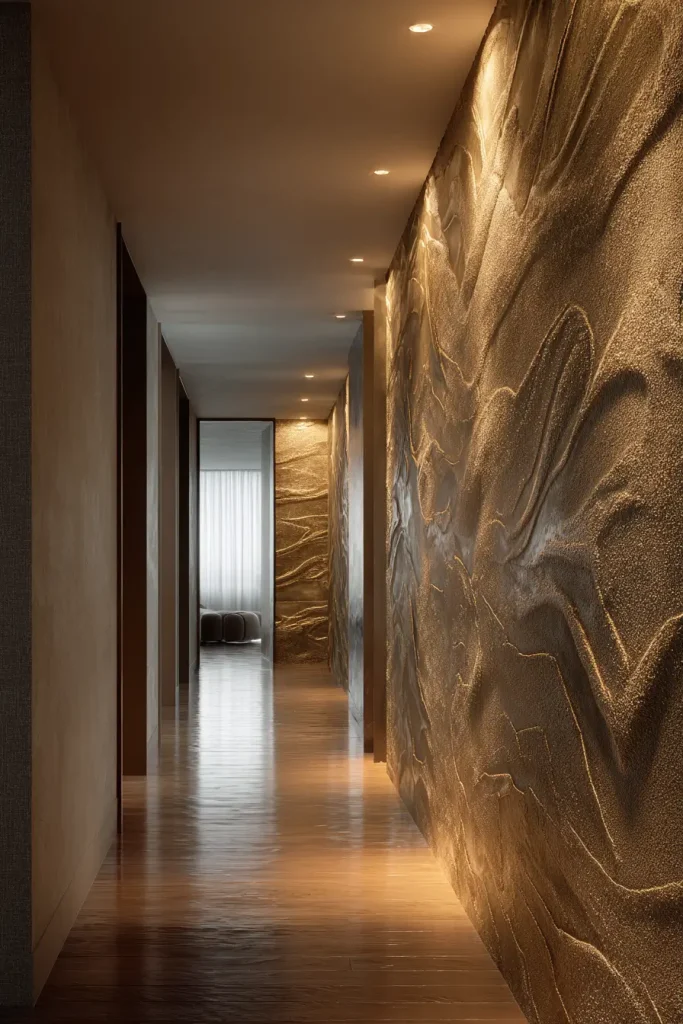
Grasscloth, 3D panels, or a large scale mural on one wall adds depth. Your eyes want to linger on the texture, which stops them from racing to the end.
Idea 7: Try “color drenching” (a 2026 trend)
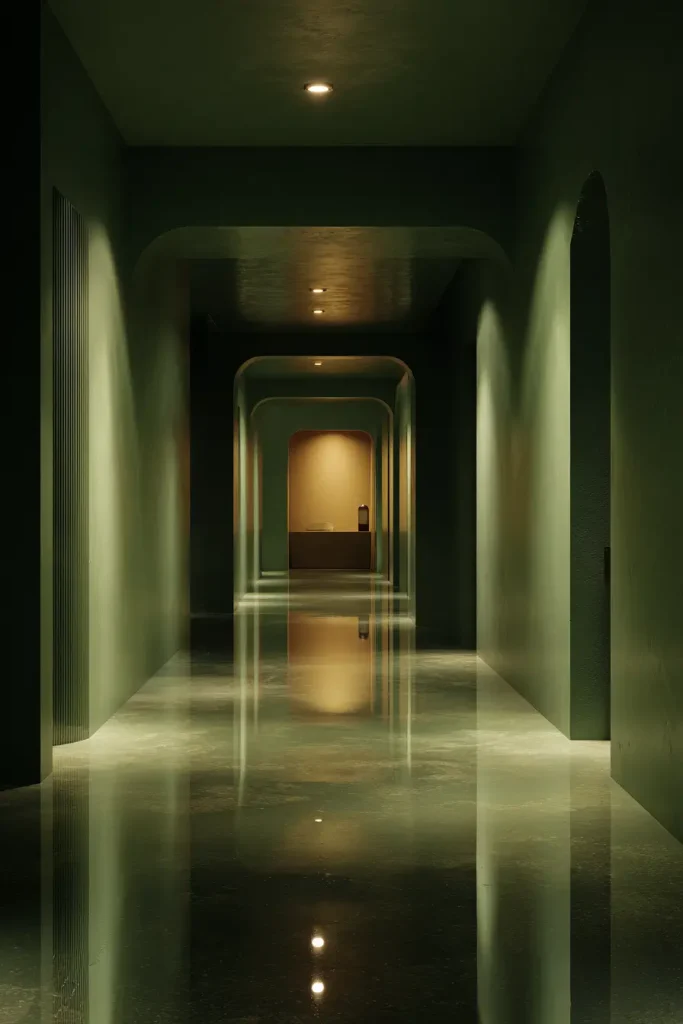
Pick one saturated color—like a warm sage or a muted rust—and paint the walls, ceiling, and trim all the same shade. This blurs the boundaries of the room. The hallway feels larger because there’s no visual break telling you where it stops.
Architectural Pauses: How to Add Rhythm to a Long Corridor
Color and light already help. Now think about the bones of the space. Architectural details can turn a straight hallway into a series of moments.
Idea 8: Add a shallow arch
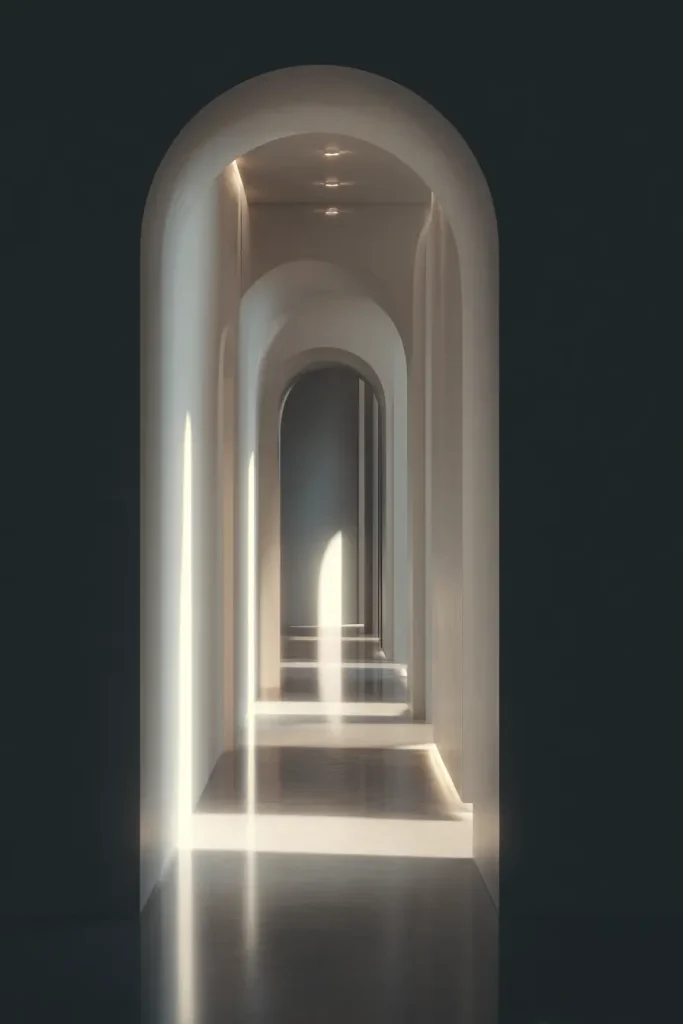
You don’t need a full doorway. A decorative arch placed midway down the hall creates a subtle transition. It tricks the brain into thinking you’ve moved into a new zone.
Idea 9: Install wainscoting or vertical slat walls
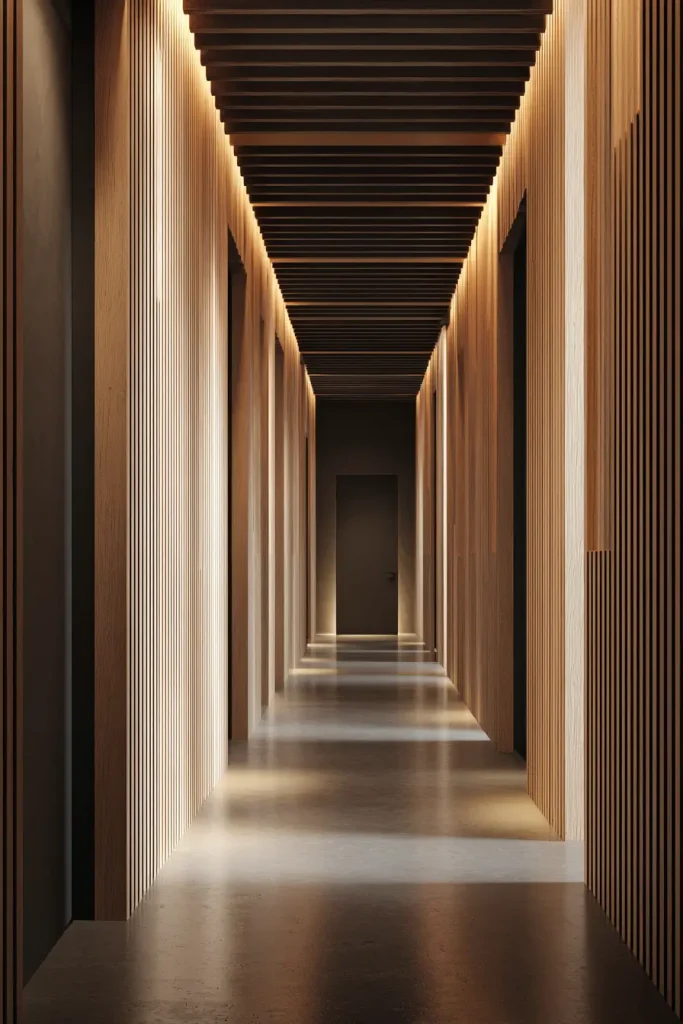
Vertical lines draw the eye up. They make the ceiling feel higher. Board and batten or simple wood slats also add rhythm. The repeating pattern breaks the long wall into manageable sections.
Idea 10: Create a recessed niche
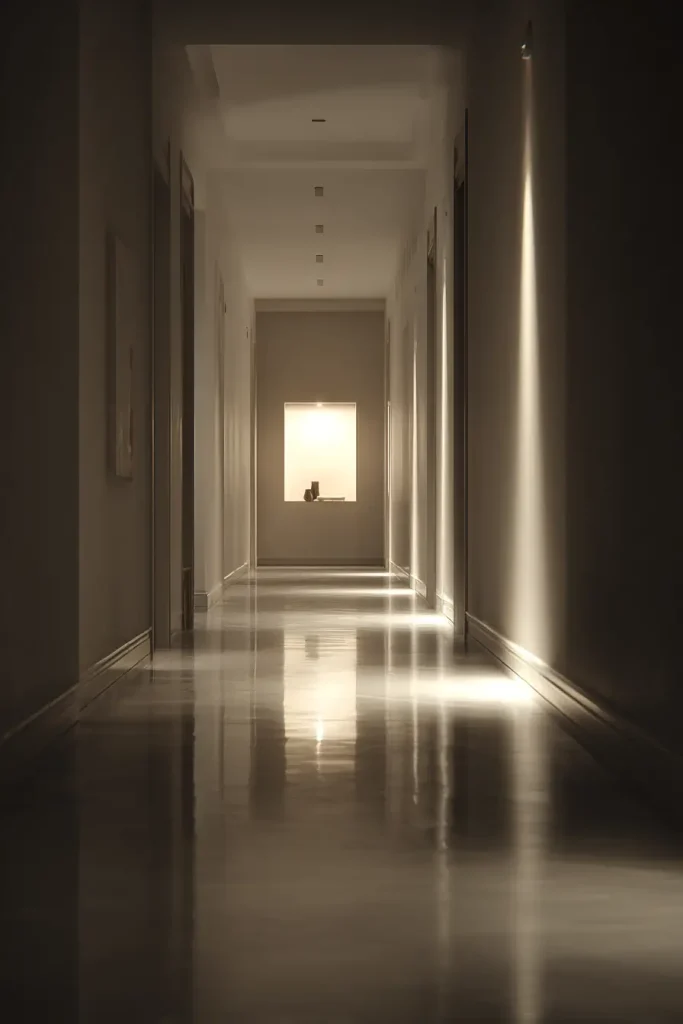
If you have an existing alcove, highlight it. If not, see if you can carve out a shallow recess. Put a small sculpture, a vase, or a single piece of art inside. It becomes a visual pause—a reason to stop for a second.
Idea 11: Change the flooring material at a midpoint
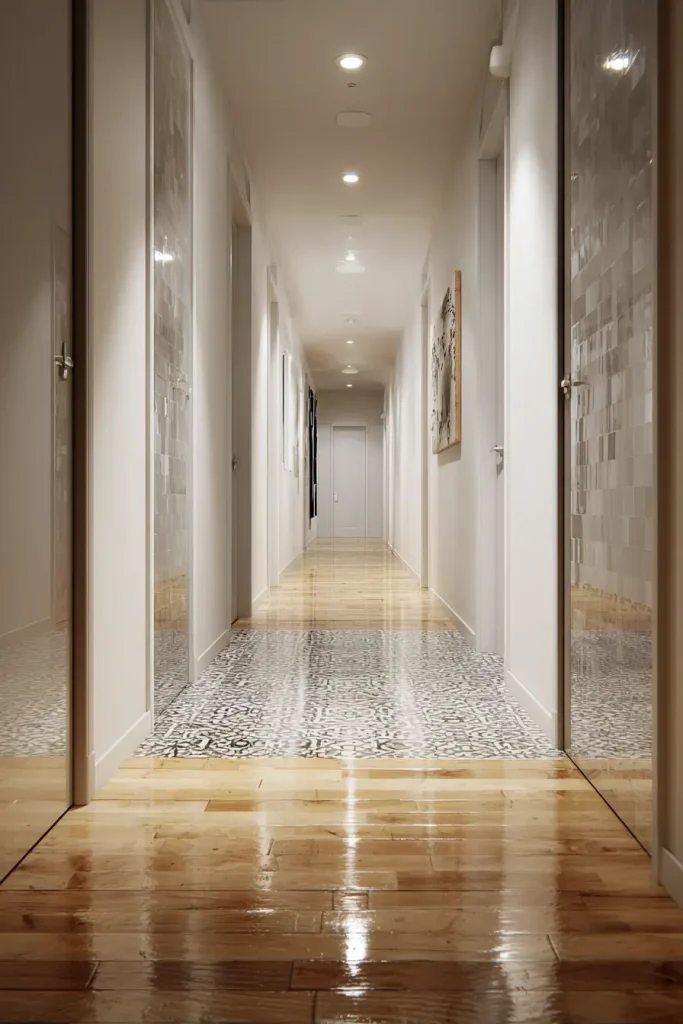
Switch from hardwood to a patterned tile halfway down the hall. This works especially well in open floor plans. It marks a transition from the public side of the house to the private wing.
Curate, Don’t Clutter: The Art of Hallway Galleries
Art is one of the easiest ways to personalize a hallway. But one small picture at the end only makes the space feel longer.
Idea 12: Create a salon style gallery
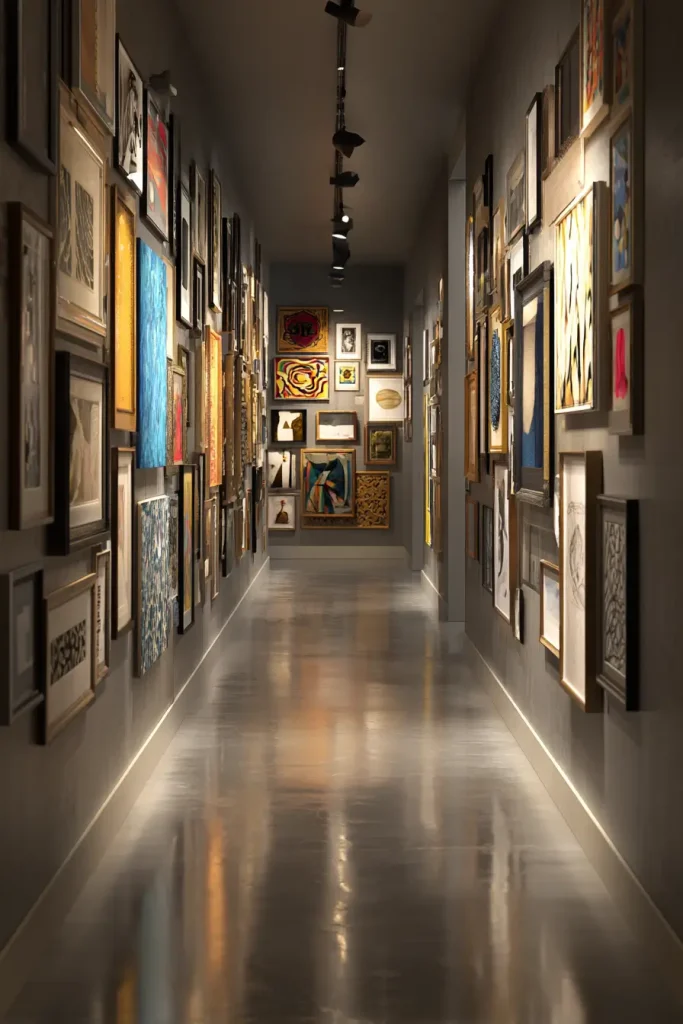
Group several pieces together in a cluster. Mix frame sizes and styles. The cluster acts as one big focal point. It pulls your attention to that wall, not to the length of the hall.
Idea 13: Hang a linear gallery
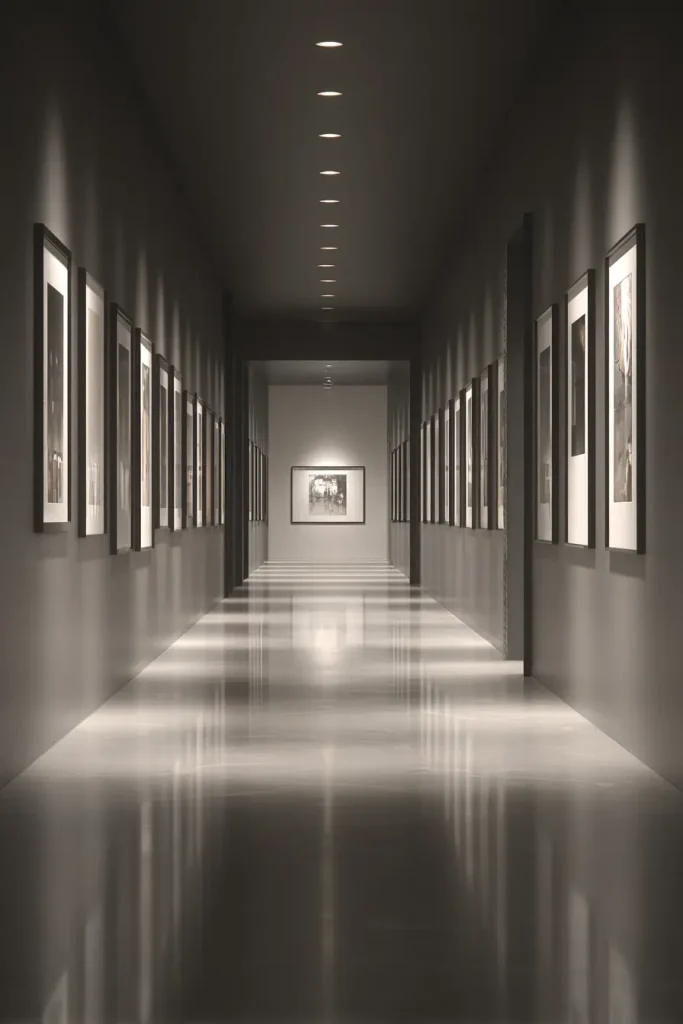
Use identically framed prints or photographs in a straight line. This gives a clean, intentional look. The line of art creates a rhythm that leads you through, but the repeating pattern also stops you from racing.
Idea 14: Use sculptural art
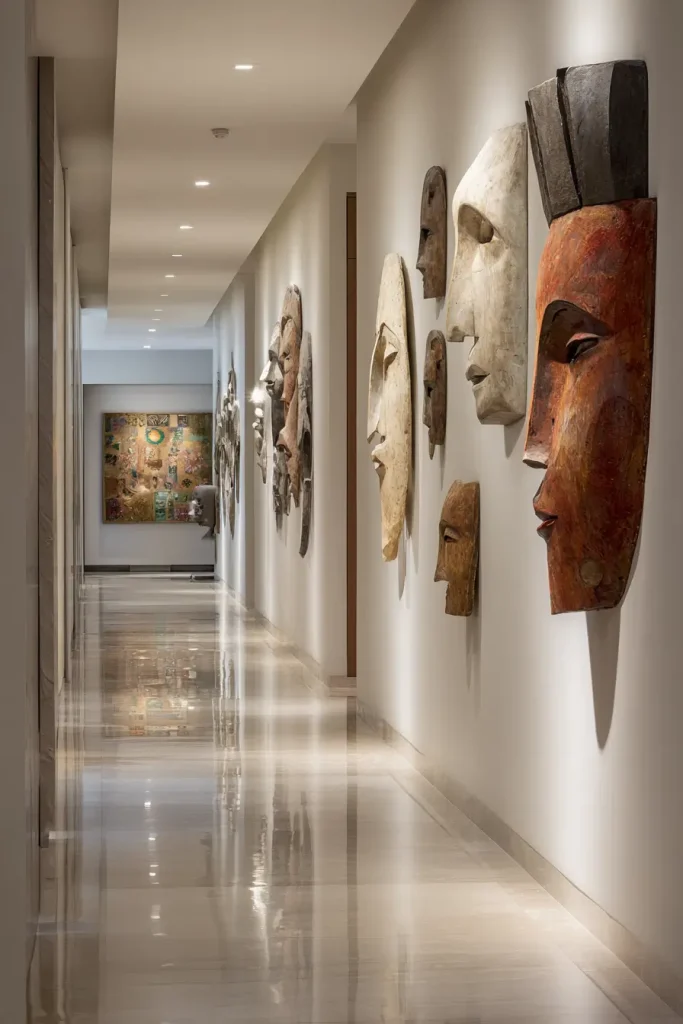
3D art, ceramic masks, or decorative plates add depth. They stick out from the wall, so your eye has to pause and adjust. That pause breaks the corridor effect.
Idea 15: Light your art
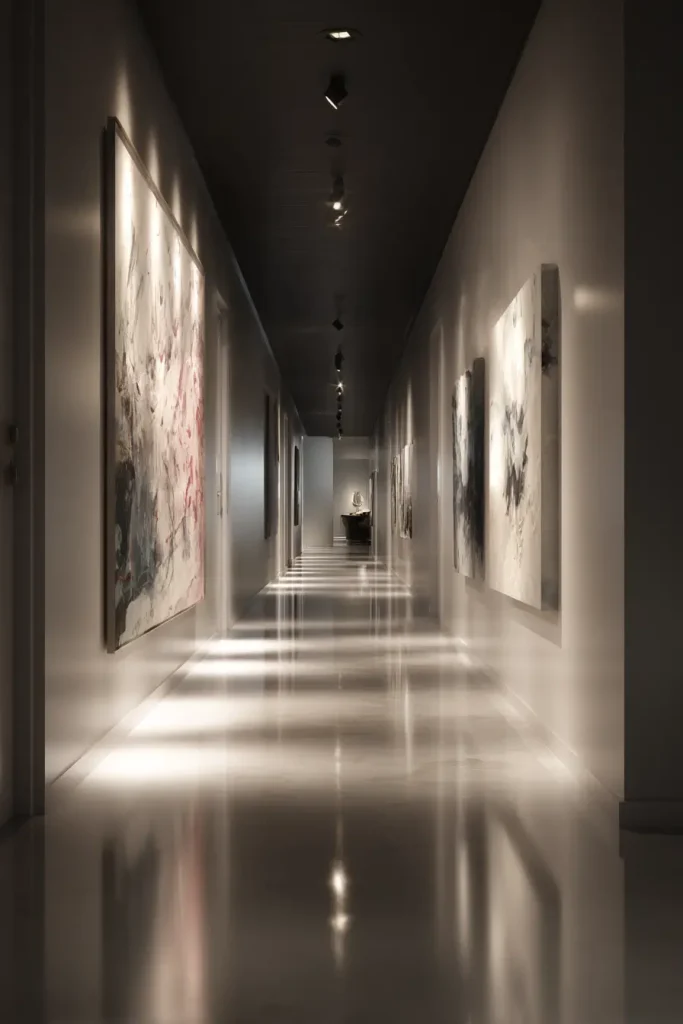
Add picture lights above key pieces. Those small pools of light create pockets of interest. Now the hallway isn’t one long space—it’s a series of well lit moments.
Rule of thumb: Hang art so the center is 57 to 60 inches from the floor. That’s museum height. It feels right and looks professional.
Beyond the Passage: Adding Functional Furniture
You can actually put furniture in a hallway. But you have to be smart about it.
Idea 16: Place a slim console table
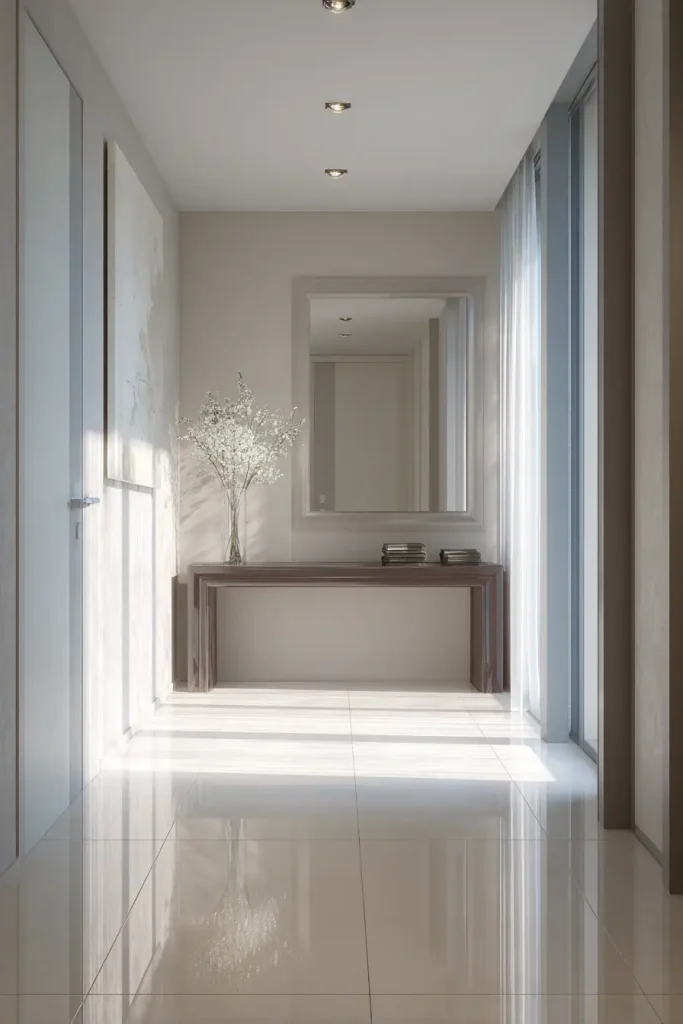
Look for a table that’s only 12 to 15 inches deep. Put it near the entrance or at a natural turn. It gives you a drop zone for keys and mail without blocking the walkway. A standard hallway needs at least 36 inches of clear width. Measure before you buy.
Bonus: Add a bench
A low, narrow bench at the far end or near a bedroom door gives you a place to put on shoes. It also breaks the floor plane. The hallway starts to feel like a functional space, not just a corridor.
Use shallow storage systems
IKEA’s Besta and Elfa systems can be configured for shallow depths. You get hidden storage without eating into your walking space.
Reflect and Expand: The Strategic Use of Mirrors
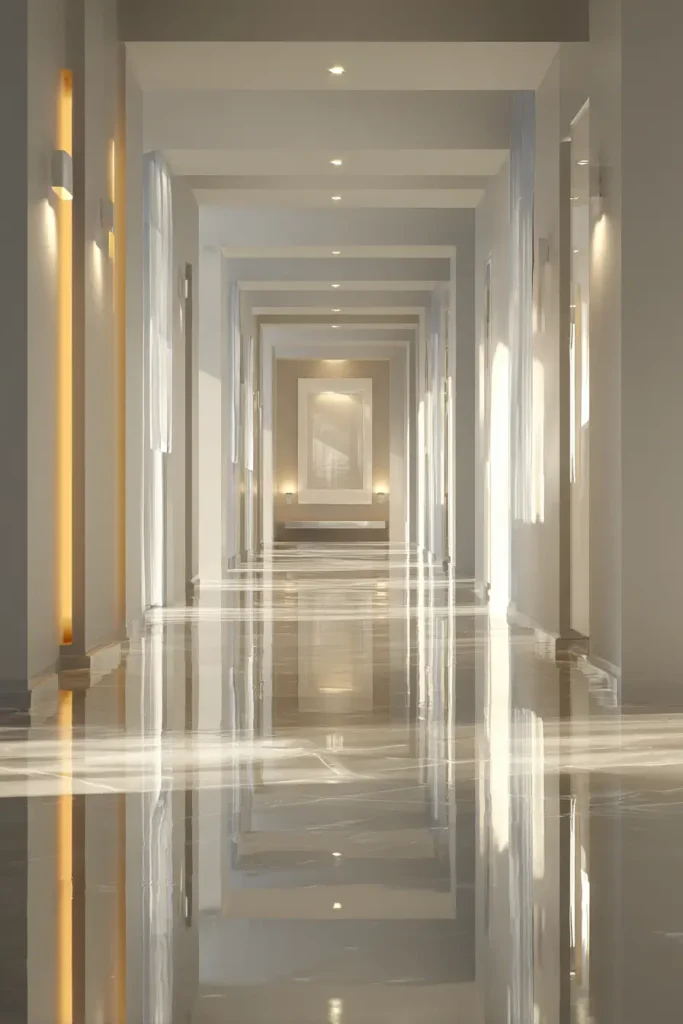
Mirrors do two things well. They bounce light and they create an illusion of space.
Place a large mirror on the end wall. It visually doubles the hallway and makes the end feel open, not closed off.
If you use a series of smaller mirrors instead of art, you create a “hall of mirrors” effect. Light scatters. The space feels more dynamic.
Always put a mirror opposite a window or a light source. That’s how you get the biggest boost in brightness.
Ground the Space: Flooring as a Design Tool
Flooring is often an afterthought, but it can change how you experience the hallway.
Use a runner that doesn’t go all the way
A long runner can actually emphasize length. Instead, use a bold, patterned runner that stops short of the end. That creates a visual stop.
Try herringbone or chevron
Laying wood or luxury vinyl plank in a herringbone pattern moves the eye sideways. It distracts from the forward line. The space feels less like a runway.
Zone with two rugs
Place one rug near the entry and another near the bedroom wing. You’re essentially creating two distinct zones. People naturally pause when they step onto a rug, which breaks the corridor into two manageable sections.
In 2026, geometric and abstract patterns are replacing traditional Persian runners. They add a modern touch that fits most styles.
Putting It All Together
A long hallway doesn’t have to feel like a tunnel. The key is to give your eye reasons to pause. You do that by layering light, adding texture, creating architectural rhythms, and using art and furniture as visual anchors.
You don’t need to do everything at once. Pick two or three ideas that fit your style and your home’s layout. Start with lighting—it makes the biggest difference the fastest.
With these long hallway ideas, you can stop rushing through the dark and start enjoying every square foot of your home.

- 17 Classy Living Room Ideas for a Cozy Elegant Look - April 23, 2026
- 16 Dark Moody Living Room Ideas That Feel Rich and Warm - April 22, 2026
- 14 Elegant Bedroom Trends for 2026 You’ll Love - April 22, 2026