
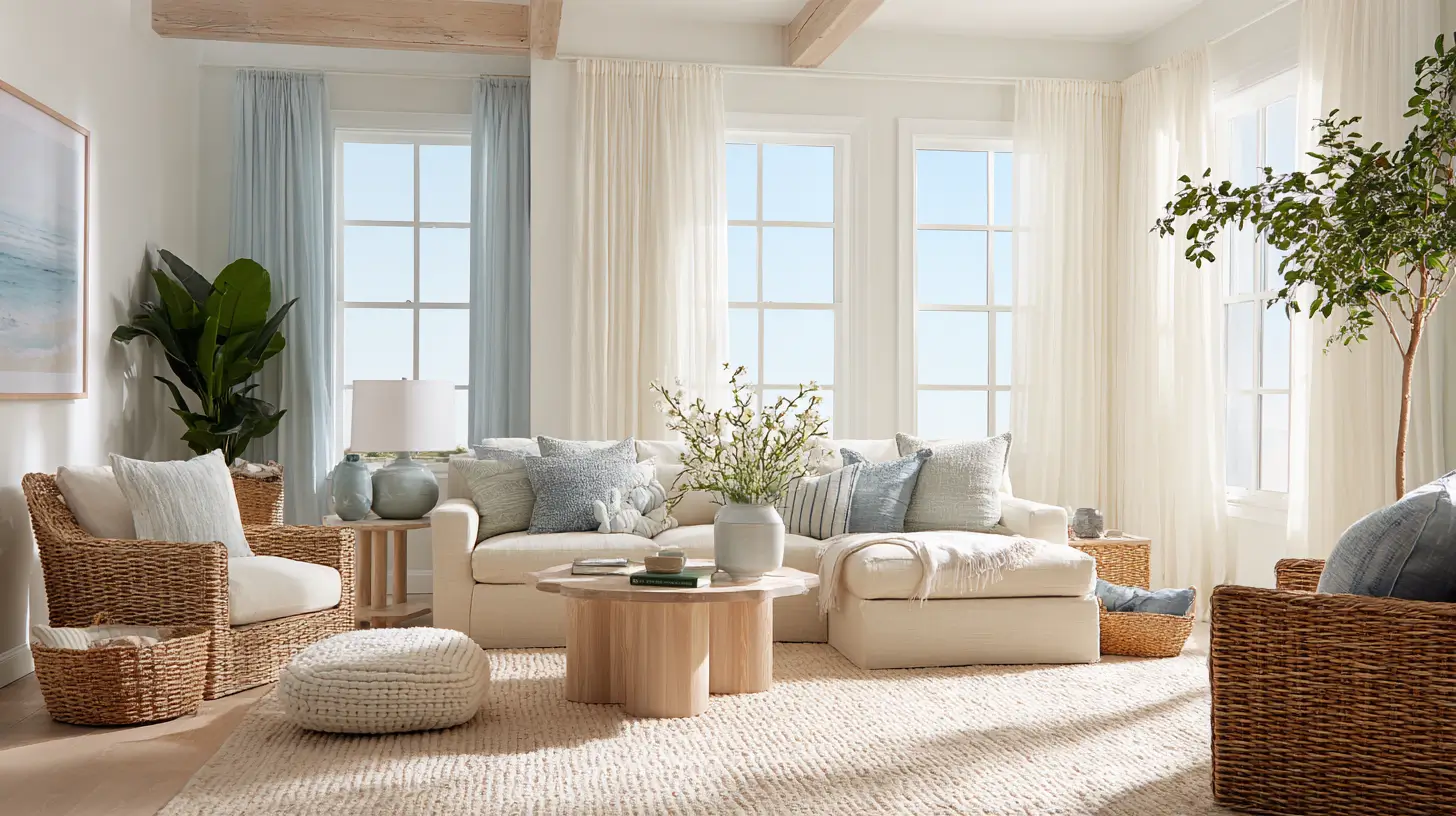
Summer 2026 is bringing hotter temperatures than ever. Your living room shouldn’t feel like an oven.
You want a space that looks good. But more than that, you want it to feel at least 10 degrees cooler without cranking the AC until your energy bill explodes.
Right now, your living room probably feels stuffy. Maybe the curtains are heavy. The couch traps heat. The air sits still. You’re stuck relying on a loud window unit that barely keeps up.
Here’s the good news: you don’t need a full renovation to fix this.
The 16 ideas below blend two things. First, passive cooling techniques—simple ways to manage sunlight and airflow. Second, sustainable home decor 2026 trends that look beautiful and actually work with the heat, not against it.
Pick a few. Try them this weekend. Your living room will feel lighter, cooler, and ready for whatever summer throws at you.
1. Maximize Cross-Ventilation with Strategic Window Treatments

You might think heavy blackout curtains are doing you a favor. But if they’re made of polyester and hug the glass, they’re trapping solar heat inside your room. The heat gets in through the window, then sits behind the curtain like a radiator.
That’s the opposite of cool.
Here’s the 2026 fix. Start with natural fiber Roman shades. Jute, bamboo, or water hyacinth work best. They block some sunlight but let air move through. They’re like shade trees—solid enough to help, loose enough to breathe.
Then add a dual-layer curtain rod. Hang a sheer linen layer closest to the room. Outside that, put a thermal blackout layer. During the hottest hours—noon to 4 PM—pull the thermal layer closed. When the sun shifts, pull it back so the sheer layer diffuses light and air flows freely.
One more trick: use the “stack back” method. Make sure your curtains can pull completely clear of the window frame. Every inch of open window matters when you’re trying to catch a breeze.
The U.S. Department of Energy says smart window coverings can reduce heat gain by up to 77%. That’s the difference between sweating in your own home and actually relaxing.
Pro Tip: Look for “solar-adaptive” smart blinds in 2026. They connect to weather apps and close automatically when the afternoon sun hits your windows hardest.
2. Switch to “Cool-Tone” Color Palettes Inspired by Nature

White walls are fine. But they’re not your only option.
2026 color trends lean into cool tones pulled straight from nature. Think glacial blues, sea-glass greens, and terracotta pinks. These colors do something interesting: they trick your brain into feeling cooler.
Here’s how to apply them. Use the 60-30-10 rule.
- 60% dominant color: A cool neutral like pale sage or soft driftwood gray.
- 30% secondary color: Something warm but muted, like sand or clay.
- 10% accent color: A deep ocean blue or misted marigold.
Pantone’s 2026 palette includes “Verde Limón”—a cool, muted green that works perfectly as a base. “Misted Marigold” adds just enough warmth as an accent without bringing the heat.
Paint is cheap. A weekend with a roller can change how a room feels for the rest of summer.
3. Layer Natural Textiles for Breathable Comfort

Here’s a quick test. Run your hand over your couch cushions. If they’re velvet or polyester, they’re trapping heat. Those synthetic fabrics don’t breathe.
Swap them out for linen, hemp, or organic cotton. Linen fibers are hollow. Heat escapes through them. Your body stays cooler.
Same goes for your rug. A synthetic shag feels soft, but it traps heat and dust. Switch to a washable jute or seagrass rug. It’s rough underfoot at first, but it lets air move through the room.
And those throw blankets? Look for “cooling” knits made from TENCEL™ Lyocell. It’s a big trend in 2026 because it’s made in a closed-loop process—no chemicals dumped into water systems. Plus, it feels cool to the touch.
Brands like Coyuchi and The Citizenry are doing this well. Hemp is another smart choice. It grows faster than cotton and uses 50% less water.
Pro Tip: Wash your linen slipcovers every two weeks during summer. Clean fabric breathes better than fabric coated in body oils and dust.
4. Embrace “Biophilic” Decor with High-Humidity Plants

Plants aren’t just decoration. They work.
Through a process called transpiration, plants release water vapor into the air. That vapor cools the space around them. It’s like a natural, invisible misting system.
Pick plants with big leaves. Bird of Paradise, Fiddle Leaf Fig, and Areca Palm are top choices. They release more moisture than small succulents.
Group them together. Three or four large plants in one corner create a micro-climate. The humidity rises. The temperature drops. And your skin feels the difference.
A 2025 NASA study update confirmed that indoor plants improve air quality and thermal comfort. They’re not just pretty—they’re functional.
Self-watering pots make this easy. Fill the reservoir once a week and forget about it.
5. Rethink Furniture Placement for Airflow

Walk around your living room. Look at where your furniture sits.
Is your sofa blocking a window? Is your big armchair sitting right in front of a vent?
Air needs a clear path. If furniture blocks that path, the room stays stuffy.
Float your furniture. Pull sofas and chairs away from walls. Even six inches helps. Air circulates behind and around each piece, cooling the whole room.
Now look at your coffee table. Is it solid wood or glass? Solid tables block airflow at knee level. Swap it for wire-mesh, rattan, or glass. Air moves through instead of slamming into a wall of wood.
Ceiling fans work best when furniture sits at least 12 inches below the blades. Measure yours. Adjust if needed.
6. Upgrade to Smart, Energy-Efficient Ceiling Fans

Your ceiling fan might be working against you.
In summer, fans need to spin counter-clockwise. That pushes air straight down, creating wind chill on your skin. If it’s spinning clockwise, it’s pulling air up—useful in winter, useless in summer.
If your fan is older, consider replacing it. DC motor fans are the 2026 standard. They use 70% less energy than old AC motors. They’re quieter, too.
Look for fans with integrated LED lighting. The best ones have dimmable warm-to-cool technology. Bright white light in the afternoon, soft warm light at night.
Big Ass Fans makes a model called Haiku that’s popular for its modern look and efficiency. But many brands now offer sleek, minimalist options that fit current trends.
Pro Tip: Run your fan even when you’re not in the room. Moving air prevents moisture buildup and keeps the whole space feeling fresher.
7. Incorporate “Vintage” or Recycled Materials

New furniture has a downside. Many pieces release VOCs—volatile organic compounds. When the room heats up, those chemicals off-gas faster. That’s the “new furniture smell,” and it’s not great to breathe.
Vintage pieces skip this problem.
Look for old rattan, cane, or solid wood furniture. These materials don’t absorb heat the way MDF or plastic does. They stay cooler naturally.
There’s another benefit. “Restorative decor” is a big trend in 2026. Keeping furniture out of landfills feels good. And vintage pieces add character that mass-produced items can’t match.
The global second-hand furniture market is projected to hit $70 billion in 2026. Thrift stores, Facebook Marketplace, and estate sales are full of solid, breathable pieces waiting for a second life.
8. Create an Outdoor-Indoor Flow

The line between inside and outside should blur in summer.
If you have sliding or bi-fold doors, use them. Open them up. Let the spaces connect.
Bring outdoor furniture inside. Weather-resistant wicker or teak works perfectly in a living room during summer. It’s made to handle humidity and temperature swings. Plus, it cleans up with a hose.
Match your flooring levels. If there’s a big step down from your sliding door, add a flat threshold. A seamless transition makes the whole room feel bigger and breezier.
Pro Tip: Create a “breezeway” entry. A small table by the door with a tray for sandals and a hook for hats keeps the mess contained while embracing the indoor-outdoor lifestyle.
9. Declutter with “Visible Storage”

Clutter traps heat. Every stack of magazines, pile of mail, and collection of knickknacks blocks airflow and collects dust.
A minimalist space feels cooler. It’s not about getting rid of everything. It’s about storing things smarter.
Replace closed cabinetry with open shelving made of light wood. Open shelves create a sense of airiness. Your eyes can move through the space instead of hitting solid surfaces.
Use woven baskets—seagrass, willow, or water hyacinth—to hide electronics, books, and blankets. Baskets soften the room’s acoustics and reduce visual noise.
Here’s a simple rule: if you can see more than five items on a surface, it’s too much for summer. Store four of them and leave one.
10. Use Ice-Based Candle Alternatives

Candles set a mood. But they also add heat. Every candle is a tiny heater adding BTUs to your room.
Swap them out for summer.
Essential oil diffusers with peppermint or eucalyptus create a cooling sensation on your skin. The scent alone makes you feel fresher.
If you want the ambiance of candles, use battery-operated LED candles. The 2026 versions are realistic. They have “wax-coated” finishes and flickering flames that look real. Recycled glass holders add to the sustainable vibe.
Zero heat. All the glow.
11. Invest in a Dehumidifier (The Unsung Hero)

You know when it’s 80 degrees but feels like 90? That’s humidity.
Your body cools itself by sweating. Sweat evaporates, and you feel cooler. But when humidity is high, sweat doesn’t evaporate. It just sits on your skin.
A dehumidifier fixes this.
It pulls moisture from the air. Lower humidity by 10%, and 75 degrees feels like 70. You can set your AC higher and still feel comfortable.
Look for Energy Star certified portable units. Noise matters—aim for below 50 decibels so it doesn’t disrupt conversation or TV watching.
Whole-home dehumidifiers exist, but a portable unit works fine for most living rooms. Run it during the hottest, stickiest parts of the day.
12. Install Reflective Window Film
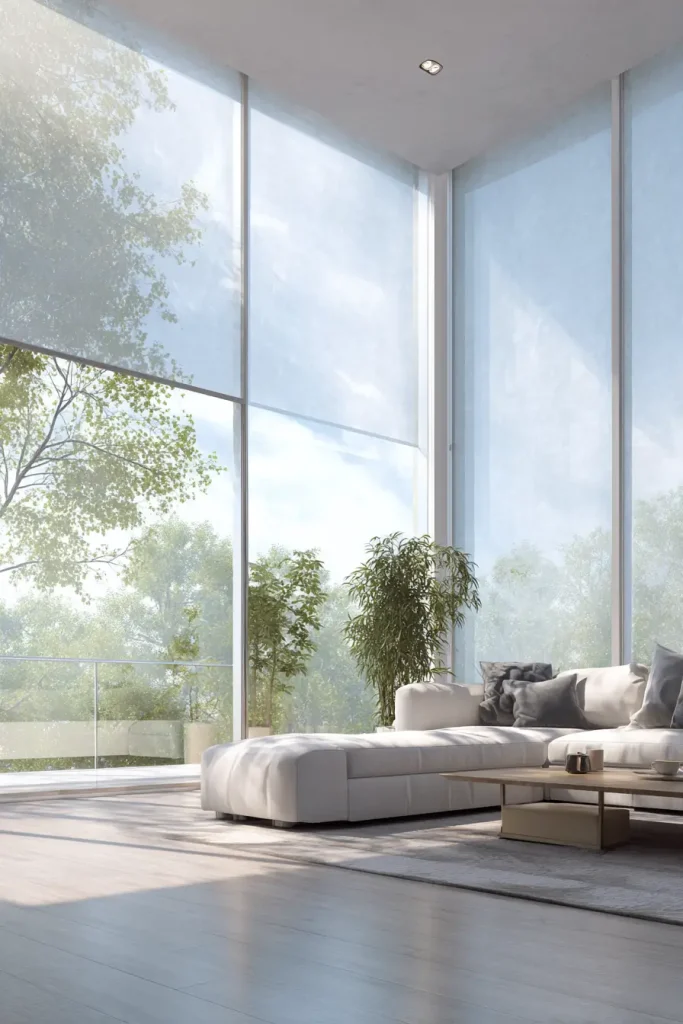
Window film is a renter’s best friend.
It blocks up to 99% of UV rays. It cuts glare. And you can still see outside clearly.
The old mirrored films looked like cheap office buildings. Dual-reflective or ceramic films are the 2026 standard. They reflect heat without looking like a mirror. From outside, they look like normal windows.
Application is simple. Clean the glass. Spray a soap-and-water solution. Apply the film. Squeegee out bubbles.
The Department of Energy says window film saves 5–10% on cooling bills. For single-pane windows, heat gain drops by up to 80%.
Pro Tip: Use the SunSeeker app to see where the sun hits your windows hardest. Treat those windows first for the biggest impact.
13. Style with “Cool-to-Touch” Surfaces

Some materials stay cooler than others.
Leather sofas are a summer problem. They stick to bare skin. Swap heavy leather for slipcovered linen. Linen stays cool and you can wash the covers when they get sweaty.
Add accessories made from stone, marble, or concrete. These materials naturally stay cooler than wood or plastic. A marble tray on your coffee table feels cool when you set down a glass.
Tadelakt plaster is a 2026 trend worth knowing. It’s a waterproof lime plaster from Morocco. Coffee tables and plant stands made from tadelakt stay cool and look beautiful.
A ceramic or hammered metal coffee table creates a tactile cooling experience. You’ll find yourself touching it just to feel the temperature difference.
14. Introduce Water Features

Water sounds make you feel cooler. It’s psychological, but it works.
A small tabletop fountain adds gentle white noise and increases humidity. If you live in a dry climate, this is a bonus. If you’re already humid, skip the fountain and just enjoy the sound.
Look for ceramic or stone bowls. Fill them with water and add floating candles or fresh flowers. The visual of water—even still water—creates a sense of calm and cool.
Feng shui principles suggest placing water features in the north or east corner of a living room for relaxation. Worth a try.
15. Create a “Low Seating” Lounge Area

Hot air rises. It’s basic physics.
So why sit up where it’s hottest?
Low seating puts you in cooler air near the floor. Think floor cushions, poufs, or a low-platform daybed.
This style naturally creates a relaxed, bohemian vibe. It says “summer” without saying a word.
Moroccan-style leather poufs are a classic choice. In 2026, you’ll find versions made from recycled fabric stuffed with organic buckwheat hulls. Sustainable and comfortable.
Use this setup for afternoon lounging, reading, or evening drinks. It changes how you use the space—and how the space feels.
16. Maintain Your AC and Fans

You’ve done all the passive cooling work. Don’t let poor maintenance ruin it.
Dust buildup on ceiling fan blades reduces efficiency by 20%. That’s a huge drop. Clean blades once a month during summer. A pillowcase works well—slip it over each blade and pull it off. Dust stays inside the case.
Change your HVAC filters every 30 days during peak summer. A dirty filter restricts airflow. Your system runs longer and works harder to cool the same space.
Check your outdoor AC unit. Make sure no leaves, grass, or debris block the vents. Clear a two-foot radius around the unit for proper airflow.
These small tasks take 15 minutes and make every other cooling strategy work better.
Conclusion
You don’t need a full remodel to beat the heat.
Pick three ideas from this list. Maybe it’s swapping your curtains, adding a dehumidifier, and moving your sofa away from the wall. Start there.
Each change builds on the last. Better window treatments help your fan work less. Less humidity means your AC runs shorter cycles. Natural fabrics keep you comfortable even when the temperature climbs.
By integrating these summer living room ideas, you’ll create a sanctuary that stays cool, breezy, and effortlessly stylish all season long.
Try it this weekend. Then post a photo with #CoolBreezeLiving and show off your new favorite room.

- 18 Scandinavian Bedroom Ideas That Are Calm & Livable (2026) - March 31, 2026
- 17 Kids Bedroom Ideas That Grow With Them - March 31, 2026
- 17 Industrial Bedroom Ideas for Urban Apartment Dwellers - March 31, 2026


