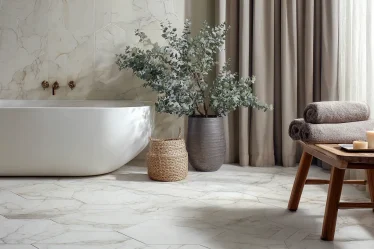
You have a tiny bathroom and kids who somehow need space for bath toys, towels, and a whole lot of chaos. You want it safe. You want it cute. You want your kid to actually use the step stool without knocking everything over. And you’d really like to stop stepping on wet puddles and plastic dinosaurs.
This guide gives you 16 small bathroom ideas for kids that actually work in 2026. We’ll cover smart storage, safety updates, and materials that survive sticky fingers. You’ll learn how to use vertical space, lower fixtures so kids can help themselves, and pick colors that stay calm even during the nightly bath meltdown. Let’s get started.
The 2026 Foundation: Safety Meets Minimalism

If you’re fixing up a bathroom for kids, start with safety stats—not Pinterest boards. The U.S. Consumer Product Safety Commission reports that around 235,000 children under 15 visit emergency rooms each year because of bathroom injuries. Falls are the biggest reason. Scalds come next.
That’s why 2026 bathroom design is shifting. Builders and parents are choosing rounded edges over sharp corners. Square vanities are out. Soft curves help prevent bumps and bruises when little ones run in.
Slip‑resistance matters more than ever.

Look for tile with a high coefficient of friction (COF). Textured porcelain or natural stone with a matte finish gives grip without looking industrial.
Anti‑scald devices are now code in many places.

These are simple valves that keep water temperature safe. If your faucet doesn’t have one, a plumber can add it for under $200.
Waterproofing gets smarter.
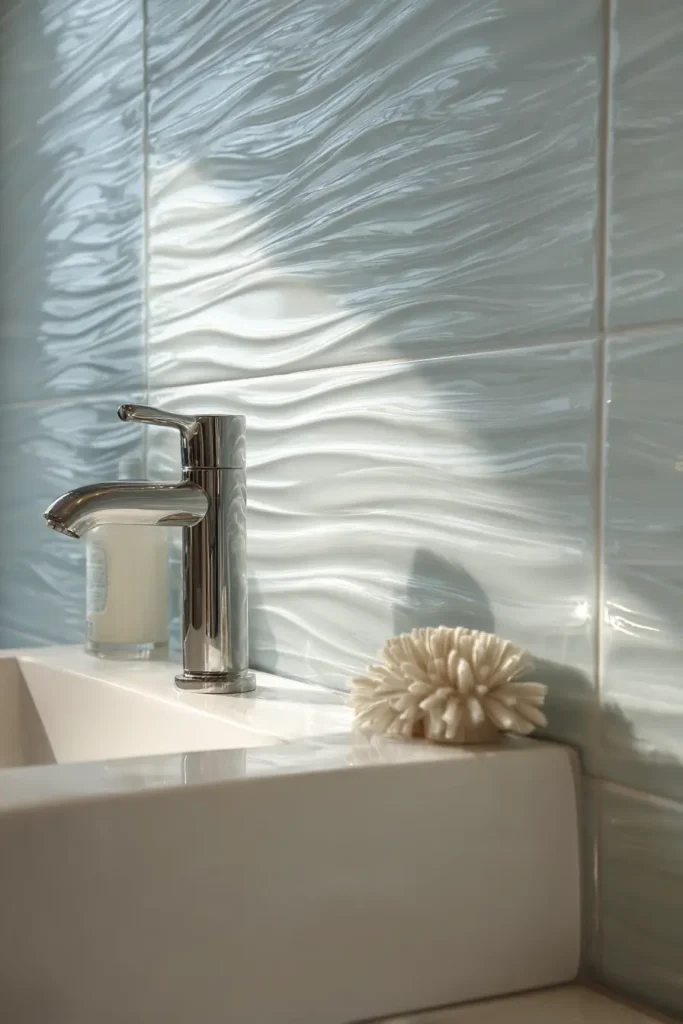
Instead of grout lines that trap mold, more families are using seamless wall panels. They look like tile but wipe clean in seconds. No scrubbing between tiny grout lines.
Before you buy anything, check these three boxes:
- Slip‑resistant flooring
- Rounded vanity corners
- Anti‑scald on the faucet
The “Reach‑It” Zone: Lowering Fixtures for Independence
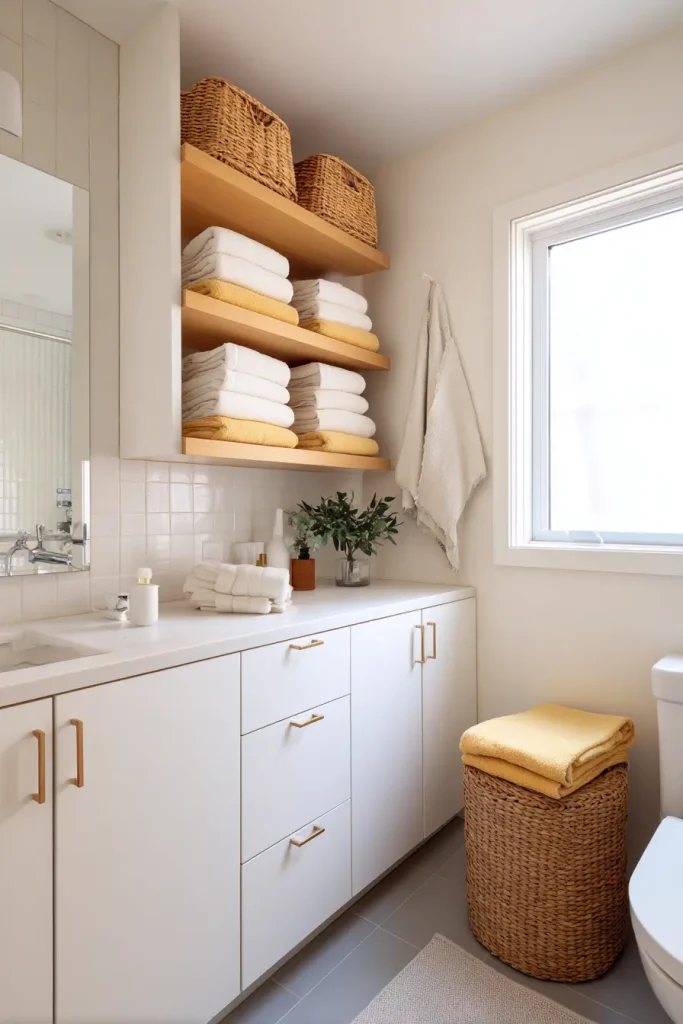
Imagine wrestling a wet, squirmy toddler while trying to grab a towel hung five feet high. That’s the old way. The new way is to put things where kids can actually reach them.
Install a “hook bar” wall at 24–30 inches high:

This is the perfect height for kids’ towels, robes, and even a lightweight step stool. When kids can grab their own towel, you get one less task. And they feel like big kids doing it.
Use dual‑height storage:
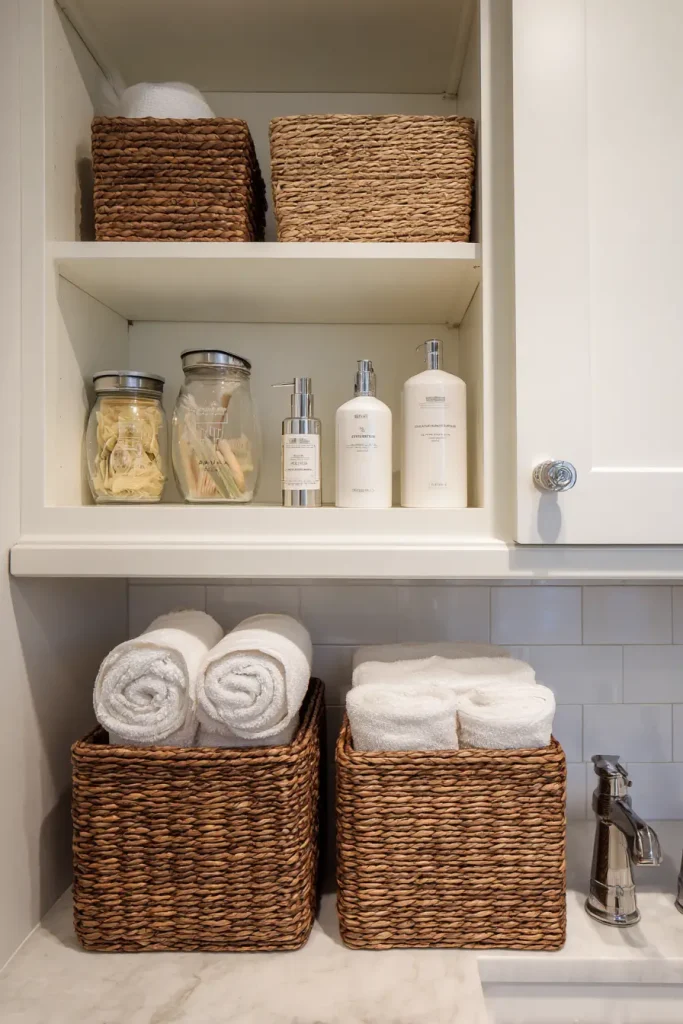
Keep adult toiletries above the toilet (closed cabinets hide the clutter). Put kid baskets below the sink on open shelving. When the baskets are low, kids can put their own stuff away—and you don’t have to bend down to fish out toothpaste.
The 2026 trending hack: a toe‑kick step stool:
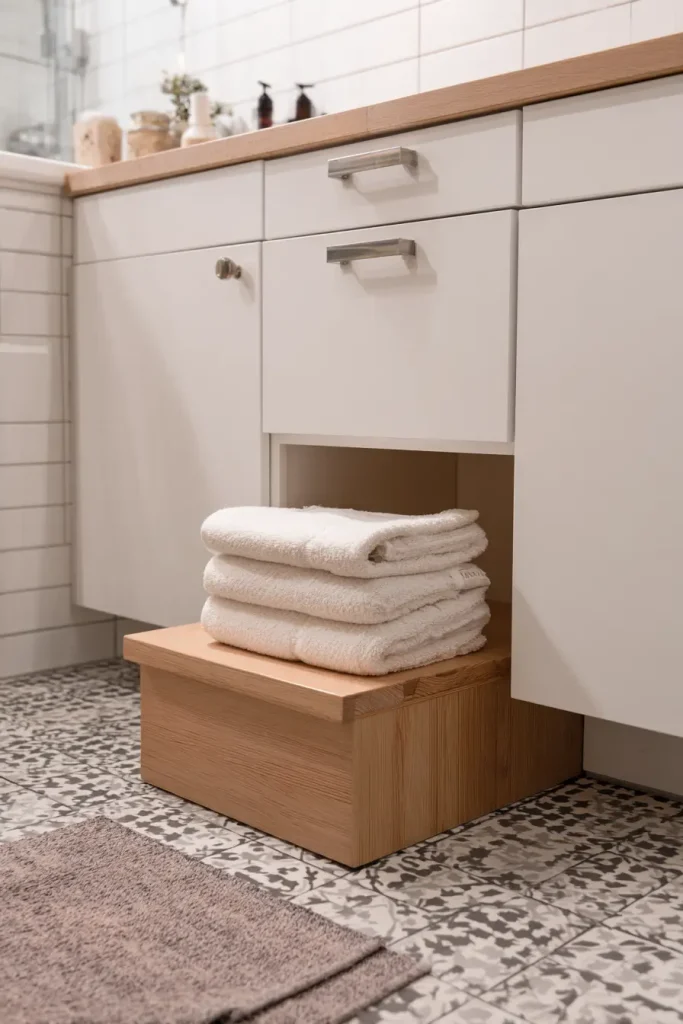
It’s a drawer that pulls out from under the cabinet and doubles as a step. You install it in the cabinet base. When closed, you’d never know it’s there. Pull it out, and your child gets a sturdy platform to reach the sink. Brands like IKEA’s METOD system can be modified for this, or you can order custom from RTA cabinet companies.
Measure your child’s arm span tonight. Tomorrow, move that towel bar down. It’s a five‑minute fix that pays off every single day.
Vertical Village: Turning Walls into Storage Giants

Small bathrooms always have dead space. Corners, door backs, and walls above the toilet—they’re all opportunities.
Magnetic boards for bath toys:

Buy a sheet of galvanized metal (or use a cheap baking sheet) and mount it behind the bathroom door or on a wall. Store toys with magnets attached. Water drips right off, so toys dry fast. No plastic bins collecting mildew. Bonus: kids love sticking magnets, so it becomes part of playtime.
Corner caddies made from clear acrylic:

These stackable shelves fit right into the corner of the shower or above the sink. Because they’re clear, they don’t visually clutter the room. Use them for shampoo, soap, or a small plant to make the space feel bigger.
Door organizer 2.0:

Forget flimsy plastic shoe pockets. Look for over‑the‑door acrylic bins with a clean look. They hold toiletries, hairbrushes, and even rolled washcloths. The clear bins let you see what’s inside, so kids can grab what they need without dumping everything out.
Pro tip: A cheap baking sheet behind the door catches drips and doubles as a magnet play zone during bath time. Two functions in one space.
The “Messy Drawer” Strategy: Zoning for Chaos

Every family has that bathroom drawer. The one with half‑empty toothpaste tubes, a mysterious hairbrush, and three kinds of bubble bath. Instead of fighting it, design for it.
Create a three‑bin system inside your vanity. Use small bins labeled:
- Keep – daily use items (toothbrush, hairbrush, soap)
- Toss – empty bottles, old flossers, random trash
- Store – extras like extra shampoo, spare soap, or bath toys not in use
When kids can see the categories, they actually put things back. And when it’s time to clean, you grab the “toss” bin and empty it in seconds.
Use dishwasher‑safe bins.
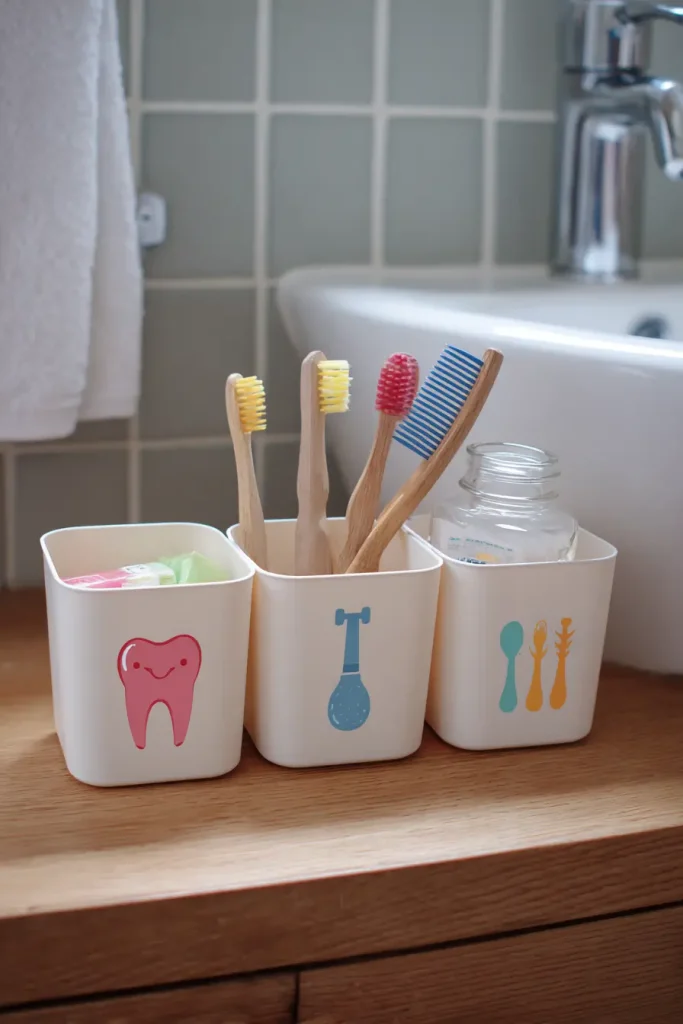
OXO and Rubbermaid make small food containers that fit perfectly in drawers. They hold toothpaste, hair ties, and combs. At the end of the week, you can pop them in the dishwasher. Everything gets sanitized without you scrubbing each item.
Add picture labels for non‑readers.

A photo of a toothbrush next to the toothbrush bin works wonders. Kids as young as two can help put things away when they see the visual cue.
Look for bins labeled “dishwasher safe.”

It changes the game when clean‑up feels like unloading the dishwasher instead of a separate chore.
Color Psychology: Fun Without Visual Clutter
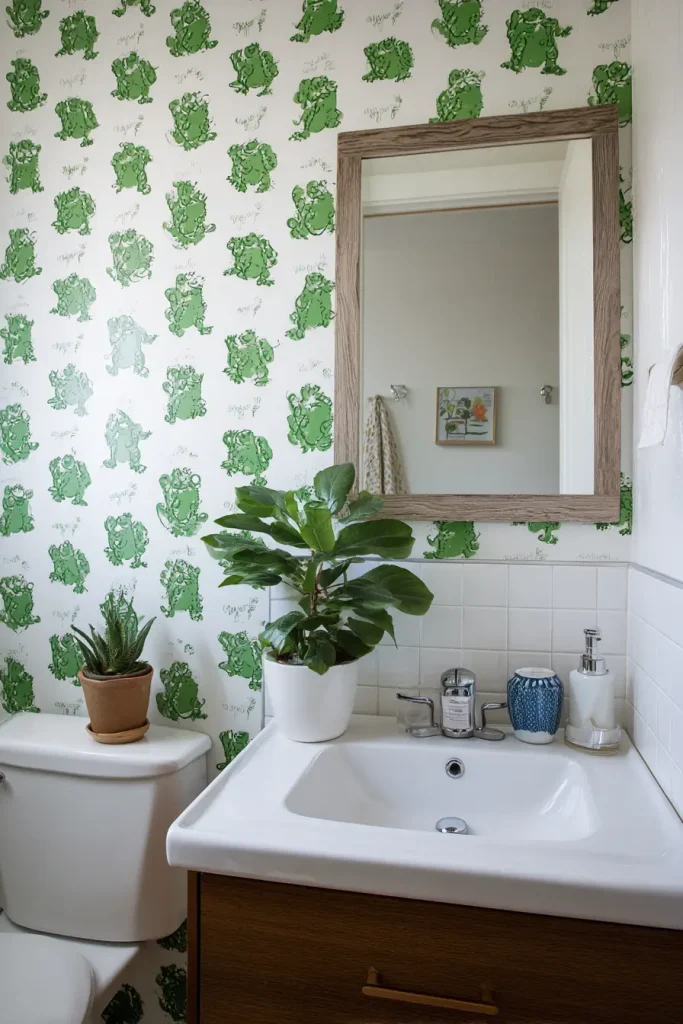
You don’t need primary colors to have a fun kid’s bathroom. In fact, bright reds and blues everywhere can make a small space feel chaotic. Calm colors help kids settle down for bedtime baths.
The 60‑30‑10 rule works perfectly here.
- 60% neutral – white, cream, or soft gray on walls and large surfaces
- 30% secondary – a muted color like sage green, navy, or dusty blue for cabinets or accent walls
- 10% pop – bright yellow, coral, or red on accessories (towels, a rug, or artwork)
Paintable wallpaper is a 2026 trend that renters love.

It adds pattern and fun but peels off cleanly when you move. Many brands now offer washable versions—spills wipe away with a damp cloth.
High‑contrast edges help little kids avoid falls.

A dark bath mat against a light floor creates a visual boundary. Kids learn to stop at the edge. You can also use contrasting tile trim on step edges or around the tub.
If you’re unsure, soft sage green is the 2026 neutral that works for all ages. It feels calm, pairs with almost anything, and hides water spots better than white.
Smart Tech for Tiny Humans
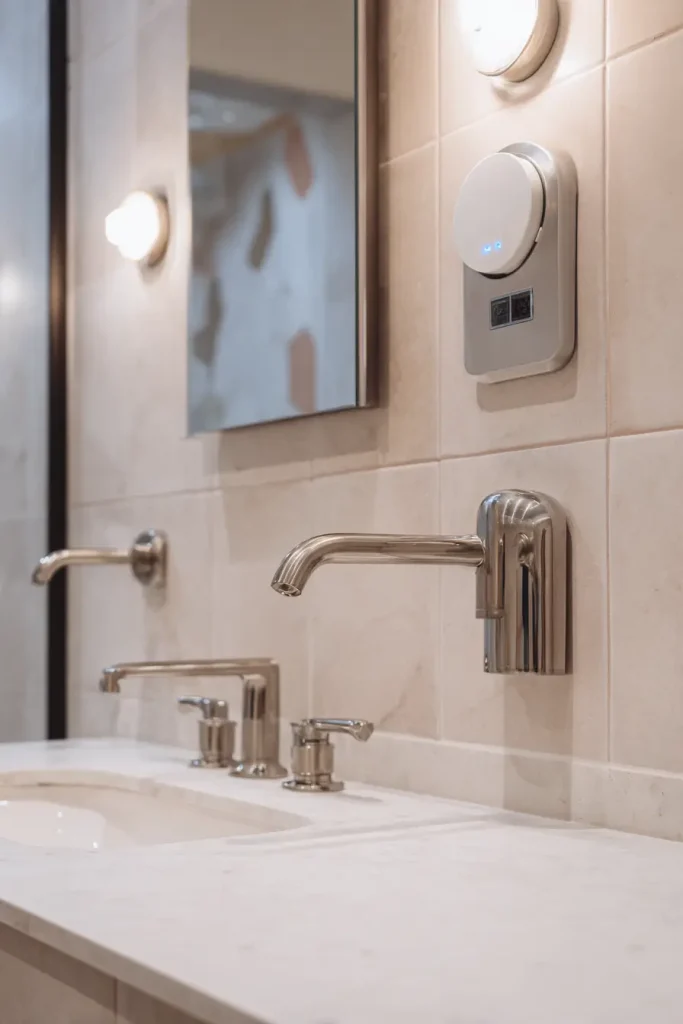
Smart home gadgets aren’t just for grown‑ups. The right tech makes the bathroom safer and gives kids more independence.
Motion‑sensor faucets
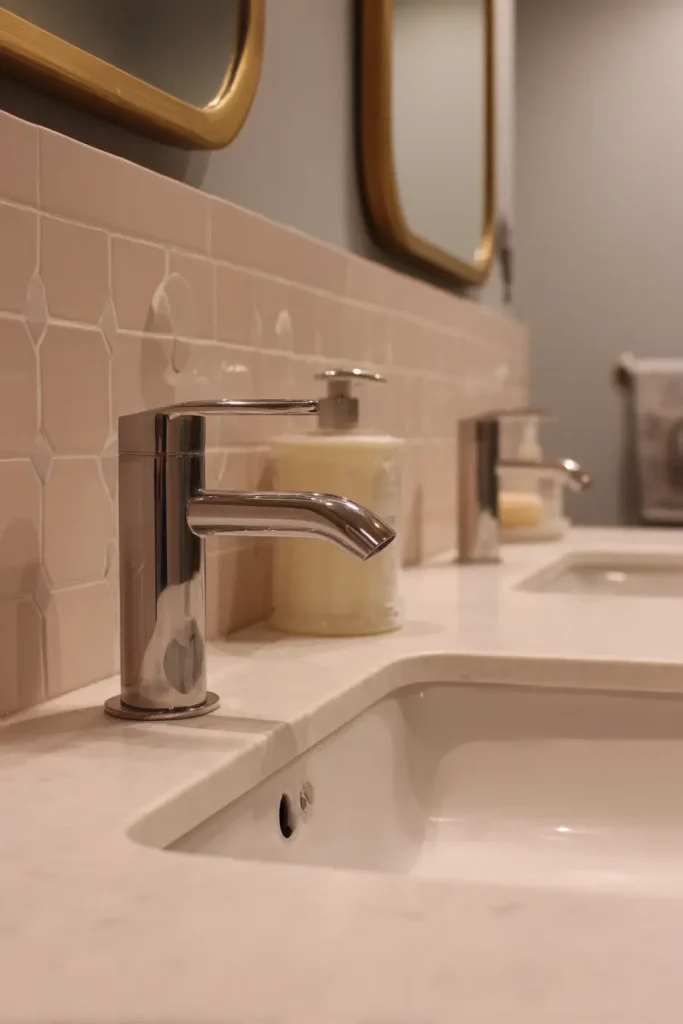
These are a game changer. No handles to get sticky. Kids wave a hand, and water comes on at the right temperature (if you set it). Water usage drops because they don’t leave the faucet running. Moen’s smart faucet lineup has models that work with voice commands too.
Automatic night lights at floor level.
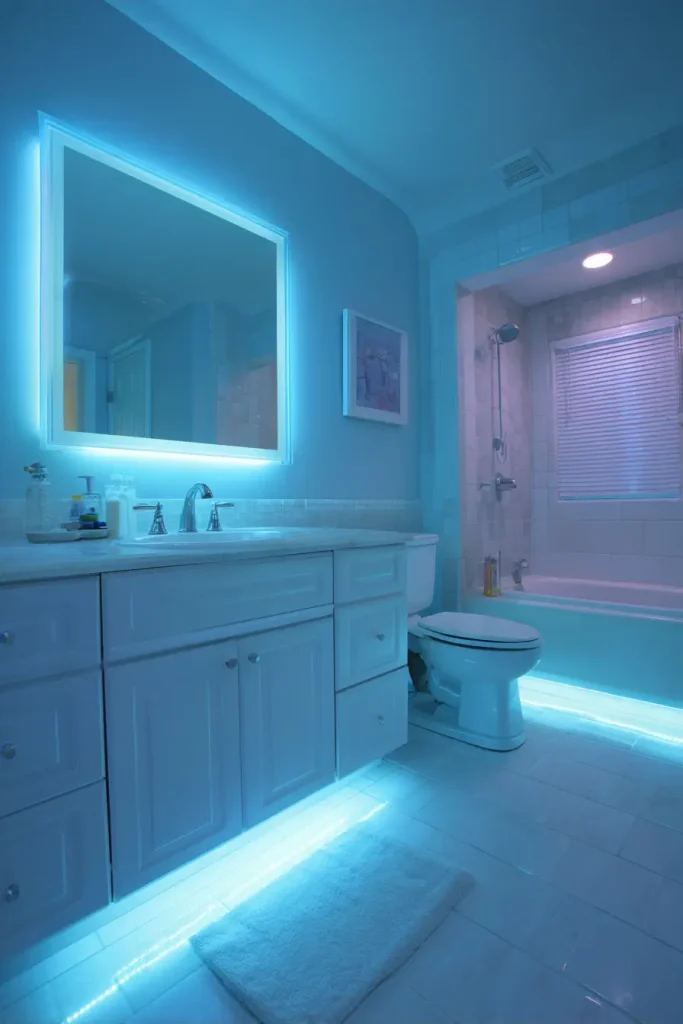
Overhead lights can blast a sleeping kid awake. Install motion‑activated LED strips along the baseboard or under the vanity. They guide sleepy kids to the toilet without waking them fully. Philips Hue makes motion sensors you can link to low‑wattage strips.
Toilet overflow sensors

sound like a luxury until you’ve had a toddler flush a toy. These small devices sit near the toilet base and send an alert to your phone when water is detected. Some smart home systems (like Ring or Aqara) offer them for under $50.
No budget for smart faucets?

A simple faucet extender like the Aqueduck costs about $10. It clips onto the spout and brings water forward so little hands can reach it easily.
Durable Materials That Look High‑End
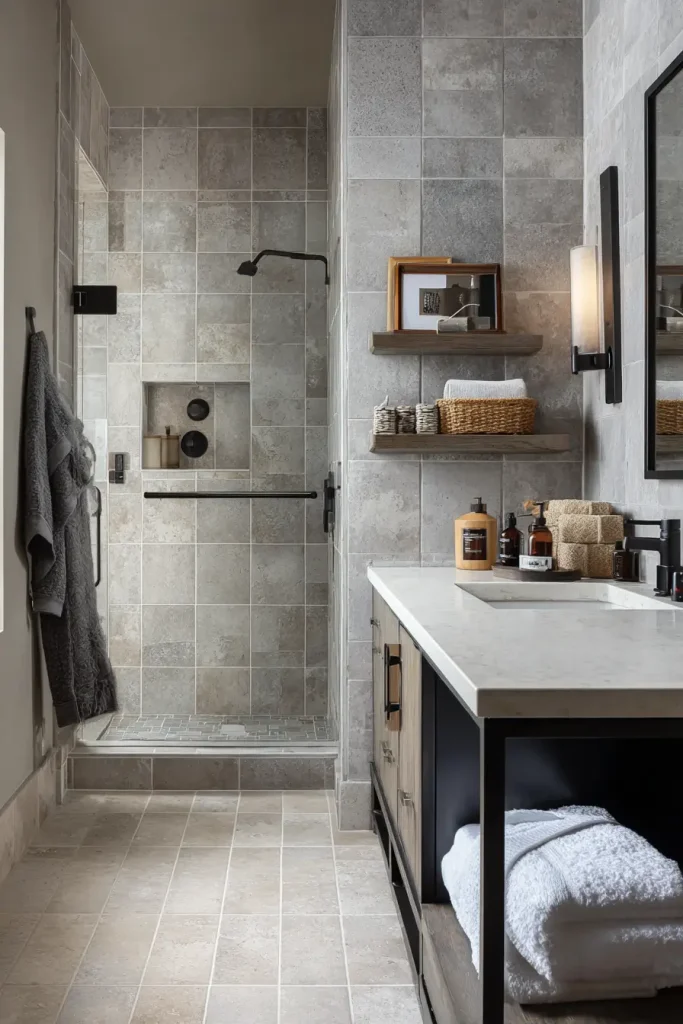
You want your bathroom to look beautiful. You also need it to survive toothpaste smears, dropped bottles, and weekly deep cleans. The right materials give you both.
Quartz beats marble every time.
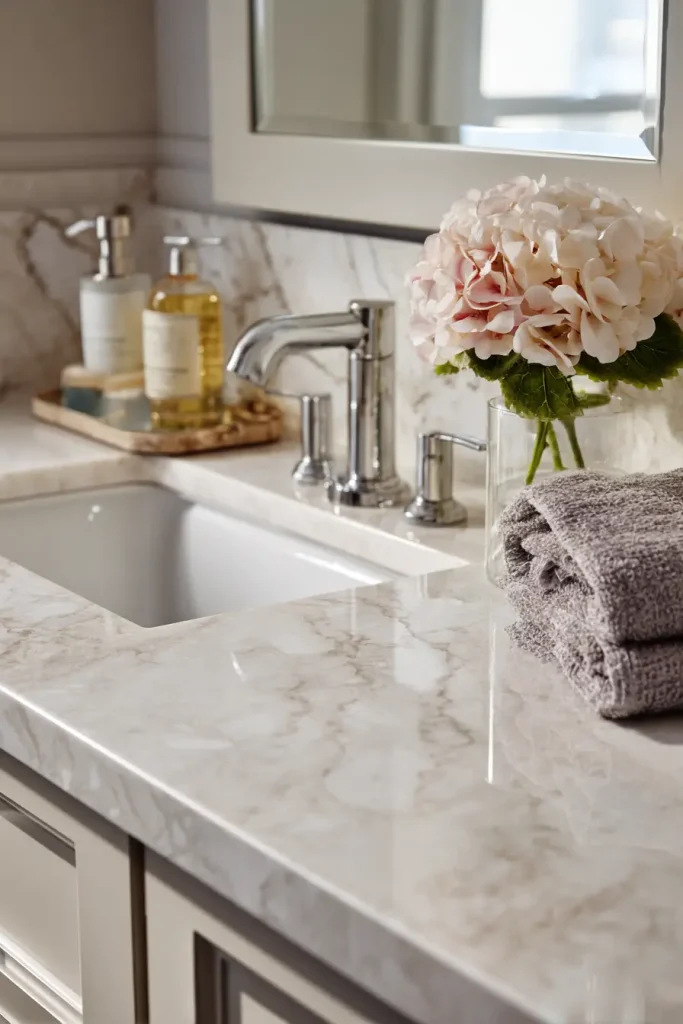
Marble is porous. Toothpaste, juice, and even water can stain it. Quartz is non‑porous, so it resists stains and doesn’t need sealing. It comes in almost any color or pattern, including marble‑lookalikes.
Porcelain wood‑look tile gives you the warmth of hardwood with zero water damage.

Kids splash. Wood floors warp. Porcelain planks look like oak or walnut but stand up to puddles. They’re also warmer underfoot than stone tile.
Spray‑on grout sealant is a must.

Even if you use tile, the grout lines are where mold hides. A high‑quality sealant creates a barrier that lasts a year or more. Apply it after every deep clean, and you’ll spend less time scrubbing.
Seal your grout. It’s the one step most DIYers skip, and it’s the only step that prevents 2026 mold from taking hold.
Putting It All Together
You don’t need a gut renovation to make a small bathroom work for kids. Start with safety: slip‑resistant floors, rounded edges, and anti‑scald valves. Then lower fixtures so kids can reach towels and step stools. Use vertical space for storage—magnetic boards, corner shelves, and door organizers turn dead space into functional zones.
Organize with dishwasher‑safe bins and picture labels. Choose colors that calm, not clutter. Add a few smart tech upgrades for independence and safety. And always pick materials that clean up fast and look good doing it.
Which of these 16 ideas fits your current bathroom layout? Try one this weekend. Move a towel bar down. Add a magnetic toy board. Swap your grout sealant. Small changes add up to a space that works for everyone—without making you feel like you live in a daycare.

- 17 Classy Living Room Ideas for a Cozy Elegant Look - April 23, 2026
- 16 Dark Moody Living Room Ideas That Feel Rich and Warm - April 22, 2026
- 14 Elegant Bedroom Trends for 2026 You’ll Love - April 22, 2026