
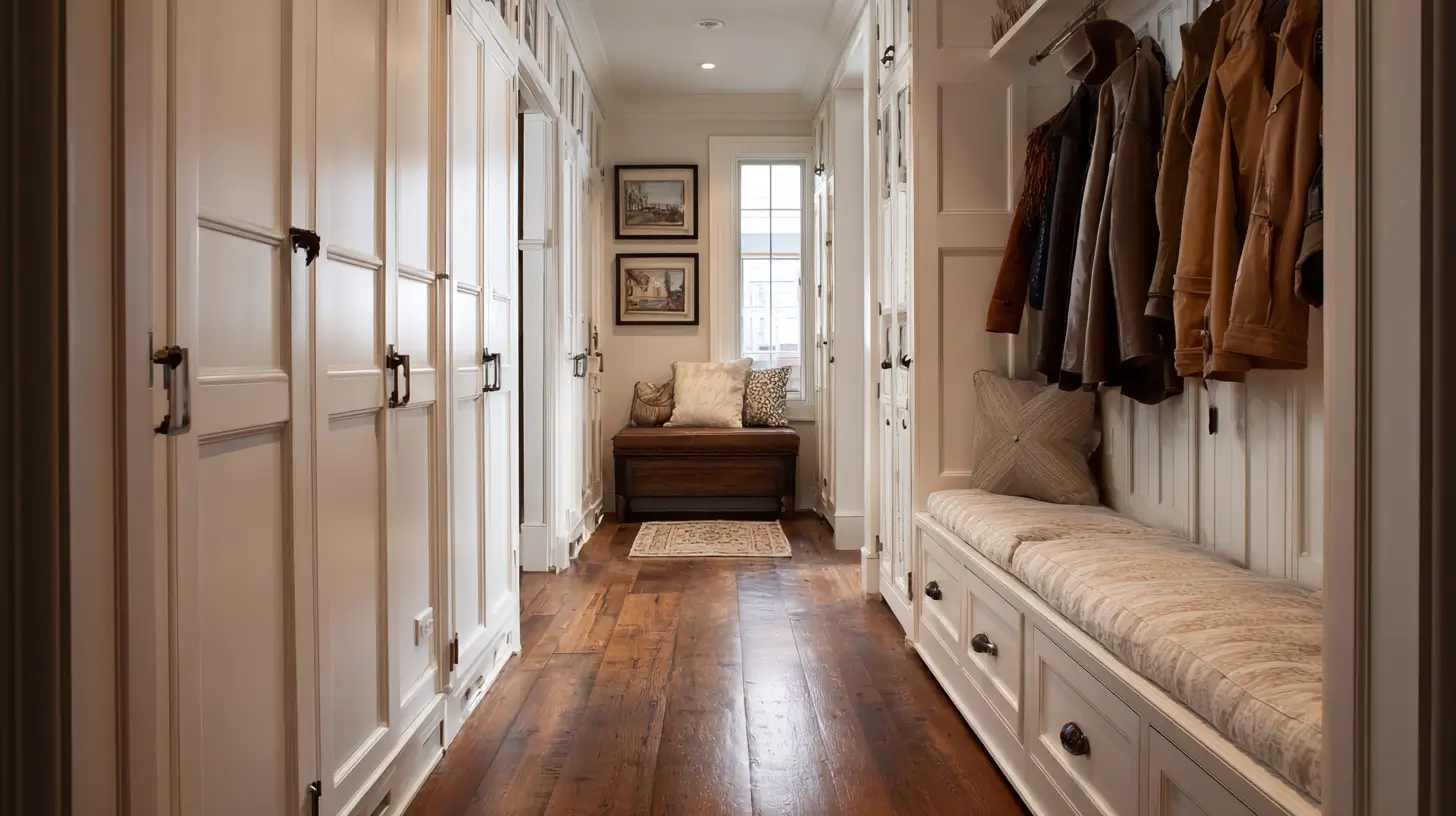
Your Coat Has Nowhere to Go. Here’s How to Fix That.
You get home. Arms full. You need to put your coat somewhere fast.
But there’s no closet. So it lands on a chair. Or the floor. Or gets draped over a doorknob.
Sound familiar?
Millions of homes especially apartments, older houses, and anything built before 1950 — were designed without a coat closet near the front door. It wasn’t a priority back then. And now you’re dealing with the mess.
Here’s the good news. You don’t need to renovate. You don’t need a big budget. And you definitely don’t need a whole mudroom.
These 16 hallway storage ideas work in tight spaces, cost as little as $15, and most can be set up in under an hour. Some are perfect for renters. Some are built to last for years.
Pick what works for your space. Skip what doesn’t. By the end of this list, you’ll have a real plan.
Why So Many Homes Skip the Coat Closet (And Why It Causes Real Problems)
Before 1950, most homes in America didn’t have entryway closets. Storage just wasn’t part of the design. Urban apartments are even worse — builders cut every possible square foot to keep rents lower and units smaller.
The National Association of Home Builders (NAHB) reports that entry storage consistently ranks as one of the top features buyers want in a home. Yet most existing homes don’t have it.
And clutter at the entry point hits harder than you think. Research from UCLA’s Center on Everyday Lives and Families found that household clutter is one of the top sources of stress for American families. Your entryway is the first thing you see when you walk in and the last thing you see when you walk out.
When it’s chaotic, the whole home feels chaotic.
The average American household owns around 300,000 items according to that same UCLA study. Coats, bags, shoes, and keys are just a small part of that. But they all land at the door. Every single day.
You need a system. And these 16 ideas will help you build one.
Before You Buy Anything: How to Size Up Your Hallway
Stop. Don’t order anything yet.
Spend 10 minutes looking at your space first. It will save you from buying the wrong thing and sending it back.
Here’s what to check:
Measure your walls, not just your floor. A hallway that feels tiny often has plenty of usable wall space. Most people ignore everything above 5 feet. That’s a mistake.
Find your “blank wall.” Is there a wall facing the front door? A long side wall? A narrow strip between two doorways? That’s your best spot.
Know your renter rules. If you rent, you may be limited on drilling. But there are strong no-drill options that hold real weight. More on those below.
Decide what you actually need to store. Coats only? Shoes too? Bags, keys, mail, umbrellas? Make a list. This decides what kind of solution you need.
Pick a budget tier before you shop:
- Under $50: Quick fixes, hooks, baskets
- $50 to $150: Benches, ladder shelves, small cabinets
- $150 to $300+: Full systems, hall trees, wardrobe units
IKEA’s small spaces room planner at ikea.com is free and lets you test layouts before buying anything. Worth 15 minutes of your time.
Idea #1 and #2: Wall-Mounted Coat Racks That Go Up in Minutes
If you have wall space and nothing else, start here.
Rental-friendly: Yes (with the right hooks) | Cost: $15 to $80 | Install time: 15 to 30 min
Idea #1: Shaker Peg Rail
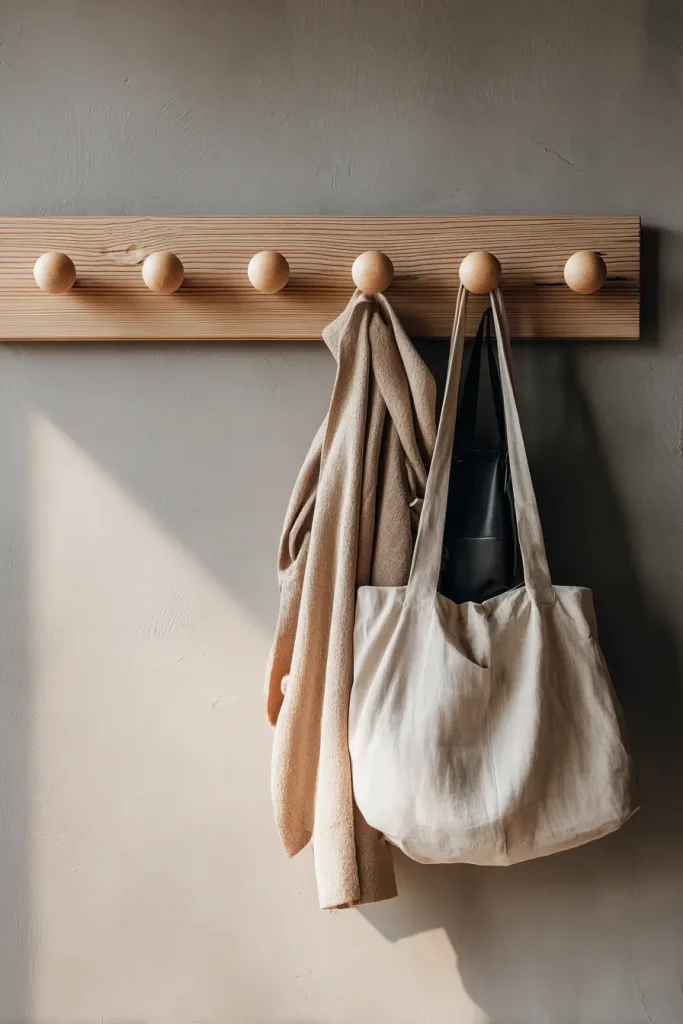
This is a row of wooden pegs mounted on a plank of wood. Simple, strong, and it holds a lot.
A standard 4-peg Shaker rail holds coats, bags, and scarves for a whole family. You can buy one ready-made or cut a board, drill in some pegs, and make it yourself for under $20.
Mount it at 60 to 66 inches from the floor for adults. Add a lower row at 48 inches if you have kids.
Product to look at: The IKEA TJUSIG rail holds up to 22 lbs and costs around $20. It works.
Idea #2: Over-Door Hook Systems
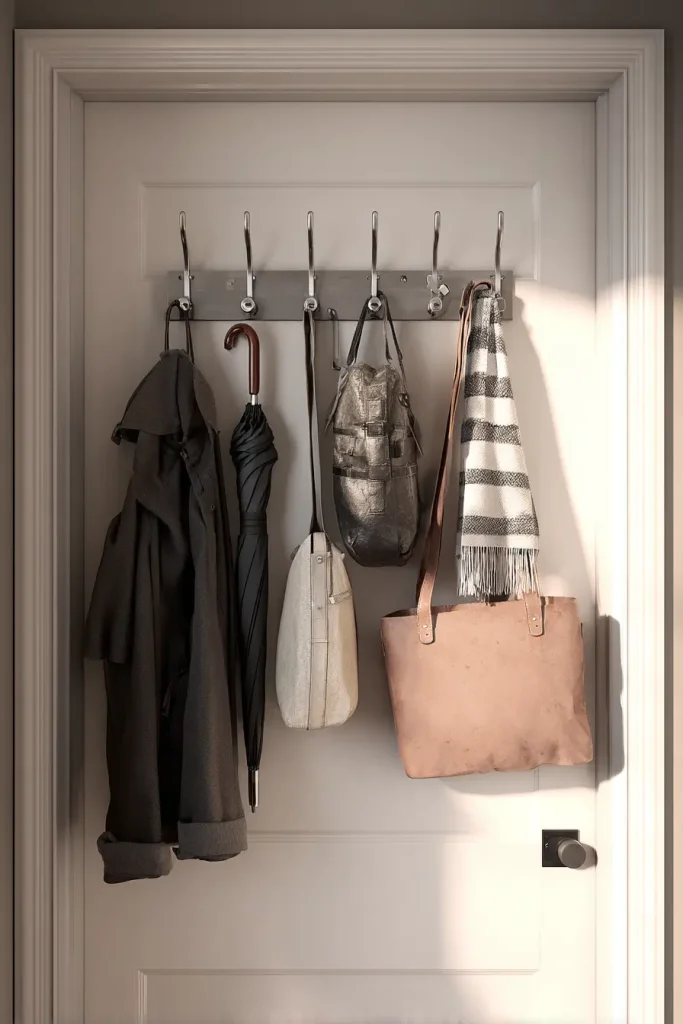
Own nothing, drill nothing, damage nothing.
Over-door hooks hang on the top of any door and hold up to 10 to 20 lbs depending on the model. They work on front doors, closet doors, and bedroom doors.
3M Command hooks are a strong option for renters. Each strip holds 7.5 lbs, so two strips can hold a heavy winter coat without pulling off the wall.
Pro tip: Put hooks at different heights on the same door. Top hooks for coats, middle for bags, bottom for dog leashes or umbrellas.
Idea #3 and #4: Entryway Benches That Hide a Lot of Stuff
Your entryway needs somewhere to sit. It also needs somewhere to stash things. A storage bench does both.
Rental-friendly: Yes | Cost: $80 to $200 | Install time: Assembly only
Idea #3: Lift-Top Storage Bench
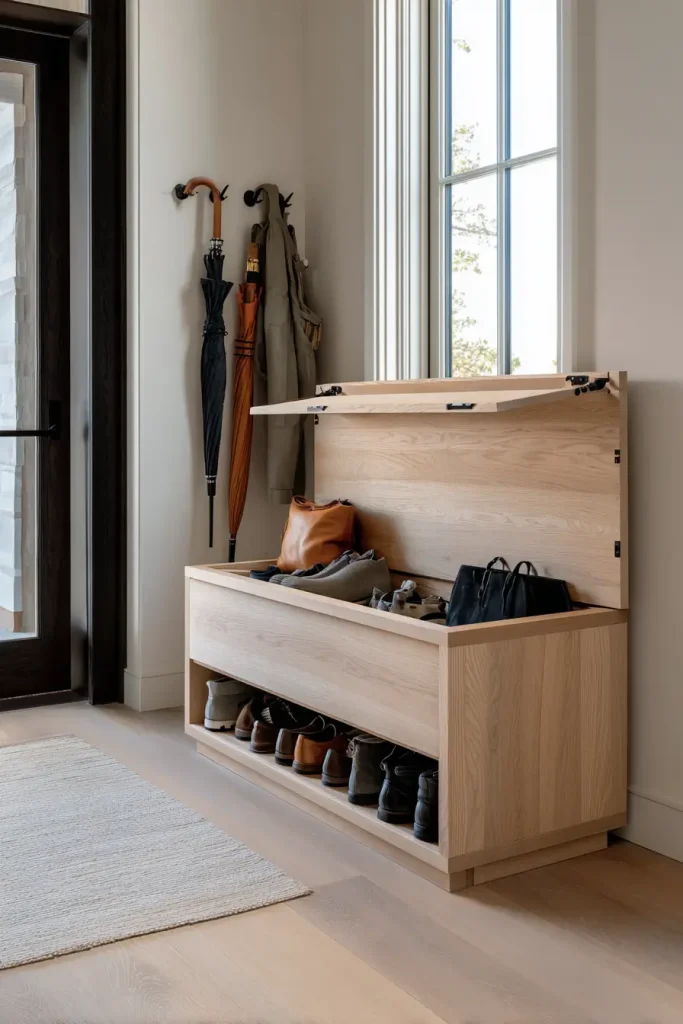
You sit on it to put on your shoes. You lift the top to hide everything else.
Inside goes: seasonal items, extra shoes, umbrellas, dog gear, reusable bags. All out of sight.
Look for benches that are 12 to 14 inches deep. That fits in hallways as narrow as 36 inches wide without blocking traffic.
The IKEA HEMNES shoe bench does this well and costs around $130.
Idea #4: Open Cubby Bench
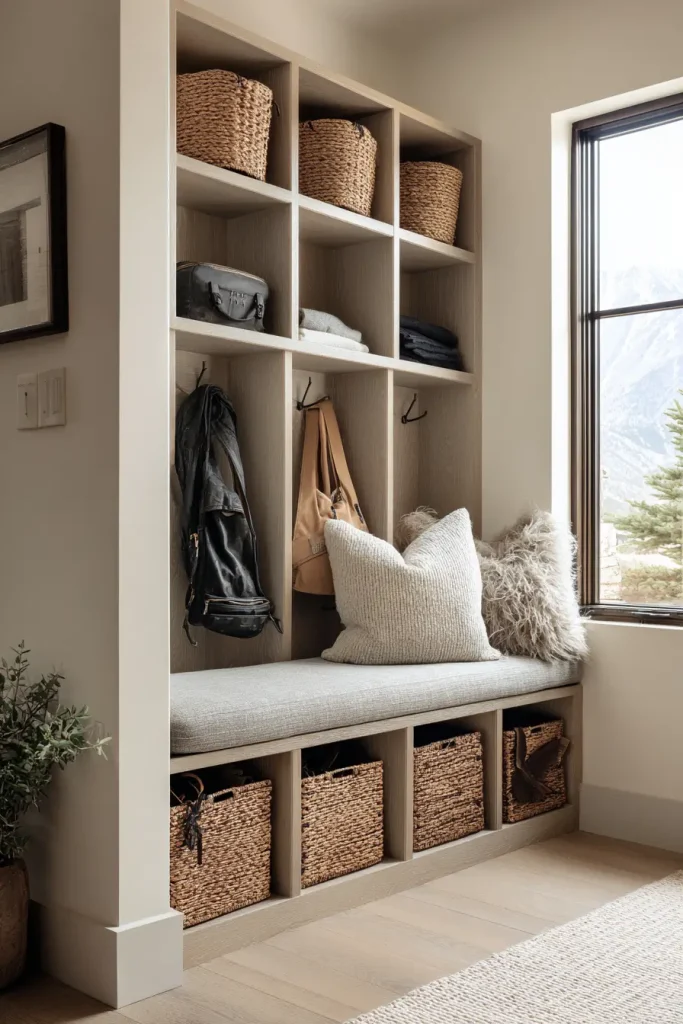
This is a bench with open square cubbies underneath instead of a hidden lid.
Each cubby holds a basket. Each basket holds one category of stuff. Shoes in one, bags in another, kid gear in a third.
The IKEA KALLAX unit turned on its side with a cushion on top is one of the most popular entryway hacks on Pinterest. A 4-cube unit, a cushion, and two baskets runs about $120 total. That setup has millions of saves for a reason. It works and it looks good.
Idea #5 and #6: Freestanding Coat Stands and Hall Trees
No wall space? No problem. These stand on their own.
Rental-friendly: Yes, completely | Cost: $30 to $250 | Install time: 10 minutes
Idea #5: Classic Coat Stand
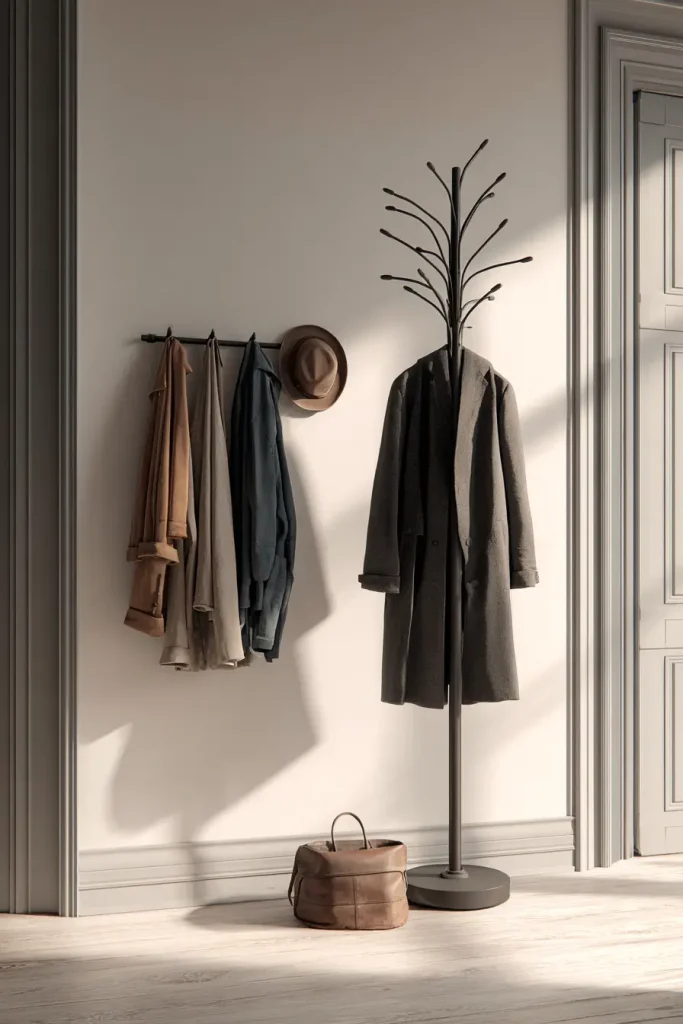
A single post with hooks fanning out at the top. It takes up about 18 inches of floor space and holds 6 to 8 coats.
It’s not a permanent fixture. You can move it, reposition it, or take it to your next home.
Best placement: In a corner diagonally. It fills the corner and keeps the walking path clear.
The SONGMICS metal coat stand on Amazon is a consistent best-seller. Around $35 to $50 and it ships fast.
Idea #6: Hall Tree
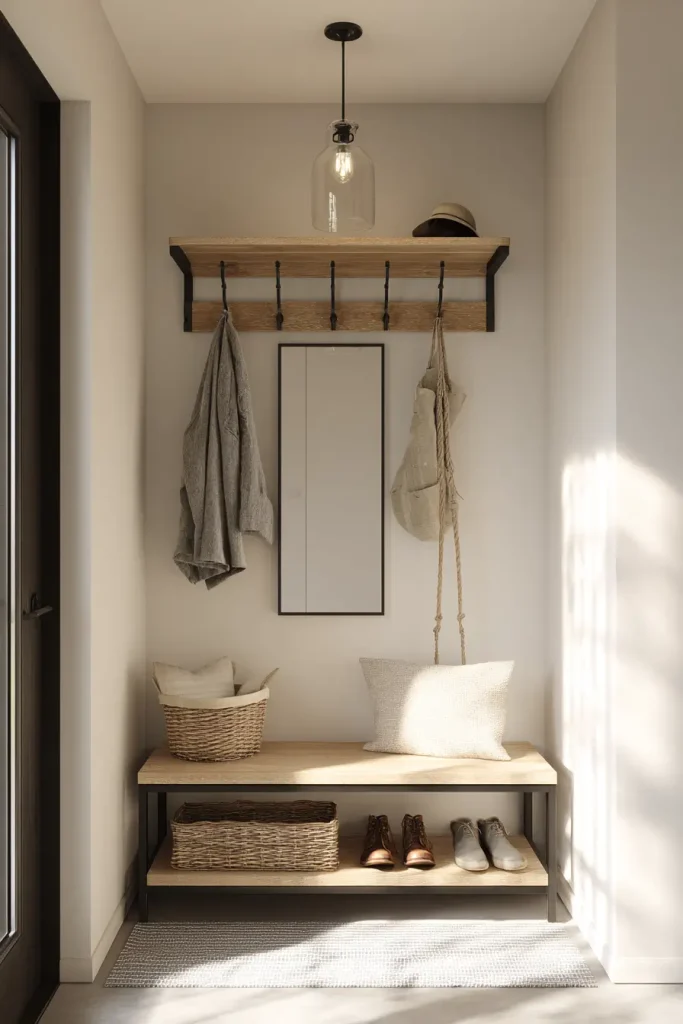
A hall tree is like a coat stand that grew up. It has hooks at the top, a mirror in the middle, and a small shelf or bench at the bottom.
One piece of furniture does the job of three. That matters a lot when you have almost no space.
Searches for “hall tree furniture” were up 34% on Pinterest in 2024. More people are solving this exact problem the same way.
The VASAGLE hall tree is a solid pick under $100. The World Market versions look better but cost more.
Idea #7: The Floating Shelf and Hook Combo
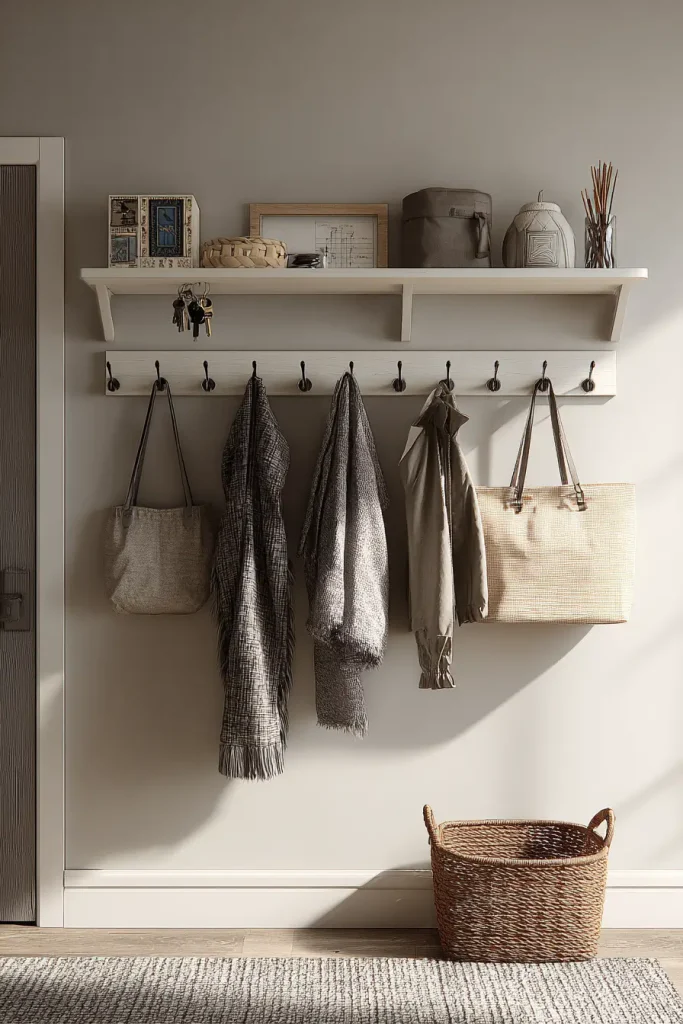
This is the most space-efficient wall setup you can build.
Rental-friendly: Depends on drilling | Cost: $25 to $60 | Install time: 30 to 45 min
One floating shelf above a row of hooks gives you two layers of storage on the same wall.
The hooks hold coats and bags. The shelf above holds keys, mail, sunglasses, and a small decorative item if you want it.
The layered wall concept works like this:
- Shelf at 72 inches from the floor
- Hooks at 60 inches
- A small basket or tray on the floor below for shoes
IKEA LACK shelf: around $12. A basic hook rail: around $15. Total system: $27.
Install tip: Find your wall studs before you drill. Use a stud finder app on your phone. If you can’t hit a stud, use toggle bolts rated for drywall. They hold more than you expect.
Pro tip: Put a small bowl or tray on the shelf for keys. You will stop losing your keys within one week. That alone makes this worth it.
Idea #8 and #9: Shoe Storage Solutions That Don’t Take Over Your Hallway
Shoes are the biggest entryway problem for most people. Here’s how to actually solve it.
Rental-friendly: Yes | Cost: $25 to $120 | Install time: Assembly only
According to Statista, the average American owns between 19 and 20 pairs of shoes. Even half of those landing by the door creates a real mess.
Idea #8: Slim Shoe Cabinet
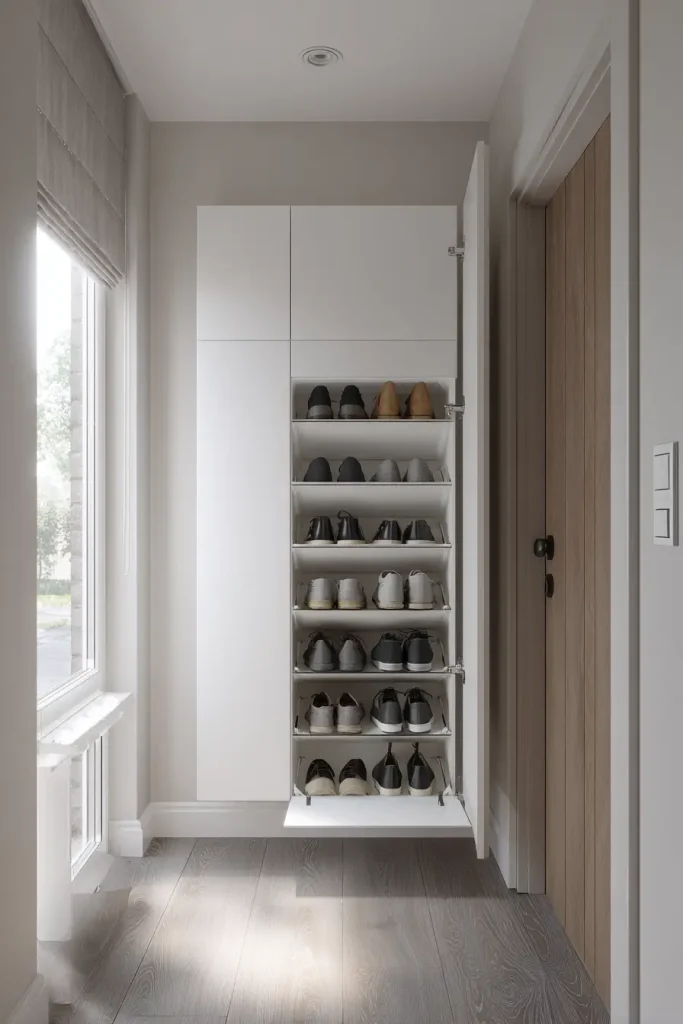
A slim shoe cabinet is typically 10 to 12 inches deep. That’s narrow enough to fit in a hallway as tight as 32 inches wide.
The front-flip style holds 6 to 10 pairs behind a clean door. No shoes visible. No mess showing. Guests don’t see it.
The IKEA HEMNES shoe cabinet in white looks like a real piece of furniture. It doesn’t look like a shoe rack. That matters for a visible entryway.
Idea #9: Over-Door Shoe Organizer
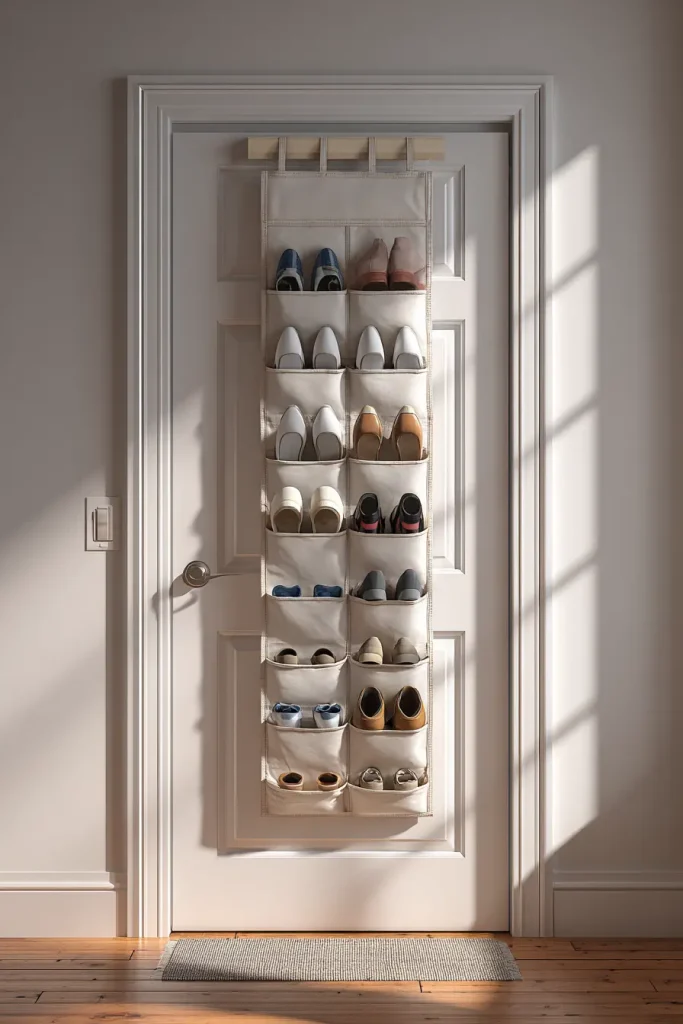
Zero floor space used. Zero holes drilled.
These hang over the door and hold 12 to 20 pairs in pockets. They work best for flats, sneakers, and everyday shoes. Not great for tall boots.
One rule that helps: the “one in, one out” policy. Every time a new pair comes in, one old pair leaves. This keeps the entryway from growing into a shoe store.
Idea #10: Pegboard Wall Storage That You Can Fully Customize
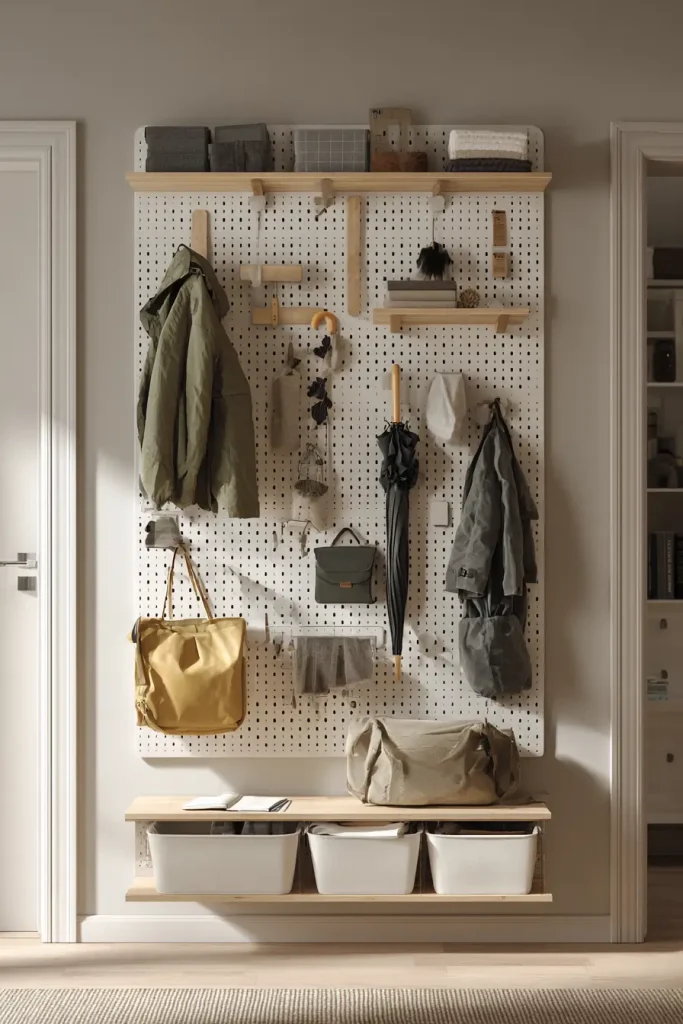
This gives you a whole wall of storage that you can rearrange any time.
Rental-friendly: Yes, with the right setup | Cost: $40 to $90 | Install time: 1 to 2 hours
A pegboard is a sheet of wood or metal with evenly spaced holes. You insert hooks, bins, and shelves wherever you want them. Change your mind? Move things around. It takes 30 seconds.
IKEA SKÅDIS is the modern version. It comes in white or beige, looks clean, and has a whole accessory system built around it.
Traditional pegboard from a hardware store costs even less. Paint it the same color as your wall if you want it to blend in. Or paint it a bold color and make it a design feature.
The renter trick: Don’t mount it directly to the wall. Build or buy a simple wooden frame the same size as the pegboard. Stand it against the wall. No drilling. When you move out, it moves with you.
You can hang coats, bags, umbrellas, keys, a mail sorter, and small baskets all on one panel. It holds more than it looks like it should.
Idea #11: Leaning Ladder Shelves With S-Hooks
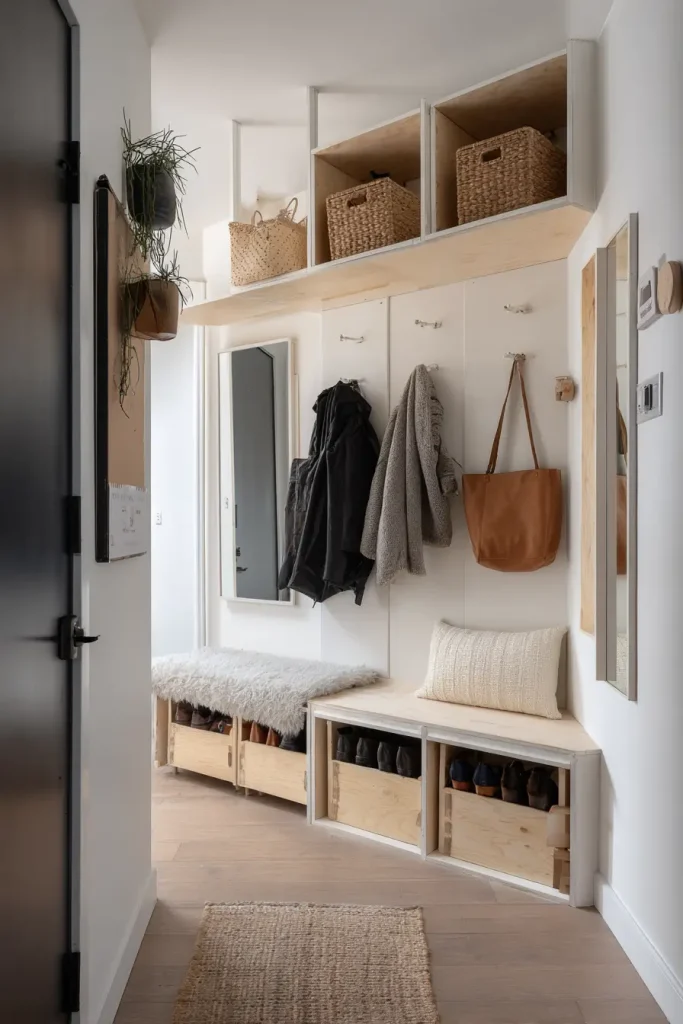
No drilling. No tools. No installation. Just lean it against the wall and load it up.
Rental-friendly: 100% yes | Cost: $40 to $100 | Install time: 5 minutes
A leaning ladder shelf leans against any wall at an angle. It has 4 to 5 horizontal rungs that work as shelves.
Here’s how to turn it into coat storage:
Put S-hooks on the top two rungs. Hang coats from them. Use the lower shelves for baskets holding shoes and accessories. Done.
Best dimensions for a hallway: 63 to 71 inches tall and 18 to 24 inches wide. That gives you enough hooks without taking too much floor space.
The VASAGLE 5-tier ladder shelf is under $60. Target’s Threshold line has good-looking options in the $70 to $90 range.
This is the single best option for renters who can’t or won’t drill anything.
Idea #12: Mudroom-Style Lockers Without a Mudroom
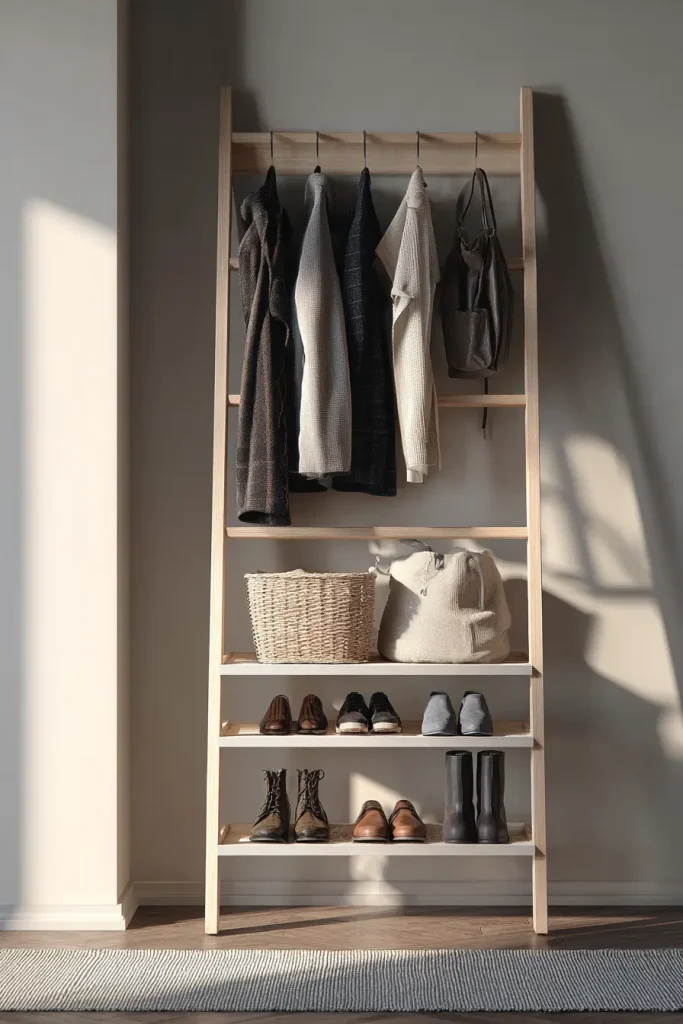
You can build the function of a mudroom in a 3-foot section of hallway.
Rental-friendly: Somewhat | Cost: $120 to $450 | Install time: 2 to 4 hours
A mudroom locker system is basically a defined zone with hooks above, a shoe area below, and sometimes a seat in the middle.
You don’t need a real mudroom. You need one wall.
The most popular approach: take an IKEA PAX wardrobe unit and remove the doors. Add a mix of hooks inside at the top, a pull-out shoe tray at the bottom, and a small mirror on the side panel.
What you get is a built-in looking closet that didn’t require any contractor, any permits, or any major work. Cost for a full PAX hallway setup runs $200 to $450 depending on your configuration.
According to HomeAdvisor, adding mudroom-style storage increases the perceived value of a home by 5 to 10%. Even if you’re renting, this kind of setup makes the space feel significantly more intentional.
The PAX hallway closet hack has millions of saves on Pinterest. It’s not new. But it still works better than most things in this price range.
Idea #13: Full-Length Mirrors With Hidden Storage
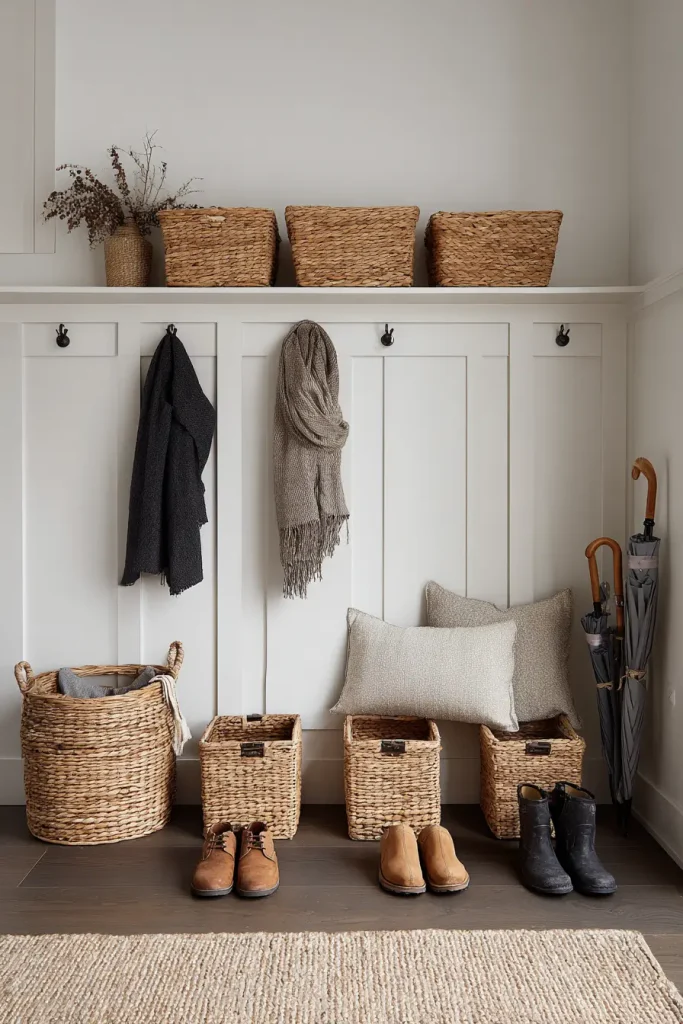
This one does two jobs at once. And it makes your hallway feel bigger.
Rental-friendly: Yes | Cost: $40 to $150 | Install time: 15 to 30 min
Interior designers use mirrors in narrow spaces for one reason: they make the room feel twice as wide. A full-length mirror at the end of a hallway can completely change how the space feels.
But here’s what most people don’t know. Many full-length mirrors come with built-in hooks on the frame or hidden storage in a cabinet behind the mirror face.
You get:
- A mirror to check yourself before leaving
- Hooks on the sides for coats or bags
- Hidden storage behind the panel for small items
IKEA STAVE mirror with side hooks added separately is a popular combo. Many Amazon options come with side hooks built in from $40 to $100.
One honest note: the hidden storage behind mirror panels is usually small. It works well for keys, sunglasses, and small accessories. It won’t hold a coat collection on its own.
Idea #14: The Basket System That Takes 10 Minutes to Set Up
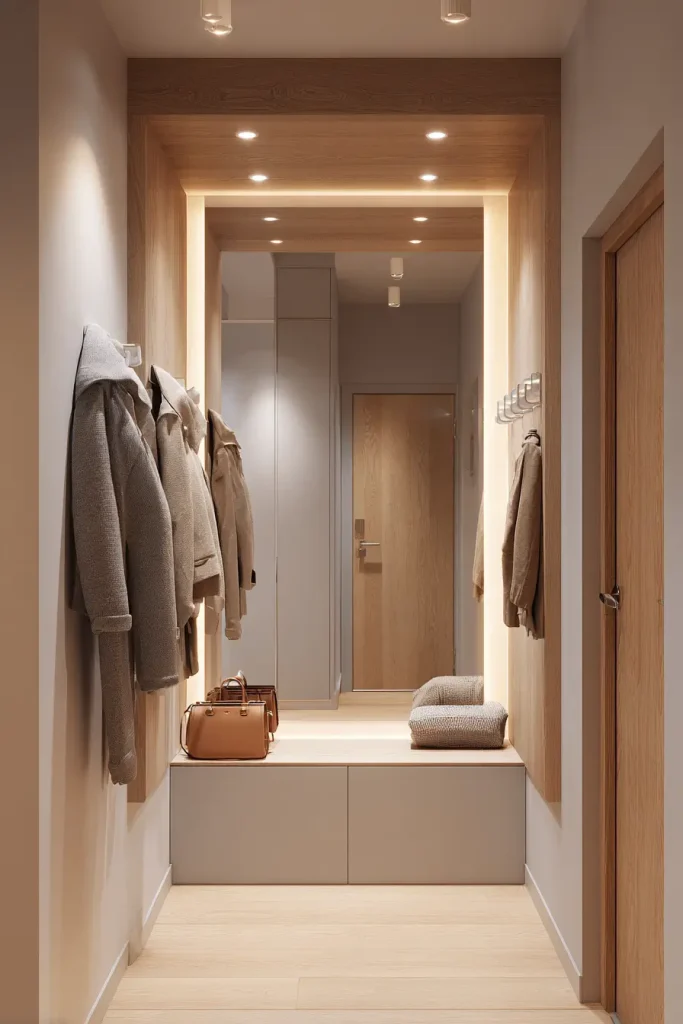
This is the fastest, cheapest, lowest effort solution on the entire list.
Rental-friendly: Yes, completely | Cost: $15 to $60 | Install time: 10 minutes
Go buy some baskets. Label them. Put them in your entryway. You’re done.
That sounds too simple. But professional organizers recommend this exact method because it works with human behavior instead of against it.
People will always drop things near the door. The basket system just gives those things a home.
Label ideas that actually work:
- One basket per family member
- One basket per category: “Dog gear,” “Kid stuff,” “Seasonal scarves,” “Umbrellas”
The National Association of Productivity and Organizing Professionals (NAPO) recommends this framework: assign one container per category. When the container is full, it’s time to remove something. Simple rule. It actually sticks.
Best materials for entryway baskets: seagrass holds up to daily use. Wire baskets are easy to clean. Fabric cube bins are softer but can get dirty faster.
Cost for a set of 3 to 4 baskets: $15 to $60 depending on material and brand.
Idea #15: Narrow Console Tables That Work Harder Than They Look
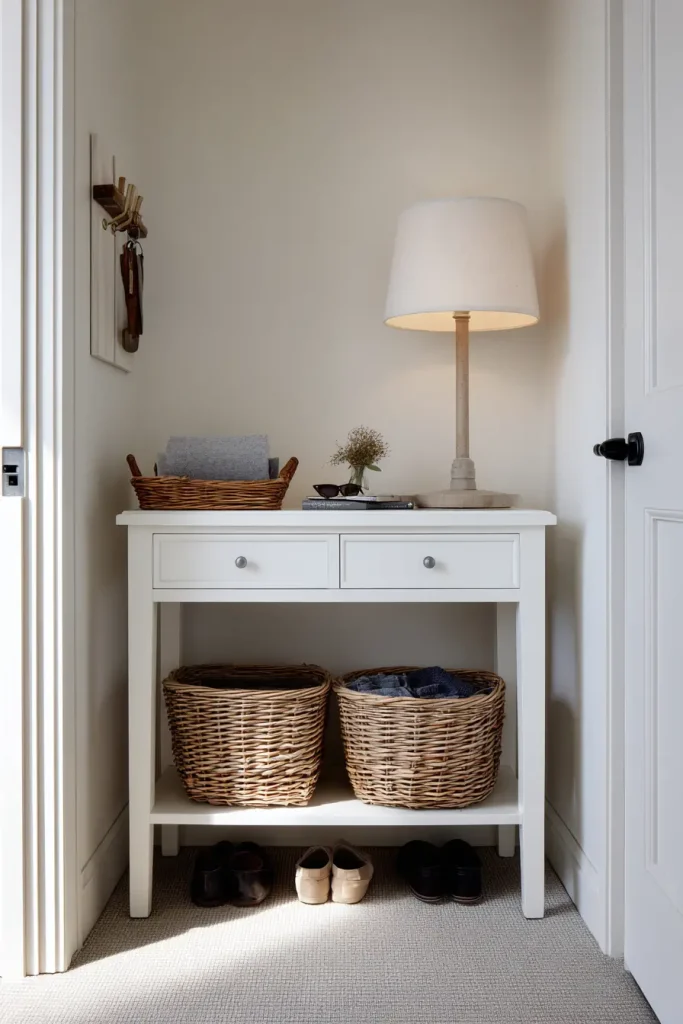
A slim table can hold more than you think when you use all three levels.
Rental-friendly: Yes | Cost: $60 to $200 | Install time: Assembly only
A console table 10 to 14 inches deep fits in a hallway as narrow as 30 inches wide. That’s narrow. And a good console table uses every inch.
Here’s how to use all three levels:
Top surface: Keys in a small tray or bowl. Mail sorted upright in a holder. Maybe a small lamp for mood.
Drawer: Gloves, sunglasses, charging cables, masks. The stuff that doesn’t belong anywhere but you need at the door.
Lower shelf: Two baskets. One for shoes you wear most often. One for bags you grab regularly.
Three storage zones from one piece of furniture that’s barely a foot deep.
IKEA HEMNES console table is around $150 and has a lower shelf. CB2 carries slim consoles with drawers in the $200 range. Amazon has decent options from $60 to $100.
Idea #16: Use the Full Height of Your Walls
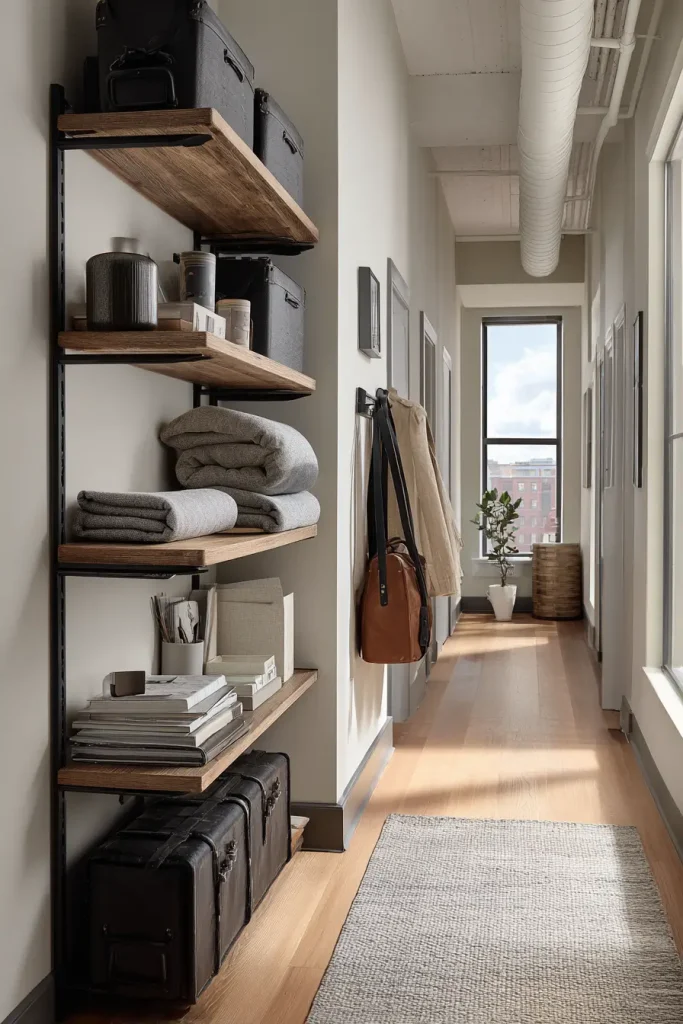
Most hallways waste 4 to 5 feet of perfectly usable space above eye level.
Rental-friendly: Depends on drilling | Cost: $80 to $300 | Install time: 2 to 3 hours
The average hallway has 8-foot ceilings. Most people use storage only up to about 6 feet. That means roughly 2 feet of wall height goes completely unused on every wall in the hallway.
Multiply that across both sides of a hallway and you’re ignoring 30 to 40 square feet of storage space. That’s more than some closets.
Floor-to-ceiling shelving captures all of it.
The IKEA BILLY bookcase with a height extension unit reaches close to ceiling level. The IVAR system is adjustable and lets you add or remove shelves based on what you need.
The system that works best:
- Eye level and below: items you reach for every day
- Above eye level: items you use weekly
- Top shelves near the ceiling: full seasonal rotation (winter coats stored in summer, summer gear stored in winter)
This approach effectively doubles your hallway storage without adding any floor furniture.
One honest note: floor-to-ceiling shelving requires drilling and some assembly. It’s more work than the other ideas. But the storage payoff is bigger than anything else on this list.
You Don’t Need a Coat Closet. You Need a System.
Here’s the honest truth. A coat closet is convenient. But it’s just a box with a rod and a shelf. Everything on this list replaces that box with something that often works better because it’s designed specifically for your space.
The three tiers to remember:
Wall-mounted options (Ideas 1, 2, 7, 10) free up your floor completely. Best for tiny hallways.
Furniture-based options (Ideas 3, 4, 5, 6, 8, 12, 13) do multiple jobs at once. Best for people who want a clean, finished look.
Quick-setup options (Ideas 9, 11, 14) need almost no effort and no tools. Best for renters or people who want results today.
Pick one idea you can do this weekend. Even the $15 basket system is better than the pile of coats on your floor right now.
Which one are you starting with? Leave it in the comments.

- 17 Classy Living Room Ideas for a Cozy Elegant Look - April 23, 2026
- 16 Dark Moody Living Room Ideas That Feel Rich and Warm - April 22, 2026
- 14 Elegant Bedroom Trends for 2026 You’ll Love - April 22, 2026