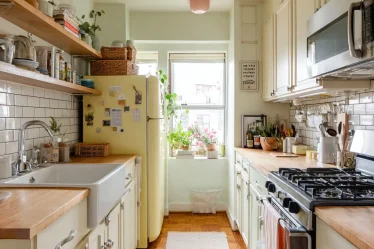
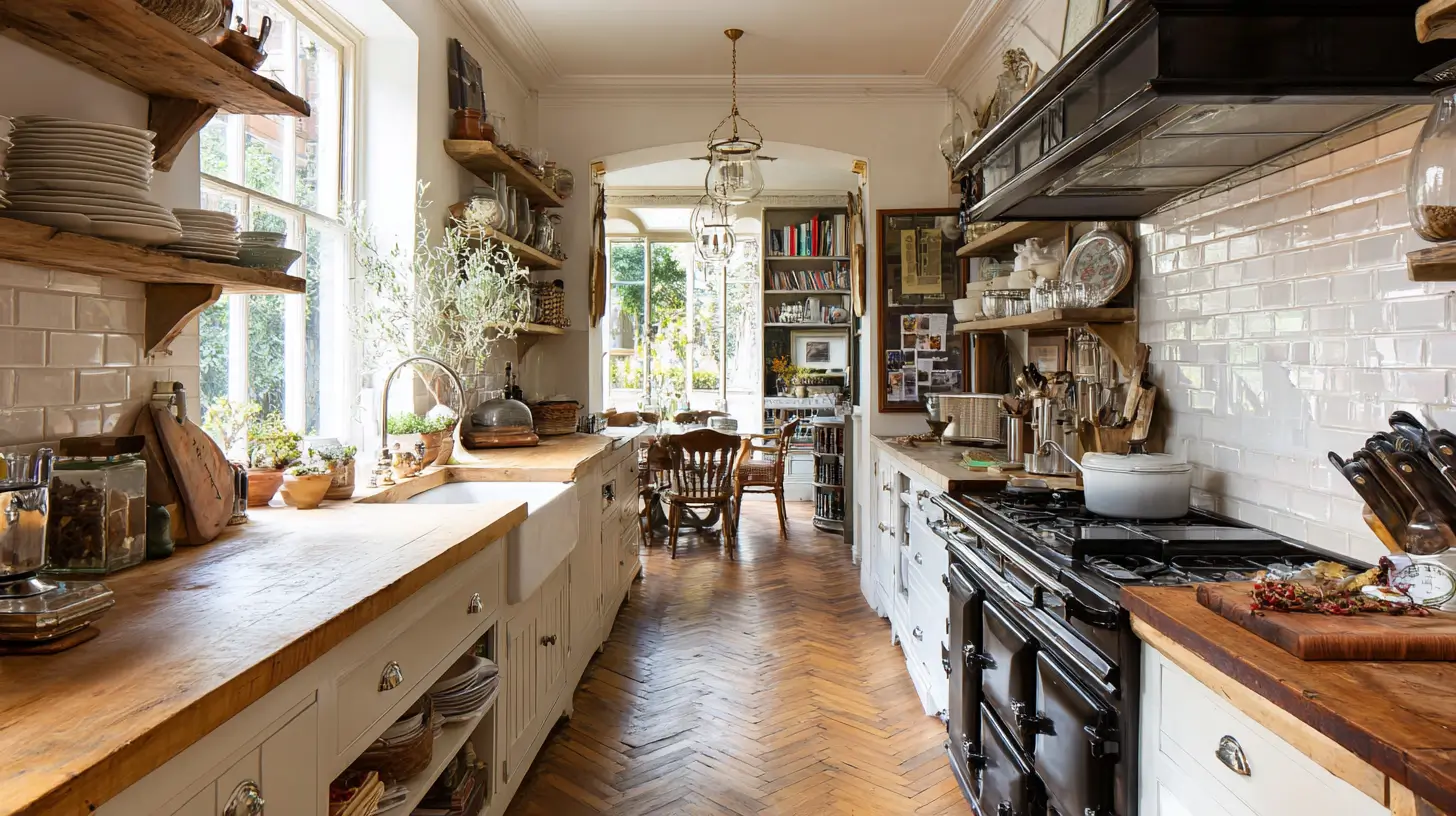
You Love Cooking. So Does Your Partner. So Why Does It Feel Like a Fight?
You both reach for the cutting board at the same time. One of you needs the oven. The other needs the counter right next to it. Someone bumps into someone else. A pan gets moved. Now nobody knows where anything is.
This is not a you problem. This is a kitchen design problem.
Most kitchens are built for one cook. One prep area. One set of tools. One workflow. When two people who both love cooking try to share that space, things fall apart fast.
The good news is that you do not need a massive budget or a full gut renovation to fix this. You need a plan. You need two zones instead of one.
This article gives you 16 real ideas to make that happen. Some cost almost nothing. Some require a contractor. All of them are worth knowing about so you can pick what works for your kitchen, your budget, and your relationship.
What Is a Two-Zone Kitchen?
A cooking zone is a dedicated area built around one task. Think of it like a workstation. One zone for prep. One for cooking on the stove. One for baking. One for cleanup.
Professional restaurant kitchens have always worked this way. Each cook has a station. Each station has its own tools, its own space, its own flow. Nobody is stepping on anyone else because the layout is designed so they do not have to.
A two-zone home kitchen borrows that same idea. Instead of one shared workspace, you create two distinct areas. Each cook has a home base. You still share the fridge. You still share the pantry. But your primary work areas stay separate enough that you can both cook at the same time without bumping elbows every three minutes.
The National Kitchen and Bath Association (NKBA) updated its design guidelines in 2024 to officially move away from the old “kitchen work triangle” model. Their newer guidance is built around kitchen work zones instead. That shift happened because households changed. More people cook at home. More households have two serious cooks. The industry caught up.
You can apply that same thinking to your kitchen starting today.
Idea 1: Give Each Cook Their Own Side of the Island
Best for: Kitchens with an existing island or room to add one Budget range: $2,000 to $8,000+ depending on size and materials
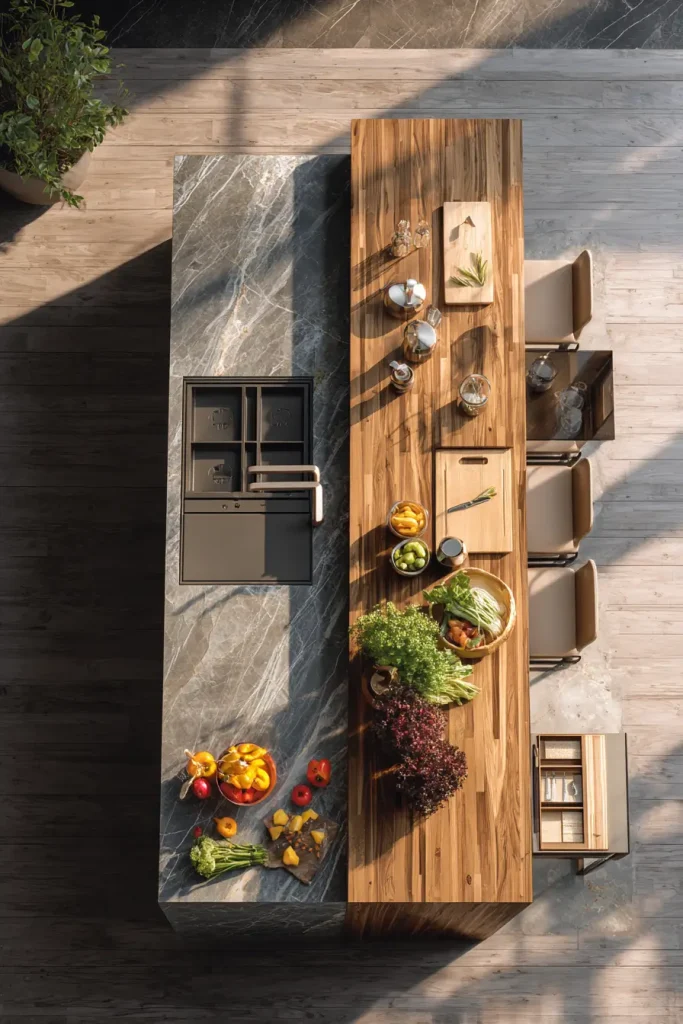
A kitchen island with prep space on both long sides is one of the cleanest solutions for two cooks. One person takes the north side. The other takes the south side. Each has their own cutting surface, their own elbow room, and their own storage underneath.
You do not need a “double island” to pull this off. A single island that is wide enough (at least 4 feet across) gives both people a real work edge.
If you are choosing countertop materials, consider using two different surfaces. Butcher block on one side works well for chopping. Quartz or marble on the other side suits baking or plating. The different surfaces also signal visually that these are two separate zones.
The Houzz 2024 Kitchen Trends Study found that 42% of homeowners who renovated added or expanded their kitchen island. That number keeps rising because islands are the most flexible piece of a kitchen layout.
Quick Win: If you already have an island, assign sides right now. No renovation needed. Just pick your side and stick to it.
Idea 2: Build a Dedicated Baking Station Away From the Stove
Best for: Kitchens where one partner bakes and the other does stovetop cooking Budget range: $500 to $3,000
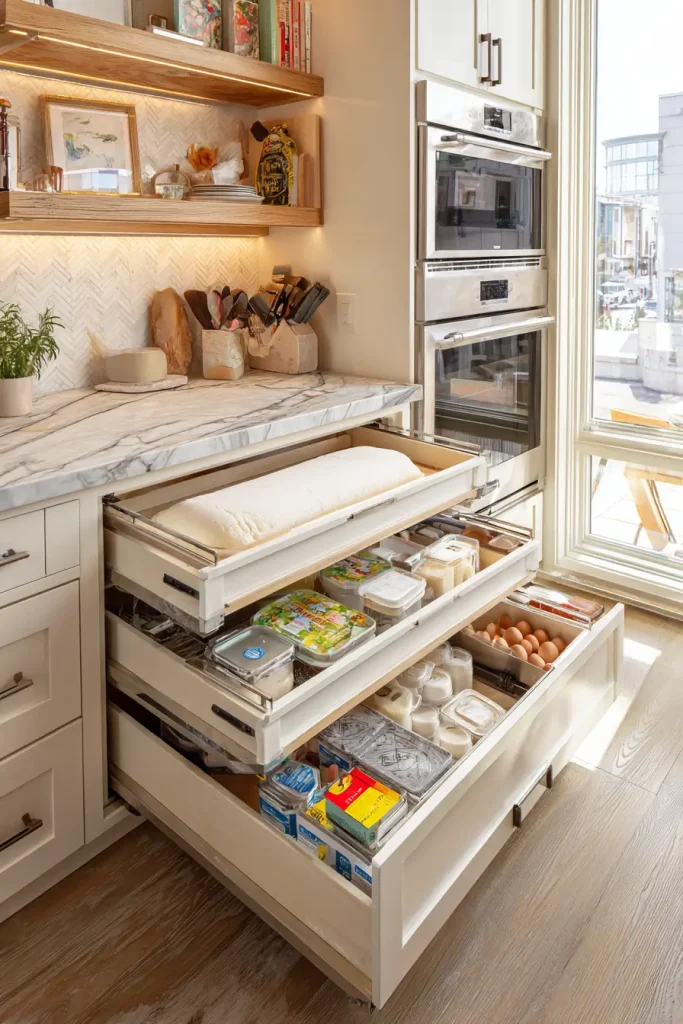
Baking and stovetop cooking do not mix well in the same space. One requires flour, cold butter, and precise measurements. The other requires heat, splatter, and constant stirring. When those two workflows collide on the same counter, both cooks lose.
The fix is to pull the baking zone away from the stove entirely.
A lower counter height (around 32 to 34 inches instead of the standard 36) makes rolling dough much easier. A marble or granite surface keeps pastry dough cool. Pull-out drawers underneath can hold baking sheets, a stand mixer, measuring cups, and mixing bowls. A small wall oven nearby means the baker never has to compete for the main oven.
Position this station near a window if possible. Natural light helps when you are decorating or working with color in food. Keep it away from the stove to avoid heat affecting your dough or chocolate.
Quick Win: A $40 pastry marble slab on any available counter creates a dedicated cold surface for baking without touching the rest of your kitchen setup.
Idea 3: Add a Second Sink and Stop Arguing About the Water
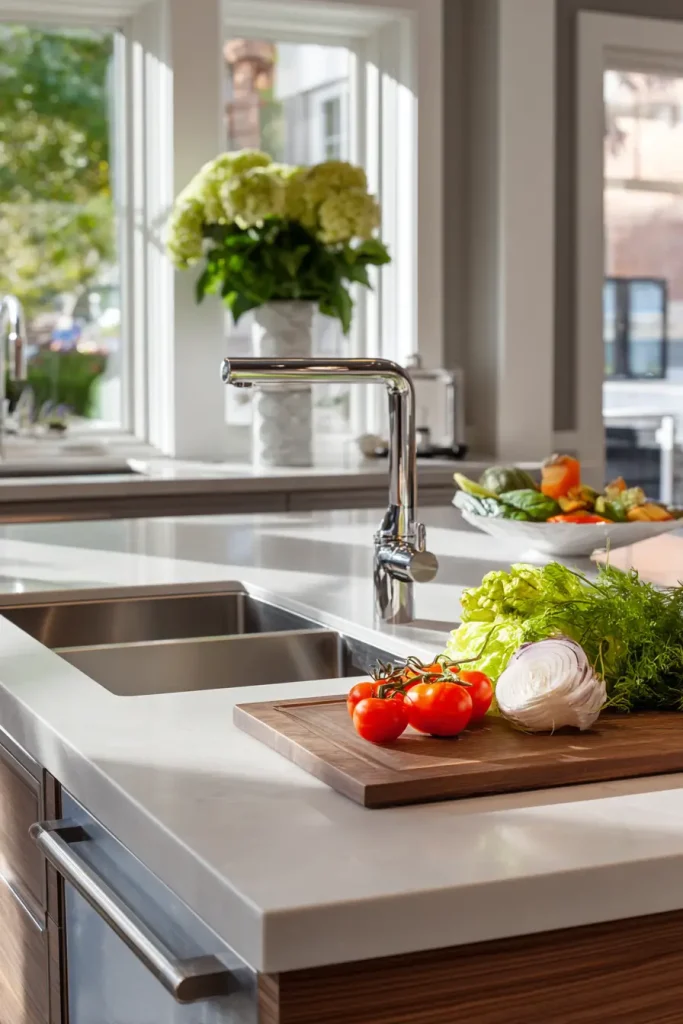
Best for: Any kitchen with room for an island or a second counter run Budget range: $150 to $400 for the basin, plus $200 to $500 for installation
Sharing one sink is the number one complaint from couples who both cook. One person needs to rinse vegetables. The other needs to wash their hands after handling raw meat. Both need water at the same time. Every single meal.
A second prep sink solves this completely.
A prep sink does not need to be large. A small bar sink (around 15 inches) built into the island gives the second cook a place to rinse, wash hands, and drain vegetables without touching the main sink. Each cook stays in their own zone. The flow stops breaking down.
NKBA data from 2024 shows that secondary sinks are now included in 35% of kitchen remodels where the kitchen is over 200 square feet. That number was much lower five years ago. Couples figured this out.
If a built-in sink is not in your budget right now, a countertop basin with a small faucet and a drain into a bucket works as a temporary rinse station. Not perfect. But better than fighting over one faucet.
Quick Win: Assign one person the main sink for cleanup and give the other a large mixing bowl of clean water for rinsing produce. Costs nothing. Removes one daily conflict.
Idea 4: Give Each Cook Their Own Cutting Board Pull-Out Drawer
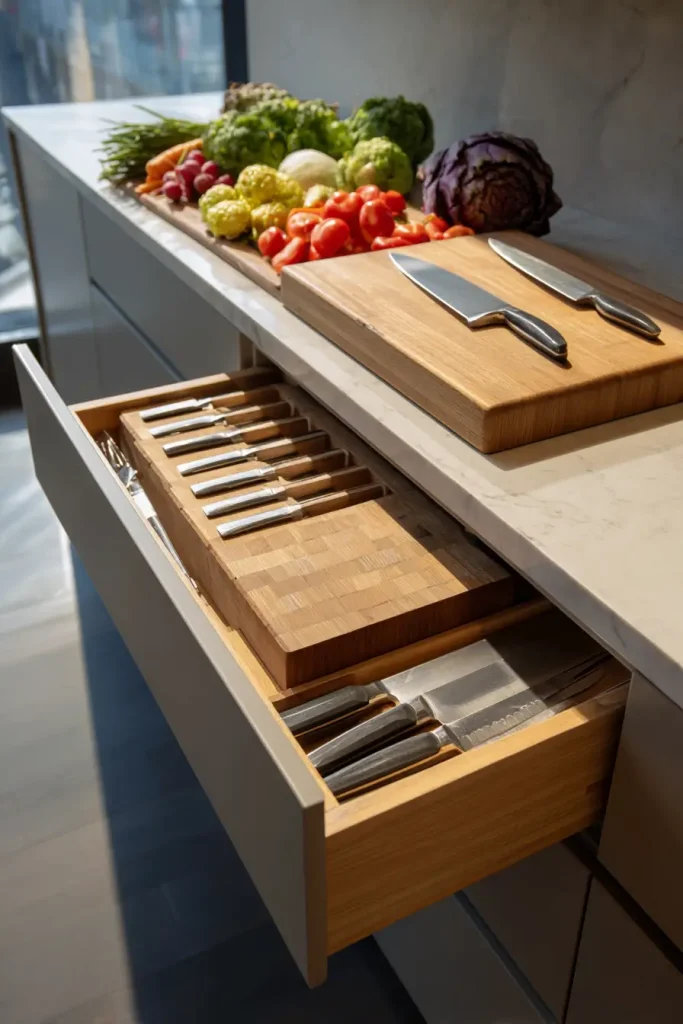
Best for: Any kitchen with base cabinets Budget range: $50 to $300 per pull-out
A pull-out cutting board drawer built into each cook’s cabinet zone gives each person their own surface that slides out of the way when not in use. No more sharing the one big board. No more moving each other’s mise en place off the counter.
Each pull-out can hold a dedicated cutting board plus a small knife block or a slot for a few knives. That means each cook’s prep setup stays together in one place.
This also reduces cross-contamination. If one cook is breaking down raw chicken and the other is slicing vegetables, using two completely separate boards and surfaces is the right call anyway.
You do not need custom cabinetry. IKEA’s Sektion cabinet line has pull-out inserts that work for this. You can add a cutting board surface to an existing drawer frame for under $100 if you are willing to do a little measuring and cutting.
Quick Win: Buy two separate cutting boards in different colors. Assign one to each cook. Keep them in different spots in the kitchen. Simple system, zero cost.
Idea 5: Get a Second Cooktop Instead of Fighting Over the Burners
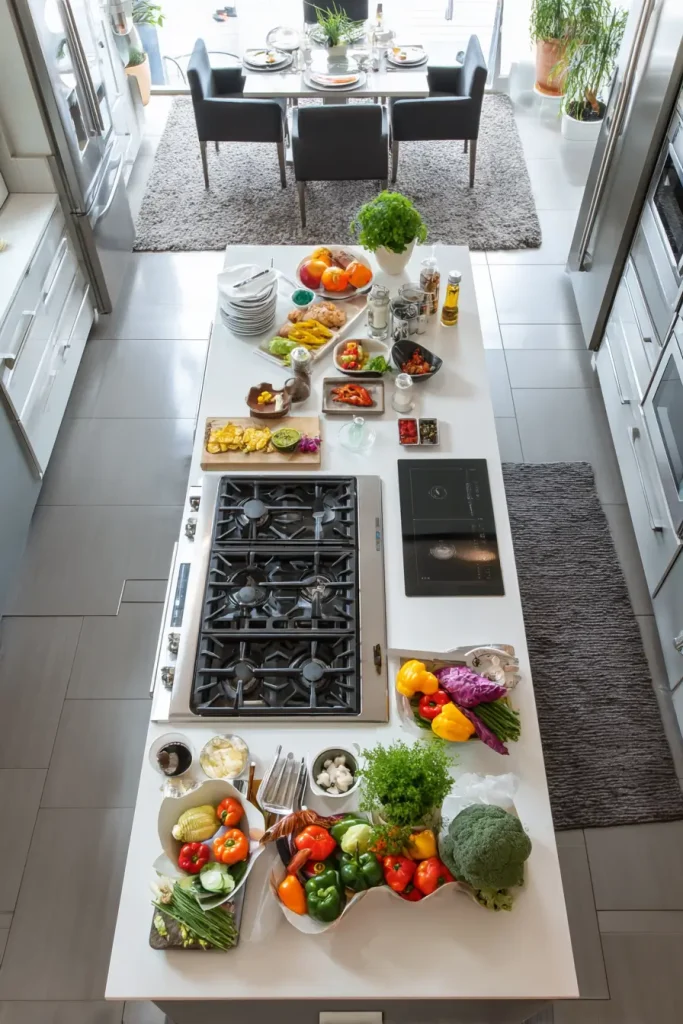
Best for: Serious home cooks who both need stovetop access at the same time Budget range: $300 for a countertop induction unit, up to $5,000+ for built-in dual cooktops
Four burners between two cooks who are both making dinner is not enough. One person takes two burners for a sauce and a protein. The other needs two burners for a stir fry and a side dish. Now there is no burner left and someone has to wait.
A second cooktop fixes this.
The cleanest setup is one gas cooktop at the main range and one portable induction cooktop on the island or a secondary counter. Induction is fast, precise, and easy to clean. It also does not add heat to the kitchen the same way a gas burner does. That matters when two people are already generating heat on opposite sides of the room.
Portable induction burners from brands like Duxtop or NuWave start around $50 to $80. Built-in induction cooktop inserts from GE Café, Miele, or Bosch run higher but give you a cleaner, permanent look.
For couples where both people cook large meals regularly, this is one of the highest-return changes you can make.
Quick Win: A $70 portable induction cooktop on the island creates a second cooking zone today. Plug it in and use it tonight.
Idea 6: Divide Your Cabinet Storage Between Two Cooks
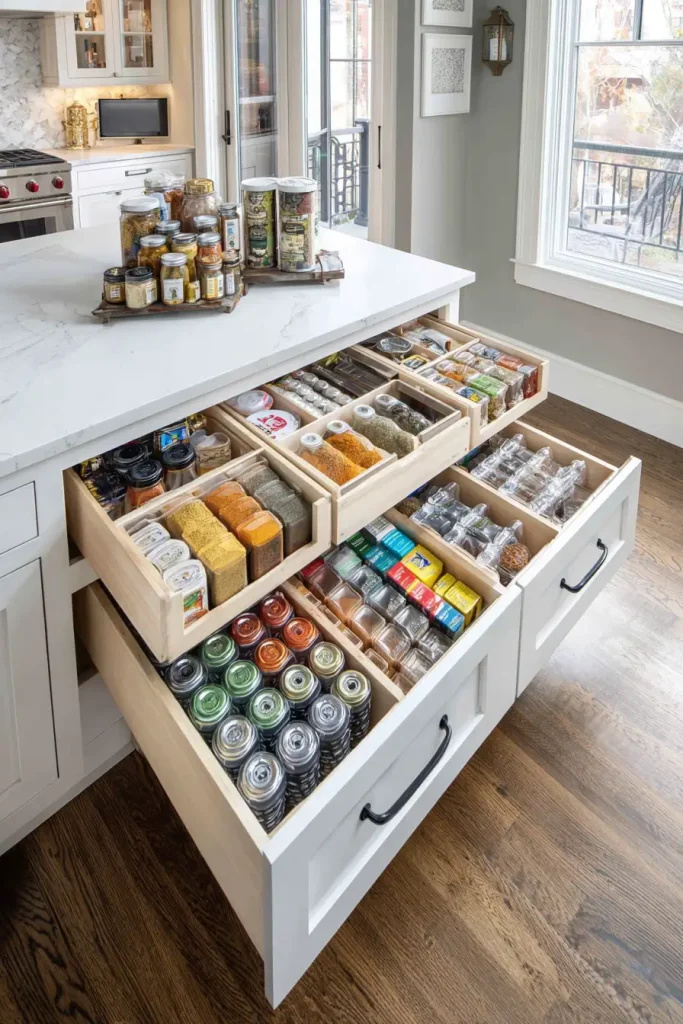
Best for: Any kitchen, any budget Budget range: $0 to $200
This one costs almost nothing and you can do it this weekend.
Divide the kitchen storage so each cook has their own section. One person takes the lower cabinets and drawers on one side of the kitchen. The other person takes the opposite side. Shared items go in a neutral zone in the middle.
Inside the pantry, use labels or small bins to separate each cook’s ingredients. If one partner cooks Italian food and the other cooks Korean food, their spices and pantry staples do not need to live in the same spot.
Pull-out shelves make both zones equally accessible. If your cabinets do not have them, you can buy pull-out organizers from The Container Store or Amazon and slide them into existing shelves without any installation.
This system also ends the “where did you put my pan?” conversation. Each person is responsible for their own section. Their tools are where they left them. Every time.
Quick Win: Spend 20 minutes right now and assign shelves. Tape a piece of paper to each section with each person’s name. Done. You just created two storage zones.
Idea 7: Add a Speed Oven or Wall Oven So You Each Have One
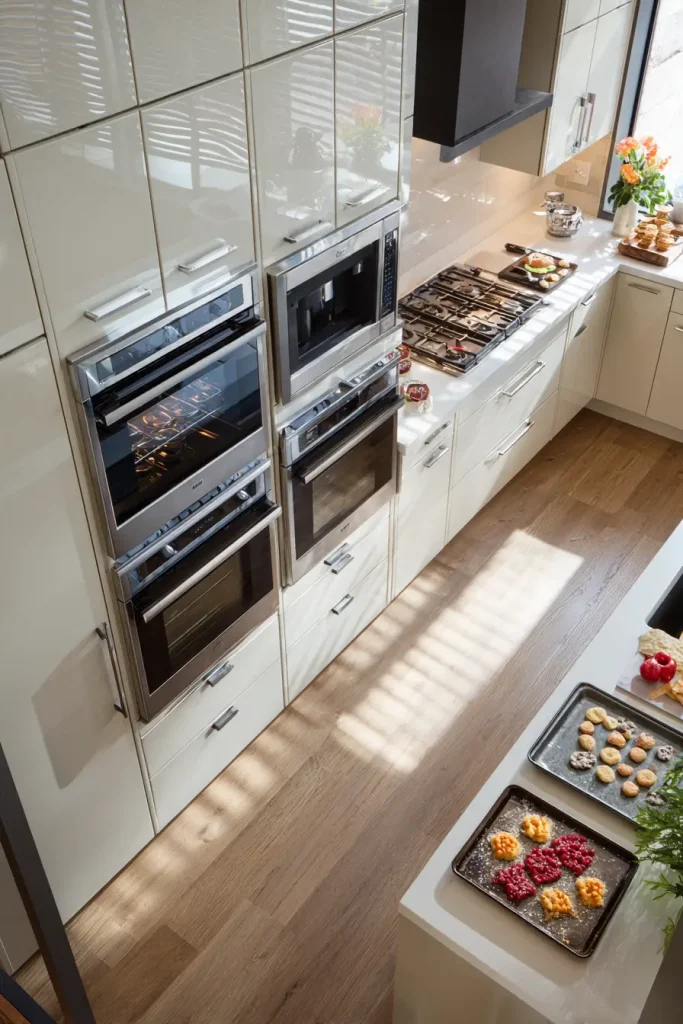
Best for: Kitchens with wall space near each cook’s primary zone Budget range: $800 to $2,500 for a speed oven, $1,500 to $4,000 for a double wall oven
One oven between two cooks who both need it at the same time is a scheduling problem. Who gets 400 degrees? Who bakes first? Who waits?
Two ovens removes all of that.
A double wall oven stacked vertically gives each cook a fully independent oven at a different height. One can roast at 450 degrees while the other bakes at 325 degrees. No waiting. No negotiating.
If a full second oven is too much, a speed oven is a strong middle option. A speed oven combines microwave speed with convection heat. Brands like Miele, Bosch, and Breville make models that handle real cooking tasks like roasting vegetables, baking small batches, and reheating without drying food out. Most are under $1,500.
Place whichever second oven you add near the cook who needs it most. A baker should have their oven close to their prep station. That way the oven is part of their zone, not a shared appliance in the middle of the kitchen.
Quick Win: A countertop convection oven ($80 to $150) on a side counter gives the second cook their own oven space without any installation.
Idea 8: Use a Galley Layout With One Cook Per Wall
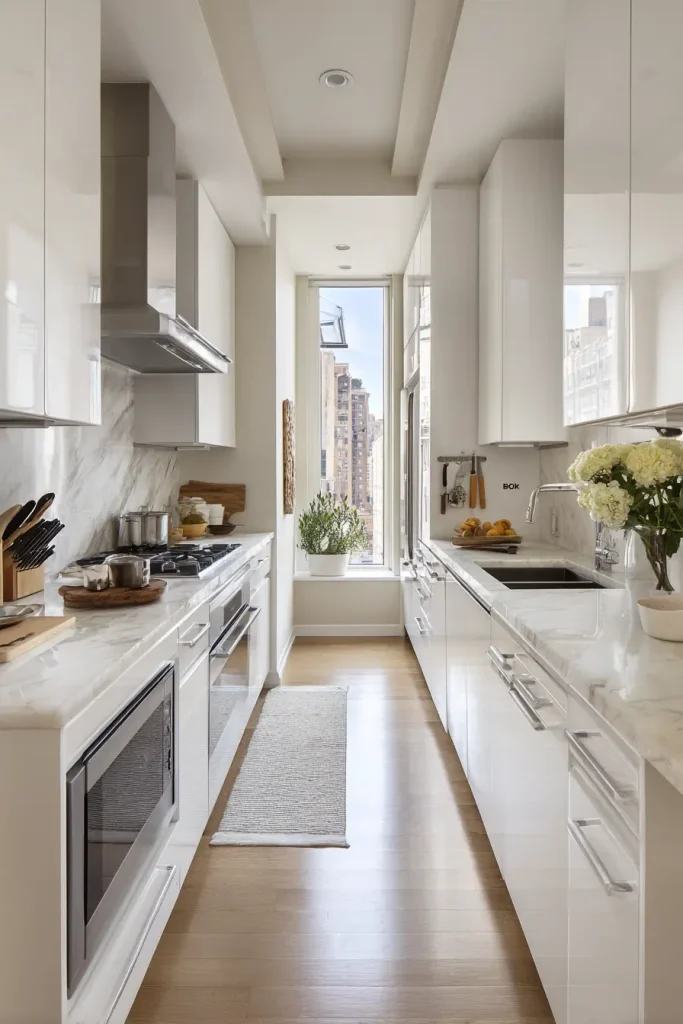
Best for: Narrow kitchens, apartments, or smaller homes Budget range: Varies widely based on extent of renovation
Galley kitchens have a reputation for being tight. That is fair. But for two cooks, a galley layout is actually one of the better options if you set it up correctly.
Here is why: a galley has two parallel walls. Give each cook one wall.
Cook A gets the wall with the cooktop and prep counter. Cook B gets the wall with the oven, sink, and secondary prep area. Both cooks face opposite walls. Nobody is behind the other person trying to squeeze past. The aisle between them is shared but neutral.
For this to work, the aisle needs to be at least 48 inches wide. Anything narrower and you are back to bumping into each other every time someone opens a cabinet door.
Keep the ends of the galley open. Closed ends make the space feel like a hallway. Open ends let each cook move freely in and out without crossing the other person’s path.
Quick Win: In an existing galley, claim your wall right now. Reorganize your tools and most-used items so each person’s supplies are on their wall. The behavior change alone helps, even before any physical renovation.
Idea 9: Set Up a Coffee and Beverage Station Outside the Main Cooking Zone
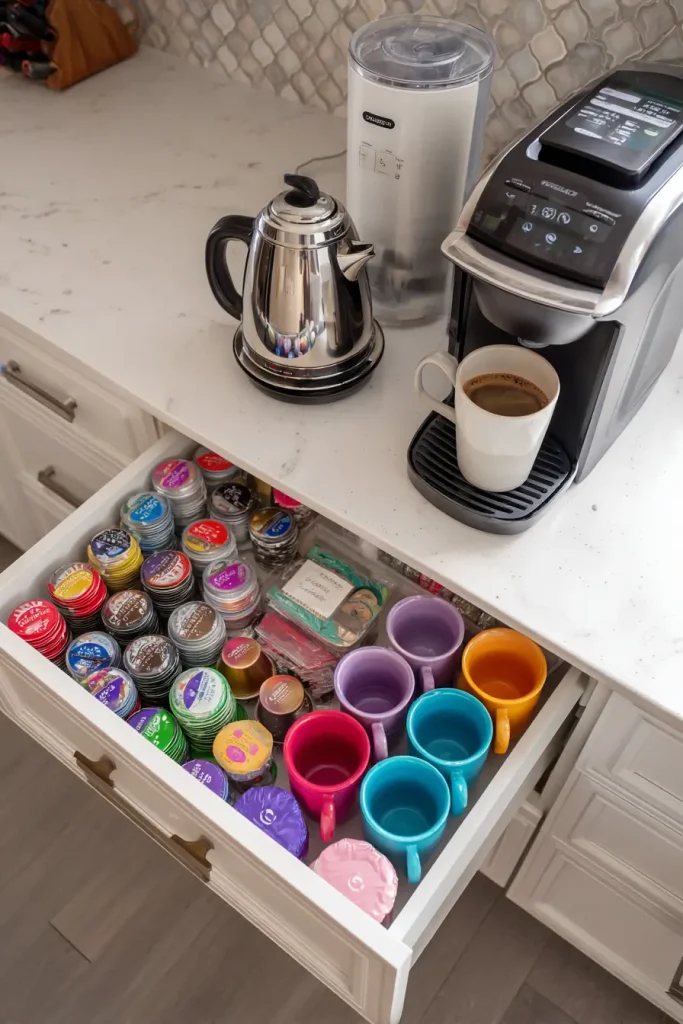
Best for: Any kitchen with a nearby counter, cart, or corner Budget range: $0 (using existing equipment) to $500 for a built-in nook
The morning kitchen rush is its own problem. One person is making breakfast. The other needs coffee. Both are in the same 6 square feet of counter space.
Pull the coffee station out of the main kitchen zone entirely.
A dedicated coffee and beverage area in a corner, a butler’s pantry, a kitchen nook, or even an adjacent dining area keeps one person completely out of the cooking zone during prep time. Everything they need is there: coffee maker, electric kettle, mugs, a small drawer for pods or filters, and a small fridge drawer for cream.
This is not just a morning fix. During dinner prep, one person can be plating and finishing while the other handles beverages, water, or drinks without ever entering the main cooking area.
IKEA makes several carts and freestanding units that work well for this. Crate and Barrel’s Belmont cart, CB2 options, and Amazon Basics rolling carts all work depending on your style and budget.
Quick Win: Move your coffee maker to a different counter, corner, or cart today. That one change already pulls one person out of the main cooking zone every morning.
Idea 10: Give Each Cook Their Own Task Lighting
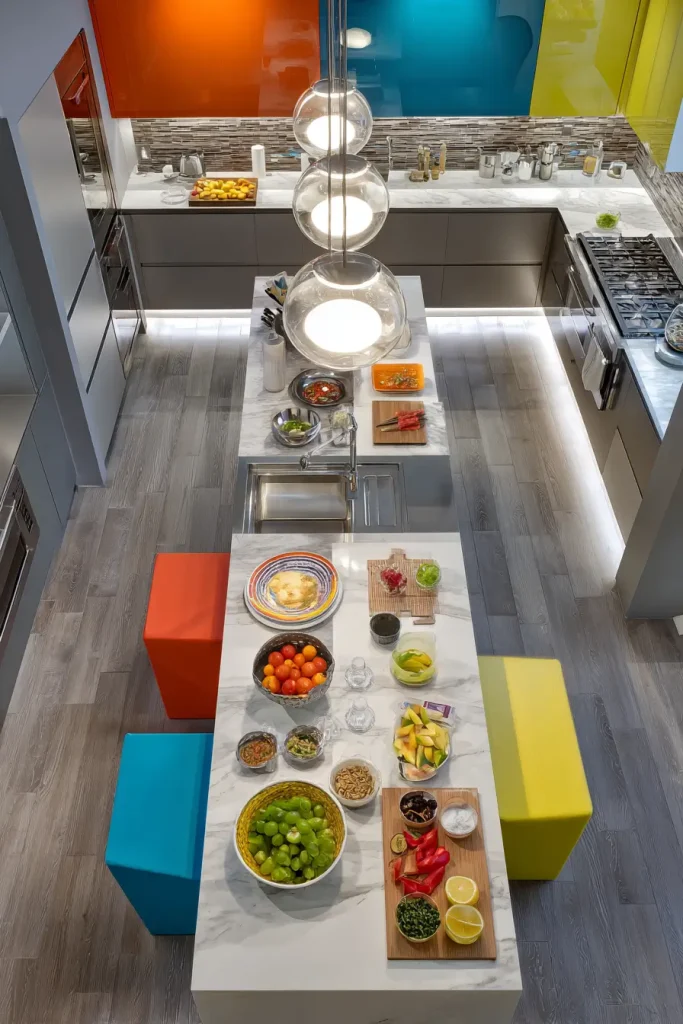
Best for: Any kitchen with under-cabinet space or pendant potential Budget range: $25 to $200 per zone
Bad lighting makes cooking harder. The wrong light in the wrong place makes cooking together worse because one person’s shadow falls directly on the other person’s cutting board.
Each cook’s zone needs its own light source.
Under-cabinet LED strip lights are the easiest solution. They mount directly under the upper cabinets and shine down onto the prep surface below. Each cook’s zone gets its own strip. Each strip should have its own switch or dimmer so each person controls their own light level.
Pendant lights above a kitchen island work well too, especially if each cook has a pendant roughly centered above their side of the island.
For task-specific needs, bright cool light (5000K) works best for detailed prep and baking. Warmer light (2700K to 3000K) suits plating and finishing. If you can set two zones to different color temperatures, that is genuinely useful.
LED strip kits from brands like Govee or Kasa start at around $25 to $40 for a complete zone. Smart versions you can control from your phone cost a little more but let you set each zone independently.
Quick Win: Plug-in under-cabinet LED puck lights ($15 to $30) need no wiring and give each prep zone its own light source starting tonight.
Idea 11: Use a Rolling Kitchen Cart as a Moveable Second Station
Best for: Renters, small kitchens, people who cannot renovate Budget range: $35 to $400
This is the most renter-friendly idea on this list.
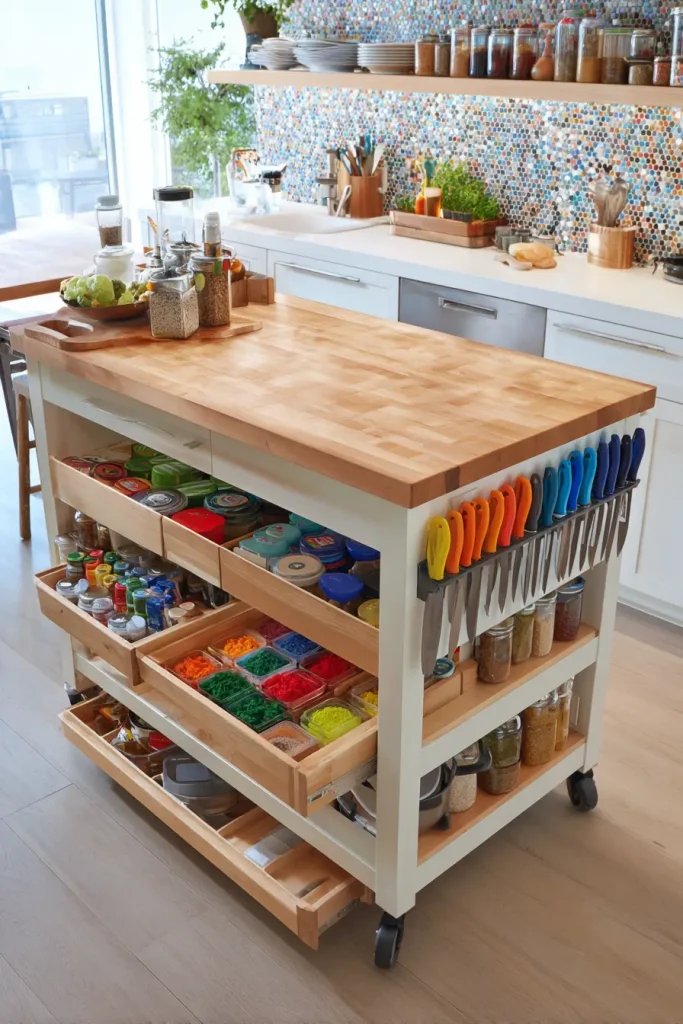
A solid rolling kitchen cart with a butcher block top becomes a full second prep station. You roll it to wherever the second cook needs to work. When dinner is done, roll it to the side. It takes up no permanent footprint.
The best carts have a butcher block or wood top, at least two shelves, and one or two drawers. John Boos makes heavy-duty carts that last for decades. Crate and Barrel’s Belmont cart is a popular mid-range option. IKEA’s RÅSKOG cart works for lighter tasks on a tight budget.
Add a magnetic knife strip to the side of the cart. Hook a small rail on the end for tools. Now the cart has its own knife block, its own tools, and its own prep surface. That is a complete second station for under $200 in most cases.
This works in apartments, small kitchens, rental units, and any space where you cannot drill into walls or rebuild cabinets.
Quick Win: Order a butcher block rolling cart this week. It arrives flat-packed, assembles in 30 minutes, and creates a second cooking zone the same day.
Idea 12: Create a “Clean Cook” Zone and a “Mess Cook” Zone
Best for: Couples with different cooking styles Budget range: $0 to $500 depending on any surface changes
Every couple has one cook who makes a big mess and one cook who works clean. This is not a criticism. It is just how cooking styles differ.
Design your two zones around that reality.
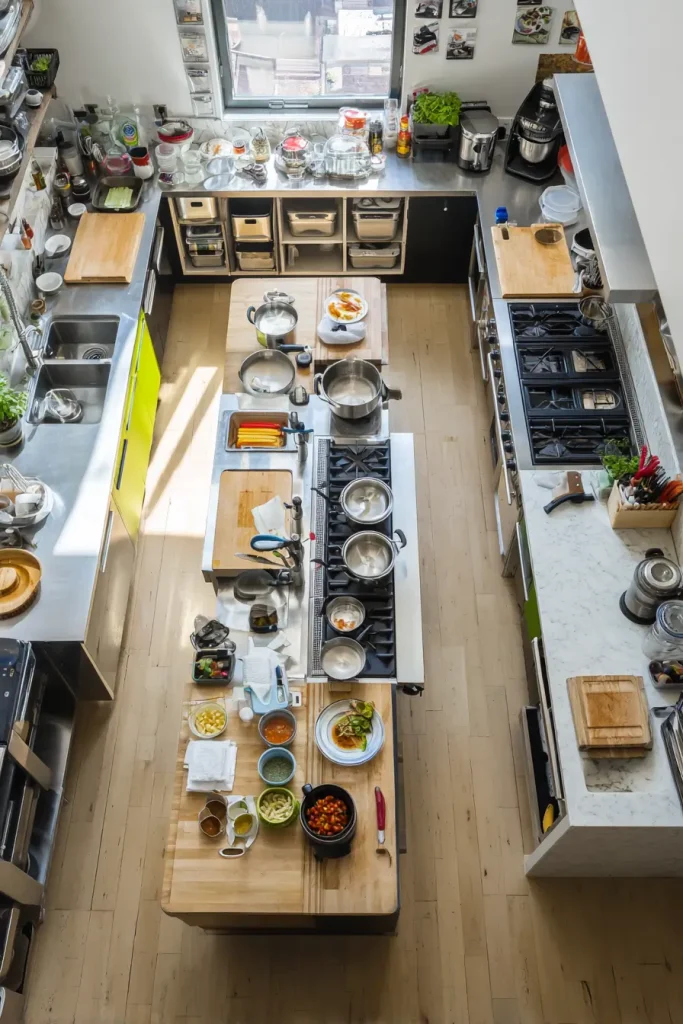
The mess cook gets the zone near the sink. They chop, marinate, sear, and splatter. Their zone has butcher block or a surface that is easy to wipe down. Their section of the under-cabinet storage holds their oils, their cast iron, their heavy pots.
The clean cook gets the zone away from the splatter zone. Their area is for finishing, plating, and delicate work. Marble or quartz suits this zone well. Their drawers hold tweezers, small spoons, plating tools, and things that need to stay dry and clean.
Each zone also gets its own trash can or compost bin directly underneath the counter. The mess cook’s bin handles meat scraps and peelings. The clean cook’s bin handles lighter waste.
This is mostly a behavioral shift, but backing it up with different surfaces and storage makes it stick.
Quick Win: Place a small trash can under each cook’s side of the counter right now. You already separated zones. The behavior will follow.
Idea 13: Mount a Pegboard or Magnetic Rail in Each Cook’s Zone
Best for: Any kitchen with available wall space Budget range: $20 to $100 per zone
Tool conflicts are a daily problem in two-cook kitchens. One person cannot find their favorite spatula because the other person used it and put it somewhere else. One person reaches for the peeler and it is gone.
Each cook needs their own tool wall.
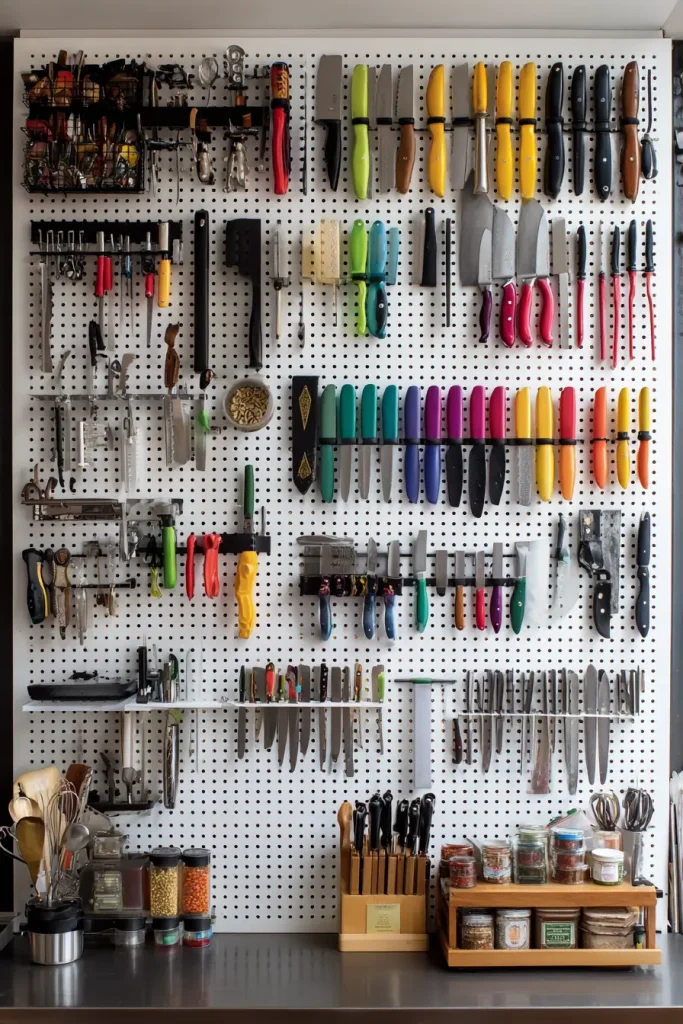
A pegboard mounted at counter height in each cook’s zone solves this completely. Each cook hangs their own tools on their own board. The tools live in their zone, used by their hands, put back in their spot.
IKEA’s SKÅDIS pegboard system is the most popular option right now. The boards come in two sizes, multiple colors, and the hooks and accessories are sold separately so you build exactly what you need. A full setup runs about $40 to $70 depending on how many accessories you add.
A magnetic knife strip does the same job for knives. Mount one in each zone. Each cook keeps their own set of knives on their own strip. No more borrowing. No more searching.
Pegboards and magnetic strips are also renter-friendly if you use proper anchors and patch the wall when you leave.
Quick Win: A $20 pegboard from a hardware store plus $10 in hooks gives each cook a personal tool zone this weekend.
Idea 14: Design Two Separate Work Triangles, Not One
Best for: Anyone planning a kitchen renovation or redesign from scratch Budget range: $0 for planning, varies widely for execution
The kitchen work triangle connects three points: the refrigerator, the sink, and the stove. The idea is that you move between those three points constantly while cooking, so they should be close together.
That triangle works fine for one cook. It breaks down for two.
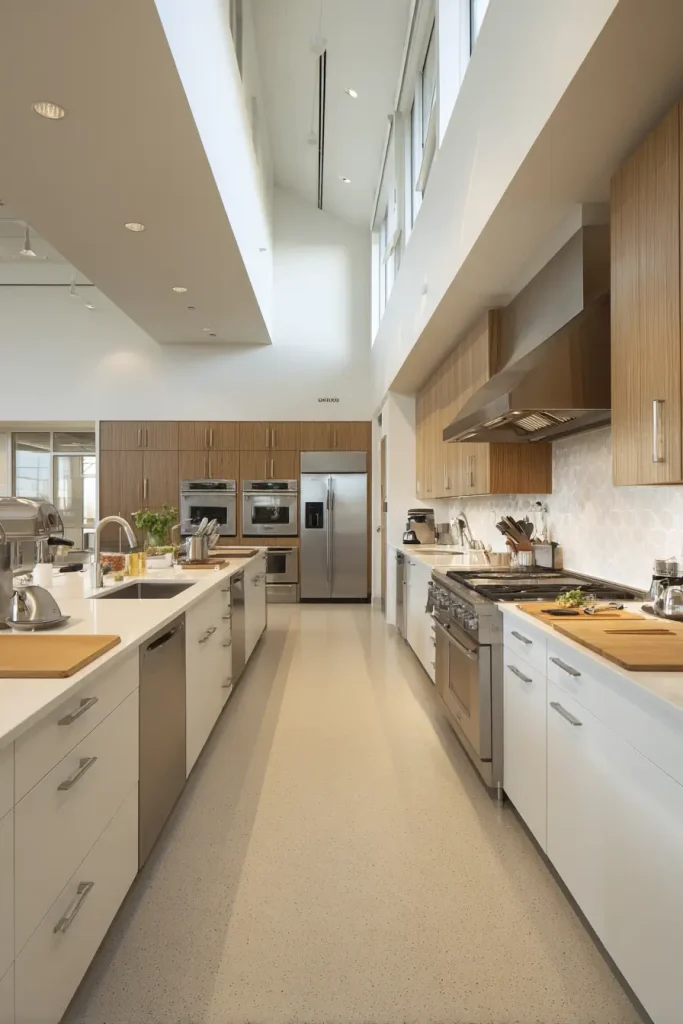
When two people cook, you need two triangles. Cook A’s triangle connects their cooktop, their prep sink, and the main refrigerator. Cook B’s triangle connects their prep zone, their secondary sink or water access, and the oven or speed oven. The two triangles overlap at the refrigerator because sharing the fridge is fine. Everything else stays in its own zone.
NKBA officially updated their design language in 2024 to move away from the strict work triangle model. Their current guidance focuses on kitchen work zones instead, which maps much better to how two-cook households actually operate.
If you are planning a renovation, sketch both triangles on paper before you finalize any cabinet or appliance placement. Where do the two paths cross? Is there a traffic conflict? Can you shift something 18 inches to reduce it?
Quick Win: Draw your current kitchen on paper. Mark where each cook stands most often. Draw lines between each person’s three main points. You will immediately see where the paths collide and what to move.
Idea 15: Build a Shared Spice and Pantry Wall Between Both Zones
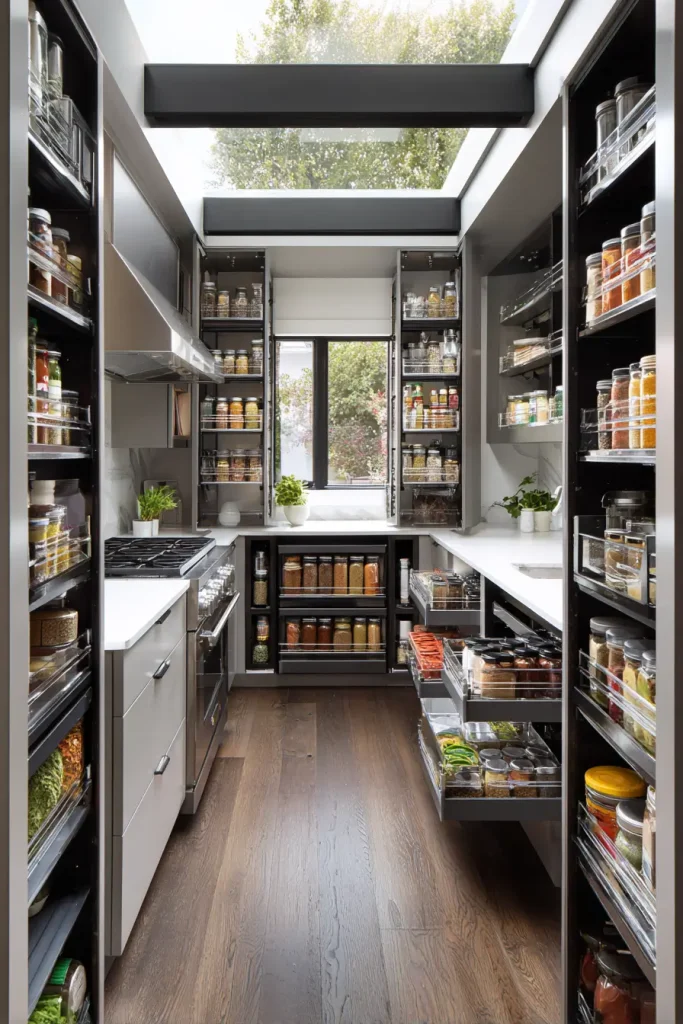
Best for: Kitchens where both cooks share ingredients Budget range: $50 to $500 depending on storage system chosen
The pantry and the spice rack are neutral territory. Both cooks need access to both. The mistake most kitchens make is burying these things in one person’s zone, which forces the other person to cross into occupied territory every time they need an ingredient.
Put the shared pantry wall in the middle of both zones.
A pantry wall centered between the two cook stations works like a shared hub. Both people can reach it without entering the other person’s primary workspace. Pull-out spice drawers at mid-height are the cleanest option. A wall-mounted spice rack at eye level also works well if you have the wall space.
Organize the pantry by cuisine type or by cooking method rather than alphabetically. An Italian section (pasta, canned tomatoes, olive oil, dried herbs) and an Asian section (soy sauce, sesame oil, rice vinegar, dried chilies) is much faster to navigate than 40 jars in alphabetical order when you are mid-cook.
Use clear containers with labels. Both cooks can see the inventory level at a glance. No more opening six containers to find out the cumin is empty.
Yamazaki Home, The Container Store, and IKEA all make solid pantry organization systems at different price points.
Quick Win: Reorganize your spice rack by cuisine this weekend. Group the bottles, add simple labels, and position the whole rack where both cooks can reach it without crossing into the other person’s zone.
Idea 16: Set Kitchen Rules Together So the Design Actually Works
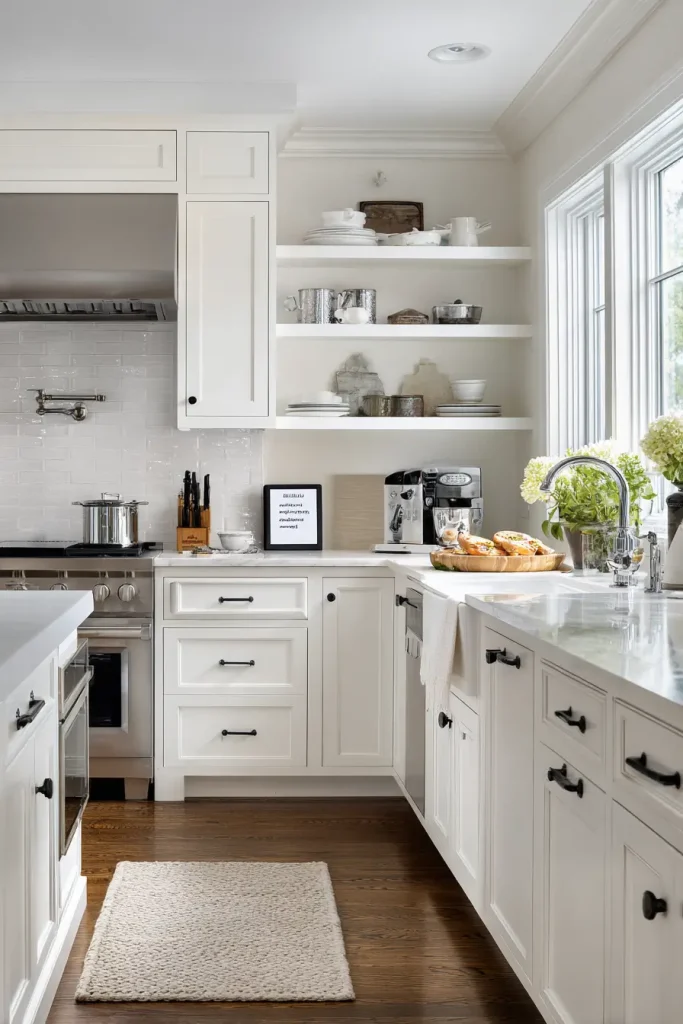
Best for: All couples who share a kitchen Budget range: Free
A great layout helps. Clear agreements between two people make it work every day.
The best-designed two-cook kitchen still breaks down if one person constantly uses the other person’s zone, puts tools back in the wrong place, or expects the other person to clean up their half.
Talk about your kitchen rules out loud. Write them down if that helps. Here are three to start with:
- Each person cleans their own zone before they leave the kitchen. No leaving the mess cook’s explosion for the other person to deal with.
- Ask before using the other person’s primary tools. This is not about being precious. It is about knowing where things are.
- One person cooks, one person preps, one person cleans if you are cooking together. Role rotation keeps one person from doing everything while the other waits.
Apps like AnyList and OurHome help with shared grocery lists and meal planning so both cooks know what is in the fridge and what the plan is for the week. This reduces the “I was going to use that chicken” problem.
The physical setup and the behavioral agreements work together. One without the other leaves gaps.
Quick Win: Have a 10-minute conversation tonight about one kitchen rule you both want to set. Start with the one that causes the most friction. Fix that one first
How to Pick Where to Start
You do not need to do all 16 of these things. You probably should not.
Start by identifying your biggest friction point. Is it the sink? Start with Idea 3. Is it the cooktop? Start with Idea 5. Do you fight about tools? Start with Idea 13.
Pick one idea that costs under $100 and do it this week. Then pick one larger idea and plan it for the next three to six months.
A two-cook kitchen does not require a full renovation. It requires thinking about how two different people move through a space and making small changes that reduce the collision points.
You both love cooking. That shared interest is worth designing around.
Whether you make one small change or redesign the whole kitchen, these two-cook kitchen ideas are built to help you cook together without getting in each other’s way. That is the whole point.

- 18 Scandinavian Bedroom Ideas That Are Calm & Livable (2026) - March 31, 2026
- 17 Kids Bedroom Ideas That Grow With Them - March 31, 2026
- 17 Industrial Bedroom Ideas for Urban Apartment Dwellers - March 31, 2026