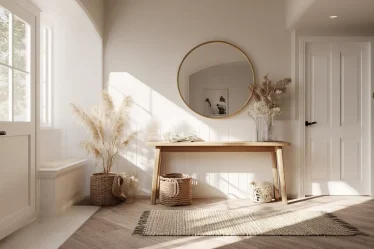
You walk through your front door, and instead of a welcoming exhale, you’re met with the claustrophobic squeeze of a narrow hallway. That’s a common 2026 reality as urban living spaces shrink. The hallway becomes a dumping ground for shoes, coats, and mail. It feels dark, cramped, and impossible to decorate without making it feel even tighter.
But you don’t need a renovation to fix it. In this guide, you’ll learn 16 actionable strategies that use vertical space, optical illusions, and smart storage. These small hallway ideas will turn your tiny entrance design into a functional, airy, and stylish introduction to your home. No demo required.
1. Use Vertical Lines to Add Height
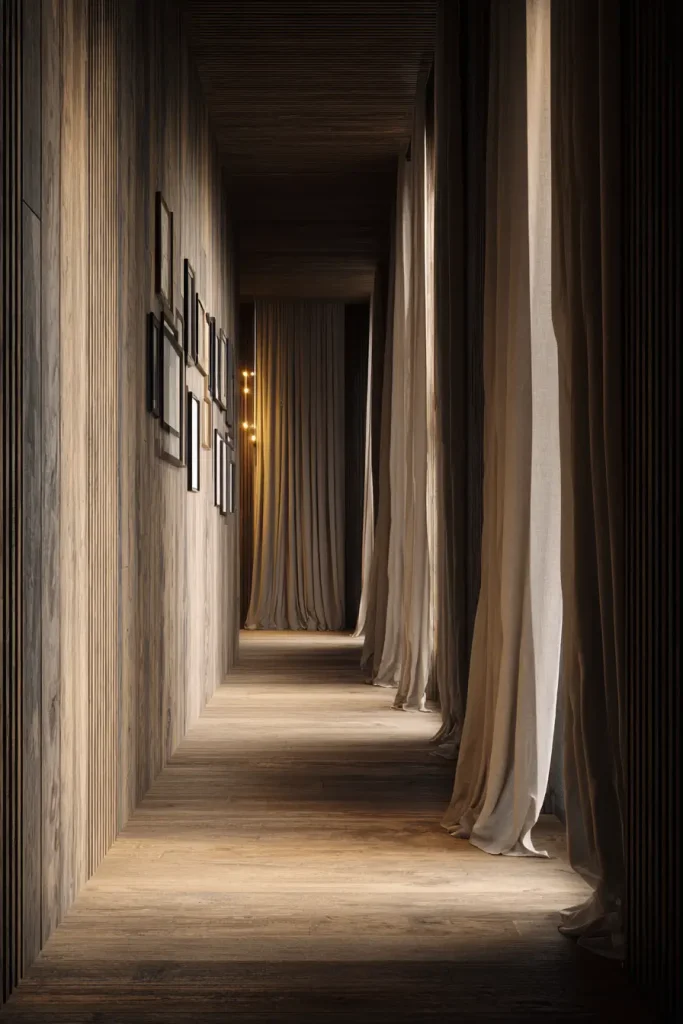
Your eyes follow lines. Horizontal lines make a room feel wider. Vertical lines pull your gaze up, making the ceiling feel higher. That’s the psychology we’re borrowing.
You can create vertical lines without ripping out walls. Try vertical paneling—like tongue-and-groove—painted the same color as the wall. It adds texture without breaking the line. If you have a window, mount a curtain rod near the ceiling and use floor-to-length curtains. Designer Emily Henderson popularized this trick: replace a standard 6‑foot rod with a ceiling track 8 feet high. The room instantly feels taller.
For art, hang a vertical gallery wall. Stack frames in a column instead of spreading them out. Each of these optical illusion techniques stretches the space. By the end of this section, you’ll see your ceiling not as a height limit, but as an asset.
2. Go Monochromatic with a Dark Twist

Stop painting your hallway white. It sounds counterintuitive, but in a narrow space with little natural light, white can actually look gray and dingy.
The 2026 trend is color drenching: paint the walls, trim, and ceiling all the same deep color. Think moody charcoal, forest green, or navy. Dark colors recede in low light, making the walls feel further away than they are. Benjamin Moore’s Rainwashed and Sherwin‑Williams’ Urbane Bronze are two popular choices for this approach.
Use matte paint on the walls, then pick a high‑gloss finish for the trim or ceiling. The gloss catches light like liquid mercury, reflecting it without glare. Don’t worry—this isn’t a cave. The contrast gives the space just enough shine. Color drenching has seen a 40% increase in search interest on Pinterest for entryways, and it’s one of the easiest narrow entryway solutions you can try this weekend.
3. Install a Slim, High-Impact Console Table
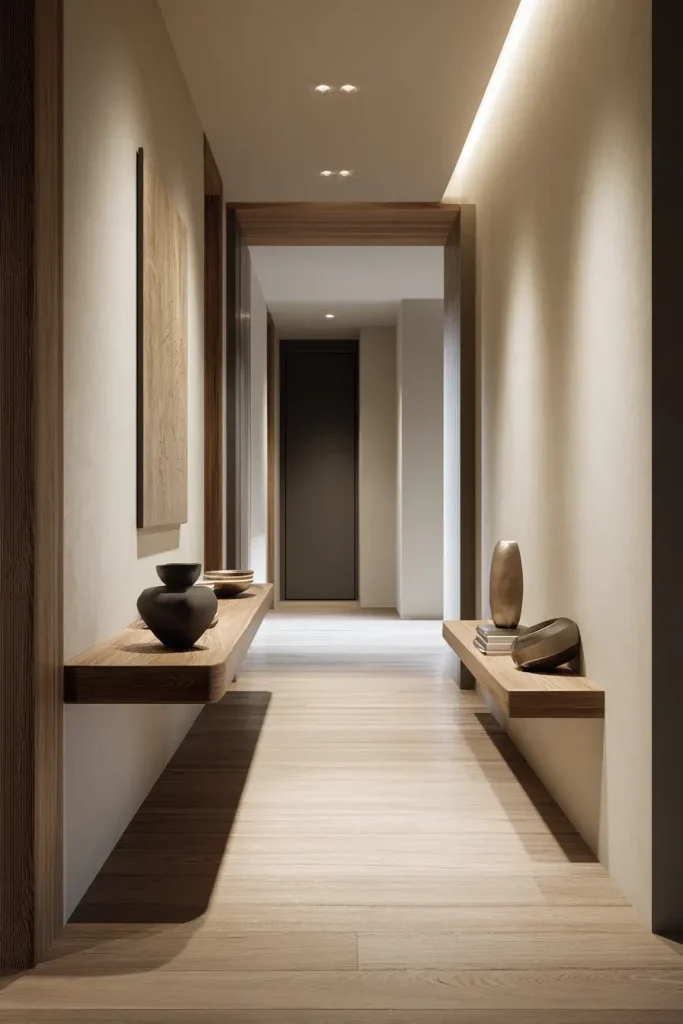
Your hallway is not a garage. Stop treating it like one. Bulky furniture eats up floor space and blocks the flow.
Look for a slim console table—12 inches deep or less. Floating tables or those with hairpin legs let the floor continue visually, which keeps the space feeling open. Use the table as a “landing strip” for keys and mail, but keep it minimal: one sculptural object and a shallow bowl. In tight corners, swap a traditional table for a demi‑lune (half‑moon) table that fits flush against the wall.
IKEA’s Mackapar and West Elm’s Industrial Slim Console are great examples. And here’s a stat that matters: entryway clutter costs the average person 15 minutes a day looking for lost items, according to the National Association of Productivity & Organizing Professionals. A slim console with a clear purpose can cut that time to zero. With a depth of just 12 inches, this piece gives you the function of a table without the sacrifice of a walkway.
4. Maximize the “Forgotten” Fifth Wall

Look up. Seriously. Right now. What do you see? A blank canvas of drywall?
The ceiling is often ignored, but it holds real potential. Install overhead shelving using industrial pipe and wood planks. Store baskets with off‑season items up there—out of the way, but accessible. If you’re a renter, use removable hooks on the ceiling to hang plants or even a bike. That frees up floor space immediately.
A statement pendant light or a flush‑mount fixture also draws the eye up, creating a sense of volume. A 2026 trend report from Apartment Therapy noted that “overhead storage” is the #1 most overlooked solution in apartments under 800 square feet. If you haven’t used your ceiling yet, you’re leaving the most valuable real estate in the room untouched.
5. Mirror Magic: Placement Over Size
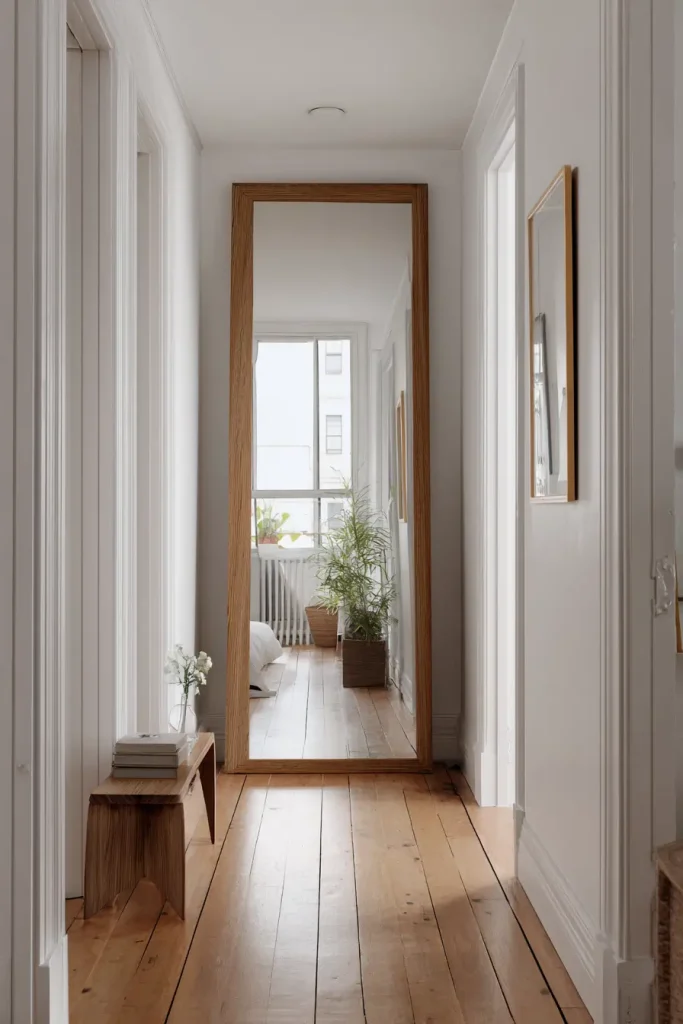
There’s a reason every hotel lobby has a massive mirror. It’s not vanity; it’s strategy.
Instead of hanging a small mirror, lean a large mirror against the wall at the end of your hallway. It creates a “faux window” effect and tricks the brain into thinking the wall disappeared. If you have a window nearby, place a mirror perpendicular to it to bounce natural light deeper into the corridor.
For extra storage, use a mirrored cabinet—like a medicine cabinet style—that hides daily essentials while reflecting light. Just avoid cheap, warped mirrors that distort reality. Brands like Umbra offer affordable, stylish mirrors designed for narrow spaces. In a hallway, a mirror is less about checking your lipstick and more about doubling the visual field. A well‑placed mirror can make a space feel up to two times larger.
6. Rethink Lighting: Layers Over Overheads

If your hallway only has one light source, it’s a tunnel. Tunnels aren’t cozy.
First, ditch the single overhead “boob light.” It casts harsh shadows and does nothing for the mood. Instead, layer your lighting. Use picture lights over art to create focal points. Install wall sconces at eye level—experts suggest 30‑40% of light should come from these. If space allows, a slim floor lamp works too.
One 2026 trend that’s easy to install: LED strip lighting. Tuck it under floating shelves or along baseboards for a subtle, futuristic glow. Recessed LED tape has become 30% more affordable in the last two years, according to industry reports. Make sure all bulbs are warm white (2700‑3000K) to avoid a sterile, clinical feel. A well‑lit hallway shouldn’t feel like a hospital corridor; it should feel like a gallery leading to your private space.
7. Ditch the Bulky Coat Rack
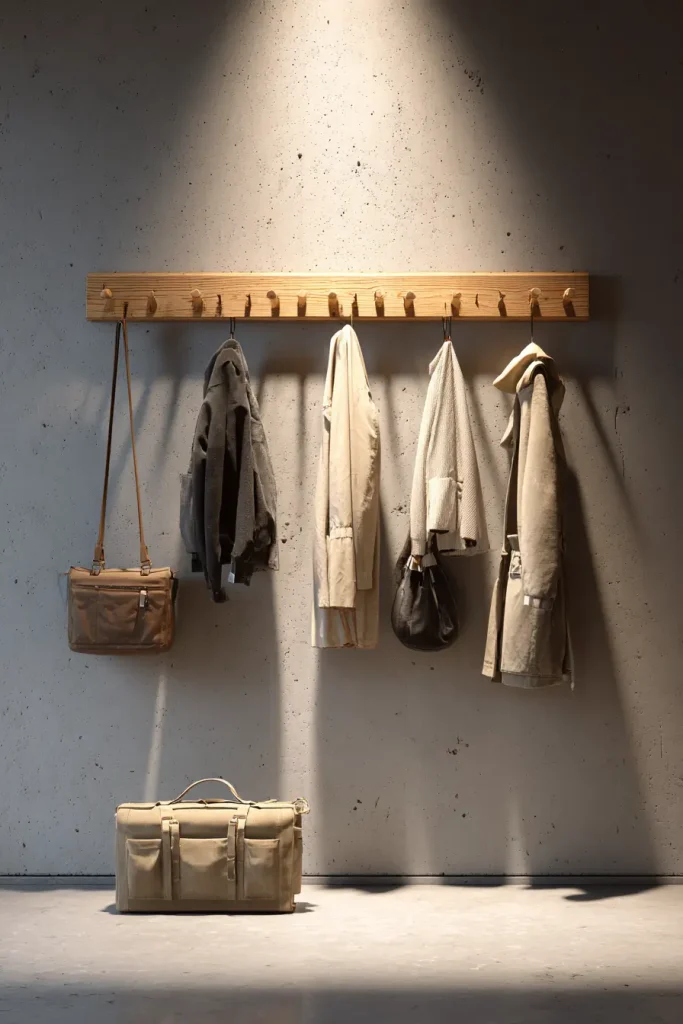
That freestanding coat rack in the corner? It’s a floor‑eating, visual‑noise machine. It takes up valuable square footage and usually ends up looking messy.
A better option: a peg rail or Shaker peg system running the length of the wall. It’s minimalist, adjustable, and scalable. You can hang coats, bags, and even hats without taking up floor space. Use decorative hooks at varying heights for adults, kids, and bags. For 2026, floating magnetic strips for keys and small metal accessories are also gaining popularity—they keep essentials visible but off the floor.
Schoolhouse Electric makes classic peg rails that work in any style. And remember the Marie Kondo principle: if it doesn’t spark joy, it doesn’t get a hook. When you remove the “tree” from the corner, you instantly add 3 square feet of visual breathing room.
8. Define the Space with a Runner

Rugs aren’t just for living rooms. In a hallway, they act as guide rails.
A runner creates a clear path and defines the traffic flow. To make your hallway look longer, choose a runner with stripes that run lengthwise. The stripes pull the eye forward, elongating the corridor.
A few practical rules: pick a low‑pile rug so doors open easily and cleaning is simple. Use a rug pad underneath to prevent tripping—safety first. The “runner rule” says your rug should be 4‑6 inches narrower than the hallway width. That border of visible floor on each side actually makes the space feel wider. Just remember: a slipping hazard ruins any aesthetic.
9. Create a “Hidden” Storage Wall
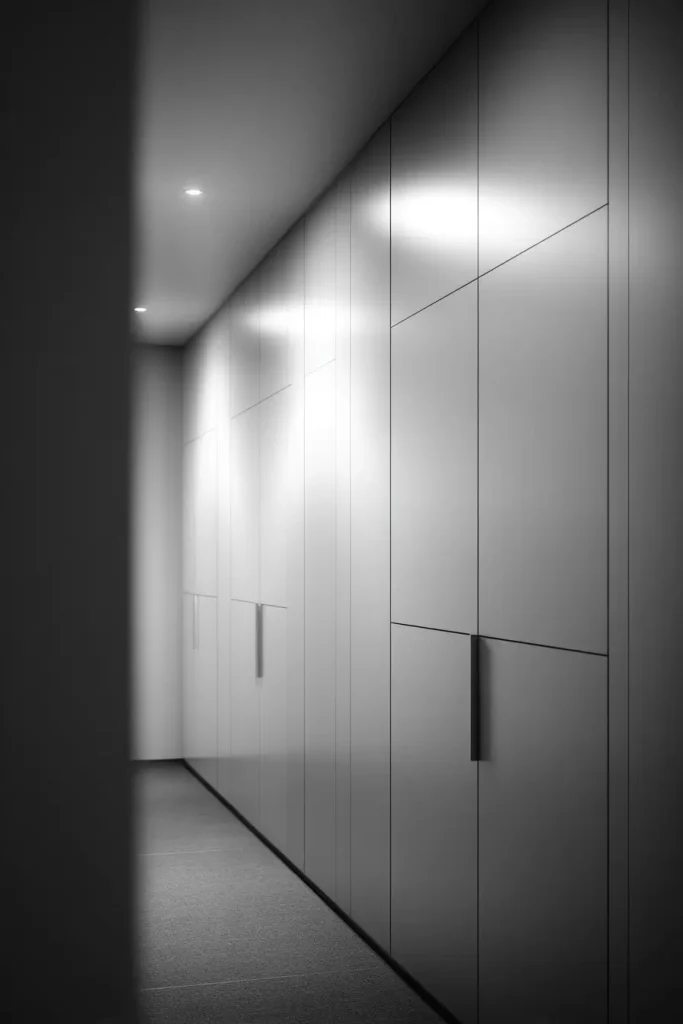
Clutter is the enemy of a small hallway. If you see it, you feel it.
If you own your home, consider built‑ins or an IKEA hack that sits flush with the wall. The classic IKEA Billy bookcase hack has been viewed over 5 million times on YouTube for good reason: it gives you floor‑to‑ceiling storage at a fraction of the cost of custom cabinets.
Use cabinet doors to hide the clutter. Open shelving is fine for display, but not for the daily junk of shoes, mail, and pet leashes. Install floor‑to‑ceiling cabinets to eliminate dust‑collecting gaps. For an extra trick, paint the inside of the cabinet doors with magnetic paint—it becomes a hidden spot for mail, tools, or a family calendar. Custom built‑ins add 3‑5% resale value to a home, according to Remodeling Magazine’s Cost vs. Value Report. When the doors close, the chaos disappears, leaving only a clean, serene corridor.
10. Bring the Outdoors In (Vertically)
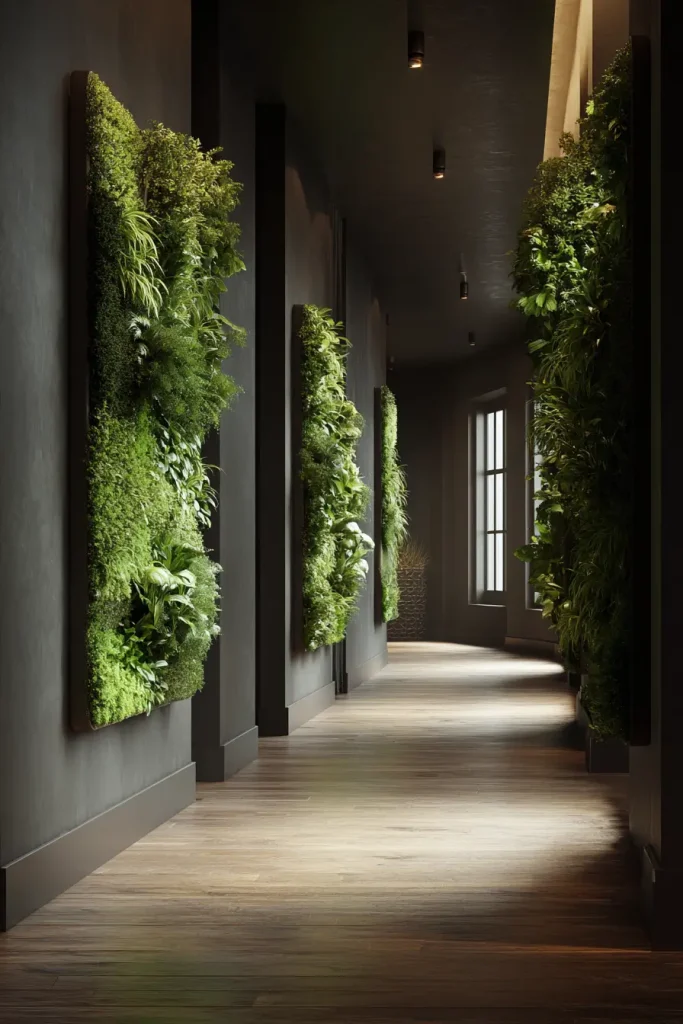
Plants soften hard edges. In a narrow hallway, they turn a pass‑through into a place you want to linger.
But floor space is precious. Instead of a pot on the floor, go vertical. Use wall‑mounted planters or a vertical garden system. This adds life without sacrificing walking space. Choose low‑light, air‑purifying plants like snake plants, pothos, or ZZ plants. They tolerate low light and don’t need constant care.
Avoid trailing plants in high‑traffic pinch points where they might get knocked over. A growing 2026 trend is preserved moss walls—they bring green texture without any maintenance. According to a NASA Clean Air Study, snake plants can remove up to 87% of volatile organic compounds (VOCs) in a 24‑hour period. So you’re not just adding style; you’re cleaning the air. With preserved moss, you don’t even need a green thumb to bring life to your entryway.
Conclusion
A small hallway doesn’t have to feel like a compromise. By using vertical space, layering light, and being smart about storage, you can transform a cramped passageway into a functional, welcoming space. You don’t need a contractor or a huge budget. Start with one or two changes—maybe a runner and a peg rail—and build from there.
Whether you rent or own, these small hallway ideas prove that narrow entryway solutions are about smart choices, not square footage. Start with decluttering, add a mirror, and watch your tiny entrance design come to life. Pick three ideas from this list and try them this weekend. You’ll be surprised how much bigger your hallway feels.

- 17 Classy Living Room Ideas for a Cozy Elegant Look - April 23, 2026
- 16 Dark Moody Living Room Ideas That Feel Rich and Warm - April 22, 2026
- 14 Elegant Bedroom Trends for 2026 You’ll Love - April 22, 2026